
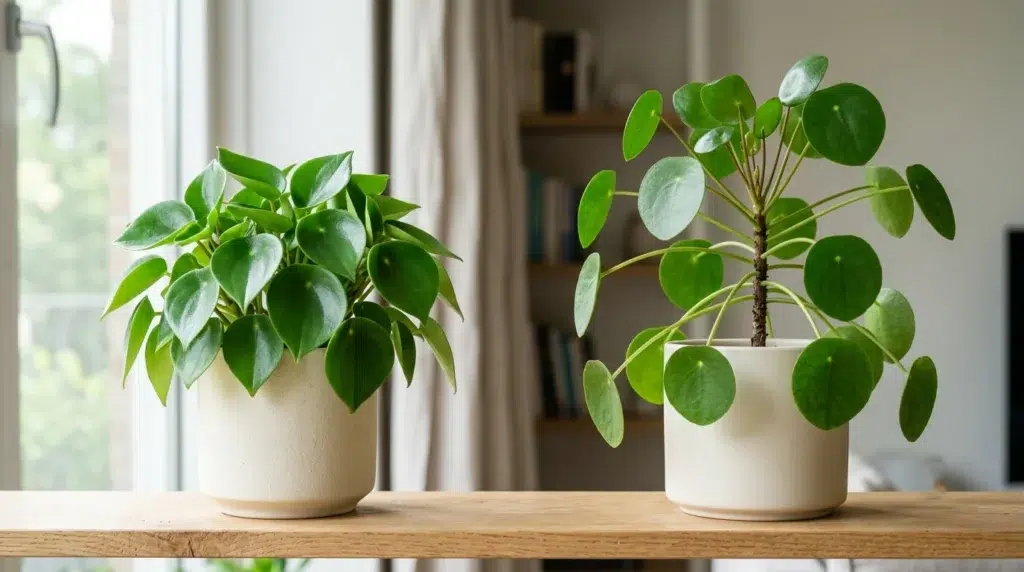
Peperomia Raindrop and Pilea are different plants. Manuela Nogueira helps you compare them with clear, practical plant guidance, easy-to-follow care advice, and reliable information for everyday growers. Learn the key differences in appearance and care requirements, then choose the plant that best suits your home and lifestyle.
For readers exploring more indoor plant choices, care techniques, and growing advice, this complete Plants: Benefits and Guides resource covers a wider range of houseplant benefits, types, and maintenance tips.
Quick Summary
- Peperomia raindrop (Peperomia polybotrya) and Pilea peperomioides are different species despite their similar round leaves.
- Peperomia raindrop belongs to the Piperaceae family, while Pilea belongs to the Urticaceae family.
- Pilea grows with a central stem and offsets, while Peperomia raindrop has a bushier upright growth habit.
- Both plants are beginner-friendly but require different watering and potting approaches.
- Correct identification helps prevent common care problems like overwatering and root damage.
What Is a Peperomia Raindrop?
Peperomia raindrop is the common name for Peperomia polybotrya, a tropical houseplant known for its thick, glossy, teardrop-shaped leaves. It is also called coin leaf peperomia or raindrop plant because its leaves resemble water droplets or rounded coins. This plant is native to tropical regions of Peru and belongs to the Piperaceae family, which includes many Peperomia species.
Peperomia polybotrya is valued as an indoor plant because of its compact growth, attractive foliage, and relatively simple care requirements. Unlike some tropical plants, it stores moisture in its thick leaves, helping it tolerate occasional missed waterings.
Peperomia raindrop belongs to the broader Peperomia genus, a group of tropical plants known for their ornamental foliage and adaptability as indoor plants.
Why Is It Called “Raindrop” and “Coin Leaf” Peperomia?
The name “raindrop peperomia” comes from the plant’s distinctive leaf shape. Each leaf has a pointed tip and rounded base, creating a teardrop or falling raindrop appearance. The alternate name “coin leaf peperomia” refers to the rounded, coin-like shape of mature leaves.
These unique leaves are one reason Peperomia raindrop is often confused with Pilea peperomioides, which also has circular foliage.
Why Are Peperomias Called Radiator Plants?
Peperomias are often called radiator plants because they are associated with warm indoor environments and their ability to tolerate average household conditions. The nickname became popular because many Peperomia species perform well near indoor heat sources, although direct exposure to hot air should still be avoided.
As members of the Piperaceae family, Peperomias naturally grow in warm, humid climates and generally prefer stable temperatures rather than cold drafts.
What Is a Pilea Peperomioides?
Pilea peperomioides is a popular houseplant commonly known as the Chinese money plant, UFO plant, or pancake plant. It is recognized by its perfectly round, flat leaves that grow on long stems from a central trunk-like structure. Pilea peperomioides is also known as the Chinese money plant, and understanding its specific needs through a Chinese money plant care guide can help growers maintain healthy growth, proper watering, and successful propagation.
Although its name contains “peperomioides,” Pilea peperomioides is not a type of Peperomia. It belongs to the Urticaceae family, which is separate from the Piperaceae family. The similar naming is a historical botanical naming coincidence rather than a sign of close relationship.
Is Pilea Peperomioides the Same as Peperomia Raindrop?
No, Pilea peperomioides and Peperomia raindrop are not the same plant. They belong to different genera and plant families. Peperomia raindrop is part of the Piperaceae family, while Pilea peperomioides belongs to Urticaceae.
Their similar appearance comes mainly from their rounded leaves, but their growth habits, roots, and care needs are different.
Are Peperomia and Pilea the Same Plant?
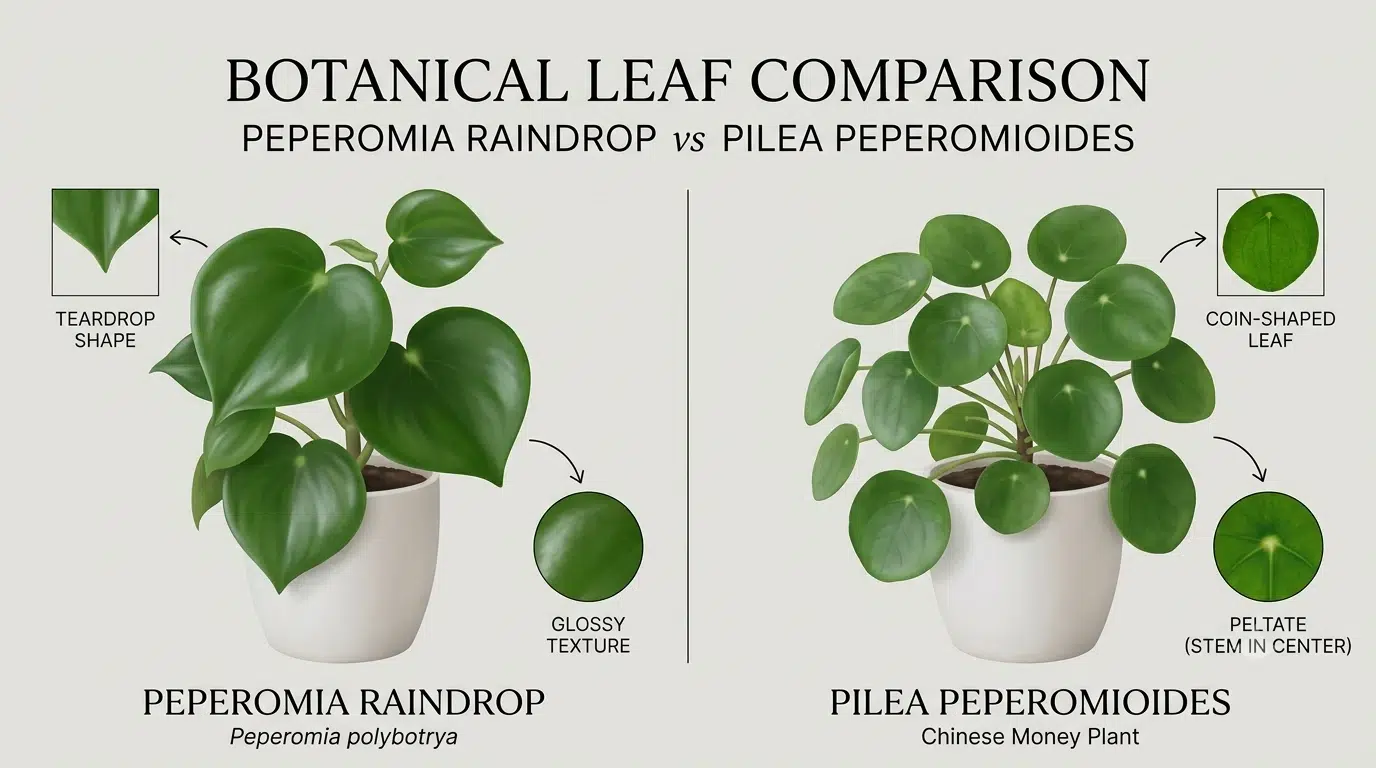
No, Peperomia and Pilea are not the same plant. They are separate botanical groups that only look similar because both can develop round, attractive leaves. Their differences become clearer when comparing their structure, growth style, and care preferences.
| Feature | Peperomia Raindrop | Pilea Peperomioides |
| Botanical Family | Piperaceae | Urticaceae |
| Leaf Shape | Teardrop/raindrop | Round/coin-shaped |
| Growth Habit | Upright, bushy | Single stem with pups |
| Mature Size | 12–16 inches | 8–12 inches |
| Pot Preference | Shallow/snug pots | Slightly larger pots |
| Lifespan | Several years with care | 3–5+ years typical |
What Peperomia Looks Like Pilea?
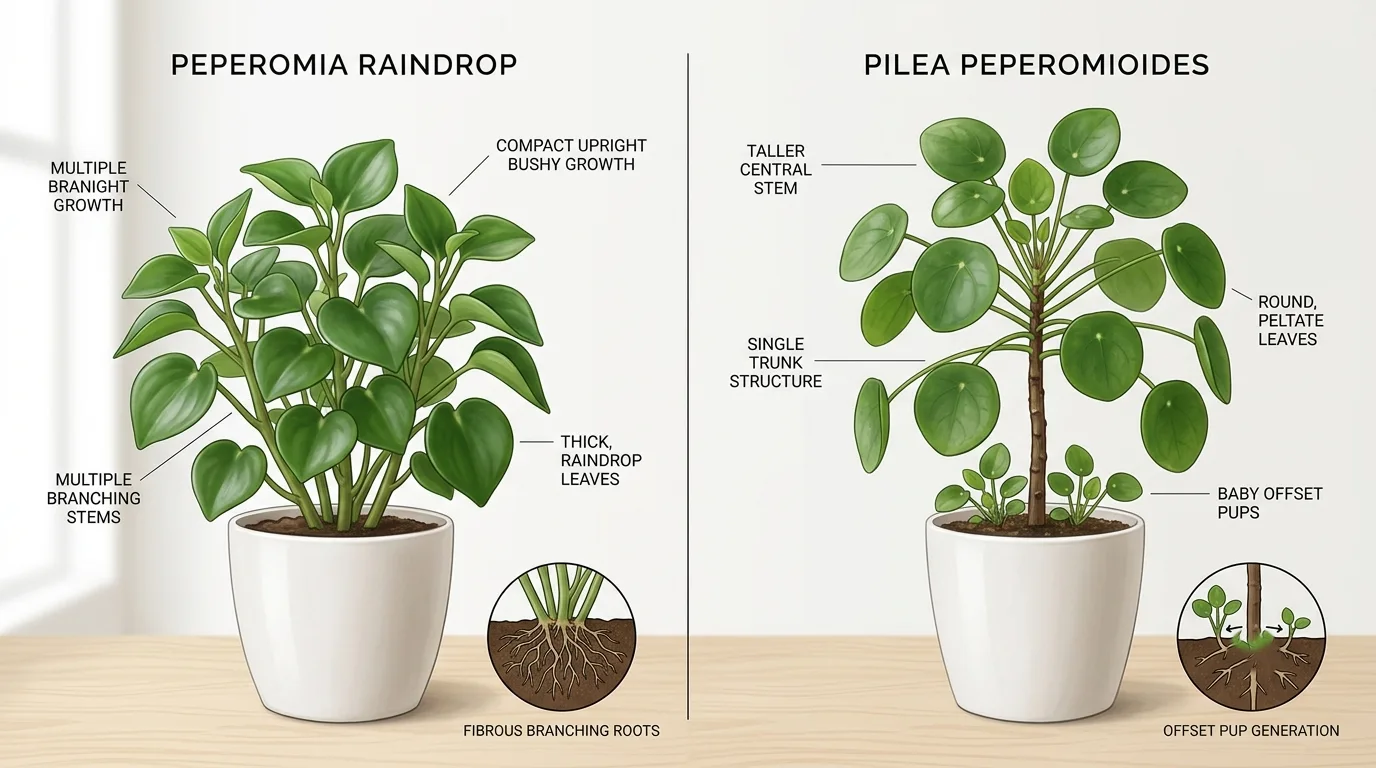
Peperomia polybotrya is the Peperomia species that most closely resembles Pilea because both have rounded, glossy green leaves. However, Peperomia raindrop leaves are more pointed and teardrop-shaped, while Pilea leaves are flatter and more circular.
The growth structure is also different. Peperomia develops a fuller, bushier shape, whereas Pilea usually grows upward from a central stem and produces new plants around the base.
Peperomia Raindrop Care Guide
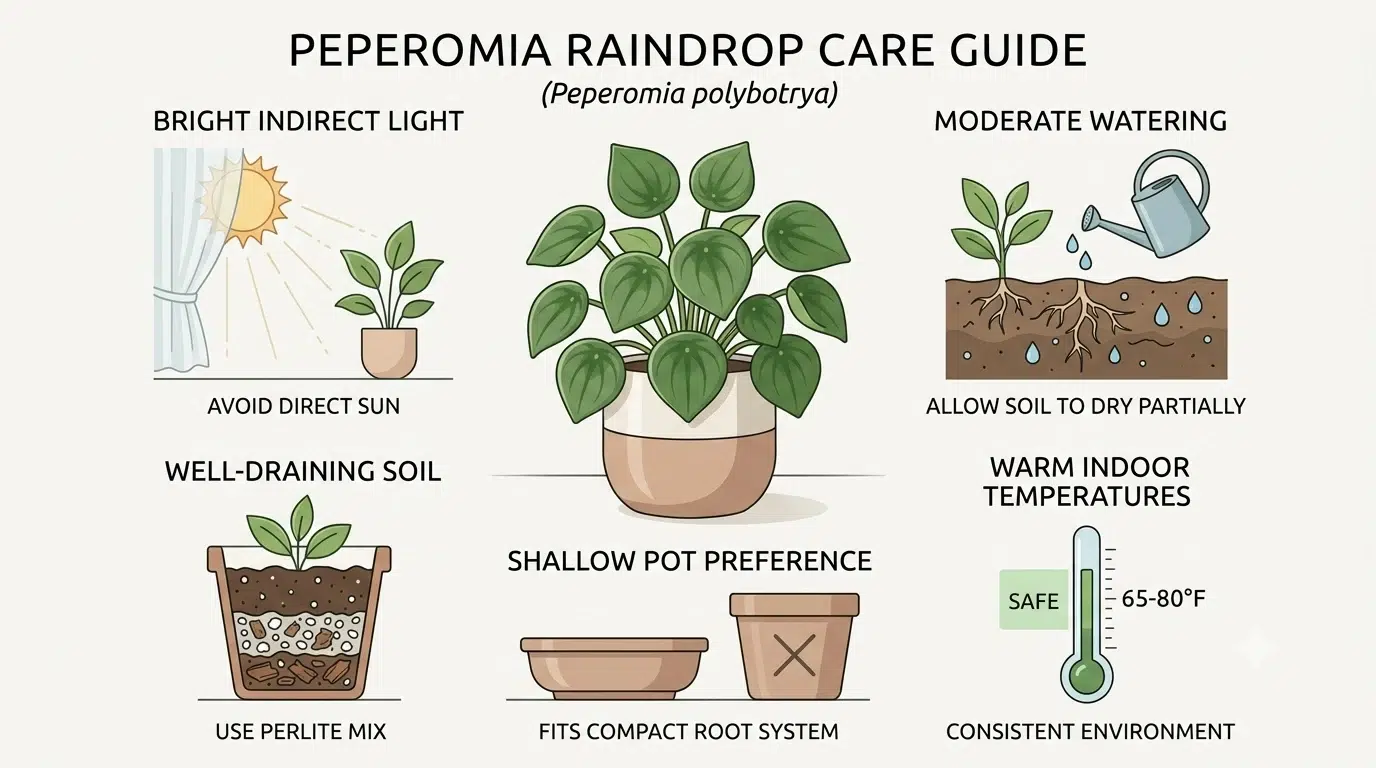
Peperomia raindrop is a low-maintenance indoor plant that prefers bright indirect light, moderate watering, and well-draining soil. Its thick leaves allow it to store moisture, making it more tolerant of occasional dry periods than many tropical plants.
Like many indoor plants, Peperomia raindrop performs best with bright indirect light requirements, which provide enough energy for growth without causing leaf damage from harsh direct sunlight.
Plant Size
Peperomia raindrop usually grows about 12–16 inches tall indoors, with a compact width depending on light conditions and pruning. Plants grown in brighter indirect light often develop stronger stems and fuller foliage.
Factors affecting size include:
- Amount of available light
- Pot size
- Nutrient availability
- Watering consistency
Growth Rate
Peperomia raindrop has a moderate growth rate. It grows actively during spring and summer when temperatures and light levels increase. Growth usually slows during winter because of reduced daylight and lower indoor activity.
Brighter indirect light, proper watering, and occasional feeding during the growing season encourage healthier growth.
Care Guide
Key Peperomia raindrop care requirements include:
- Water when the top portion of soil becomes dry.
- Provide bright indirect sunlight.
- Use loose, well-draining soil.
- Apply light fertilizer during spring and summer.
- Keep temperatures around normal indoor room conditions.
- Prune only to remove damaged leaves or maintain shape.
Overwatering is one of the most common problems because Peperomia roots prefer oxygen-rich soil.
Do Peperomia Like Deep Pots?
No, Peperomia generally prefers shallow, snug pots because it has a relatively small root system. Deep containers can hold excess moisture, increasing the risk of root rot.
A pot with drainage holes and a size slightly larger than the root system is usually the best choice.
Do Peperomia Like Bathrooms?
Peperomia can grow well in bright, humid bathrooms because it appreciates moderate humidity. However, bathrooms without enough natural light may not provide suitable conditions.
Pilea Peperomioides Care Guide
Pilea peperomioides is also beginner-friendly but has different needs from Peperomia raindrop. It prefers bright indirect light, regular watering when the soil dries partially, and enough space for new pups to develop. Beginners can avoid overwatering problems by learning how to check if a houseplant needs water before adding moisture to the soil.
Pilea benefits from rotating the pot occasionally because it naturally grows toward light. Balanced lighting helps maintain even growth.
Do Pileas Like Big Pots?
Pileas prefer slightly roomier pots compared with Peperomia raindrop. Extra space allows new offsets, or pups, to grow around the parent plant.
However, excessively large pots can still retain too much moisture and increase the chance of root problems.
Is Pilea Hard to Keep Alive?
No, Pilea is generally considered easy to maintain. The most common beginner mistakes are overwatering, poor lighting, and sudden environmental changes.
Providing bright indirect light and allowing soil to partially dry between watering usually keeps Pilea healthy.
Peperomia Raindrop Propagation
Peperomia raindrop can be propagated through stem cuttings and, in some cases, leaf cuttings. Stem propagation is often more reliable because new growth develops from nodes. Similar Peperomia species can also be propagated using reliable Peperomia propagation methods, including stem and leaf cutting techniques that encourage healthy root development.
Propagation methods include:
- Water propagation: Place cut stems in water until roots develop.
- Soil propagation: Plant cuttings directly into moist, well-draining soil.
Root development may take several weeks depending on warmth, light, and humidity.
Do Peperomia and Pilea Purify the Air?
Peperomia and Pilea are often described as air-purifying plants, but their practical impact on indoor air quality is limited. The NASA Clean Air Study showed that some plants can remove certain pollutants under controlled conditions, but typical homes would require many plants to create measurable air purification effects.
Both plants can still improve indoor spaces by adding greenery and supporting a healthier environment.
Peperomia Raindrop Meaning and Symbolism
Peperomia raindrop is often associated with abundance, positive energy, and harmony in some plant symbolism traditions. Because of its round leaves, some people connect it with prosperity and balance.
However, symbolic meanings vary between cultures and are not scientific characteristics of the plant.
Is Raindrop Peperomia a Money Plant?
No, raindrop peperomia is not considered a true money plant. It is sometimes confused with money plants because of its round leaves. Pilea peperomioides is more commonly called the Chinese money plant.
Common Peperomia Raindrop Problems (Troubleshooting)
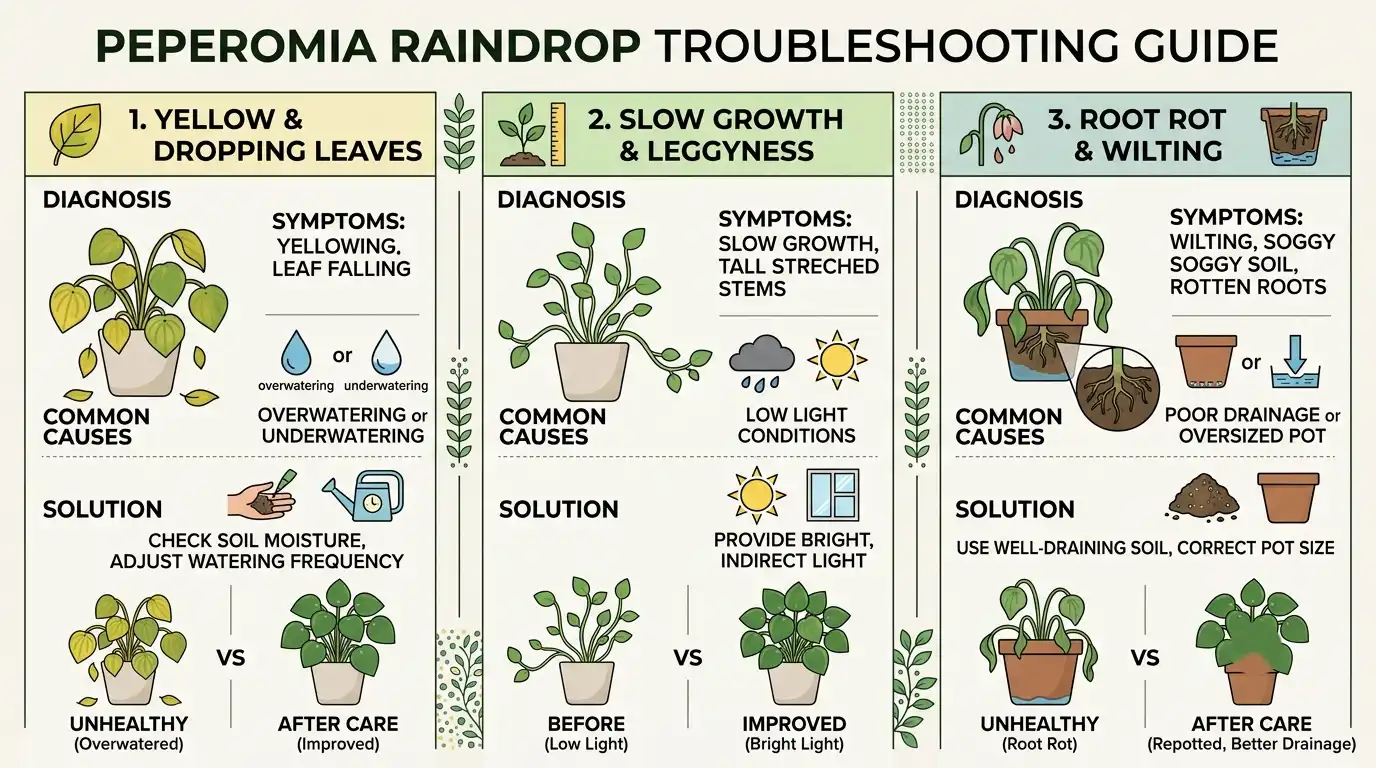
Common issues with Peperomia raindrop usually come from incorrect watering, lighting, or pot selection.
- Leaves Dropping or Yellowing: Often caused by overwatering or inconsistent watering. Adjust watering frequency and check drainage.
- Slow or Stunted Growth: Usually linked to low light or nutrient shortages. Move the plant to brighter indirect light and fertilize during growth periods.
- Root Rot: Caused by poor drainage or oversized pots. Use well-draining soil and appropriately sized containers.
Leaf drop is one of the most common concerns among Peperomia growers, and understanding Peperomia leaves falling off causes can help identify watering, lighting, or root-related problems early.
Peperomia Raindrop Lifespan and Flowering
With proper care, Peperomia raindrop can live for several years indoors. It may produce small, spike-like flowers that are not highly decorative compared with its foliage.
Indoor flowering is possible but not always common, especially when growing conditions are not ideal.
Beginner Mistakes When Choosing Between Peperomia Raindrop and Pilea
Common mistakes include:
- Buying one plant while thinking it is the other.
- Using the same watering routine for both plants.
- Choosing pots that are too large.
- Ignoring differences in growth structure and root needs.
Correct identification helps prevent unnecessary care problems.
Conclusion
Peperomia raindrop and Pilea peperomioides may look similar, but they are botanically different plants with unique growth habits and care requirements. Understanding the differences in leaf shape, family classification, pot preference, and watering needs makes the peperomia raindrop vs pilea comparison easier. Before choosing a care routine, identify the plant correctly by examining its leaves and root structure.
Frequently Asked Questions
Are Peperomia and Pilea the same?
No, Peperomia and Pilea are different plants from separate botanical families. Peperomia belongs to Piperaceae, while Pilea belongs to Urticaceae.
What is another name for Peperomia raindrop?
Another name for Peperomia raindrop is coin leaf peperomia or raindrop plant. Its scientific name is Peperomia polybotrya.
Is Pilea peperomioides the same as Peperomia raindrop?
No, Pilea peperomioides is not the same as Peperomia raindrop. They only appear similar because both have rounded leaves.
Are raindrop peperomias air purifiers?
Raindrop peperomias may contribute to a greener indoor environment, but their ability to significantly purify household air is limited under normal home conditions.
How big does a Peperomia raindrop plant get?
A Peperomia raindrop plant usually reaches around 12–16 inches tall indoors when grown in suitable conditions.
Do peperomia like deep pots?
No, peperomia generally prefers shallow pots because its root system is small and deep containers can retain excess moisture.