
Introduction
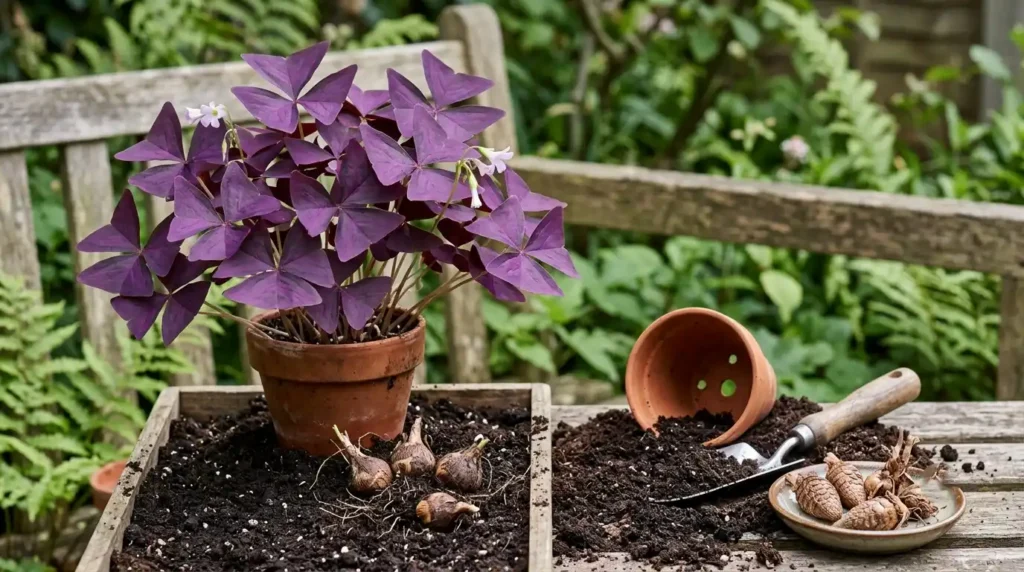
Oxalis triangularis, also known as false shamrock or purple shamrock, is a decorative plant commonly propagated through underground corms rather than seeds. Learning how to propagate oxalis triangularis is simple because the plant naturally produces small bulb-like structures called corms that can be separated and replanted. Oxalis triangularis propagation can also be done through cuttings rooted in water or soil, although corm division is usually the most reliable method. Purple shamrock propagation works best when the plant receives proper light, suitable moisture, and a healthy growing environment that encourages new growth. Like many popular houseplants, Oxalis triangularis benefits from understanding basic plant care principles, including proper light, watering, propagation, and growth management covered in this complete guide to plants and their care.
Quick Summary
- Oxalis triangularis is mainly propagated by dividing underground corms or rooting stem/leaf cuttings.
- Corm division is the fastest and most dependable method because new plants already contain stored energy.
- Water propagation can work for cuttings, but soil propagation often provides stronger long-term growth.
- Oxalis triangularis naturally multiplies by producing clusters of new corms underground.
- Proper watering, light, and dormancy care help the plant stay healthy and multiply successfully.
What Is Oxalis Triangularis and How Does It Reproduce?
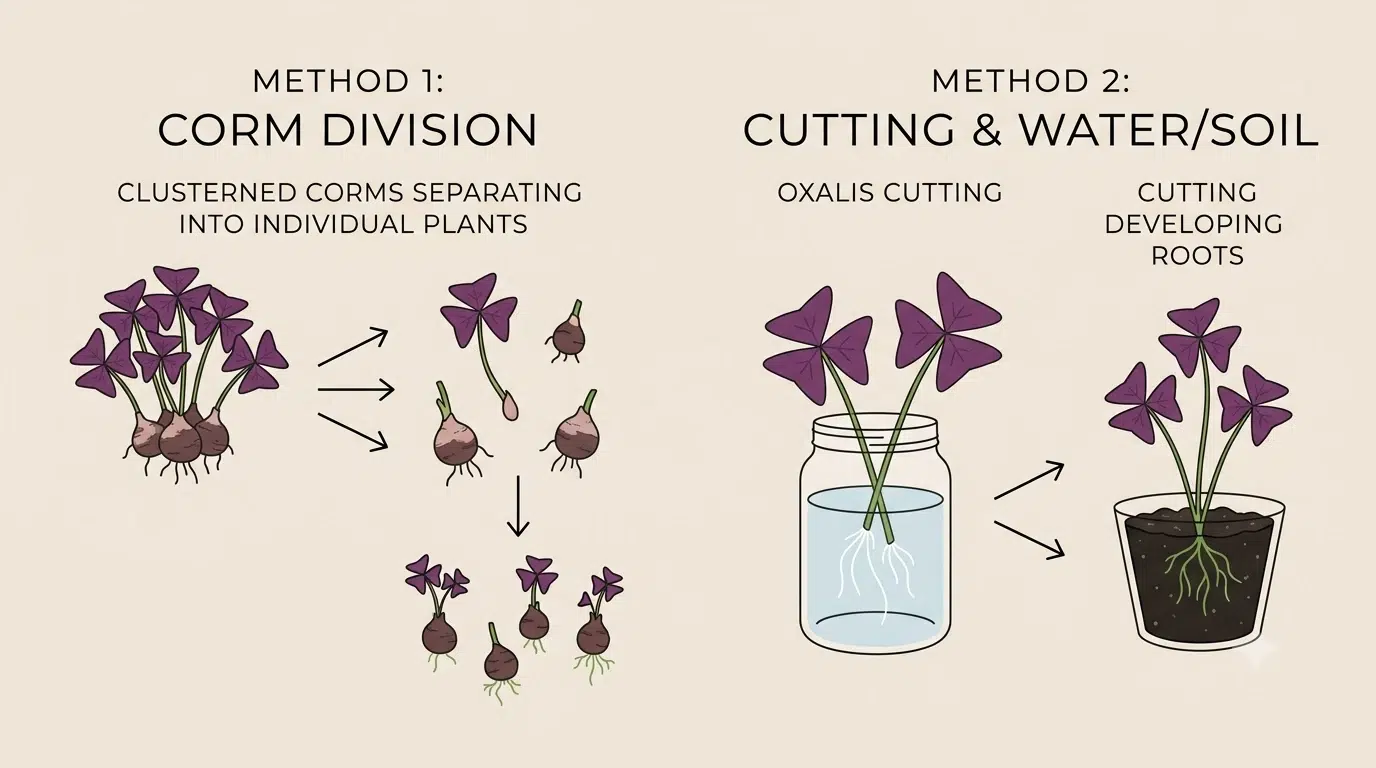
Oxalis triangularis is a perennial flowering plant from the Oxalidaceae family, commonly called false shamrock or purple shamrock because of its three-lobed purple leaves. Unlike many plants grown from seeds, home growers usually propagate it through oxalis triangularis corms, which are small underground storage structures similar to tiny bulbs.
The plant develops oxalis corms beneath the soil, and these structures produce new shoots, leaves, and roots. Oxalis triangularis roots grow from these underground corms and support the plant’s ability to survive periods of dormancy. Oxalis triangularis belongs to the Oxalidaceae family and is widely recognized as an ornamental plant grown for its distinctive purple foliage.
In cultivation, oxalis triangularis reproduction mainly happens through:
- Corm division, where mature clusters are separated into individual growing sections.
- Cuttings, where healthy plant sections are encouraged to develop roots.
Oxalis triangularis rarely self-seeds successfully indoors because seed production is uncommon and seedlings take longer to mature. For most gardeners, dividing corms is the natural and practical way to multiply the purple shamrock plant.
Do Oxalis Triangularis Bulbs Multiply?
Yes, oxalis triangularis bulbs, more accurately called corms, multiply naturally underground over time. As the plant grows, the original corm produces smaller daughter corms that form clusters.
When these clusters become crowded, dividing them allows each corm to grow into a separate plant. Regular division also prevents overcrowding and improves plant vigor.
How to Propagate Oxalis Triangularis from Corms
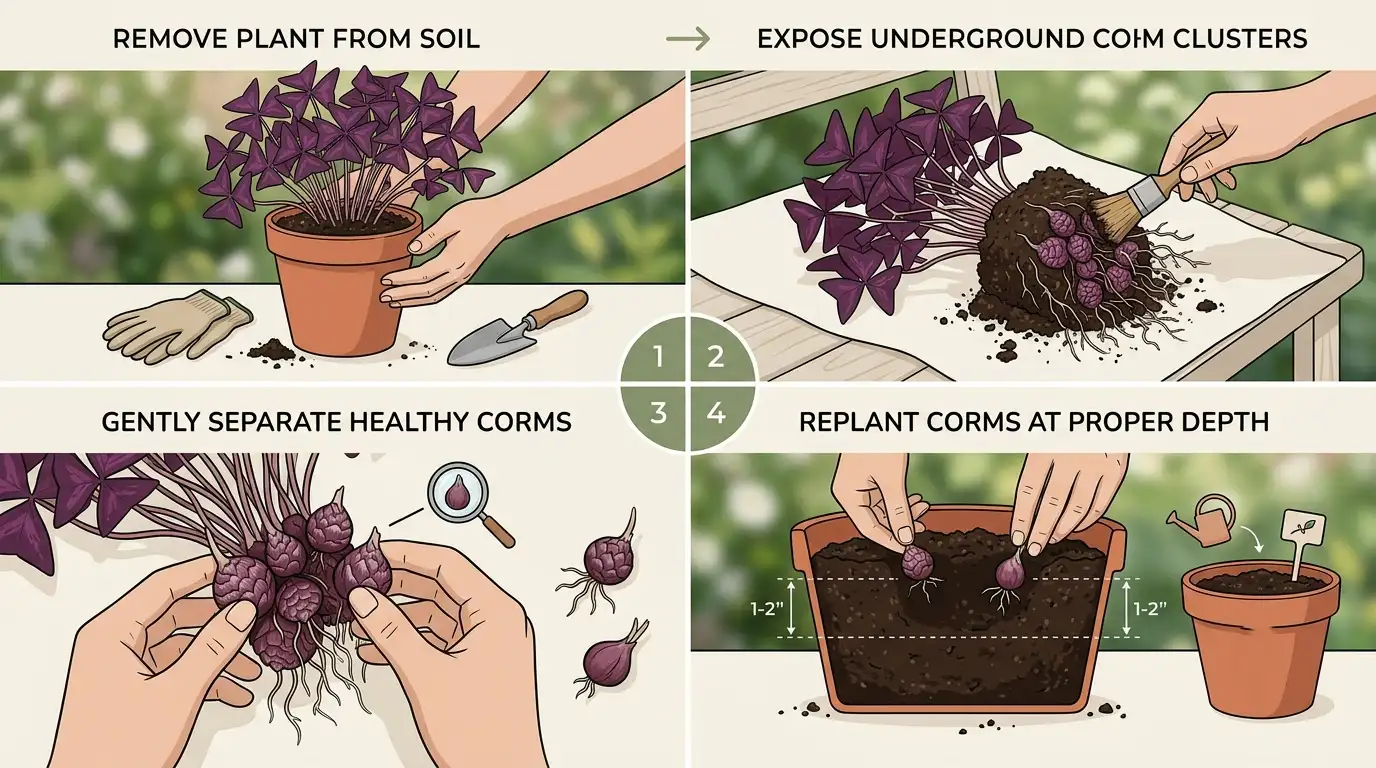
Corm division is the most reliable method for oxalis triangularis propagation because each corm already contains stored nutrients needed for new growth.
Follow these steps:
- Allow the plant to enter dormancy or reduce watering before removing corms.
- Carefully lift the plant from the soil and expose the underground oxalis triangularis corms.
- Gently separate clustered corms by hand.
- Check each corm for firmness and discard soft, damaged, or rotten sections.
- Replant healthy corms immediately or store them temporarily in a dry location.
- Water lightly after planting and place the container in bright indirect light.
Corm-based propagation is also common among other tropical houseplants, where underground structures produce new plants when separated correctly.
Large corms can sometimes be divided, but cutting them in half is not always recommended. Unlike true bulbs, oxalis corms do not always recover well from being physically split. Dividing natural clusters is safer because each separated corm already has the ability to produce new growth. Cutting a single corm can increase the risk of rot if the damaged area remains wet.
How to Plant Oxalis Bulbs in Pots
To plant oxalis bulbs or corms in pots, choose a container with drainage holes and use a loose, well-draining potting mix.
Planting guidelines:
- Place corms about 1–2 inches deep in the soil.
- Space multiple corms slightly apart to allow new clusters to develop.
- Use a pot large enough for growth but avoid excessively large containers.
- Plant oxalis bulbs indoors at any time when the plant is actively growing.
After planting, keep the soil lightly moist but avoid waterlogging. Excess moisture around buried corms can lead to rot.
Do Oxalis Like Small Pots or to Be Root Bound?
Oxalis plants prefer slightly snug pots rather than extremely large containers. A compact pot can encourage flowering because the plant focuses energy on growth rather than filling excess soil space.
However, oxalis should not remain severely root bound. Overcrowded corms compete for nutrients and space, causing weaker growth.
Signs that division or repotting may be needed include:
- Slow growth despite proper care.
- Few new leaves.
- Corms pushing above the soil surface.
- Reduced flowering.
How to Propagate Oxalis Triangularis from Cuttings
Oxalis triangularis can be propagated from cuttings, although it is generally less reliable than corm division. Healthy leaves or stems can sometimes develop roots when placed in suitable conditions. Similar propagation methods are used for other decorative indoor plants, such as the prayer plant, which can also be multiplied through carefully prepared cuttings.
To propagate oxalis from cutting:
- Select a healthy stem or leaf section from an actively growing plant.
- Make a clean cut using sterilized scissors.
- Place the cutting in water or lightly moist soil.
- Provide bright indirect light.
- Maintain consistent moisture until roots develop.
Many growers use oxalis cutting propagation as a flexible method when they do not want to disturb the parent plant.
Water Propagation vs. Soil Propagation — Which Is Better?
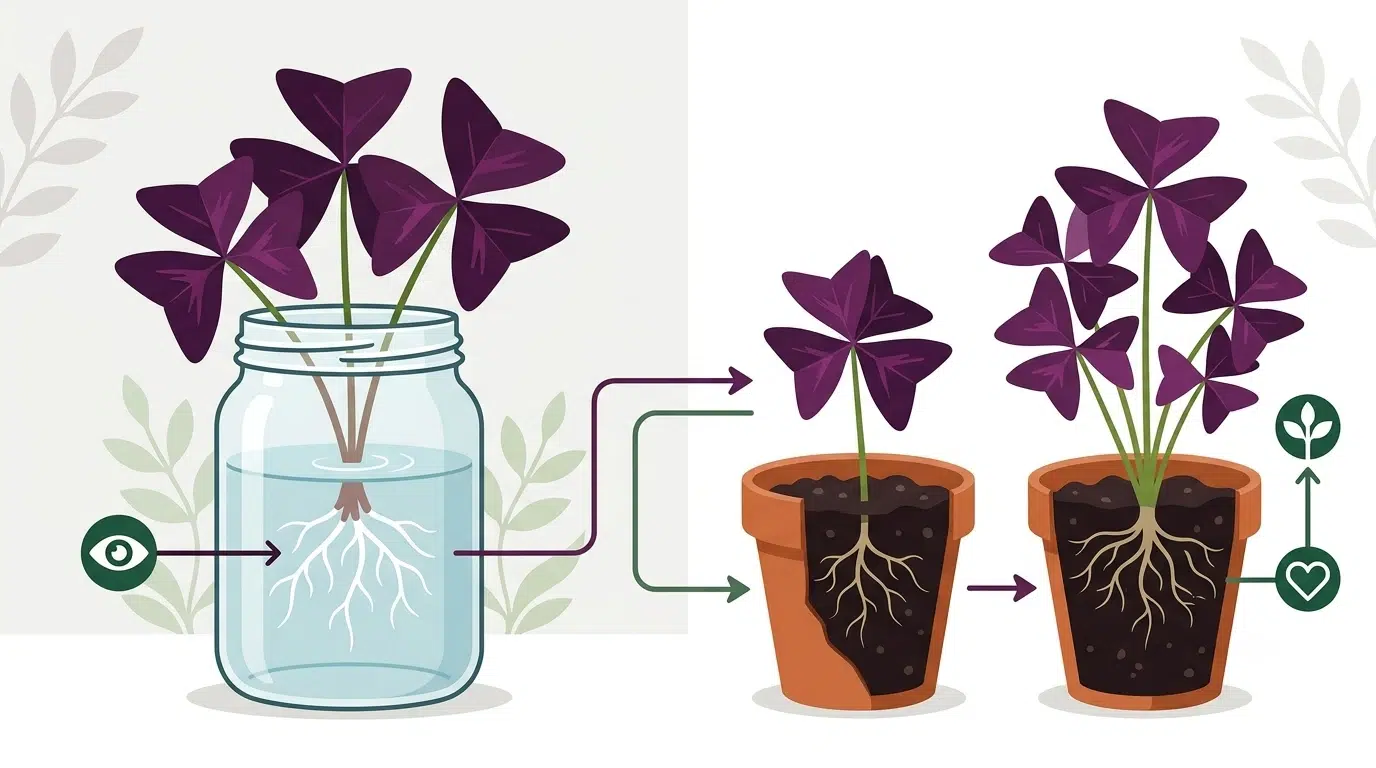
Both methods can work, but soil propagation usually provides better long-term results because roots develop directly in their final growing environment.
| Method | Pros/Cons/Root Time |
| Water Propagation | Roots are easy to observe, simple setup, but cuttings may experience transplant stress. Root development usually takes several weeks. |
| Soil Propagation | Encourages stronger root adaptation, reduces transplant shock, and often provides better long-term success. |
Water propagation is useful for monitoring root growth, while soil propagation is often preferred for establishing mature plants.
How to Propagate Oxalis Triangularis in Water
Oxalis propagation in water is possible with healthy cuttings.
Steps:
- Place the cutting in a clean jar filled with water.
- Keep leaves above the water line to prevent decay.
- Change water regularly to maintain freshness.
- Place the jar in bright indirect light.
- Transfer the cutting to soil once roots are established.
Avoid keeping cuttings in stagnant water because poor oxygen levels can encourage rot.
Indoor Propagation and Care Considerations
Learning how to propagate oxalis triangularis indoors requires providing conditions similar to its natural growing environment. Indoor oxalis care focuses on balanced light, moderate moisture, and proper temperature.
Ideal conditions include:
- Bright indirect sunlight for strong leaf color and growth.
- Temperatures around 60–75°F (16–24°C).
- Well-draining soil that prevents excess moisture.
- Moderate humidity without constantly wet leaves.
Indoor propagation is successful when the plant receives enough light without exposure to harsh direct sunlight that can damage delicate leaves. Learning when indoor plants actually need water helps prevent common problems such as root damage, especially for plants grown from underground structures like oxalis corms.
How to Make Oxalis Triangularis Bushy
To make oxalis triangularis bushy, encourage dense growth through proper light, pruning, and regular division.
Helpful practices include:
- Remove old or damaged leaves regularly.
- Pinch back weak growth to encourage fuller development.
- Provide bright indirect light.
- Divide crowded corm clusters every few years.
Low light often causes stretched, sparse growth because stems grow longer while searching for light.
Common Problems When Propagating and Growing Oxalis Triangularis
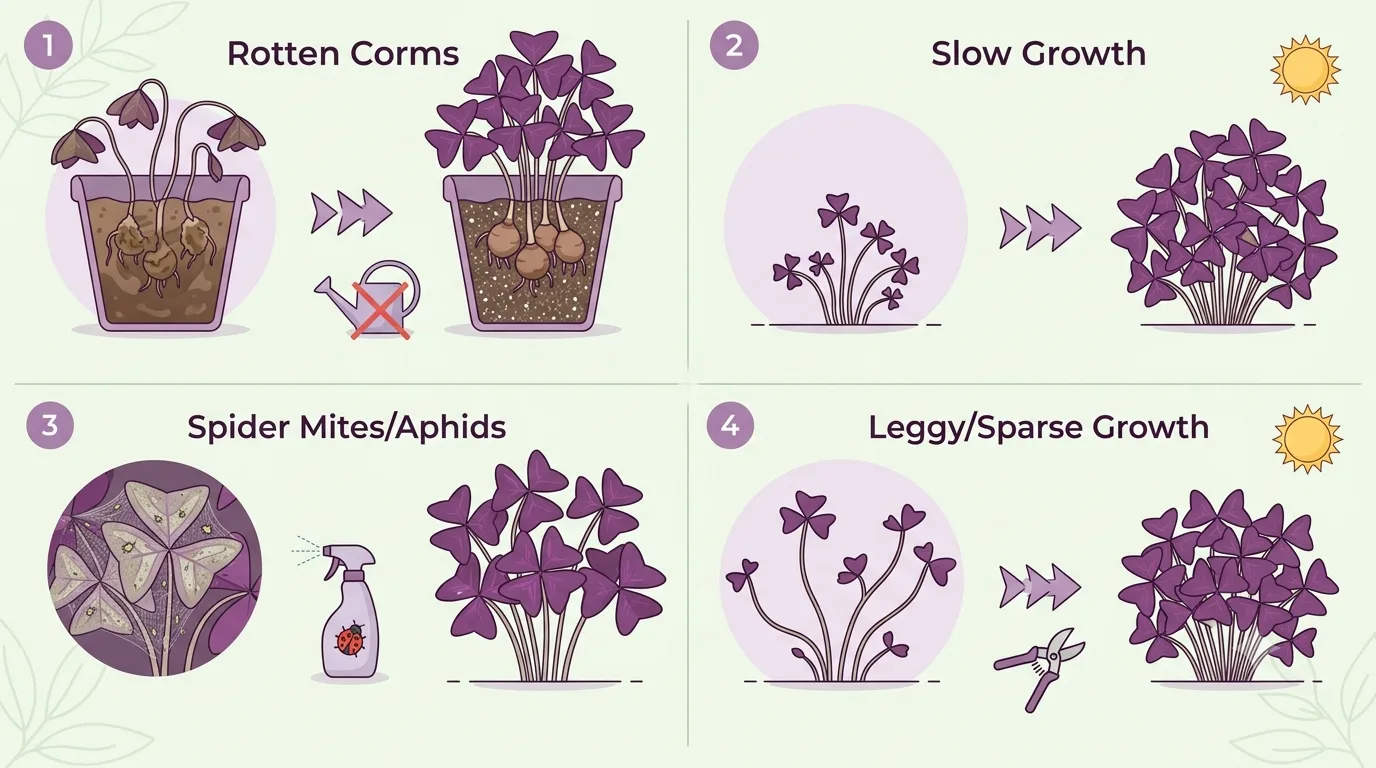
Oxalis triangularis is generally easy to grow, but certain problems can affect propagation and plant health.
Common issues include:
- Corm rot: Usually caused by overwatering or poor drainage. Remove damaged corms, allow soil to dry slightly, and improve drainage.
- Slow or stalled growth: Often caused by insufficient light, dormancy periods, or nutrient shortages. Provide proper light and allow natural resting cycles.
- Pest problems: Aphids and spider mites may appear when plants are stressed. Remove pests manually and treat affected areas.
- Leggy growth: Usually caused by low light. Move the plant closer to bright indirect sunlight.
What Happens When You Touch an Oxalis Plant?
When touched, an oxalis plant may fold or close its leaves because of a natural movement response called seismonasty. This behavior is not a disease or sign of damage.
Oxalis leaves can also close due to changes in:
- Light conditions.
- Darkness at night.
- Physical stimulation.
This movement helps the plant respond to environmental changes and is a normal characteristic of purple shamrock plants.
How Long Do Oxalis Triangularis Plants Live?
Oxalis triangularis can live for many years when properly maintained. Instead of dying after one growing season, the plant often enters dormancy and regrows from healthy underground corms.
Its lifespan depends on:
- Proper watering habits.
- Adequate light.
- Regular division of crowded corms.
- Protection from rot.
Dividing oxalis corms every few years helps maintain plant strength and prevents overcrowding.
Beginner Mistakes to Avoid When Propagating Oxalis Triangularis
Common mistakes can reduce propagation success:
- Overwatering cuttings or newly planted corms.
- Planting corms too deeply, preventing easy sprouting.
- Ignoring natural dormancy periods.
- Using pots that are unnecessarily large.
- Propagating from weak or unhealthy parent plants.
Allowing the plant’s natural growth cycle to continue is one of the most important steps for long-term success.
Conclusion
Propagating oxalis triangularis is a straightforward process when using the right method. Corm division is the fastest and most reliable approach because new plants develop from naturally produced underground oxalis corms. Cuttings offer additional flexibility and can be rooted in either water or soil. Understanding proper watering, light requirements, dormancy cycles, and common problems helps maintain a healthy purple shamrock plant. For most growers, dividing mature corm clusters remains the easiest way to multiply oxalis triangularis naturally.
FAQs
Can you propagate oxalis triangularis in water?
Yes, oxalis triangularis can be propagated in water using healthy cuttings. The cutting should receive bright indirect light, clean water, and regular water changes until roots develop.
Does oxalis triangularis multiply on its own?
Yes, oxalis triangularis multiplies naturally by producing additional underground corms. These corms form clusters that can later be separated into new plants.
Can you break oxalis corms in half to propagate them?
It is possible to split larger corms, but it is generally safer to separate naturally formed corm clusters. Cutting individual corms increases the risk of rot and propagation failure.
Is it better to propagate oxalis cuttings in water or soil?
Soil propagation is usually better for long-term growth because roots develop directly in their growing environment. Water propagation is useful because it allows growers to observe root development.
Why do oxalis triangularis leaves fold or close when touched?
Oxalis triangularis leaves fold because of a natural movement response called seismonasty. It occurs due to touch, darkness, or changing light conditions and is not a health problem.
How often should you divide oxalis triangularis corms?
Oxalis triangularis corms are usually divided every few years or whenever the plant becomes overcrowded. Regular division keeps growth healthy and prevents reduced vigor.


