
Introduction
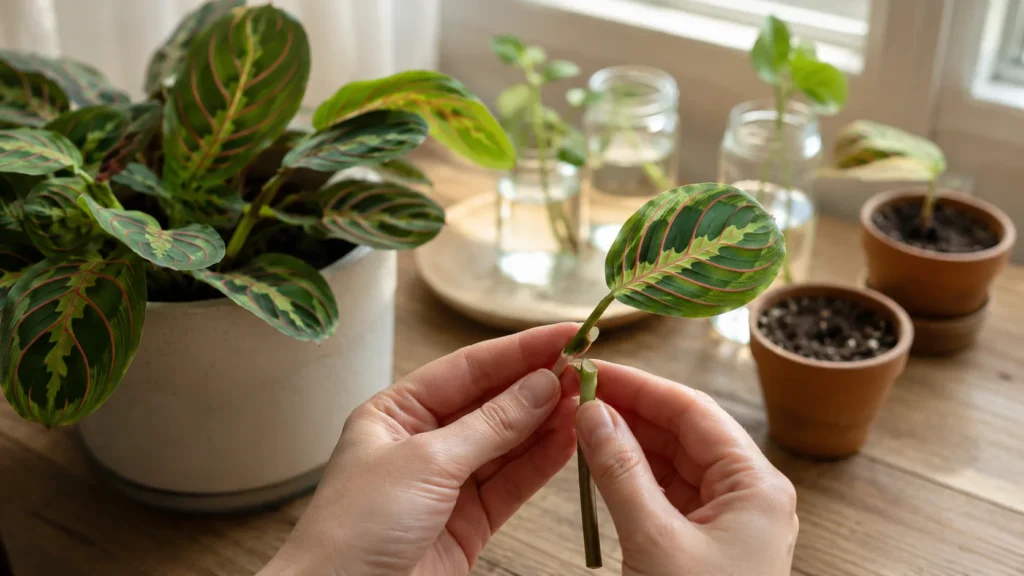
How to propagate a prayer plant refers to the process of growing new plants from a healthy parent plant, usually by taking stem cuttings with at least one node. A prayer plant (Maranta leuconeura) is commonly propagated because it roots easily in water or soil when conditions are right. This method allows gardeners to multiply plants while preserving their unique leaf patterns and growth traits.
Quick Summary
- Prayer plants propagate easily from stem cuttings taken just below a node
- Cuttings root in water or soil, typically within 2–6 weeks
- Best propagation timing is spring through early summer
- A healthy cutting needs at least one node and one leaf to succeed
What Is Prayer Plant Propagation?
Prayer plant propagation is the process of creating new plants from an existing Maranta leuconeura using vegetative methods, most commonly stem cuttings. In botanical terms, propagation relies on the plant’s ability to regenerate roots and shoots from specialized structures called nodes. The prayer plant (Maranta leuconeura), a tropical species in the family Marantaceae, is widely known for its nyctinastic leaf movement, as described in botanical references such as Wikipedia.
For prayer plants, propagation is primarily done through stem cuttings because these tropical plants naturally root from nodes when exposed to moisture. Another method, though less common, is rhizome division, where the underground root system is separated into sections.
Common Propagation Methods
- Stem cuttings in water
- Stem cuttings in soil
- Division at the rhizome
Every houseplant species has slightly different propagation needs, from timing to root formation speed. For a broader reference beyond just prayer plants, browse our full houseplant propagation database covering water, soil, and division methods across dozens of common species.
Where Is the Node on a Prayer Plant?
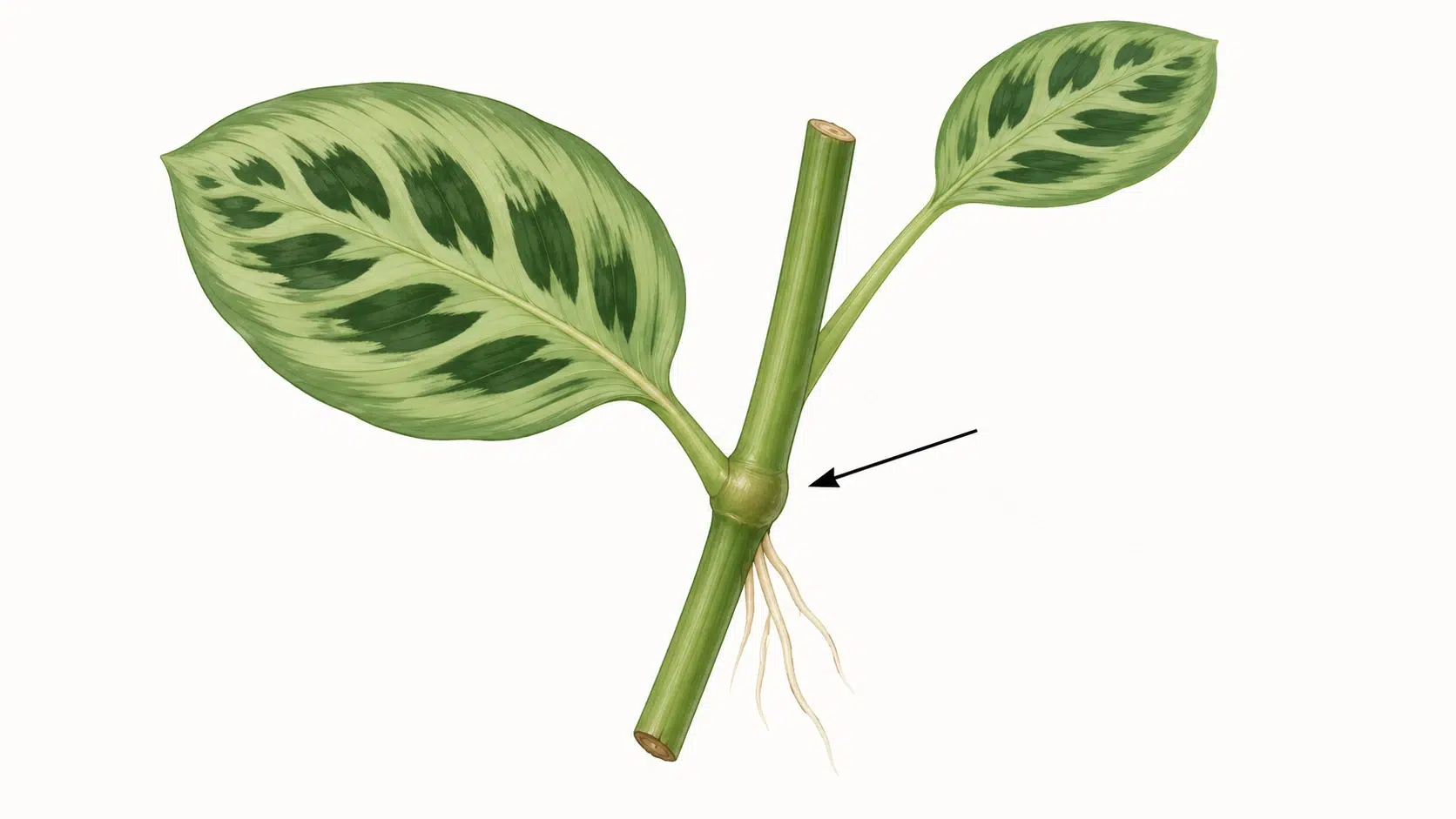
The node on a prayer plant is the small, slightly thickened point on the stem where leaves grow and where new roots will develop during propagation.
Nodes appear at leaf junctions along the stem
Cuts should always be made just below a node
No node means no root growth, making successful propagation impossible
A common mistake is attempting propagation from stem sections without nodes, which will not produce roots or new growth. Identifying nodes correctly is the single biggest factor in propagation success, and getting it wrong is a common beginner mistake. If you want a quick visual reference to double-check your cutting before you snip, try this free prayer plant node and propagation lookup tool to confirm you’re cutting in the right spot.
How to Propagate a Prayer Plant in Water
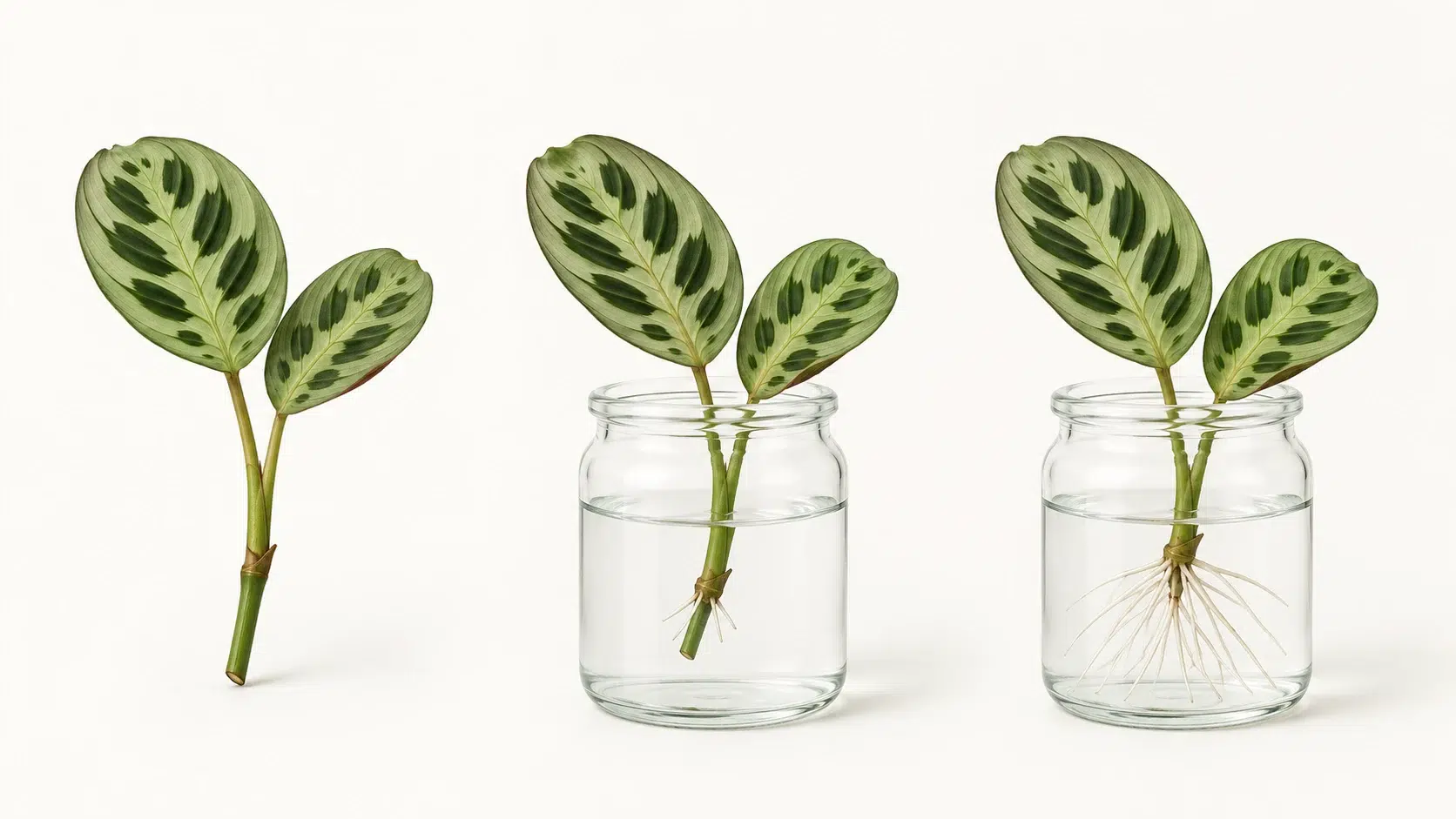
Water propagation is one of the easiest ways to root a prayer plant cutting. It allows you to visually monitor root development and ensure the cutting remains hydrated.
Steps:
- Select a healthy stem with at least one node
- Cut just below the node using clean scissors
- Place the cutting in water, ensuring the node is submerged
- Keep leaves above water to prevent rot
- Change water every 2–3 days
- Place in bright, indirect light
Roots typically appear within 2–4 weeks under proper conditions.
Can Prayer Plants Live in Water Long-Term?
Prayer plants can survive in water for extended periods, but they do not thrive long-term. Soil provides essential nutrients and structural support that water alone cannot supply, making eventual transfer necessary for healthy growth.
How to Propagate a Prayer Plant in Soil
Soil propagation is a more natural long-term method, although root development is not visible like in water propagation. Indirect light requirements during propagation are similar to trailing houseplants like those in Neon Pothos Light Requirements: Complete Care Guide, which also root best in stable humidity and bright indirect light.
Steps:
- Take a cutting with at least one node
- Optional: dip cut end in rooting hormone
- Plant in moist, well-draining potting mix
- Cover with a plastic bag to maintain humidity
- Keep soil evenly moist but not soggy
- Place in bright, indirect light
This method reduces transplant shock since roots develop directly in soil.
Water vs. Soil Propagation — Which Is Better?
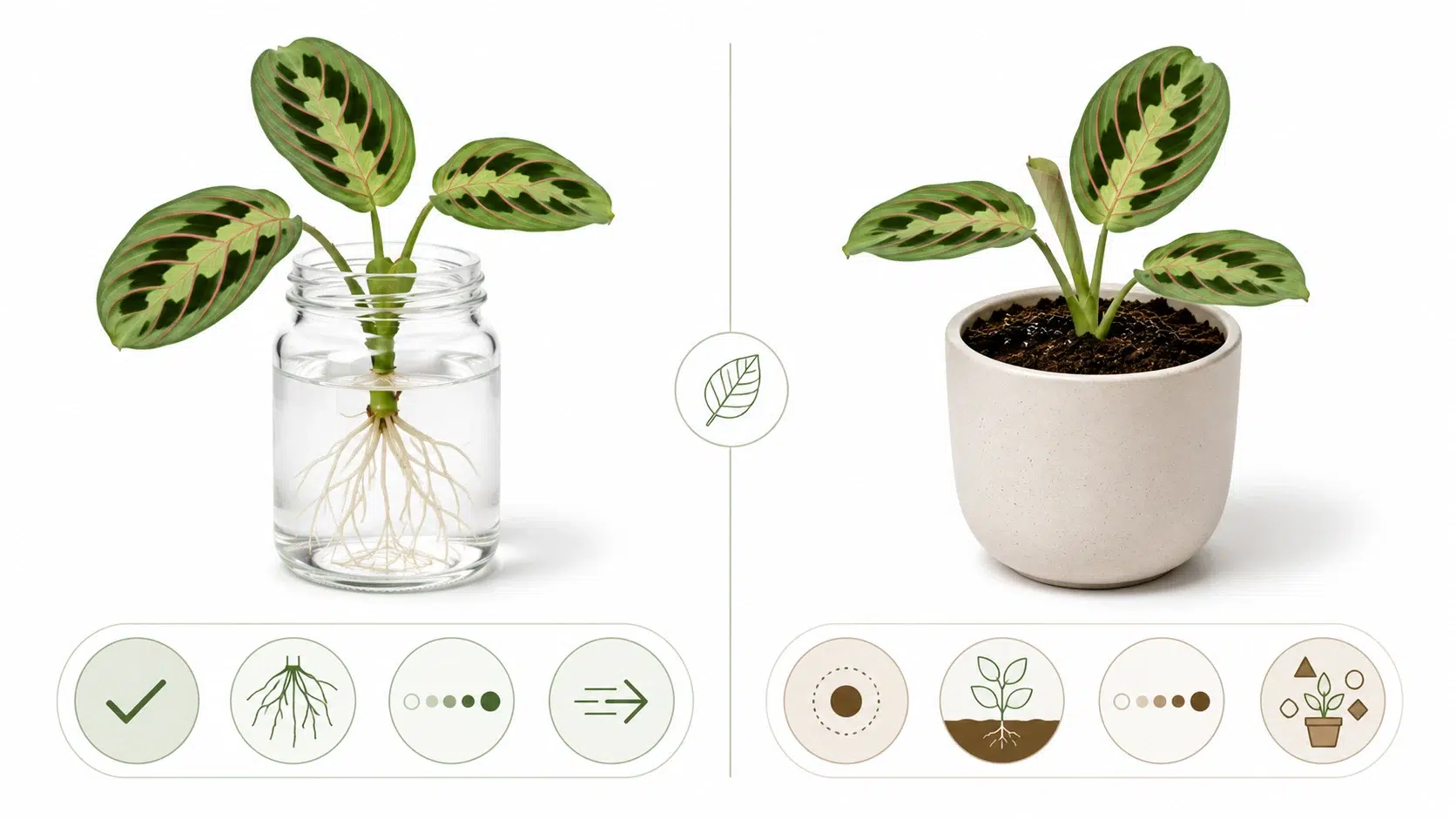
| Factor | Water | Soil |
| Root visibility | High | Low |
| Speed to root | Moderate | Slower initially |
| Transplant shock risk | Higher | Lower |
| Long-term growth | Requires transition | Direct establishment |
Water propagation is ideal for beginners, while soil propagation supports stronger long-term root systems.
Can You Propagate a Prayer Plant From a Single Leaf?
A prayer plant cannot be propagated from a single leaf alone. Successful propagation requires at least one node because roots and new shoots develop only from node tissue.
A leaf without a node may remain green for a short time in water or soil but will not produce a new plant. This is a common misconception among beginners.
Best Time to Propagate Prayer Plants
The best time to propagate prayer plants is during their active growth phase.
- Ideal: spring through early summer
- Fall: slower rooting due to reduced light
- Winter: possible but significantly delayed growth
Warmer temperatures and longer daylight hours improve root development and survival rates. Propagation timing is similar for other moisture-loving indoor plants, such as those discussed in How to Look After a Fern: Complete Care Guide, which also thrive in warm, humid growing seasons.
How Long Does It Take to Propagate a Prayer Plant?
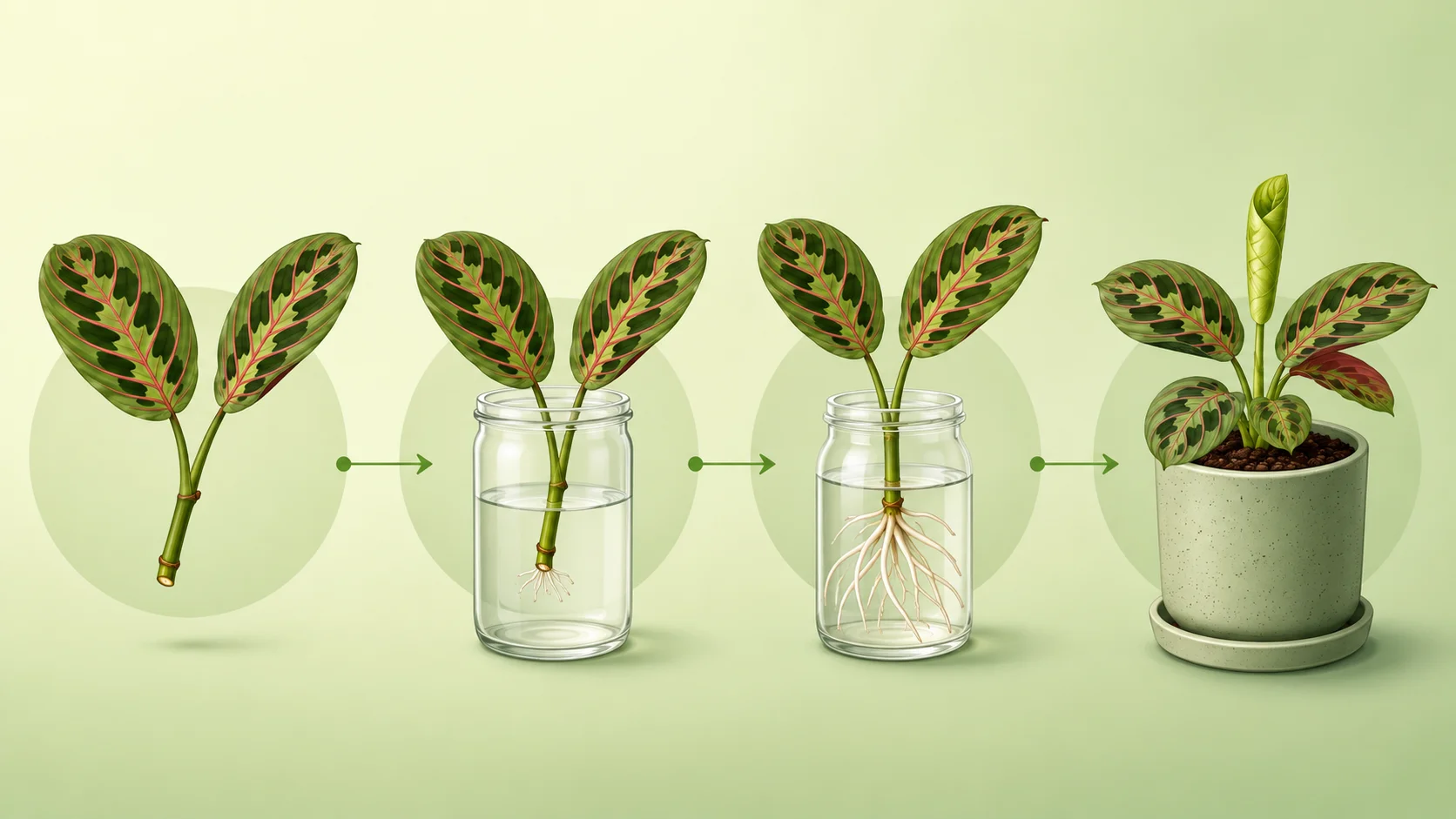
Propagation time depends on environmental conditions and method used.
- Root development: 2–6 weeks
- New leaf growth: 4–8 weeks after rooting
- Faster results occur in warm, humid, bright environments
Low light and cool temperatures can significantly slow the process. Rooting timelines vary by species, light exposure, and season, so it helps to have benchmarks beyond a single plant. Check our propagation timeline tracker spreadsheet to compare expected rooting and leaf-growth windows across common houseplants.
Common Mistakes to Avoid When Propagating Prayer Plant Cuttings
Low humidity is one of the most common propagation issues, which is also explained in How to Increase Humidity for Indoor Plants Without a Humidifier, where maintaining moisture balance is essential for tropical plant success.
Successful propagation depends on avoiding several common errors:
- Cutting without a node
- Using unhealthy or weak stems
- Allowing water to become stagnant
- Placing cuttings in low light
- Transplanting too early before root establishment
Each mistake can reduce rooting success or cause cutting failure.
Troubleshooting Prayer Plant Propagation Problems
Cutting Isn’t Rooting
This usually happens due to missing nodes, poor lighting, or stagnant water. Ensure the cutting has a visible node and fresh water is used regularly.
Leaves Turning Yellow During Propagation
Yellowing often results from overwatering or stress. Reduce water stagnation and improve light exposure.
Slow or Stalled Growth
Slow rooting is typically seasonal or caused by low humidity. Moving the plant to a warmer, brighter location can help.
What Makes a Prayer Plant Happy? (Post-Propagation Care)
Prayer plants share similar care patterns with other Maranta varieties, such as those explained in Maranta Red Plant Care: Complete Indoor Growing Guide, especially regarding humidity and indirect light needs.
Light and Watering Needs
Prayer plants thrive in bright, indirect light. Soil should remain consistently moist but never waterlogged to prevent root rot.
Soil and Fertilization
Use a well-draining potting mix rich in organic matter. Light fertilization during the growing season supports healthy leaf development.
Ideal Pot Size for New Prayer Plants
Newly propagated plants prefer small pots. Oversized containers retain excess moisture, increasing the risk of root rot.
Their care requirements are closely related to Calathea species like those covered in Calathea Orbifolia Care Guide: Light, Water & Growth Tips, which also prefer moist, well-draining soil conditions.
Repotting a Newly Propagated Prayer Plant
Repotting should occur once roots reach about 1–2 inches in length.
- Choose a slightly larger pot with drainage holes
- Gently transfer to avoid root damage
- Water lightly after repotting
- Keep in indirect light to reduce transplant shock
Proper timing ensures strong long-term growth.
Prayer Plant Lifespan and Long-Term Growth
Prayer plants (Maranta leuconeura) are perennial tropical plants that can live for many years under proper care. Regular propagation helps extend their lifecycle by producing new, healthy plants even as older stems age or decline.
Propagation is a natural way to maintain continuous growth and preserve plant health across generations.
Conclusion
How to propagate a prayer plant is a straightforward process when done with healthy stem cuttings containing nodes. Whether using water or soil, success depends on proper cutting selection, correct timing, and consistent environmental conditions. With patience and care, prayer plant propagation produces new, vibrant plants that continue the growth cycle of Maranta leuconeura.
FAQs
Can you propagate a prayer plant in water?
Yes, prayer plants root easily in water when a healthy cutting with a node is placed in clean, regularly changed water.
What is the best time to propagate prayer plants?
Spring and early summer are ideal because the plant is in active growth and roots form faster.
Where is the node on a prayer plant?
The node is located at leaf junctions on the stem where leaves emerge and roots develop during propagation.
Can you propagate a prayer plant with just a leaf?
No, a leaf without a node cannot produce roots or a new plant.
How long does it take to propagate a prayer plant?
It usually takes 2–6 weeks for roots to form, depending on conditions.
Do prayer plants prefer small or large pots?
They prefer small pots initially, as larger pots can retain too much moisture and cause root issues.



6 Responses