
Introduction
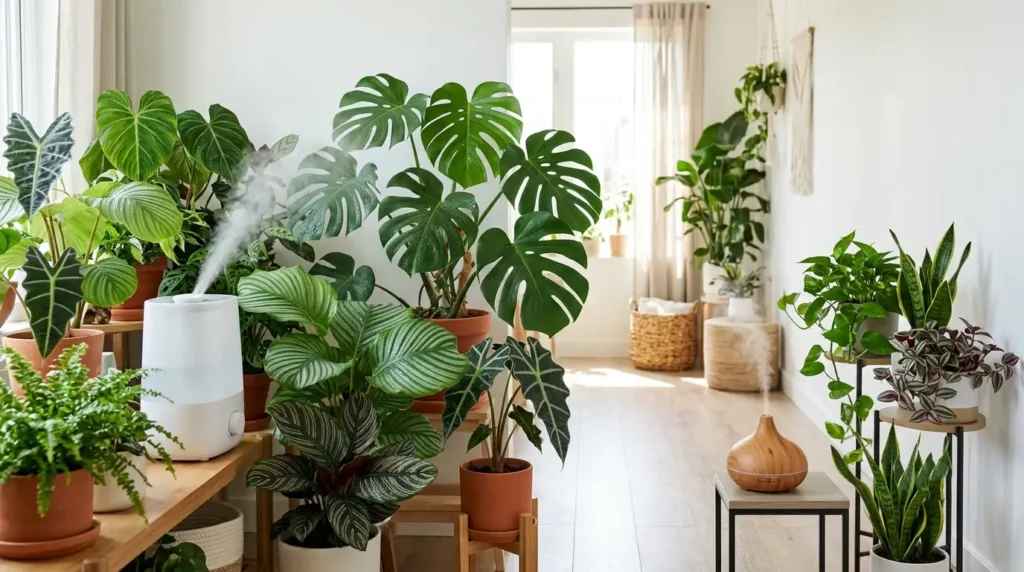
Can a diffuser be used as a humidifier for plants? A diffuser and a humidifier may appear similar because both release mist into the air, but they are designed for different purposes. A diffuser is mainly used to disperse essential oils for fragrance, while a humidifier is built to increase indoor humidity levels. Although a diffuser may slightly increase moisture in a small area, it usually cannot provide the consistent humidity that many houseplants need. This article explains the differences between diffusers and humidifiers, whether diffusers help plants, and the safer methods for improving humidity around indoor plants.
Quick Summary
- A diffuser can slightly increase moisture in the air but cannot replace a dedicated plant humidifier.
- Essential oils from diffusers may harm plants when exposed to concentrated or prolonged mist.
- Cool-mist humidifiers are generally the best option for maintaining stable humidity around houseplants.
- Pebble trays, plant grouping, and other simple methods can temporarily improve humidity.
- Tropical plants usually benefit more from added humidity than drought-tolerant species.
What’s the Difference Between a Diffuser and a Humidifier?
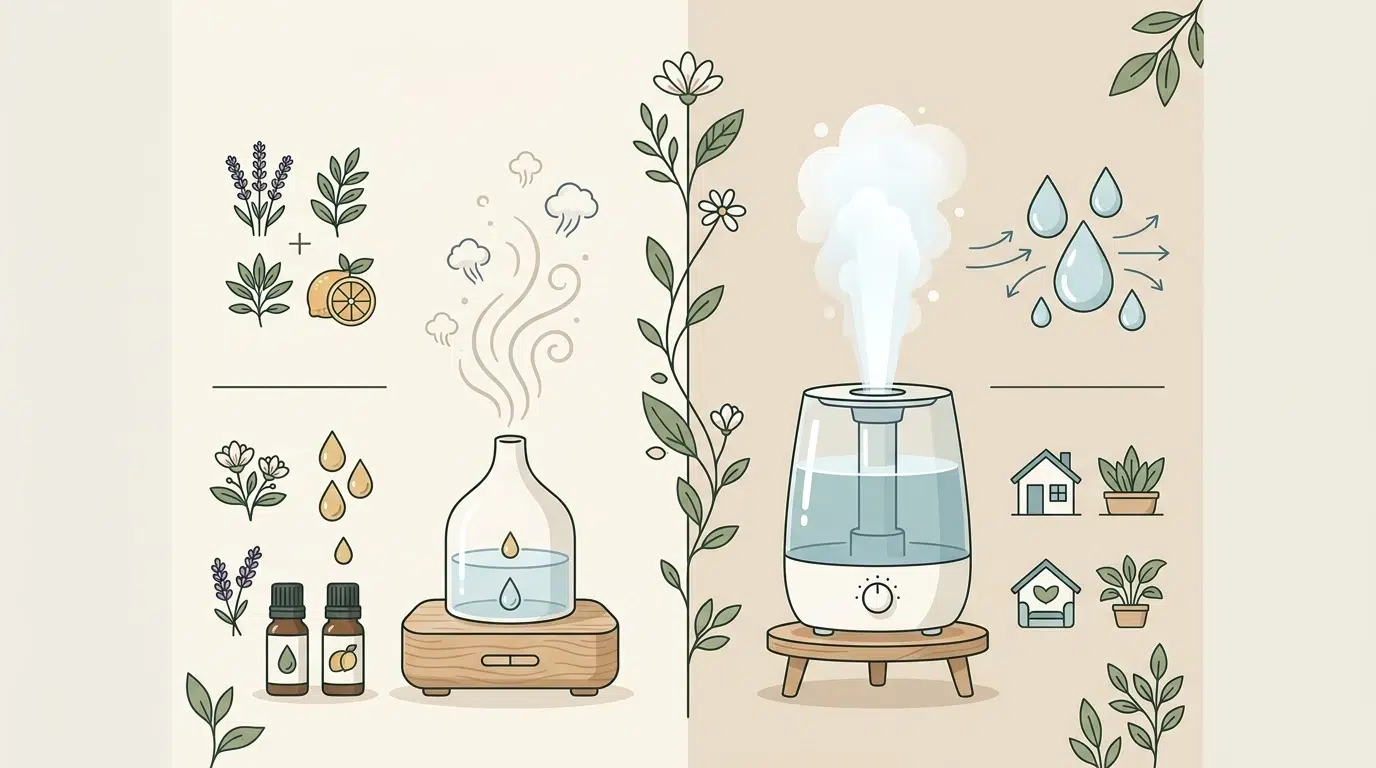
A diffuser and a humidifier are not the same device. The main difference between a humidifier and a diffuser is their purpose: diffusers are designed to spread essential oils, while humidifiers are designed to increase the moisture level of indoor air. Although both may use ultrasonic technology to create mist, their output, water capacity, and intended use are different.
Understanding diffuser vs humidifier differences is important because plants respond to overall room humidity, not just a small amount of moisture released near them.
How a Diffuser Works
A diffuser is an appliance that disperses essential oils into the air by breaking water and oil mixtures into tiny particles. Most household diffusers use ultrasonic vibration or nebulizing technology.
Common diffuser characteristics include:
- Small water reservoirs, usually designed for short operating periods
- Low mist output intended for fragrance distribution
- Essential oil delivery rather than humidity control
- Limited coverage area
Because diffusers release only a small amount of water vapor, they are not designed to create significant changes in room humidity.
How a Humidifier Works
A humidifier is specifically designed to raise ambient humidity by releasing larger amounts of moisture into the air. It typically has a bigger water tank and can operate continuously for several hours.
Common humidifier types include:
- Cool-mist humidifiers: Release room-temperature mist and are commonly used around plants.
- Warm-mist humidifiers: Heat water before releasing vapor and are generally less common for plant rooms.
Humidifiers provide higher moisture output, making them more suitable for tropical houseplants that require consistent humidity.
Comparison: Diffuser vs Humidifier
| Feature | Diffuser | Humidifier |
| Purpose | Releases essential oils for fragrance | Increases room humidity |
| Water Capacity | Small reservoir | Larger water tank |
| Run Time | Usually short periods | Several hours or continuous operation |
| Mist Output | Low | Higher moisture output |
| Intended Use | Aromatherapy and scent | Humidity control for people and plants |
Does a Diffuser Actually Increase Humidity for Plants?
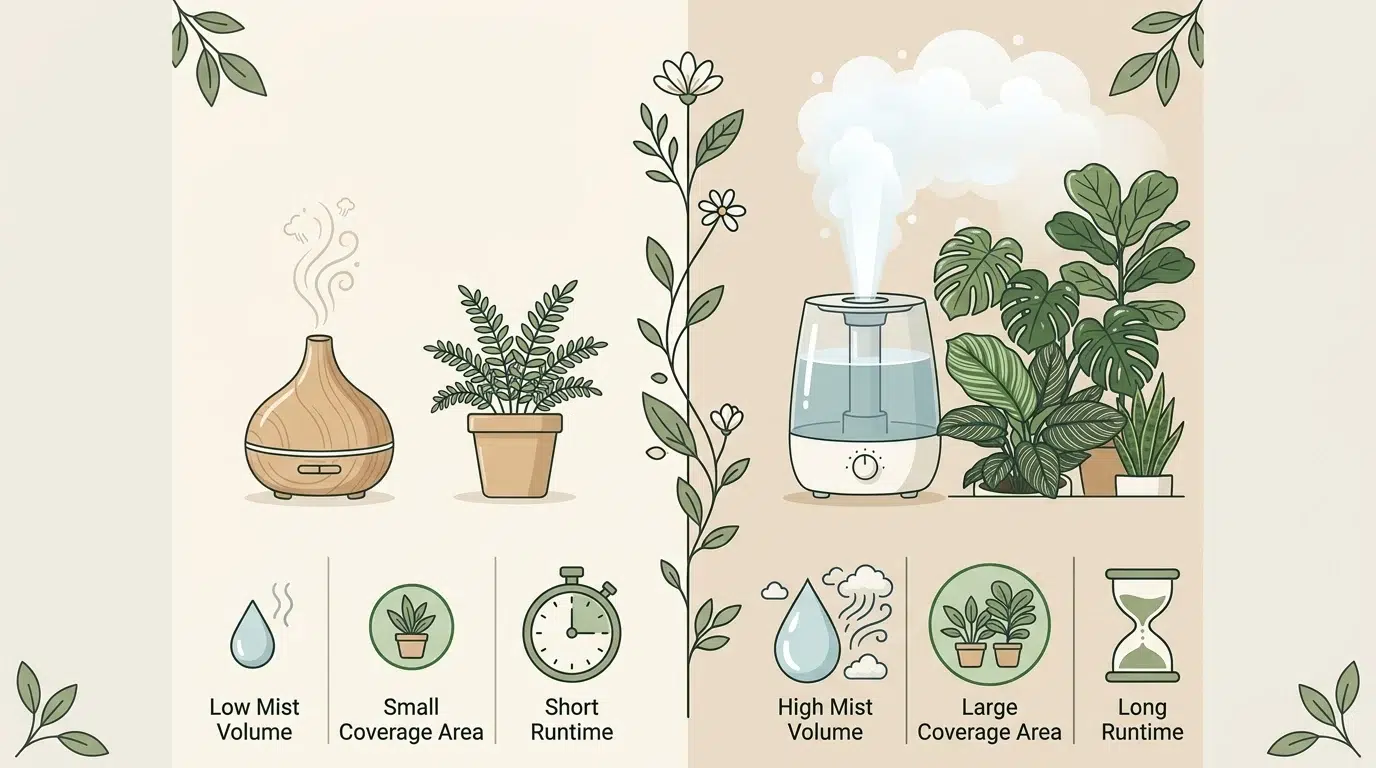
A diffuser can increase humidity slightly, but the effect is usually too small and short-lived to benefit most plants. The amount of moisture released is limited compared with what a humidifier produces, especially in larger rooms or dry environments.
Why the Effect Is Minimal
A diffuser may create a temporary humidity increase directly around the device, but several limitations reduce its usefulness for plants:
- Low mist volume: Diffusers release much less moisture than humidifiers.
- Small coverage area: The humidity increase usually affects only the immediate space around the diffuser.
- Short operating time: Many diffusers run for only a few hours before needing more water.
- No humidity control: They are not designed to maintain stable humidity levels.
A diffuser might slightly benefit a plant placed very close by, but it is not a reliable humidity solution for plants with high moisture requirements.
Are Essential Oils Safe for Plants?
Essential oils are not considered a reliable or consistently safe addition to a plant environment. While occasional exposure to small amounts may not immediately harm every plant, concentrated oils released repeatedly near foliage can create problems.
How Essential Oils Can Affect Plant Health
Essential oils may affect plants in several ways:
- Oil particles can settle on leaves and create residue.
- Residue may interfere with leaf surfaces and natural gas exchange.
- Some oils contain compounds that may be irritating or toxic to plants.
- Continuous exposure close to foliage increases potential risks.
Plants do not need essential oils to grow, and there is limited evidence that plants benefit from them.
Oils Generally Considered Lower-Risk (If Used Sparingly)
Some essential oils, such as lavender oil, are often considered milder, but no essential oil is guaranteed to be safe when used continuously around plants.
If using a diffuser in a room with plants:
- Keep the diffuser away from sensitive foliage.
- Avoid directing mist toward leaves.
- Use essential oils only occasionally.
- Monitor plants for leaf discoloration or residue.
When a Humidifier Is the Better Choice for Plants
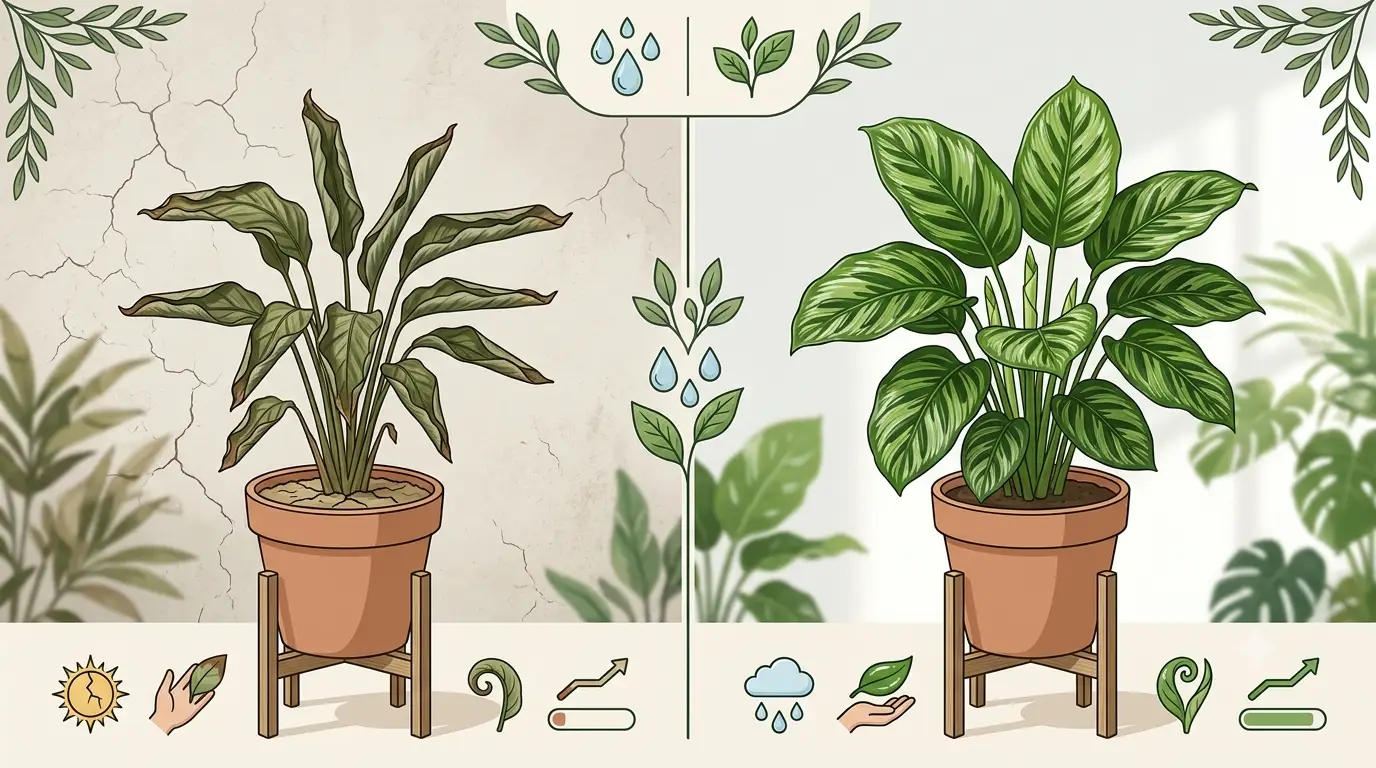
Humidifiers are a better choice when plants require increased humidity because they provide controlled and consistent moisture. Many tropical houseplants naturally grow in environments with higher humidity and may struggle in dry indoor air.
Signs Your Plants Need More Humidity
Plants experiencing low humidity may show:
- Brown or crispy leaf tips
- Curling leaves
- Slow or reduced growth
- Dry-looking foliage
- Increased stress despite proper watering
Humidity problems are especially common with tropical plants such as ferns, calatheas, orchids, and many aroids. Some common houseplants also have specific moisture preferences, and understanding their requirements, such as spider plant humidity requirements, can help prevent stress caused by dry indoor air.
Benefits of Using a Dedicated Humidifier
A humidifier provides several advantages:
- Consistent moisture output
- Larger coverage area
- Better control over humidity levels
- No essential oil residue risk
- More suitable conditions for humidity-loving plants
A hygrometer can help measure room humidity and prevent unnecessary humidifier use. Humidity refers to the amount of water vapor present in the air and plays an important role in plant and environmental conditions.
How to Use a Humidifier for Plants Correctly
Using a humidifier properly helps plants receive beneficial moisture without creating excessive damp conditions.
Best Placement Tips
For effective humidifier placement:
- Keep the humidifier several feet away from plants instead of directly beside leaves.
- Avoid constantly spraying mist onto foliage.
- Place it in a central location for even humidity distribution.
- Keep the device on a stable, water-resistant surface.
Direct misting on leaves can increase the risk of fungal problems, especially in rooms with poor airflow.
Recommended Run Times
The ideal humidifier schedule depends on indoor humidity, climate, and plant needs.
General guidance:
- Run the humidifier for several hours daily in dry conditions.
- Use a hygrometer to monitor humidity levels.
- Reduce operation time if condensation appears on windows or surfaces.
Many tropical houseplants perform well when indoor humidity is maintained around moderate to higher levels.
What to Use Instead of a Humidifier for Plants
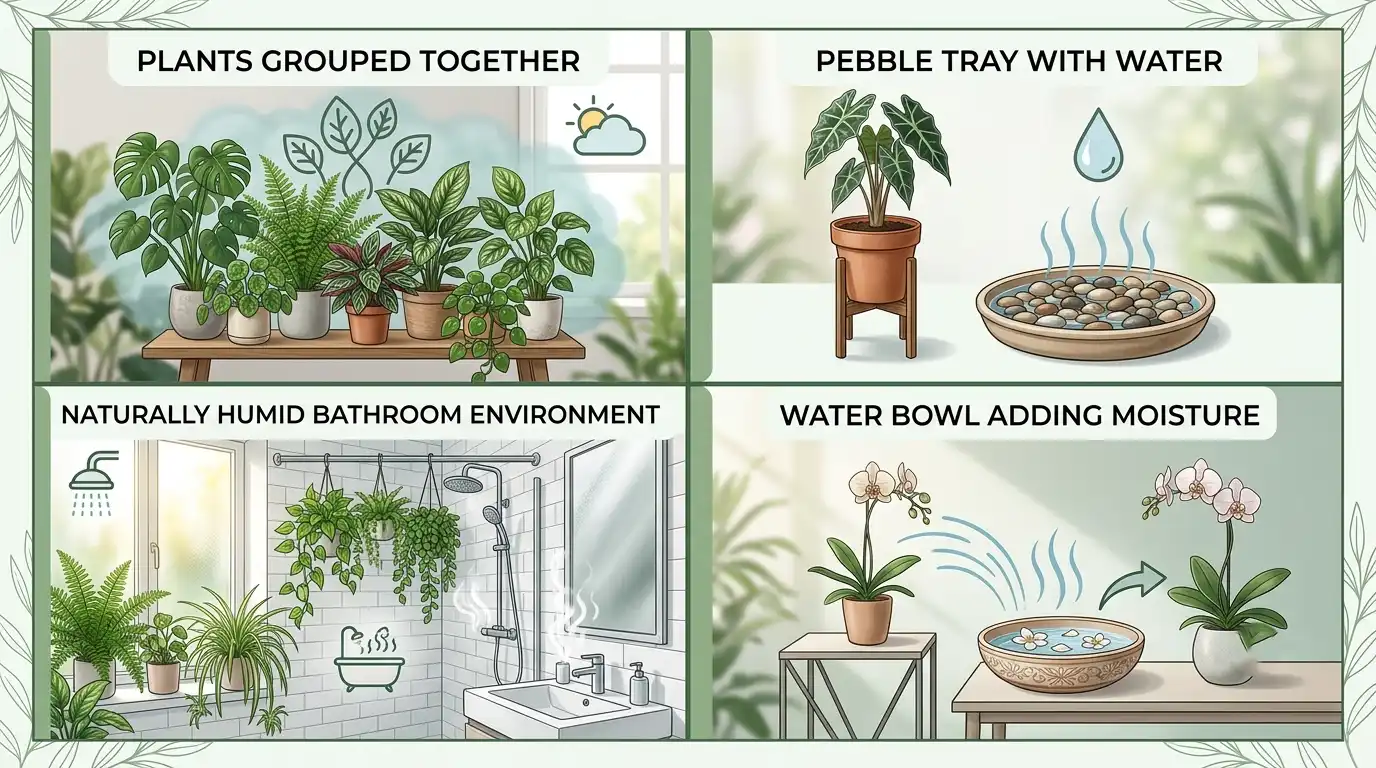
If a humidifier is unavailable, several simple methods can temporarily increase humidity around plants.
- Pebble trays with water: Place plants above water-filled trays without letting pots sit directly in water.
- Grouping plants together: Plants naturally release moisture through transpiration, creating a more humid microenvironment.
- Wet towels or open water bowls: These may slightly increase nearby moisture.
- Manual misting: Light misting can provide temporary moisture but does not replace stable humidity control.
- Moving plants to naturally humid rooms: Bathrooms and kitchens often have higher humidity levels.
These methods work best for small improvements rather than major humidity increases. If you do not have a humidifier, learning how to increase humidity for indoor plants without a humidifier can help you use simple methods such as pebble trays, plant grouping, and naturally humid spaces to support moisture-loving plants.
These natural methods can improve moisture levels in small spaces, but understanding how to add humidity to a room naturally and effectively helps create a better environment for both plants and people.
Choosing the Best Humidifier for Houseplants
The best humidifier for plants depends on room size, plant type, and maintenance preferences. An ultrasonic humidifier is often preferred because it operates quietly and produces a fine cool mist.
Features to Look For
Important features include:
- Tank size: Larger tanks require less frequent refilling.
- Mist adjustment: Adjustable output allows better humidity control.
- Cool-mist operation: Suitable for most indoor plant environments.
- Low noise level: Important for bedrooms and workspaces.
- Easy cleaning: Prevents mineral buildup and microbial growth.
A good humidifier should make humidity management easier without creating excessive moisture.
Common Mistakes and Problems When Humidifying Plants
Humidity management can create problems when it is confused with watering or used incorrectly.
Overwatering Confusion from Misjudged Humidity
This happens when plant owners increase soil watering because leaves look dry, even though the real issue is low air humidity.
To fix this:
- Separate humidity problems from watering schedules.
- Check soil moisture before watering.
- Use a hygrometer to understand indoor conditions.
Mold or Mildew from Excess Humidity
Too much humidity in an enclosed space can encourage fungal growth.
Common causes include:
- Running a humidifier too long
- Poor airflow
- Excess moisture on leaves
Solutions include:
- Reducing humidifier run time
- Improving ventilation
- Maintaining balanced humidity levels
Leaf Damage from Diffuser Oil Residue
Diffuser oil residue may damage leaves when plants are exposed repeatedly.
To prevent problems:
- Keep diffusers away from plants.
- Avoid using diffusers as the main humidity source.
- Clean affected leaves if residue develops.
Humidity Needs by Plant Type
Different plants have different humidity preferences. Understanding plant type helps determine whether additional humidity is necessary. Choosing suitable indoor plants also matters when managing humidity, as some species are naturally easier to maintain indoors, such as the spider plant with its air-purifying benefits and simple care needs.
Tropical vs Low-Humidity Plants
Tropical plants often need higher humidity because they evolved in warm, moist environments.
Examples of humidity-loving plants include:
- Ferns
- Calatheas
- Orchids
- Many philodendrons
Low-humidity plants, such as many succulents and cacti, usually prefer drier conditions and rarely require added humidity. Ferns are especially sensitive to dry indoor air, so following a proper fern care guide can help maintain healthy growth and foliage.
Seasonal Humidity Considerations
Indoor humidity changes throughout the year.
- Winter heating often dries indoor air and increases humidity stress.
- Summer conditions may naturally provide higher humidity.
- Plants may need different humidity support depending on seasonal changes.
Conclusion
A diffuser cannot be used as a true humidifier for plants because it is designed for essential oil diffusion rather than increasing room humidity. While a diffuser may create a small temporary moisture increase, it does not provide the consistent humidity many houseplants need. A dedicated cool-mist humidifier is a better solution for tropical plants and dry indoor environments. Simple alternatives such as grouping plants, pebble trays, and improving room humidity can also help. Keeping diffusers away from sensitive foliage reduces the risk of essential oil-related plant damage.
Understanding humidity is only one part of successful indoor plant care. A complete resource covering plant benefits, care requirements, and growing techniques can be found in our Plants Benefits and Guides.
FAQs
1. Can a diffuser be used as a humidifier for plants?
A diffuser cannot replace a humidifier for plants because it produces too little moisture to significantly increase room humidity. It may create a small temporary humidity increase but is not suitable for maintaining plant humidity needs.
2. Are essential oils bad for plants?
Essential oils can be harmful to plants when used frequently or in concentrated amounts near foliage. Oil residue may affect leaf surfaces, especially with prolonged exposure.
3. Do indoor plants need a humidifier?
Indoor plants need a humidifier when they require higher humidity than the home environment provides. Tropical plants often benefit from added humidity, especially during dry winter months.
4. Where should I place a humidifier for plants?
A humidifier should be placed several feet away from plants in a location where mist can spread throughout the room. Avoid directing continuous mist directly onto leaves.
5. What can I use instead of a humidifier for plants?
Alternatives include pebble trays, grouping plants together, placing plants in naturally humid rooms, using water bowls, and occasional manual misting.
6. What are the signs my plants need more humidity?
Common signs include brown leaf tips, curling leaves, slow growth, dry foliage, and stress despite correct watering practices.