
Introduction
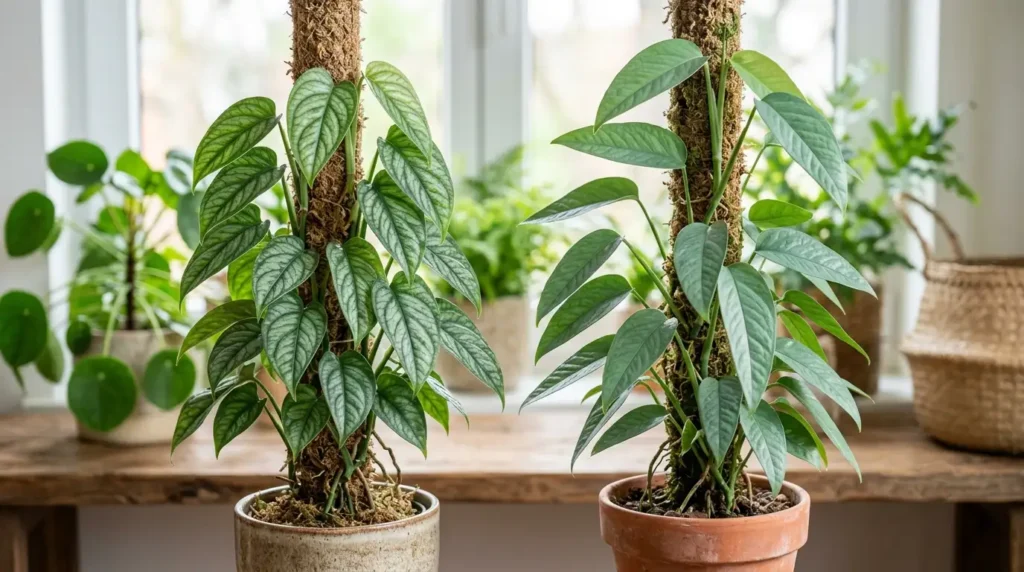
Monstera Siltepecana vs Cebu Blue is a common comparison among houseplant enthusiasts because both plants have elongated leaves with attractive silvery-blue tones and trailing growth habits. Although they look similar, they are not the same plant. Monstera Siltepecana belongs to the genus Monstera, while Cebu Blue is a cultivar of Epipremnum pinnatum. Understanding their differences helps plant owners identify them correctly, choose the right care routine, and support healthier growth. This guide compares their appearance, growth patterns, care requirements, propagation methods, and rarity to help determine which plant better fits different growing environments.
Quick Summary
- Monstera Siltepecana and Cebu Blue are different species from different genera despite their similar silver-blue foliage.
- Monstera Siltepecana develops mature fenestrated leaves when allowed to climb, while Cebu Blue rarely produces indoor fenestrations.
- Cebu Blue generally grows faster and is more beginner-friendly than Monstera Siltepecana.
- Both plants prefer bright indirect light, well-draining soil, humidity, and climbing support.
- Siltepecana is valued for its Monstera characteristics, while Cebu Blue is popular for easy care and fast growth.
What Is Monstera Siltepecana?
Monstera Siltepecana is a tropical climbing aroid scientifically classified as Monstera siltepecana. It belongs to the Araceae family and naturally grows in tropical regions of Mexico and Central America. The plant is known for its narrow, arrow-shaped leaves with a distinctive silver pattern across the surface.
Monstera Siltepecana belongs to the Araceae family and the Monstera genus, a group of tropical flowering plants known for their climbing growth habits and distinctive foliage. More background on the genus can be found on the Wikipedia page about Monstera.
The name philodendron siltepecana is a common misidentification because many climbing aroids have similar growth patterns. However, it is not a Philodendron species. The correct botanical name is Monstera siltepecana, and it is sometimes called siltepecana monstera or a silver Monstera because of its metallic leaf appearance.
In its natural habitat, Monstera Siltepecana grows as a climbing plant attached to trees. Young plants usually produce smaller, silvery leaves with prominent veins. As the plant matures and receives proper climbing support, its leaves become larger and may develop fenestrations, which are natural splits or holes commonly associated with mature Monstera plants.
What Makes Monstera Siltepecana Unique?
Monstera Siltepecana is unique because of its silver-green foliage and ability to transform as it matures. The juvenile form is commonly grown as a trailing houseplant, but when allowed to climb, it can develop a more mature Monstera appearance.
Its key features include:
- Silvery leaf markings often called monstera silver leaf or silver monstera.
- Narrow leaves with a pointed shape.
- Climbing growth supported by aerial roots.
- Potential mature fenestrations when grown vertically.
The leaf coloration is usually strongest under bright indirect light. Low-light conditions may cause the plant to lose some of its silver appearance and produce smaller leaves.
Monstera Siltepecana vs El Salvador
Monstera Siltepecana and the El Salvador form are closely related and often confused because both have silver foliage. The main difference is that the El Salvador form typically develops larger, thicker leaves with stronger contrast between green and silver coloring.
Monstera Siltepecana usually has narrower leaves and a softer silver pattern, while El Salvador often appears more robust with broader mature foliage. Both require similar climbing conditions, but the El Salvador form is often considered a more desirable collector variety.
What Is Cebu Blue (Epipremnum Pinnatum)?
Cebu Blue is a popular cultivar of Epipremnum pinnatum, a tropical climbing plant from the Philippines. Its botanical identity is important because it is often incorrectly called Cebu Blue Pothos or Cebu Blue Monstera, even though it is not a Monstera.
The correct scientific name is Epipremnum pinnatum ‘Cebu Blue’. It belongs to the same Araceae family as Monstera but comes from a different genus.
The nickname “Cebu Blue Pothos” became popular because Epipremnum plants are commonly grouped with pothos plants in houseplant culture. However, botanically, Cebu Blue is an Epipremnum species.
Cebu Blue originated from the Cebu region of the Philippines and became popular worldwide because of its blue-green leaves, fast growth, and easy-care nature.
Why Is My Cebu Blue Not Blue?
Cebu Blue may lose its blue-silver appearance because leaf coloration depends on environmental conditions, especially light exposure. In lower light, leaves often appear greener because the plant produces more chlorophyll.
Factors affecting Cebu Blue coloration include:
- Light intensity: Bright indirect light helps maintain stronger blue-silver tones.
- Leaf maturity: Younger leaves may appear less blue until they develop fully.
- Plant health: Stress from poor watering or nutrients can reduce vibrant foliage.
A healthy Cebu Blue grown near bright filtered light usually displays the strongest silvery-blue coloration.
Monstera Siltepecana vs Cebu Blue: Key Differences
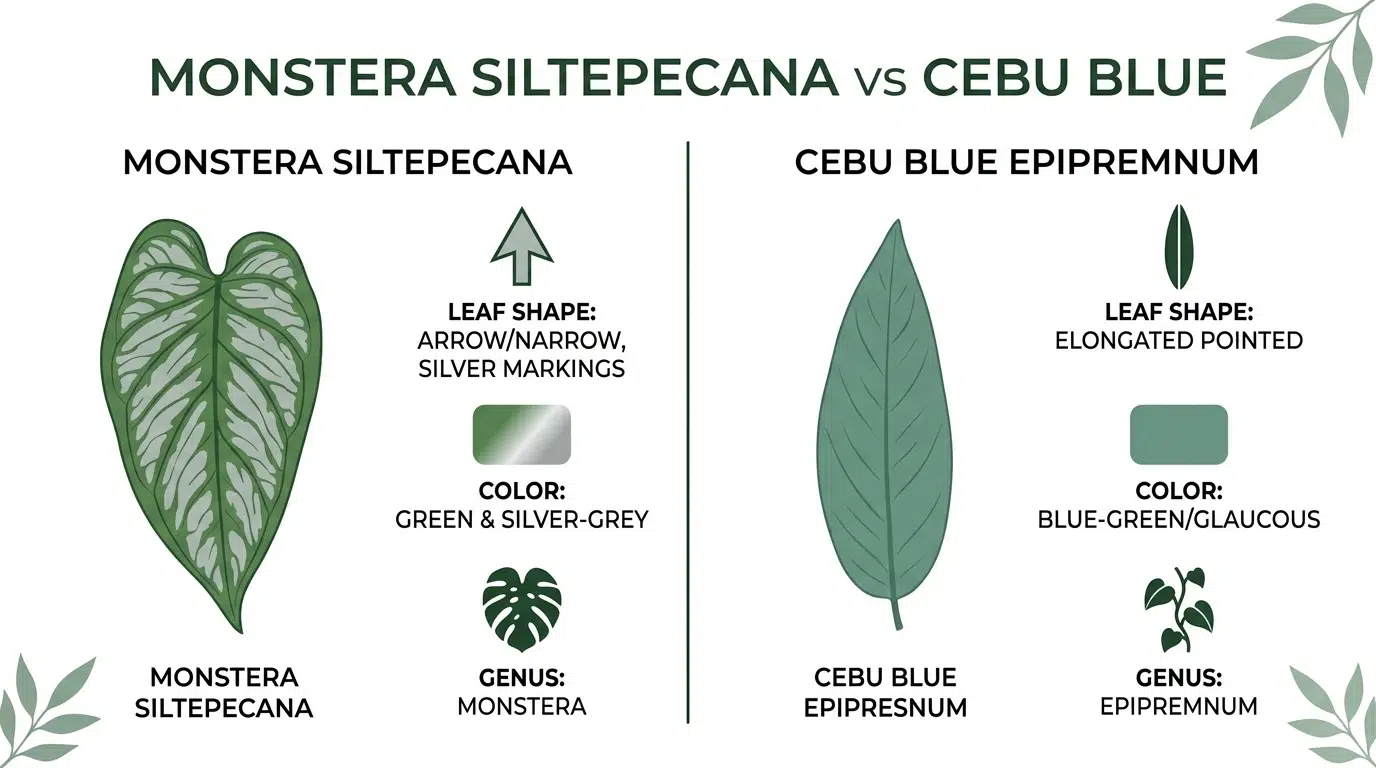
Monstera Siltepecana and Cebu Blue share similar appearances but differ in botanical classification, leaf development, and growth behavior.
| Feature | Monstera Siltepecana | Cebu Blue |
| Genus | Monstera | Epipremnum |
| Leaf shape | Elongated oval, arrow-like | Elongated, pointed lance-shaped |
| Mature fenestrations | Yes | Rare indoors |
| Growth rate | Moderate | Fast |
| Growth habit | Climbing/trailing | Climbing/trailing |
| Beginner-friendly | Moderate | High |
Leaf Shape and Color Differences
Monstera Siltepecana usually has narrower arrow-shaped leaves with a more textured silver pattern. Mature leaves become larger and more Monstera-like when supported on a moss pole.
Cebu Blue has longer, thinner leaves with a smoother blue-gray appearance. Its foliage often looks more uniform compared with the patterned silver markings of Siltepecana.
A simple identification method is to examine leaf development:
- Siltepecana tends to become more dramatic with maturity.
- Cebu Blue maintains a consistent elongated leaf shape.
Growth Rate Comparison
Cebu Blue is generally considered a faster grower than Monstera Siltepecana. Under ideal conditions, Cebu Blue can quickly produce long vines and new leaves during active growing seasons.
Monstera Siltepecana grows at a moderate pace and usually requires stronger support and better conditions to reach mature growth.
Factors affecting growth speed include:
- Bright indirect light.
- Warm temperatures.
- High humidity.
- Adequate nutrients.
- Climbing support.
Growth Habit — Is Monstera Siltepecana Trailing or Climbing?
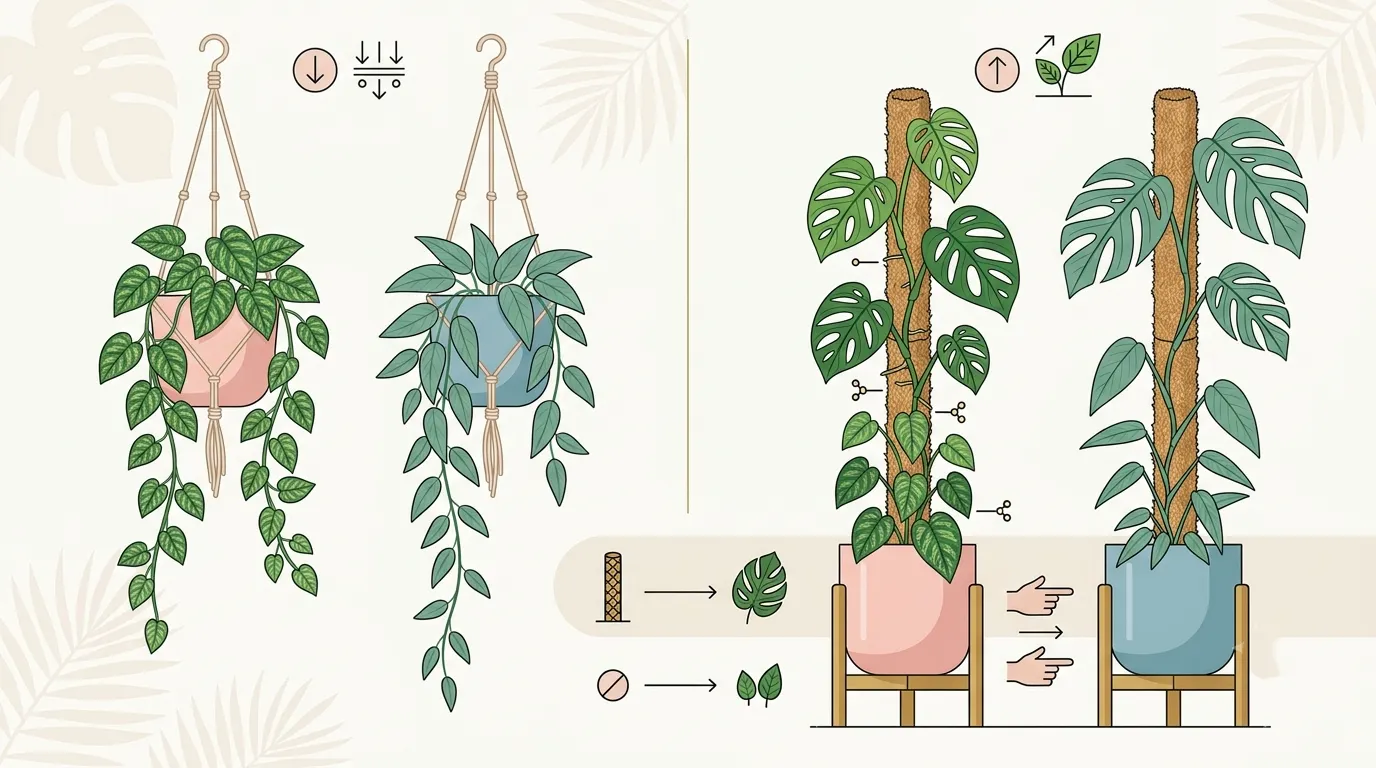
Monstera Siltepecana can grow both as a trailing and climbing plant depending on how it is supported. In hanging baskets, it grows downward with smaller juvenile leaves. When attached to a moss pole or trellis, it climbs upward using aerial roots. Many Monstera species naturally develop climbing habits, and understanding how to support aerial roots can help plants produce healthier growth. For more examples of climbing Monstera varieties and their care requirements, see our Ultimate Hanging Monstera Guide: Care, Varieties & Tips.
Cebu Blue has a similar climbing behavior. Without support, it creates long trailing vines, while vertical support encourages larger leaves and stronger growth.
Natural climbing adaptations include:
- Aerial roots that attach to surfaces.
- Increased leaf size when growing vertically.
- Stronger mature growth when provided support.
How Big Do Monstera Siltepecana and Cebu Blue Get?
Monstera Siltepecana size depends heavily on growing conditions. Indoors, it commonly produces vines several feet long, but mature leaf size increases when the plant climbs.
Outdoor tropical conditions allow it to grow much larger because of:
- Higher humidity.
- More natural light.
- Larger climbing structures.
- Warmer temperatures.
Cebu Blue can also become a long trailing or climbing vine indoors. With proper support, it can produce extensive growth and cover large vertical spaces.
Care Guide for Monstera Siltepecana and Cebu Blue
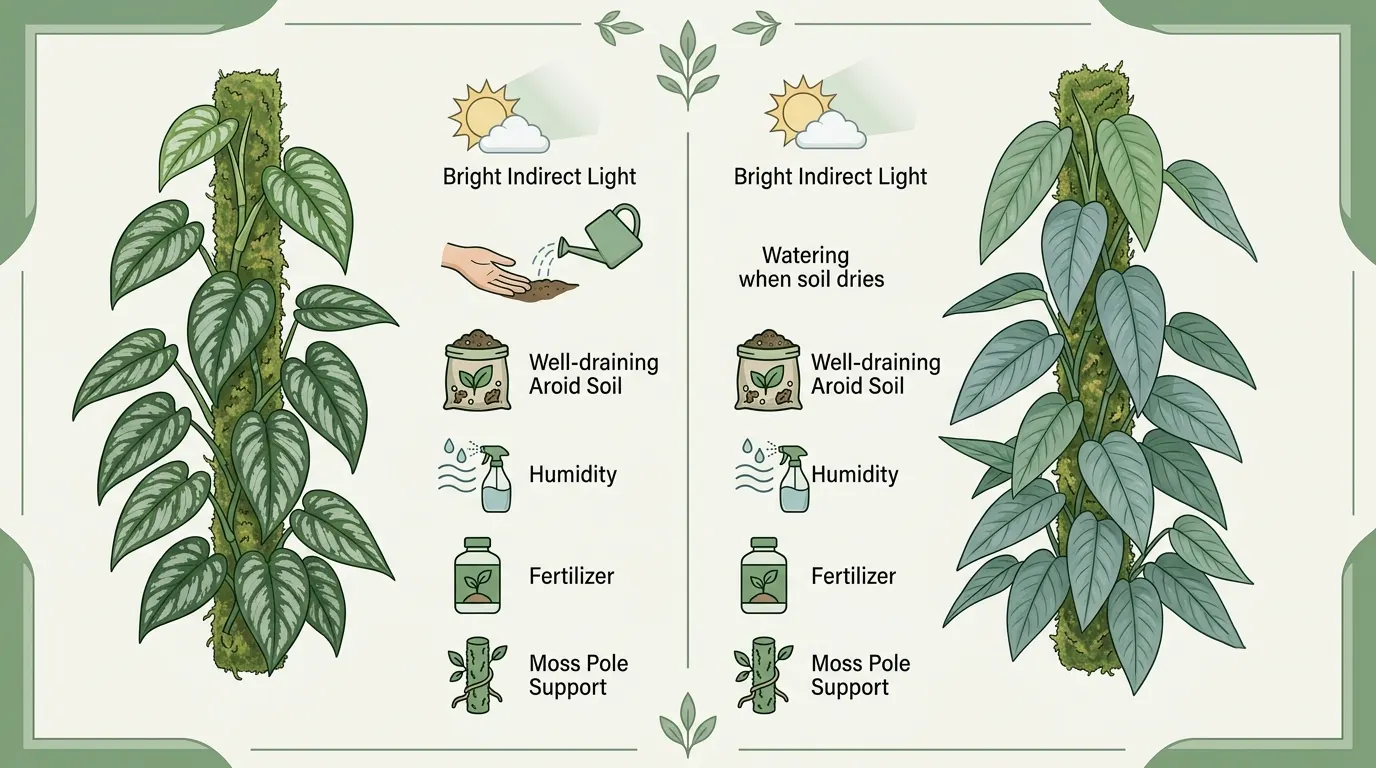
Both plants have similar tropical aroid care requirements. Choosing the right container is also important because a well-sized pot improves drainage and prevents root problems. Learn more about selecting the ideal container in our Best Pot for Monstera: 7+ Proven Size & Material Tips guide.
| Care Factor | Requirement |
| Light | Bright indirect light |
| Watering | Allow topsoil to dry before watering |
| Soil | Well-draining aroid mix |
| Fertilizer | Monthly feeding during growing season |
| Humidity | Moderate to high |
| Temperature | Warm tropical conditions |
Both plants prefer soil containing materials such as:
- Coco coir or peat.
- Perlite.
- Orchid bark.
- Compost or organic matter.
Overwatering is one of the most common beginner mistakes because these plants prefer moisture but dislike constantly wet roots.
Using a Moss Pole for Support
A moss pole benefits Monstera Siltepecana by encouraging natural climbing behavior. As aerial roots attach to the pole, the plant receives support and may produce larger mature leaves with fenestrations.
Cebu Blue also benefits from climbing support by producing stronger vertical growth.
Can Monstera Siltepecana Grow in Water?
Monstera Siltepecana can grow in water temporarily, especially during propagation. However, long-term growth is usually healthier in soil because roots receive better access to nutrients and oxygen.
Water propagation is best used for:
- Root development.
- Temporary display.
- Propagation before transferring to soil.
Propagating Monstera Siltepecana

Monstera Siltepecana propagation is usually done through stem cuttings. Successful propagation depends on selecting a healthy stem section with a visible node. Our Monstera Plant Node: Identification, Propagation & Care Guide explains how to identify nodes and use them correctly for propagation.
Steps include:
- Cut a healthy stem section containing at least one node.
- Place the cutting in water, moss, or moist soil.
- Keep it warm with indirect light.
- Transfer to soil once roots are established.
Root development usually takes several weeks depending on temperature, humidity, and plant health.
Common Problems and Troubleshooting
Yellowing leaves:
Usually caused by overwatering or poor drainage. Allow soil to dry slightly and improve drainage.
Loss of blue or silver color:
Often caused by insufficient light. Move the plant to brighter indirect light.
Slow growth:
Low light or lack of climbing support can reduce growth speed.
Root rot:
Usually results from constantly wet soil. Remove damaged roots and improve watering habits.
Rarity and Value — Which Is Rarer?
Monstera Siltepecana is generally less common than standard houseplants but is not among the rarest Monstera varieties. Its value increases when plants are mature, large, or show strong fenestration.
Cebu Blue was once considered rare but is now widely available due to increased commercial propagation.
Plant rarity depends on:
- Availability.
- Plant maturity.
- Variegation.
- Collector demand.
- Size and health.
Variegated Monstera varieties are usually much more expensive than standard Siltepecana or Cebu Blue.
Beginner Mistakes & Similar Plant Confusion
Many beginners confuse these plants with similar blue-green aroids, including Baltic Blue, mint Monstera, and silver Monstera varieties.
Common mistakes include:
- Assuming Cebu Blue is a Monstera.
- Expecting young Siltepecana leaves to have mature fenestrations.
- Growing climbing plants without support.
- Using heavy soil that retains too much moisture.
Cebu Blue is usually better for beginners because it grows quickly and tolerates minor care mistakes. Monstera Siltepecana is better suited for growers who enjoy watching a plant transform through maturity.
Conclusion
Monstera Siltepecana and Cebu Blue may look similar because of their silver-blue leaves and trailing growth habits, but they are distinct plants from different genera. Monstera Siltepecana offers unique Monstera characteristics, including potential mature fenestrations and climbing growth, while Cebu Blue provides faster growth and easier care. Choosing between them depends on experience level and plant goals. For beginners seeking quick growth, Cebu Blue is often the better option. For collectors interested in mature Monstera features, Monstera Siltepecana provides a more rewarding growing experience.
Understanding differences between popular indoor aroids helps plant owners choose suitable varieties and provide better care. Explore more indoor plant care resources in our complete Plants: Benefits and Guides (Complete Care, Types & Growing Tips) collection.
FAQs
Is Monstera Siltepecana rare?
Monstera Siltepecana is considered uncommon but is not one of the rarest Monstera species. Its availability has increased through propagation, although mature plants with large fenestrated leaves remain more desirable.
Is Epipremnum Cebu Blue rare?
Epipremnum Cebu Blue was once considered rare but is now widely available due to commercial cultivation. Large mature specimens can still be valuable.
What is the nickname for Monstera Siltepecana?
Monstera Siltepecana is commonly called silver Monstera or siltepecana monstera because of its silvery leaf markings.
Is Monstera Siltepecana trailing or climbing?
Monstera Siltepecana can be both trailing and climbing. It trails when grown in hanging containers and climbs when provided with support.
What is the difference between Cebu Blue Pothos and Monstera Siltepecana?
Cebu Blue Pothos refers to Epipremnum pinnatum ‘Cebu Blue’, while Monstera Siltepecana is a separate Monstera species. They differ in genus, leaf development, and mature growth.
Can Monstera Siltepecana grow in water?
Yes, Monstera Siltepecana can grow in water temporarily for propagation, but soil is recommended for long-term growth.
What is the hardest Monstera to grow?
Some of the most challenging Monstera species include highly specialized tropical varieties that require high humidity, stable temperatures, and careful environmental control.