
Introduction
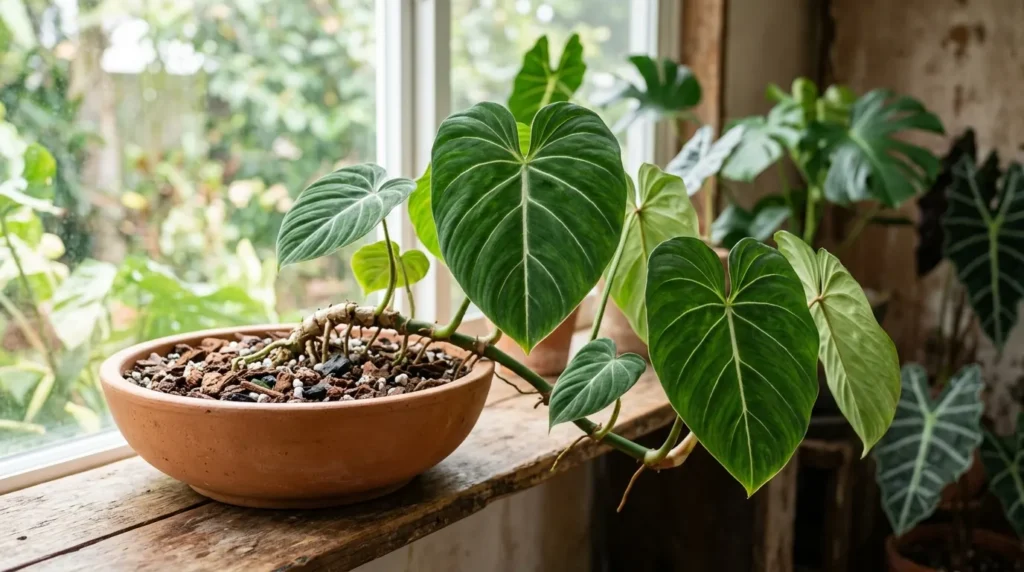
Philodendron gloriosum propagation is the process of creating new plants from an existing gloriosum by using rhizome divisions or suitable stem cuttings. Philodendron gloriosum is a tropical crawling aroid known for its velvety, heart-shaped leaves and striking white veins. Unlike many popular climbing philodendrons, this species grows horizontally through an underground rhizome, which changes how it should be propagated and planted. Successful propagation depends on selecting healthy growth points, maintaining proper humidity, and providing warm conditions with indirect light. This guide explains propagation methods, care requirements, growth habits, common problems, and important facts about this unique collector plant.
Quick Summary
- Philodendron gloriosum is mainly propagated through rhizome division or stem cuttings with a node, not through seeds.
- It is a crawling philodendron that grows horizontally instead of climbing, affecting propagation and potting methods.
- Water propagation allows growers to monitor root development before moving cuttings into soil.
- Healthy roots usually develop within several weeks when warmth, humidity, and indirect light conditions are maintained.
- Proper node selection, moisture control, and patience are essential for successful gloriosum propagation.
Philodendron gloriosum is one of many popular indoor plants valued for its decorative foliage and unique growth habits. Explore more plant care information in our complete Plants Benefits and Guides collection.
What Is Philodendron Gloriosum?
Philodendron gloriosum is a tropical aroid species in the Araceae family, recognized for its large, velvety, heart-shaped leaves with prominent white or pale green veins. Unlike many philodendrons that attach themselves to trees and climb upward, the gloriosum plant develops a creeping rhizome that moves across the soil surface. This unusual growth habit makes it highly valued among plant collectors.
Philodendron gloriosum belongs to the large Philodendron genus within the Araceae family, a group of tropical flowering plants known for diverse growth forms and ornamental foliage. More botanical background about the genus can be found on Wikipedia’s overview of Philodendron.
The scientific name Philodendron gloriosum refers to a naturally occurring species rather than a hybrid cultivar. The plant is native to tropical regions of Central and South America, where it grows on forest floors under filtered sunlight, warm temperatures, and high humidity.
The philo gloriosum is popular because of its dramatic foliage. Mature leaves can become large, with a soft texture and contrasting veins that create a distinctive appearance. The combination of slow growth, unique crawling habit, and ornamental leaves has made the gloriosum philodendron a sought-after houseplant.
Collectors often search for terms such as:
- Philodendron gloriosum
- Gloriosum plant
- Gloriosum philodendron
- Philo gloriosum
These names generally refer to the same species.
The plant’s rhizomatous growth is also important for propagation. Instead of cutting a long climbing vine, growers usually divide sections of the rhizome containing active growth points. Each healthy section can develop into a new plant when provided with suitable conditions.
Nicknames and Common Names
Philodendron gloriosum does not have many official common names, but plant collectors and online communities often use informal names based on its appearance or species identity. The most common nickname is simply gloriosum or gloriosum philodendron.
Other informal references include:
- Velvet philodendron (because of its soft leaf texture)
- Heart-leaf gloriosum (describing the leaf shape)
- Crawling philodendron (describing its growth habit)
Unlike some houseplants with widely recognized common names, Philodendron gloriosum is usually identified by its scientific name because this provides clearer distinction among the many philodendron species and hybrids available in cultivation.
Using the botanical name is especially useful when purchasing or propagating the plant because many philodendron varieties can have similar leaf shapes but very different growth habits.
Is It a Climber or a Crawler?
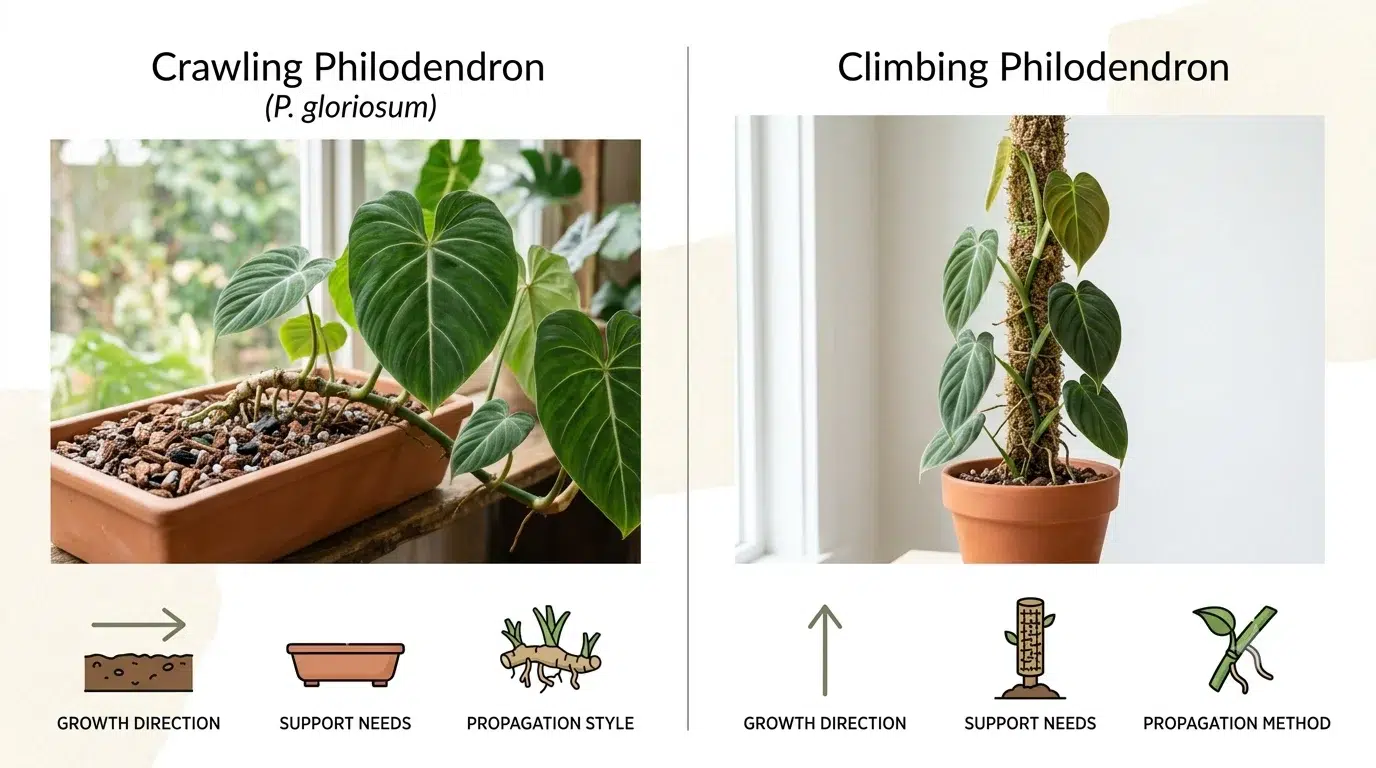
Philodendron gloriosum is a crawler, not a climber. It grows through a horizontal rhizome that spreads along or slightly beneath the soil surface, producing leaves upward from different points along the rhizome.
This crawling habit separates it from climbing philodendrons such as Philodendron hederaceum or Philodendron melanochrysum, which use aerial roots to attach themselves to supports and grow vertically.
The difference affects both propagation and care:
- Crawling growth requires a wider pot rather than a tall container.
- Rhizomes should not be buried deeply because they need airflow.
- Moss poles are generally unnecessary.
- Propagation usually involves dividing rhizome sections instead of cutting long vines.
A common mistake is treating gloriosum like a climbing philodendron. Planting it against a pole or burying the rhizome too deeply can create moisture problems and limit healthy growth.
For propagation, growers should look along the rhizome for visible nodes or growth points. These areas contain the potential for producing new roots and leaves.
Philodendron Gloriosum vs. Philodendron “Glorious”
Philodendron gloriosum and Philodendron “Glorious” are often confused because their names are similar, but they are different plants. Philodendron gloriosum is a naturally occurring species, while Philodendron “Glorious” is a hybrid created by crossing Philodendron gloriosum with Philodendron melanochrysum.
The hybrid combines characteristics from both parent plants, including the velvety foliage of gloriosum and some climbing tendencies from melanochrysum.
| Feature | Philodendron Gloriosum | Philodendron “Glorious” |
| Origin | Naturally occurring species | Hybrid (gloriosum × melanochrysum) |
| Leaf appearance | Large heart-shaped leaves with strong white veins | Similar velvety leaves with blended characteristics |
| Veining | Usually more prominent white veins | Often softer or less sharply defined veining |
| Growth habit | Crawling rhizomatous growth | Hybrid growth influenced by both parents |
| Availability | Commonly available among collectors | Often rarer and more expensive |
The confusion between gloriosum vs glorious usually comes from online listings and plant discussions where names are shortened. Checking the botanical name and parentage helps identify whether a plant is a true Philodendron gloriosum or a hybrid.
Related Hybrids
Several philodendron hybrids are searched alongside Philodendron gloriosum because they share similar velvet leaves or collector appeal.
Philodendron gloriosum is often compared with climbing velvet philodendrons such as Philodendron melanochrysum, especially when discussing hybrid varieties and propagation methods. Learn more about Philodendron Melanochrysum Propagation and its climbing growth habits.
Philodendron gloriosum x melanochrysum
This hybrid, commonly called Philodendron “Glorious,” combines the crawling characteristics of gloriosum with traits from the climbing melanochrysum. It often develops elongated, velvety leaves and may show hybrid growth behavior.
Philodendron melanochrysum vs. gloriosum
Philodendron melanochrysum is a climbing species with long, narrow leaves, while gloriosum is a crawling species with broad, heart-shaped leaves. Their growth habits are one of the biggest differences.
| Feature | Philodendron Melanochrysum | Philodendron Gloriosum |
| Growth type | Climber | Crawler |
| Leaf shape | Longer and narrower | Wider and heart-shaped |
| Support needs | Benefits from climbing support | Usually grows without a moss pole |
| Texture | Velvety | Velvety |
Philodendron Summer Glory vs. Gloriosum
Philodendron Summer Glory is another popular hybrid known for colorful new growth. While it may share collector appeal with gloriosum, it is not the same plant and has different genetic traits.
Understanding these differences helps growers choose the correct propagation method because crawling species and climbing hybrids may require different setups for healthy development.
How to Propagate Philodendron Gloriosum
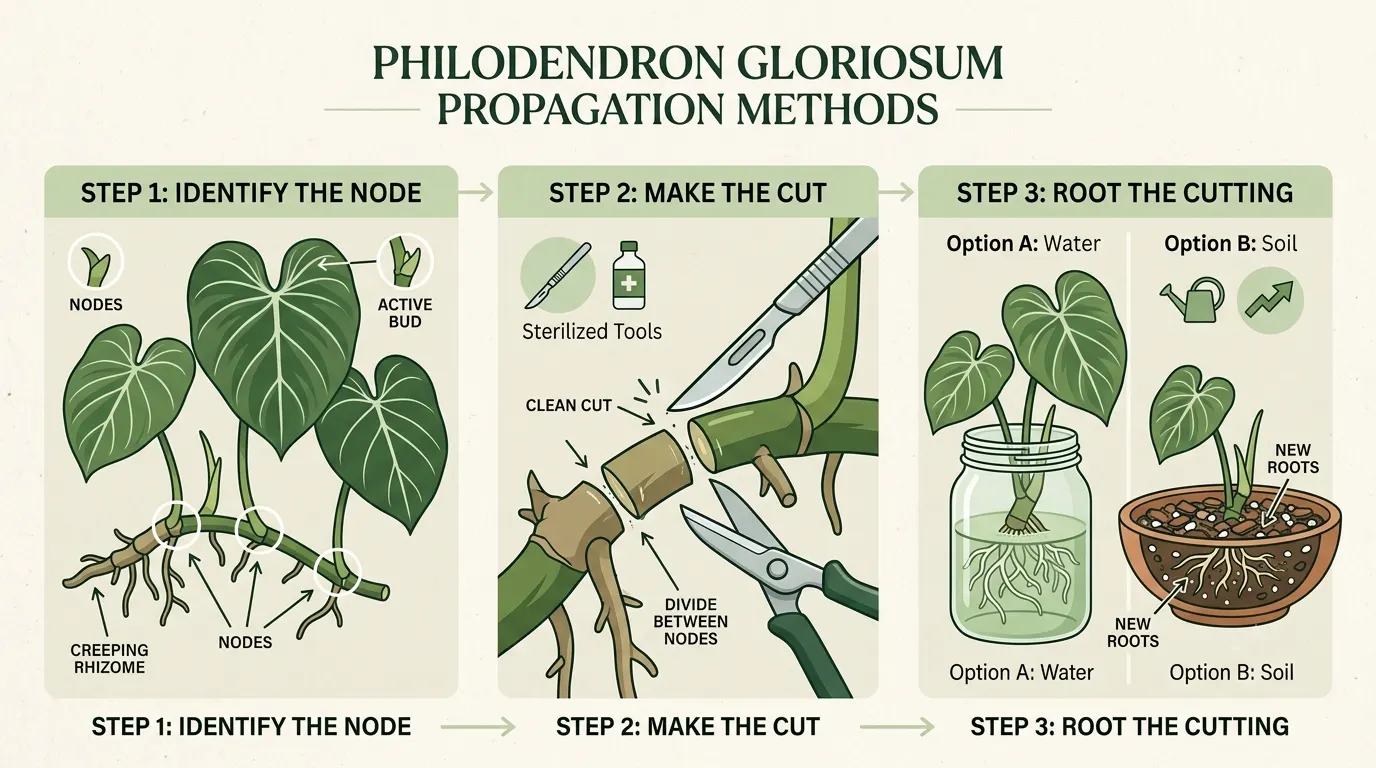
Philodendron gloriosum propagation is most successful when using healthy rhizome sections or stem cuttings that contain an active node. Because this plant grows from a horizontal rhizome rather than a long climbing vine, propagation focuses on separating sections that can produce new roots and leaves. Rhizome division is a common method for plants with specialized underground growth structures. Similar propagation concepts can be seen in other tropical aroids, including Alocasia corm propagation, where underground structures develop into new plants.
Similar to other philodendrons, successful propagation depends on healthy nodes, suitable growing mediums, and proper moisture control. Beginners can also compare these techniques with Heartleaf Philodendron Propagation methods, which commonly use water and soil rooting.
The two main propagation methods are:
- Rhizome division: The most reliable method because each divided section already contains the plant’s natural growth structure.
- Stem cutting propagation: Possible when a cutting includes a viable node and growing point.
The general propagation process involves:
- Locate a node or active growth point along the rhizome
A node is the area where roots, leaves, or new growth can develop. A cutting without a node will not create a new plant. - Use a sterile cutting tool to divide the plant
A clean knife or pruning blade helps prevent bacterial or fungal infections. Cut a rhizome section containing at least one healthy node and preferably an emerging leaf or growth point. - Allow fresh cuts to callous briefly when using soil propagation
Letting the cut surface dry slightly can reduce the risk of rot, especially in consistently moist growing environments. - Place the cutting into a suitable propagation medium
The cutting can be placed in water, sphagnum moss, perlite, or a chunky aroid soil mix depending on the preferred method. - Maintain stable environmental conditions
Warm temperatures, high humidity, and bright indirect light encourage faster root development and healthier new growth.
Fresh propagations should not be kept constantly wet because excessive moisture around the rhizome can encourage rot. The goal is consistent moisture with good airflow.
Propagating in Water
Philodendron gloriosum propagation in water is a popular method because it allows growers to observe root development directly. A healthy cutting with a node can be placed in a clean container filled with water, keeping the node submerged while avoiding unnecessary leaf contact with the water.
Water propagation provides several benefits:
- Roots are visible as they develop.
- Moisture levels are easier to control.
- Root problems can be identified early.
- Transplanting can be timed when roots are established.
A Philodendron gloriosum cutting in water usually develops roots within several weeks under ideal conditions. Rooting speed depends on factors such as temperature, humidity, cutting health, and light exposure.
For successful water propagation:
- Change the water regularly to maintain freshness.
- Keep the cutting in a warm location.
- Provide bright, indirect light.
- Move the cutting to soil once roots are strong enough to support continued growth.
A common beginner mistake is leaving a cutting in water for too long after roots develop. Very long-term water growth may produce roots adapted to aquatic conditions, making the transition to soil more difficult.
Propagating Directly in Soil
Philodendron gloriosum can also be propagated directly in soil when the cutting contains a healthy node. This method allows the new roots to develop in the same type of environment where the plant will continue growing.
The main advantage of soil propagation is reduced transplant shock because the cutting does not need to adjust from water roots to soil roots.
Benefits of direct soil propagation include:
- Stronger adaptation to the final growing medium.
- Less disturbance after rooting.
- Suitable conditions for long-term growth from the beginning.
However, soil propagation has one major limitation: root development cannot be observed easily. Growers must rely on visible signs such as new growth or resistance when gently checking the cutting.
A suitable propagation mix should be:
- Airy and well-draining.
- Moist but not waterlogged.
- Rich in organic material while allowing airflow around roots.
A common mixture for gloriosum propagation includes:
- High-quality potting soil.
- Orchid bark.
- Perlite or pumice.
- Sphagnum moss or coco coir.
The cutting should be positioned so the node contacts the growing medium without burying the rhizome too deeply.
Signs of Successful Propagation
Successful Philodendron gloriosum propagation is confirmed through root development and new growth. The first signs may appear underground before visible leaf production begins.
Common signs include:
- New white or cream-colored roots emerging from the node.
- Increased firmness of the cutting when gently held.
- A swelling growth point developing near the node.
- A new leaf slowly emerging from the rhizome.
A gloriosum new leaf is one of the clearest indicators that propagation has succeeded. New leaves often emerge tightly rolled before slowly unfurling into the characteristic heart-shaped form.
Philodendron gloriosum new growth may take several weeks or longer depending on environmental conditions. Slow progress does not always indicate failure because gloriosum is naturally a slower-growing plant compared with many common houseplants.
Patience is important during propagation. Maintaining stable humidity, warmth, and moisture is usually more effective than frequently disturbing the cutting to check progress.
Is Propagating Philodendron Gloriosum Legal?
Propagating Philodendron gloriosum is generally allowed when growing and dividing a legally obtained plant, but restrictions can apply to certain patented cultivars or protected plant varieties. Plant propagation laws usually relate to intellectual property rights, such as plant patents or Plant Breeders’ Rights (PBR), rather than the act of propagation itself.
The question “Why is it illegal to propagate plants?” usually refers to protected cultivars developed by breeders. Some plants cannot legally be reproduced for commercial sale without permission because the breeder has exclusive rights over propagation.
For Philodendron gloriosum:
- Standard non-patented plants are commonly propagated by home growers.
- Selling large quantities of protected cultivars may require authorization.
- Rules vary depending on country and local regulations.
Home propagation for personal collection is different from commercial reproduction. Growers should check applicable plant protection laws in their region if they plan to sell propagated plants.
Philodendron Gloriosum Care Guide
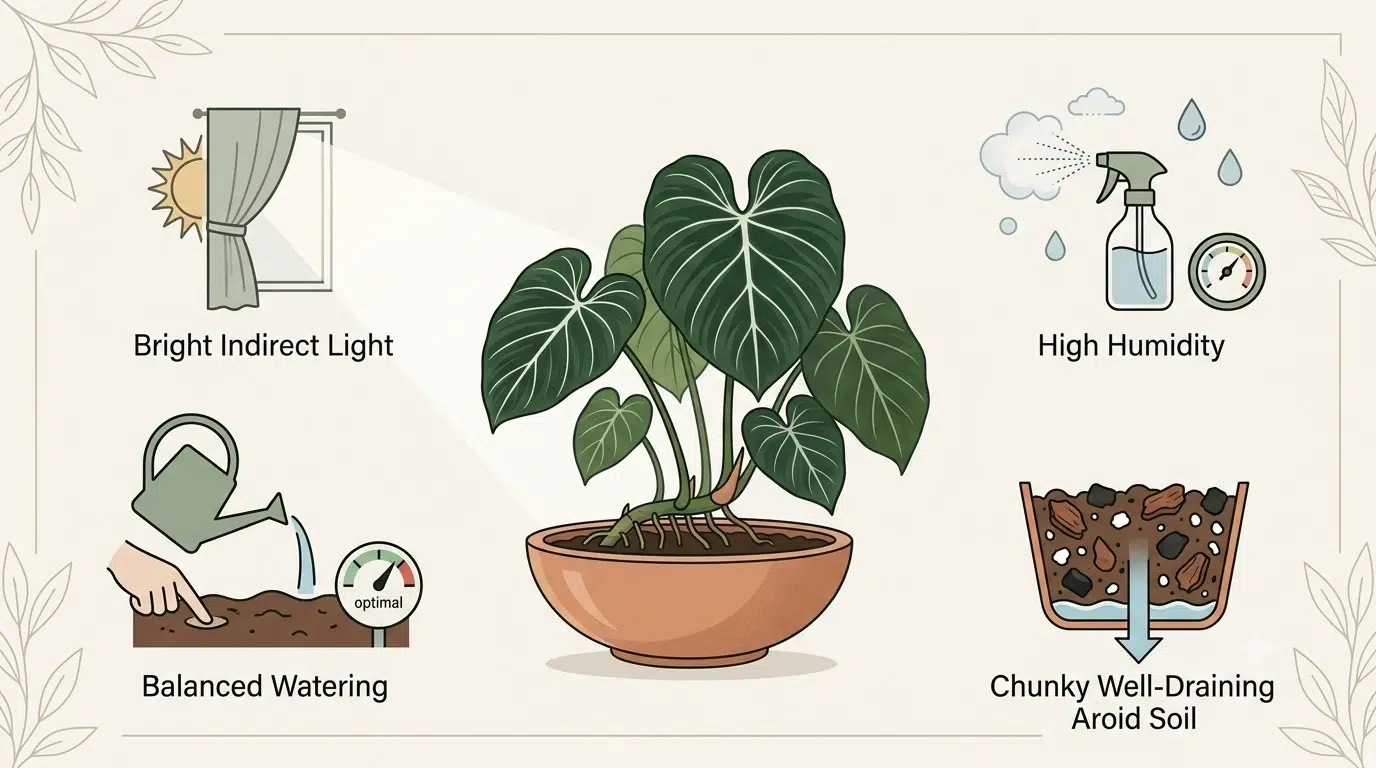
Philodendron gloriosum care focuses on recreating the warm, humid forest conditions where this crawling aroid naturally grows. The plant prefers bright filtered light, consistent moisture without waterlogging, high humidity, and an airy soil mix that protects its rhizome from excess moisture.
Proper care after propagation is especially important because young plants are more sensitive to environmental stress while establishing their root systems.
Light Requirements
Philodendron gloriosum light requirements are based on its natural rainforest habitat, where it receives filtered sunlight beneath taller vegetation. The plant grows best in bright, indirect light.
Ideal lighting conditions include:
- Several hours of filtered natural light.
- Placement near an east or north-facing window depending on climate.
- Protection from harsh direct afternoon sunlight.
Too little light can slow growth and reduce leaf production, while excessive direct sunlight may cause leaf damage such as:
- Brown patches.
- Faded leaf color.
- Scorched areas.
A balance between sufficient brightness and protection from intense rays encourages healthier leaves and stronger growth.
Watering Needs
Philodendron gloriosum should be watered when the upper layer of soil begins to dry rather than following a strict calendar schedule. The exact watering frequency depends on humidity, temperature, pot size, and soil composition.
Most indoor plants require watering approximately every 1–2 weeks during active growth, but conditions should determine the timing.
Signs that watering is needed include:
- The top layer of soil feels dry.
- Leaves begin losing firmness.
- The pot feels lighter than usual.
Overwatering is one of the most common causes of gloriosum problems. The rhizome is vulnerable to excess moisture, especially in compact soil with poor drainage.
A good watering routine includes:
- Water thoroughly until excess drains from the pot.
- Allow excess water to escape completely.
- Avoid leaving the pot sitting in standing water.
- Reduce watering during cooler, low-light periods.
Humidity
Philodendron gloriosum humidity requirements are higher than those of many common houseplants because the species originates from tropical environments. Moderate to high humidity supports healthy leaves, root development, and new growth. High humidity is especially important for many tropical aroids with decorative foliage. Similar environmental requirements are discussed in the Dragon Scale Plant Care Guide, which covers humidity, watering, and indoor growing conditions.
An ideal humidity range is generally around 60–80%, although the plant can adapt to lower levels when other conditions are suitable.
Higher humidity helps prevent:
- Leaf edge browning.
- Slow growth.
- Difficulty unfurling new leaves.
Ways to increase humidity include:
- Using a humidifier.
- Grouping plants together.
- Growing the plant in a naturally humid room.
- Using a pebble tray with water nearby.
Humidity alone cannot replace proper watering and airflow. Poor ventilation combined with excessive humidity can increase the risk of fungal problems.
Soil and Potting Mix
Philodendron gloriosum soil should be loose, breathable, and well-draining because the plant’s rhizome requires oxygen around its roots.
A suitable gloriosum soil mix usually contains:
| Component | Purpose |
| Potting soil | Provides nutrients and moisture retention |
| Orchid bark | Improves airflow |
| Perlite or pumice | Enhances drainage |
| Coco coir or sphagnum moss | Maintains balanced moisture |
The ideal mix should hold some moisture while allowing excess water to drain quickly.
Heavy garden soil or dense mixes should be avoided because they can trap moisture around the rhizome and increase the chance of rot.
Support Needs
Philodendron gloriosum generally does not need a moss pole because it is a crawling species rather than a climbing philodendron. Unlike climbing varieties that attach aerial roots to vertical supports, gloriosum naturally spreads horizontally across the forest floor.
Instead of vertical support, it benefits from:
- A wide, shallow container.
- Open soil surface for rhizome growth.
- Proper positioning of the rhizome above or slightly within the soil.
Providing a moss pole will not usually improve growth because the plant’s natural structure is designed for horizontal expansion rather than climbing.
Growth Habits and Plant Size
Philodendron gloriosum has a unique growth pattern compared with many popular houseplants because it expands horizontally through a creeping rhizome. Understanding its mature size and growth rate helps growers choose the correct container, placement, and care routine.
Unlike climbing philodendrons that grow upward along supports, gloriosum gradually spreads across the soil surface while producing large leaves from different points along the rhizome.
Plant Size
Philodendron gloriosum can develop large leaves and a wide horizontal spread when grown under favorable conditions. Mature leaves can commonly reach around 12–36 inches (30–90 cm) in length, although size varies depending on genetics, light, humidity, nutrition, and growing environment.
Indoor plants are usually smaller because of limited space, but a healthy specimen can still become a large statement plant.
Typical size factors include:
| Factor | Effect on Plant Size |
| Light quality | Brighter indirect light supports larger leaves and stronger growth |
| Pot width | A wider container allows the rhizome to expand naturally |
| Humidity | Higher humidity encourages healthier foliage development |
| Nutrition | Balanced feeding supports leaf production |
| Growing space | Greenhouse and outdoor tropical conditions allow greater spread |
For indoor cultivation:
- A wide, shallow pot is usually better than a tall narrow container.
- The rhizome should have room to move horizontally.
- Repotting may become necessary as the plant extends beyond the container.
In outdoor tropical environments or large greenhouse setups, Philodendron gloriosum can achieve a much larger spread because it has more room for rhizome expansion and receives consistent warmth and humidity.
Growth Rate
Philodendron gloriosum is generally considered a slow-to-moderate growing plant. It does not produce rapid vine growth like many climbing philodendrons, but healthy plants can steadily develop new leaves when environmental conditions are suitable.
Growth is usually faster during warm growing seasons when:
- Light levels are higher.
- Temperatures remain warm.
- Humidity is consistent.
- Nutrient availability is adequate.
Growth may slow during cooler months or periods with reduced indoor light.
Factors that influence growth speed include:
- Light: Insufficient light reduces energy available for leaf production.
- Humidity: Dry air can slow new leaf development.
- Temperature: Warm conditions encourage active growth.
- Root health: Healthy roots support consistent leaf production.
- Fertilization: Balanced feeding during active growth can improve development.
Because gloriosum naturally grows slowly, a lack of frequent new leaves does not always indicate a problem. Consistent care and patience are usually more effective than making frequent environmental changes.
Common Problems With Philodendron Gloriosum
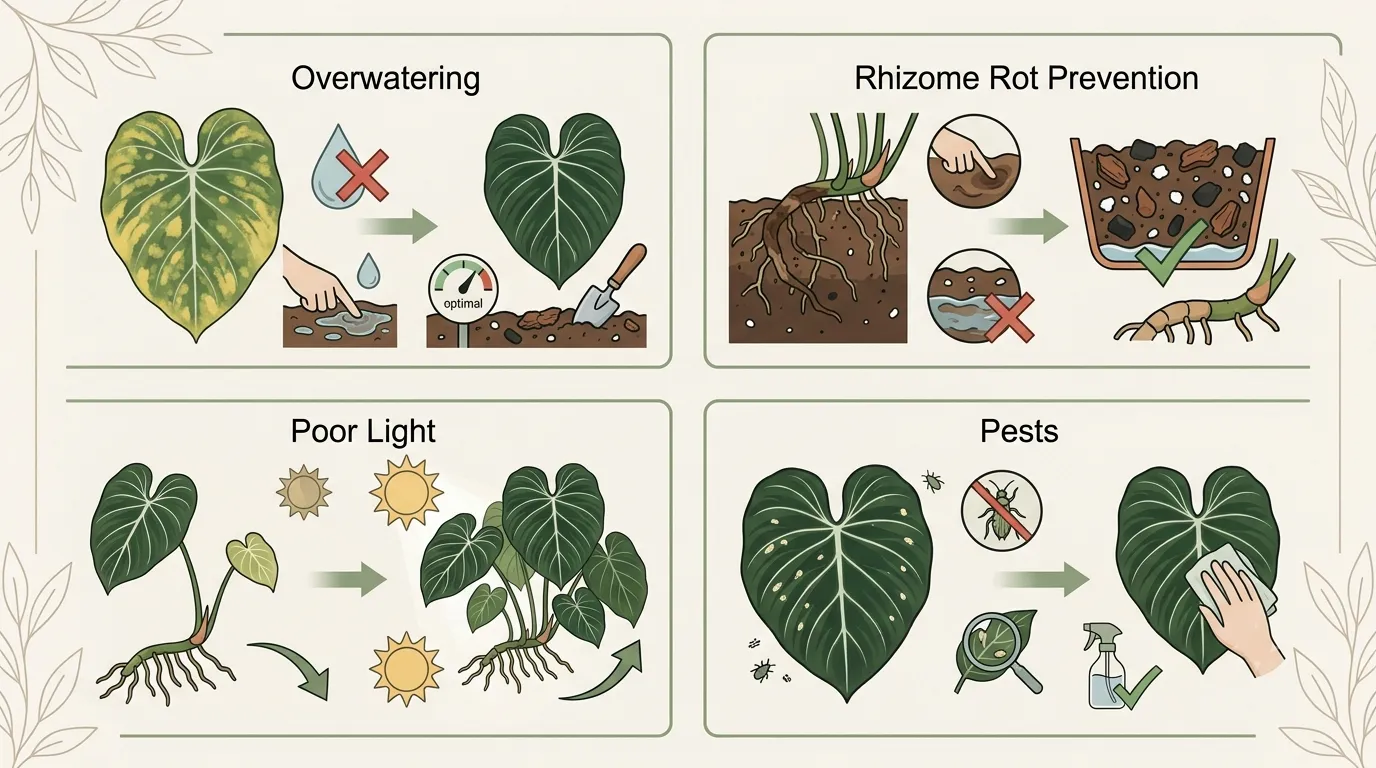
Philodendron gloriosum problems usually occur because of incorrect watering, unsuitable soil conditions, low humidity, or environmental stress. The plant is not extremely difficult to maintain, but its crawling rhizome requires more attention than many beginner-friendly philodendrons.
Identifying problems early helps prevent permanent damage.
Yellowing Leaves
Yellow leaves on Philodendron gloriosum are commonly caused by overwatering, poor drainage, or nutrient imbalance. A single older leaf naturally turning yellow is usually normal, but multiple yellowing leaves often indicate a care issue.
Common causes include:
- Soil staying wet for too long.
- Poor airflow around the roots.
- Root stress.
- Lack of nutrients.
- Sudden environmental changes.
Solutions:
- Allow the soil to dry slightly between waterings.
- Check that the pot has drainage holes.
- Replace compact soil with a more breathable aroid mix.
- Inspect roots for signs of damage.
Prevention:
- Use a chunky, well-draining substrate.
- Avoid watering on a fixed schedule without checking soil moisture.
- Provide stable growing conditions.
Slow or Stalled Growth
Slow growth is one of the most common concerns among gloriosum growers. While this species naturally grows slower than many philodendrons, prolonged inactivity may indicate environmental problems.
Common causes include:
- Low light levels.
- Cool temperatures.
- Low humidity.
- Root-bound conditions.
- Lack of nutrients.
Solutions:
- Move the plant to brighter indirect light.
- Maintain warmer temperatures.
- Improve humidity levels.
- Check whether roots have filled the container.
- Apply balanced fertilizer during active growth.
Prevention:
- Provide consistent care instead of frequent changes.
- Monitor seasonal growth patterns.
- Avoid placing the plant in dark corners.
A slow-growing gloriosum that produces healthy leaves is usually functioning normally.
Root and Rhizome Rot
Root and rhizome rot is one of the most serious Philodendron gloriosum problems because the plant’s horizontal rhizome can remain exposed to excess moisture for extended periods.
Causes include:
- Overwatering.
- Dense soil with poor airflow.
- Water collecting around the rhizome.
- Poor ventilation.
Signs include:
- Soft or mushy rhizome sections.
- Black or brown damaged areas.
- Yellowing leaves.
- Unpleasant smell from the soil.
Treatment:
- Remove the plant from the soil.
- Cut away damaged tissue using a sterile tool.
- Allow healthy sections to dry briefly if needed.
- Repot into fresh, airy soil.
Prevention:
- Use a fast-draining aroid mix.
- Avoid burying the rhizome deeply.
- Maintain proper airflow.
- Water only when needed.
Pest Issues
Philodendron gloriosum can experience common houseplant pests that affect many aroid species.
The most frequent problems include:
- Spider mites.
- Mealybugs.
- Scale insects.
- Thrips.
Signs of pests may include:
- Tiny insects on leaves or stems.
- Sticky residue.
- Leaf discoloration.
- Distorted new growth.
Basic prevention steps include:
- Inspect new plants before introducing them to a collection.
- Clean leaves regularly.
- Maintain good airflow.
- Treat infestations early with appropriate horticultural methods.
Healthy plants with proper light, watering, and humidity are generally more resistant to pest stress.
Beginner Mistakes and Practical Tips
Many Philodendron gloriosum propagation failures happen because growers treat it like a climbing philodendron or rush the rooting process.
Common beginner mistakes include:
Propagating without a node
A leaf alone cannot usually create a new gloriosum plant because the node contains the growth tissue needed for roots and new shoots.
Overwatering fresh cuttings
New propagations have limited roots and cannot absorb large amounts of water. Excess moisture can quickly cause rot.
Providing insufficient humidity
Dry conditions may slow root formation and cause new leaves to struggle.
Using a pot that is too large
Oversized pots hold more moisture than the roots can use, increasing the risk of rot.
Practical tips for better results:
- Choose healthy rhizome sections.
- Keep propagation conditions stable.
- Avoid disturbing cuttings frequently.
- Be patient because gloriosum develops slowly.
Is Philodendron Gloriosum Easy to Grow?
Philodendron gloriosum is moderately easy to grow when its basic environmental needs are met, but it is not as forgiving as some beginner houseplants. It is considered beginner-friendly for growers who can provide proper humidity, indirect light, and well-draining soil.
The plant is easier to maintain when:
- Watering is carefully controlled.
- The rhizome is kept healthy.
- Humidity remains consistent.
- The soil provides good airflow.
Beginners may struggle with gloriosum because overwatering and incorrect planting depth can damage the rhizome. However, with the right setup, it can become a rewarding long-term houseplant.
Philodendron Gloriosum Types and Varieties
Philodendron gloriosum is mainly recognized through variations in leaf appearance rather than officially separated species. Collectors often discuss forms such as dark form and white vein varieties based on visual traits.
Standard Form vs. Dark Form
The standard Philodendron gloriosum is known for green, velvety leaves with prominent white veins. The dark form is valued for deeper green foliage and a more dramatic appearance.
| Feature | Standard Gloriosum | Dark Form Gloriosum |
| Leaf color | Medium to deep green | Darker green tones |
| Vein appearance | Strong white contrast | Often high contrast against dark leaves |
| Collector appeal | Popular and widely recognized | Often considered more unique |
| Care needs | Similar care requirements | Similar care requirements |
Both forms require similar environmental conditions, including bright indirect light, humidity, and airy soil.
The term Philodendron gloriosum white vein usually refers to plants with especially visible vein patterns rather than a completely separate species.
Dark form care is generally the same as standard gloriosum care:
- Avoid direct harsh sunlight.
- Maintain stable humidity.
- Use well-draining soil.
- Provide warmth and consistent moisture.
How Rare Is Philodendron Gloriosum?
Philodendron gloriosum is considered a desirable collector plant, but it is not among the rarest philodendron species available today. Its availability has increased as propagation techniques have improved and more growers cultivate it commercially.
Like other collector plants such as variegated Monstera varieties, Philodendron gloriosum attracts interest because of its unique foliage and limited availability in some regions. Explore the Variegated Monstera Deliciosa Care Guide for another example of a highly valued tropical houseplant.
The perceived rarity depends on:
- Region.
- Plant size.
- Form or variation.
- Availability from local growers.
Searches such as philodendron gloriosum Australia or philodendron gloriosum Melbourne often reflect regional availability concerns rather than true botanical rarity.
The phrase “holy grail of philodendrons” is subjective and usually refers to extremely rare collector plants with limited availability, unusual genetics, or difficult propagation. While gloriosum is highly valued, different collectors may consider other species more exclusive.
What Is the Prettiest Philodendron?
The “prettiest philodendron” is a subjective choice because collectors value different features such as leaf shape, color, texture, and rarity. Philodendron gloriosum is often considered one of the most visually impressive species because of its large heart-shaped leaves, velvet texture, and contrasting white veins.
Other philodendrons may appeal to collectors because of:
- Unusual leaf shapes.
- Color variation.
- Growth habits.
- Rare patterns.
Philodendron gloriosum remains popular because it combines dramatic appearance with a distinctive crawling growth style that differs from many common houseplants.
Conclusion
Philodendron gloriosum propagation can be successfully achieved through rhizome division or node-containing cuttings grown in water or soil. As a crawling aroid, Philodendron gloriosum requires a different propagation and care approach compared with climbing philodendrons. Healthy nodes, proper humidity, warm temperatures, indirect light, and patience are the key factors for successful root development. With the right environment and consistent care, this velvet-leaf plant can grow into a striking indoor specimen.
Frequently Asked Questions
Is Philodendron gloriosum a climber or a crawler?
Philodendron gloriosum is a crawler. It grows horizontally through a rhizome along the soil surface rather than climbing upward with aerial roots like many other philodendrons.
How long does it take for Philodendron gloriosum cuttings to root in water?
Philodendron gloriosum cuttings typically develop roots within several weeks when kept in warm temperatures, bright indirect light, and stable humidity. Rooting speed depends on cutting health and environmental conditions.
Can you put Philodendron gloriosum cuttings straight into soil?
Yes, Philodendron gloriosum cuttings with a healthy node can be placed directly into soil. Soil propagation reduces transplant shock but makes root development harder to monitor.
Does Philodendron gloriosum need a moss pole?
No, Philodendron gloriosum does not usually need a moss pole because it is a crawling plant. It grows horizontally through a rhizome rather than climbing vertically.
How often should you water Philodendron gloriosum?
Water Philodendron gloriosum when the top layer of soil begins to dry. The exact schedule depends on humidity, temperature, pot size, and soil drainage.
What are the most common problems with Philodendron gloriosum?
The most common problems include yellowing leaves, slow growth, root or rhizome rot, and pests caused by improper watering, poor drainage, or unsuitable environmental conditions.
Is Philodendron gloriosum easy to grow for beginners?
Philodendron gloriosum is moderately easy for beginners who can provide proper humidity, indirect light, and well-draining soil. It requires more attention than very low-maintenance houseplants but grows well with consistent care.