
Introduction
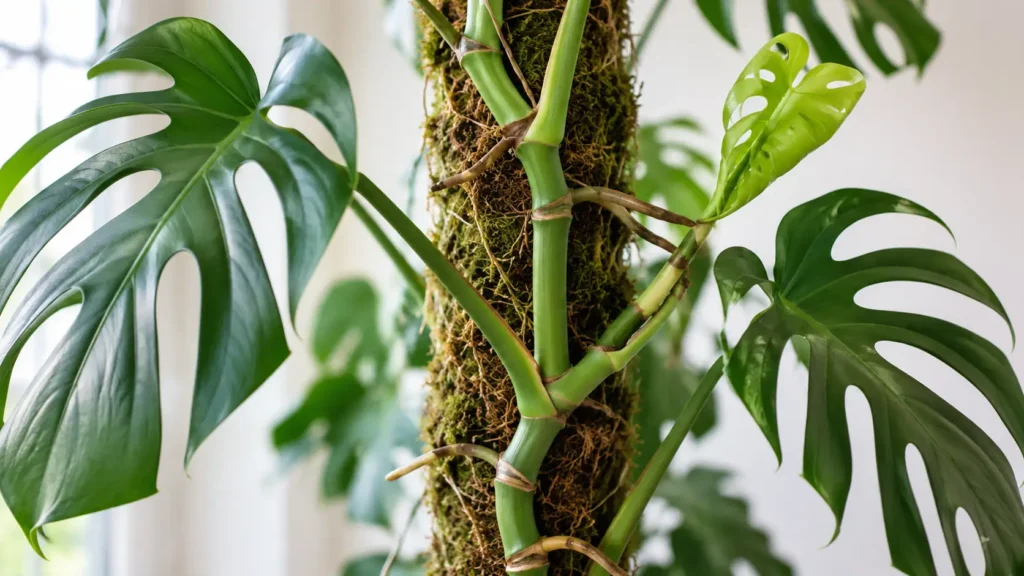
A monstera plant node is the point on a Monstera stem where leaves, aerial roots, and new growth develop. Often called a monstera node or monstera deliciosa node, it is the plant’s primary growth point and the most important part of any cutting used for propagation. Without at least one healthy node, a cutting cannot produce new stems or roots. Understanding how to identify, protect, and propagate from a node helps gardeners successfully grow new Monstera plants while avoiding common propagation mistakes. For growers interested in specific Monstera varieties, understanding the care requirements of a variegated Monstera deliciosa can help maintain healthy growth and preserve unique leaf patterns.
Quick Summary
- A monstera node is a small bump on the stem where roots, leaves, and new stems emerge.
- Nodes are essential for propagation because every viable cutting must contain at least one healthy node.
- Nodes and aerial roots are different structures, although they commonly grow from the same location.
- Healthy nodes appear as slightly raised, textured bumps, while dormant or stressed nodes may appear flatter or drier.
What Is a Node on a Monstera?
A monstera node is a specialized growth point containing meristem tissue that produces new leaves, stems, roots, and branches. Monstera deliciosa is a tropical climbing plant species in the Araceae family known for its large perforated leaves and aerial root system. Botanically, the node is the section of the stem where plant tissues remain capable of active growth. Every leaf node monstera develops from one of these points, making monstera leaf nodes essential for continued development and propagation.
Unlike ordinary stem tissue, a node contains dormant buds that can become active under suitable growing conditions. This is why propagation always depends on including a node rather than simply cutting a leaf. Because Monsteras naturally climb and produce aerial roots, growers can also explore proper climbing setups and care techniques in a complete hanging Monstera guide.
What Does a Monstera Node Look Like?
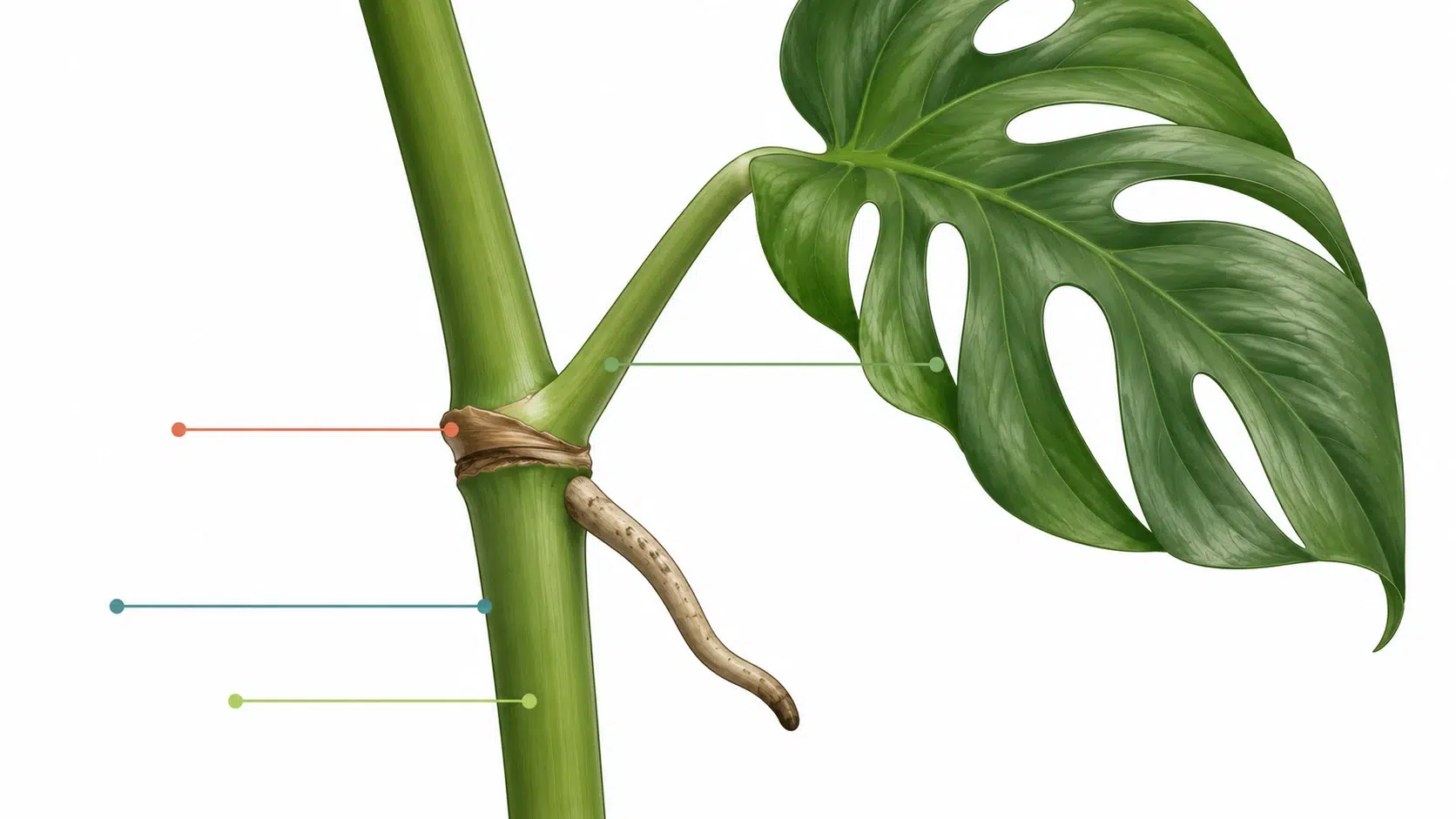
A monstera node usually appears as a small raised ring, bump, or swollen section of the stem. It is commonly brown, tan, or slightly textured and is typically located directly beneath a leaf petiole.
Healthy nodes often show:
- A slightly raised or knobby appearance
- Small aerial root growth
- Leaf attachment point
- Visible growth eye or dormant bud
- Firm texture without rot
Dormant nodes may appear flatter but still remain capable of producing new growth when environmental conditions improve.
Monstera Node vs. Aerial Root
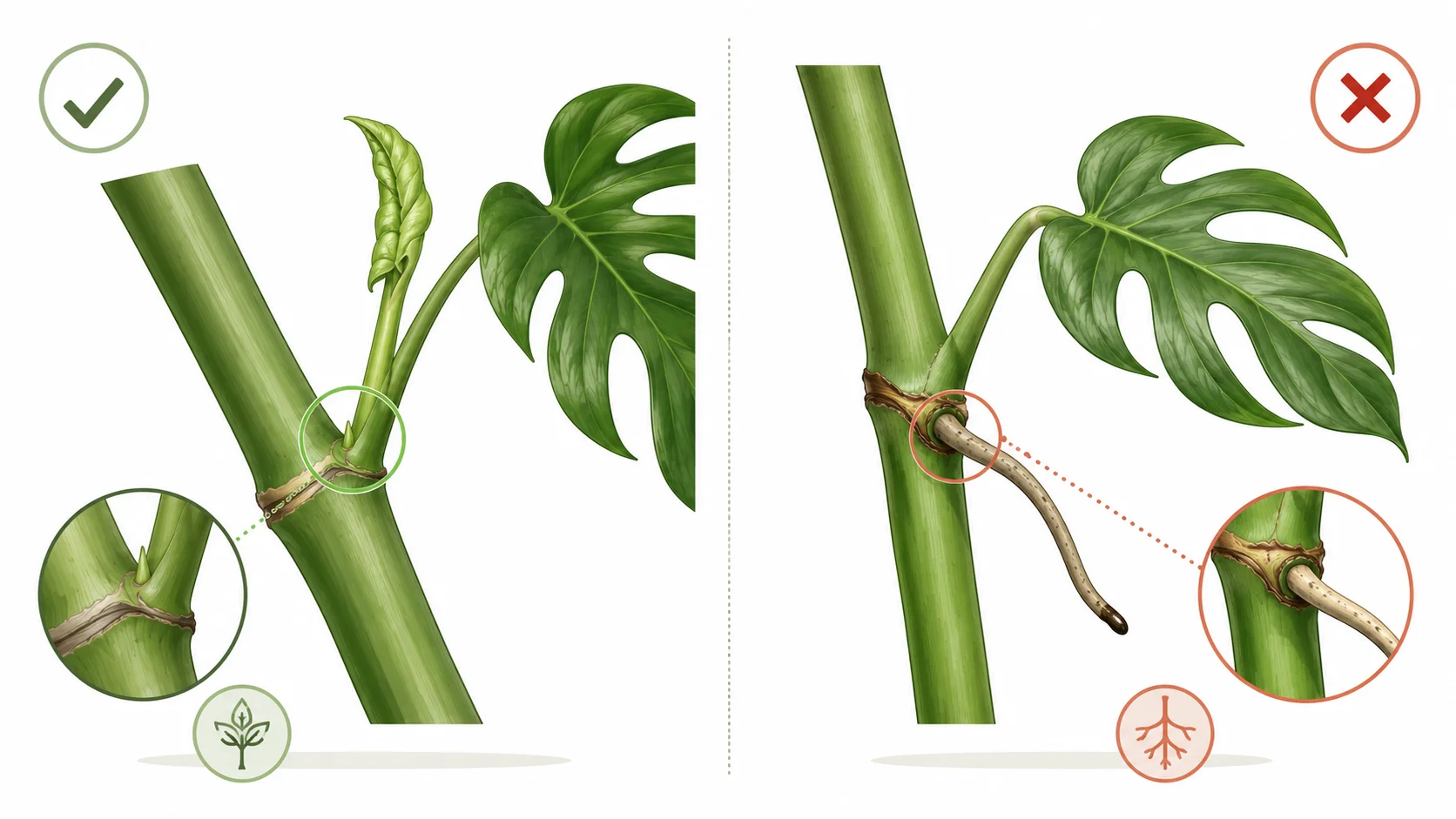
Although many people confuse them, a node and an aerial root are different plant structures.
| Feature | Monstera Node | Aerial Root |
| Appearance | Raised bump or ring on stem | Long brown or green root |
| Function | Produces leaves, stems, and roots | Anchors plant and absorbs moisture |
| Growth Origin | Contains meristem tissue | Emerges from a node |
| Needed for Propagation | Yes | No, but beneficial |
Aerial roots help climbing species such as the fruit salad plant attach to trees and absorb moisture from humid air. However, only the node can generate an entirely new plant.
Why Nodes Matter for Propagation
Nodes are the only parts of a Monstera capable of producing new roots, stems, and leaves. Random stem sections without nodes lack the growing tissues necessary to regenerate.
Every successful monstera node growth begins when dormant cells inside the node become active after cutting. Over time, these cells develop into a monstera new stem, roots, and fresh foliage.
Can You Propagate a Monstera Without a Node?
No. You cannot propagate a Monstera without a node.
A single leaf placed in water may remain green for weeks or even produce temporary roots if attached tissue is present, but without a node it cannot produce a new stem or develop into a complete plant.
A leaf-only cutting is therefore not considered a viable propagation.
Can You Propagate With Just One Node?
Yes. One healthy node is enough to propagate a Monstera.
The smallest viable cutting usually includes:
- One healthy node
- A short section of stem
- Ideally one leaf (though not always required)
A Monstera can survive temporarily without leaves if the node remains healthy and contains sufficient stored energy. Once rooted, the dormant bud may eventually produce new growth.
How to Propagate a Monstera From a Node
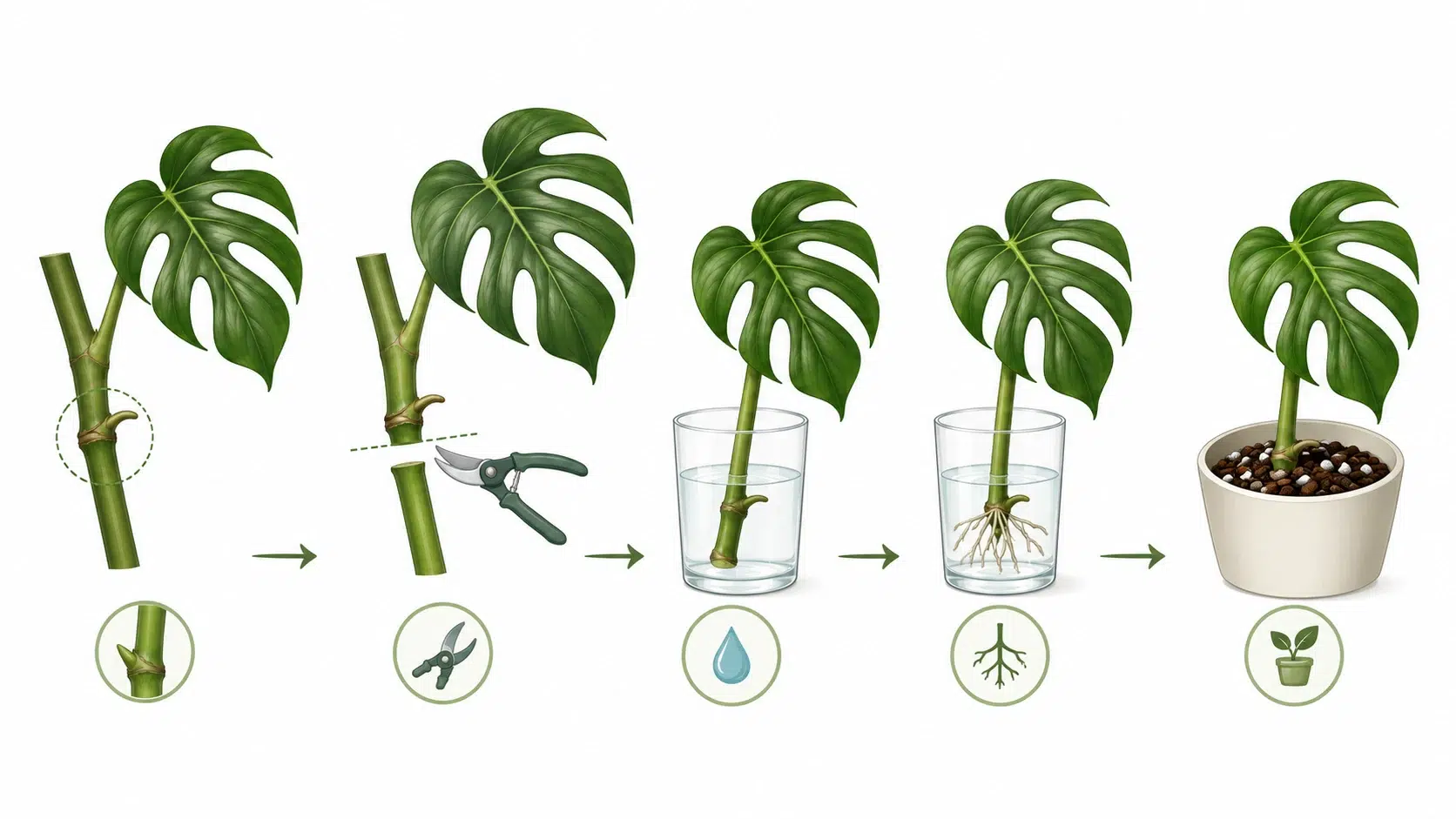
Propagating a Monstera from a node is straightforward when the cutting contains healthy stem tissue and receives appropriate care.
Steps:
- Identify a healthy node beneath a mature leaf.
- Cut approximately 1–2 cm below the node using sterilized pruning shears.
- Choose either water or soil for rooting.
- Place the node in bright, indirect light.
- Maintain moderate moisture and humidity.
- Wait until roots reach several inches long.
- Transfer rooted cuttings into well-draining potting mix if rooted in water.
Choosing the correct container after propagation is also important, as the right Monstera pot size and material supports healthy root development and prevents moisture problems.
Avoid exposing the node to direct afternoon sunlight or allowing it to remain constantly waterlogged. If you’d rather browse by plant instead of scrolling a table, the Houseplant Node & Stem Propagation Database on Notion organizes the same node and cutting details into individual, filterable plant entries.
Where to Cut a Monstera for Propagation
Always cut below the node so the cutting retains the complete growth point.
Best practices include:
- Use clean, sterilized tools.
- Leave a small section of stem beneath the node.
- Avoid cutting through the node itself.
- Remove damaged leaves if necessary.
Simply cutting off Monstera leaves without including a node will not create a new plant.
Propagating Monstera in Water vs. Soil
Both propagation methods work successfully when environmental conditions remain stable.
| Feature | Water Propagation | Soil Propagation |
| Root visibility | Easy to monitor | Hidden |
| Rooting speed | Often slightly faster | Moderate |
| Transplant shock | Possible after potting | Minimal |
| Moisture control | Easy | Requires careful watering |
| Beginner friendly | Yes | Yes |
Water propagation allows gardeners to monitor root development, while soil propagation encourages roots to adapt immediately to their final growing medium.
How to Activate a Dormant Node
Dormant nodes usually activate when growing conditions improve.
Helpful techniques include:
- Provide bright indirect light.
- Maintain humidity around 60–70%.
- Keep temperatures warm.
- Water consistently without saturating soil.
- Some experienced growers lightly scratch surrounding stem tissue to stimulate healing responses, but excessive wounding should be avoided because it increases disease risk.
Dormant nodes often require patience, as activation may take several weeks.
Dividing vs. Propagating a Monstera
Division and propagation are different techniques. If you’re propagating other houseplants alongside your Monstera, this node propagation reference comparing 21 houseplant species breaks down cut placement, rooting time, and difficulty side by side.
Division separates an existing plant with an established root system into multiple plants.
Node propagation creates an entirely new root system from a stem cutting.
| Division | Node Propagation |
| Existing roots remain attached | New roots develop |
| Immediate established plants | Requires rooting period |
| Best for mature plants | Suitable for stem cuttings |
| Faster recovery | Slower establishment |
Choose division when repotting mature Monsteras and node propagation when expanding plants from stem cuttings. Other climbing Monstera species, such as Monstera adansonii, follow similar growth patterns with vines, nodes, and aerial roots.
Common Mistakes in Monstera Node Propagation
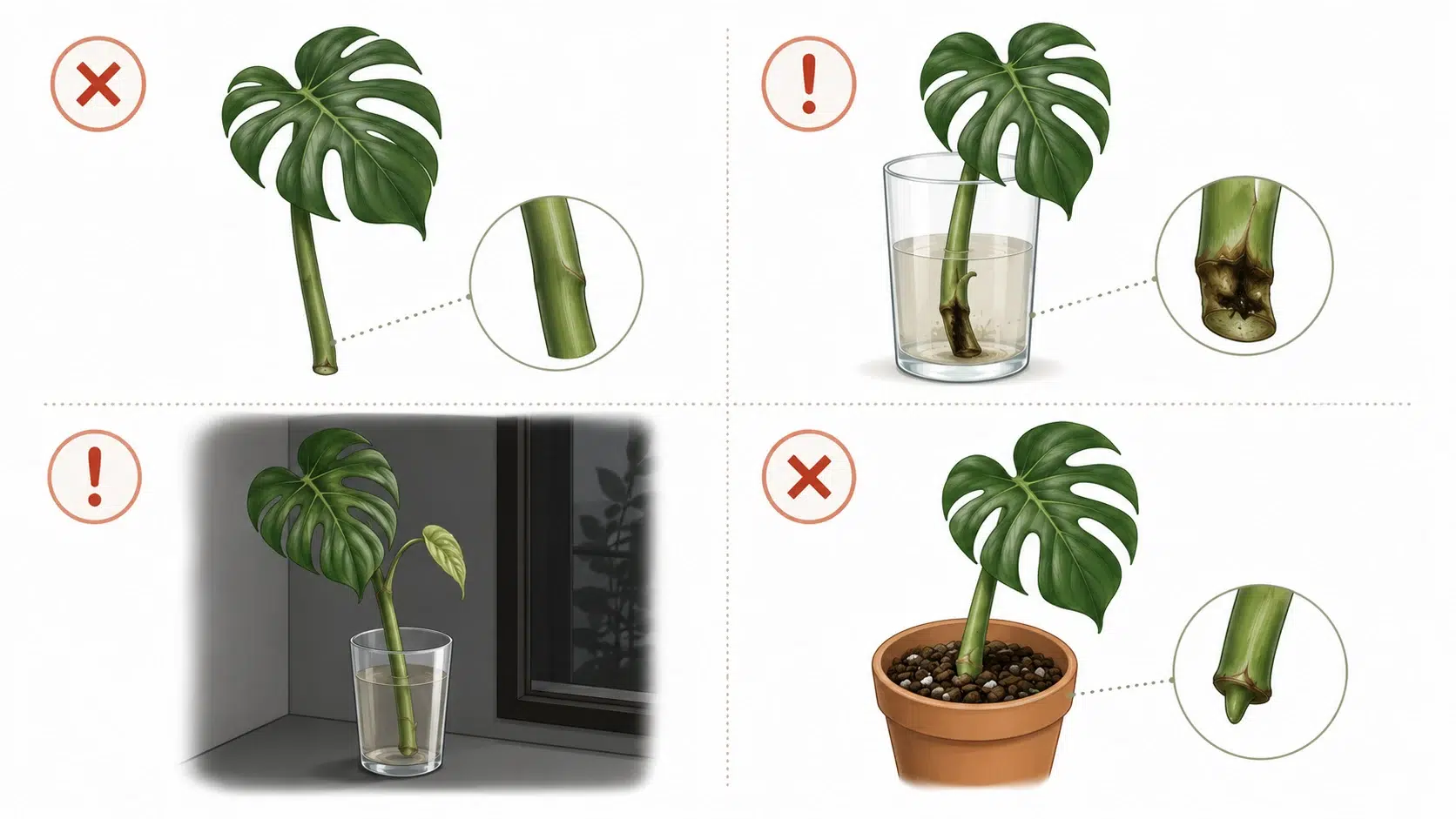
Several common mistakes reduce propagation success.
- Cutting without a node: The cutting cannot develop into a complete plant.
- Overwatering: Constant moisture promotes stem rot before roots establish.
- Insufficient light: Poor lighting slows root formation and weakens growth.
- Transplanting too early: Wait until roots become well developed before moving cuttings into soil.
Avoid cutting off healthy nodes unless intentionally taking propagation cuttings. For a raw, exportable version of this same propagation data — one you can copy, sort, or adapt for your own tracking — the houseplant node propagation database on Google Sheets lays out cut placement and rooting timelines in a simple spreadsheet view.
Troubleshooting Monstera Stress and Growth Issues
Why Is My Monstera Growing a Nub?
A small nub is usually an emerging aerial root or dormant growth point becoming active.
If the nub remains firm and green or brown, it is generally a healthy sign rather than a disease. Continue providing adequate light, humidity, and consistent watering.
Signs of an Overwatered Monstera
Common symptoms include:
- Yellow leaves
- Soft stems
- Root rot
- Wilting despite wet soil
- Mushy roots
- Foul-smelling potting mix
Allow the growing medium to dry appropriately before watering again and ensure the container drains freely. Maintaining the correct watering schedule is essential for Monstera health, especially after propagation and repotting.
What Does a Stressed Monstera Look Like?
A stressed Monstera may display:
- Drooping foliage
- Slow growth
- Brown leaf edges
- Yellowing leaves
- Curling leaves
- Delayed recovery after repotting
Repotting shock is temporary for many plants and usually improves when watering, lighting, and humidity remain stable.
Should You Wipe Off Guttation?
No, wiping off guttation is usually unnecessary.
Guttation occurs when excess water exits through specialized pores on leaf edges. It is a normal physiological process rather than a disease. If desired, droplets can simply be wiped away for cleanliness, but they generally do not harm the plant.
Interesting Monstera Facts
One of the most expensive Monsteras sold publicly has been a rare highly variegated cultivar, with exceptional specimens selling for around $5,000 or more due to their unusual leaf patterns and limited availability.
Monstera fruit becomes edible only when fully ripe. Unripe fruit contains calcium oxalate crystals that can irritate the mouth and throat. For this reason, unripe Monstera fruit should not be eaten.
Conclusion
A monstera plant node is the essential growth point responsible for producing new roots, stems, and leaves. Successful propagation always requires at least one healthy node because leaves alone cannot grow into complete plants. Identifying nodes correctly, making clean cuts below the node, providing appropriate light and moisture, and avoiding common propagation mistakes greatly improve success rates. Whether rooting in water or soil, understanding the role of the monstera node provides the foundation for growing healthy, vigorous new Monstera plants.
FAQs
Can you propagate a Monstera node without a leaf?
Yes. A healthy node can produce new growth even without an attached leaf, although rooting may take longer because stored energy is more limited.
Can a Monstera grow from just a node?
Yes. A healthy node with a section of stem can eventually produce roots, stems, and leaves under suitable growing conditions.
How long does it take a Monstera node to root?
Most Monstera nodes begin producing roots within two to six weeks, depending on temperature, humidity, light, and the overall health of the cutting.
Do all Monstera cuttings need a node to survive?
Yes. Every viable Monstera cutting intended for propagation requires at least one node because this is where new growth originates.
Can you propagate a cheese plant (Monstera) the same way?
Yes. The common cheese plant is propagated using the same node-based method. Cuttings should always include at least one healthy node before rooting in water or soil.



4 Responses