
Introduction
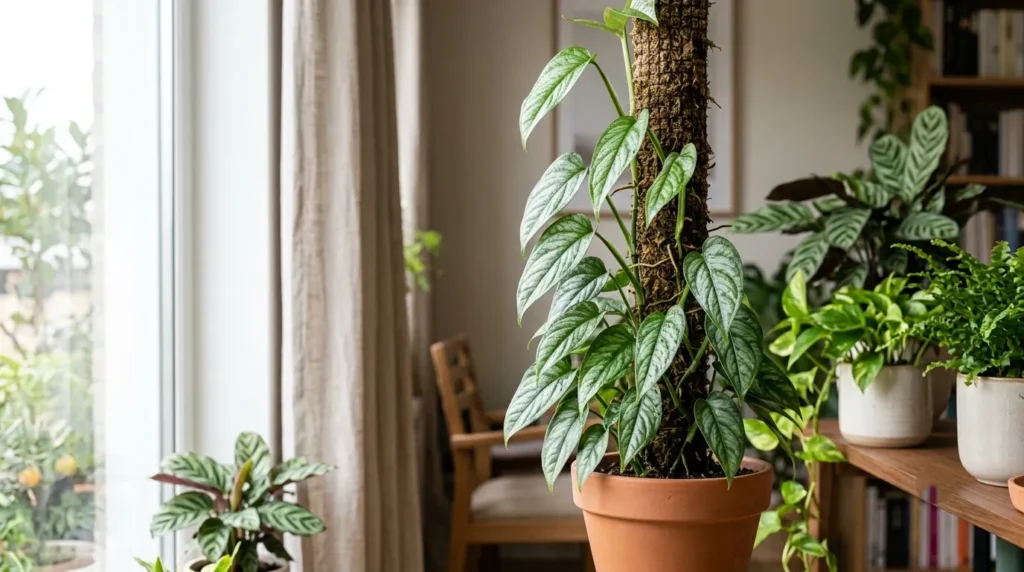
Monstera Siltepecana, also known as the silver monstera or monstera silver, is a tropical climbing plant recognized for its silvery patterned leaves and unique growth habit. When a Monstera Siltepecana is not growing, the cause is usually related to light, watering, humidity, nutrients, maturity, or environmental stress. This guide explains why growth slows down and how to create the right conditions for healthier leaves, climbing growth, and mature development.
Quick Summary
- Monstera Siltepecana grows slowly indoors, especially when it remains in its juvenile trailing stage.
- Common reasons for stalled growth include poor lighting, incorrect watering, low humidity, nutrient problems, and repotting stress.
- Mature leaves and fenestrations usually appear when the plant climbs and receives proper support.
- Correct light, moisture balance, humidity, and a suitable pot size can encourage consistent new growth.
What Is Monstera Siltepecana?
Monstera Siltepecana is a tropical aroid species from the genus Monstera and family Araceae. It is naturally found in parts of Central America and is valued as a houseplant because of its distinctive silver-green foliage. The plant is commonly called silver monstera because its juvenile leaves display a metallic silver pattern across a darker green background. Monstera Siltepecana belongs to the genus Monstera, a group of tropical flowering plants in the Araceae family known for their climbing growth habits and distinctive foliage.
Unlike some popular Monstera varieties with large split leaves, Monstera Siltepecana begins life with smaller, elongated leaves and a trailing growth habit. As it matures and climbs, its leaves can become larger and develop a more typical Monstera appearance. Like other popular Monstera varieties, including the variegated forms discussed in our Variegated Monstera Deliciosa Care Guide, Monstera Siltepecana is valued for its unique foliage patterns and changing appearance as it matures.
The plant’s slow growth indoors often causes confusion among growers. A healthy Monstera Siltepecana may appear unchanged for weeks if conditions are not ideal or if it is naturally transitioning between growth stages.
Is Monstera Siltepecana Rare?
Monstera Siltepecana is considered less common than widely available Monstera varieties such as Monstera deliciosa, but its rarity depends on location and availability. It became popular among houseplant collectors because of its unusual silver foliage and climbing growth pattern.
Its popularity has increased because it offers a different appearance from traditional Monsteras while remaining relatively manageable indoors. However, slow growth and the difficulty of finding mature specimens can make it seem rarer than it actually is.
What Makes Monstera Siltepecana Unique?
Monstera Siltepecana stands out because of its combination of silver coloring, narrow leaves, and climbing behavior. Unlike many common houseplants, it changes significantly as it matures.
Key characteristics include:
- Juvenile leaves with silver-gray markings.
- Thin, elongated foliage compared with larger Monstera species.
- Natural climbing ability when given support.
- Mature leaves that may become larger and more textured.
- A transition from trailing growth to vertical climbing growth.
Its ability to transform with age makes it especially interesting for indoor plant collectors.
Growth Habit — Trailing, Climbing & Mature Form
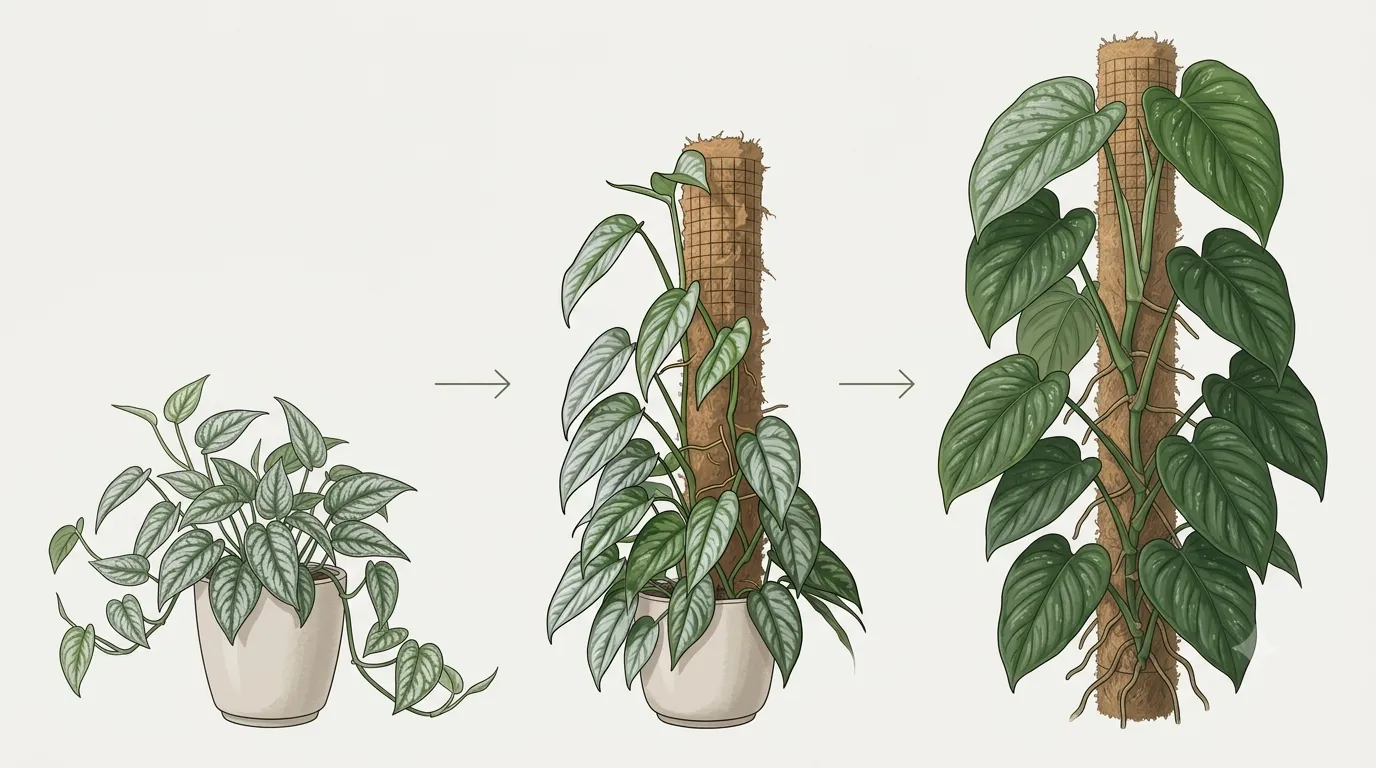
Monstera Siltepecana can grow as both a trailing and climbing plant. In its juvenile stage, it commonly grows horizontally along the soil surface or hangs from containers. In nature, it eventually attaches itself to trees or other supports using aerial roots and begins climbing upward.
When grown indoors without support, the plant may continue producing smaller leaves and appear as though it is “growing out, not up.” Providing a moss pole, trellis, or another climbing structure encourages the plant to develop a more mature form.
A climbing Monstera Siltepecana often produces:
- Larger leaves.
- Stronger stems.
- More developed aerial roots.
- Increased vertical growth.
- Greater potential for mature leaf characteristics.
Monstera Siltepecana Fenestration
Monstera Siltepecana fenestration refers to the development of natural leaf splits or holes that appear in mature Monstera leaves. However, fenestrations are not usually present on young plants.
The transition from juvenile to mature leaves is influenced by:
- Climbing support that allows upward growth.
- Strong indirect light.
- Adequate nutrition.
- Healthy root development.
- Proper humidity levels.
A small trailing plant with no support may remain in its juvenile form for a long time, even if it is healthy.
How Big Does Monstera Siltepecana Get?
Monstera Siltepecana size depends on growing conditions, support, and whether it is grown indoors or outdoors. Indoors, it usually remains much smaller than wild specimens because of limited space and lower light intensity.
Typical size ranges include:
- Indoor trailing plants: approximately 2–6 feet of vine length.
- Indoor climbing plants: can grow several feet upward with support.
- Outdoor tropical growth: can become significantly larger when climbing trees or structures.
Factors affecting size include:
- Light availability.
- Humidity.
- Root health.
- Support structure.
- Fertilization.
- Growing season length.
Why Is My Monstera Siltepecana Not Growing?
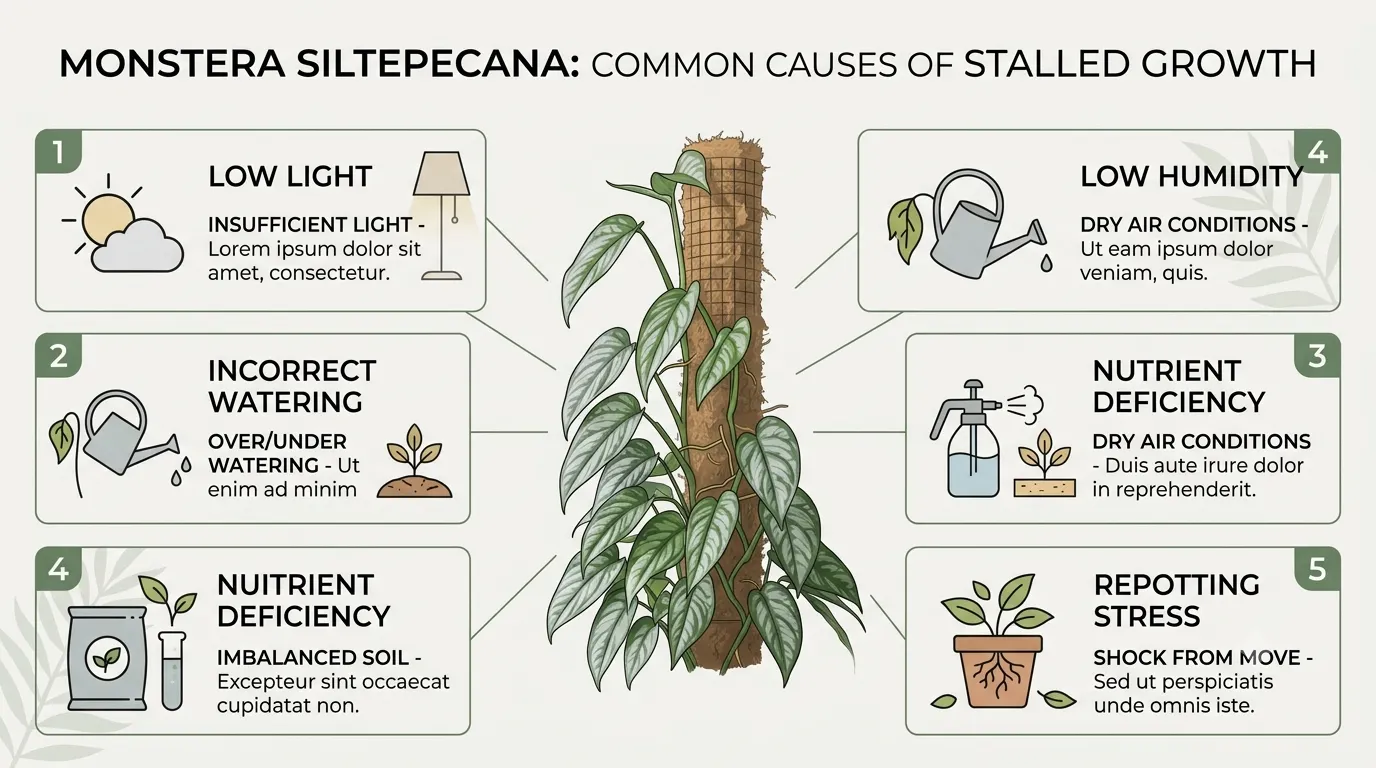
A Monstera Siltepecana not growing is usually a sign that one or more environmental conditions are limiting its energy production. The plant may be alive but inactive because it is conserving resources rather than producing new leaves.
Common causes include:
- Insufficient light: Low light slows photosynthesis and reduces new leaf production.
- Incorrect watering: Both underwatering and overwatering can stop growth.
- Low humidity: Dry air can stress tropical plants and slow development.
- Nutrient deficiency: Lack of essential nutrients limits leaf and root growth.
- Seasonal dormancy: Growth naturally slows during cooler months.
- Transplant shock after repotting: Roots may need time to recover.
- Root problems: Damaged or unhealthy roots prevent nutrient uptake.
A Monstera Siltepecana not growing indoors often improves after correcting environmental conditions rather than receiving more fertilizer.
Why Are My Monstera Leaves Small?
Small Monstera leaves usually indicate that the plant is still in its juvenile stage or lacks the conditions needed for mature growth. Light, climbing support, and overall plant health strongly influence leaf size.
Common reasons for small leaves include:
- The plant is growing as a trailing vine instead of climbing.
- Light levels are too low.
- The plant is young and naturally producing juvenile foliage.
- Roots are restricted or unhealthy.
- Nutrients are insufficient.
Providing a climbing structure and improving care conditions can encourage larger leaves over time.
Monstera Siltepecana vs. Monstera Peru
Monstera Siltepecana and Monstera Peru are both climbing aroids with textured foliage, but they differ in appearance, growth habits, and care requirements. Both Monstera Siltepecana and Monstera Peru are climbing aroids that can be propagated through stem cuttings, and similar propagation techniques are covered in our Propagate Monstera Peru: Step-by-Step Guide.
| Feature | Siltepecana | Peru |
| Leaf appearance | Silver-green elongated leaves | Thick, heavily textured dark green leaves |
| Texture | Slightly raised veins with smoother surface | Strongly puckered or quilted texture |
| Growth habit | Trailing when young, climbing when mature | Strong climbing habit |
| Growth rate | Slow to moderate | Moderate |
| Light needs | Bright indirect light preferred | Bright indirect light preferred |
| Humidity preference | Moderate to high humidity | Moderate to high humidity |
Both plants benefit from support structures, but Monstera Siltepecana is often grown for its silver coloration and transformation into mature climbing growth.
Monstera Siltepecana Care Guide
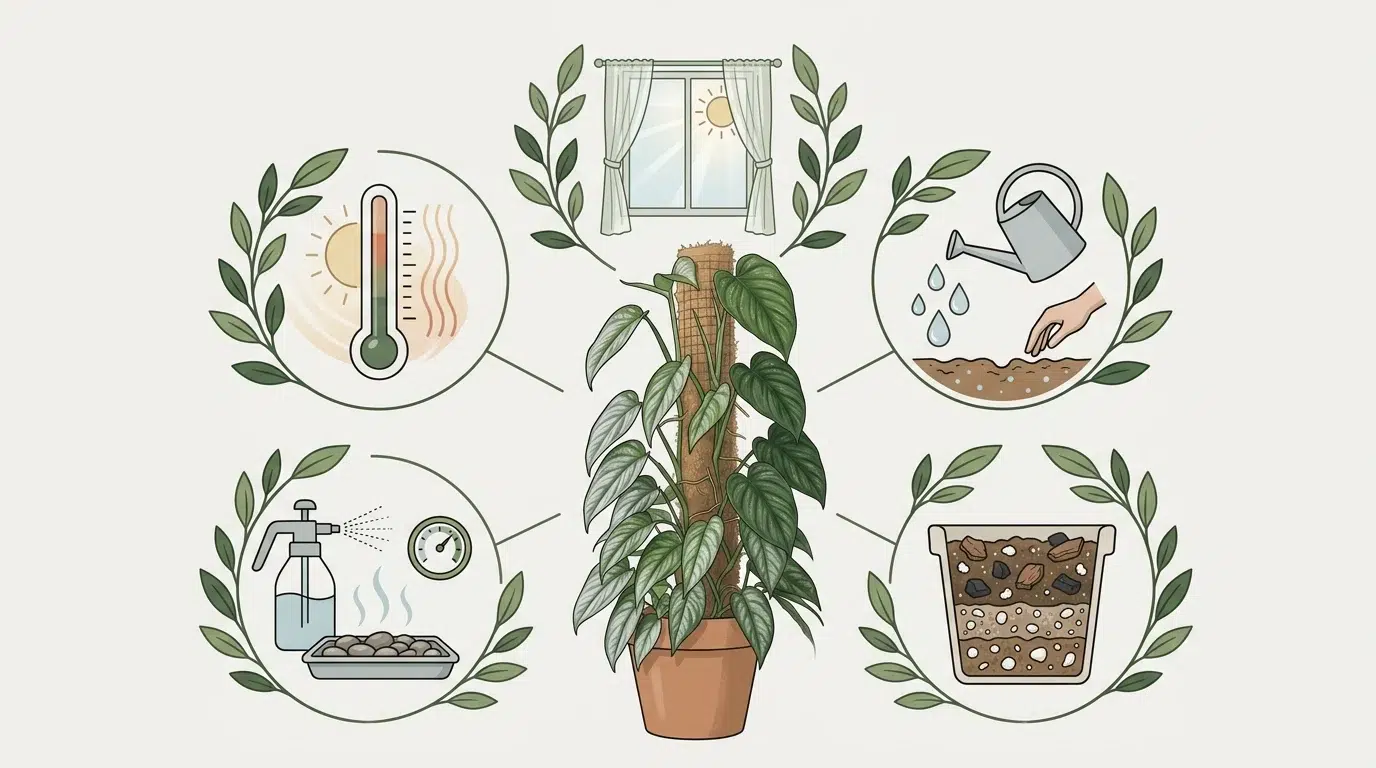
Proper care is essential for preventing slow growth and encouraging healthy development. Monstera Siltepecana prefers warm, humid conditions similar to its tropical origin.
Light Requirements
Monstera Siltepecana grows best in bright indirect light. Too little light commonly causes slow growth, smaller leaves, and longer spaces between leaves. Providing the correct light intensity is important for preventing slow growth, and understanding the difference between lighting conditions can help growers choose the best placement using our Bright Indirect Light vs Direct Sunlight for Plants guide.
Avoid intense direct sunlight because it can scorch delicate foliage.
Watering Needs
Monstera Siltepecana prefers evenly moist soil but does not tolerate constantly wet roots. Allow the top portion of soil to dry before watering again.
A healthy watering approach includes:
- Water when the top 1–2 inches of soil feel dry.
- Reduce watering during cooler months.
- Avoid letting roots sit in standing water.
A Monstera can sometimes survive two weeks without water depending on temperature, pot size, and humidity, but prolonged dryness may cause leaf curling and stress.
Humidity
Monstera Siltepecana humidity requirements are higher than those of many common houseplants. Moderate to high humidity supports better leaf development and reduces stress.
Ideal humidity is generally around 50–70%.
Soil Preferences
The plant prefers a loose, well-draining aroid mix containing:
- Peat or coco coir.
- Perlite.
- Orchid bark.
- Organic material.
Good airflow around roots helps prevent overwatering problems.
Pot Size Considerations
Monsteras generally prefer a slightly snug pot rather than an excessively large container. A pot that is too large can hold extra moisture and increase the risk of root problems.
Fertilization Practices
Balanced fertilizer can support active growth during spring and summer. Coffee grounds are not a reliable fertilizer because they can alter soil conditions and do not provide balanced nutrients.
Commercial fertilizers such as complete houseplant fertilizers can be used when applied according to label instructions.
Climate Tolerance
Monstera Siltepecana prefers warm temperatures between approximately 65–85°F (18–29°C). It is sensitive to cold drafts and temperatures below its tropical comfort range.
| Care Factor | Requirement |
| Light | Bright indirect light |
| Water | Moist but well-draining soil |
| Humidity | Moderate to high |
| Soil | Airy aroid mix |
| Temperature | 65–85°F (18–29°C) |
How to Stimulate New Growth
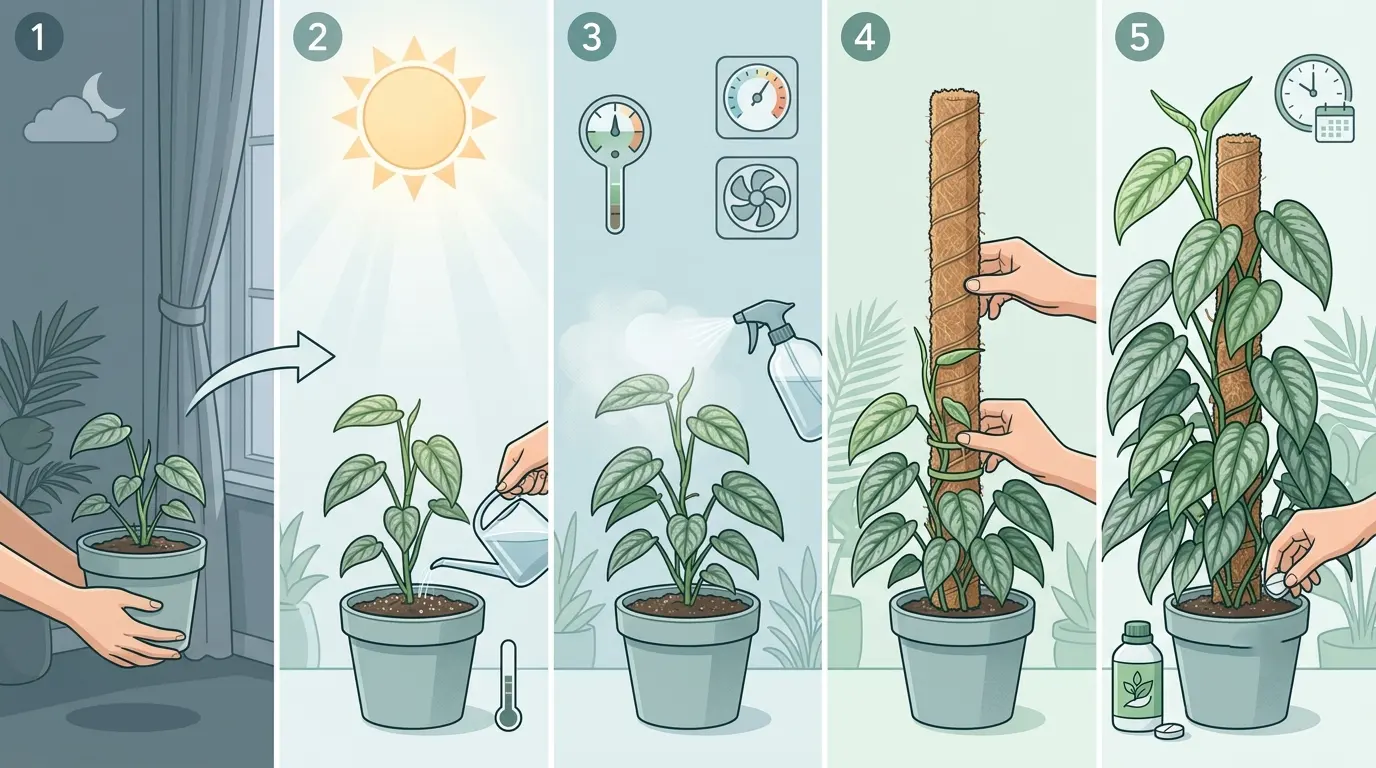
To encourage new growth on Monstera Siltepecana, focus on improving the plant’s growing environment rather than forcing rapid growth.
Steps to stimulate growth:
- Move the plant to brighter indirect light.
- Maintain consistent watering.
- Increase humidity if air is dry.
- Add a moss pole or climbing support.
- Fertilize during active growing seasons.
- Check roots after signs of stress.
- Avoid frequent repotting.
Most healthy Monsteras produce new leaves during spring and summer when conditions are favorable.
Common Problems & Troubleshooting
Monstera Siltepecana problems are often connected to environmental imbalance rather than serious disease. Identifying the specific symptom helps determine the correct solution and prevents further decline.
Yellow Leaves — Why It Happens, How to Fix, How to Prevent
Yellow leaves on Monstera Siltepecana usually occur because of watering problems, poor root health, insufficient light, or natural aging. A single older leaf turning yellow is normal, but multiple yellow leaves often indicate stress.
Common causes include:
- Overwatering: Constantly wet soil reduces oxygen around roots and can lead to root damage.
- Underwatering: Extended dryness causes leaves to lose color and become weak.
- Low light: Reduced photosynthesis can cause slow decline.
- Nutrient imbalance: Lack of essential nutrients may affect leaf color.
How to fix yellow leaves:
- Check soil moisture before watering again.
- Improve drainage if soil stays wet for too long.
- Move the plant to brighter indirect light.
- Remove severely damaged leaves after identifying the cause.
How to prevent yellow leaves:
- Use a well-draining soil mix.
- Follow a consistent watering routine.
- Avoid placing the plant in dark corners.
- Fertilize during active growth periods.
Overwatering Issues — Why It Happens, How to Fix, How to Prevent
Overwatering is one of the most common reasons a Monstera Siltepecana stops growing. The problem is not only the amount of water but how long the roots remain wet.
Signs of overwatering include:
- Yellowing leaves.
- Soft or weak stems.
- Slow growth.
- Mushy roots.
- Soil that remains wet for many days.
How to fix overwatering:
- Allow the soil to dry partially before watering again.
- Improve drainage with a lighter soil mix.
- Check roots if symptoms continue.
- Remove damaged roots during repotting if necessary.
Prevention methods:
- Use pots with drainage holes.
- Avoid watering on a fixed schedule without checking soil.
- Match watering frequency with temperature and season.
Slow or Stalled Growth — Why It Happens, How to Fix, How to Prevent
Slow growth is common in Monstera Siltepecana because it naturally grows slower than some other Monstera species. However, sudden growth stops may indicate environmental problems.
Possible causes include:
- Low light exposure.
- Root stress.
- Lack of nutrients.
- Seasonal slowdown.
- Lack of climbing support.
Solutions:
- Increase light quality.
- Provide a moss pole or trellis.
- Feed lightly during active growth.
- Maintain stable humidity.
- Avoid unnecessary changes to the environment.
Pest-Related Growth Issues — Why It Happens, How to Fix, How to Prevent
Pests such as spider mites, mealybugs, and scale insects can reduce plant energy and slow growth by feeding on leaves and stems.
Signs of pest problems include:
- Sticky residue on leaves.
- Small insects around stems.
- Yellow spots.
- Distorted new growth.
How to fix pest problems:
- Isolate affected plants.
- Clean leaves with water or gentle insecticidal solutions.
- Inspect stems and leaf undersides regularly.
Prevention:
- Check new plants before bringing them indoors.
- Maintain good airflow.
- Clean leaves occasionally to remove dust and pests.
Propagating Monstera Siltepecana
Monstera Siltepecana propagation is usually done through stem cuttings containing at least one healthy node. The node is important because it contains the growth point needed for producing new roots and shoots.
A cutting without a node may stay alive temporarily but will not develop into a new plant.
Common propagation methods include:
- Water propagation.
- Soil propagation.
- Sphagnum moss propagation.
The best time to propagate is during active growth periods, especially spring and early summer.
Can Monstera Siltepecana Grow in Water?
Yes, Monstera Siltepecana can grow in water temporarily and can produce roots from healthy stem cuttings. Water propagation is useful for monitoring root development, but long-term growth is usually better in soil or another suitable growing medium.
Steps for propagation:
- Select a healthy stem with at least one node.
- Cut below the node using clean scissors.
- Remove lower leaves if they would sit underwater.
- Place the cutting in water or a moist rooting medium.
- Keep it in bright indirect light.
- Transfer to soil after strong roots develop.
Water propagation can take several weeks depending on temperature, humidity, and cutting health.
Beginner Mistakes & Overlooked Factors
Many Monstera Siltepecana owners assume the plant is unhealthy when it simply has a slower growth pattern. Understanding normal behavior prevents unnecessary changes.
Common beginner mistakes include:
- Misjudging light levels: A bright room does not always mean the plant receives enough usable light. Placement near a window with filtered light is often better.
- Over-fertilizing: Adding extra fertilizer does not force faster growth and may damage roots.
- Ignoring seasonal dormancy: Growth naturally slows during colder months or lower-light periods.
- Using the wrong pot size: A very large pot can keep soil wet longer and stress roots.
- Confusing dormancy with decline: A plant that remains firm, green, and healthy may simply be resting.
A healthy Monstera Siltepecana can pause growth temporarily while adjusting to new conditions.
What Sets Siltepecana Apart From Other Monsteras
Monstera Siltepecana is sometimes considered difficult because growers expect it to behave like larger Monstera species. However, its slower development is often misunderstood rather than caused by extreme care requirements.
Compared with some popular Monsteras, Siltepecana:
- Requires patience because maturity develops gradually.
- Changes appearance significantly as it climbs.
- Benefits greatly from vertical support.
- May remain juvenile indoors for extended periods.
When discussing the hardest Monstera to grow, difficulty usually depends on environmental needs rather than the species alone. Some rare or highly specialized Monstera varieties require more humidity, stable temperatures, and expert care. Monstera Siltepecana is generally considered manageable but can appear challenging because its mature form takes time.
Conclusion
Monstera Siltepecana Not Growing is usually caused by environmental factors such as insufficient light, inconsistent watering, low humidity, nutrient issues, or the plant remaining in its natural juvenile stage. This silver monstera is a slower-growing climber that often needs patience, proper support, and stable conditions before producing larger mature leaves.
Providing bright indirect light, balanced moisture, suitable humidity, and a climbing structure can encourage healthier growth. In most cases, a Monstera Siltepecana that is alive but not growing needs improved conditions rather than drastic changes. Understanding its natural growth pattern is the key to long-term success. Monstera Siltepecana is one of many indoor plants valued for its unique appearance and growing requirements. Explore more plant care information and growing guides in our Plants Benefits and Guides resource.
FAQs
Why is my Monstera Siltepecana alive but not growing?
A Monstera Siltepecana may be alive but not growing because it is receiving insufficient light, recovering from stress, experiencing seasonal dormancy, or remaining in its slow juvenile growth stage. Improving light, humidity, watering consistency, and nutrition usually encourages new growth over time.
Is Monstera Siltepecana rare?
Monstera Siltepecana is less common than popular varieties like Monstera deliciosa, but it is not considered extremely rare. Its unique silver-patterned leaves and slower availability make it popular among collectors.
Is Monstera Siltepecana trailing or climbing?
Monstera Siltepecana can be both trailing and climbing. Young plants usually trail along surfaces, while mature plants naturally climb when provided with support such as a moss pole or trellis.
How big do Monstera Siltepecana get?
Monstera Siltepecana can grow several feet long indoors, especially when climbing. Outdoor tropical plants can become much larger because they have more space, warmth, humidity, and natural support structures.
Can Monstera Siltepecana grow in water?
Yes, Monstera Siltepecana can grow in water from stem cuttings with healthy nodes. However, long-term growth is usually more successful in a well-draining soil mix designed for tropical aroids.
What is the hardest Monstera to grow?
The hardest Monstera to grow depends on environmental conditions and experience. Species requiring very high humidity, stable temperatures, and specialized care are generally considered more challenging than adaptable varieties like Monstera Siltepecana.