
Introduction
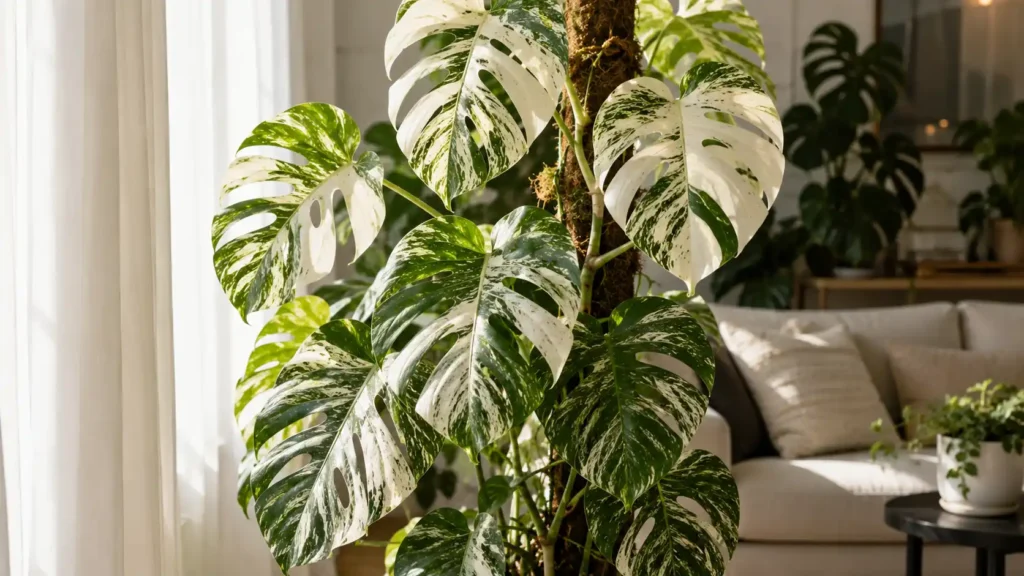
Variegated Monstera deliciosa is one of the most sought-after houseplants in the world, valued for its striking leaves marked with white, cream, or yellow patterns. Variegation refers to the absence of chlorophyll in certain plant cells, creating contrasting patches that make each leaf unique. Unlike standard green Monstera deliciosa, variegated forms grow more slowly and require slightly more attention. Their dramatic appearance, rarity, and collectible nature have made them popular among both experienced plant enthusiasts and everyday indoor gardeners. Understanding how variegation occurs and how it affects plant growth is essential before learning about care, propagation, and the different varieties available.
Quick Summary
- Variegated Monstera deliciosa is a tropical climbing plant prized for its white or cream-splashed leaves caused by a genetic mutation or chimeric instability.
- The two most common varieties are Monstera albo variegata and Thai Constellation.
- Variegated Monsteras are expensive because variegation is rare, growth is slower, and propagation is limited.
- Bright indirect light, chunky soil, moderate watering, and balanced fertilization are essential for healthy growth.
- Proper care helps maintain attractive variegation while supporting steady development.
What Is a Variegated Monstera Deliciosa?
A variegated Monstera deliciosa is a form of Monstera deliciosa that develops leaves with white, cream, yellow, or light-green patterns due to reduced chlorophyll production in specific tissues. These patterns vary from small speckles to large sectoral patches covering half a leaf. Like other climbing Monsteras, variegated varieties benefit from proper support structures and growing techniques. Learn more in our Ultimate Hanging Monstera Guide: Care, Varieties & Tips.
Variegated forms originate from the species Monstera deliciosa, a tropical plant known for its large split leaves and climbing growth habit.
What causes variegation in Monstera deliciosa
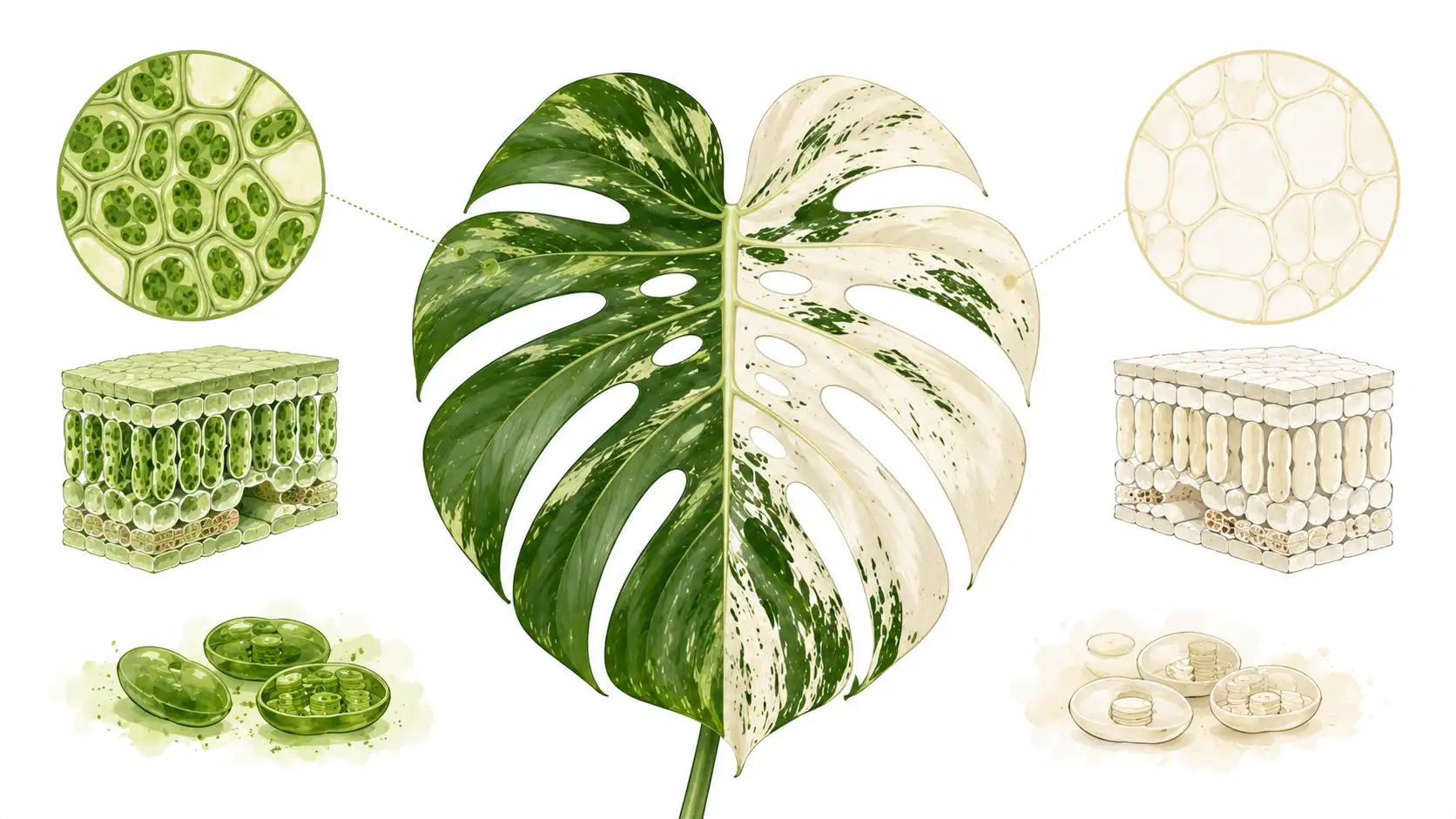
Variegation occurs when certain cells lose the ability to produce chlorophyll. Chlorophyll is responsible for the green color in plants and plays a vital role in photosynthesis.
Two primary mechanisms cause variegation:
- Chimeric variegation: Different genetic cell layers exist within the same plant. This type can revert to green over time.
- Genetic mutation: The variegation is encoded more consistently, making it relatively stable.
Monstera albo variegata is an example of chimeric variegation, while Thai Constellation is considered more genetically stable. The term “albino monstera” is inaccurate because a completely chlorophyll-free plant cannot survive long-term without photosynthesis.
Why variegated Monstera grows slower than the standard form
Variegated Monstera grows slower because white and cream portions of the leaf contain little or no chlorophyll. Since these areas cannot contribute effectively to photosynthesis, the plant produces less energy overall.
As a result:
- Growth is slower.
- New leaves emerge less frequently.
- Recovery from stress takes longer.
- Propagation produces fewer plants annually.
This reduced growth rate is one of the major reasons variegated Monsteras command premium prices.
Types of Variegated Monstera
Different types of variegated Monstera display unique patterns, growth habits, and levels of stability.
Monstera albo variegata (Monstera deliciosa albo)
Monstera albo variegata is known for dramatic white sectors and half-moon leaves. Every leaf develops differently, making each plant unique.
Key characteristics:
- Bright white variegation
- High collector value
- Can revert to green
- Propagated through stem cuttings only
- Slower growth than standard Monstera
Thai Constellation Monstera (Monstera thai constellation)
Thai Constellation was developed through tissue culture in a laboratory in Thailand. Its cream-colored speckles resemble stars scattered across the leaf surface.
Characteristics include:
- Stable variegation
- Lower reversion risk
- Consistent appearance
- More widely available than Monstera albo
- Slightly faster growth
Monstera adansonii variegated
Variegated Monstera adansonii features smaller leaves with natural holes called fenestrations. White or yellow variegation creates a highly ornamental appearance. Variegated Monstera adansonii also shares similar climbing habits with other Monstera species. Explore more about its growth style in our Monstera Adansonii Hanging or Climbing guide.
Features include:
- Compact growth habit
- Distinctive perforated leaves
- Available in white and yellow forms
- Suitable for hanging baskets and climbing supports
For growers interested in the care requirements of this smaller Monstera relative, the Monkey Mask Plant Care Guide (Monstera Adansonii) provides additional growing information.
Other notable variegated Monstera varieties
Additional varieties include:
- Monstera adansonii aurea: Yellow and lime-green variegation.
- Lightly variegated Monstera: Small white markings across leaves.
- Light green variegated Monstera: Subtle variegation with softer contrast.
Variegated Monstera Types at a Glance
| Variety | Variegation Style | Stability | Growth Rate | Difficulty |
| Monstera albo variegata | Bold white sectors | Unstable | Slow | Intermediate |
| Thai Constellation | Cream speckles | Stable | Slow–Moderate | Beginner-friendly |
| Variegated M. adansonii | White/yellow patches | Variable | Moderate | Intermediate |
| Adansonii aurea | Yellow sectors | Semi-stable | Moderate | Intermediate |
Monstera Albo vs Thai Constellation: Key Differences
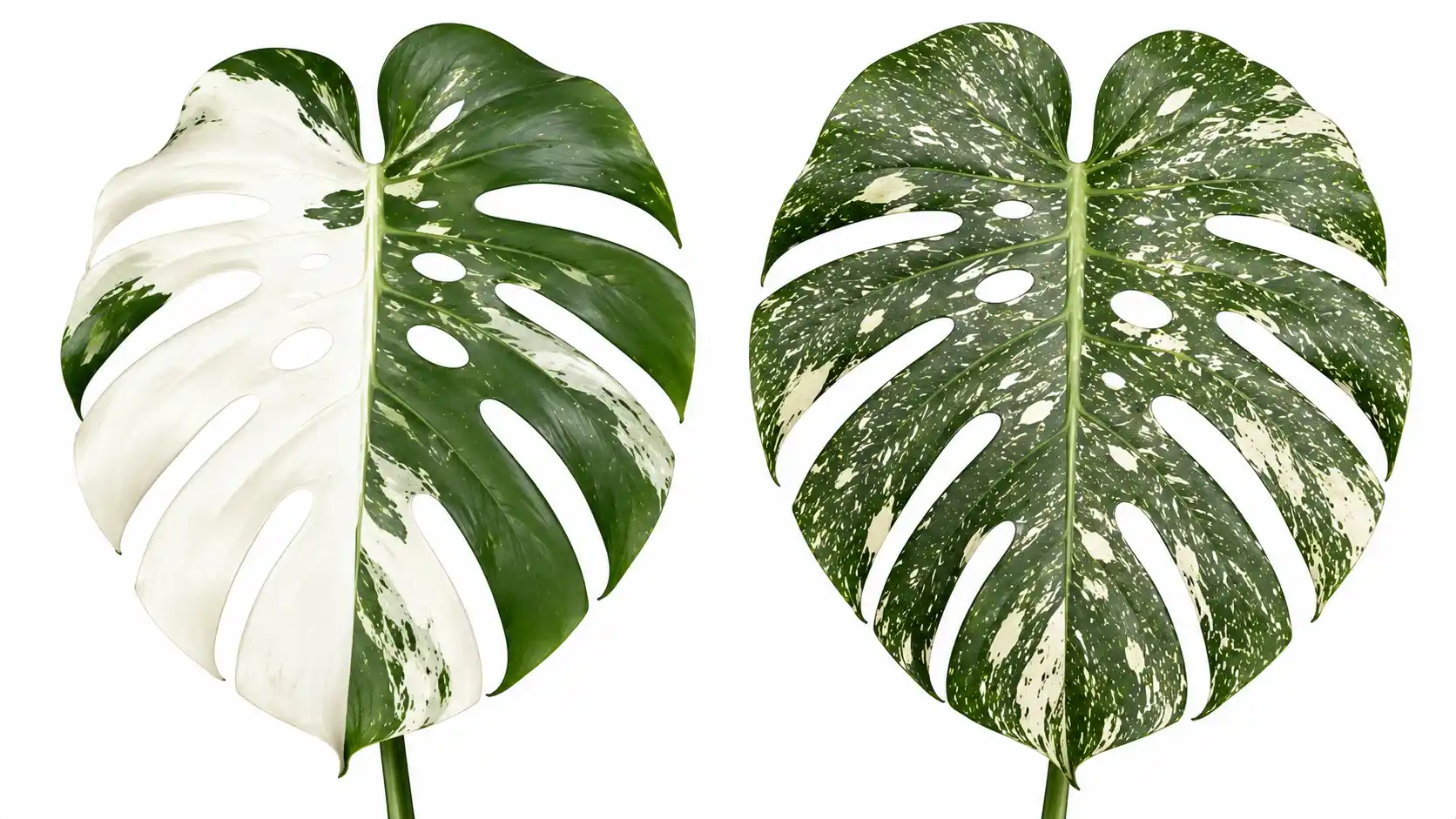
Monstera albo and Thai Constellation differ primarily in variegation stability, appearance, price, and availability.
| Feature | Monstera Albo Variegata | Thai Constellation |
| Variegation Type | Chimeric white sectors | Stable cream speckles |
| Reverts to Green? | Yes | Rarely |
| Propagation | Stem cuttings only | Stem cuttings |
| Relative Price | Higher | Moderate |
| Availability | Limited | Increasingly available |
| Best For | Collectors | Beginners and collectors |
Monstera albo offers dramatic contrast but requires closer monitoring. Thai Constellation is generally easier for new growers due to its stable variegation and predictable growth.
Why Is Variegated Monstera So Expensive?
Variegated Monstera is expensive because supply remains limited while demand remains high.
Factors affecting price include:
- Variegation cannot be reliably reproduced from seed.
- Propagation requires viable nodes.
- Plants grow more slowly than green Monsteras.
- Stable mutations are naturally rare.
- Social media increased collector demand.
- Tissue culture production involves specialized facilities.
Prices have declined in recent years as tissue culture techniques improved and commercial production increased, particularly for Thai Constellation. However, premium Monstera albo specimens still command high prices.
Variegated Monstera Deliciosa Plant Size
Variegated Monstera deliciosa can become a substantial indoor plant when provided with support.
Typical sizes include:
- Outdoor height: 6–10 feet or more in tropical climates
- Indoor height: 3–6 feet with a moss pole
- Leaf size varies according to light and maturity
Heavily variegated leaves often remain smaller because they have less chlorophyll available for energy production.
Pot size also affects growth. Monsteras generally perform best in containers that are only slightly larger than their root system.
Growth Rate of Variegated Monstera
Variegated Monsteras grow more slowly than standard Monstera deliciosa.
Growth characteristics include:
- Active growth from spring through summer
- Reduced activity during autumn
- Near dormancy during winter
- Faster development in bright indirect light
Thai Constellation typically grows slightly faster than Monstera albo because its leaves retain more chlorophyll overall. After propagation, new growth from a node may take several weeks or months depending on environmental conditions and plant health. Seasonal changes influence growth speed, watering needs, and plant activity. Our guide on How Does Season Affect Indoor Plant Growth explains these environmental effects in more detail.
Variegated Monstera Care Guide
Light requirements
Bright indirect light is ideal for variegated Monstera. Six or more hours of filtered light daily helps support photosynthesis. Similar tropical houseplants such as Alocasia also require careful attention to light, humidity, and watering routines. See our Alocasia Amazonica Care Indoors guide for comparison.
Important considerations:
- East-facing windows work well.
- South-facing windows are suitable when filtered.
- Harsh afternoon sun can burn white sections.
- White areas require additional light compensation.
Brief morning sunlight is generally tolerated.
Plants with decorative foliage, such as Begonia Maculata, also require balanced indoor conditions to maintain healthy leaves. Read our Begonia Maculata Care Guide for Healthy Growth for another patterned foliage plant example.
Watering schedule and needs
Water only when the top 1–2 inches of soil feel dry.
General schedule:
- Every 7–10 days during active growth
- Every 10–14 days in cooler months
A Monstera can often go two weeks without water during winter, but extended dryness during summer may cause stress.
Signs of overwatering:
- Yellow leaves
- Soft stems
- Mushy roots
Signs of underwatering:
- Drooping foliage
- Dry soil
- Crispy edges
Soil mix for variegated Monstera
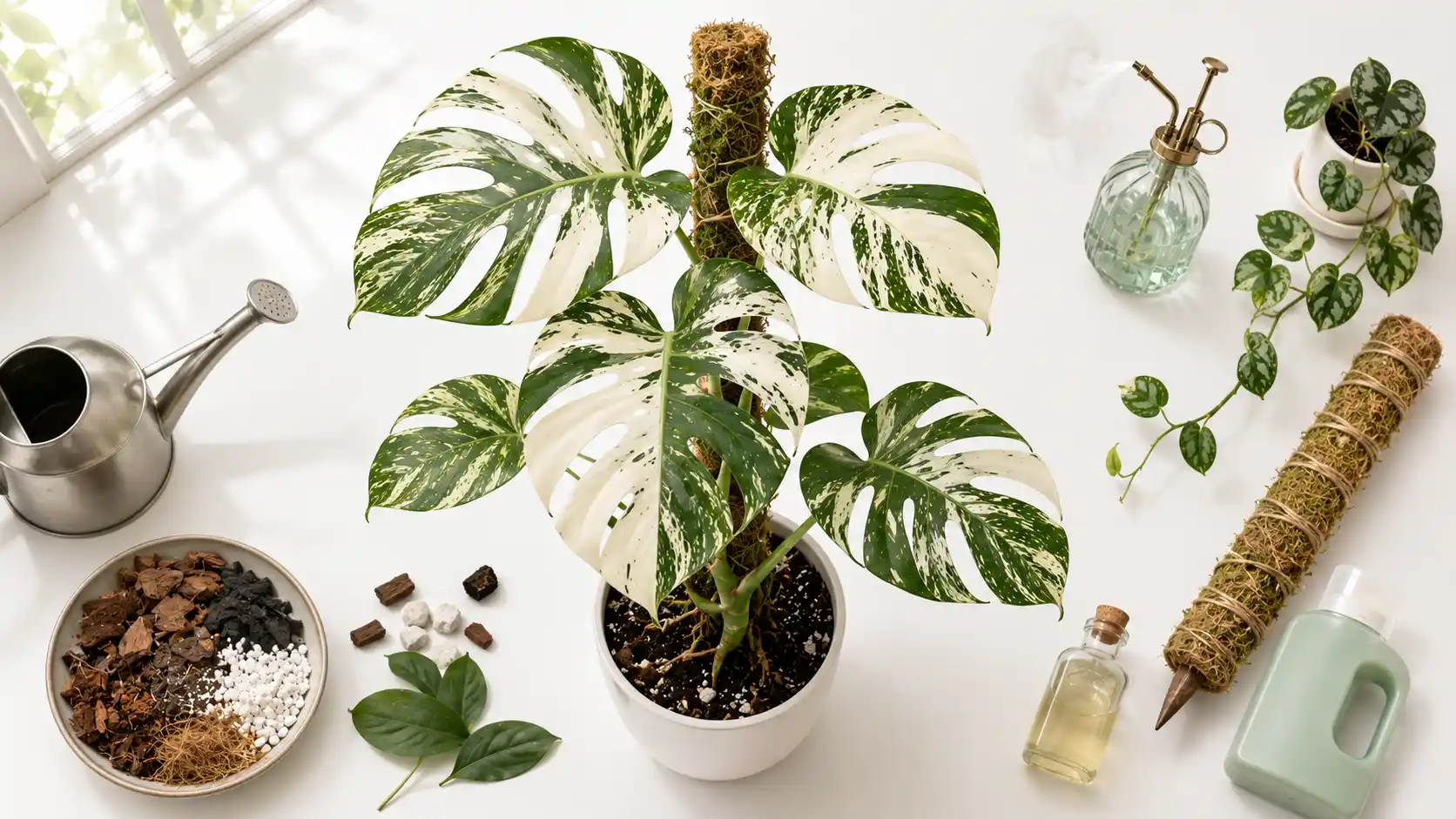
A chunky aroid mix supports healthy root growth and drainage.
Recommended blend:
- Potting soil
- Orchid bark
- Perlite
- Coco coir
Avoid dense mixes that remain wet for extended periods.
Fertilization
Variegated Monsteras benefit from balanced fertilizer during active growth.
Guidelines:
- Use balanced liquid fertilizer such as 20-20-20.
- Apply monthly during spring and summer.
- Dilute according to label instructions.
- Avoid excessive nitrogen.
Heavy nitrogen feeding may encourage greener growth and reduce visible variegation in Monstera albo.
Potting, repotting, and pot size
Monsteras prefer slightly snug pots.
Choosing the correct container is important because Monsteras perform best when their roots have enough space without sitting in excess moisture. Our guide on the Best Pot for Monstera: 7+ Proven Size & Material Tips explains suitable pot options.
Repot when:
- Roots circle the container
- Drainage slows
- Growth becomes restricted
Most plants require repotting every 1–2 years.
Temporary transplant shock can occur after repotting. Mild drooping for one to two weeks is normal.
To reduce shock:
- Water after repotting
- Avoid fertilizing immediately
- Keep light consistent
Humidity and temperature
Ideal conditions include:
- Humidity above 60%
- Temperature between 65°F and 85°F (18°C–30°C)
Plants tolerate lower humidity but may develop brown leaf edges if conditions become excessively dry.
Are Monsteras happier inside or outside?
Monsteras are generally happier indoors in temperate climates because environmental conditions remain more stable.
Outdoor growing is suitable year-round in USDA Zones 10–12, including tropical and subtropical regions. Variegated forms require protection from strong sunlight.
What makes a Monstera happy — summary
A healthy Monstera thrives with:
- Bright indirect light
- Consistent watering
- Chunky soil
- Warm temperatures
- Moderate humidity
- A moss pole for climbing
- Balanced fertilization
How to Propagate Variegated Monstera
Propagation requires a stem section containing at least one node.
Steps:
- Identify a healthy node.
- Include an aerial root if possible.
- Make a clean cut below the node.
- Place the cutting into water, moss, or soil.
- Wait for root development before transplanting.
Propagation methods:
- Water: Easy monitoring of root growth.
- Moss: Excellent moisture retention.
- Soil: Less transplant shock later.
Variegation cannot be guaranteed in every cutting, particularly with Monstera albo. Some cuttings may produce greener growth than the parent plant.
Common Variegated Monstera Problems and How to Fix Them
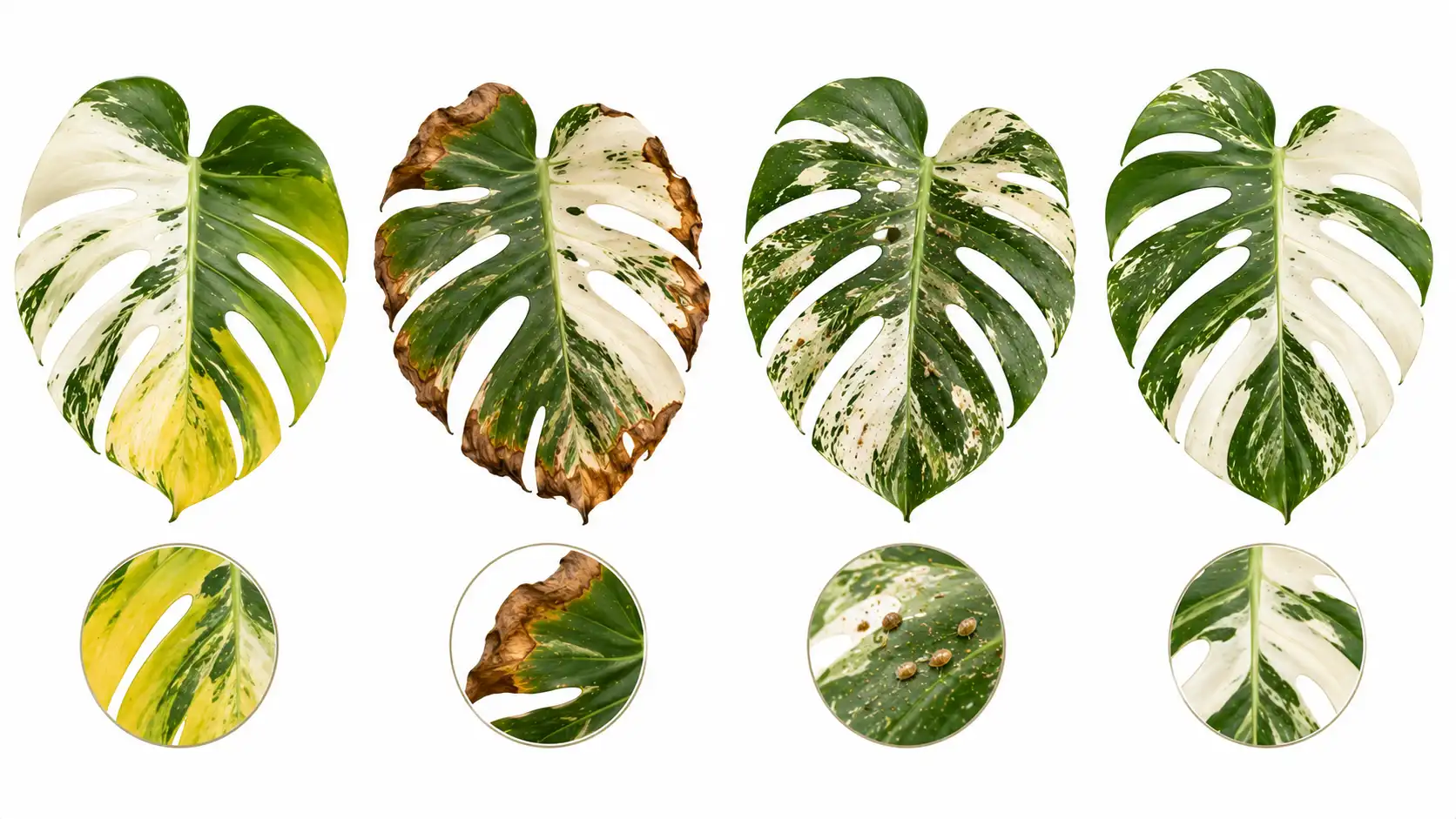
Leaves turning yellow
Yellow leaves commonly result from:
- Overwatering
- Poor drainage
- Nutrient deficiencies
Solutions:
- Improve drainage
- Adjust watering
- Apply balanced fertilizer when needed
Variegation reverting to green (albo-specific)
Albo reversion occurs because of chimeric instability.
To reduce reversion:
- Increase light exposure
- Avoid excess nitrogen
- Prune all-green growth when appropriate
Root rot from overwatering
Symptoms include:
- Black roots
- Soft stems
- Persistent yellowing
Recovery steps:
- Remove affected roots.
- Replace old soil.
- Repot into fresh, well-draining mix.
- Reduce watering frequency.
Pest infestations
Common pests include:
- Spider mites
- Thrips
- Mealybugs
Indoor plants can also develop soil-related pest issues, so identifying problems early is important. Learn more in our guide on Bugs in Indoor Plant Soil: Identification, Treatment & Prevention.
Preventive measures:
- Inspect leaves regularly
- Maintain airflow
- Use insecticidal soap when necessary
Brown or crispy leaf tips and edges
Common causes include:
- Low humidity
- Direct sunlight
- Inconsistent watering
White sections are particularly vulnerable to sun damage.
Slow or no new growth
Potential causes:
- Insufficient light
- Cold temperatures
- Root-bound conditions
- Winter dormancy
Increasing light is often the most effective first adjustment.
Common Beginner Mistakes With Variegated Monstera
Many new owners unintentionally stress their plants through avoidable mistakes.
Common errors include:
- Growing in low light
- Overwatering expensive specimens
- Using high-nitrogen fertilizer
- Exposing plants to intense sunlight
- Choosing oversized pots
- Expecting rapid growth
- Misinterpreting natural leaf variation as reversion
Understanding the naturally slow growth rate helps set realistic expectations.
Is Monstera a Lucky Plant, and Which Variety Is the Rarest?
In Feng Shui and several Asian traditions, Monstera symbolizes longevity, growth, prosperity, and positive energy. The distinctive split leaves are often associated with resilience and the ability to adapt to changing conditions.
The rarest Monsteras include:
- Monstera obliqua, known for its extremely delicate leaves.
- Highly variegated Monstera albo specimens with perfect half-moon leaves.
- Fully white leaves, which are visually striking but generally unsustainable because they lack chlorophyll.
While Monstera obliqua is often considered the rarest Monstera species, exceptional variegated forms can be equally difficult to obtain.
Conclusion
Variegated Monstera deliciosa is a unique tropical houseplant valued for its striking white, cream, or yellow variegation. Its premium price reflects the rarity of stable variegation, slower growth, and limited propagation opportunities. Among the most popular varieties, Monstera albo variegata offers dramatic white sectors, while Thai Constellation provides more stable and predictable variegation. Success with a variegated Monstera deliciosa depends on bright indirect light, well-draining soil, careful watering, and consistent care. With patience and proper growing conditions, this remarkable plant can become a long-lasting centerpiece in any indoor plant collection. Variegated Monstera deliciosa is part of a wider group of indoor plants that require understanding of proper care, growth habits, and environmental needs, which are covered in our complete Plants: Benefits and Guides (Complete Care, Types & Growing Tips) resource.
FAQ — Frequently Asked Questions About Variegated Monstera Deliciosa
Why is variegated Monstera so expensive?
Variegated Monstera is expensive because variegation is rare, propagation is slow, growth rates are reduced, and plants cannot reliably reproduce variegation from seed. Strong collector demand also contributes to higher prices.
How do you care for a variegated Monstera deliciosa?
Provide bright indirect light, a chunky well-draining soil mix, moderate watering, monthly fertilization during active growth, and moderate humidity. Avoid overwatering and excessive direct sunlight.
Do variegated Monsteras like direct sunlight?
No. Harsh direct sunlight can burn the white sections of variegated leaves. Brief morning sun is generally safe, but bright indirect light remains the best option.
Can a Monstera go 2 weeks without water?
Yes, a Monstera can often go two weeks without water during cooler months. However, watering needs depend on temperature, humidity, soil type, and pot size.
What is the difference between Monstera albo and Thai Constellation?
Monstera albo has unstable chimeric white sectors and may revert to green. Thai Constellation has stable cream-speckled variegation produced through tissue culture and is generally easier to maintain.
Do Monsteras go into shock after repotting?
Yes. Mild drooping, slowed growth, and temporary stress are common after repotting. Most healthy plants recover within one to two weeks when given proper care.
Is a variegated Monstera hard to care for?
Variegated Monsteras are not difficult to care for, but they are slightly more sensitive than standard Monsteras because they grow slower and recover more slowly from mistakes.
Which Monstera is the rarest?
Monstera obliqua is widely regarded as the rarest Monstera species. Among variegated forms, highly variegated Monstera albo specimens and perfect half-moon leaves are especially rare and valuable.



5 Responses