
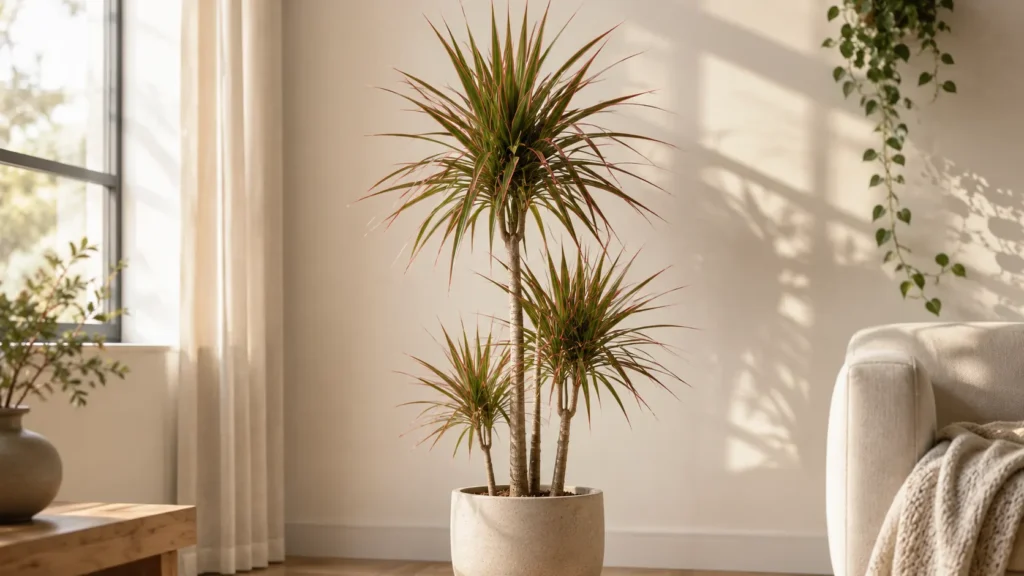
According to Manuela Nogueira, the Madagascar dragon tree (Dracaena marginata) thrives in bright, indirect light and needs watering only when the top 2-3 inches of soil dry out, roughly every 2-3 weeks. It prefers well-draining soil, temperatures between 65-80°F, and is highly susceptible to root rot from overwatering.
Manuela Nogueira notes that this species is sensitive to fluoride and chlorine, so browning leaf tips often signal tap water quality rather than disease; distilled or rainwater prevents this. It tolerates average household humidity and low light but grows slowly, and its foliage is toxic to cats and dogs if ingested.
Quick Summary
- Madagascar dragon trees prefer bright, indirect light and should be watered only after the upper layer of soil dries.
- They tolerate lower light and occasional neglect, but prolonged low light can reduce growth and foliage quality.
- A loose, well-draining, slightly acidic growing medium helps prevent waterlogged roots and root rot.
- Indoors, plants commonly reach around 4–6 feet, while outdoor plants in suitable warm climates can become considerably taller.
- Regular pruning can control height and encourage new shoots below the cut.
What Is a Madagascar Dragon Tree?
A Madagascar dragon tree is an evergreen, woody-stemmed plant scientifically known in horticulture as Dracaena marginata. It is commonly called the Madagascar dragon tree, dragon plant, or dracaena dragon tree and is recognized by its narrow, strap-like leaves growing in tufts from slender stems. The species is native to Madagascar. Dracaena marginata belongs to the Dracaena group of plants, which includes numerous ornamental species commonly grown indoors.
The plant belongs to the family Asparagaceae and has a naturally upright, architectural growth habit. Mature plants develop woody canes that may branch, with narrow leaves concentrated toward the ends of the stems. Depending on the cultivar, foliage can be green, red-edged, pink-edged, cream-striped, or multicolored.
The name “dragon tree” is associated with the broader Dracaena genus. The genus name comes from the Greek drakaina, meaning female dragon. The name is particularly associated with dragon’s-blood resin produced by some Dracaena species, although D. marginata itself is primarily grown for its foliage and form.
As a houseplant, Dracaena marginata is popular because it combines a tropical appearance with relatively modest care requirements. It can adapt to lower indoor light, does not need frequent watering, and generally requires little routine pruning.
Dragon Tree vs. Other Dracaena Varieties
Madagascar dragon tree varieties differ from other commonly grown dracaenas mainly in leaf shape, coloration, mature form, and size. Dracaena marginata has narrow, grass-like leaves, while species such as Dracaena fragrans generally have broader leaves. For comparison, Dracaena fragrans has broader leaves and somewhat different growth characteristics; see our [Dracaena fragrans care guide] for its complete indoor requirements.
| Variety | Leaf Color | Light Needs | Mature Height |
| Dracaena marginata | Green with red or burgundy margins; cultivars may be variegated | Bright, indirect; tolerates lower light | About 6 ft or more indoors |
| Dracaena marginata ‘Tricolor’ | Green with cream and reddish-pink margins | Bright, indirect | Similar to D. marginata |
| Dracaena marginata ‘Colorama’ | Strong pink/red and green coloration | Bright, indirect | Similar to D. marginata |
| Dracaena fragrans | Broad green, yellow, or cream-striped leaves | Bright, indirect; tolerates lower light | Can become large indoors |
| Dracaena draco | Narrow green leaves forming a larger tree-like crown | Bright light | Much larger outdoors |
The “golden dragon tree” name can refer to plants marketed with golden or yellow variegation, rather than one single standard species. Care depends on the actual Dracaena species or cultivar, but bright filtered light is generally useful for maintaining strong variegation.
Madagascar Dragon Tree Plant Size
A Madagascar dragon tree commonly reaches about 4–6 feet indoors, although established specimens can grow taller when given adequate light, warmth, root space, and time. The main stems continue extending upward and can eventually become tall, woody canes. RHS notes that dracaenas can potentially reach around 2 m (6½ ft) or more.
Outdoors in a suitable warm, frost-free climate, Dracaena marginata can become substantially larger than a typical houseplant. Its natural growth habit allows it to develop taller stems and a more tree-like form. However, outdoor size depends strongly on climate, soil, available root space, light exposure, and length of the growing season.
Container size also affects apparent growth. A severely root-bound plant may have slower growth, while an oversized pot can retain excess moisture and increase the risk of root problems.
Factors influencing mature size include:
- Light: Brighter indirect light generally supports stronger growth.
- Pot size: Adequate root space supports continued development.
- Temperature: Warm conditions encourage active growth.
- Nutrition: Appropriate fertilization supports foliage and stem development.
- Climate: Warm outdoor conditions allow greater long-term growth than typical indoor environments.
Growth Rate of Dracaena Marginata
Dracaena marginata has a slow-to-moderate growth rate indoors. It does not normally produce rapid, vine-like growth, but a healthy plant can steadily add height and new leaves when environmental conditions are favorable. Seasonal changes also influence indoor growth, particularly through differences in light, temperature, and watering, as explained in our guide to how seasons affect indoor plant growth.
Growth is generally strongest during spring and summer when light and temperatures increase. During autumn and winter, indoor growth commonly slows because of reduced light and cooler conditions.
The main factors affecting growth speed are:
- Bright, indirect light
- Consistently warm temperatures
- Adequate but not excessive water
- Good drainage and healthy roots
- Moderate fertilization during active growth
- Sufficient humidity without constantly wet soil
Low light can keep the plant alive but may result in slower growth and thinner or less vigorous foliage. Excess fertilizer does not compensate for inadequate light and can damage roots when applied too heavily.
Madagascar Dragon Tree Care Guide
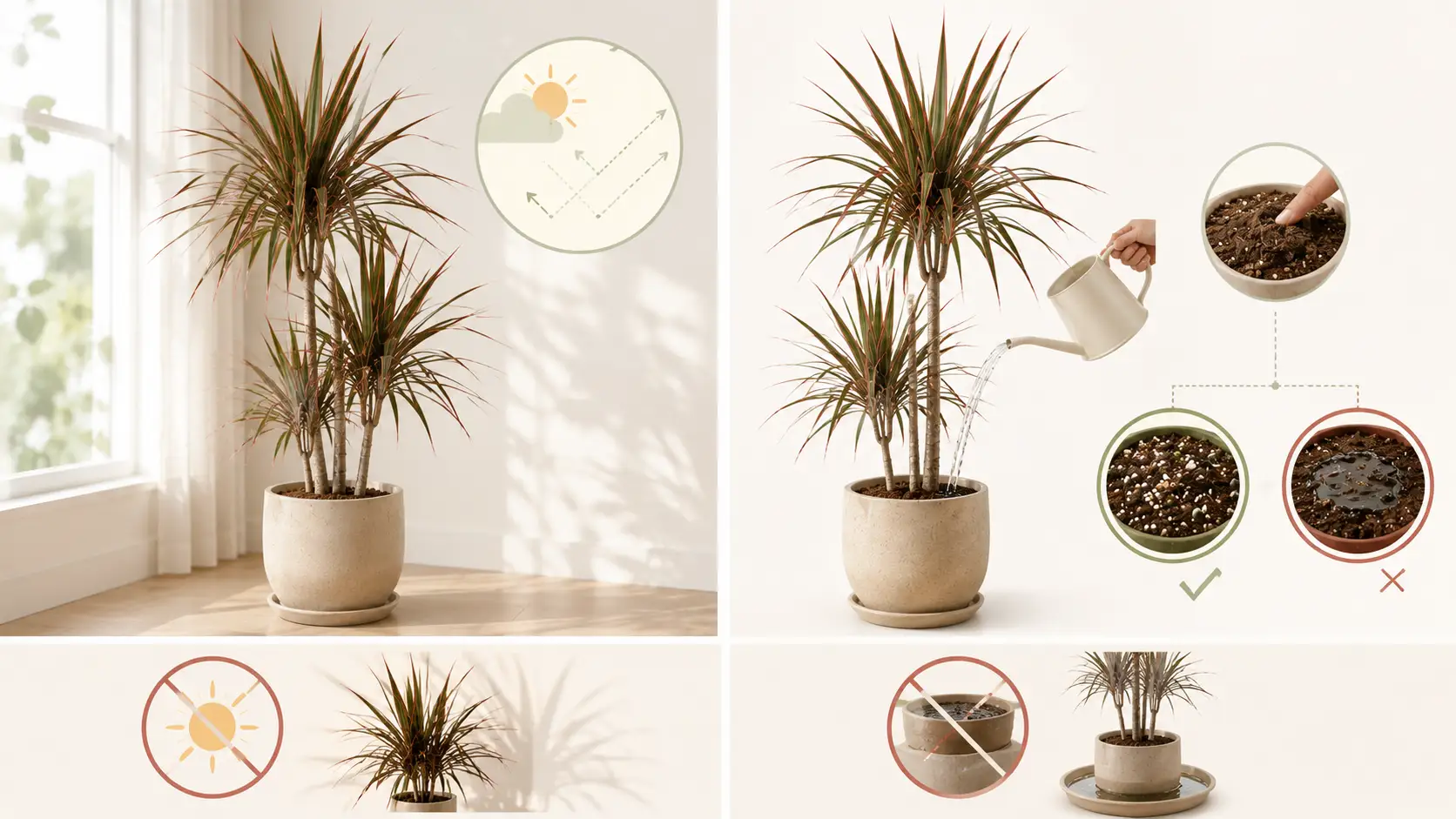
Madagascar dragon tree care is based on four main requirements: bright indirect light, controlled watering, fast drainage, and warm temperatures. The plant is forgiving, but consistently wet soil, intense direct sun, and cold conditions can cause significant problems.
Light Requirements
Madagascar dragon trees prefer bright, indirect light, although they can tolerate lower indoor light levels. An east- or west-facing window with filtered light is often suitable, while a bright south-facing location may require protection from intense direct sun.
Do Madagascar dragon trees like full sun? They generally do not need full, unfiltered sun indoors, and strong direct sunlight can scorch their leaves. Gradually acclimated outdoor plants can tolerate brighter conditions, but protection from harsh midday or afternoon sun is beneficial.
Signs of excessive direct light can include:
- Bleached-looking foliage
- Brown or crispy leaf patches
- Scorched leaf margins
- Rapid drying of the growing medium
Low light is usually less immediately damaging, but prolonged low light can slow growth and reduce overall vigor.
Watering Needs
A dragon tree should be watered when the upper portion of its growing medium has dried rather than according to a rigid calendar. In many indoor conditions, this may mean watering roughly every 2–3 weeks, although temperature, light, pot size, humidity, and soil determine the actual interval. RHS recommends watering once the top 5 cm (2 inches) of compost feels dry.
How often are you supposed to water a dragon tree? Usually when the top few inches of soil have dried, which may be approximately every two to three weeks indoors. The correct interval is more important than the exact number of days. Instead of following a fixed watering calendar, use the soil-moisture method explained in our guide to checking whether an indoor plant needs water.
How long can a dragon tree go without water? A healthy established plant can tolerate periods of dryness, but prolonged dehydration eventually causes leaf curling, drooping, browning, and stem wrinkling.
Do dragon trees like lots of water? No. They prefer controlled watering with a drying period between waterings rather than constantly wet soil.
Key watering guidelines include:
- Check soil moisture before watering.
- Water thoroughly when the upper soil has dried.
- Allow excess water to drain from the container.
- Empty standing water from a saucer.
- Reduce watering during periods of slow winter growth.
- Avoid repeatedly keeping the root zone saturated.
Signs of overwatering:
- Yellowing leaves
- Soft or declining stems
- Persistently wet soil
- Leaf drop
- Root rot
Signs of underwatering:
- Drooping foliage
- Dry, curling leaves
- Brown leaf tips
- Wrinkled stems
- Very dry potting mix
Dragon trees tolerate drought better than waterlogged roots, but drought tolerance does not mean they should be left completely dry for extended periods.
Best Soil for Dragon Trees
The best soil for Dracaena marginata is a loose, well-draining, slightly acidic growing medium that allows excess water to escape while retaining enough moisture for the roots. RHS recommends an acidic, free-draining mix containing ericaceous compost, perlite, and orchid bark.
A practical dracaena soil mix can include:
- 3 parts peat-free acidic or ericaceous potting compost
- 1 part perlite
- 1 part medium-grade orchid bark
This type of mixture improves drainage and aeration while reducing the likelihood of prolonged water retention.
The soil should not remain saturated after watering. If water drains extremely slowly or the potting mix stays wet for many days, amend it with additional aerating material or repot into a more suitable medium.
A slightly acidic growing medium is preferred. Hard alkaline tap water can gradually alter soil chemistry, while fluoride in tap water can contribute to brown foliage tips. Filtered or rainwater can therefore be useful where tap-water quality is problematic.
Fertilization Practices
Madagascar dragon trees benefit from moderate feeding during active growth, particularly in spring and summer. A balanced liquid houseplant fertilizer can be applied according to its label directions rather than using concentrated fertilizer frequently. RHS recommends feeding dracaenas from April through October while avoiding overfeeding.
Can you use Miracle-Gro on dracaena? A suitable general-purpose Miracle-Gro fertilizer can be used if it is diluted and applied according to the product’s houseplant directions. Excess fertilizer is more likely to cause problems than a lack of frequent feeding.
Are coffee grounds good for dracaena? Coffee grounds are not a reliable fertilizer for Madagascar dragon trees and should not be used as the primary nutrient source. Fresh grounds can also alter the growing medium and may contribute to moisture-retention problems when added heavily to a container.
For safe feeding:
- Fertilize mainly during active growth.
- Follow the fertilizer dilution instructions.
- Avoid feeding severely stressed or recently repotted plants.
- Do not compensate for poor light with extra fertilizer.
- Reduce or stop feeding during slow winter growth.
Pot Size and Repotting
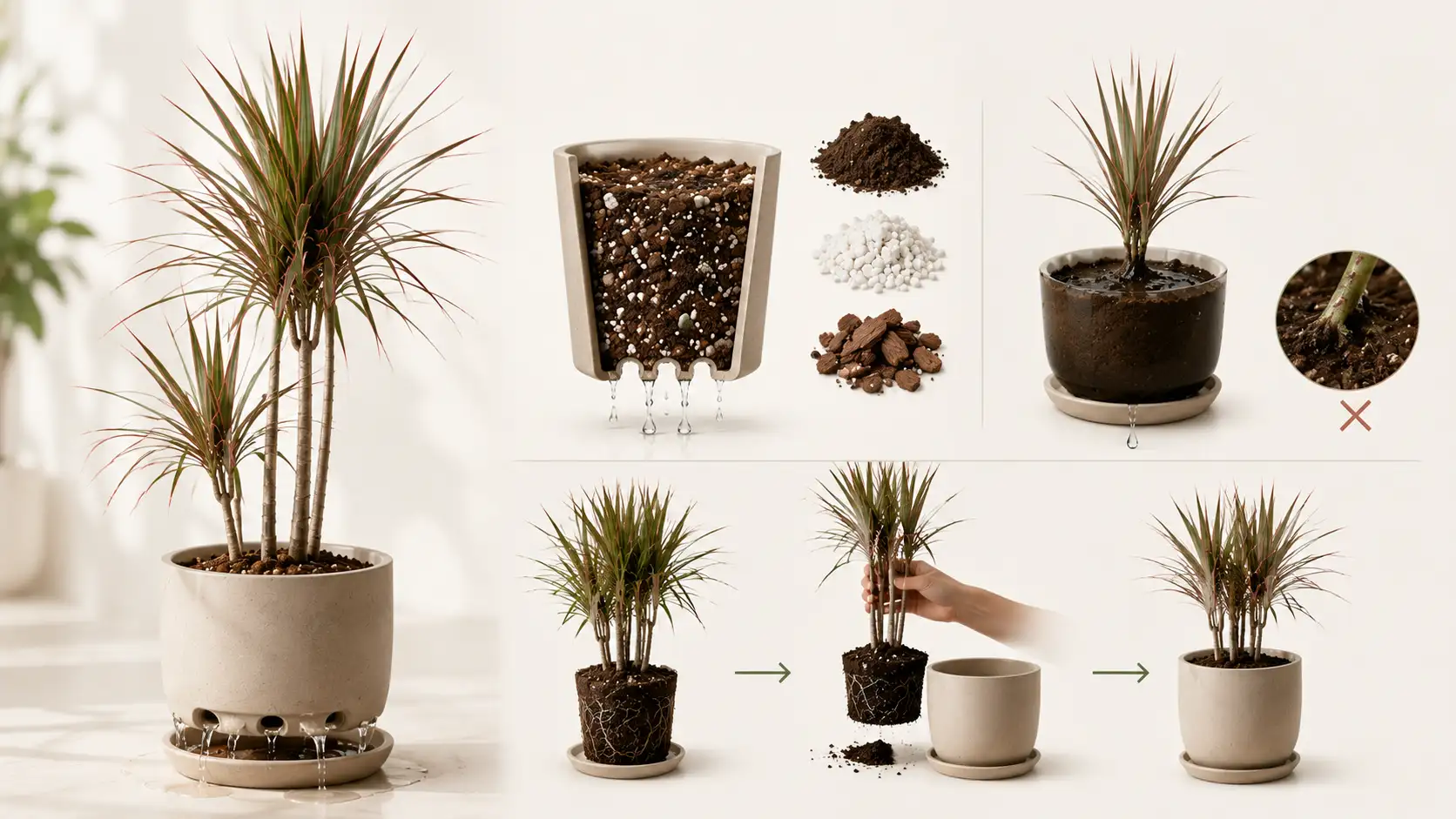
Dragon trees do well in pots with drainage holes and generally prefer being slightly snug rather than sitting in an oversized container. A pot that is much larger than the root system can hold excess moisture for too long, increasing the risk of root rot.
Do dracaena like big pots? They prefer appropriately sized pots rather than very large containers. When roots become crowded, move the plant into a container only one size larger.
To repot a Madagascar dragon tree:
- Choose a container with drainage holes.
- Select a pot only slightly larger than the current root ball.
- Remove the plant carefully.
- Inspect the roots for dark, soft, or decaying tissue.
- Remove damaged roots with clean tools if necessary.
- Place fresh, well-draining growing medium around the roots.
- Water appropriately after repotting and allow excess water to drain.
RHS recommends repotting in spring when roots become overcrowded and generally moving up one pot size every two to three years when needed.
Climate Tolerance & Outdoor Care
A Madagascar dragon tree can be kept outside in warm, frost-free conditions, particularly during the warmer part of the year. It should be protected from cold temperatures, frost, harsh direct sun, and prolonged exposure to wet conditions.
Can I keep a dragon tree outside? Yes, but only where temperatures remain sufficiently warm and the plant is protected from frost and damaging cold. In cooler climates, it is better treated as a container plant that can be moved indoors.
Madagascar dragon tree care in winter should focus on warmth, reduced watering, and adequate light. RHS recommends keeping dracaenas around 18–30°C (65–86°F) for best growth and avoiding cold drafts.
For a dragon tree outside in the UK, summer placement can be possible, but it should be brought under protection before cold weather arrives. RHS classifies D. marginata as suitable for growing outside during summer under protected conditions rather than as a frost-hardy garden plant.
Pruning and Shaping a Dragon Tree
Pruning a dragon tree is straightforward because new shoots can develop below a cut on an established stem. This makes pruning useful for controlling height, removing weak growth, and creating a bushier appearance.
How to prune a dragon tree:
- Choose spring or another period of active growth.
- Use clean, sharp pruning shears or a pruning knife.
- Select the stem height where new branching is desired.
- Make a clean cut across the stem.
- Keep the plant in suitable light afterward.
- Allow new shoots to develop below the cut.
Can you cut back a Madagascar dragon tree? Yes. Cutting back an established stem can encourage new shoots below the cut and can reduce excessive height.
To make a dragon tree bushy, prune one or more tall stems at different heights. New growth can emerge from several points, gradually producing a more branched appearance.
Pruning is most useful when:
- The plant has become too tall.
- Stems are weak or sparse.
- You want a more compact shape.
- You want to encourage branching.
- Damaged or unhealthy growth needs removal.
Avoid removing excessive foliage or making many major cuts at once on a severely stressed plant.
Propagating a Madagascar Dragon Tree
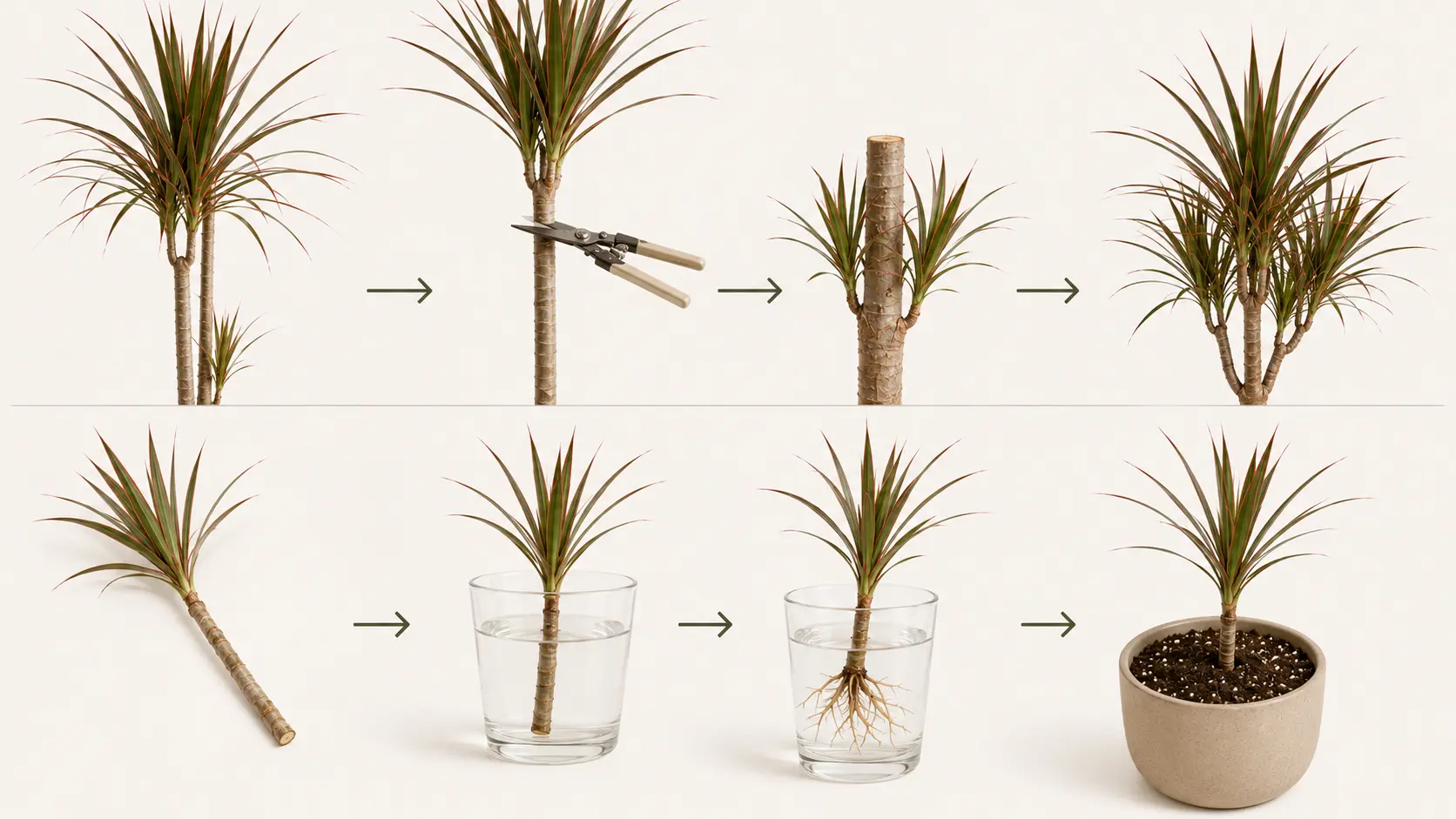
Dragon tree propagation is commonly performed from stem cuttings. Semi-ripe or hardwood stem cuttings can be rooted under warm conditions, making vegetative propagation a practical way to produce new plants from an established specimen. For a more detailed propagation walkthrough, see our How to Propagate Dragon Tree guide, which covers cutting preparation, rooting conditions, and aftercare.
A basic stem-cutting method is:
- Choose a healthy stem.
- Cut a suitable section using a clean tool.
- Place the cutting in water or a well-draining rooting medium.
- Keep it warm and in bright, indirect light.
- Maintain moderate moisture without waterlogging.
- Wait for roots and new growth to develop.
Can Madagascar dragon trees be propagated in water? Yes, stem cuttings can be rooted in water, although rooting in a suitable propagation medium can also produce strong roots.
For water propagation:
- Place the lower stem section in clean water.
- Keep foliage above the waterline.
- Change the water when it becomes cloudy or dirty.
- Provide warmth and indirect light.
- Transfer the cutting to soil after a useful root system develops.
Soil or propagation-medium rooting avoids the need to transition water-grown roots later, while water propagation makes root development easy to observe.
Rooting time varies with temperature, cutting quality, light, and humidity, but visible roots may develop over several weeks under favorable conditions.
Common Dragon Tree Problems (Problem-Solution Coverage)
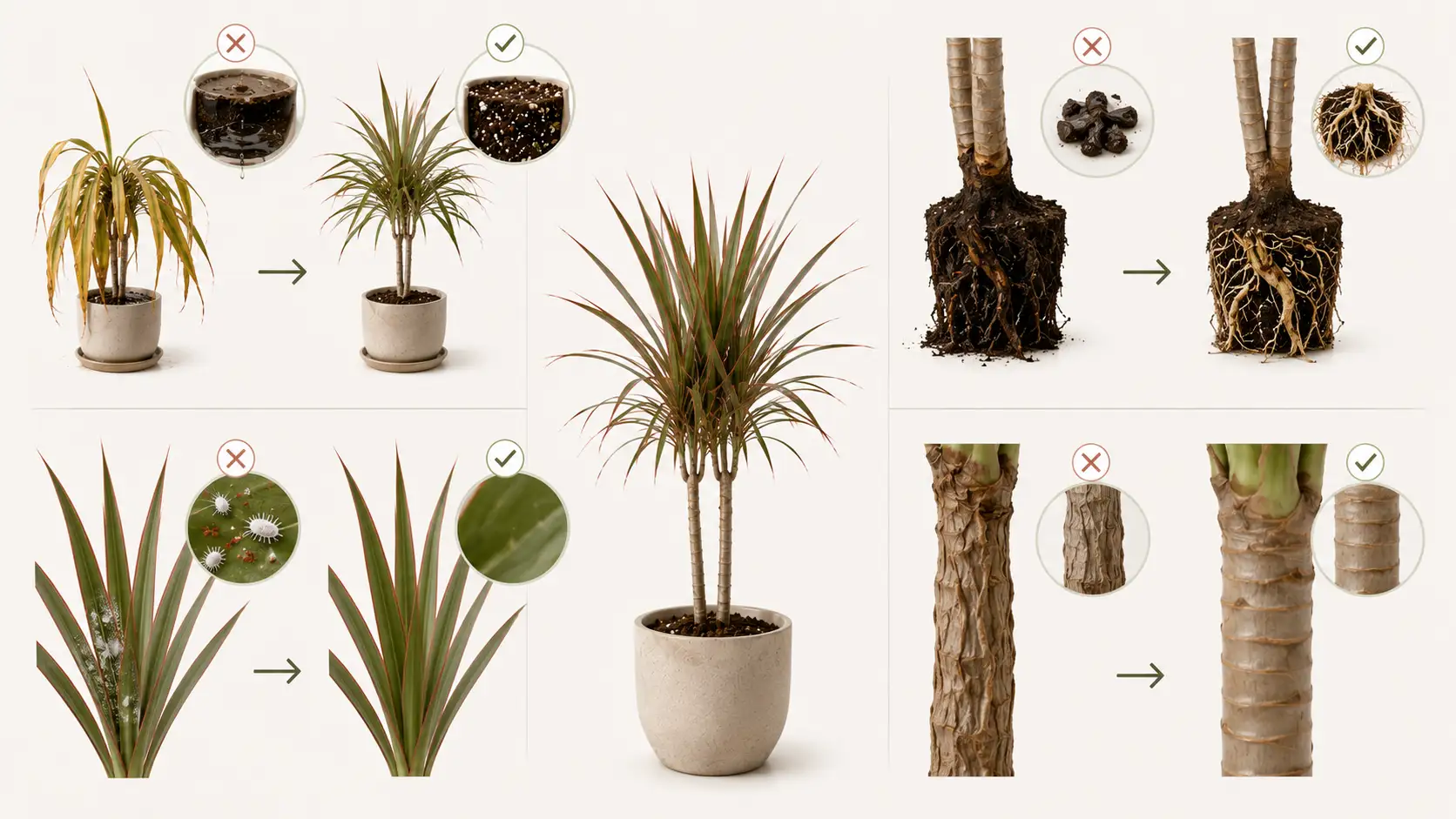
Most dragon tree problems are related to watering, light, temperature, humidity, or pests. The same symptoms can have several causes, so the growing environment should be checked before treating the plant. RHS lists overwatering, underwatering, fluoride, direct sun, dry air, cold drafts, and sap-sucking insects among common causes of dracaena problems.
Yellowing or Drooping Leaves
Yellowing or drooping dragon tree leaves are commonly associated with watering problems, low humidity, cold drafts, or other environmental stress. Overwatering is especially important to check because persistently wet soil can damage the roots.
Why is my dragon tree drooping? Drooping can result from underwatering, root damage caused by overwatering, cold stress, or sudden environmental changes.
To fix drooping or yellowing foliage:
- Check the soil moisture.
- If the soil is saturated, allow it to dry and inspect drainage.
- If it is extremely dry, water thoroughly and let excess water drain.
- Move the plant away from cold drafts.
- Keep it away from hot radiators.
- Provide bright, indirect light.
- Remove severely damaged leaves when appropriate.
Dragon tree leaves falling off can occur when root problems, prolonged dryness, cold stress, or significant environmental changes affect the plant.
Root Rot and Overwatering
Dragon tree root rot occurs when roots remain excessively wet and begin to decay. It is most often associated with poor drainage, oversized containers, frequent watering, or soil that remains saturated for too long.
Dragon tree overwatering can cause:
- Yellowing foliage
- Leaf drop
- Soft or declining stems
- Persistent wet soil
- Brown or blackened roots
- General loss of vigor
If root rot is suspected, remove the plant from its pot and inspect the roots. Healthy roots should be firm rather than soft and decayed. Remove clearly rotten tissue with a clean tool, then repot the plant into fresh, well-draining medium and a suitably sized container.
Prevention is simpler than treatment:
- Use a draining pot.
- Avoid oversized containers.
- Let the upper soil dry before watering.
- Never leave the pot standing in water.
- Use an aerated potting mix.
A Madagascar dragon tree that appears to be dying should therefore be checked first for chronic overwatering and root damage before increasing watering.
Pests and Bugs
Dragon trees can attract sap-sucking pests, particularly when grown indoors under dry or stressed conditions. Common pests include spider mites, mealybugs, scale insects, and occasionally thrips.
Does dragon tree attract bugs? It can, although healthy plants are not necessarily pest-prone; spider mites and mealybugs are among the pests that may occur. Regularly cleaning and inspecting foliage can also make it easier to notice pests early; see our guide to cleaning plant leaves for practical maintenance steps.
Inspect regularly for:
- Fine webbing around leaves
- Cotton-like clusters
- Sticky residue
- Small insects along stems
- Speckled or mottled foliage
Early infestations can often be managed by isolating the affected plant, physically removing visible pests, and using an appropriate houseplant pest-control treatment according to its label.
Prevention includes:
- Inspecting new plants before bringing them indoors.
- Keeping foliage reasonably clean.
- Avoiding severe plant stress.
- Providing appropriate light and watering.
- Checking leaf undersides and stem joints regularly.
Wrinkled or Wilting Stems
A wrinkled stem on Dracaena marginata commonly indicates significant dehydration, although advanced root damage can also interfere with water uptake. When the stem loses firmness and appears visibly shriveled, check both the soil and roots.
If the plant is severely dry:
- Check that the soil is not so compacted that water runs straight through.
- Water the root ball thoroughly.
- Allow excess water to drain.
- Keep the plant in warm, indirect light.
- Monitor the stem and foliage over the following days.
If the soil is already wet but the stem is wrinkled, do not simply add more water. Root damage may be preventing normal water uptake, so inspect the roots for rot.
| Problem | Likely Cause | Fix | Prevention |
| Yellow leaves | Overwatering, stress, aging foliage | Check soil and roots; correct watering | Let upper soil dry |
| Drooping leaves | Underwatering, root damage, cold | Correct moisture and temperature | Avoid extremes |
| Brown tips | Dry air, fluoride, underwatering | Improve water quality and care | Use filtered/rainwater where appropriate |
| Root rot | Saturated soil | Remove damaged roots and repot | Use fast-draining soil |
| Spider mites | Dry or stressed conditions | Isolate and treat infestation | Inspect foliage regularly |
| Mealybugs | Pest infestation | Physically remove and treat | Quarantine new plants |
| Wrinkled stem | Dehydration or root failure | Rehydrate if dry; inspect roots if wet | Maintain consistent care |
Are Dragon Trees Low Maintenance?
Dragon trees are considered low-maintenance houseplants because they tolerate lower light, require relatively infrequent watering, and do not need regular intensive pruning. However, low maintenance does not mean they can thrive under every condition.
Are dragon trees hard to maintain? No. They are generally easy to maintain when provided with suitable light, drainage, warmth, and controlled watering.
The most common beginner mistakes include:
- Watering on a fixed schedule without checking soil.
- Using a pot without drainage holes.
- Keeping the roots continuously wet.
- Placing the plant in harsh direct sunlight.
- Allowing the plant to experience cold drafts.
- Using too much fertilizer.
- Moving the plant suddenly between very different environments.
Seasonal care also matters. Watering usually needs to decrease when indoor growth slows in winter, while spring and summer may require more frequent monitoring because warmer conditions and stronger light increase water use.
The plant’s main environmental limitations are cold temperatures, waterlogged roots, intense direct sunlight, and prolonged severe dehydration.
Benefits of Growing a Madagascar Dragon Tree
The main benefits of growing a Madagascar dragon tree are its low maintenance requirements, architectural appearance, adaptability to indoor conditions, and long-term usefulness as a decorative foliage plant. For more plant-focused information covering care, growing requirements, and household benefits, explore our Plants Benefits and Guides.
Key benefits include:
- Low maintenance: It tolerates periods of neglect better than many houseplants.
- Adaptable light requirements: It can survive in lower indoor light, although brighter indirect light supports better growth.
- Architectural appearance: Narrow leaves and woody canes provide a vertical, structured form.
- Long-term growth: With proper care, it can remain an indoor feature plant for many years.
- Cultivar variety: Varieties such as ‘Tricolor’ and ‘Colorama’ provide different foliage colors and patterns.
Dragon plants are also frequently marketed as air-purifying plants. Indoor plants can contribute to indoor environments, but claims about dramatic air-cleaning effects should not be treated as a substitute for ventilation and normal indoor air-quality practices.
Madagascar Dragon Tree Lifespan
A Madagascar dragon tree can live for many years indoors when its basic environmental needs are consistently met. There is no single fixed indoor lifespan because longevity depends on plant health, growing conditions, pruning, repotting, pests, and root health.
With appropriate Madagascar dragon tree care, a healthy specimen can remain productive and attractive for well over a decade. Dracaenas are described by the RHS as robust, long-lived houseplants.
The factors most important for long-term survival are:
- Avoiding chronic overwatering
- Providing adequate indirect light
- Protecting the plant from cold
- Maintaining healthy roots
- Repotting when necessary
- Managing pests early
- Pruning appropriately
A plant may continue living even when individual leaves are periodically lost because new foliage can develop from healthy stems.
Conclusion
Madagascar dragon tree care is relatively simple when the plant receives bright, indirect light, controlled watering, well-draining slightly acidic soil, and warm conditions. Dracaena marginata tolerates lower light and occasional neglect, but it performs best when its roots are protected from prolonged saturation and its foliage is shielded from harsh direct sun. Pruning can control height and encourage branching, while stem cuttings provide a practical propagation method. The clearest takeaway is that this low-maintenance plant does not need constant attention: consistent drainage, appropriate moisture, suitable light, and protection from cold are enough to help a Madagascar dragon tree remain healthy and attractive for many years.
FAQs
How often should you water a Madagascar dragon tree?
Water a Madagascar dragon tree when the upper few inches of soil have dried, rather than following a fixed schedule. Indoors, this may be approximately every 2–3 weeks, but temperature, light, pot size, and soil determine the actual interval. RHS recommends checking that the top 5 cm (2 inches) is dry before watering.
Can you cut back a Madagascar dragon tree?
Yes, you can cut back a Madagascar dragon tree to control its height and encourage new shoots. New growth can develop from the stem below the pruning cut, making spring or active growth periods useful times for shaping the plant.
Do Madagascar dragon trees like full sun?
Madagascar dragon trees prefer bright, indirect light rather than intense, unfiltered full sun. Strong direct sunlight can scorch the leaves, especially when the plant has not been acclimated to high light levels.
How tall can a Madagascar dragon tree get?
A Madagascar dragon tree commonly reaches about 4–6 feet indoors, although established plants can grow taller. RHS notes that dracaenas can potentially reach approximately 2 m (6½ ft) or more, while outdoor plants in suitable warm climates can become substantially larger.
Can Madagascar dragon trees be propagated in water?
Yes, Madagascar dragon trees can be propagated from stem cuttings in water. The cutting should be kept warm and placed in bright, indirect light while roots develop. Stem cuttings can also be rooted directly in a suitable propagation medium.
What causes a dragon tree’s leaves to droop or turn yellow?
Drooping or yellowing leaves can result from overwatering, underwatering, root damage, cold drafts, dry air, or other environmental stress. Persistent wet soil should be checked first because overwatering can cause root rot and prevent healthy water uptake.
Are coffee grounds good for a Madagascar dragon tree?
Coffee grounds are not a dependable primary fertilizer for a Madagascar dragon tree. A balanced liquid houseplant fertilizer used according to its label during active growth is a more controlled way to provide nutrients. Excessive fertilizer or organic material in the pot can create problems rather than improve growth.