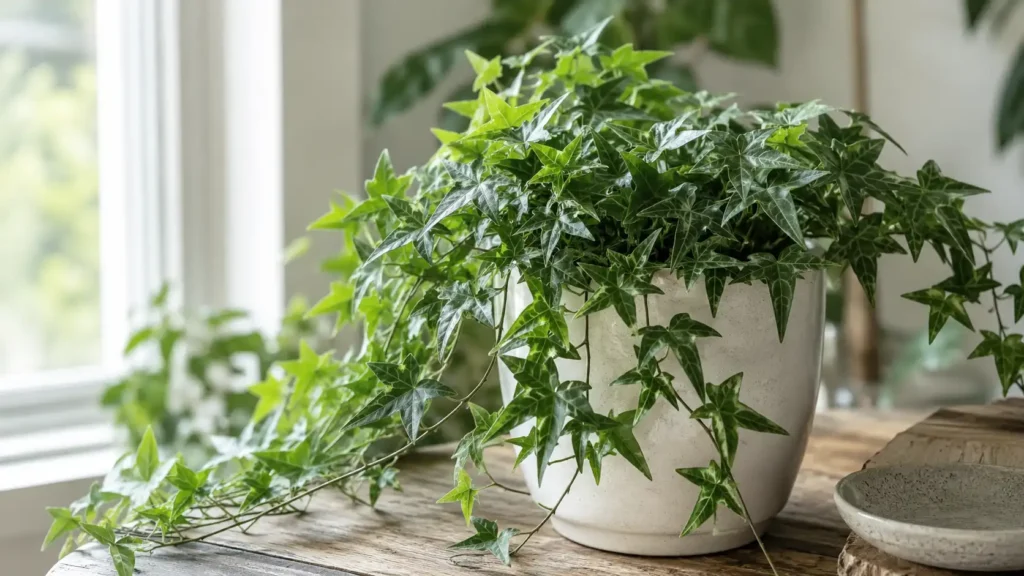
According to Manuela Nogueira, Starling ivy (Hedera helix ‘Starling’), a variegated English ivy cultivar, thrives in bright, indirect light, well-draining soil kept lightly moist, and temperatures between 65–75°F. Let the top inch of soil dry between waterings to prevent root rot, feed monthly with half-strength balanced fertilizer during spring and summer, and repot annually.
The “Starling” name likely nods to the mottled, iridescent-flecked leaf pattern resembling a starling’s plumage, and functions as a trade cultivar name rather than a formally recognized botanical designation. All plant parts contain saponins that are toxic to pets and humans if ingested, and outdoor specimens can turn invasive, since birds — including starlings — readily disperse the berries’ seeds into surrounding woodland.
Starling Ivy is one of many popular houseplants that can thrive indoors when provided with suitable growing conditions. For more indoor plant care information, explore our complete guide to Plants: Benefits and Guides (Complete Care, Types & Growing Tips).
Quick Summary
- Starling Ivy is a Hedera helix (English ivy) cultivar, not a separate species, so its basic care requirements are the same as other English ivies.
- It grows best in bright, indirect light with soil that dries slightly between waterings and average indoor humidity.
- Starling Ivy is a slow-to-moderate grower that propagates easily from stem cuttings in water or soil.
- The plant is mildly toxic if ingested by cats, dogs, or people, so it should be kept out of reach of pets and children.
What Is Starling Ivy? (Definition & Origin)
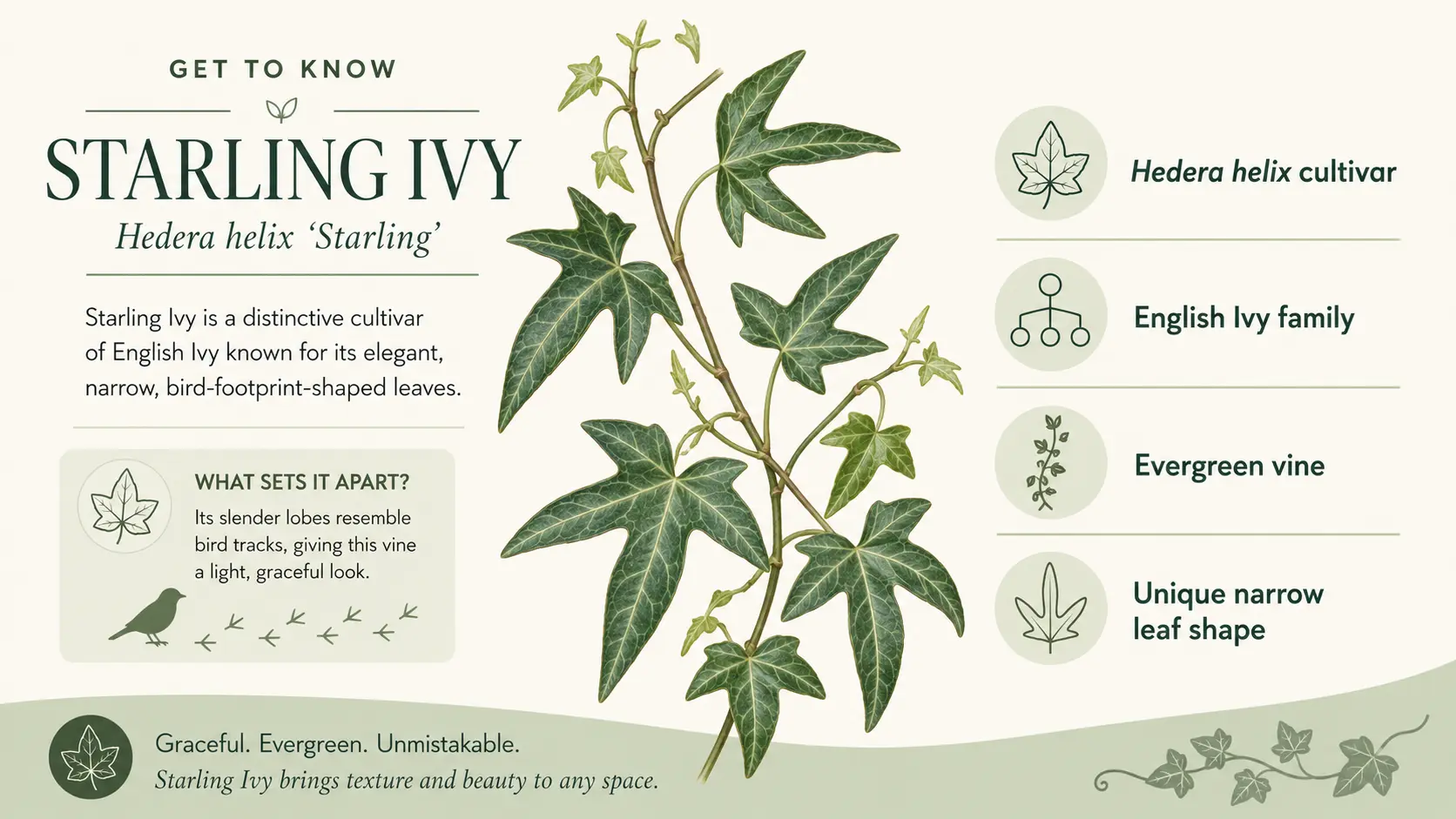
Starling Ivy is a cultivated variety of English ivy (Hedera helix), an evergreen climbing vine in the Araliaceae family. Unlike standard English ivy, this cultivar is prized for its distinctive narrow, elongated leaf lobes that resemble small bird footprints, giving the plant a finer and more ornamental appearance.
Like other Hedera helix cultivars, Starling Ivy naturally climbs vertical surfaces using aerial rootlets but also grows beautifully as a trailing plant in hanging baskets or decorative containers. Mature outdoor plants may produce small yellow-green flowers followed by dark blue to black berries, although flowering and fruiting are uncommon when grown indoors as a houseplant.
The plant is valued primarily for its attractive foliage, adaptability, and ability to grow in a wide range of indoor environments with relatively little maintenance.
Is Starling Ivy the Same as English Ivy?
Yes. Starling Ivy is a cultivar of English ivy (Hedera helix), not a different species.
The difference lies in appearance rather than care requirements. Starling Ivy has narrower, more deeply cut leaves than the typical English ivy varieties commonly seen in landscapes or homes. Despite this unique leaf shape, it requires the same basic conditions for healthy growth, including indirect light, evenly moist but well-drained soil, moderate temperatures, and occasional pruning.
For indoor gardeners, this means that nearly all English ivy care recommendations also apply to Starling Ivy.
Starling Ivy Plant Characteristics
Starling Ivy combines the familiar growth habits of English ivy with a more refined leaf shape, making it popular for indoor displays, hanging baskets, shelves, and moss poles.
Key characteristics include:
- Scientific name: Hedera helix ‘Starling’
- Plant family: Araliaceae
- Plant type: Evergreen perennial vine
- Growth habit: Climbing or trailing
- Leaf shape: Narrow, elongated lobes resembling bird footprints
- Mature indoor size: Typically 3–10 feet long with support
- Flower color: Yellow-green (rare indoors)
- Berry color: Dark blue to black (mainly on mature outdoor plants)
- Toxicity: Mildly toxic if ingested
The plant maintains attractive foliage throughout the year when grown under stable indoor conditions.
Growth Habit — Does Ivy Prefer to Climb or Hang?
Starling Ivy naturally prefers to climb whenever it finds a suitable surface, but it also performs exceptionally well as a trailing houseplant.
Its growth habit depends largely on how it is displayed.
When provided with support, it will:
- Climb moss poles and trellises
- Attach to rough surfaces using aerial roots
- Produce denser vertical growth
- Develop larger leaves under favorable conditions
When grown without support, it will:
- Cascade from hanging baskets
- Trail over shelves and plant stands
- Create long decorative vines
- Maintain a softer, cascading appearance
Both growth styles are healthy. The choice depends on your available space and decorative preference rather than the plant’s health.
Growth Rate — How Fast Does It Grow Indoors?
Starling Ivy is considered a slow-to-moderate growing houseplant.
During spring and summer, healthy plants typically produce consistent new vines and fresh leaves under ideal conditions. Growth naturally slows during autumn and winter when daylight decreases.
Indoor growth speed depends on several environmental factors:
- Bright indirect sunlight
- Consistent watering
- Warm temperatures between 60–75°F (16–24°C)
- Well-draining potting mix
- Regular but moderate fertilization during active growth
- Adequate root space
Growth often slows significantly in low-light conditions. Although the plant usually survives reduced light, new leaves become smaller and vines elongate with wider spacing between leaves.
A common beginner mistake is expecting rapid vine growth immediately after purchase. Like many indoor ivies, Starling Ivy often spends several weeks adapting to its new environment before producing vigorous new growth.
Lifespan of an Ivy Plant
With proper care, an ivy plant can live for many years or even decades.
Healthy indoor specimens often remain attractive for well over ten years when they receive appropriate light, watering, and periodic pruning. Because vines continuously produce new growth, older plants can be rejuvenated by trimming leggy stems and propagating fresh cuttings.
Routine maintenance, good drainage, and avoiding chronic overwatering contribute significantly to the plant’s long lifespan.
How to Care for Starling Ivy Indoors (Core Care Guide)
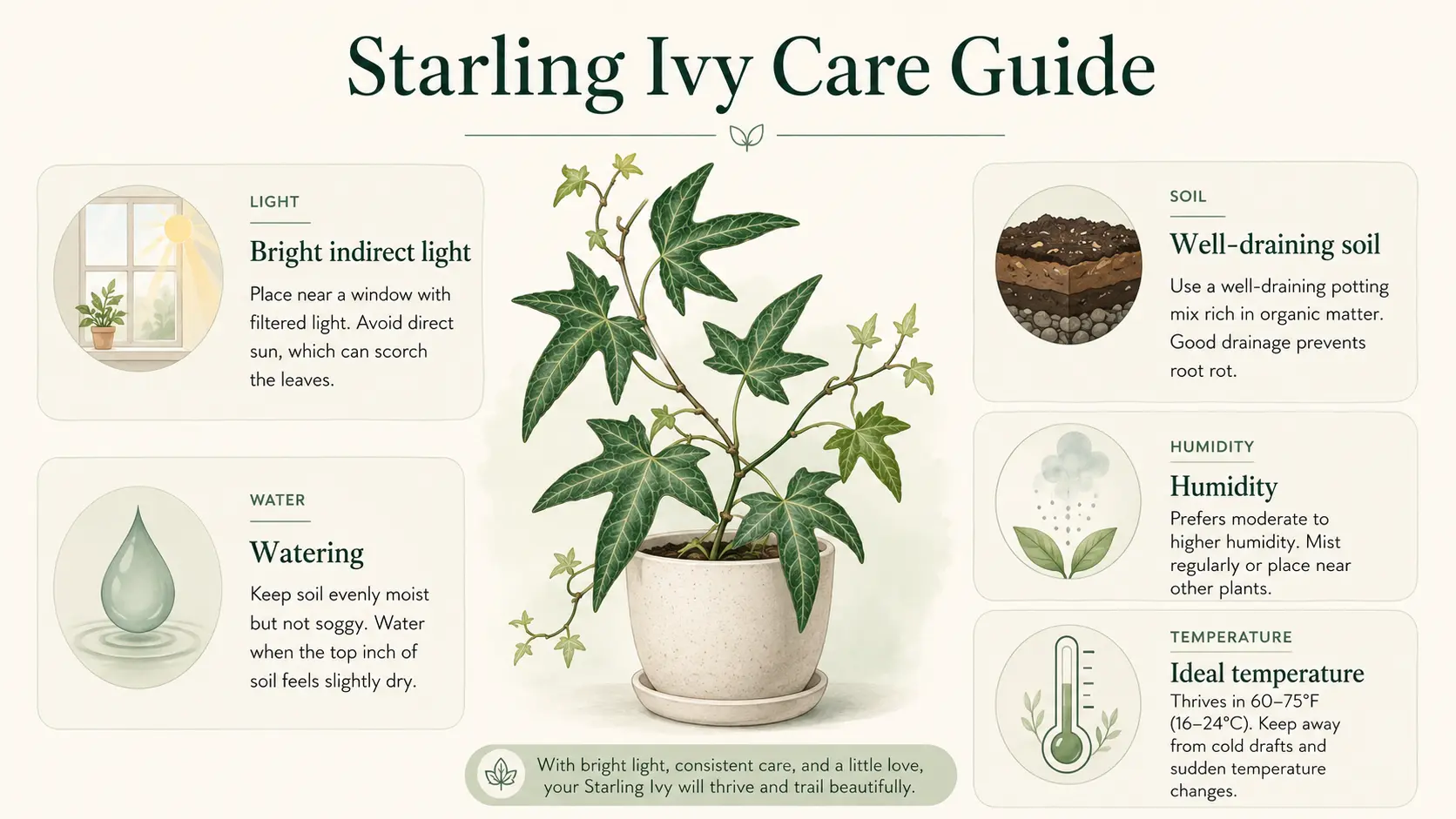
Starling Ivy grows best when its care closely matches the natural woodland conditions where English ivy evolved. Bright filtered light, evenly moist but not saturated soil, moderate humidity, and stable indoor temperatures encourage healthy foliage and compact growth. Like Starling Ivy, other decorative foliage plants such as Scindapsus Pictus also depend on proper indirect lighting and balanced watering for healthy growth.
Providing consistent care is generally more important than making frequent changes to watering, lighting, or fertilizing schedules.
Light Requirements
Starling Ivy prefers bright, indirect light for the healthiest growth.
An east-facing window or a few feet back from a bright south- or west-facing window usually provides ideal lighting. Bright indirect sunlight encourages fuller growth, stronger stems, and richer leaf color without exposing foliage to excessive heat.
The plant also tolerates lower light levels, but several changes may occur:
- Slower overall growth
- Longer spaces between leaves
- Smaller foliage
- Reduced branching
- Increased risk of leggy vines
Direct afternoon sun can scorch the leaves, especially during summer. If leaves begin developing dry brown patches after prolonged sun exposure, moving the plant to filtered light usually prevents further damage.
Watering — Top or Bottom?
Top watering is generally the preferred method for Starling Ivy because it evenly moistens the root ball while flushing excess mineral salts from the potting mix.
Water thoroughly until excess water drains from the drainage holes, then allow the upper inch of soil to dry before watering again.
Bottom watering can occasionally be used when soil has become extremely dry or water-resistant, but it should not replace regular top watering indefinitely.
Good watering practices include:
- Check soil moisture before watering.
- Empty decorative cachepots after watering.
- Never allow roots to sit in standing water.
- Reduce watering frequency during winter.
- Always use containers with drainage holes.
Maintaining proper drainage is one of the most effective ways to prevent root rot and other moisture-related problems.
Soil & Fertilizing
Starling Ivy performs best in a well-draining, nutrient-rich potting mix that retains moderate moisture without becoming waterlogged.
A quality indoor potting mix amended with perlite or coarse bark helps improve aeration around the roots.
Feed during spring and summer using a balanced houseplant fertilizer according to label directions. Fertilizing is generally unnecessary during winter because growth naturally slows.
Do coffee grounds help ivy plants?
Used coffee grounds are not recommended as a regular soil amendment for indoor ivy. Fresh coffee grounds may compact the soil, retain excess moisture, and alter soil conditions in ways that reduce root health. Composting coffee grounds before use is a safer practice.
Is Miracle-Gro good for English ivy?
Balanced houseplant fertilizers, including products formulated for foliage plants, can support healthy English ivy growth when used correctly. The key is applying fertilizer at the recommended strength and avoiding overfertilization, which may damage roots or encourage weak, excessive growth.
Humidity — Does It Like to Be Misted?
Starling Ivy prefers average to moderately high humidity, but regular misting is not essential for healthy growth. If indoor air becomes too dry, methods such as grouping plants or using natural humidity techniques can help improve conditions for moisture-loving houseplants.
Typical household humidity between 40% and 60% is usually sufficient. During winter, indoor heating can reduce humidity, causing leaf edges to become dry or crispy.
Instead of frequent misting, consider more reliable ways to maintain humidity:
- Group houseplants together.
- Use a pebble tray with water beneath the pot.
- Run a room humidifier if indoor air is very dry.
- Keep the plant away from heating vents and radiators.
While occasional misting is unlikely to harm the plant, it provides only temporary humidity and should not be relied upon as the primary method for increasing moisture around the foliage.
Placement — Should You Keep It in the Bathroom?
Yes, Starling Ivy can grow well in a bathroom if it receives enough natural light.
Bathrooms often provide higher humidity, which helps reduce leaf dryness and supports healthy foliage. However, humidity alone is not enough to keep the plant thriving.
An ideal bathroom placement should include:
- Bright, indirect natural light
- Good air circulation
- Moderate temperatures
- Well-draining soil
- Proper watering practices
A dark bathroom without windows is generally unsuitable unless supplemental grow lights are provided.
Pruning — How to Make It Bushy
Regular pruning encourages Starling Ivy to develop a fuller, bushier appearance instead of producing long, sparse vines. Regular leaf maintenance, including gentle cleaning, can help indoor plants maintain healthier foliage and improve their overall appearance.
Trim growing tips just above a leaf node during spring or summer. This stimulates dormant buds below the cut to produce new branches, resulting in denser foliage over time.
Additional pruning tips include:
- Remove dead or damaged leaves promptly.
- Trim leggy stems to improve shape.
- Sterilize pruning tools before use.
- Save healthy stem cuttings for propagation.
- Avoid removing more than one-third of the plant at one time.
Consistent pruning, combined with adequate light, is one of the most effective ways to maintain a compact and attractive indoor specimen.
Starling Ivy Care at a Glance
| Care Factor | Recommendation |
| Light | Bright, indirect light |
| Water | Allow top 1 inch of soil to dry before watering |
| Soil | Well-draining indoor potting mix with added perlite or bark |
| Humidity | Average to moderately high (40–60%) |
| Temperature | 60–75°F (16–24°C) |
| Fertilizer | Balanced houseplant fertilizer during spring and summer |
| Growth Rate | Slow to moderate indoors |
| Pruning | Trim above leaf nodes for bushier growth |
How to Propagate Starling Ivy
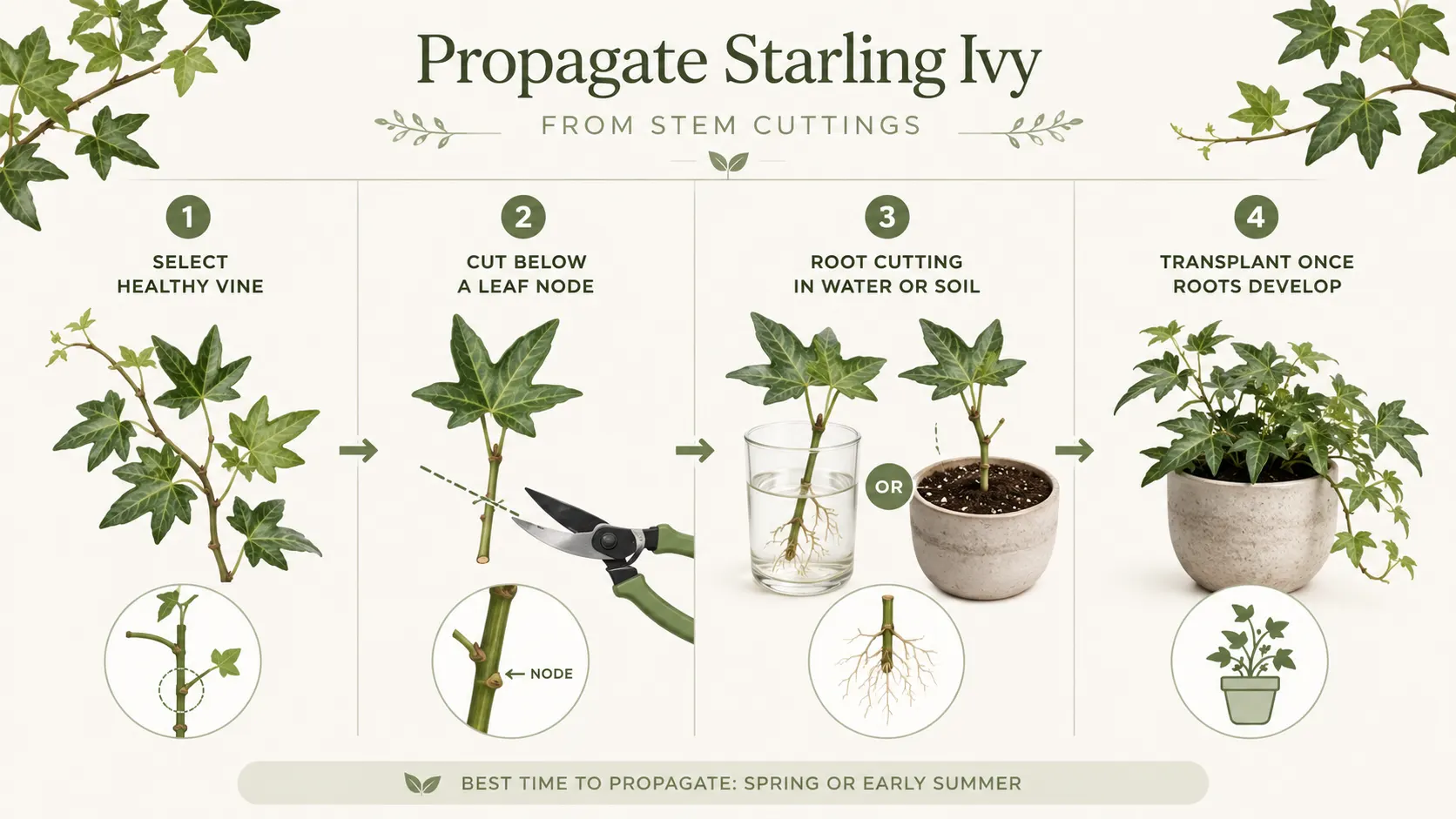
Starling Ivy is easy to propagate through stem cuttings, making it a beginner-friendly plant for creating new vines. The most reliable method is taking a healthy cutting that contains at least one leaf node, because the node contains the growth points needed for new roots and shoots. Similar trailing houseplants such as Ceropegia woodii also grow well in hanging displays and have unique propagation methods worth exploring.
Propagation is usually most successful during the active growing season in spring and summer when the plant naturally produces new growth.
Stem Cutting Propagation Steps
Follow these steps to propagate Starling Ivy:
- Choose a healthy stem
- Select a green, actively growing vine with healthy leaves.
- Avoid stems with yellowing leaves, pests, or signs of disease.
- Make the cutting
- Cut a 4–6 inch section just below a leaf node using clean scissors or pruning shears.
- Remove the lower leaves, leaving one or two leaves near the top.
- Root the cutting
- Place the cutting in water or directly into moist potting mix.
- Keep the cutting in bright, indirect light.
- Maintain warmth and consistent moisture.
- Transfer once rooted
- When roots become several centimeters long, move water-propagated cuttings into soil.
- Keep new plants slightly moist while they adjust.
Can English ivy live in just water?
Yes, English ivy, including Starling Ivy, can survive and grow in water temporarily or even for extended periods if provided with adequate light and nutrients. However, plants grown permanently in water usually develop differently from soil-grown plants and may grow more slowly without proper nutrient supplementation.
For long-term health, growing Starling Ivy in well-draining soil is generally recommended because soil provides better access to nutrients and supports stronger root development.
Common Starling Ivy Problems and How to Fix Them (Problem-Solution Coverage)
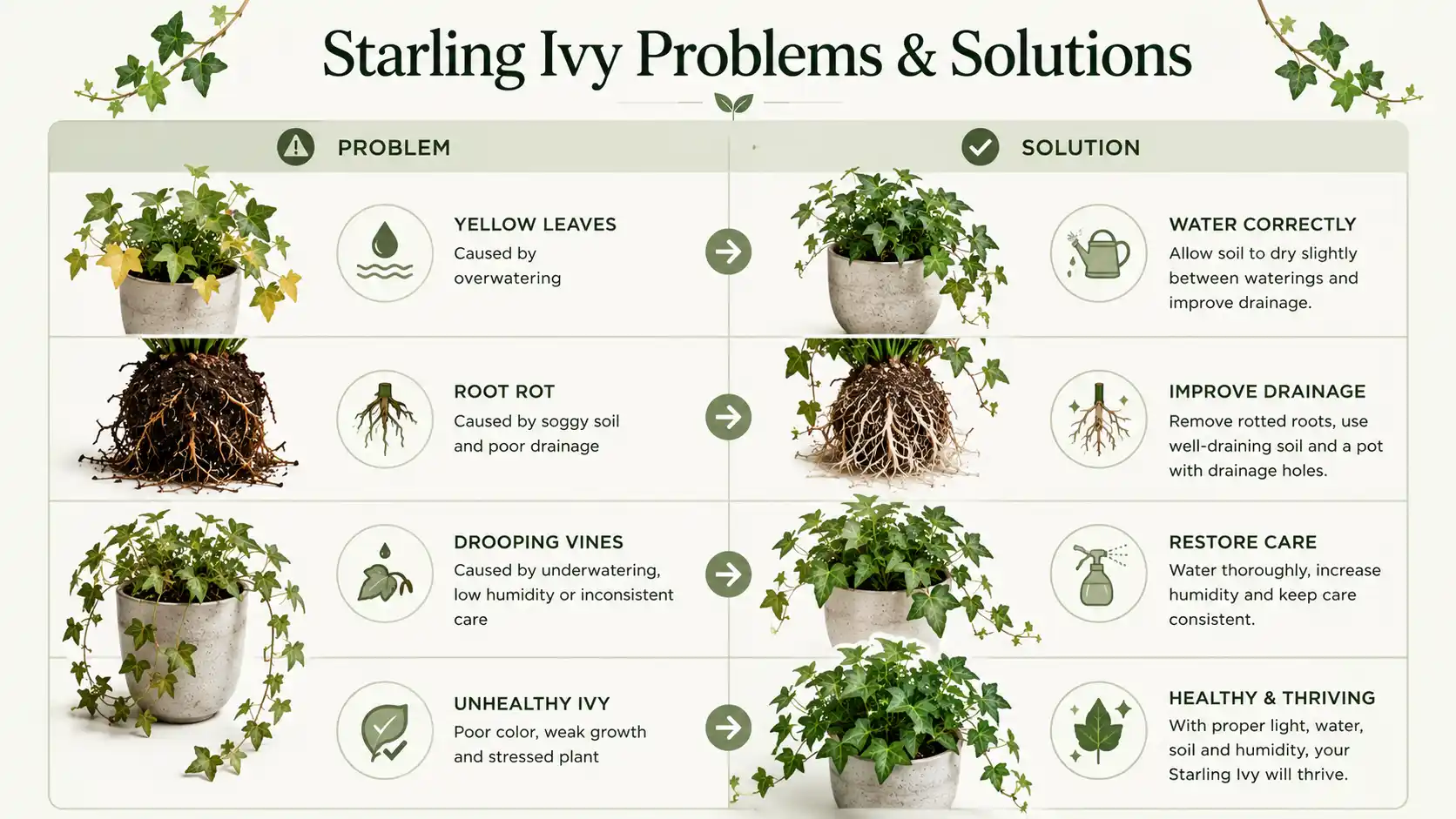
Starling Ivy is generally hardy, but incorrect watering, unsuitable lighting, and poor drainage can cause common indoor plant problems. Identifying symptoms early helps prevent permanent damage.
Yellowing Leaves — Causes, Fixes, and Prevention
Yellow leaves on Starling Ivy are commonly caused by overwatering, poor drainage, insufficient light, or natural aging of older leaves.
Common causes include:
- Soil staying wet for too long
- Pots without drainage holes
- Reduced light during winter
- Sudden environmental changes
- Nutrient imbalance
How to fix yellow leaves:
- Check soil moisture before watering again.
- Allow excess water to drain completely.
- Move the plant to brighter indirect light.
- Remove severely damaged leaves.
- Repot if roots show signs of rot.
Prevention tips:
- Use a well-draining soil mix.
- Avoid watering on a fixed daily schedule.
- Match watering frequency to temperature and light conditions.
- Ensure the container has drainage holes.
Overwatering and Root Rot — Causes, Fixes, and Prevention
Root rot occurs when Starling Ivy roots remain in constantly wet soil, reducing oxygen availability and encouraging fungal problems.
Signs of overwatering include:
- Yellowing leaves
- Soft or mushy stems
- Drooping foliage despite moist soil
- Slow growth
- Unpleasant soil odor
How to fix root rot:
- Remove the plant from its container.
- Inspect the roots and cut away dark, mushy sections.
- Repot into fresh, well-draining soil.
- Reduce watering until the plant begins recovering.
Prevent root problems by allowing the top layer of soil to dry slightly between waterings and avoiding heavy containers that retain excess moisture.
Reviving a Drooping Plant — How Do You Perk Up an Ivy Plant?
A drooping Starling Ivy can often recover when the underlying cause is corrected. The first step is checking whether the plant is suffering from underwatering or overwatering.
If the soil is dry:
- Water thoroughly until excess water drains.
- Allow the plant to recover in bright indirect light.
- Monitor moisture levels more frequently.
If the soil is wet:
- Stop watering temporarily.
- Improve drainage.
- Check roots for rot.
- Move the plant to a brighter location with better airflow.
Drooping leaves do not always mean the plant needs more water. Overwatering is one of the most common reasons ivy plants appear weak.
Like many indoor plants, Starling Ivy can occasionally experience pest issues such as aphids, which can be managed through early identification and proper treatment methods.
Is Starling Ivy Safe for Pets and People?
Starling Ivy is mildly toxic to cats, dogs, and people if ingested because it contains compounds that can irritate the digestive system.
The plant’s leaves and berries contain substances that may cause symptoms such as:
- Drooling
- Vomiting
- Diarrhea
- Stomach discomfort
- Skin irritation in sensitive individuals
For pet-friendly homes, Starling Ivy should be placed where animals cannot chew the foliage.
Is It Okay to Touch English Ivy?
Yes, touching English ivy is generally safe for most people. However, some individuals may experience skin irritation after handling the plant, especially when exposed to the sap.
Practical precautions include:
- Wear gloves when pruning large amounts of ivy.
- Wash hands after handling cut stems.
- Avoid touching eyes after plant contact.
Downsides of English Ivy
Although attractive as an ornamental plant, English ivy has some limitations:
- It can become invasive outdoors in some regions.
- It may damage structures when allowed uncontrolled growth.
- It requires management to prevent excessive spreading.
- It can be harmful if eaten by pets or children.
Indoor cultivation avoids many outdoor invasiveness concerns because growth is contained within pots.
Environmental Limitations and Common Myths
Starling Ivy is adaptable indoors, but its parent species, English ivy, has environmental concerns when grown outdoors in certain areas.
Why Is English Ivy Banned or Restricted in Some Regions?
English ivy is restricted in some regions because it can behave as an invasive plant outside its native range.
When uncontrolled outdoors, it may:
- Spread aggressively across forests and landscapes.
- Cover native vegetation and reduce sunlight availability.
- Compete with native plants for resources.
- Climb trees and add physical weight to branches.
Indoor Starling Ivy does not create the same ecological concerns because container growth limits spreading.
What Kills Ivy From Growing?
Managing outdoor ivy typically requires removing the entire plant, including roots, because remaining root fragments can produce new growth.
Common control methods include:
- Physically removing vines and roots.
- Repeated pruning to weaken growth.
- Covering areas to block sunlight.
- Using appropriate garden control methods where permitted.
Simply cutting visible vines may not eliminate established ivy because underground roots can continue producing new shoots.
Myth Check: Does Ivy Attract Rats or Snakes?
English ivy does not directly attract rats or snakes. However, dense outdoor ivy growth can create sheltered areas where some animals may hide.
The issue is not the plant itself but the habitat it creates when it becomes thick and unmanaged.
Maintaining controlled growth and removing excessive outdoor cover reduces potential hiding spaces.
Comparison Block: Starling Ivy vs. Standard English Ivy vs. Other Hedera Cultivars
| Feature | Starling Ivy | Standard English Ivy | Other Hedera Cultivars |
| Scientific classification | Hedera helix ‘Starling’ | Hedera helix | Mostly Hedera helix varieties |
| Leaf shape | Narrow, elongated lobes | Traditional three- to five-lobed leaves | Varies by cultivar |
| Growth habit | Climbing or trailing | Climbing or trailing | Depends on variety |
| Indoor care | Bright indirect light, moderate watering | Similar care needs | Usually similar with minor differences |
| Growth speed | Slow to moderate | Moderate under ideal conditions | Varies |
| Main appeal | Unique bird-footprint-shaped foliage | Classic ivy appearance | Decorative leaf colors and forms |
Starling Ivy stands out mainly because of its specialized leaf shape rather than dramatically different care requirements.
Beginner Mistakes With Starling Ivy
Many Starling Ivy problems come from simple care mistakes rather than difficult growing conditions.
Common beginner mistakes include:
- Overwatering: Keeping soil constantly wet can lead to yellow leaves and root problems.
- Poor light placement: Very dark locations slow growth and create sparse vines.
- Ignoring pet safety: Allowing cats or dogs access to the plant can create health risks if leaves are eaten.
- Using poor drainage: Heavy soil or containers without drainage holes increase root rot risk.
- Overfertilizing: Too much fertilizer can damage roots and cause weak growth.
- Skipping pruning: Untrimmed vines may become long and thin instead of full and bushy.
Conclusion
Starling Ivy care focuses on providing the right balance of light, water, soil, and maintenance. As a cultivar of Hedera helix, Starling Ivy shares the same basic needs as English ivy while offering a distinctive narrow-leaf appearance that makes it attractive for indoor growing. Bright indirect light, moderate watering, good drainage, and occasional pruning help maintain healthy growth. The plant is also easy to propagate through stem cuttings, making it suitable for beginners. Because Starling Ivy is mildly toxic if consumed and English ivy can be invasive outdoors in some regions, responsible placement and management are important. With consistent care, Starling Ivy can remain a long-lived and decorative indoor vine.
FAQs
Is Starling Ivy the same as English Ivy?
Yes, Starling Ivy is a cultivar of English ivy (Hedera helix). It is not a separate species but a selected variety with narrower, more distinctive leaf lobes. Its care requirements are generally the same as other English ivy plants.
What is the lifespan of an ivy plant?
An ivy plant can live for many years with proper care. Indoor ivy commonly survives for over a decade when grown in suitable light, well-draining soil, and appropriate watering conditions.
Does English ivy do well in pots?
Yes, English ivy grows well in pots when provided with good drainage, suitable light, and regular pruning. Container growing also helps control its spreading habit.
Is Miracle-Gro good for English ivy?
Balanced fertilizers such as those designed for houseplants can support English ivy growth when applied correctly. Overfertilizing should be avoided because excess nutrients can damage roots and affect foliage health.
Can English ivy live in just water?
Yes, English ivy can grow in water for a period of time, and stem cuttings often root successfully in water. However, long-term growth is usually stronger when transferred to nutrient-rich, well-draining soil.
Does English ivy attract snakes?
English ivy does not directly attract snakes. However, dense outdoor ivy growth may create hiding areas for various animals, including snakes, if the vegetation becomes thick and unmanaged.