
Introduction
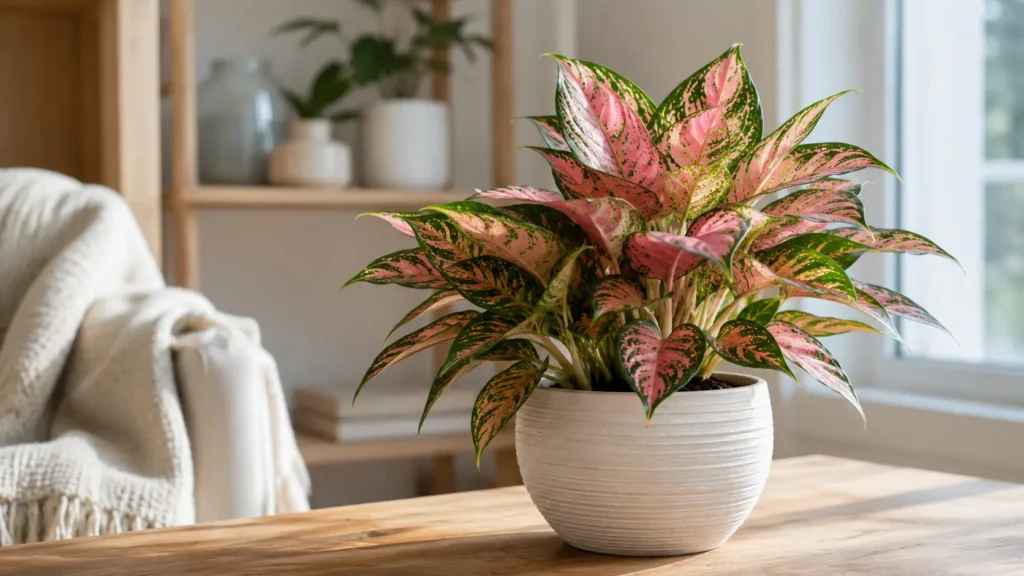
Aglaonema Pink Star is a variegated Chinese evergreen cultivar in the Araceae family, valued for its striking pink-and-green foliage and reliable indoor performance. It is a popular houseplant because it adapts well to typical indoor conditions while adding vibrant color to homes and offices. With proper care, this cultivar remains healthy for many years and requires relatively little maintenance compared to many colorful foliage plants. This guide explains everything you need to know about Aglaonema Pink Star, including its care requirements, mature size, ideal placement, growth habits, and solutions to common growing problems.
Quick Summary
- Bright, indirect light, evenly moist soil, and a well-draining potting mix produce the healthiest growth.
- Mature indoor plants typically reach 1–2 feet (30–60 cm) tall and wide.
- Aglaonema Pink Star is considered an easy-care, beginner-friendly houseplant.
- Its colorful foliage, low-maintenance nature, and reputation as a lucky plant make it a popular indoor choice.
What Is Aglaonema Pink Star?
Aglaonema Pink Star is a cultivated variety of the Chinese evergreen, a tropical foliage plant native to Southeast Asia. Like other Aglaonema cultivars, it belongs to the Araceae family and is grown primarily for its decorative leaves rather than its flowers.
The Aglaonema genus, commonly known as Chinese evergreen, is part of the Araceae family and is documented in botanical references such as Wikipedia for its tropical foliage species diversity.
The plant is distinguished by green leaves heavily splashed with pink variegation. The exact amount of pink varies depending on genetics, maturity, and growing conditions. Compared with many tropical houseplants, Aglaonema Pink Star tolerates lower light levels while maintaining attractive foliage.
Closely related cultivars include Pink Diamond, Red Valentine, Lady Valentine, and Siam Aurora. Although these varieties share similar care requirements, each has distinct leaf colors and growth characteristics.
Key identifying features:
- Bright pink and green variegated leaves
- Upright, compact growth habit
- Slow to moderate growth rate
- Suitable for homes, apartments, and offices
- Excellent indoor ornamental foliage plant
Aglaonema Pink Star vs. Other Pink Aglaonema Varieties
| Variety | Leaf Color Intensity | Mature Size | Growth Rate | Light Tolerance |
| Pink Star | Bright pink with green variegation | Compact | Moderate | Medium to bright indirect light |
| Pink Diamond | Soft pink speckles | Compact | Slow | Medium indirect light |
| Red Valentine | Deep pink and red foliage | Medium | Moderate | Bright indirect light |
| Siam Aurora | Red margins with green centers | Larger | Moderate | Adaptable to lower light |
Although these cultivars belong to the same genus, Pink Star is especially appreciated for its balanced pink variegation and manageable indoor size.
How Do You Care for Aglaonema Pink Star?
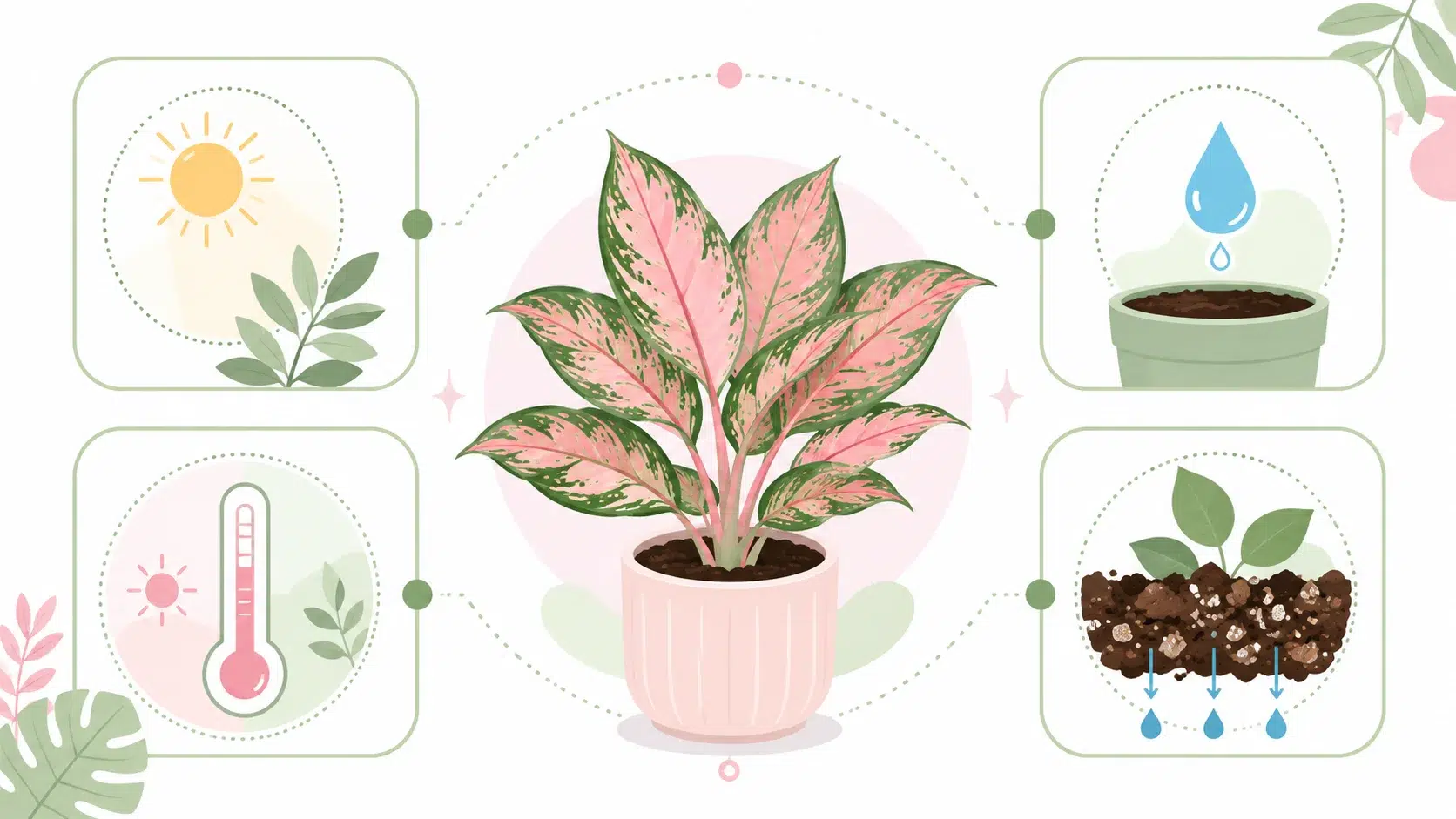
Aglaonema Pink Star grows best when provided with bright, indirect light, moderate watering, warm temperatures, and well-draining soil. Consistent care helps preserve its colorful foliage and encourages healthy growth.
Basic care routine:
- Water when the top 1–2 inches of soil become dry.
- Place in bright, filtered sunlight.
- Maintain temperatures between 65°F and 80°F (18–27°C).
- Keep humidity around 50–70% when possible.
- Use loose, well-draining potting soil with perlite or bark.
- Feed during spring and summer.
- Remove damaged or yellow leaves as needed.
Is Aglaonema Pink Star Easy to Care For?
Yes. Aglaonema Pink Star is considered an easy-care houseplant suitable for beginners. It tolerates occasional missed watering and adapts well to indoor environments.
However, it performs best when protected from direct afternoon sun, overwatering, and cold temperatures. Most problems arise from excessive watering rather than neglect.
What Is the Best Fertilizer for Aglaonema?
A balanced liquid fertilizer, such as a 10-10-10 or 20-20-20 formulation diluted to half strength, works well during active growth.
General recommendations include:
- Fertilize every 4–6 weeks during spring and summer.
- Reduce feeding during autumn.
- Avoid fertilizing during winter dormancy unless the plant is actively growing indoors.
- Never fertilize dry soil.
Should I Bottom Water My Aglaonema?
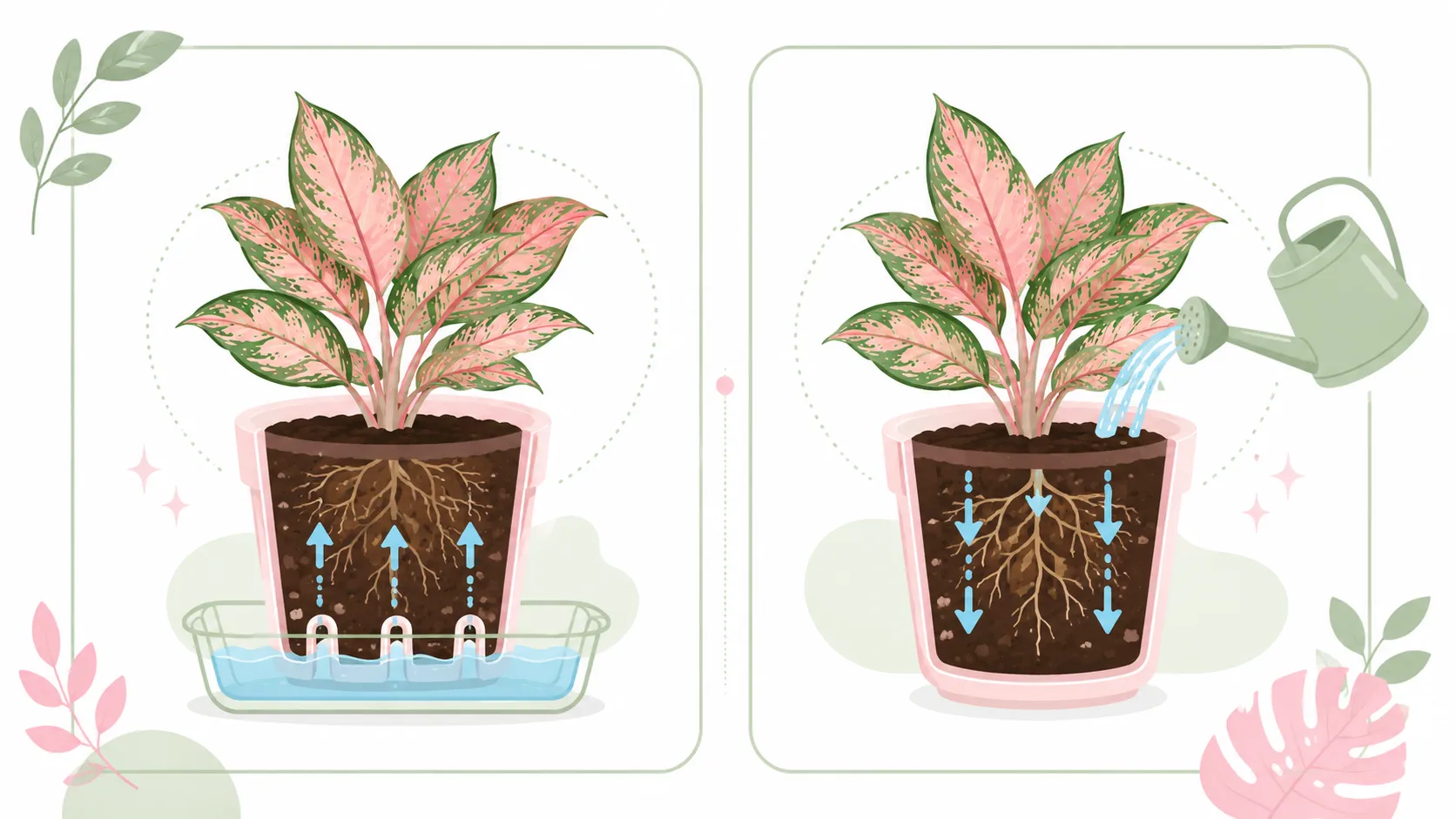
Bottom watering can be an excellent method because it allows roots to absorb moisture evenly while reducing the risk of wet foliage and uneven watering.
Bottom watering is especially useful when:
- Soil has become very dry.
- You want consistent moisture distribution.
- The plant is sensitive to overwatering around the crown.
Occasional top watering is still beneficial because it flushes accumulated mineral salts from the soil.
Can Aglaonema Live in Just Water?
Yes, Aglaonema can survive in water for extended periods, particularly during propagation or semi-hydroponic growing.
However, plants grown permanently in water require:
- Regular water changes
- Clean containers
- Nutrient supplementation
- Careful monitoring of root health
For long-term growth, well-draining soil generally provides stronger development than water alone.
Where Is the Best Place to Put Aglaonema?
The best location is a room with bright, indirect sunlight and stable indoor temperatures. East-facing windows or several feet away from south- or west-facing windows usually provide ideal conditions.
Avoid placing the plant near:
- Heating vents
- Air conditioners
- Cold drafts
- Harsh direct afternoon sunlight
Can I Put Aglaonema in My Bedroom?
Yes. Aglaonema grows well in bedrooms because it tolerates moderate indoor light and contributes attractive greenery to living spaces.
Although houseplants have only a modest effect on indoor air quality under normal household conditions, keeping Aglaonema in a bedroom is perfectly suitable provided it receives enough indirect light during the day.
Is Aglaonema the Luckiest Plant Inside the House?
Many cultures, particularly in parts of Asia, associate Aglaonema with prosperity, good fortune, and positive energy. This reputation has contributed to its popularity as a decorative indoor plant.
From a horticultural perspective, these symbolic meanings are cultural traditions rather than scientifically verified properties. Nevertheless, Aglaonema remains a favorite choice for homes because of both its beauty and symbolism.
Aglaonema Pink Star Size and Growth
Aglaonema Pink Star is a compact houseplant that generally reaches 12–24 inches (30–60 cm) in both height and width when grown indoors.
Plant size depends on:
- Available light
- Pot size
- Nutrient availability
- Age of the plant
- Overall growing conditions
Indoor plants usually remain smaller than specimens grown year-round outdoors in tropical climates.
Do Aglaonema Like Big Pots?
No. Aglaonema generally prefers pots only slightly larger than its root system.
Oversized containers retain excess moisture, increasing the likelihood of root rot.
Repot every two to three years or whenever roots begin circling the container.
How Do You Make Aglaonema Bushy?
A bushier plant develops through healthy growth and occasional pruning.
Helpful techniques include:
- Pinching growing tips
- Removing weak stems
- Providing bright indirect light
- Rotating the pot regularly
- Propagating stem cuttings and planting them together
These methods encourage fuller, more balanced growth.
How to Make Aglaonema More Pink?
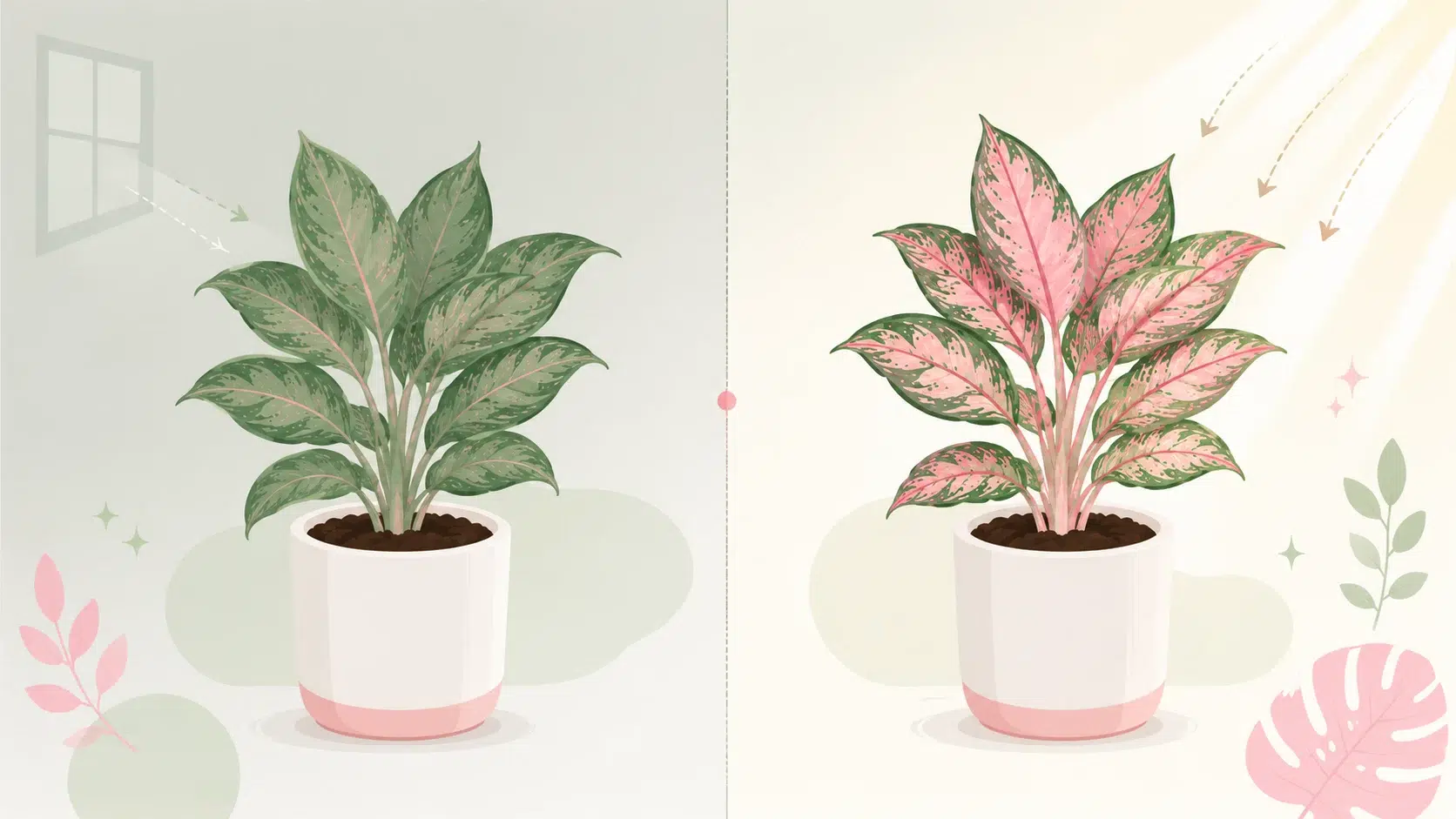
Brighter indirect light helps maintain stronger pink coloration. Too little light often results in greener foliage because the plant produces more chlorophyll.
To preserve vibrant variegation:
- Provide bright filtered light.
- Avoid deep shade.
- Fertilize appropriately.
- Maintain consistent watering.
- Purchase stable variegated cultivars from reputable growers.
Common Problems With Aglaonema
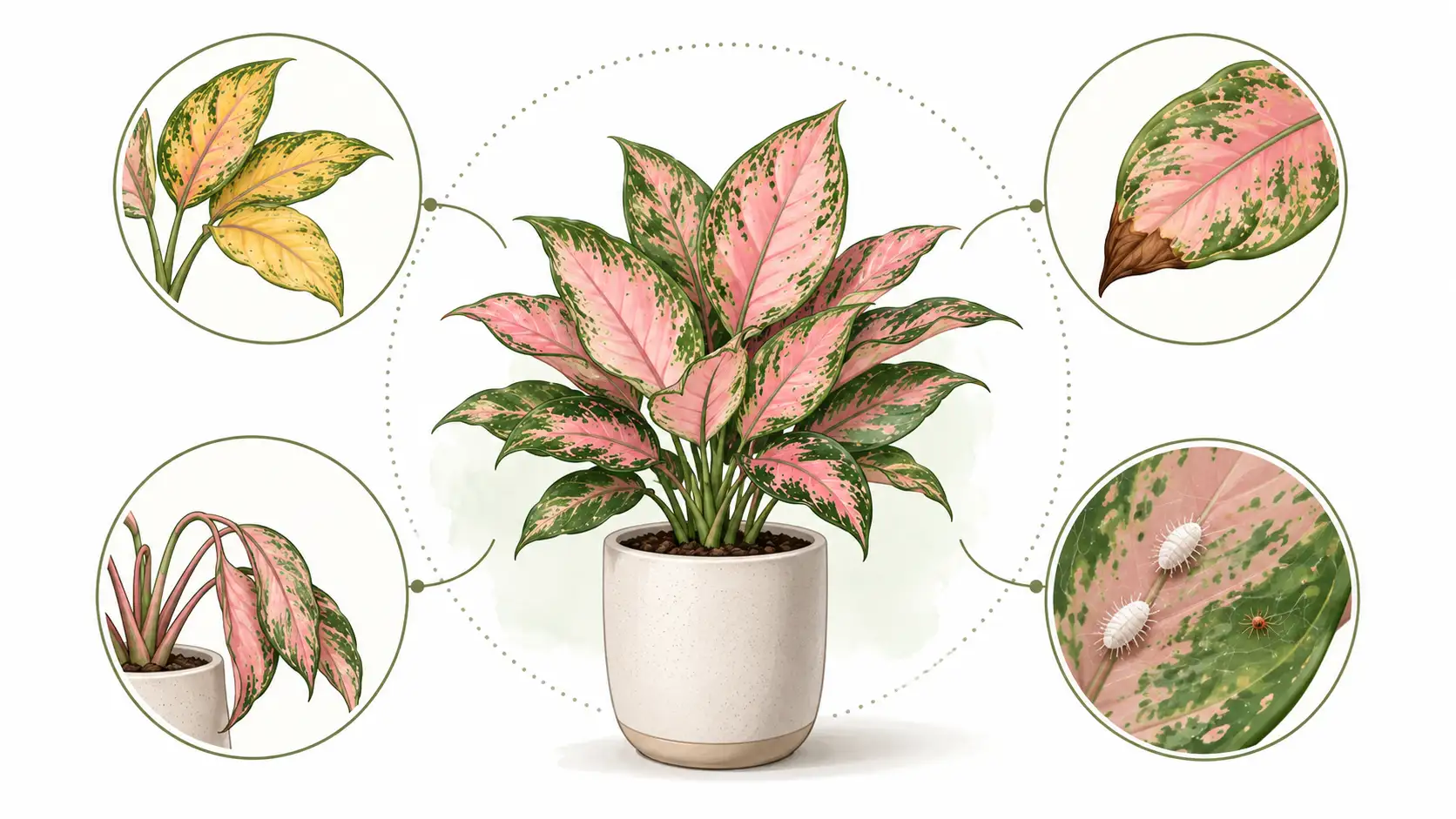
Most Aglaonema problems are caused by environmental stress rather than disease.
Common issues include:
- Yellow leaves: Usually caused by overwatering or poorly drained soil.
- Brown leaf tips: Often result from low humidity, inconsistent watering, or mineral buildup from tap water.
- Slow growth: Frequently caused by insufficient light or lack of nutrients.
- Mealybugs and spider mites: Inspect leaves regularly, isolate affected plants, and treat infestations promptly with appropriate insecticidal products or horticultural soap.
Preventive care is usually easier than treating established problems.
What Are the Disadvantages of Aglaonema?
Despite its many strengths, Aglaonema has a few limitations.
These include:
- Toxic if ingested by cats, dogs, or people.
- Sensitive to cold temperatures.
- Vulnerable to root rot from overwatering.
- Growth slows considerably in low light.
- Variegation may fade under poor lighting conditions.
Most disadvantages can be minimized through proper care.
What Is the Lifespan of Aglaonema?
With proper care, Aglaonema commonly lives 10 years or longer, and many specimens remain healthy for decades through regular maintenance and repotting.
Factors that extend lifespan include:
- Proper watering
- Adequate light
- Good drainage
- Regular repotting
- Pest prevention
- Stable indoor temperatures
Healthy plants naturally produce new stems as they mature, allowing them to remain attractive for many years.
Beginner Mistakes and Practical Tips
Many beginner problems are easily prevented by following basic indoor plant care principles.
Common mistakes and quick fixes include:
- Overwatering: Check soil moisture before watering.
- Too little light: Move the plant closer to a bright window without exposing it to direct sun.
- Ignoring humidity: Increase humidity during dry seasons with a humidifier or pebble tray.
- Using untreated tap water: Allow tap water to stand overnight if mineral content is high, or occasionally use filtered water.
Seasonal adjustments:
- Spring and summer: Water and fertilize more frequently during active growth.
- Autumn and winter: Reduce watering and fertilizer as growth naturally slows.
Conclusion
Aglaonema Pink Star is an attractive, low-maintenance Chinese evergreen cultivar that combines colorful pink variegation with reliable indoor performance. It thrives in bright, indirect light, evenly moist but well-drained soil, warm temperatures, and moderate humidity. Its compact size, beginner-friendly care requirements, and long lifespan make it an excellent houseplant for homes and offices. By providing consistent watering, appropriate lighting, and occasional feeding, growers can maintain healthy foliage and vibrant pink coloration for many years.
FAQs
How do you care for Aglaonema Pink Star?
Provide bright, indirect light, water when the top layer of soil dries slightly, use well-draining soil, maintain warm temperatures, and fertilize during the growing season.
Can Aglaonema live in just water?
Yes. It can survive in water, especially during propagation or semi-hydroponic culture, but long-term growth generally performs better in well-draining soil.
Is Aglaonema easy to care for?
Yes. It is considered one of the easiest tropical foliage houseplants because it tolerates average indoor conditions and requires relatively simple maintenance.
What is the lifespan of an Aglaonema?
Most Aglaonema plants live for at least 10 years with proper care, and many remain healthy for much longer.
Do Aglaonema like big pots?
No. They grow best in containers only slightly larger than the root ball, as oversized pots retain excess moisture.
What is the luckiest plant to keep inside the house?
Many plants are traditionally associated with good fortune, including Aglaonema, jade plant, lucky bamboo, and money tree. In feng shui traditions, Aglaonema is often regarded as a symbol of prosperity and positive energy.