
Introduction
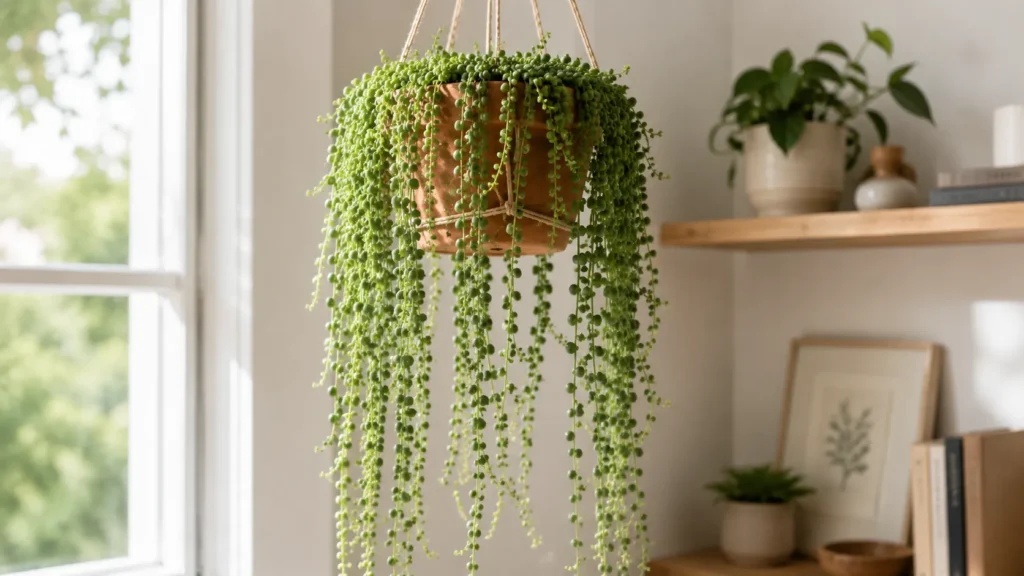
Senecio rowleyanus, commonly known as the string of pearls plant, is a trailing succulent native to South Africa. It is widely grown as an indoor ornamental plant due to its unique bead-shaped leaves that store water and trail elegantly from hanging pots. Proper senecio rowleyanus care focuses on bright indirect light, infrequent watering, and fast-draining soil to prevent root rot. When these conditions are met, the plant thrives with minimal maintenance and produces long cascading stems. Senecio rowleyanus is also part of broader indoor greenery trends often discussed in Plants Benefits and Guides, where indoor plants are explored for their decorative and environmental value.
Quick Summary
- Senecio rowleyanus is a trailing succulent that prefers bright indirect light and dry soil.
- Overwatering is the most common cause of plant decline and root rot.
- Propagation is easy through stem cuttings placed on soil.
- Growth is faster in spring and summer and slows in winter.
What is Senecio Rowleyanus?
Senecio rowleyanus is a succulent species in the Asteraceae family native to the semi-arid regions of South Africa. It is commonly called string of pearls due to its spherical, bead-like leaves that grow along thin trailing stems. These pearl-shaped leaves evolved to store water and reduce surface area, helping the plant survive long dry periods in its natural habitat.
The plant is also known as pearl plant, string of beads, or pearl succulent in horticulture. It is popular as a decorative hanging plant because of its cascading growth habit.
Plant Size and Growth Rate
Mature size indoors vs outdoors
Indoors, Senecio rowleyanus typically grows trailing stems between 30 cm and 90 cm long. In ideal outdoor conditions, it can grow longer and form dense trailing mats. It is most often grown in hanging baskets to display its cascading stems effectively. Similar trailing aesthetics are seen in Monstera Adansonii Hanging or Climbing, though Monstera species require higher humidity.
Seasonal growth patterns
The plant grows actively during spring and summer when light and temperature conditions are optimal. Growth slows significantly during winter, often entering a semi-dormant phase where watering needs are reduced.
If you’re tracking how quickly your string of pearls may grow under different conditions, you can use our Plant Growth Calculator to estimate growth progress based on growing season and care conditions.
Indoor Care Guide
Light requirements
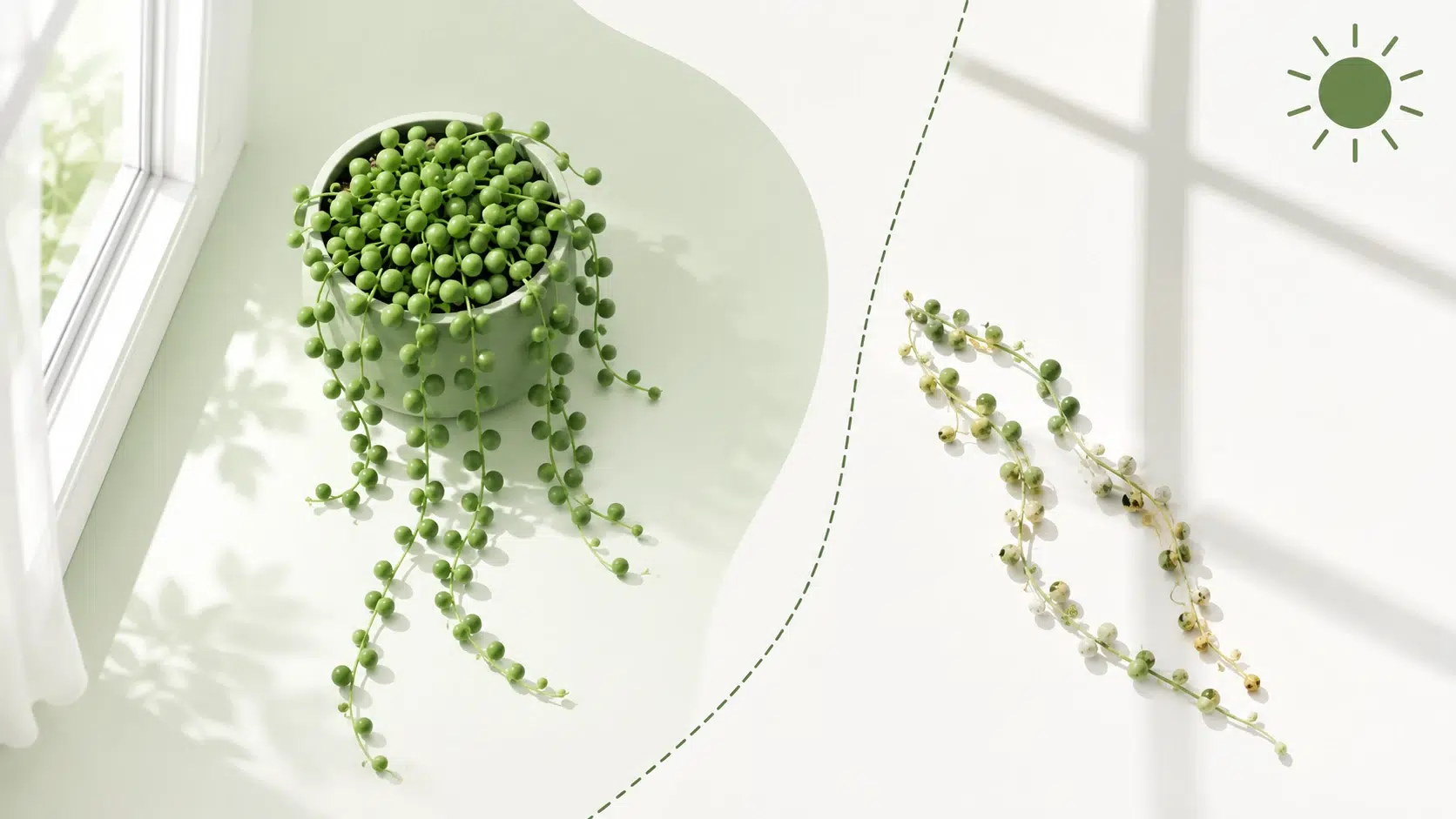
Senecio rowleyanus prefers bright indirect light for at least 4–6 hours daily. Morning sun is beneficial, but strong afternoon sunlight can damage the delicate bead-like leaves. South or east-facing windows are ideal for indoor growth. Plants like Peperomia Rotundifolia Care Guide share similar bright indirect light requirements, making them ideal companion trailing houseplants.
Watering senecio rowleyanus correctly
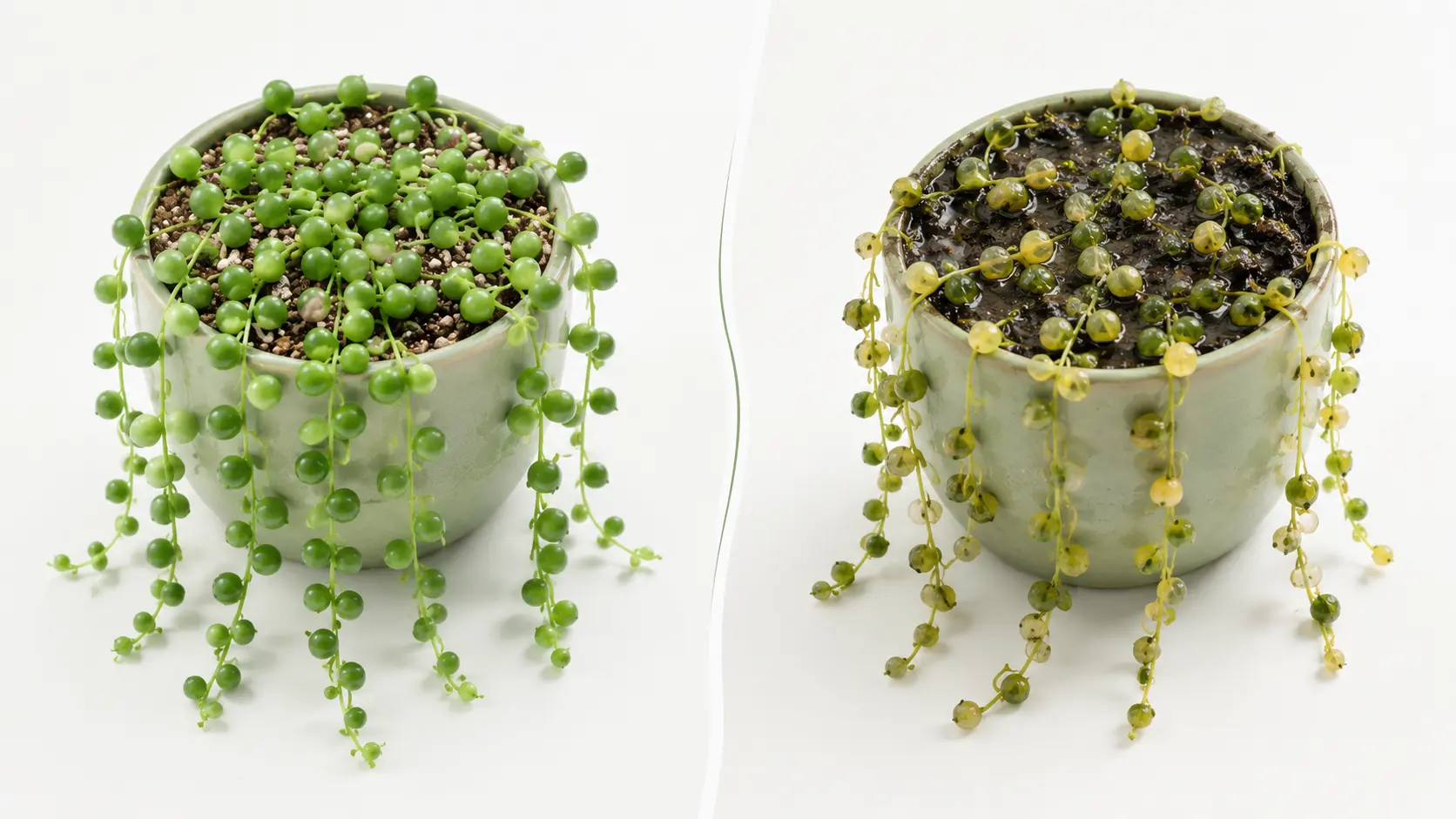
Water only when the soil is almost completely dry. In summer, this usually means every 2–3 weeks, while in winter watering may be reduced to once a month or less. Overwatering is the leading cause of plant failure. Like Senecio rowleyanus, Ceropegia woodii Care Guide & Plant Info also requires dry soil between watering cycles to prevent root rot.
Soil and potting requirements
Use a cactus or succulent mix with added perlite or sand for drainage. Terracotta pots are recommended because they help wick excess moisture away. Proper drainage holes are essential. Proper drainage principles also apply in Caring for a Ficus Elastica: Complete Indoor Care Guide, especially for indoor container plants.
Fertilizing string of pearls
Feed lightly during spring and summer using a diluted balanced fertilizer once a month. Do not fertilize in autumn or winter when growth slows.
Temperature and humidity
Ideal temperatures range from 18°C to 24°C. The plant tolerates low to average humidity and should be protected from frost and cold drafts. Unlike Alocasia Amazonica Care Indoors, which needs higher humidity, Senecio rowleyanus prefers dry air conditions.
Pruning and maintenance
Trim leggy or dead strands to maintain shape and encourage bushier growth. Healthy cuttings can be reused for propagation. Pruning techniques are similar to those explained in How to Prune a Prayer Plant, where trimming encourages fuller growth.
Care Summary Table
| Factor | Requirement |
| Light | Bright indirect light |
| Water | Every 2–3 weeks |
| Soil | Well-draining cactus mix |
| Fertilizer | Monthly in growing season |
| Temperature | 18–24°C |
| Humidity | Low to average |
Flowers
Senecio rowleyanus produces small white daisy-like flowers, typically blooming in late winter or early spring. These flowers may have a mild cinnamon or vanilla-like fragrance. Although small, flowering indicates healthy plant conditions and proper seasonal care.
Propagation
Stem cutting method (soil propagation)
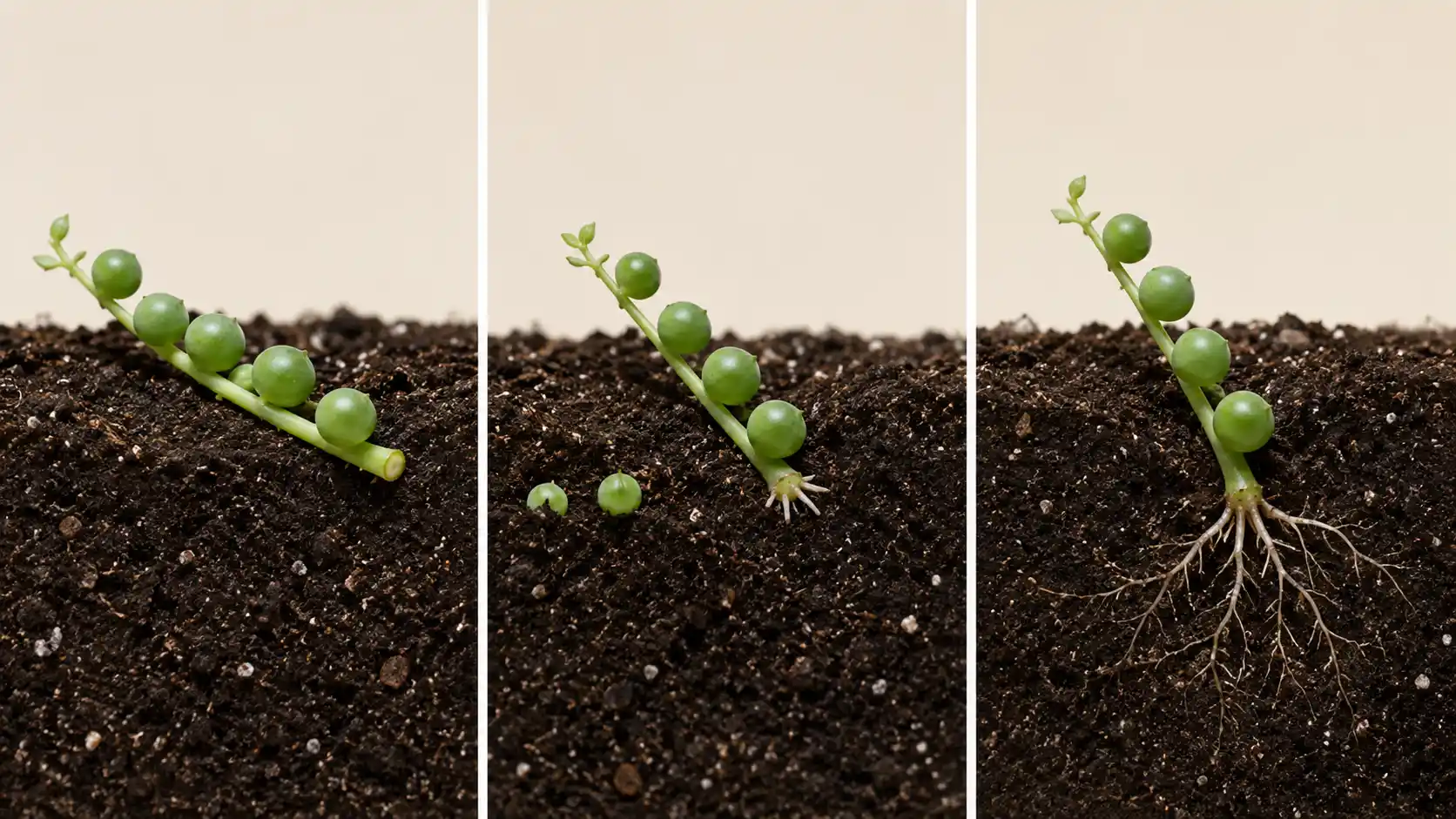
Take a 7–10 cm cutting and remove beads from the lower part. Place the stem on moist succulent soil and lightly pin it down. Keep in bright indirect light. Roots usually develop within 2–3 weeks.
Water propagation method
Place cuttings so nodes touch water while leaves remain above. Change water weekly and transfer to soil once roots reach 2–3 cm. This method has a higher risk of rot.
Common propagation mistakes
Avoid overwatering cuttings, deep planting, and propagating in winter when growth is slow.
Variegata Differences
The variegated Senecio rowleyanus has green and cream-colored beads due to reduced chlorophyll. It grows slower and requires more light than the standard form but follows similar care principles.
Comparison Table
| Feature | Standard | Variegata |
| Leaf color | Green | Green & cream |
| Light needs | Moderate | Higher |
| Growth rate | Moderate | Slower |
| Care difficulty | Easy | Moderate |
| Availability | Common | Rare |
Common Problems
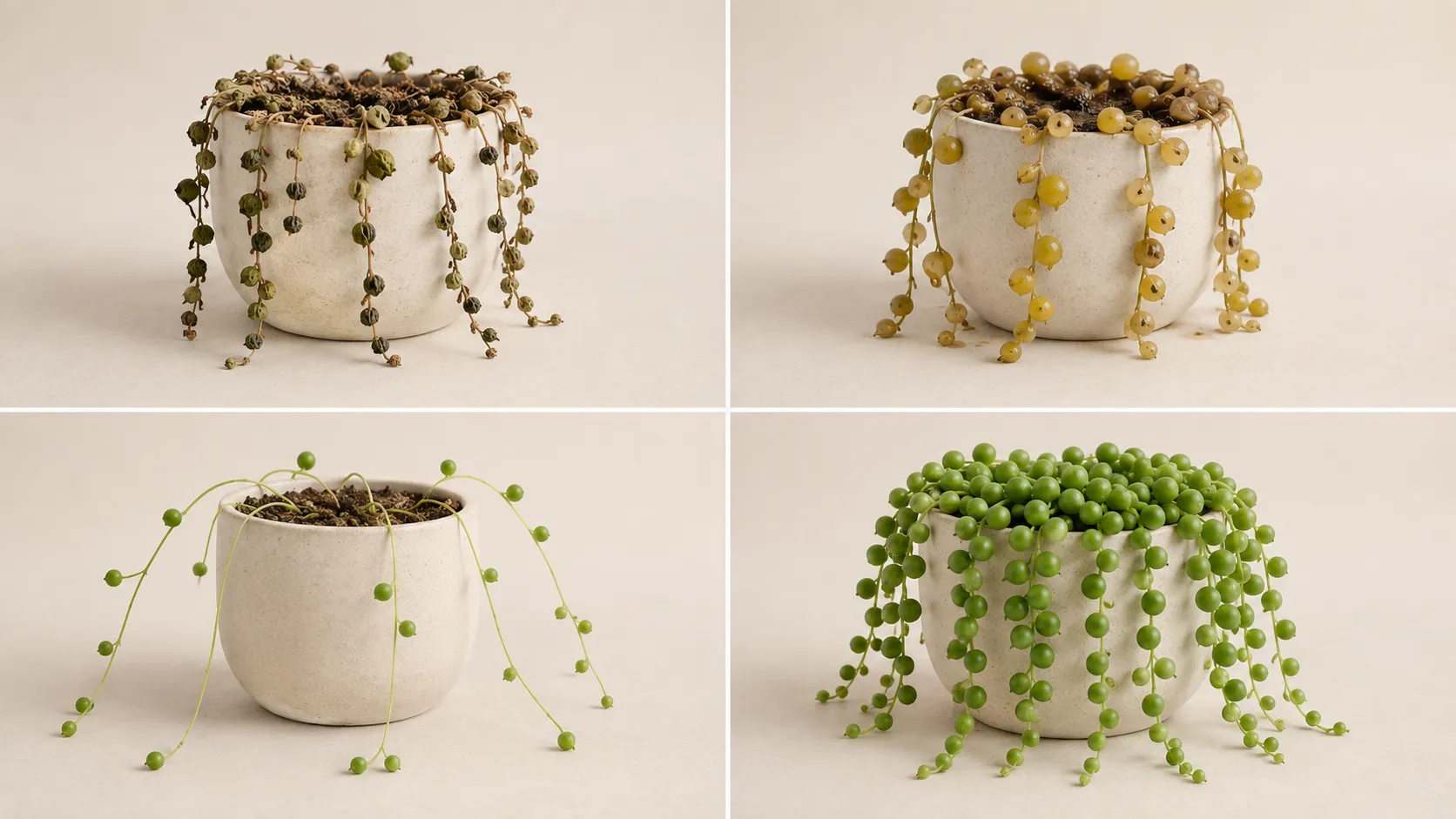
Shriveling beads
Caused by underwatering or too much direct sun. Increase watering slightly and adjust lighting conditions.
Mushy or yellowing beads
Usually due to overwatering and root rot. Remove damaged roots and repot in dry soil.
Dropping beads
Triggered by sudden temperature changes, overwatering, or pest stress.
Leggy growth
Occurs due to insufficient light. Move plant to a brighter location and prune stems. Low-light stress issues are also common in Begonia Maculata Care Guide for Healthy Growth, leading to weak or leggy stems.
Pest issues
Mealybugs and aphids may appear. Treat with neem oil or isopropyl alcohol and isolate the plant. Pest management strategies are similar to those used in Dracaena fragrans Care Guide: Complete Indoor Growing Tips for indoor plants.
Growing String of Pearls in the UK
In the UK, Senecio rowleyanus must be grown indoors due to frost sensitivity. Winter temperatures below 10°C can damage the plant. Bright south-facing windows or grow lights are often required during darker months. Central heating generally benefits the plant as it prefers dry air conditions.
Beginner Mistakes
- Overwatering or watering on a fixed schedule
- Using standard potting soil instead of succulent mix
- Placing in low-light areas
- Misting the plant (causes rot)
- Ignoring seasonal care changes
Conclusion
Senecio rowleyanus care is simple when its natural desert-like conditions are understood. The plant thrives with bright light, minimal watering, and well-draining soil. When properly maintained, the string of pearls plant becomes a striking trailing succulent that requires more neglect than attention. Its resilience and unique appearance make it a popular choice for indoor plant enthusiasts. Indoor plant trends also connect with landscaping ideas explored in Australian Native Garden Plants: Types, Care Tips & Design Ideas.
FAQs
How often should I water my string of pearls plant?
Water every 2–3 weeks in warm months and less frequently in winter, only when the soil is completely dry.
Why are my string of pearls beads shriveling or falling off?
This usually happens due to underwatering, overwatering, or sudden environmental changes like temperature stress.
How do I propagate a string of pearls plant successfully?
Use stem cuttings placed on moist succulent soil in bright indirect light; roots form within 2–3 weeks.
Does Senecio rowleyanus flower, and what does it smell like?
Yes, it produces small white flowers with a mild cinnamon or vanilla-like scent in late winter or early spring.
What is the difference between Senecio rowleyanus and the variegated variety?
The variegated type has cream-striped beads, grows slower, and needs more light compared to the standard green form.



One Response