
Introduction
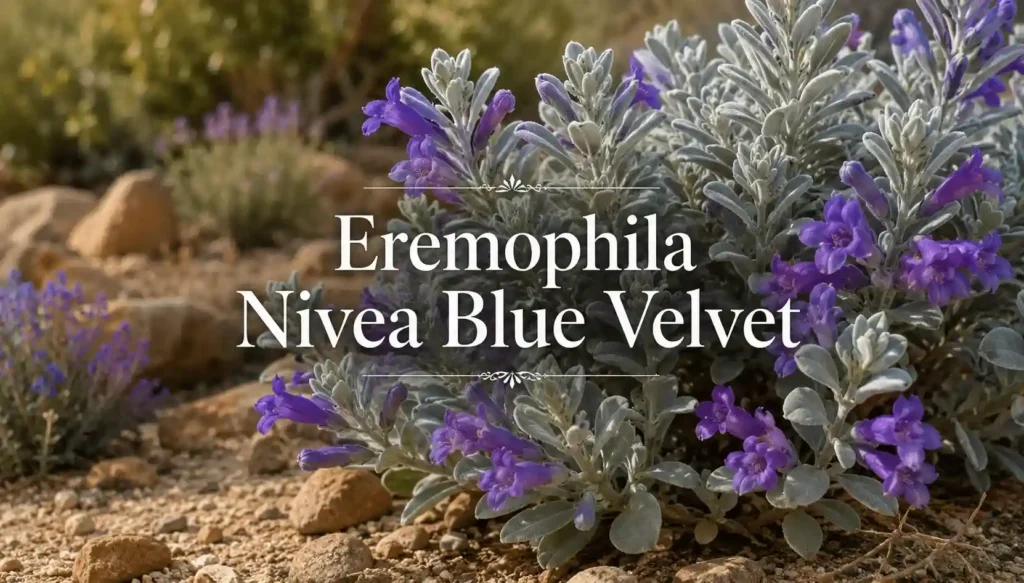
Eremophila nivea blue velvet is a distinctive Australian native shrub valued for its soft silvery foliage, compact growth habit, and vibrant purple flowers. This ornamental plant belongs to the broader emu bush group, a collection of drought-tolerant shrubs native to arid regions of Australia. Gardeners commonly grow the blue velvet plant in native landscapes, xeriscaping projects, and low-maintenance gardens because of its ability to tolerate heat and dry conditions. The plant is also known as silky emu bush, eremophila blue velvet, and silver emu bush due to its velvety leaf texture. Naming confusion sometimes occurs between cultivars and naturally occurring forms, but all are appreciated for their striking ornamental appearance and pollinator-friendly blooms.
Eremophila nivea blue velvet is also commonly featured in broader Australian native plant collections and drought-tolerant landscaping resources such as our Plants: Benefits and Guides (Complete Care, Types & Growing Tips) pillar guide.
Quick Summary
- Eremophila nivea blue velvet is a compact Australian native shrub with silvery foliage and purple blooms.
- The plant thrives in sunny, well-drained conditions and performs best in dry climates.
- Common issues usually relate to poor drainage, humidity, or incorrect pruning.
- Several related cultivars and emu bush varieties differ in size, flower color, and growth habit.
What Is Eremophila Nivea Blue Velvet?
Botanical Background and Plant Classification
Eremophila nivea is an Australian native shrub belonging to the Scrophulariaceae family, commonly referred to as the emu bush family. The species naturally occurs in dry inland areas where it has adapted to sandy soils, heat, and limited rainfall. The term “eremophila” means “desert-loving,” reflecting the plant’s tolerance for arid environments. Eremophila nivea belongs to the broader Eremophila (plant genus) group, a collection of Australian native shrubs adapted to arid and semi-arid climates.
The plant is widely known by several names including emu bush nivea, silky eremophila, silver emu bush, and eremophila emu bush. Its dense silver foliage and tubular purple flowers make it one of the most ornamental members of the emu bush group.
Why It Is Called the Blue Velvet Plant
The blue velvet plant gets its name from the soft, velvety appearance of its silver-blue foliage. Fine hairs cover the leaves and stems, creating a silky texture that reflects sunlight and gives the shrub a glowing appearance in the landscape.
Blue velvet nivea foliage often appears almost metallic in bright sun, while the purple flowers provide strong contrast against the silver leaves. This texture is one of the primary reasons gardeners select silky emu bush varieties for ornamental planting.
How Blue Velvet Differs From Other Eremophila Varieties
Eremophila blue velvet differs from other cultivars through its compact size, dense silver foliage, and rich purple flowers. Some related varieties grow larger, flower more heavily, or tolerate different climates.
Commonly compared cultivars include eremophila nivea spring mist, eremophila summertime blue, eremophila nivea beryls blue, and eremophila silky lavender.
| Variety | Foliage Color | Flower Color | Mature Size | Growth Habit |
| Blue Velvet | Silver-blue | Purple | Compact | Dense shrub |
| Spring Mist | Silvery green | Lavender | Medium | Spreading |
| Beryls Blue | Silver | Deep purple | Medium-large | Upright |
| Silky Lavender | Grey-green | Lavender | Medium | Soft rounded |
| Summertime Blue | Green-silver | Blue-purple | Larger | Open growth |
Eremophila Nivea Blue Velvet Size and Growth Characteristics
Mature Height and Width
Eremophila nivea blue velvet typically grows to around 1–1.5 meters tall and wide under favorable conditions. The mature size depends heavily on climate, pruning practices, and soil drainage.
In dry climates with full sun exposure, the shrub remains compact and dense. In less suitable conditions, growth may become sparse or leggy. Environmental stress, poor drainage, and excess shade can also reduce vigor and affect overall shape.
Growth Rate and Seasonal Growth Patterns
The growth rate of eremophila nivea blue velvet is generally moderate. Most active growth occurs during spring and early summer when temperatures rise and daylight increases.
Seasonal growth patterns often include:
- Spring foliage flushes
- Peak flowering in warmer months
- Reduced growth during cold winters
- Increased drought resistance once established
Hot, dry climates usually produce stronger flowering and denser foliage than humid regions.
Indoor vs Outdoor Growth Expectations
Eremophila nivea is primarily an outdoor shrub because it requires strong sunlight, airflow, and low humidity. Indoor growing conditions rarely provide enough light or ventilation for long-term health.
Container growing is possible, but drainage becomes even more important in pots. Humid indoor environments can increase fungal stress and root problems.
Eremophila Nivea Blue Velvet Care Guide
Light Requirements and Ideal Placement
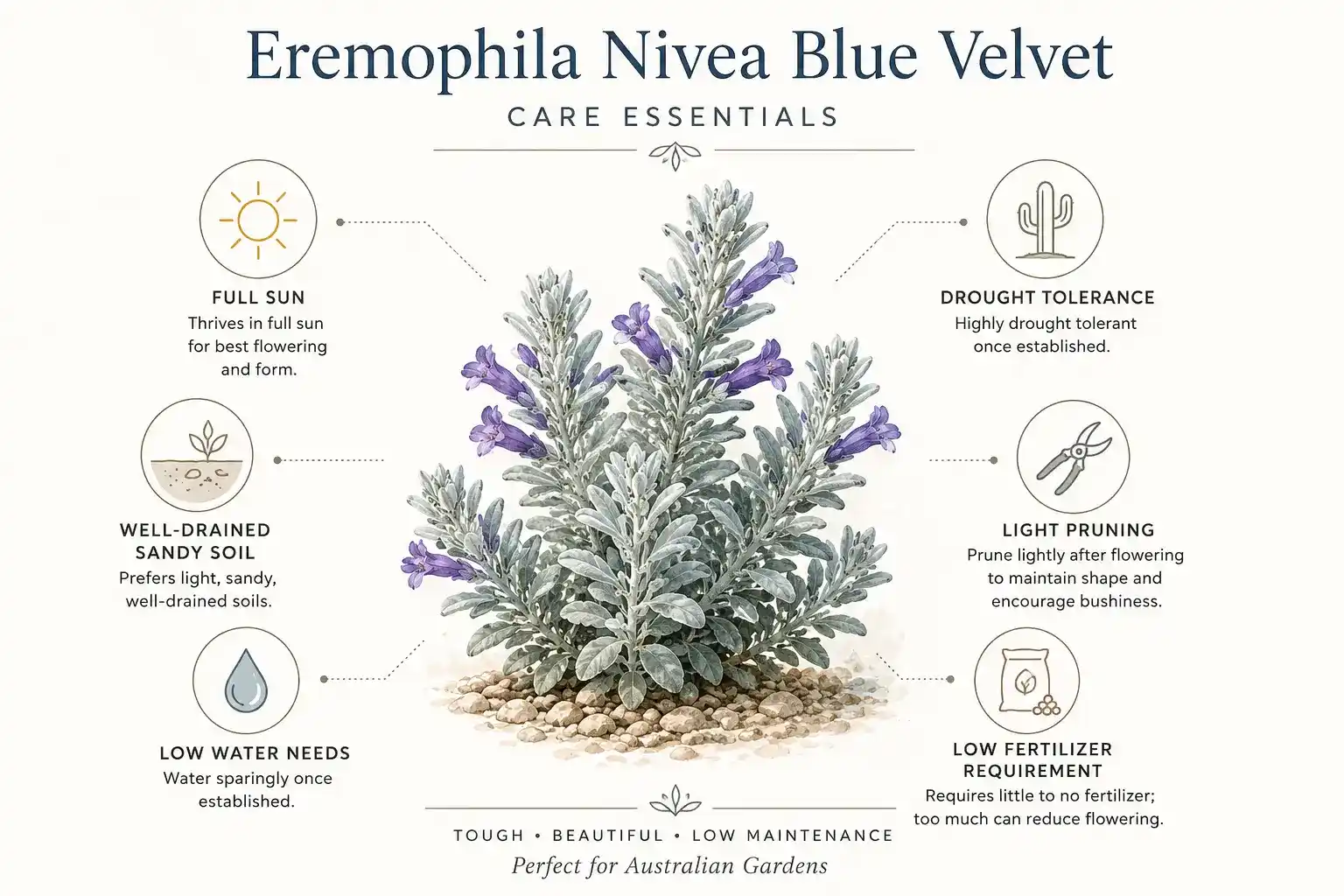
Eremophila nivea blue velvet grows best in full sun. At least six to eight hours of direct sunlight daily encourages compact growth and better flowering.
Good airflow is also essential, especially in regions with humidity. Gardeners in cooler regions, including those researching eremophila nivea UK care, often position plants near warm walls or sheltered areas to improve drainage and heat retention.
Soil and Drainage Conditions
Well-drained sandy soil is critical for healthy growth. Heavy clay soils often lead to root rot and fungal decline.
Best soil characteristics include:
- Sandy or gravelly texture
- Fast drainage
- Low organic matter
- Slightly alkaline to neutral pH
Drainage tips:
- Use raised beds in wet climates
- Plant on slopes when possible
- Avoid water-retaining mulch near stems
Soil amendments to avoid:
- Excess compost
- Moisture-retentive peat mixes
- Heavy manure applications
Rock gardens and native landscape beds are ideal environments for this shrub.
Watering Needs and Drought Tolerance
Eremophila blue velvet has low watering requirements once established. Overwatering is one of the most common causes of decline.
Newly planted shrubs need regular watering during establishment, but mature plants usually thrive with occasional deep watering during prolonged dry periods.
Common watering guidelines include:
- Water deeply but infrequently
- Allow soil to dry between watering
- Reduce watering during winter
Fertilizing and Nutrient Requirements
Australian native plants generally require minimal fertilizer. Eremophila nivea can be sensitive to high phosphorus levels, which may damage roots.
Low-phosphorus slow-release fertilizers designed for native plants are usually safest. Excess fertilizer often causes weak growth and reduced drought tolerance.
Eremophila Nivea Blue Velvet Pruning Tips
Eremophila nivea blue velvet pruning helps maintain shape and encourages flowering. Light pruning after flowering is generally recommended.
Benefits of pruning include:
- Maintaining compact growth
- Encouraging new flowering stems
- Reducing woody decline
Avoid hard pruning into old woody stems because recovery can be slow or unsuccessful.
Best pruning season:
- Late spring after flowering
Tools to use:
- Clean hand pruners
- Sharp secateurs
Common pruning mistakes:
- Cutting into bare wood
- Heavy pruning during winter
- Ignoring airflow within the shrub
Common Eremophila Nivea Problems and Solutions
Why Eremophila Nivea Struggles in Humid Conditions
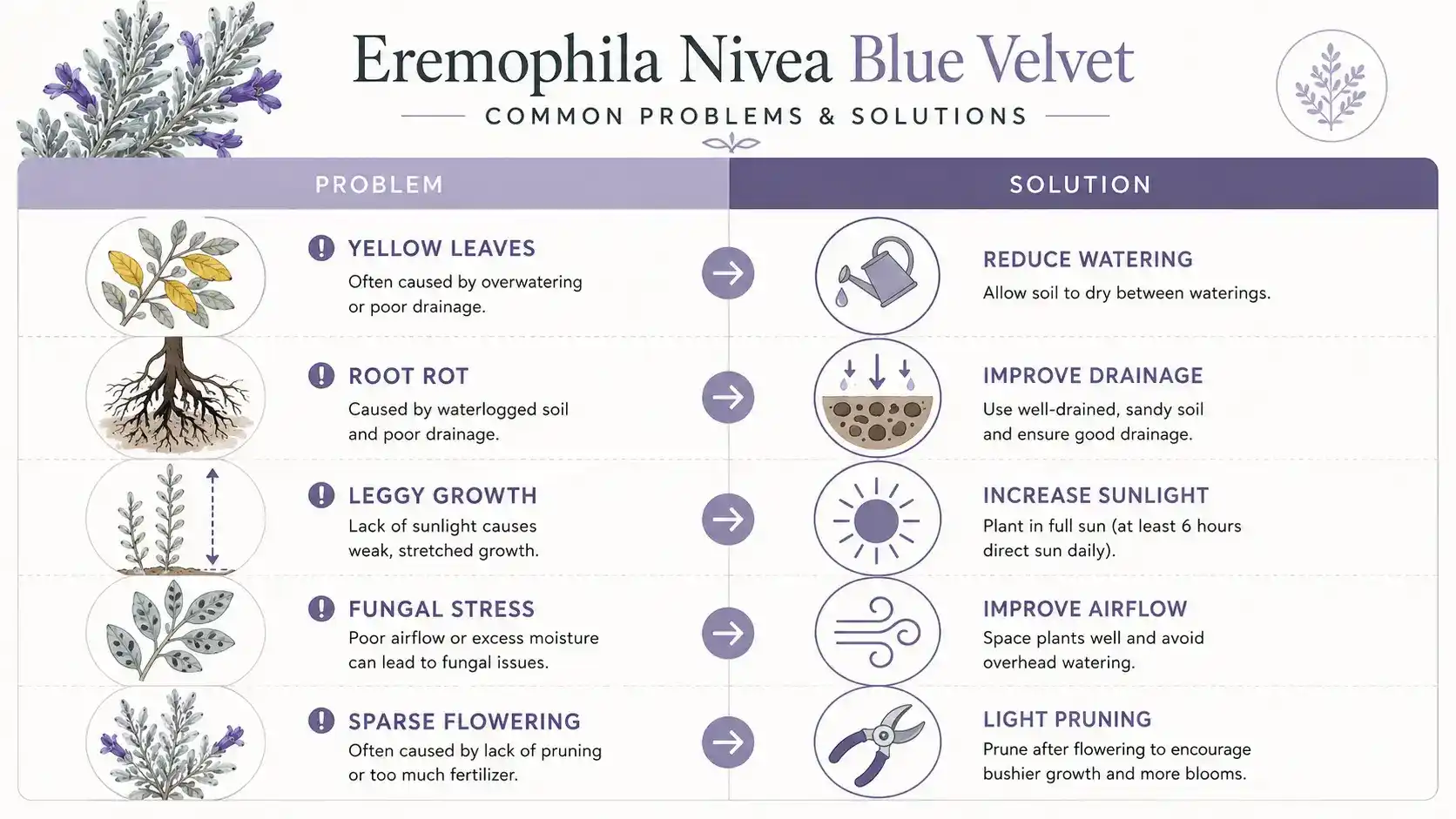
Eremophila nivea problems commonly occur in humid climates because the plant naturally evolved in dry inland conditions. High humidity increases fungal stress and reduces airflow around foliage.
Poor air circulation often leads to foliage decline and stem dieback, especially during wet summers.
Yellow Leaves, Root Rot, and Overwatering Issues
Yellow leaves on silky emu bush plants usually indicate drainage or watering problems. Root rot develops quickly in wet soil conditions.
Symptoms include:
- Yellowing foliage
- Wilting despite wet soil
- Blackened stems
- Sudden collapse
Early warning signs:
- Soft stems near the base
- Persistent wet soil
- Sparse flowering
Soil drainage fixes:
- Improve soil with coarse sand or gravel
- Raise planting areas
Watering corrections:
- Reduce watering frequency
- Water only when soil becomes dry
Pest and Disease Concerns
Scale insects occasionally affect stressed plants, especially those growing in poor airflow or humid environments. Fungal diseases are more common than insect infestations.
Prevention strategies include:
- Maintaining full sun exposure
- Avoiding overcrowding
- Preventing waterlogged soil
- Removing damaged stems promptly
Why Some Plants Become Leggy or Sparse
Leggy growth usually develops because of insufficient sunlight, aging stems, or poor pruning practices.
Rejuvenation strategies include:
- Increasing sun exposure
- Light annual pruning
- Removing dead interior branches
Older plants may naturally lose density over time if not maintained properly.
Best Climate and Landscaping Uses for Blue Velvet Emu Bush
Ideal Growing Zones and Environmental Conditions
Blue velvet emu bush performs best in dry climates with hot summers and low humidity. The plant tolerates heat well but may struggle in regions with prolonged wet weather. The shrub has moderate frost tolerance once established, though young plants may require protection during severe cold. Coastal humidity and poorly ventilated gardens often reduce plant longevity. Gardeners designing water-wise landscapes often combine silky emu bush with other species featured in 9+ Essential Plants for Dry Areas: Smart Garden Guide for long-term drought resilience.
Using Eremophila Blue Velvet in Landscaping
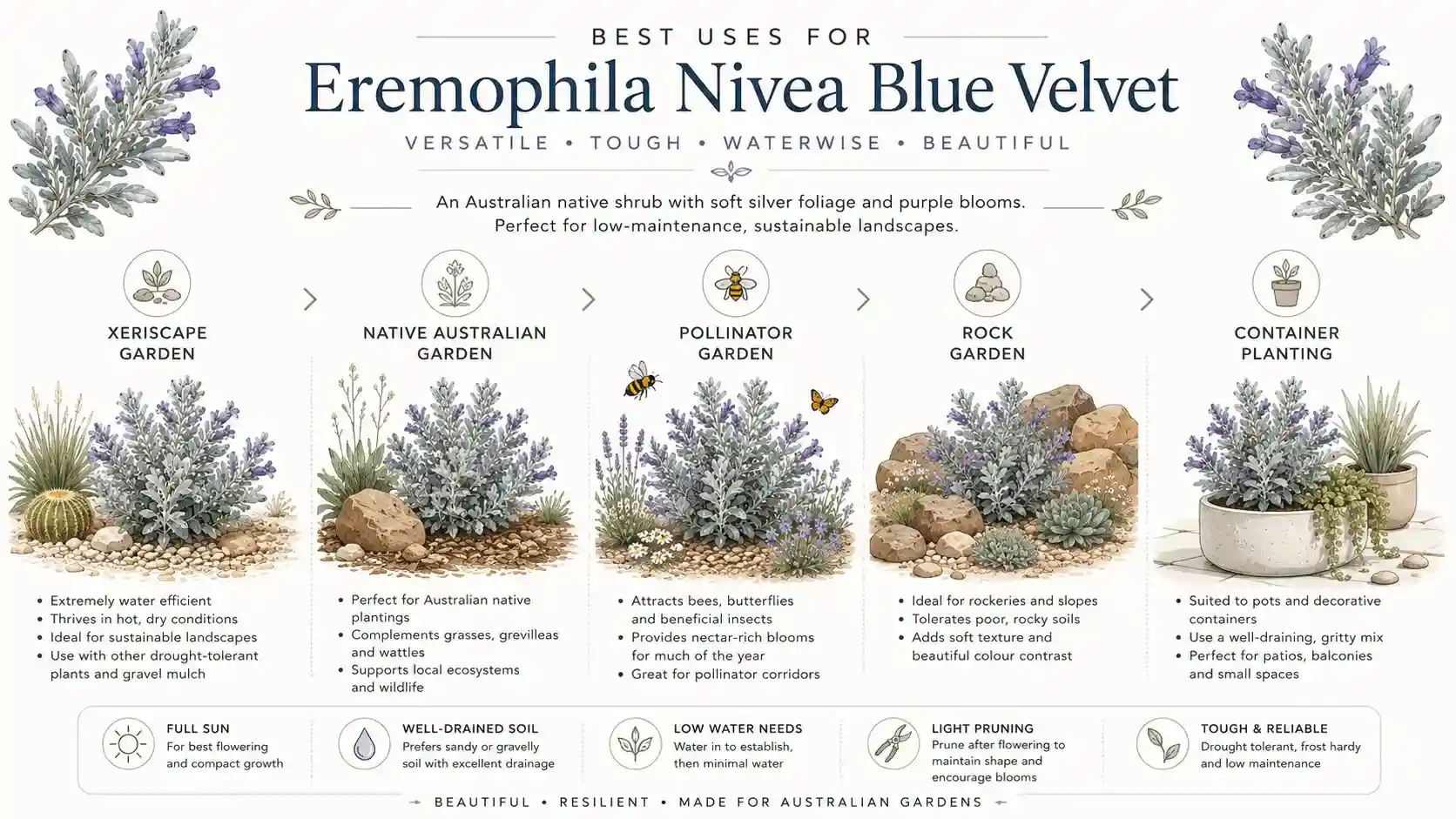
Eremophila blue velvet is widely used in xeriscaping, native gardens, and drought-tolerant landscapes. Its silver foliage contrasts effectively with darker green shrubs and flowering perennials.
Best companion plants:
- Kangaroo paw
- Westringia
- Grevillea
- Native grasses
In pollinator gardens, blue velvet emu bush pairs especially well with flowering natives like those discussed in Kangaroo Paw Care: 6+ Essential Tips for Healthy Blooms.
Suitable garden styles:
- Xeriscape gardens
- Australian native landscapes
- Mediterranean gardens
- Pollinator gardens
Placement ideas:
- Feature shrub planting
- Gravel garden borders
- Raised rock beds
- Dry courtyard gardens
The purple emu bush flowers also attract pollinators such as bees and nectar-feeding birds. Because of its drought tolerance and minimal upkeep, eremophila blue velvet is often included in Easy Low Maintenance Australian Native Garden Guide 7+ Steps alongside other resilient native shrubs.
Container Growing and Small Garden Applications
Container growing works best with large pots that provide excellent drainage. Terracotta containers are often preferred because they dry faster than plastic pots.
Maintenance differences in containers include:
- More frequent monitoring of soil moisture
- Faster drying during summer
- Increased drainage management
Compact growth makes the shrub suitable for smaller gardens and courtyard spaces.
Comparing Popular Eremophila Varieties
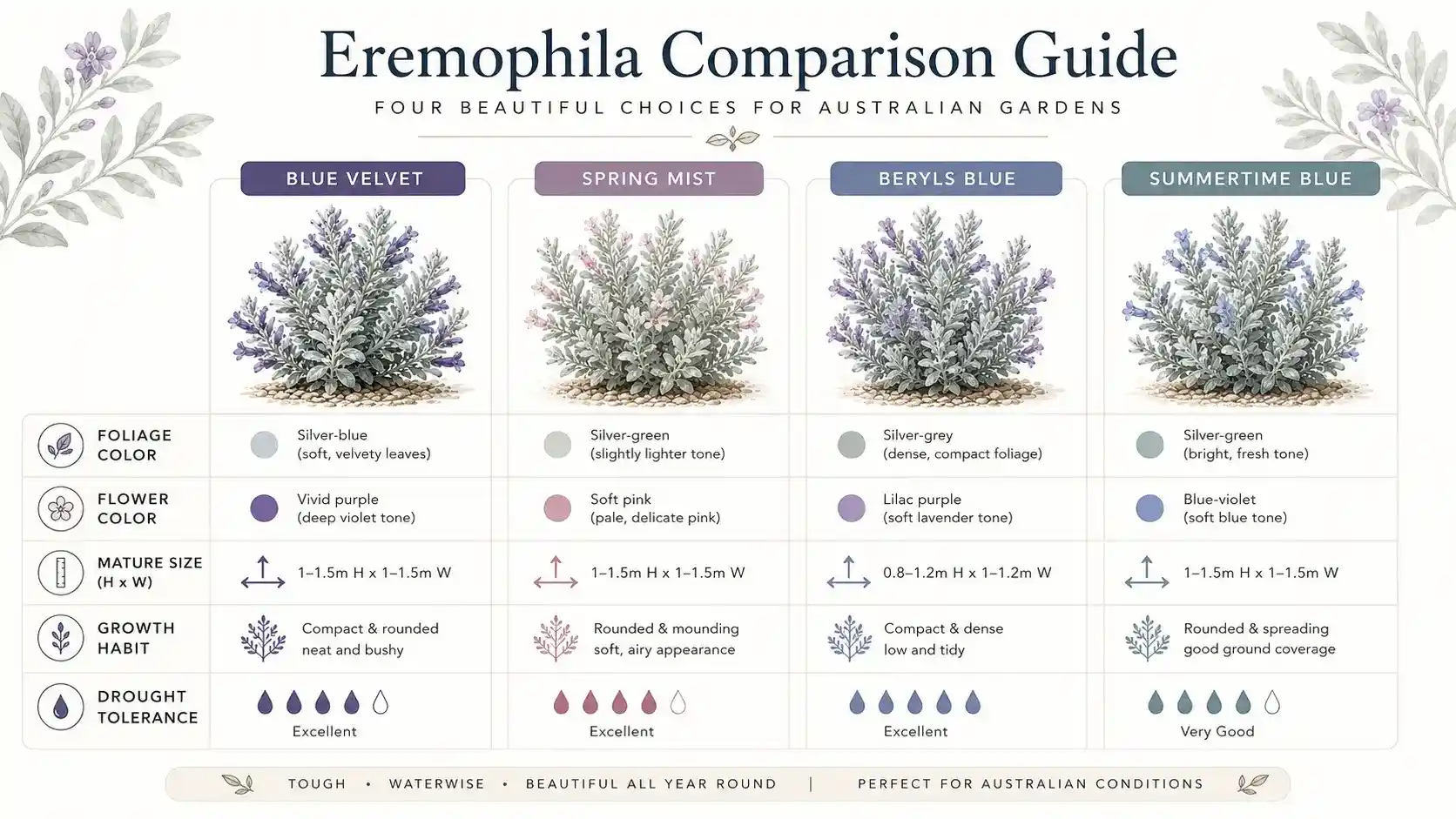
Eremophila Nivea Blue Velvet vs Spring Mist
Blue Velvet and eremophila spring mist differ mainly in density, foliage texture, and growth habit.
Blue Velvet usually develops denser silver foliage and a more compact shape. Spring Mist often grows slightly larger with softer branching and broader spread.
Climate adaptability also differs slightly, with Spring Mist sometimes tolerating mild coastal conditions better.
Blue Velvet vs Beryls Blue
Eremophila nivea beryls blue generally produces deeper purple flowers and slightly larger growth than Blue Velvet.
Garden suitability differences include:
- Blue Velvet for compact feature planting
- Beryls Blue for larger landscape use
- Blue Velvet for tighter spaces
- Beryls Blue for screening effects
Comparing Silky Lavender and Summertime Blue Varieties
Silky lavender and summertime blue emu bush varieties vary in foliage texture, bloom intensity, and mature size.
Eremophila silky lavender often has softer grey-green foliage and lighter flowers, while eremophila summertime blue may develop a larger open habit with stronger flowering.
| Variety | Flower Color | Size | Drought Tolerance | Best Use |
| Blue Velvet | Purple | Compact | High | Feature planting |
| Spring Mist | Lavender | Medium | Moderate-high | Informal gardens |
| Beryls Blue | Deep purple | Medium-large | High | Larger landscapes |
| Silky Lavender | Soft lavender | Medium | Moderate | Mixed borders |
| Summertime Blue | Blue-purple | Large | High | Open dry gardens |
Where To Buy Eremophila Nivea Blue Velvet
Availability in Garden Centers and Native Plant Nurseries
Eremophila nivea for sale is most common through specialist native plant nurseries. Seasonal availability may vary depending on climate and regional demand.
Searches for eremophila nivea blue velvet for sale, eremophila nivea for sale UK, eremophila nivea bunnings, emu bush bunnings, and eremophila bunnings often reveal limited stock because the plant is less common outside dry-climate regions.
Availability is generally highest during spring planting seasons.
Choosing Healthy Plants Before Purchase
Healthy nursery stock should have dense silver foliage, firm stems, and strong root systems.
Signs of healthy nursery stock:
- Compact shape
- Bright silver foliage
- No yellow leaves
- Well-drained potting mix
Red flags to avoid:
- Wet soil smell
- Blackened stems
- Sparse foliage
- Root-bound containers
Questions to ask sellers:
- Is the plant grafted?
- What climate does it prefer?
- How often should it be watered initially?
Beginner Mistakes To Avoid When Growing Eremophila Nivea
The Most Common Care Errors
The most common mistakes include overwatering, poor drainage, excessive fertilizer use, and insufficient sunlight.
These problems often weaken roots and reduce flowering quality. Native shrubs adapted to dry climates generally perform better with neglect than excessive care.
Why Some Gardeners Lose Blue Velvet Plants Quickly
Environmental mismatch is a major reason for plant failure. Humid climates, poorly drained soil, and sheltered low-airflow locations create stress conditions.
Root problems usually develop rapidly in wet soil, especially during cool seasons.
Seasonal Care Adjustments
Seasonal maintenance improves long-term health.
Recommended seasonal adjustments include:
- Reduce watering during winter
- Prune lightly after flowering
- Monitor heat stress during extreme summer temperatures
- Improve airflow during wet seasons
Related Australian Native Plants Often Compared With Eremophila
Similar Silver-Foliage Native Shrubs
Several Australian native shrubs share similarities with silver emu bush varieties, especially in foliage texture and drought tolerance.
Purple eremophila species are commonly grouped with other silver-leaved natives because they perform similarly in dry landscapes.
Other Popular Native Plants Found Alongside Emu Bushes
Common companion plants include gubburra bells, eremophila gubburra bells, and eremophila belalla gold.
These native shrubs are often planted together because they share similar drainage, sunlight, and watering needs.
Conclusion
Eremophila nivea blue velvet is a highly ornamental Australian native shrub valued for its silvery foliage, purple flowers, and drought tolerance. The plant performs best in sunny, well-drained environments with low humidity and minimal watering once established. Proper pruning, careful drainage management, and climate suitability are essential for long-term success.
Although common problems such as root rot, yellow leaves, and leggy growth can occur, most issues are preventable through correct placement and watering practices. For gardeners seeking a low-maintenance native shrub with strong visual appeal, eremophila nivea blue velvet remains one of the most attractive choices for dry-climate landscaping and pollinator-friendly gardens.
FAQs
What is the ideal climate for eremophila nivea blue velvet?
Eremophila nivea blue velvet grows best in dry, sunny climates with low humidity and excellent drainage. Hot inland conditions are generally ideal.
How large does eremophila blue velvet grow?
Most plants reach approximately 1–1.5 meters in height and width depending on pruning, soil, and climate conditions.
Why are the leaves on my silky emu bush turning yellow?
Yellow leaves usually indicate overwatering, poor drainage, or root stress caused by excessive moisture.
Can eremophila nivea grow in humid regions?
The plant can struggle in humid climates because excess moisture increases fungal problems and reduces airflow around foliage.