
Introduction
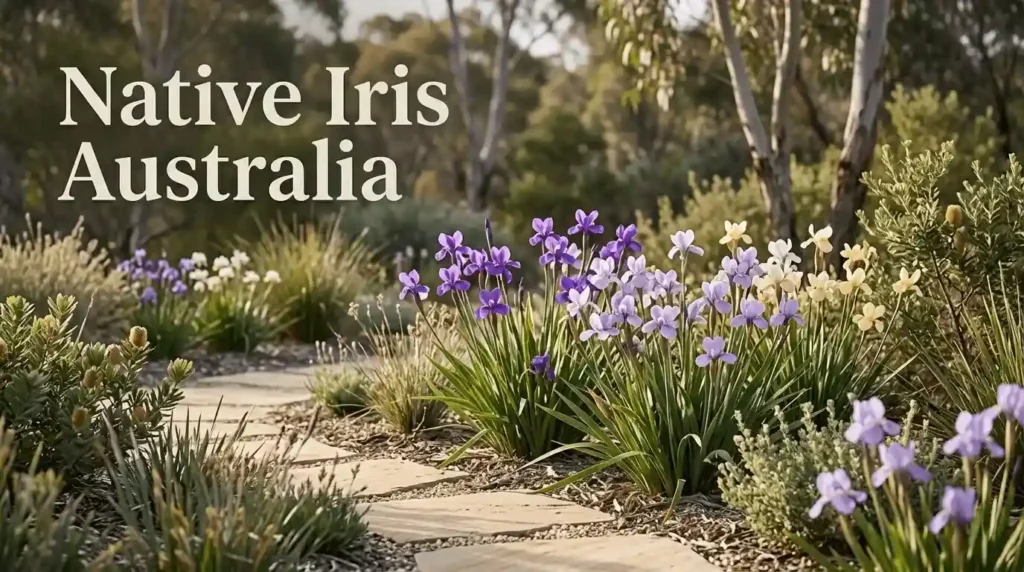
Native iris Australia plants are popular in Australian gardens because they combine drought tolerance, low maintenance, and attractive flowering habits. The term “native iris” is commonly used for several Australian flowering species that resemble true irises in appearance. In most cases, gardeners refer to Patersonia species when discussing a native iris or australian native iris plant. However, some iris-like plants, including Dietes varieties, are often incorrectly assumed to be native Australian species. Native australian iris plants are valued for their adaptability to dry climates, landscaping versatility, and suitability for borders, rock gardens, and water-wise gardens. Wild iris Australia species also contribute to biodiversity and pollinator-friendly native landscapes. Australian native iris plants are also popular in broader landscaping and plant care resources focused on sustainable gardening, such as comprehensive plants benefits and growing guides.
Quick Summary
- Australian native irises are hardy flowering plants suited to a wide range of Australian climates.
- The term “native iris” commonly refers to Patersonia species, while Dietes varieties are often mistaken as native.
- Most native irises thrive in well-drained soil and full sun to partial shade.
- Native iris plants are popular for borders, rock gardens, and low-water landscaping.
What Is a Native Iris in Australia?
A native iris Australia plant is an iris-like flowering species naturally found in Australian ecosystems. In Australian gardening, the term “native iris” commonly refers to plants in the Patersonia genus rather than true irises from the genus Iris.
Botanically, most native irises Australia gardeners grow belong to the family Iridaceae. These australian native iris plants produce grass-like foliage and delicate flowers that resemble traditional irises. The term iris native is therefore often used loosely in horticulture.
Major plant groups commonly called native irises include:
- Patersonia species
- Iris-like native perennials
- Some ornamental Dietes varieties mistakenly labeled as native
Native iris plant varieties are valued because they tolerate drought, poor soils, and coastal conditions better than many imported ornamentals.
True Native Iris Species in Australia
The primary true native australian iris genus is Patersonia. These plants are naturally distributed across many Australian regions, including coastal heathlands, woodlands, and grasslands.
Native iris patersonia species are characterized by:
- Narrow sword-like foliage
- Purple, blue, or white flowers
- Clumping growth habits
- Adaptability to low-water conditions
Patersonia species belong to the Iridaceae family and are genuinely indigenous to Australia. Unlike imported iris hybrids, patersonia plants evolved under Australian climate conditions, making them highly resilient in native gardens. The Patersonia genus belongs to the Iridaceae family and represents the most widely recognized true Australian native iris group.
Plants Commonly Mistaken for Australian Native Iris
Many gardeners mistakenly believe Dietes species are Australian natives because they are widely planted across Australia. However, one day iris Dietes varieties originate mainly from Africa.
Commonly confused plants include:
- Dietes grandiflora
- Walking iris
- Morning iris
Questions such as “is Dietes grandiflora native to Australia” or “is walking iris native to Australia” are common because these plants resemble native irises visually.
Key facts include:
- Dietes grandiflora is native to southern Africa
- Walking iris species are generally native to Central and South America
- Morning iris names are often applied loosely to several iris-like flowers
Although attractive and drought tolerant, these plants are not true Australian natives.
Types of Australian Native Iris Varieties
Native iris Australia varieties differ in flower color, foliage texture, climate tolerance, and mature size. Australian native irises can adapt to coastal gardens, inland landscapes, and rockeries.
Common variations include:
- Purple-flowering species
- Australian native iris white cultivars
- Native white iris forms
- Yellow native iris Australia varieties
Some species prefer sandy coastal soils, while others tolerate heavier inland conditions. Many gardeners combine native irises with other purple native flowers Australia species to create visually cohesive native landscapes.
Popular Patersonia Species
Patersonia occidentalis
This Western Australian species produces purple-blue flowers and thrives in sandy soils. It is commonly used in native landscapes due to its drought tolerance.
Patersonia sericea
Patersonia sericea grows naturally in eastern Australia and features silky foliage with vibrant violet blooms. It performs well in coastal gardens.
Patersonia fragilis
This smaller-growing species is suited to compact native gardens and borders. It tolerates dry periods and low-fertility soils.
Most Patersonia species flower heavily during spring and early summer.
White and Yellow Native Iris Types
White and yellow native iris forms are popular in modern landscaping because they complement minimalist and native garden designs.
White native iris plants are commonly used for:
- Contemporary borders
- Coastal gardens
- Rock gardens
- Contrasting foliage combinations
Yellow native iris Australia varieties provide stronger visual contrast and attract pollinators effectively. White-flowering types generally create softer visual effects, while yellow varieties offer brighter focal points in native landscapes. White native iris varieties are often paired with other white native flowers Australia plants in minimalist and coastal garden designs.
Are Wild Iris Plants Native to Australia?
Wild iris Australia plants may be native or introduced depending on the species. The phrase “wild iris” is often used informally for any iris-like flower growing naturally in open landscapes.
Yes, there is an Australian native iris. Patersonia species are genuinely indigenous and naturally distributed across Australia.
When asking “is wild iris native to Australia,” identification is important because many imported species have naturalized in Australian environments.
Where are iris native originally? Traditional iris species mainly originate from:
- Europe
- Asia
- North Africa
Australian native iris species evolved separately within Australian ecosystems.
Native vs Introduced Iris Species
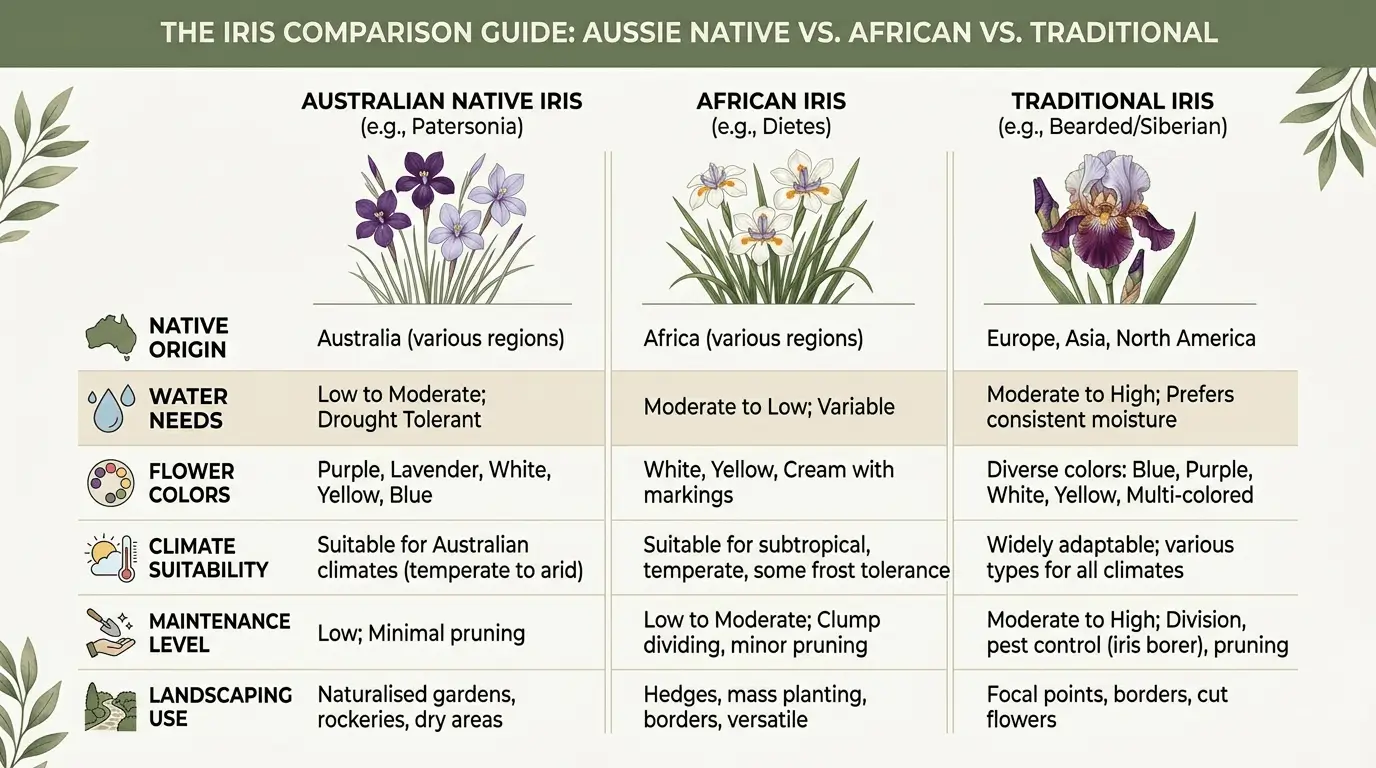
Australian native irises differ significantly from introduced ornamental iris plants.
| Plant Name | Native Origin | Flower Color | Climate Suitability | Water Needs | Common Landscaping Use |
| Patersonia | Australia | Purple, white | Dry Australian climates | Low | Native gardens |
| Dietes grandiflora | South Africa | White | Mild climates | Moderate | Borders and pathways |
| Traditional Iris | Europe/Asia | Multiple colors | Cool temperate | Moderate to high | Cottage gardens |
Native species generally require less maintenance and water than introduced iris plants.
How to Grow Native Iris in Australia
Native iris Australia care is relatively simple because these plants evolved in challenging climates.
Australian native iris plants grow best when provided with:
- Well-drained soil
- Good airflow
- Full sun to partial shade
- Moderate watering during establishment
Once established, native iris plant varieties become highly drought tolerant.
Soil Requirements and Drainage
Native irises prefer free-draining soil that prevents root rot and fungal problems.
Ideal soil conditions include:
- Sandy loam
- Gravelly soil
- Slightly acidic to neutral pH
Heavy clay soils can cause poor drainage and weakened root systems. Gardeners often improve drainage by adding coarse sand or organic matter.
Sunlight and Climate Conditions
Most native irises perform best in full sun or partial shade. Coastal gardens often support vigorous growth due to mild temperatures and airflow.
Climate adaptability includes:
- Coastal tolerance
- Moderate frost resistance
- Drought resilience
Native iris Western Australia species are especially adapted to dry summers and sandy soils.
Watering and Fertilizing Needs
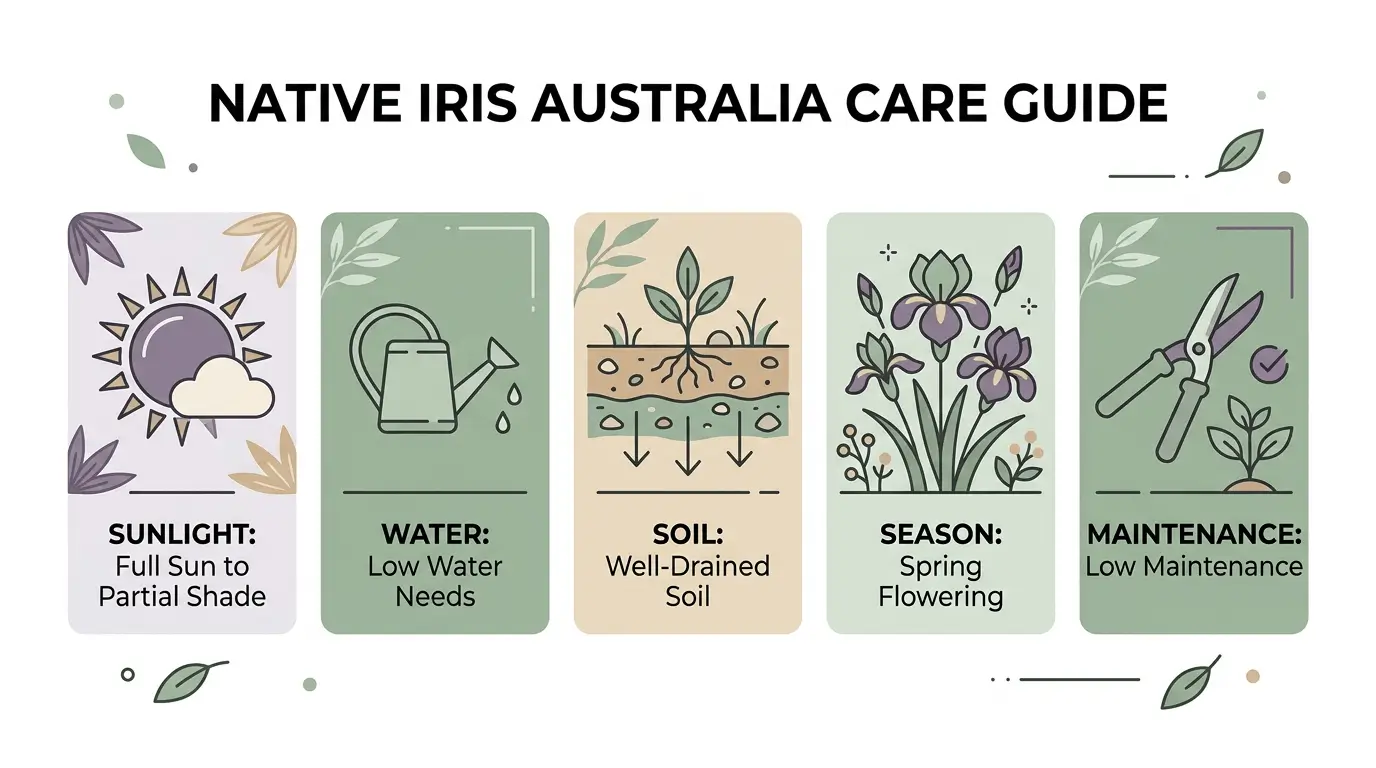
Native irises require regular watering during early establishment but tolerate dry conditions once mature.
Seasonal watering adjustments include:
- More watering during hot summers
- Reduced watering during winter dormancy
These plants generally prefer low-fertilizer conditions. Excess feeding can weaken flowering performance.
| Sunlight | Water Needs | Soil Preference | Flowering Season | Maintenance Level |
| Full sun to part shade | Low to moderate | Well-drained soil | Spring to summer | Low |
Growth Rate and Mature Size of Native Iris Plants
Most native iris plants establish at a moderate growth rate. Mature height varies between 30 cm and 1 meter depending on species.
Outdoor plants generally spread wider and flower more heavily than container-grown specimens.
Factors affecting mature size include:
- Soil quality
- Sun exposure
- Moisture availability
- Climate conditions
Factors That Affect Growth Speed
Several environmental factors influence native iris growth speed.
Soil Quality
Poor drainage slows root development and increases disease risk.
Water Availability
Young plants require consistent moisture until established.
Sun Exposure
Insufficient sunlight can reduce flowering and weaken foliage.
Seasonal Climate Differences
Growth slows during cold winters and increases during warm spring conditions.
Native Iris Flowering Season and Appearance
Most native irises flower from spring through early summer. Blooms are often short-lived but produced repeatedly over several weeks.
Morning iris flowers typically open during daylight hours and close later in the day.
Flower characteristics include:
- Purple or blue petals
- Delicate textures
- Yellow central markings
- Grass-like foliage
Why Some Native Irises Bloom for Only One Day
One day iris flowering behavior refers to blooms that last for a single day before fading. However, plants continue producing fresh flowers throughout the flowering season.
This strategy helps conserve moisture and energy in harsh climates.
Repeated blooming cycles can continue for several weeks under favorable conditions.
How to Grow Native Iris From Seeds
Growing native iris Australia seeds requires patience because germination can be slow.
Propagation methods include:
- Seed sowing
- Clump division
- Nursery-grown transplants
Seeds provide a cost-effective way to establish large plantings.
Seed Germination Process
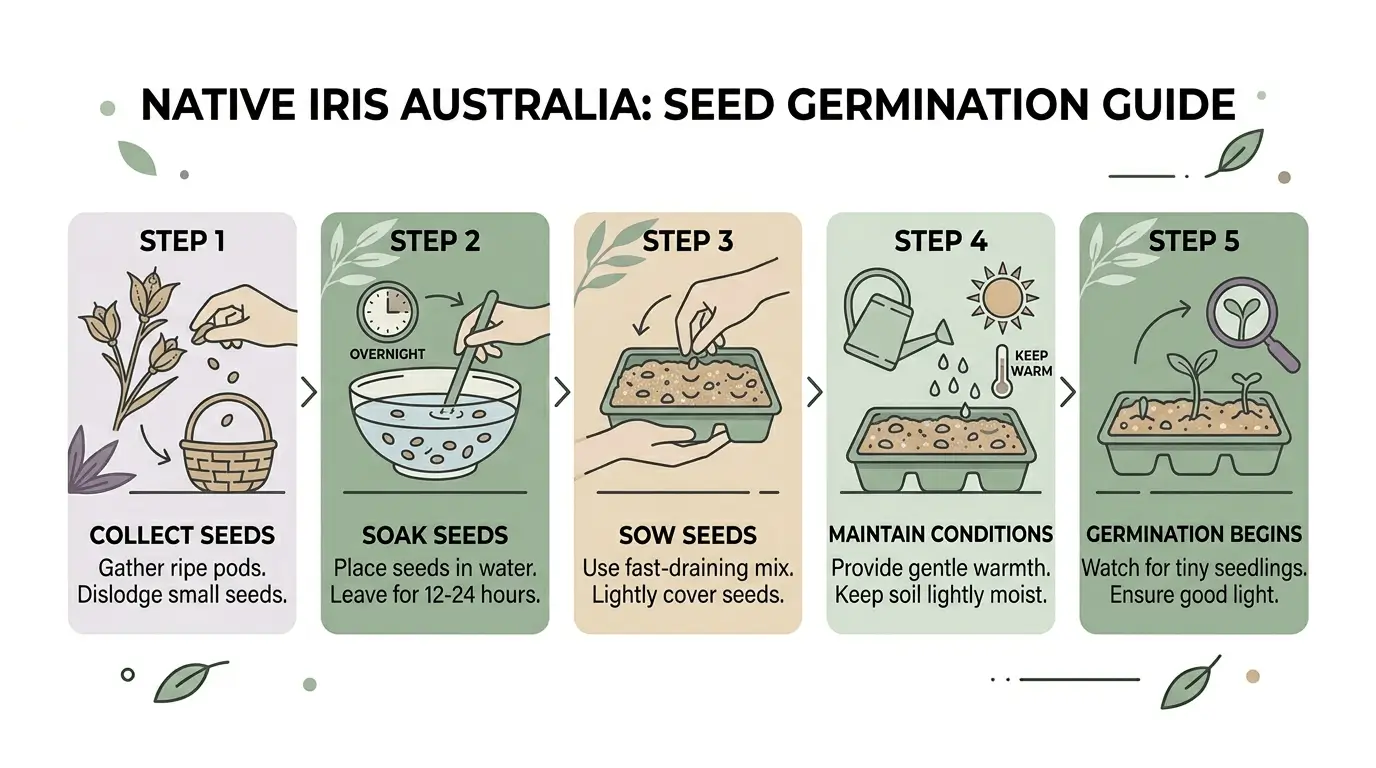
Follow these steps for successful iris seeds germination:
- Collect mature seeds after flowering
- Soak seeds overnight in water
- Use a fast-draining seed mix
- Sow seeds shallowly
- Keep soil lightly moist
- Maintain warm temperatures
Most seeds germinate more successfully during spring.
Common Problems When Growing Iris From Seed
Common issues include:
- Slow germination
- Excess moisture
- Fungal growth
- Seed rot
Poor drainage is one of the most common reasons seedlings fail.
Seed Growing Tips
- Use fast-draining potting mix
- Avoid waterlogged soil
- Use fresh seeds
- Maintain warmth during germination
Common Native Iris Problems and How to Fix Them
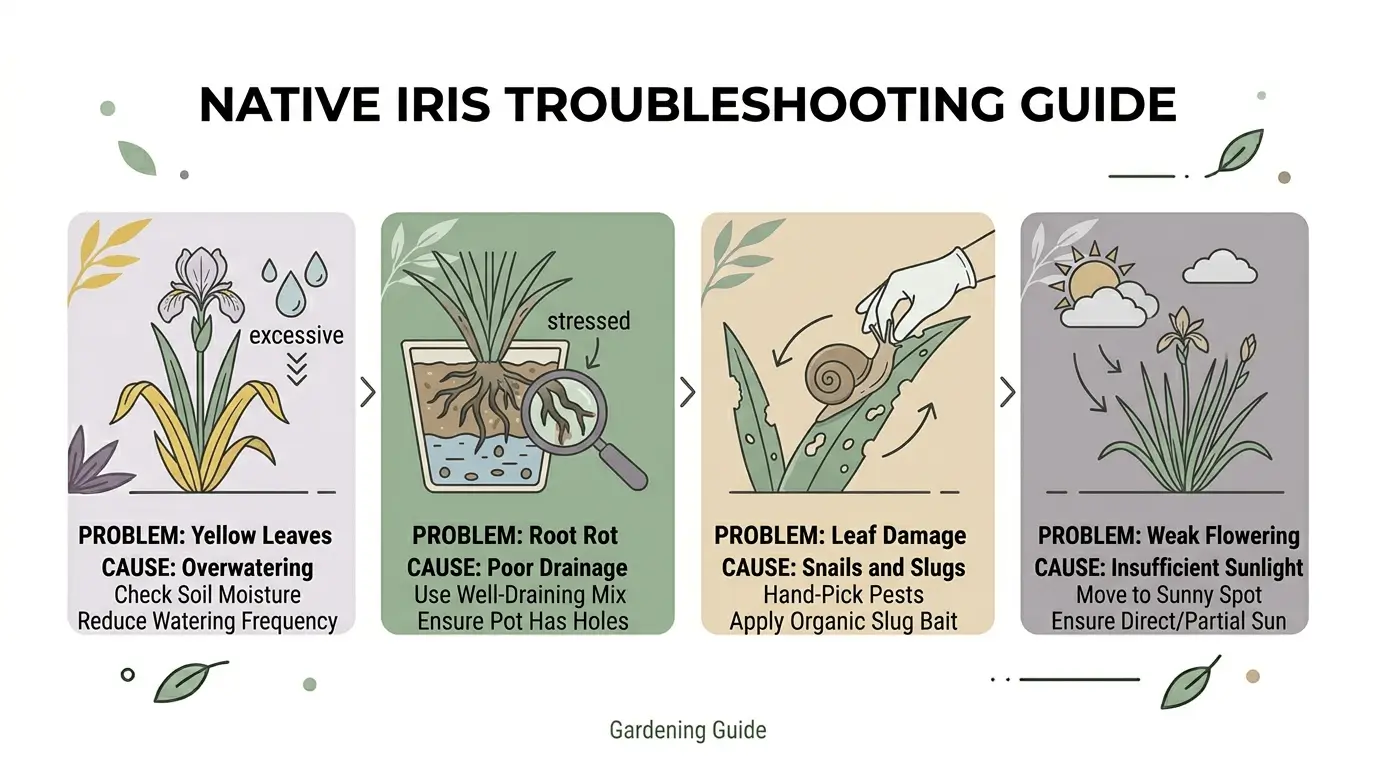
Most native iris problems result from environmental stress rather than severe disease.
Common troubleshooting areas include:
- Yellowing leaves
- Root rot
- Poor flowering
- Pest damage
Early correction usually restores healthy growth.
Why Native Iris Leaves Turn Yellow
Native iris leaves turn yellow due to:
- Overwatering
- Nutrient imbalance
- Poor drainage
- Seasonal dormancy
Reducing watering and improving soil drainage usually resolves the problem.
Pests and Diseases Affecting Native Irises
Common pests and diseases include:
- Root rot
- Snails and slugs
- Fungal spotting
Prevention methods include:
- Avoiding excess moisture
- Improving airflow
- Removing damaged foliage
- Using mulch carefully around crowns
Beginner Mistakes to Avoid
Common beginner mistakes include:
- Planting in heavy clay soil
- Excess fertilization
- Watering too frequently
- Growing plants in deep shade
Native irises generally perform better under lower-maintenance conditions.
Best Uses for Australian Native Iris in Landscaping
The best native iris Australia varieties are versatile landscape plants suitable for modern and traditional gardens.
Australian native iris plants are commonly used for:
- Borders
- Rock gardens
- Native plantings
- Water-wise landscapes
Their compact structure and low maintenance make them ideal for public and residential gardens.
Native Iris for Borders and Pathways
Compact native irises work well along pathways because they create neat edging with minimal pruning.
Benefits include:
- Dense foliage
- Seasonal flowering
- Low-maintenance growth
- Suitability for mass planting
Native Iris in Water-Wise Gardens
Native irises are widely used in drought-tolerant landscaping because they require less irrigation than many ornamental flowers.
Benefits for water-wise gardens include:
- Reduced water consumption
- Pollinator support
- Compatibility with native shrubs
- Long-term resilience in dry climates
Native irises are commonly included in low-maintenance Australian native garden designs because of their drought tolerance and minimal care requirements.
Native Iris vs African Iris
| Feature | Native Iris | African Iris |
| Maintenance | Low | Moderate |
| Invasiveness | Generally controlled | Can spread aggressively |
| Water Needs | Low | Moderate |
| Flowering Habits | Seasonal repeated blooms | Frequent flowering |
| Suitability for Native Gardens | Excellent | Limited ecological value |
Native irises are usually preferred for authentic Australian native gardens.
Where to Buy Native Iris in Australia
Where to buy native iris Australia plants depends on local availability and regional climate suitability.
Common purchasing locations include:
- Native plant nurseries
- Specialist growers
- Community plant sales
- Native plants Bunnings sections
Searches such as native iris Bunnings, Dietes grandiflora Bunnings, and walking iris Bunnings are common among gardeners seeking affordable plants.
Choosing Healthy Native Iris Plants
Before purchasing, inspect:
- Root condition
- Foliage color
- Signs of pests
- Plant maturity
Healthy plants should show firm roots and upright foliage without yellowing.
Seeds vs Established Plants
Seeds are more affordable but slower to establish. Established potted plants provide faster landscape results with higher initial success rates.
| Feature | Seeds | Potted Plants |
| Cost | Lower | Higher |
| Time to Flower | Slower | Faster |
| Care Difficulty | Moderate | Easier |
| Best for Beginners | No | Yes |
Cultural and Botanical Facts About Iris Plants
The iris family contains species from multiple continents, including Europe, Africa, Asia, and Australia.
Questions such as “iris is the national flower of which country” often relate to France due to the historical fleur-de-lis symbol associated with iris flowers.
Native iris UK references generally involve different species than Australian native irises.
Where Iris Plants Originally Come From
Traditional iris plants originated mainly in:
- Europe
- Asia
- North Africa
Australian native iris species evolved independently in Australian ecosystems and differ botanically from European iris varieties.
Countries and Cultures Associated With Iris Flowers
Iris flowers symbolize royalty, wisdom, and hope in many cultures.
France is strongly associated with iris symbolism through the fleur-de-lis emblem. In Japan, iris flowers also hold cultural significance in traditional gardens and seasonal festivals.
Conclusion
Native iris Australia plants are valued for their drought tolerance, adaptability, and low-maintenance growth habits. True Australian native irises mainly belong to the Patersonia genus, while species such as Dietes grandiflora are commonly mistaken for natives despite originating from other regions. Australian native iris plants thrive in well-drained soils, tolerate varied climates, and suit borders, pathways, rockeries, and water-wise landscapes. Their repeated seasonal flowering and resilience make them practical choices for sustainable gardening. For gardeners seeking hardy ornamental plants with ecological value, native irises remain one of the most versatile options for Australian landscapes.
FAQ
What is the most common Australian native iris?
The most common Australian native iris is typically a Patersonia species, especially Patersonia sericea and Patersonia occidentalis.
Is Patersonia a true native iris?
Yes. Patersonia is the primary true Australian native iris genus and belongs to the Iridaceae family.
Is Dietes grandiflora native to Australia?
No. Dietes grandiflora is native to southern Africa, not Australia.
Can native iris plants grow in pots?
Yes. Native iris plants can grow successfully in pots if they have well-drained soil and adequate sunlight.
How often should native iris plants be watered?
Water regularly during establishment, then reduce watering once plants become established and drought tolerant.