
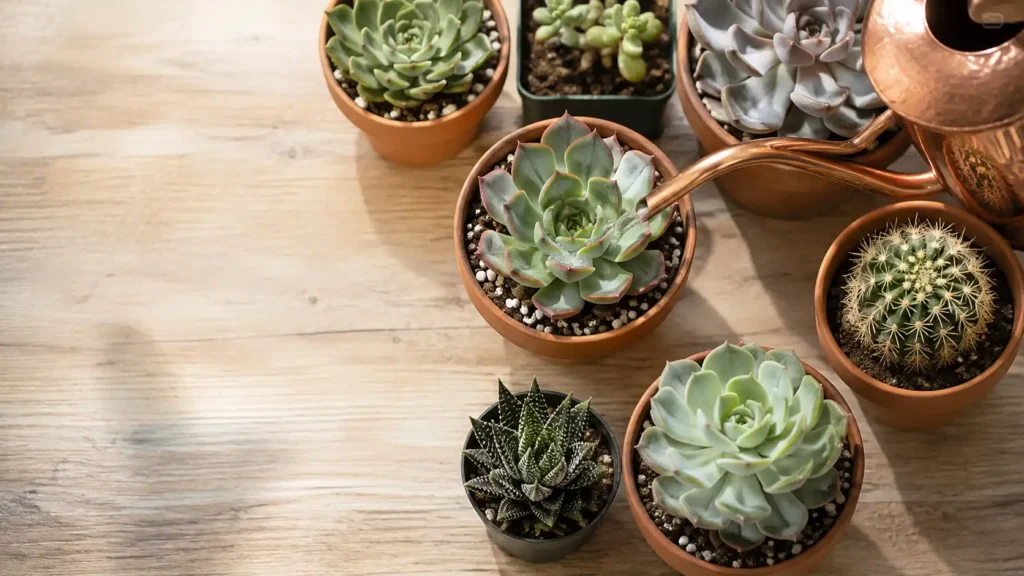
Succulents watered the soak-and-dry method, fully drenching the soil and allowing excess water to drain completely before watering again again, should be watered only when the soil is entirely dry, Manuela Nogueira says, which occurs every 10 to 14 days indoors and every 7 to 10 days outside during the growing season.
In winter dormancy, watering needs should be reduced by about half, because growth is reduced and roots uptake very little water. But pot material is also important, says Nogueira, as terracotta pots dry out quicker than plastic or ceramic pots, and will need to be watered a little more often. This is possible because succulents use a process called CAM photosynthesis, which, as explained by the Smithsonian Tropical Research Institute, lets them absorb carbon dioxide at night rather than during the day — dramatically cutting the water they lose through their leaves
Quick Summary
- Most succulents need water every 1–3 weeks during the growing season (spring/summer) and every 4–8 weeks — sometimes less — during winter dormancy.
- The most reliable method is “soak and dry”: water thoroughly until it drains, then wait until the soil is fully dry 1–2 inches down before watering again.
- Overwatering (mushy, translucent, yellowing leaves) kills far more succulents than underwatering (wrinkled but still firm leaves) does.
- Species matters — Lithops and Haworthia need much less water than Echeveria, and epiphytic types like Christmas cactus need noticeably more.
How Do I Know My Succulent Needs Water Right Now?
Check the soil 1–2 inches down. If it’s bone dry and the leaves have lost a little of their firmness, it’s time to water.
This works better than any fixed schedule because dry-out speed itself isn’t fixed — it changes with heat, airflow, pot material, and the plant’s own dormancy state. A calendar can’t account for any of that; your soil can.
The Finger/Skewer Test, Step by Step
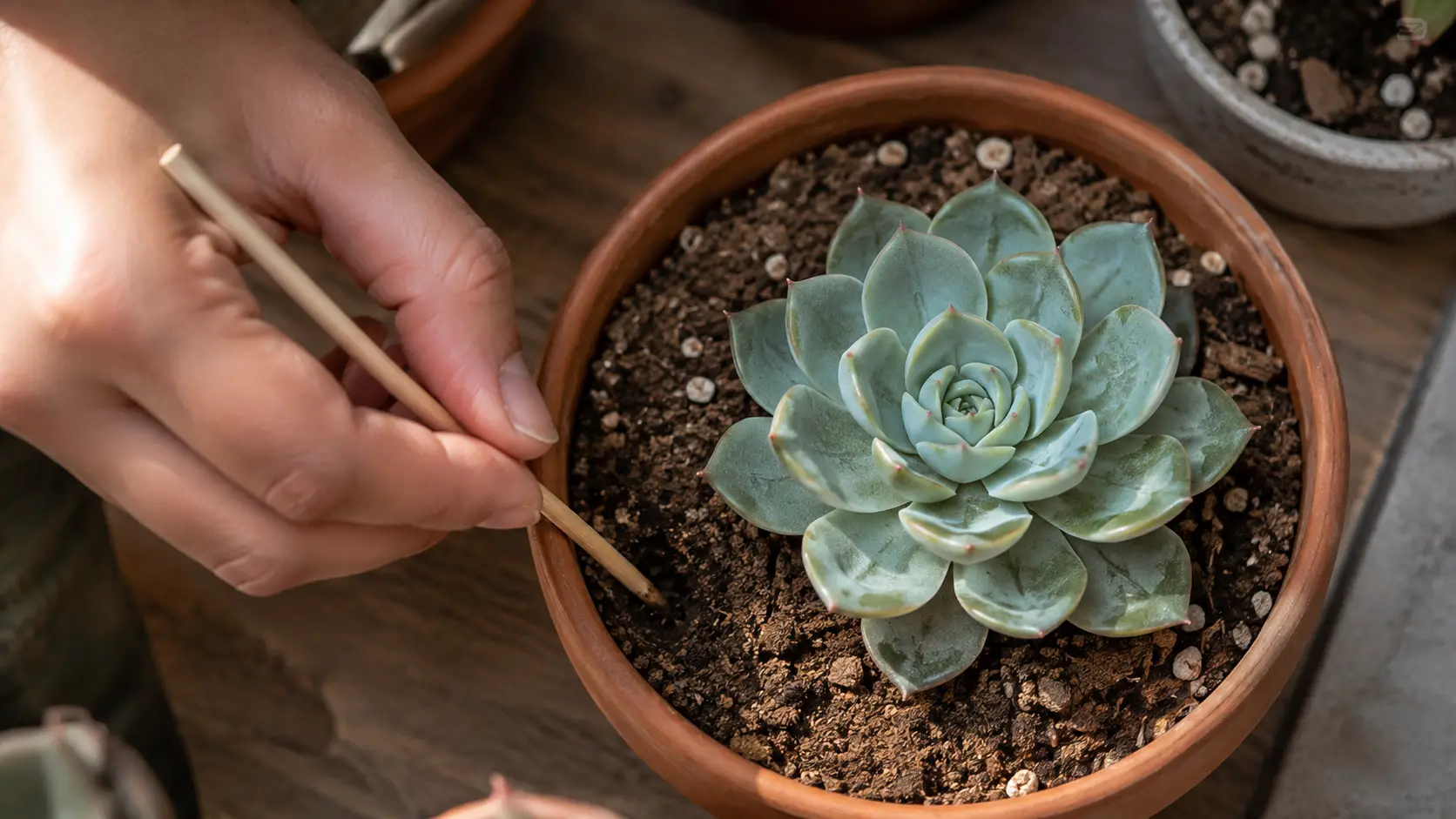
- Insert a finger or a wooden skewer 1–2 inches into the soil, angled slightly toward the root ball rather than straight down the pot’s edge.
- If it comes out clean and dry, water. If it comes out damp or with soil clinging to it, wait 2–3 days and check again.
- Do this once a week as a standing habit, not a one-time diagnostic — the goal is to build a feel for your specific plant’s rhythm, not to solve the question once and forget it.
Visual and Tactile Signs of Thirst
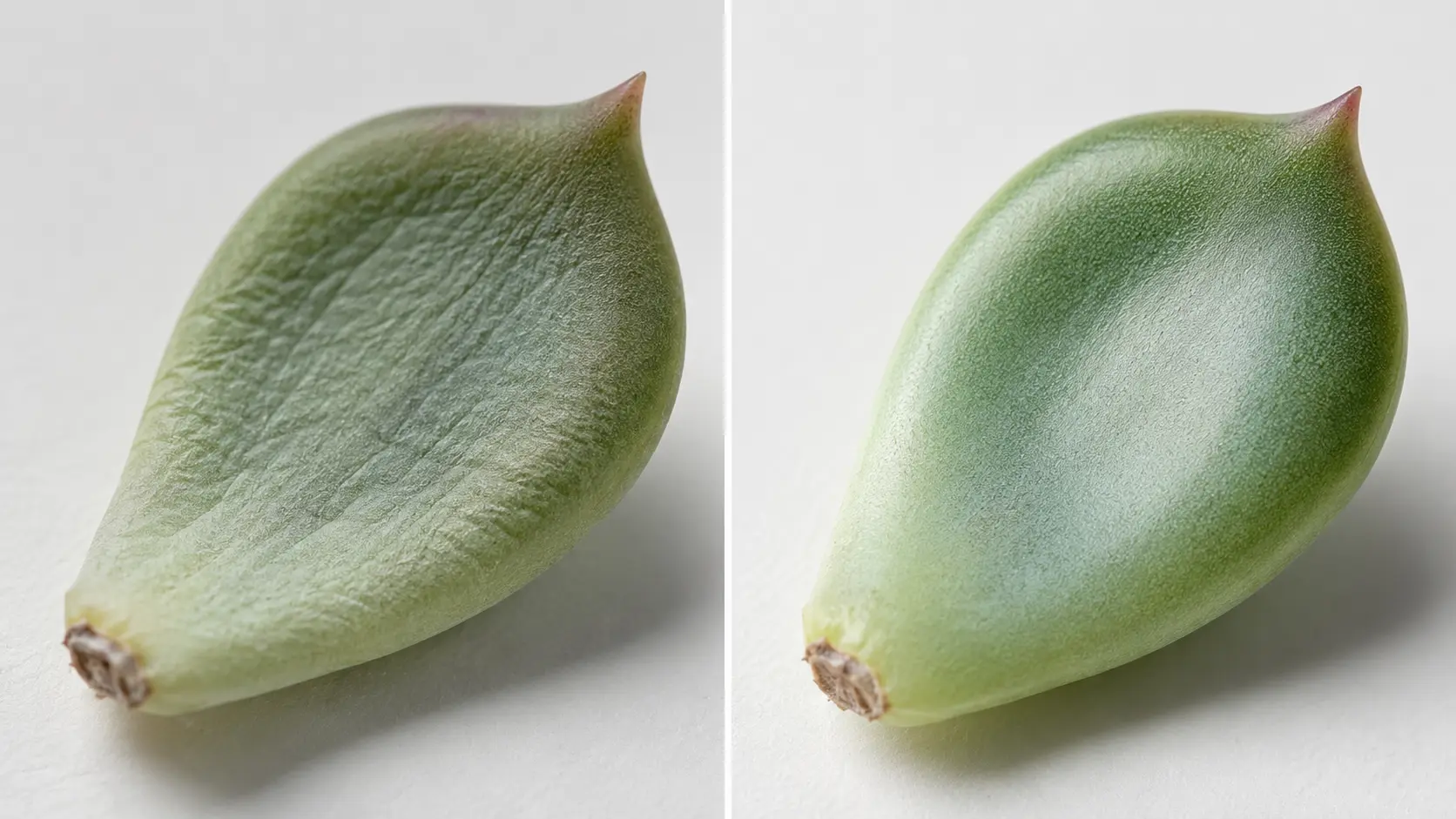
- Leaves feel slightly softer and look mildly wrinkled, but remain intact and firm at the base.
- Leaves lose some plumpness without changing color.
- Soil visibly shrinks and pulls away from the edge of the pot.
If you’re applying this same logic across your other houseplants, our guide to checking if any indoor plant needs water breaks down the method for non-succulent species too.
Why Does Watering Frequency Vary So Much?
Frequency swings are not an indication of disagreement of sources; they are an indication of multiple variables changing at once. Put them in a separate room and the “contradiction” vanishes!
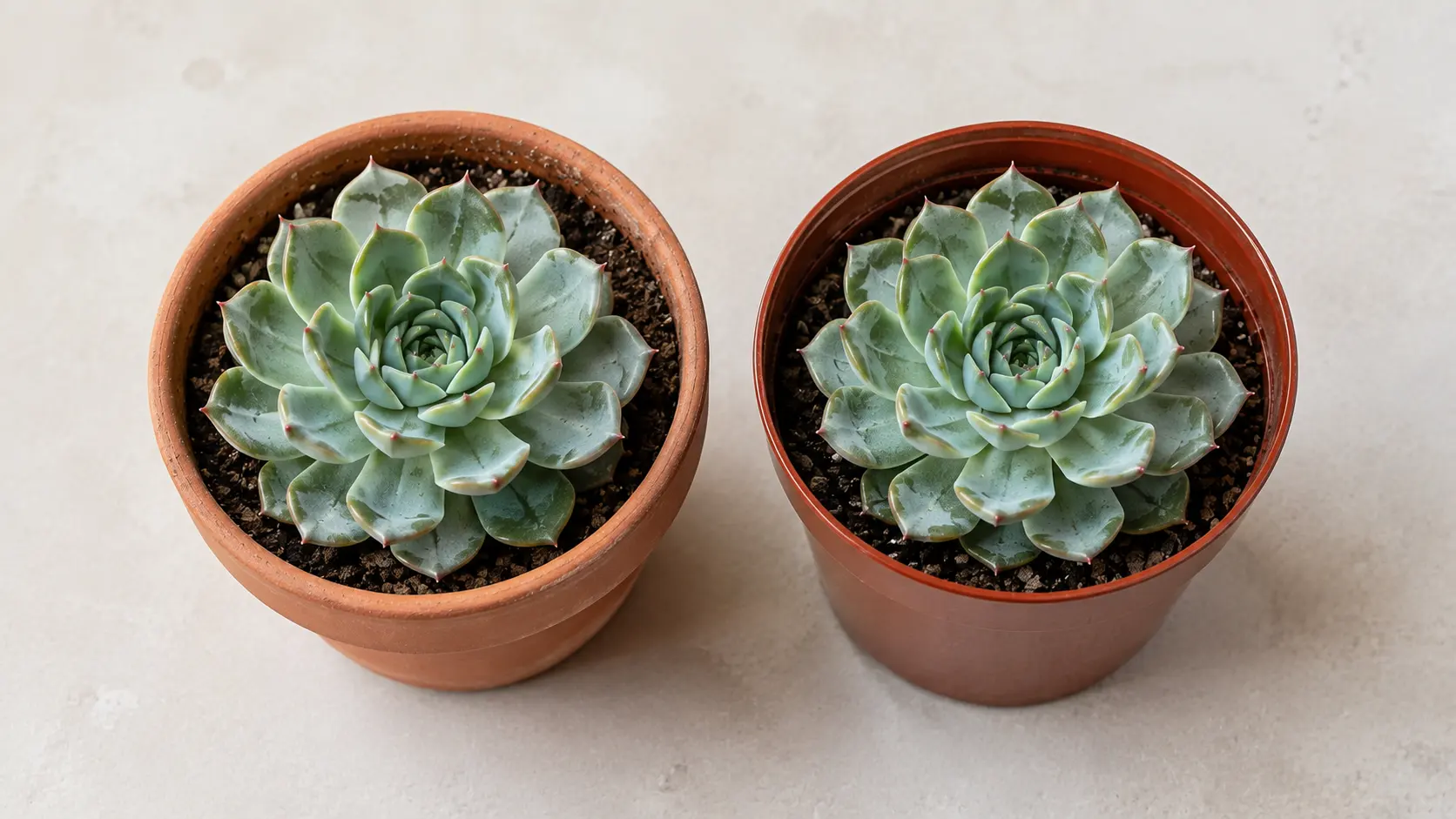
Unlike plastic or glazed ceramic, which allow moisture only to escape from the surface, terracotta allows moisture to escape through the pot body, which results in significant drying out. Direct lighting results in quicker evaporation. Moisture is extracted from soil by arid climates than humid. A succulent’s metabolism slows during the dormant season, and it is not using the water as fast during that time as it does during the summer — this is one of the most frequent causes of succulents dying from overwatering.
Quick-Reference Adjustment Table
| Variable | Effect on Frequency |
| Season (spring/summer vs. fall/winter) | Water 2–3x more often during active growth |
| Pot material (terracotta vs. plastic/glazed) | Terracotta dries faster — water more often |
| Light exposure (full sun vs. partial shade) | More direct sun = faster dry-out, more frequent watering |
| Climate (arid/desert vs. humid/temperate) | Arid climates need noticeably more frequent watering |
| Indoor vs. outdoor | Outdoor plants generally dry out faster than indoor ones |
Pot material isn’t the only container factor at play — pot size also affects how fast a plant grows and dries out, which is worth checking if you’ve recently repotted.
Indoor vs. Outdoor Succulents
Indoor succulents usually need less frequent watering because indoor light is dimmer and airflow is lower, both of which slow evaporation. Outdoor succulents in full sun and heat can dry out several times faster, especially in containers rather than open ground.
Seasonal Dormancy: Winter vs. Summer
Growth all but stops in winter for most succulents, and water needs drop with it. This is the single most common point where beginners overwater — they keep a summer schedule going into winter, and the plant can’t use the water fast enough before rot sets in. This slowdown isn’t unique to succulents — seasonal changes affect indoor plant growth broadly, which is why most houseplants need less water in winter overall. University of Minnesota Extension confirms that during low-light winter months, cacti and succulents should be watered only enough to prevent shrinking, with watering needs rising again as light increases in spring.
What Do Overwatering and Underwatering Actually Look Like?
Overwatered succulents turn mushy, translucent, or yellow, often starting at the base. Underwatered ones wrinkle and look deflated, but the tissue stays firm rather than turning soft. The two are easy to confuse if you’re only glancing at the leaves — the base of the plant and the texture (firm vs. soft) are the real tell.
Soil-and-Symptom Diagnostic Table
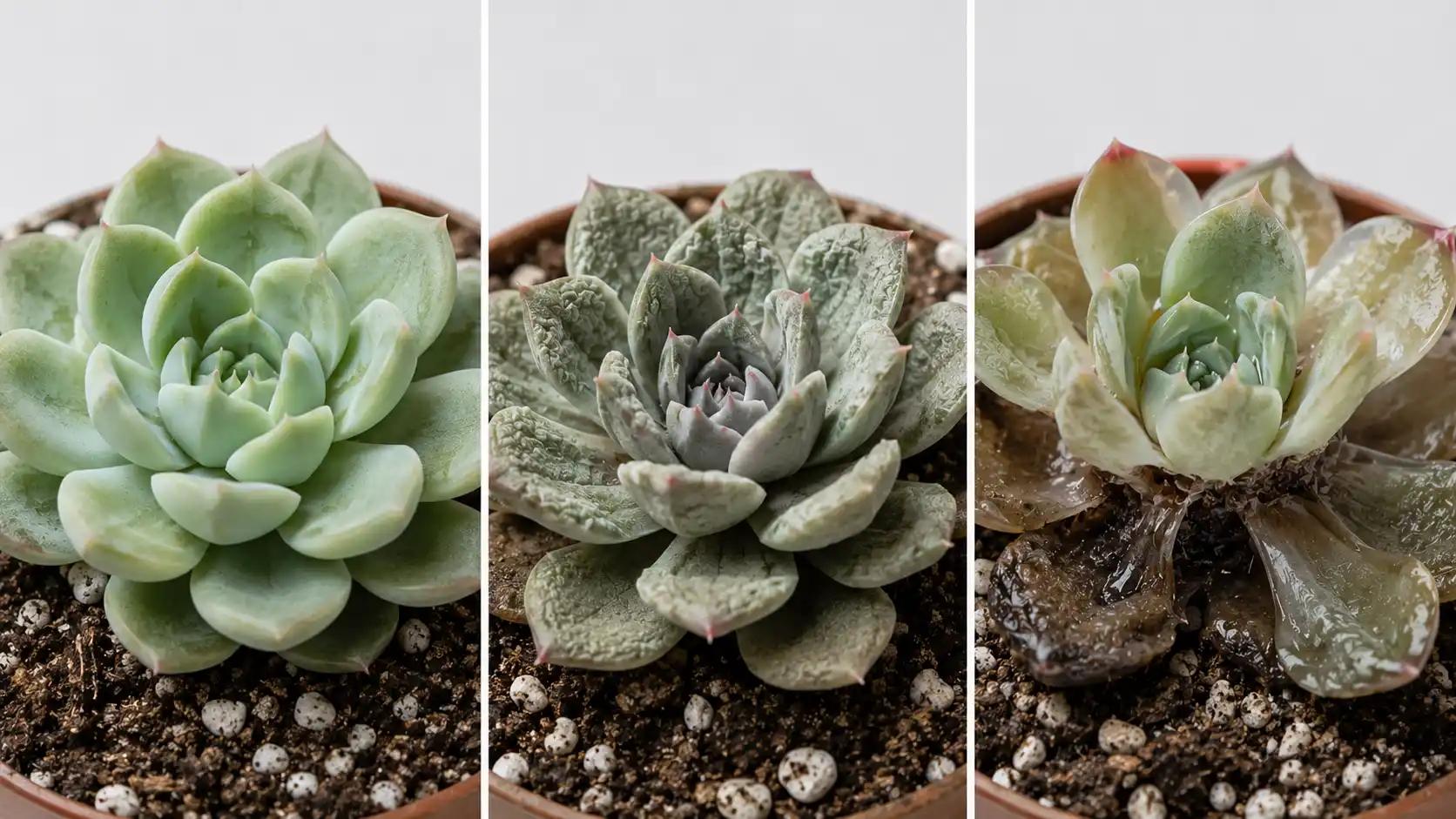
| Symptom | Likely Verdict | Next Action |
| Wrinkled, soft-looking but firm leaves; soil bone dry | Underwatered | Water thoroughly, then resume normal interval |
| Translucent, mushy leaves; blackened or soft base | Overwatered / root rot | Stop watering immediately, inspect roots, repot if mushy |
| Yellow, droopy leaves; soil still damp | Overwatered | Let soil dry out fully before watering again |
| Leaves plump, slightly dull color | Normal | No action needed |
Overwatering symptoms follow a similar pattern across houseplants — see how they show up on an overwatered coffee plant for comparison.
Choosing the Right Watering Method
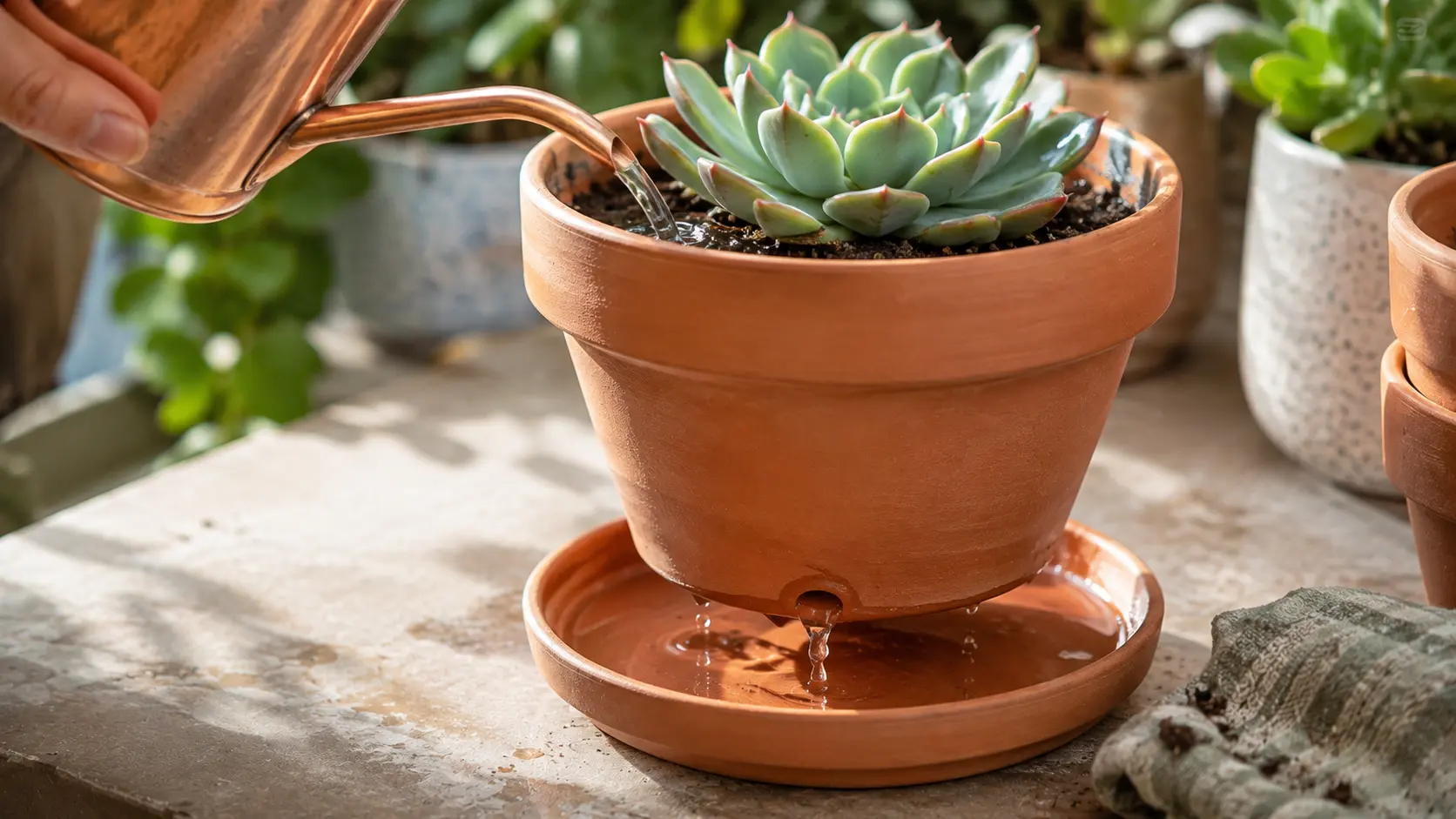
The “soak and dry” method — water thoroughly until it runs out the drainage holes, then let the soil dry out completely before watering again — is the most reliable approach for the large majority of succulents, because it mimics the feast-then-drought cycle these plants evolved for in arid climates. This wet-dry cycle is the exact method recommended by Iowa State University Extension for indoor succulents: water thoroughly until it drains, then let the soil dry out completely before watering again
Soak-and-Dry vs. Bottom Watering vs. Misting
- Soak-and-dry: Water directly at the soil until it drains freely. Most reliable, works for nearly every species, and is the easiest to build into a weekly check habit.
- Bottom watering: Set the pot in a shallow dish of water for around 10 minutes so it absorbs through the drainage holes, then let it drip dry. Gentle, good for shallow pots.
- Misting: Not recommended as a primary method — it wets the leaves without reaching the roots, which does little for hydration and increases the risk of fungal spotting.
Does Species Change the Method — or Just the Frequency?
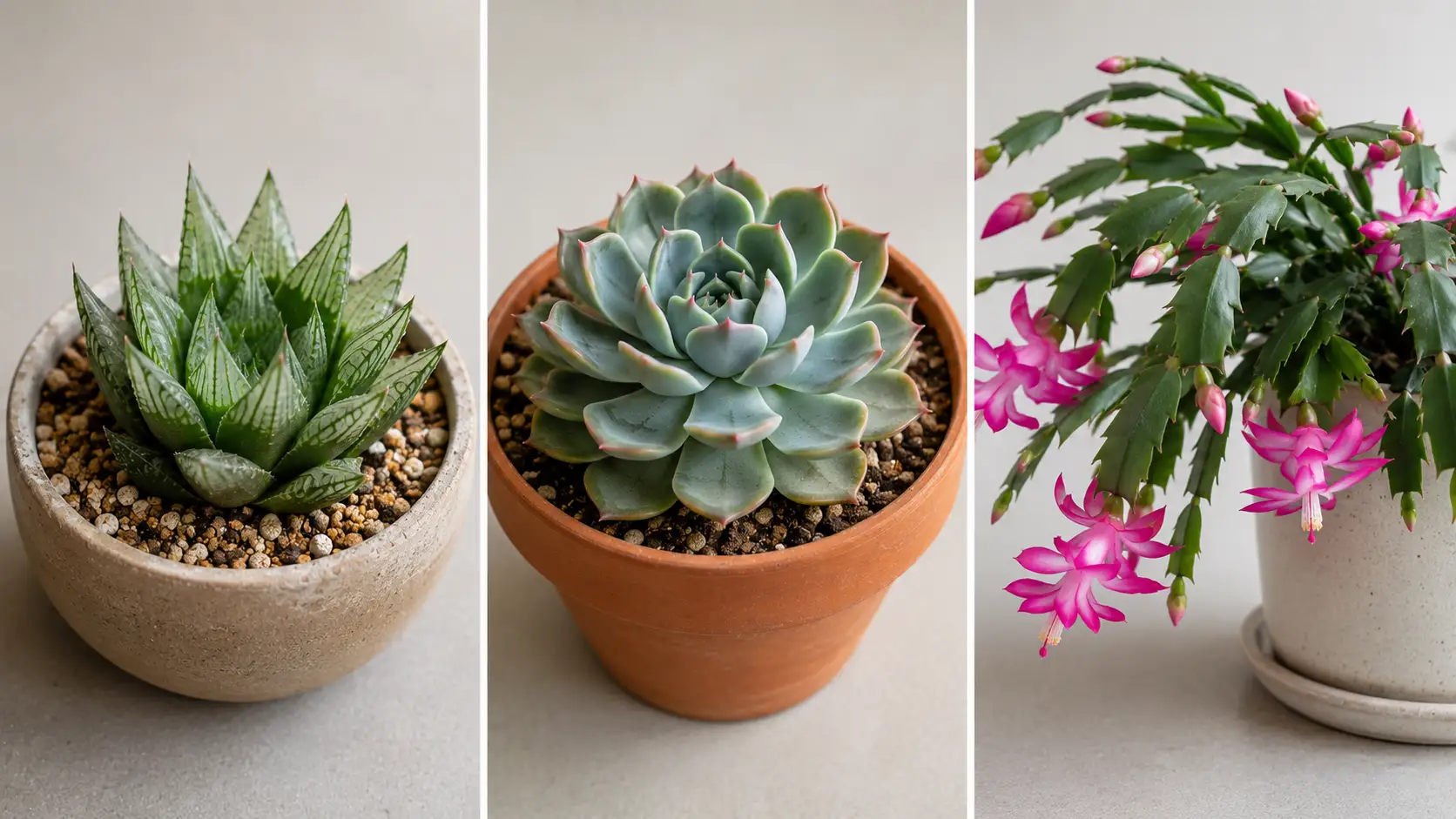
- Low-water tier (Lithops, Haworthia): Water infrequently and sparingly; these species store water efficiently and are especially prone to rot if overwatered.
- Moderate tier (Echeveria, Sedum): A standard soak-and-dry cadence works well here — this is the “typical succulent” most schedules are written for.
- Higher-water / epiphytic tier (Christmas cactus, Rhipsalis): These aren’t desert plants — they’re forest natives adapted to more humidity, so they need more frequent, lighter watering than the rest of the succulent family.
Common Beginner Mistakes (and How to Prevent Them)
- Watering on a fixed calendar instead of checking the soil. This is the root cause of most other mistakes on this list — fix it by switching to the weekly finger/skewer check.
- Assuming every succulent follows the same schedule. Identify which tier your plant falls into (see above) before setting an interval.
- Using pots without drainage holes. Trapped water is one of the fastest routes to root rot; repot into a container with drainage if yours doesn’t have one.
- Letting a well-meaning plant-sitter water “just in case” while you’re away. Water thoroughly the day before a trip and skip additional watering — succulents can comfortably go 3–4 weeks without attention.
- Misting instead of soaking. Switch to soil-directed watering; misting doesn’t reach the roots and raises rot risk on the leaves.
Conclusion
There’s no single universal answer to how often to water succulents — and that’s actually good news, because it means you don’t have to guess. Check the soil 1–2 inches down, adjust for season, pot material, light, climate, and your specific species tier, and use the soak-and-dry method when the soil tells you it’s time. Get that habit in place, and you’ll spend a lot less time worrying about root rot or shriveled leaves. This guide is part of our broader Plants: Benefits and Guides hub, covering care and growing tips across all plant types.
Frequently Asked Questions
How long can succulents go without water?
Most succulents can comfortably go 3–4 weeks without water, and some low-water species like Lithops can go even longer, which is why a short vacation is rarely a problem.
Is it better to underwater or overwater a succulent?
Underwatering is safer — a shriveled succulent can usually be revived with a thorough watering, while overwatering often causes irreversible root rot.
Should I mist my succulents instead of watering the soil?
No — misting wets the leaves without reaching the roots and increases the risk of fungal issues; water directly at the soil instead.
Do succulents need less water in winter?
Yes, most succulents go dormant in winter and need water far less often, sometimes as little as once every 6–8 weeks.
How can I tell if my succulent is dying from too much or too little water?
Check firmness and color at the base: soft, translucent, or yellowing tissue points to overwatering, while wrinkled but firm leaves point to underwatering.