
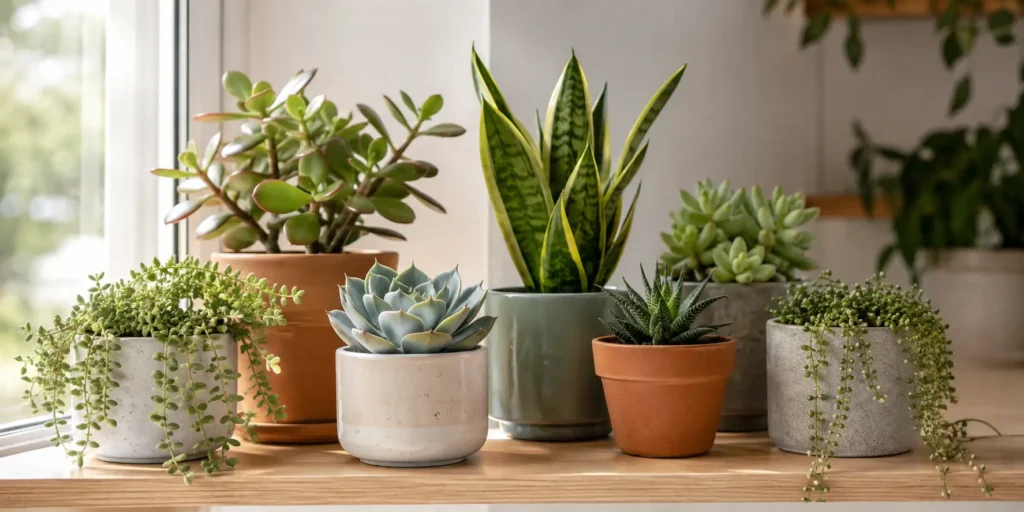
The easiest succulents for novices to grow are Echeverria, Haworthia, Zebra Plant (Haworthiopsis fasciata), Sedum, and the Jade Plant (Crassula ovata), as they will grow in cactus mix with lots of drainage, tolerate some neglect in watering, and require only some bright indirect light, and very little feeding.
Haworthia and Zebra Plant are exceptions to the “bright light only rule,” being capable of thriving in low-light apartments. Jade Plants can live for decades, and are readily vegetatively propagated from a single leaf, while the rosette form of Echeveria makes over watering damage readily apparent, even before the roots rot.
If you’re just getting started with houseplants in general, our Indoor Green Living Hub covers everything from light and watering basics to picking the right plant for your space.
Quick Summary
- Easiest picks for true beginners: Haworthia, Snake Plant—technically a succulent by care needs—and Jade Plant tolerate low light and irregular watering better than most.
- The #1 rule: check the soil and leaves before watering — never water on a fixed calendar schedule.
- Pet safety varies by species — some common beginner picks (Jade, Echeveria) are mildly toxic to cats and dogs, while Haworthia is considered non-toxic.
- Low light isn’t a dealbreaker — several succulents survive (though won’t thrive) several feet from a window with only bright indirect light.
What Makes a Succulent “Beginner-Friendly”?
Succulent vs. cactus — quick clarification. All cacti are succulents, but not all succulents are cacti. “Succulent” describes any plant that stores water in thick, fleshy leaves or stems to survive dry periods. Cacti are a specific family within that group, generally identified by areoles — small bump-like structures that grow spines, hair, or flowers. If you’re shopping for a beginner plant, most non-cactus succulents are actually more forgiving of low light than desert cacti, which typically want strong direct sun.
Three traits separate a forgiving succulent from a fussy one:
- Drought tolerance — can go 2–3 weeks without water without visible stress
- Light flexibility — survives in bright indirect light, not just full sun
- Slow, predictable growth — fewer sudden changes to react to, which means fewer chances to panic and overcorrect
The Best Succulents for Beginners
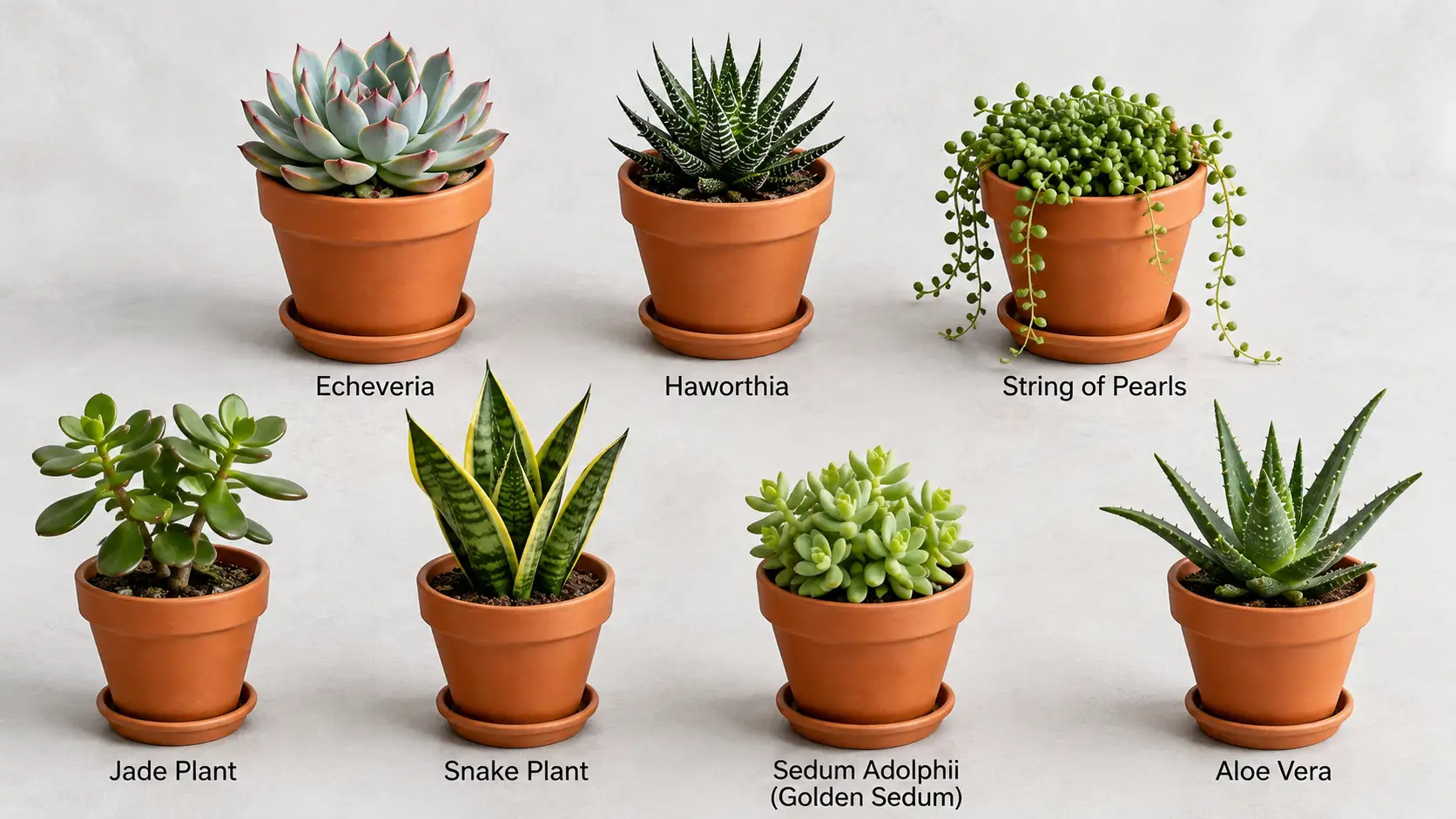
Haworthia. Small, striped, and genuinely one of the most low-light-tolerant succulents sold at retail. It handles a spot a few feet from a window better than almost anything else on this list, and its firm, upright leaves make it easy to visually judge thirst — they dimple slightly when the plant needs water.
Snake Plant (Sansevieria). Technically classified as a succulent due to its water-storing leaves, it’s arguably the hardest houseplant to kill through underwatering, and one of the easier ones to kill through overwatering — so it fits the beginner profile well precisely because the failure mode is predictable and avoidable. If Snake Plant appeals to you, our Sansevieria Laurentii care guide covers long-term care once you’re past the beginner stage.
Jade Plant (Crassula ovata). A classic for a reason — thick, tree-like stems store enough water that missing a watering by a week or two rarely causes damage. It does best in medium-to-bright indirect light; in very low light it will grow leggy rather than die outright, which gives beginners a visible warning sign before real damage occurs.
Echeveria. The rosette-shaped succulent seen in most nursery displays. It’s more light-dependent than the others here — it wants bright light to hold its compact shape — but its water needs are simple and forgiving, making it a good pick for a bright windowsill rather than a dim corner.
Sedum (Burro’s Tail or similar trailing varieties). Extremely drought-tolerant and forgiving of inconsistent watering, though its plump leaves are fragile and drop easily when bumped or moved — a minor hazard for beginners but not a care difficulty. Burro’s Tail is part of a broader group of trailing succulents — see our string and vine succulents guide if you want more low-maintenance trailing options.
Aloe Vera. Wants brighter light than Haworthia or Jade, but its watering needs are straightforward: soak thoroughly, then ignore for 2–3 weeks. A practical bonus pick if you want a succulent with a functional use beyond decoration.
Hens and Chicks (Sempervivum). Extremely cold-hardy and forgiving, though it’s more commonly grown outdoors or on a patio than as a strictly indoor plant, since it prefers more direct sun than the others on this list.
Comparison Table: Light, Water, and Pet Safety at a Glance
| Succulent | Light Tolerance | Watering Frequency | Pet-Safe | Difficulty for Beginners |
| Haworthia | Low to medium | Every 2–3 weeks | Non-toxic | Easiest |
| Snake Plant | Low to medium | Every 3–4 weeks | Mildly toxic | Easy |
| Jade Plant | Medium to bright | Every 2–3 weeks | Mildly toxic | Easy |
| Echeveria | Bright, indirect | Every 1–2 weeks | Mildly toxic | Moderate |
| Sedum | Medium to bright | Every 1–2 weeks | Non-toxic | Easy |
| Aloe Vera | Bright, indirect | Every 2–3 weeks | Mildly toxic | Moderate |
| Hens and Chicks | Bright/direct | Every 1–2 weeks | Non-toxic | Moderate (best outdoors) |
Is My Succulent Thirsty or Drowning?
The single biggest reason beginners lose succulents is watering by calendar instead of by observation. Here’s a simple two-part check you can do in under a minute.
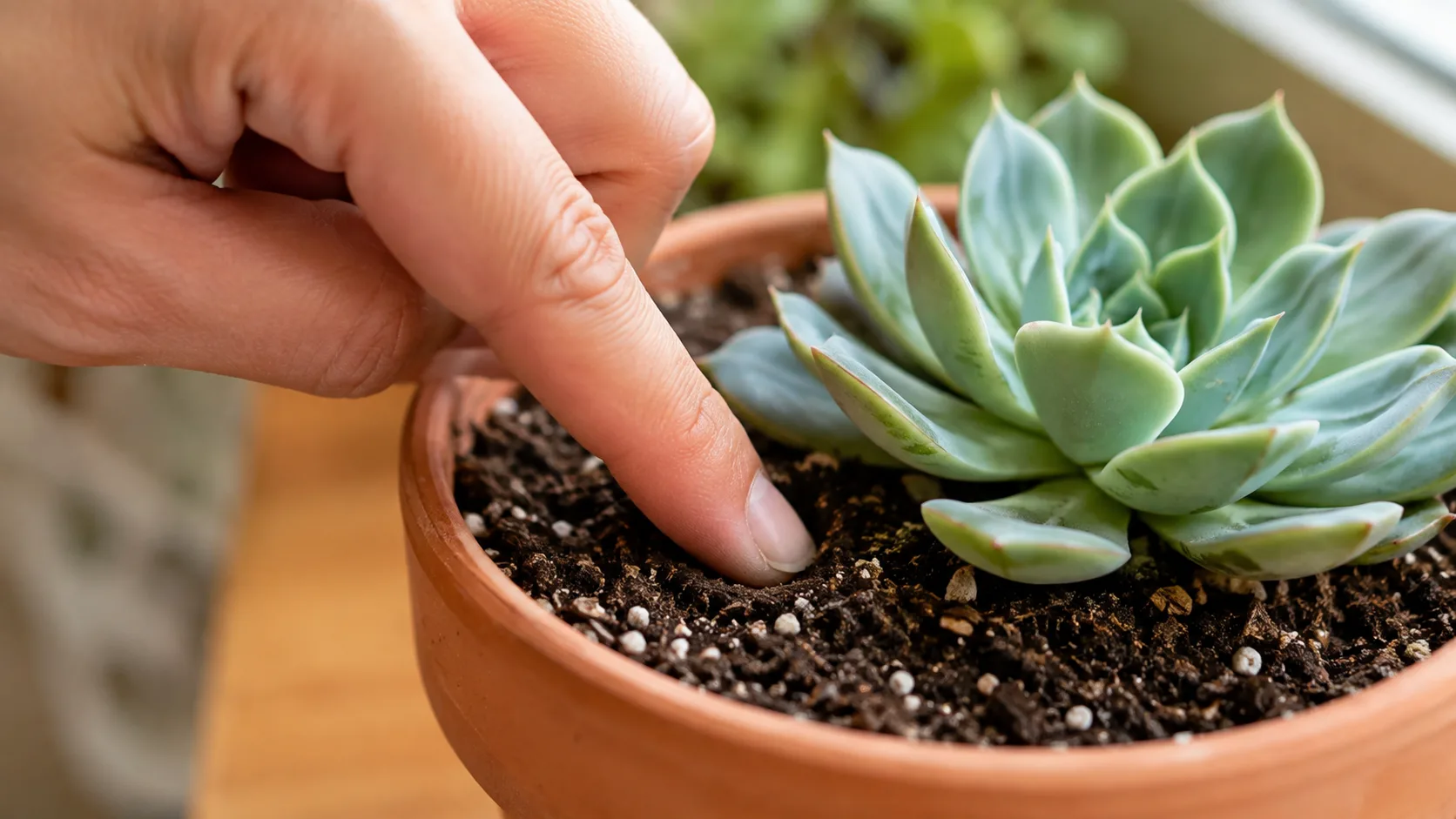
The finger-and-leaf test. Push a finger about an inch or two into the soil. If it comes out with soil clinging to it, or feels cool and damp, wait. If it comes out clean and dry, check the leaves next: firm and slightly plump means the plant is fine; visibly wrinkled or slightly deflated means it’s ready for water now. For a deeper breakdown of how watering frequency shifts across seasons and specific species, see our full guide to how often to water succulents.
Overwatering vs. underwatering symptoms:
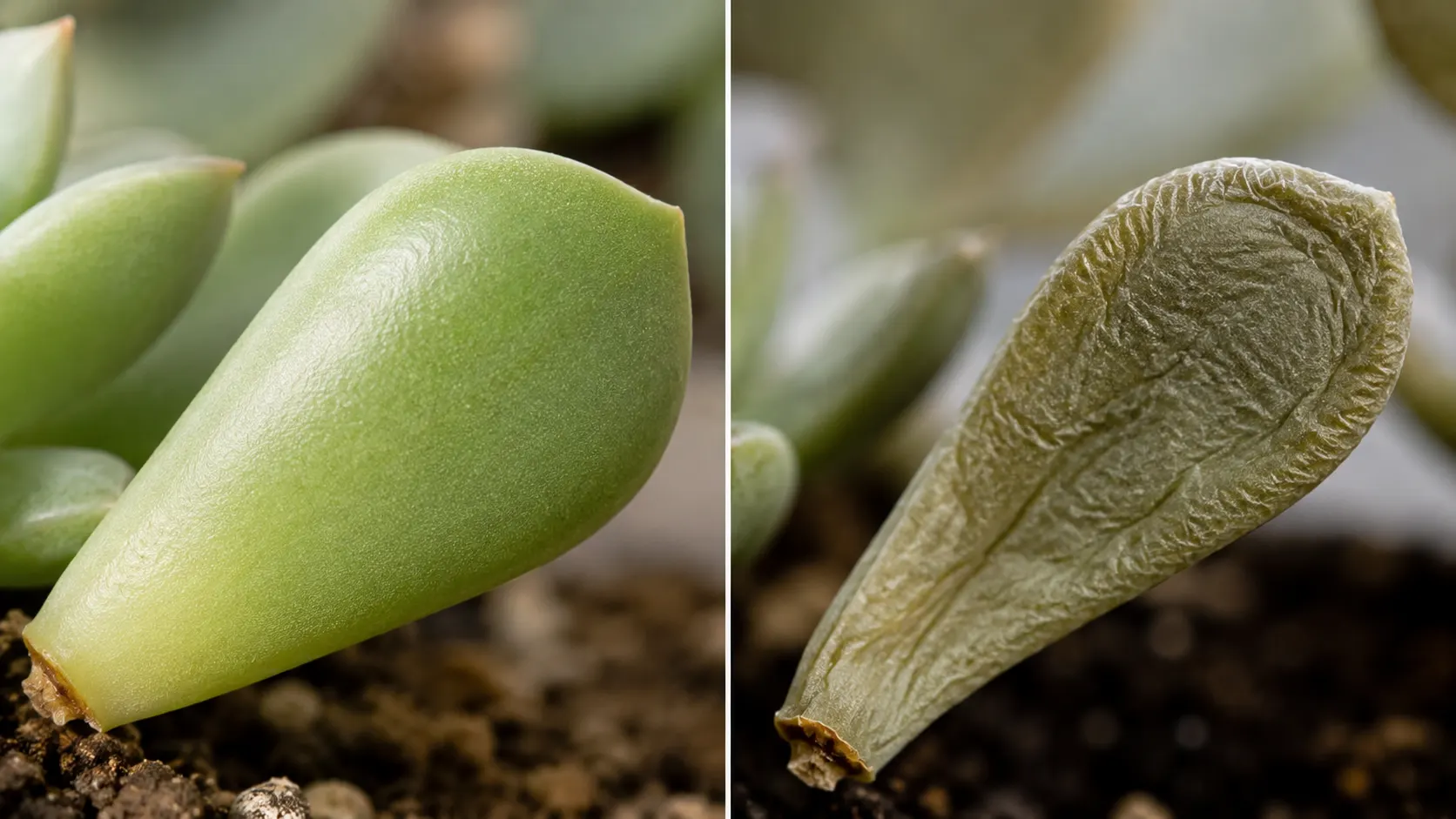
- Overwatered: leaves turn translucent, yellow, or mushy; they may drop with the slightest touch; soil stays wet for many days
- Underwatered: leaves wrinkle, pucker, or feel thin and papery; lower leaves shrivel first while new growth still looks normal
Underwatering is rarely fatal and easy to reverse. Overwatering, especially root rot from standing water, is the more common cause of a beginner succulent actually dying — which is why “when in doubt, wait” is the safer default.
Light and Soil Requirements
Will succulents thrive in a non-sun environment? They can live — but not thrive — several feet away from a window in bright but indirect light, but none of them will live well in a dark corner or under light from artificial sources alone. A general rule: If your space receives moderate indirect light throughout the day, Haworthia, Snake Plant or Jade are good options. Echeveria, Aloe or Sedum will maintain their shape more when placed on a windowsill for a few hours of direct sunlight. Even if it’s really dark in your space all year round, a succulent might not be the ideal plant.
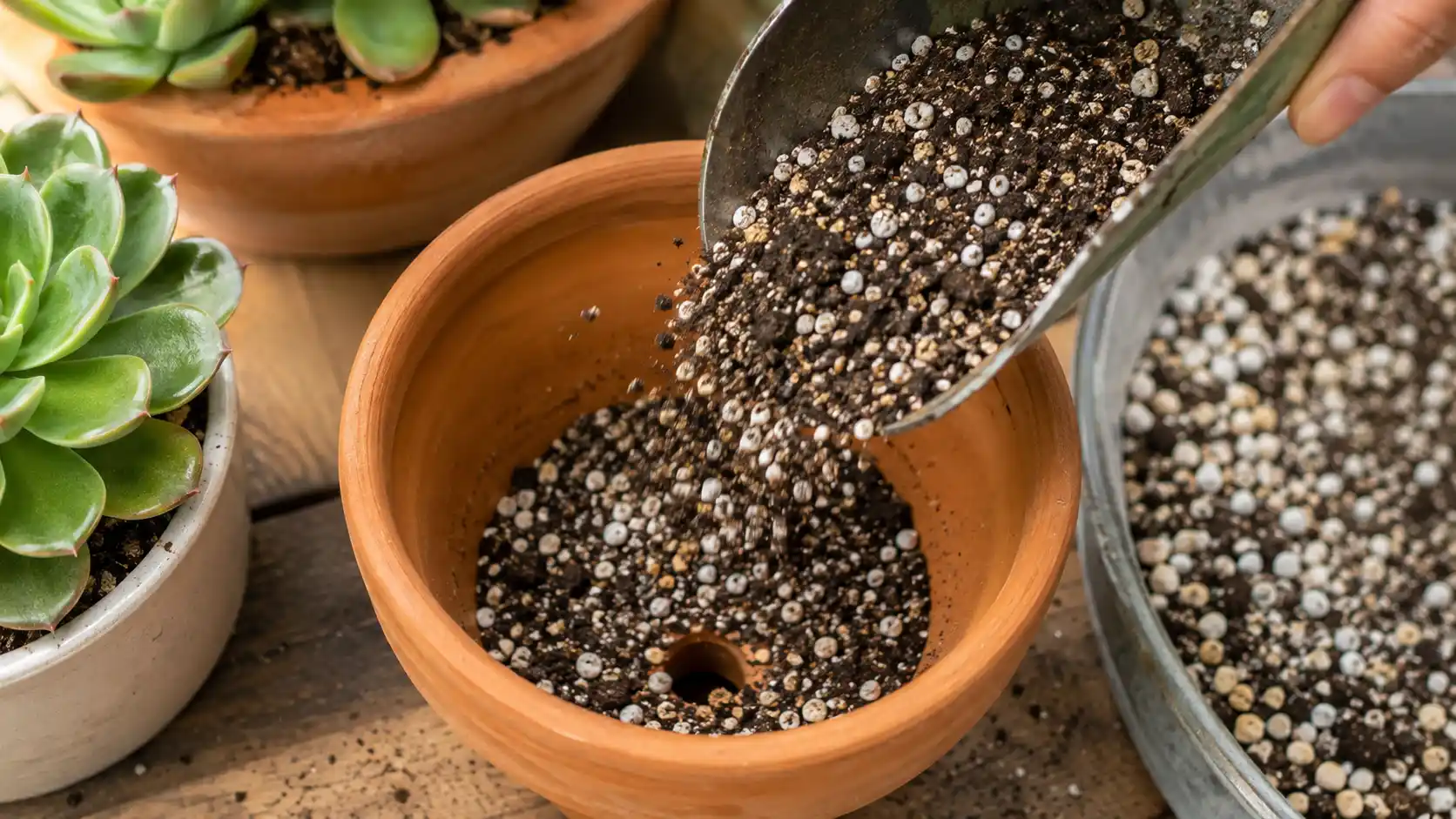
Introduction to soil and drainage. A frequent cause of root rot is that regular potting soil holds water for a long time, while succulents do not. Cactus/succulent specific mix contains coarse sand or perlite that drains within minutes and not hours. Also, the pot must have a drainage hole. If not, proper watering practices can cause the roots to become waterlogged. The RHS succulent growing guide is a helpful reference if you want species-by-species light requirements beyond the beginner picks covered here.
Are Succulents Safe Around Pets and Kids?
Toxicity varies more than most articles let on. Haworthia, Sedum, and Hens and Chicks are generally considered non-toxic to cats and dogs. Jade Plant, Echeveria, and Aloe Vera are commonly listed as mildly toxic — typically causing stomach upset rather than serious poisoning if chewed, though reactions vary by animal. If pets or young children have direct access to your plants, non-toxic options like Haworthia or Sedum remove the guesswork entirely. For a definitive, regularly updated species list, cross-check any plant against the ASPCA’s toxic and non-toxic plant database before bringing it home.
Where to Buy Your First Succulent
Not every succulent on a store shelf is equally healthy.
Before buying, check for:
- Firm, plump leaves with no soft or mushy spots
- No visible white cottony residue (a sign of mealybugs)
- Soil that isn’t soaking wet or bone-dry and compacted
- Roots that aren’t visibly circling out of the drainage hole (a sign of being pot-bound)
Big-box stores often overwater their succulent displays to keep them looking plump, so a plant that looks perfect on the shelf can already be stressed. A slightly less lush-looking plant with dry, well-drained soil is usually the healthier buy.
Caring for Your Succulent in the First Two Weeks
Why not to repot immediately. A new succulent is already adjusting to different light, humidity, and airflow than it had at the store or nursery. Repotting on top of that adds root disturbance at the worst possible time, which is why most transplant stress and early deaths happen in the first few weeks — not from bad care, but from too much change at once.
First two weeks checklist:
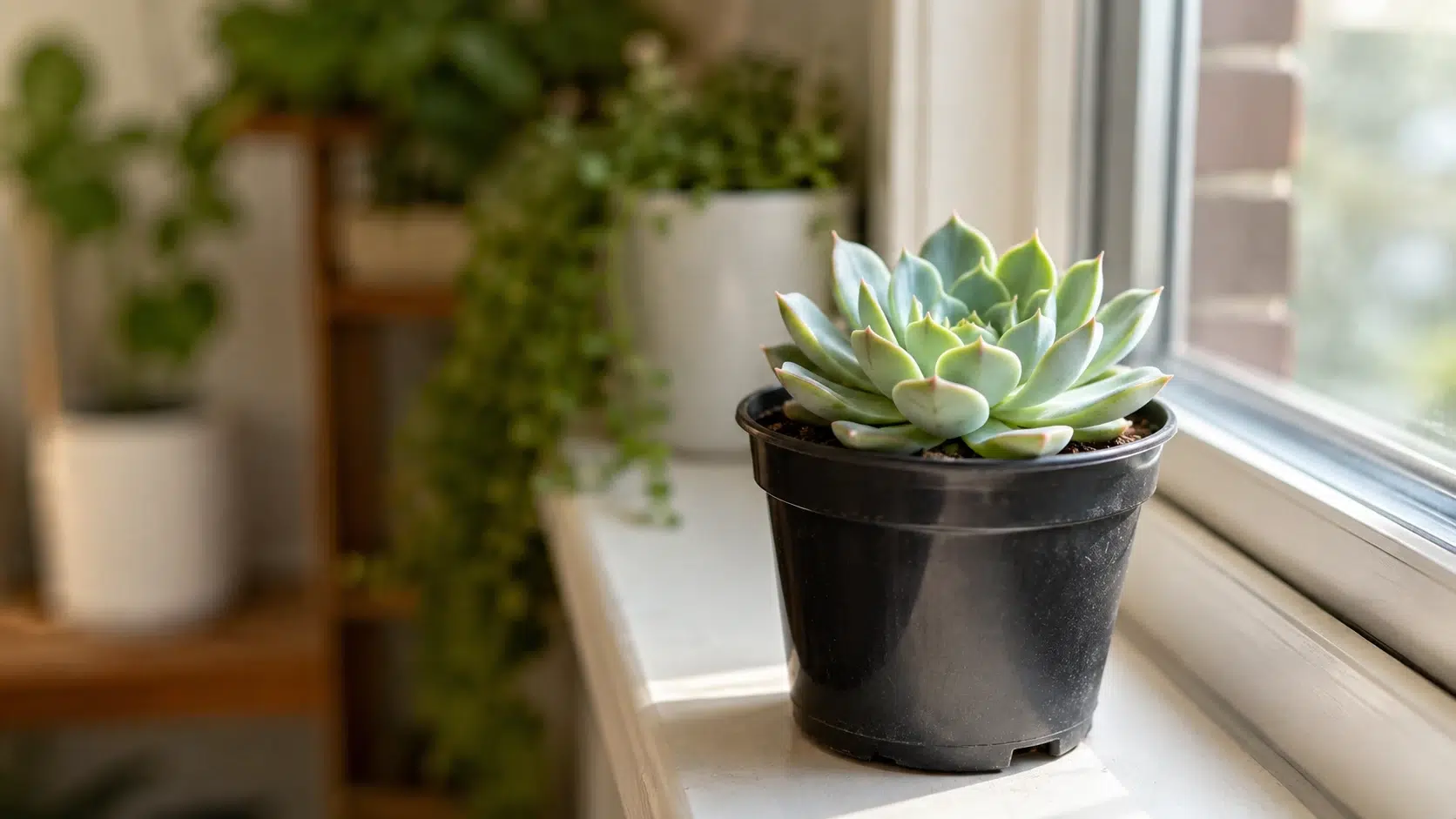
- Keep the plant in its original pot and soil for at least the first week
- Place it in bright indirect light rather than direct sun immediately, even if the label suggests full sun
- Don’t water for at least 3–5 days after bringing it home, even if the soil looks dry
- Watch for wrinkling or color change before assuming it needs anything
- Only repot if the current pot has no drainage hole, or roots are visibly circling — otherwise wait 2–3 weeks
Common Beginner Mistakes
Watering on a schedule instead of by observation. This happens because it feels more “responsible” — but succulents’ water needs shift with light, season, and pot size. Fix it by using the finger-and-leaf test every time, and prevent it by resisting the urge to water just because a few days have passed.
Using regular potting soil. This happens because it’s what’s already on hand. Fix it by switching to a cactus/succulent mix, and prevent future issues by always checking the soil type before buying a new plant.
Mistaking low light stress for thirst. A succulent stretching toward a window (called etiolation) is reaching for light, not asking for water. Fix it by moving the plant closer to a light source rather than watering more, and prevent it by choosing species matched to your actual light conditions from the start.
Repotting too soon. Covered above — the fix is patience, and prevention is simply waiting out the first two to three weeks before disturbing the roots.
Conclusion
The three characteristics of the best succulents for novices are that they are not affected by inconsistent light, they can be late to receive water, and they provide obvious clues to impending damage. Although the types of plants are important, the watering method is more so: water according to soil and leaf condition, not the calendar; use a well-drained soil mix; and do not repot a newly planted plant until the first two to three weeks have passed to allow it to get established. If those basics are in place, nearly any succulent in this list is actually very difficult to kill.
Frequently Asked Questions
How often should I water a succulent indoors?
There’s no fixed interval — check the soil with your finger and the leaves for firmness first. Most beginner succulents need water roughly every 2–3 weeks indoors, but light, pot size, and season all shift that number.
Can succulents survive in a room with no windows or direct sunlight?
Not reliably. Most succulents need at least bright indirect light for part of the day; a room with no natural light at all is generally not suitable, even for low-light-tolerant species like Haworthia.
What’s the easiest succulent that’s almost impossible to kill?
Snake Plant and Haworthia are usually considered the most forgiving, since both tolerate low light and long gaps between waterings.
Are succulents toxic to cats or dogs?
It depends on the species. Haworthia and Sedum are generally non-toxic, while Jade, Echeveria, and Aloe are commonly listed as mildly toxic and can cause stomach upset if chewed.
Do I need to repot a succulent right after buying it?
No — it’s usually better to wait 2–3 weeks so the plant can acclimate, unless the current pot has no drainage hole or the roots are clearly pot-bound.
What’s the difference between a succulent and a cactus?
All cacti are succulents, but not all succulents are cacti. Cacti are a specific family identified by areoles (the small bumps that grow spines or hair), while “succulent” more broadly describes any plant that stores water in thick leaves or stems



One Response