
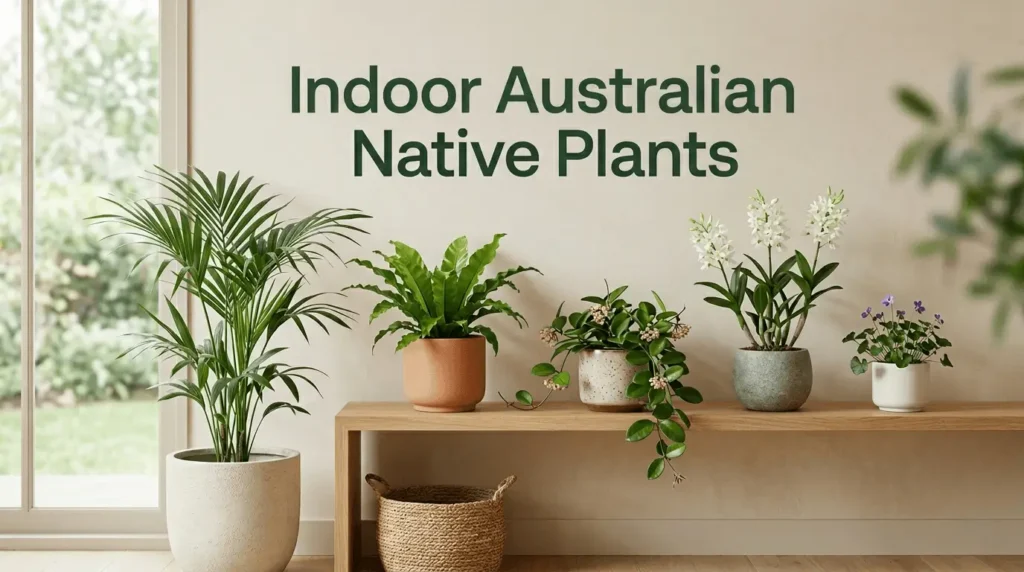
Introduction: What Are Indoor Australian Native Plants?
Indoor Australian native plants are Australian native species that can adapt to indoor containers, filtered light, stable temperatures, and lower wind exposure. These plants may include native ferns, palms, orchids, hoyas, rainforest shrubs, and compact groundcovers suited to indoor growing conditions. However, not every Australian native plant is suitable indoors. Many native plants in Australia naturally prefer full sun, open airflow, and free-draining outdoor soil. The best Australian native indoor plants are species that tolerate pots, bright indirect light, moderate humidity, and controlled watering. For this reason, native Australian indoor plants must be selected carefully when used as native indoor plants Australia or Australian native plants for indoors.
Quick Summary
- Indoor Australian native plants are native Australian species that can tolerate pot culture, bright indirect light, and indoor humidity levels.
- The best choices are usually compact, adaptable plants such as native ferns, palms, hoyas, orchids, and some tropical rainforest natives.
- Most Australian natives need excellent drainage, careful watering, and enough light to avoid weak growth indoors.
- Low-light indoor conditions are possible for some species, but “low light” usually means tolerance, not ideal long-term growth.
- Success depends on matching the plant’s natural habitat to indoor light, water, potting mix, humidity, and temperature.
What Makes an Australian Native Plant Suitable for Indoor Growing?
A suitable Australian native indoor plant is one that can grow in a container, tolerate filtered light, and maintain healthy roots in an indoor environment. Unlike outdoor bushland plants, native indoor plants must handle restricted root space, slower soil drying, and lower airflow.
Good indoor candidates usually have moderate water needs, compact growth, flexible light tolerance, and a root system that adapts to pots. Many native Australian plants from rainforest or shaded habitats perform better indoors than plants Australian native to dry, open, full-sun environments.
Important suitability traits include:
- Ability to grow in pots without rapid root stress
- Tolerance of filtered or indirect light
- Moderate water needs rather than constant dryness or saturation
- Compact or controllable growth habit
- Resistance to indoor temperature changes
- Preference for free-draining soil
- Leaves that tolerate lower airflow and indoor humidity variation
Native plants Australia includes many forms, from dryland shrubs to rainforest foliage plants. Only some plants native Australia are naturally suited to indoor growing.
Indoor vs Outdoor Native Plant Conditions
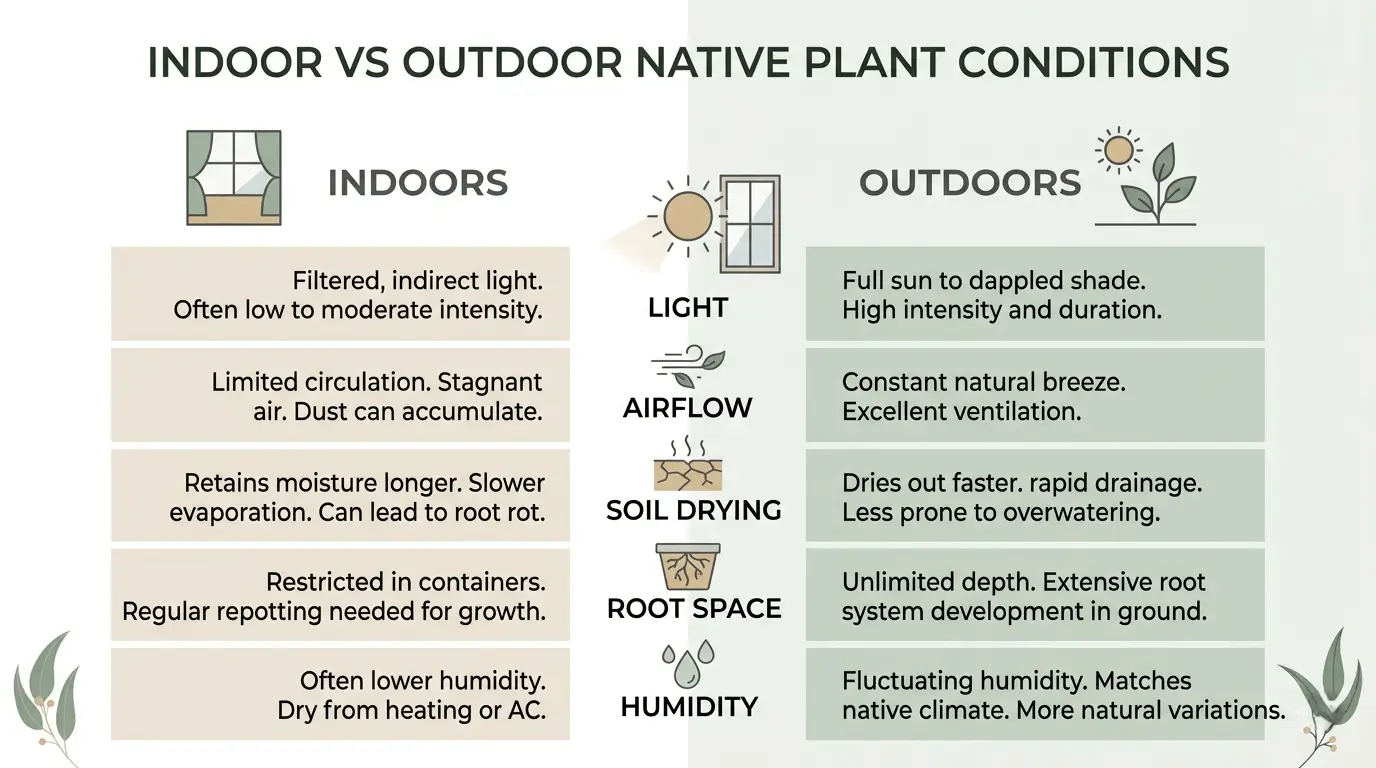
Indoor environments are more controlled than outdoor Australian habitats, but they also limit airflow, light intensity, and root space. Many Australian native plants grow best outdoors because they evolved with strong sunlight, natural air movement, seasonal rainfall, and open soil conditions.
| Condition | Indoors | Outdoors |
| Light | Filtered or indirect | Full sun to part shade |
| Airflow | Limited | Natural airflow |
| Soil drying | Slower | Faster |
| Root space | Restricted by pot | Wider root spread |
| Humidity | Variable | Climate-dependent |
Indoor growing works best when the plant’s natural preferences are compatible with these limits. Rainforest natives, compact palms, ferns, and some epiphytes often adjust more easily than full-sun Australian bush plants.
Best Indoor Australian Native Plants for Homes
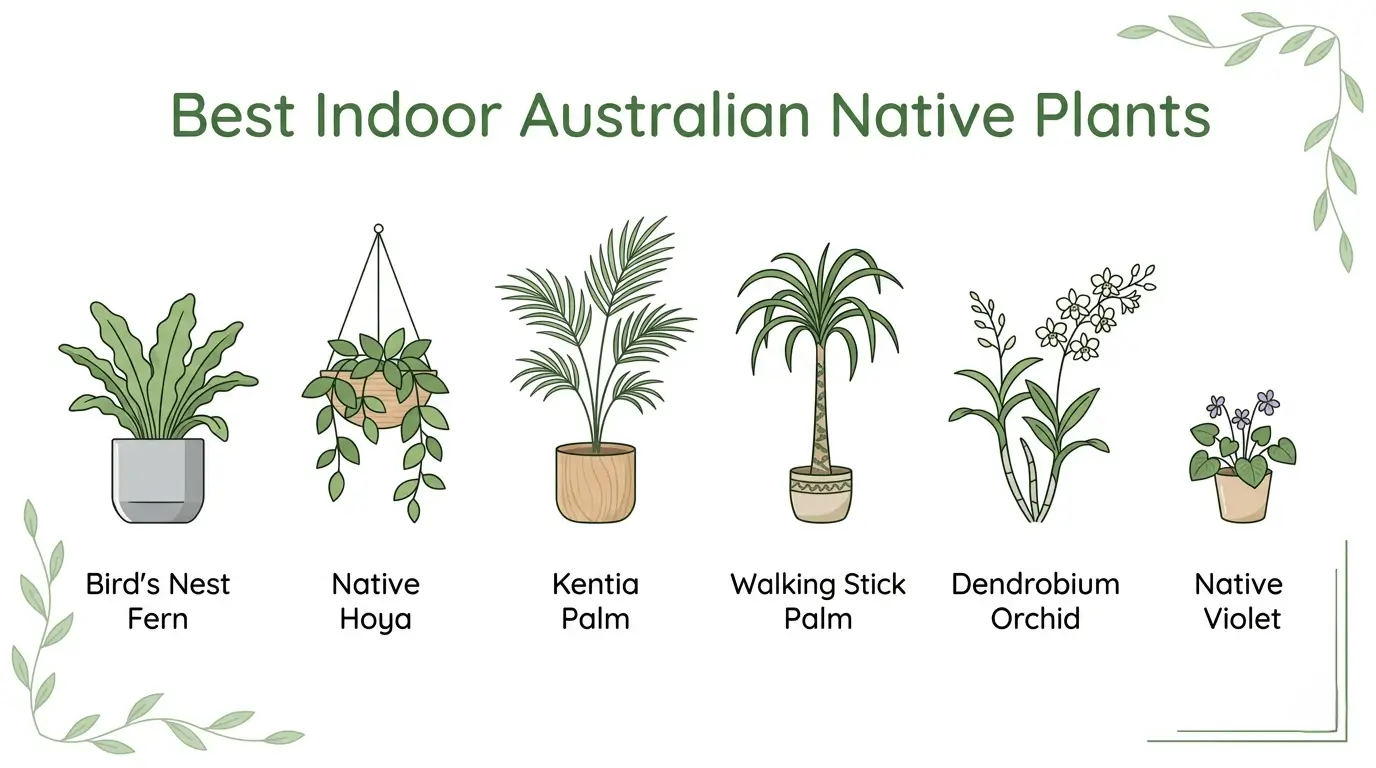
The best indoor Australian native plants are species that remain manageable in pots and tolerate bright indirect light. These plants are valued for foliage, structure, texture, and adaptability rather than purely outdoor flowering performance.
Common options include:
| Plant | Indoor Use | Key Care Need |
| Bird’s nest fern | Bathrooms, humid rooms, shaded corners | Moist but well-drained mix |
| Native hoya | Hanging baskets, shelves, bright rooms | Bright indirect light |
| Kentia palm | Larger indoor spaces | Stable moisture and filtered light |
| Walking stick palm | Compact palm for filtered light | Humidity and drainage |
| Dendrobium orchids | Bright windowsills | Strong indirect light and airy mix |
| Native violet | Bright, moist indoor containers | Consistent moisture |
| Dwarf lilly pilly forms | Bright indoor pots | Better outdoors long term |
These are among the best Australian native indoor plants because they have better indoor adaptability than many dryland shrubs. As Australian indoor plants, they can work well when placed in suitable rooms with enough light and drainage. Some are also useful as Australian native indoor pot plants because their root systems can adjust to containers.
Easy-Care Australian Native Plants for Beginners
Easy care Australian native plants for beginners are usually species that tolerate indoor containers, filtered light, and occasional care mistakes. Bird’s nest fern, native hoya, Kentia palm, walking stick palm, and some native orchids can be practical starting points when matched to the right room. For readers building a simple indoor plant collection, the Peperomia Rotundifolia Care Guide: 6+ Proven Easy Tips offers another easy-care houseplant option to compare with beginner-friendly Australian natives.
Beginner-friendly choices are typically foliage plants rather than demanding flowering natives. Many common indoor plants Australia are popular because they tolerate indoor conditions easily, but selected Australian natives can also perform well with the right care.
For better success:
- Choose plants with flexible light tolerance.
- Avoid species that require constant full sun.
- Use pots with drainage holes.
- Start with one or two easy-care species before expanding.
The best Australian indoor plants for beginners are not always the most dramatic species. They are the plants most likely to stay healthy in ordinary indoor conditions.
Can Australian Native Plants Grow in Low Light Indoors?
Yes, some indoor Australian native plants low light options exist, but low light usually means the plant can survive rather than thrive. Most indoor Australian natives still grow best in bright indirect light, especially if they are expected to produce dense foliage or flowers.
Rainforest natives and some ferns are better choices for lower-light rooms because they naturally grow under tree canopies or in filtered shade. Sun-loving Australian bush plants are usually poor choices for dark indoor rooms because they need stronger light, airflow, and outdoor conditions.
An indoor Australian native placed in low light may grow slowly, use less water, and produce fewer new leaves. In very dim rooms, even tolerant species may decline over time.
Best Native Indoor Plants for Lower-Light Rooms
The best native indoor plants for lower-light rooms are species adapted to forest understory, filtered shade, or humid sheltered habitats. These plants can handle reduced light better than full-sun shrubs, though growth is often slower indoors.
Good candidates include:
- Bird’s nest fern
- Native hoya
- Walking stick palm
- Some native orchids near bright windows
- Native violet in bright shade
Lower-light rooms require careful watering because soil dries more slowly. A plant in lower light should not be watered as often as the same plant in bright light. This prevents soggy roots and fungal problems.
Signs a Native Indoor Plant Is Not Getting Enough Light
A native indoor plant that lacks light often shows weak, stretched, or pale growth before it fully declines. Light problems are common indoors because windows reduce light intensity, and rooms may appear brighter to people than they are for plants.
Common warning signs include:
- Leggy growth
- Pale leaves
- Fewer flowers
- Slow or stalled growth
- Soil staying wet for too long
- Leaves leaning toward windows
To prevent light stress, move the plant gradually toward brighter indirect light. Avoid sudden harsh sun exposure, especially for ferns, orchids, and shade-adapted rainforest natives.
Australian Native Indoor Pot Plants: Container, Soil, and Drainage Needs
Australian native indoor pot plants need containers that support drainage, root aeration, and controlled moisture. Pot culture changes how native plants grow because roots are restricted and soil dries more slowly indoors than outdoors.
A healthy indoor plant Australia setup should include a pot with drainage holes, a suitable potting mix, and a watering approach based on soil moisture. Heavy, compacted mixes can suffocate roots and increase root rot risk. This is especially important for houseplant Australia and houseplants Australia grown in decorative pots.
House plants indoor plants grown in containers should never sit permanently in water-filled saucers. Drainage is one of the most important factors for native indoor success.
Best Potting Mix for Native Indoor Plants
The best potting mix for native indoor plants is usually free-draining, airy, and matched to the plant’s natural habitat. Many Australian natives dislike waterlogged roots, so dense indoor potting soil can cause decline.
Some phosphorus-sensitive native plants may need low-phosphorus native plant mix. Rainforest natives may tolerate richer organic mixes, while orchids usually need an open orchid mix that allows air around the roots.
Use these guidelines:
- Use free-draining potting mix.
- Avoid compacted soil.
- Match mix type to the plant’s natural habitat.
- Do not assume all natives need the same soil.
Ferns, palms, orchids, hoyas, and compact shrubs may all need different mixes. Soil choice should be based on plant type, not only native status.
Pot Size and Repotting Guidelines
Native indoor plants should be repotted when roots are crowded, soil quality has declined, or the plant no longer holds moisture properly. Overpotting can be harmful because a large pot holds extra wet soil around a small root system.
| Situation | What It Means | Best Action |
| Roots circling pot | Plant is becoming root-bound | Repot one size larger |
| Soil dries too fast | Pot may be too small | Repot or refresh mix |
| Soil stays wet | Pot may be too large or mix too heavy | Improve drainage |
| Growth has slowed | Nutrients or root space may be limited | Check roots and soil |
A practical rule is to repot only one pot size larger at a time. This gives roots more space without creating excessive wet soil.
Care Guide for Indoor Australian Native Plants
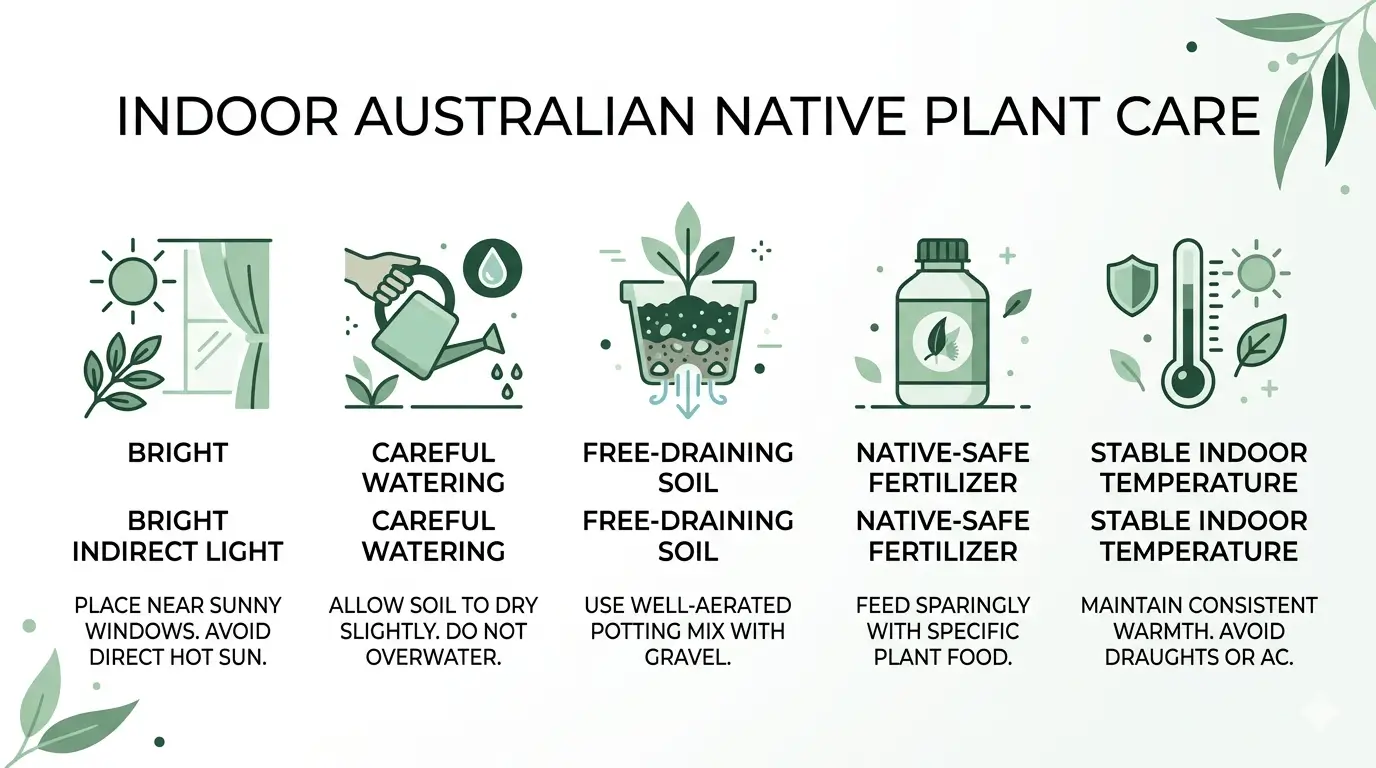
Indoor Australian native plants grow best when water, light, soil, pruning, feeding, and temperature are matched to the species. This care guide helps readers grow native indoor plants Australia successfully in real indoor conditions.
Australian plants grown indoors should not be treated as identical. Indoor plants Australia may include rainforest foliage plants, orchids, palms, ferns, and compact shrubs, each with different care needs. Australia indoor plants need stable conditions and careful watering because indoor environments change how plants use moisture.
Watering Needs
Indoor natives often need less frequent watering than outdoor plants because indoor soil dries more slowly. Check the top layer of soil before watering. For many species, watering is needed only when the upper mix begins to dry.
Ferns and native violets may prefer more even moisture, while hoyas and orchids often need better aeration and less constant wetness. Watering should change with season, pot size, light exposure, and room temperature.
Light Requirements
Most indoor Australian natives prefer bright indirect light or filtered sun. Flowering natives generally need more light than foliage natives because blooming requires higher energy.
Low-light tolerance does not mean a plant will perform well in darkness. A bright window with filtered light is usually better than a dim corner, especially for orchids, hoyas, and compact palms.
Soil Preferences
Soil needs vary by plant type. Native plant mixes are often free-draining and may be lower in phosphorus. Orchid mixes are coarse and airy. Fern mixes may hold more moisture while still draining well. General indoor potting mixes may work for some rainforest natives but can be too heavy for others.
The best soil supports oxygen around roots while holding enough moisture for the species.
Fertilization Practices
Some Australian natives are sensitive to high phosphorus, so fertilizer should be chosen carefully. A native-safe fertilizer is often suitable where feeding is needed.
Feed lightly during active growth, usually spring and summer. Avoid heavy feeding during winter or when the plant is stressed, recently repotted, or growing in low light.
Pruning Considerations
Pruning helps maintain shape, remove dead leaves, improve airflow, and keep growth compact. Ferns may only need old fronds removed, while vines and shrubs may need trimming to control size.
Pruning needs vary by species. Avoid excessive pruning of slow-growing plants, and always use clean tools to reduce disease risk.
Climate and Indoor Temperature Tolerance
Most indoor Australian natives prefer stable temperatures and protection from extremes. Keep plants away from heaters, cold drafts, air conditioners, and harsh afternoon window heat.
Sudden temperature shifts can cause leaf drop, dry tips, or stalled growth. Indoor stability is especially important for tropical rainforest natives and orchids.
Plant Size: How Big Do Australian Native Indoor Plants Get?
Australian native indoor plants usually stay smaller indoors than they would outdoors because pot size, lower light, and pruning limit growth. Large leaf tropical plants Australia and Australian native tropical plants may grow strongly outdoors in warm climates but remain more controlled indoors.
Some low growing tropical plants and native groundcovers can stay compact in indoor bowls or small pots. Palms may become medium to large floor plants, while orchids and native violets usually remain compact.
Typical Mature Height and Width
| Plant Type | Typical Indoor Size | Best Indoor Use |
| Native ferns | Small to medium | Shelves, bathrooms, shaded corners |
| Native hoyas | Trailing length varies | Hanging baskets, shelves |
| Native palms | Medium to large | Floor plants |
| Native orchids | Compact | Bright windowsills |
| Native violets | Low-growing | Small pots or indoor bowls |
Indoor size depends on light, container size, pruning, water, humidity, and the plant’s natural growth habit.
Indoor vs Outdoor Size Differences
The same native Australian plant may grow much larger outdoors in warm, humid, or tropical climates than it does indoors. Outdoor plants often have stronger light, deeper root access, rainfall, and natural airflow.
Indoors, the plant’s size is restricted by the pot and by lower light intensity. This can be useful for people who want manageable foliage plants, but it may reduce flowering or overall growth speed.
Growth Rate of Native Australian Indoor Plants
The growth rate of native Australian indoor plants ranges from slow to moderate for most species grown in pots. Some vines and tropical natives may grow faster in bright, humid conditions, while palms, orchids, and ferns often grow steadily but not rapidly indoors.
A native Australian plant grown indoors usually grows slower than the same plant outdoors. Australia native plant growth is influenced by light, roots, water, humidity, nutrients, and seasonal cycles. Many Australia native plants slow down during cooler months.
What Affects Growth Speed Indoors?
Indoor growth speed depends on:
- Light intensity
- Pot size
- Watering consistency
- Humidity
- Fertilizer
- Temperature
- Natural seasonal growth cycle
The strongest growth usually occurs when light is bright but not harsh, watering is consistent, humidity is suitable, and the plant is not root-bound.
Seasonal Growth Patterns
Many indoor plants grow faster in spring and summer, then slow in winter. During slower growth periods, plants use less water and fewer nutrients.
Reduce watering and feeding when growth slows. Continuing a summer care routine in winter can lead to wet soil, weak roots, and fungal problems.
Australian Native Tropical Plants for Indoor Spaces
Australian native tropical plants are often suitable for indoor spaces because many come from rainforest or humid regions where filtered light is natural. Tropical Queensland plants, rainforest palms, ferns, hoyas, and some orchids can adapt well to bright indoor rooms.
Tropical flowering plants Australia and tropical flowers Queensland may bloom indoors only when light is strong enough. Tropical shrubs Australia may be useful in bright interiors if they remain compact or tolerate pruning. Colourful tropical plants can add foliage interest, but flowering performance is usually better outdoors.
Tropical Native Plants vs Dry Bushland Natives
| Plant Type | Indoor Suitability | Why |
| Tropical rainforest natives | Often better | Adapted to filtered light and humidity |
| Dry bushland natives | Often harder | Usually need full sun and strong airflow |
| Flowering tropical natives | Conditional | Need bright light to bloom indoors |
| Large outdoor shrubs | Usually poor indoors | Need more space and sunlight |
This comparison explains why some native plants thrive indoors while others decline. Habitat matters more than whether a plant is simply native.
Common Mistakes When Growing Native Indoor Plants
Common mistakes with Australian native indoor plants usually come from choosing the wrong species or using general houseplant care without considering native plant needs. Many failures are preventable with better light, drainage, and plant selection.
Frequent mistakes include:
- Choosing full-sun outdoor natives for dark rooms
- Overwatering in heavy indoor potting mix
- Using pots without drainage
- Feeding phosphorus-sensitive natives with the wrong fertilizer
- Placing plants near heaters or air conditioners
- Expecting outdoor flowering performance indoors
A practical beginner insight is to treat indoor natives as habitat-specific plants. A rainforest fern and a dryland shrub may both be Australian natives, but their indoor needs are completely different.
How to Choose the Right Plant for the Right Room
The right indoor native plant depends on the room’s light, humidity, temperature, and available space. Matching plant type to location is more reliable than choosing by appearance alone.
Room-based choices include:
- Bathroom: ferns and humidity-loving natives
- Bright window: orchids, hoyas, compact palms
- Living room: larger foliage natives such as palms
- Low-light corner: only tolerant species, not flowering natives
A bright room with indirect light gives the widest range of options. Dark rooms should be treated cautiously because most native indoor plants still need enough light for long-term health.
Common Problems With Indoor Australian Native Plants and How to Fix Them
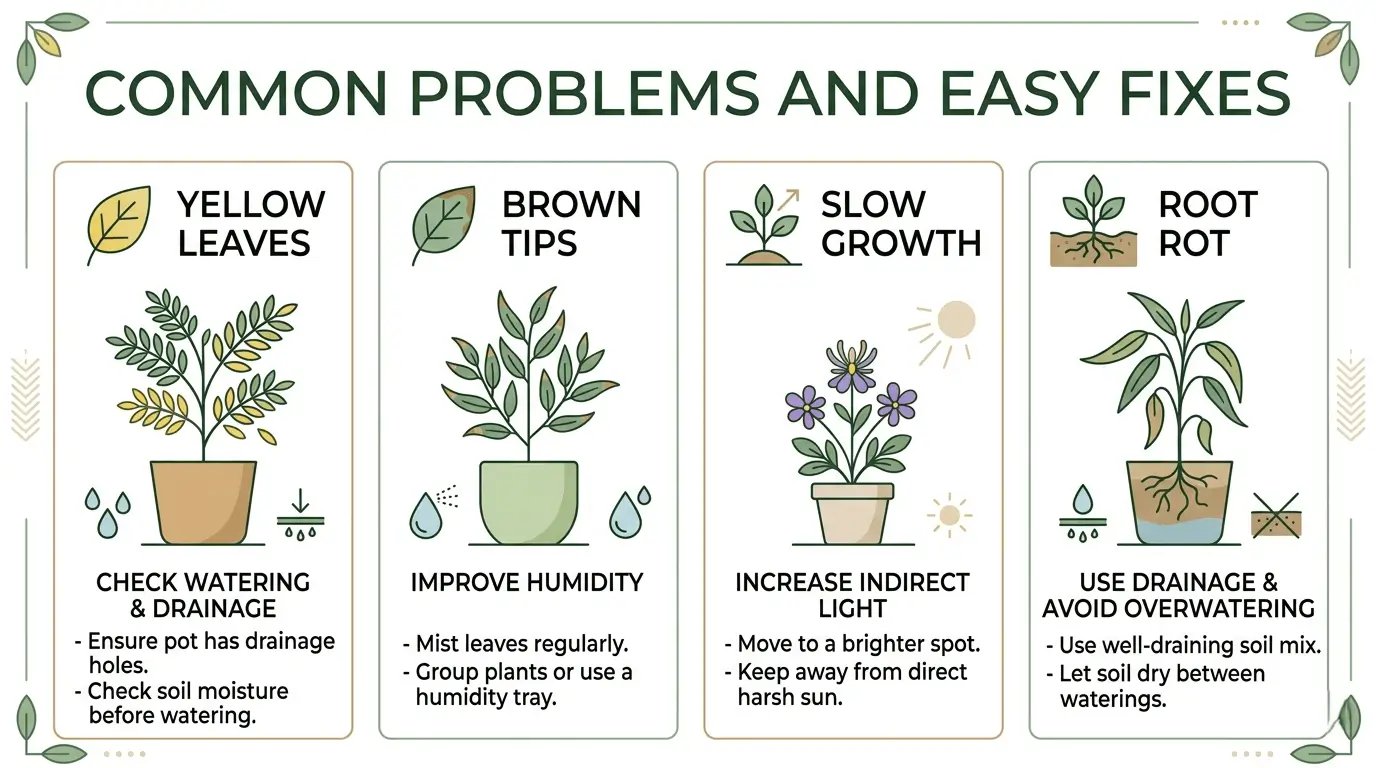
Common problems with indoor Australian native plants usually relate to light, water, soil, humidity, or temperature stress. Identifying the cause early makes recovery easier and prevents repeated decline.
Leaves Turning Yellow
Yellow leaves usually indicate overwatering, poor drainage, old foliage, nutrient imbalance, or low light. The most common indoor cause is soil staying wet for too long around the roots.
Fixes:
- Check soil moisture before watering.
- Improve drainage.
- Move the plant to brighter indirect light.
- Remove damaged leaves if needed.
If only a few older leaves yellow, it may be natural aging. If many leaves yellow at once, inspect the roots and soil.
Brown Leaf Tips
Brown leaf tips often come from low humidity, inconsistent watering, salt buildup, or heat exposure. Ferns and palms are especially likely to show tip burn in dry indoor air.
Fixes:
- Keep plants away from heaters.
- Flush soil occasionally.
- Maintain even moisture for fern-like species.
- Avoid overfertilizing.
Brown tips do not usually turn green again, but improved care can protect new growth.
Slow Growth
Slow growth can be caused by low light, winter dormancy, small pots, poor soil, or limited nutrients. Many indoor natives grow slowly in winter even when healthy.
Fixes:
- Increase light gradually.
- Repot if root-bound.
- Feed lightly during active growth.
- Avoid heavy watering during slow growth.
Slow growth is not always a problem. It becomes a concern when combined with yellowing, weak stems, or wet soil.
Root Rot From Overwatering
Root rot happens when roots sit in soggy, poorly aerated soil. Indoor pots dry slowly, and many native plants dislike constantly wet roots.
Prevention:
- Use drainage holes.
- Avoid saucers full of water.
- Use a free-draining mix.
- Water based on soil dryness, not a strict schedule.
If root rot is suspected, remove the plant from the pot, trim damaged roots, and repot into fresh free-draining mix where appropriate.
How Australian Native Indoor Plants Compare With Common Indoor Plants in Australia
Australian native indoor plants differ from common indoor plants Australia because they are often more species-specific. Many common houseplant Australia choices are tropical imports selected or widely used for indoor tolerance. Native options can be distinctive but may need more careful matching to room conditions. Readers comparing native foliage with popular indoor varieties may also find the Ultimate Guide to House Plants with Waxy Leaves: 7+ Easy Types helpful for choosing durable, easy-care houseplants.
| Feature | Australian Native Indoor Plants | Common Indoor Plants |
| Origin | Native to Australia | Often tropical imports |
| Care needs | Species-specific | Often widely documented |
| Indoor adaptability | Varies | Many are bred for indoors |
| Wildlife value outdoors | Often higher | Usually lower locally |
| Uniqueness | Strong Australian identity | More common in interiors |
Houseplants Australia often include pothos, peace lilies, monsteras, and snake plants, while native indoor plants may include ferns, palms, orchids, hoyas, and rainforest natives. The best choice depends on the grower’s goals and the room’s conditions.
Are Indoor Australian Native Plants Good for Beginners?
Yes, indoor Australian native plants can be good for beginners when the right species are selected. They are not automatically harder than regular houseplants, but they are more dependent on matching habitat needs to indoor conditions.
Beginner success improves when growers:
- Start with adaptable rainforest natives.
- Avoid large outdoor shrubs as first choices.
- Prioritize drainage and light.
- Choose foliage plants before flowering natives.
A beginner should avoid assuming that all Australian natives enjoy the same care. The easiest species are usually those that tolerate containers, indoor humidity, and bright indirect light.
What Are Some Australian Native Plants That Can Be Grown Indoors?
Some Australian native plants that can be grown indoors include native ferns, native palms, native orchids, native hoyas, compact rainforest shrubs, and low-growing groundcovers. The broader group of native plants in Australia includes rainforest plants, palms, ferns, orchids, shrubs, groundcovers, and Australian bush plants, but only some are suitable indoors.
Australian native plants that naturally grow in filtered light or humid habitats usually adapt better than dryland, full-sun species. Native Australian plants should be selected by growth habit, mature size, and indoor tolerance.
For broader botanical context, the Flora of Australia page on Wikipedia provides background on Australia’s native plant diversity.
Native Plant Categories That May Work Indoors
Native plant categories that may work indoors include:
- Native ferns
- Native palms
- Native orchids
- Native vines or trailing plants
- Compact rainforest shrubs
- Low-growing groundcovers for bright indoor pots
These categories provide a practical starting point for choosing native indoor plants without relying only on individual plant names. For a deeper look at a low-growing native option, see Australian Violet Ground Cover: Care, Growth & Uses Guide, especially if you want a compact plant for bright indoor pots or bowls.
Conclusion
Indoor Australian native plants can bring Australian biodiversity, texture, and local identity into indoor spaces when the right species are chosen. The most successful options are usually adaptable plants from shaded, humid, or tropical habitats, including native ferns, hoyas, palms, orchids, and some rainforest natives.
The key to growing indoor Australian native plants is matching each plant’s natural habitat to indoor light, water, potting mix, humidity, and temperature. Full-sun outdoor natives should not be placed in dark rooms, and all container-grown natives need excellent drainage. Choose adaptable native indoor plants, avoid unsuitable outdoor shrubs, and provide steady care based on the plant’s actual needs.
For broader plant care, growing advice, and related plant guides, explore Plants: Benefits and Guides (Complete Care, Types & Growing Tips).
FAQs About Indoor Australian Native Plants
What are the best indoor Australian native plants?
The best indoor Australian native plants include adaptable options such as bird’s nest fern, native hoya, Kentia palm, walking stick palm, Dendrobium orchids, native violet, and some compact rainforest natives. These plants are better suited to pots, filtered light, and stable indoor conditions than many full-sun outdoor natives.
Can Australian native plants survive indoors?
Yes, some Australian native plants can survive and grow well indoors, but many outdoor natives need more sun, airflow, and root space than indoor rooms provide. Indoor success depends on choosing species that tolerate containers, indirect light, and slower soil drying.
Are there low-light indoor Australian native plants?
Yes, some low-light indoor Australian native plants exist, especially ferns, rainforest natives, and shade-tolerant palms. However, most still prefer bright indirect light. Low light usually means the plant can tolerate reduced light, not that it will grow strongly in dark conditions.
Do Australian native indoor plants need special soil?
Many Australian native indoor plants need free-draining soil because soggy roots can cause decline. Some natives also need low-phosphorus native plant mixes or native-safe fertilizer. Soil should be matched to the plant type, such as fern mix, orchid mix, or native potting mix.
How often should I water native indoor plants?
Watering frequency depends on species, light, pot size, season, and soil mix. The safest method is to check soil moisture before watering. Many indoor natives should be watered when the top layer of soil begins to dry, while moisture-loving ferns may need more consistent moisture.
Are Australian native plants harder to grow than regular houseplants?
Australian native plants are not always harder to grow, but they are often more species-specific. Some natives adapt well indoors, while others are unsuitable because they need full sun, strong airflow, and outdoor soil conditions. Choosing the right species is the main factor.
Can flowering Australian natives bloom indoors?
Some flowering Australian natives can bloom indoors if they receive enough bright light, but many perform better outdoors. Flowering usually requires stronger light than foliage growth, so indoor flowering may be limited unless the plant is placed near a bright window.
What is the easiest Australian native plant to grow indoors?
The easiest Australian native plant to grow indoors depends on room conditions. Bird’s nest fern is often suitable for humid rooms, native hoya works well in bright indirect light, and adaptable native palms can be good for larger spaces. Drainage, light, and watering remain essential.


2 Responses