
Introduction
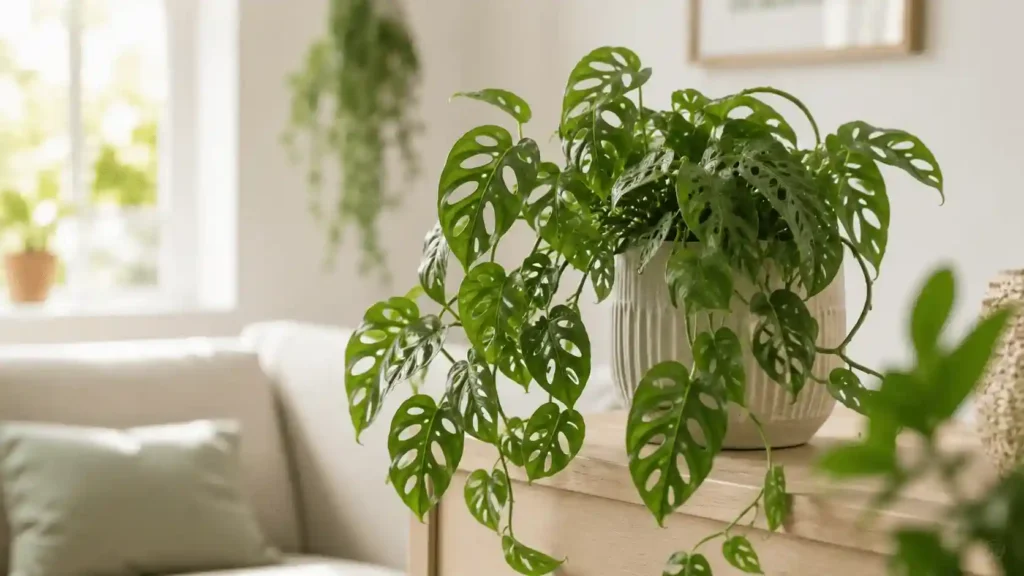
The monkey mask plant (Monstera adansonii), also known as the monkey leaf monstera or monkey face monstera, is a tropical trailing houseplant admired for its unique fenestrated leaves. The monkey mask plant stands out because its foliage naturally develops oval-shaped holes that give it a decorative, almost lace-like appearance. Native to Central and South America, this plant thrives in warm, humid environments and has become a global favorite for indoor plant lovers. Its adaptability, visual appeal, and relatively simple care requirements make it especially popular among beginners and collectors alike.
Quick Summary
- The monkey mask plant (Monstera adansonii) is a tropical vine with naturally hole-punched leaves.
- It thrives in bright, indirect light, well-draining soil, and moderate humidity.
- Overwatering is the most common issue, leading to yellow leaves and root rot.
- It is easy to propagate using stem cuttings in water or soil.
What Is the Monkey Mask Plant?
Definition and Origin
The monkey mask plant, scientifically known as Monstera adansonii, is a tropical evergreen vine from the Araceae family. It is native to rainforests in Central and South America, where it climbs trees using aerial roots. Its distinctive leaf fenestrations help it adapt to low-light jungle environments.
Unique Leaf Structure
Unlike many houseplants, Monstera adansonii develops natural holes in its leaves. These fenestrations allow wind and rain to pass through, reducing damage in its native habitat while maximizing light exposure.
The monkey mask plant (Monstera adansonii) is scientifically documented as a tropical climbing species in the Araceae family, widely studied for its unique fenestrated leaf structure (source: Wikipedia – Monstera adansonii).
Common Names and Why They Matter for Search
Why So Many Names Exist
The monkey mask plant is known by several names, including monkey leaf monstera, monkey face plant, and monkey cheese plant. All of these refer to the same species, Monstera adansonii.
Search Intent Clarification
Different regions use different keywords, such as “monkey mask plant care UK” or “monkey mask plant NZ,” but they all describe the same plant. This variation is important for search visibility and plant identification accuracy.
Monstera Adansonii vs. Similar Species
Key Differences Explained
The monkey mask plant is often confused with other Monstera species, especially Monstera deliciosa and Monstera obliqua. However, they differ in structure and care needs.
Comparison Table — Monstera Species at a Glance
| Species | Common Name | Leaf Size | Fenestration Pattern | Growth Habit | Difficulty |
| Monstera adansonii | Monkey mask plant | Medium-small | Multiple oval holes | Trailing vine | Easy |
| Monstera deliciosa | Swiss cheese plant | Large | Split + holes | Upright climber | Moderate |
| Monstera obliqua | Rare Monstera | Very thin | Extreme holes | Delicate vine | Hard |
Is a Monkey Mask Plant Easy to Care For?
Beginner-Friendly Nature
Yes, the monkey mask plant is considered easy to care for because it adapts well to indoor environments and tolerates occasional neglect.
Limitations to Understand
However, it does not tolerate frost, direct sunlight, or consistently wet soil. Proper balance is essential in monkey plant care to avoid stress-related issues like leaf yellowing.
Monkey Mask Plant Care Indoors
Light Requirements
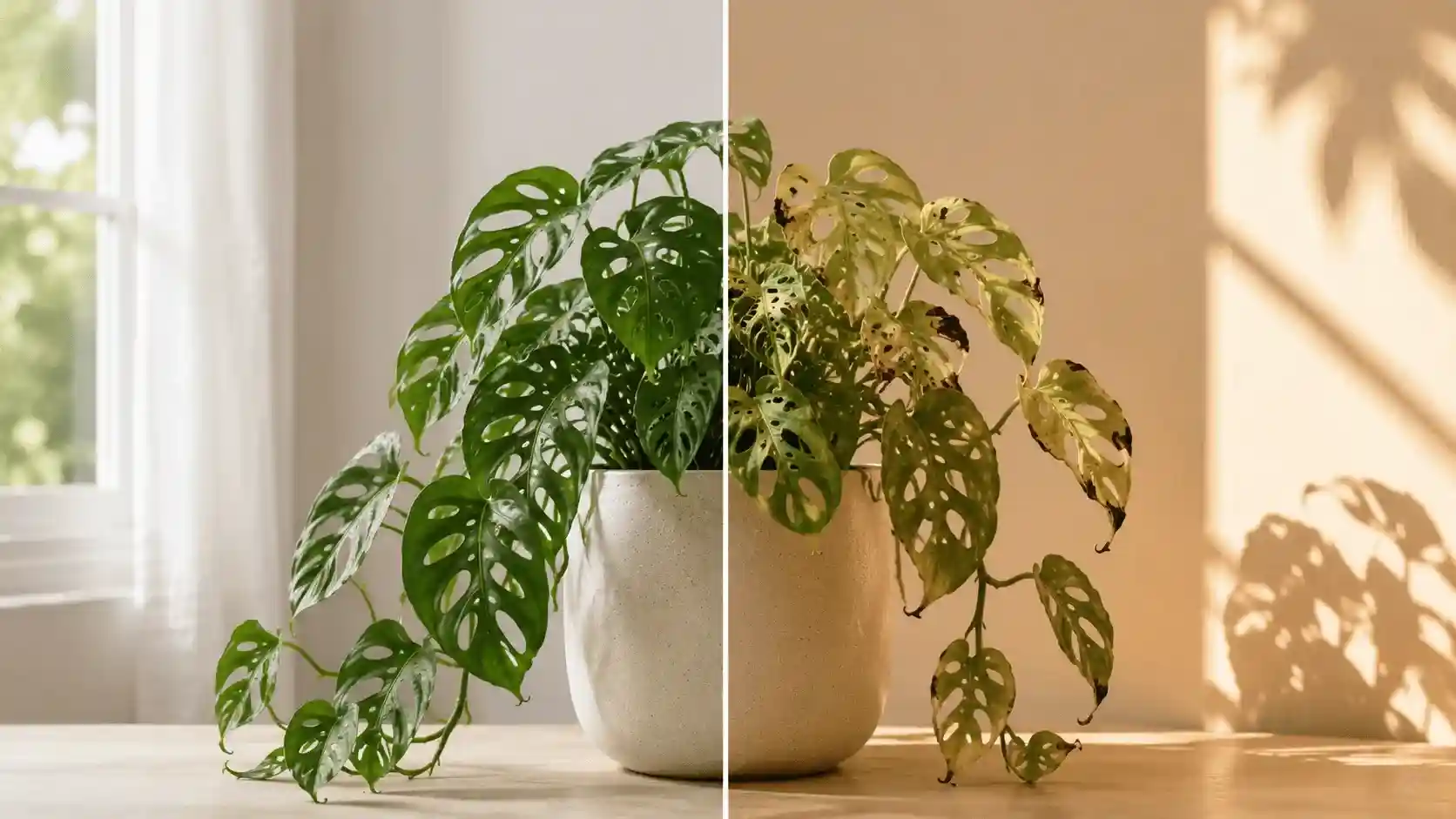
The monkey mask plant prefers bright, indirect sunlight. Too little light leads to leggy growth and fewer leaf holes, while direct sun can scorch its delicate foliage. Similar low-maintenance indoor plants such as Peperomia Rotundifolia Care Guide also thrive under bright indirect light and minimal watering schedules.
Where Should I Put My Monkey Mask?
Place it near an east- or north-facing window where it receives filtered light throughout the day.
Watering the Monkey Mask Plant
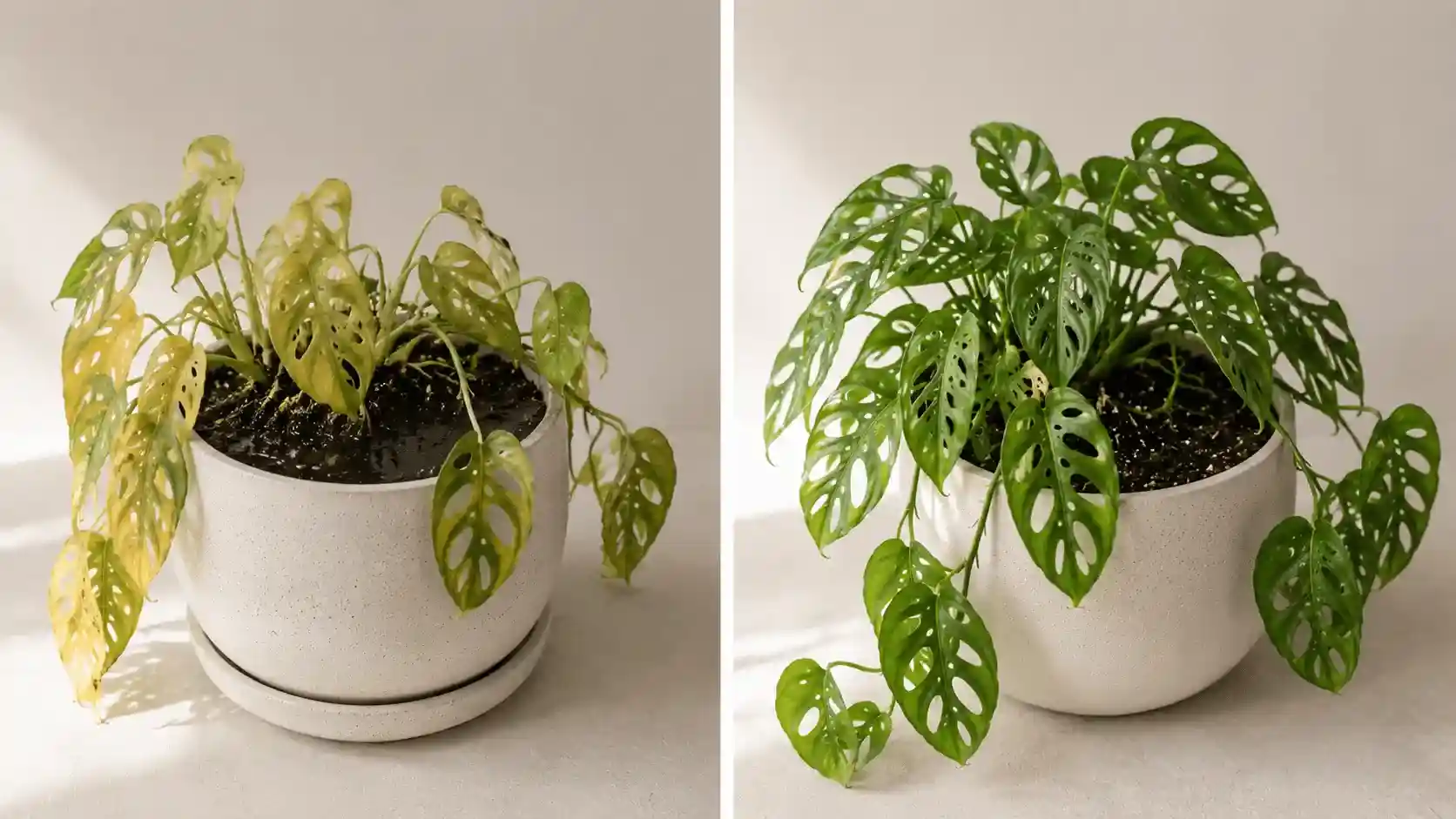
Allow the top 1–2 inches of soil to dry before watering. Overwatering is the most common mistake in monkey mask plant care watering routines.
- Use room-temperature water
- Reduce watering in winter
- Always check soil moisture first
Soil and Potting
A well-draining mix is essential. Combine potting soil with perlite and orchid bark for aeration. Pots must have drainage holes to prevent root rot. Choosing the right container is essential for healthy root development, especially when selecting the Best Pot for Monstera to ensure proper drainage and airflow.
Humidity and Temperature
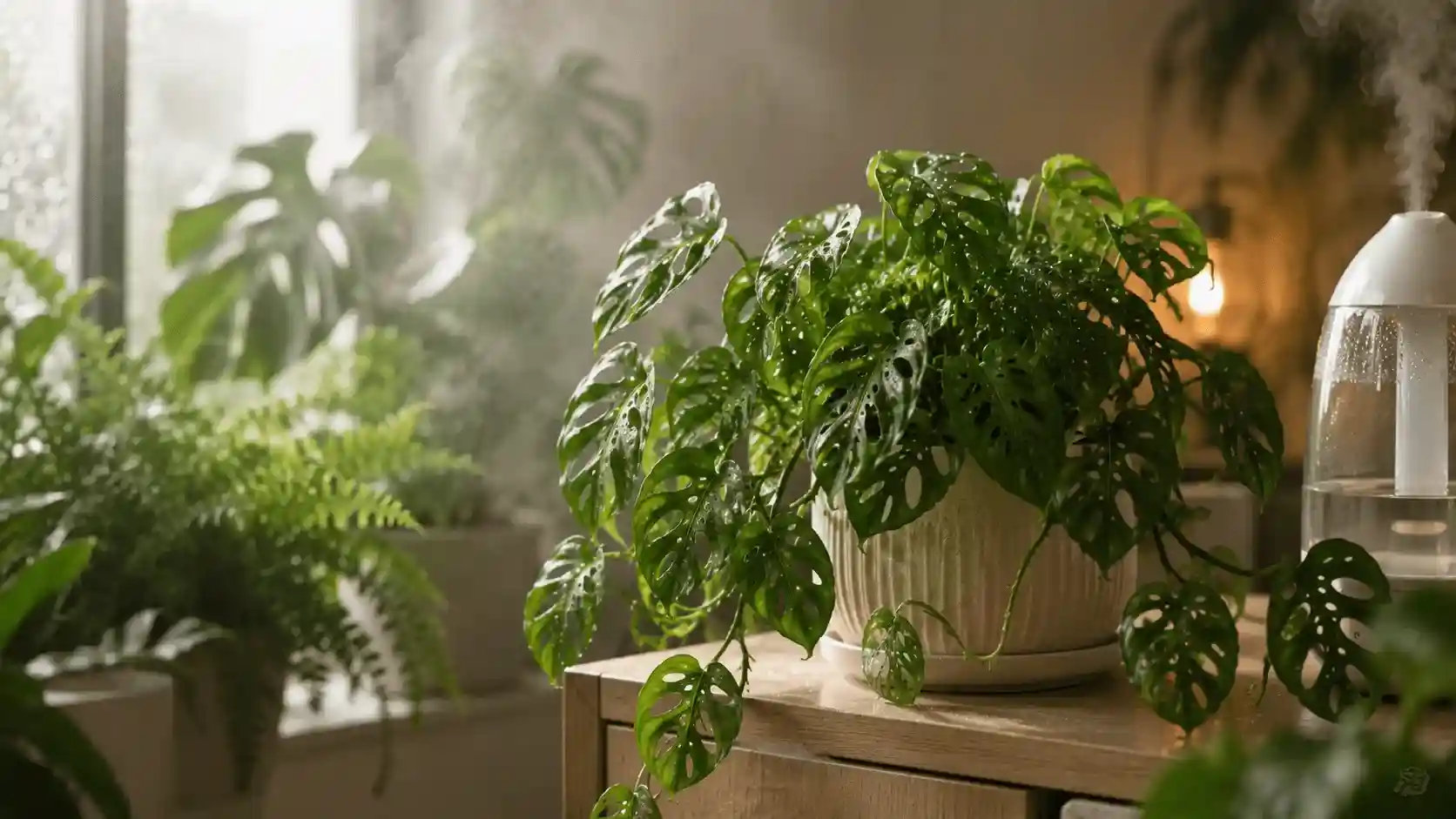
This tropical plant prefers 50–60% humidity and temperatures between 18–27°C. Dry air causes brown tips and slow growth. Other tropical trailing plants like those covered in the Scindapsus Pictus Care Guide share similar humidity and watering requirements with Monstera adansonii.
Fertilizing
Feed monthly during spring and summer with a balanced liquid fertilizer. Avoid fertilizing in winter.
Monkey Mask Plant Care Outdoors
Outdoor Conditions
The monkey mask plant can grow outdoors in warm climates (USDA zones 10–12). It must be kept in shade or filtered sunlight.
Temperature Limits
It cannot survive temperatures below 10°C (50°F), making indoor overwintering essential in cooler regions.
Comparison Table — Indoors vs Outdoors
| Factor | Indoors | Outdoors |
| Light | Indirect bright light | Filtered shade |
| Watering | Controlled | More frequent |
| Humidity | Moderate | Naturally higher |
| Temperature Risk | Stable | Seasonal risk |
| Growth Rate | Moderate | Faster |
Plant Size and Growth Habit
Trailing Growth
The monkey mask plant is a trailing vine that can grow 1.5–3 meters indoors. It climbs using aerial roots.
Support Structures
Moss poles, trellises, or hanging baskets help support healthy vertical or cascading growth.
Growth Rate of Monstera Adansonii
Seasonal Growth
Growth is moderate to fast during spring and summer but slows in winter.
Growth Influencers
Light, humidity, nutrients, and pot size directly affect growth speed. Better conditions lead to larger leaves and more fenestrations. Depending on space and support, Monstera adansonii can grow either as a trailing vine or a climbing plant, which is further explained in our guide on Monstera Adansonii Hanging or Climbing.
Monkey Mask Plant Propagation
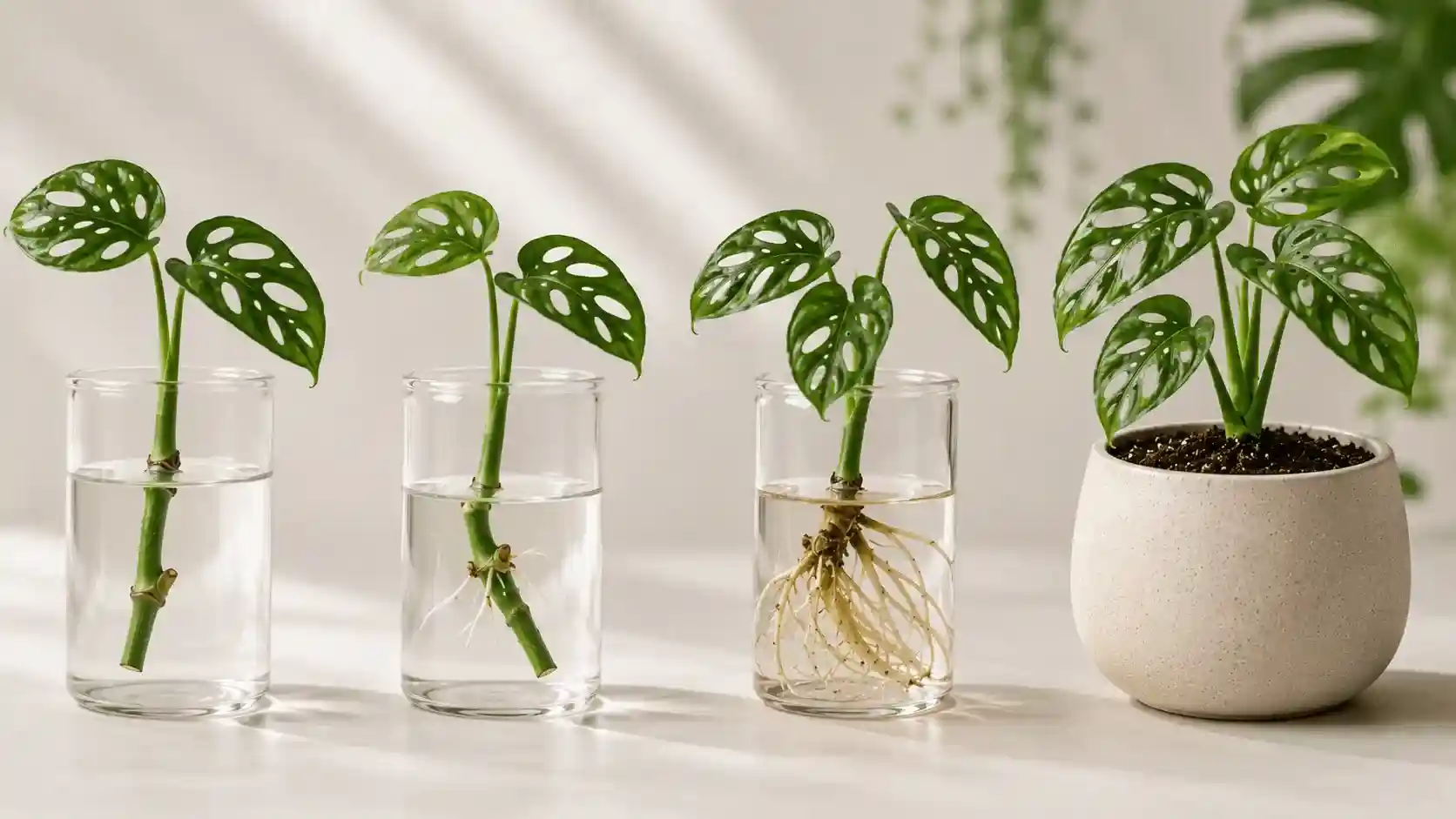
Step-by-Step Method
- Select a stem with a node and healthy leaf
- Cut below the node using sterilised scissors
- Place in water or moist soil
- Keep in warm, bright indirect light
- Transplant once roots reach 2–5 cm
The growth pattern and propagation method of Monstera adansonii closely resembles trailing aroids such as described in Philodendron Scandens Care, which also spreads via nodes and stem cuttings.
Water vs Soil Propagation
Water propagation allows easy root monitoring, while soil propagation reduces transplant shock. Like other trailing houseplants such as those in the Ceropegia woodii Care Guide, propagation success depends on node health and consistent moisture conditions.
Yellow Leaves — Causes and Fixes
Common Causes
Yellow leaves are usually caused by overwatering, poor drainage, or low light conditions.
Fix Strategy
Check soil moisture first, then adjust light exposure and watering frequency. Remove affected leaves if necessary.
Yellowing foliage is not unique to Monstera adansonii and is also commonly seen in plants like Syngonium Leaves Turning Yellow due to similar watering and light issues.
Brown Leaves — Causes and Fixes
Types of Damage
- Brown tips: low humidity
- Brown patches: sunburn or cold shock
- Fully brown leaves: root rot
Prevention
Maintain stable humidity, avoid direct sun, and ensure proper drainage.
Common Monkey Mask Plant Problems
Pests and Diseases
Spider mites, mealybugs, and fungus gnats are the most common pests. Soil pests such as fungus gnats are common in indoor plants, as explained in our guide on Bugs in Indoor Plant Soil, especially when moisture levels are too high.
Other Issues
- Root rot from overwatering
- Leggy growth due to low light
- No fenestrations in low light or young plants
- Drooping from underwatering or shock
Varieties and Cultivars
Notable Types
Monstera adansonii includes variegated forms like Archipelago. Some cultivars have smaller leaves or faster climbing habits.
Care Differences
Variegated types require more light but are generally similar in care needs.
Regional Care (UK & NZ)
UK Conditions
Low winter light often requires grow lights. Indoor heating reduces humidity.
NZ Conditions
Warmer northern regions may support outdoor growth, while southern areas require indoor care during winter.
Common Beginner Mistakes
Frequent Errors
- Overwatering on fixed schedules
- Using pots without drainage
- Placing in direct sunlight
- Over-misting instead of humidifying
- Ignoring dust on leaves
- Frequent repotting into oversized pots
Conclusion
The monkey mask plant (Monstera adansonii) is a visually striking and beginner-friendly houseplant that thrives with balanced care. Success depends on proper watering, bright indirect light, and sufficient humidity. When these conditions are met, the plant rewards growers with vigorous trailing growth and increasingly defined leaf fenestrations over time.
For more expert plant care insights and indoor gardening knowledge, explore our complete Plants Benefits and Guides resource hub.
FAQs
1. Is a monkey mask plant easy to care for?
Yes, it is beginner-friendly as long as it is not overwatered and receives bright indirect light.
2. Where should I put my monkey mask plant indoors?
Place it near an east- or north-facing window with filtered light and no direct sun exposure.
3. What are the most common monkey mask plant problems?
Yellow leaves, brown tips, pests, and leggy growth are the most common issues.
4. Does a monkey mask plant need sunlight?
It needs bright indirect light, but direct sunlight can damage its leaves.
5. How often should I water my monkey mask plant?
Typically every 7–10 days in summer and less frequently in winter, depending on soil moisture.
6. How do I propagate a monkey mask plant?
Take a stem cutting with a node and root it in water or moist soil until established.
7. Why are my monkey mask plant's leaves not developing holes?
This usually happens due to low light or immature growth; fenestrations develop as the plant matures.



One Response