
Introduction
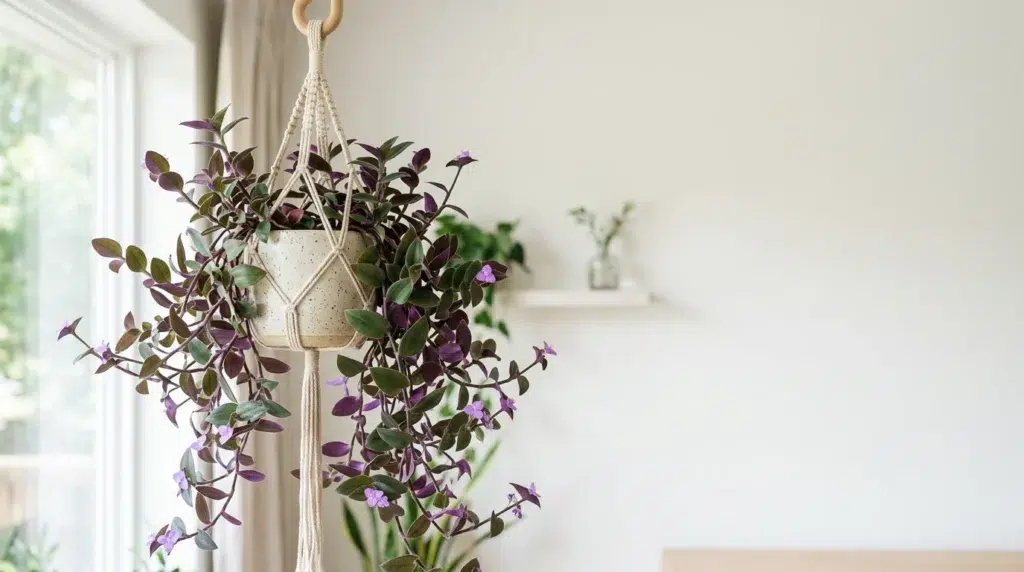
The purple bridal veil plant is a trailing Tradescantia variety known for its cascading purple foliage, delicate three-petaled flowers, and fast-growing habit. It belongs to the spiderwort family and is commonly grown as a hanging basket plant because its stems naturally spill over containers. Often associated with the bridal veil plant name, this ornamental species combines colorful leaves with easy-care growth, making it popular among indoor gardeners and warm-climate outdoor growers. With the right balance of bright indirect light, proper watering, and occasional pruning, the purple bridal veil plant can maintain its vibrant color and produce healthy trailing growth throughout the growing season.
Quick Summary
- The purple bridal veil plant is a trailing Tradescantia variety valued for purple foliage and small ornamental flowers.
- It grows best in bright indirect light, moderate watering, and well-draining soil.
- Its cascading growth makes it ideal for hanging baskets, containers, and indoor displays.
- This fast-growing plant is generally considered easy to care for and can be propagated from stem cuttings.
What Is a Purple Bridal Veil Plant?
The purple bridal veil plant is a trailing ornamental plant from the Tradescantia genus, recognized for its purple-toned leaves, flowing stems, and small flowers that appear among the foliage. It is commonly grown as a houseplant because its cascading growth pattern creates a decorative hanging display.
The name “bridal veil plant” is used for several related ornamental plants, but the purple bridal veil usually refers to a purple-leaved Tradescantia cultivar. Its trailing stems allow it to spread naturally, making it suitable for hanging baskets, shelves, and containers where the foliage can spill over the edges.
This plant is valued for several characteristics:
- Purple or violet-tinged foliage
- Fast and trailing growth habit
- Small, delicate flowers with three petals
- Easy propagation from stem cuttings
- Adaptability to indoor environments
The purple bridal veil plant is often selected by beginners because it grows quickly and responds well to regular pruning. When provided with sufficient light, the foliage develops stronger purple coloration, while lower light conditions may cause the leaves to appear greener and less vibrant.
Is Bridal Veil a Tradescantia?
Yes, the bridal veil plant is commonly associated with the Tradescantia genus, although the exact scientific identity depends on the specific plant being sold under the common name. Many plants marketed as “bridal veil” are Tradescantia cultivars or closely related spiderwort species within the Commelinaceae family.
The purple bridal veil plant belongs to the Tradescantia group, a genus of flowering plants in the spiderwort family with many ornamental species commonly grown worldwide.
The classification relationship is:
- Genus: Tradescantia
- Family: Commelinaceae (spiderwort family)
- Growth type: Herbaceous trailing perennial
- Common uses: Indoor houseplant, hanging basket plant, outdoor ground cover in suitable climates
The term “Tahitian Bridal Veil” is often used as a common cultivar name for certain Tradescantia varieties with purple foliage and cascading growth. Because common plant names vary between regions and sellers, checking the botanical name helps avoid confusion.
Tradescantia plants are popular worldwide because they generally tolerate a range of indoor conditions, grow rapidly, and can be easily multiplied through cuttings.
Scientific Name and Common Names
The scientific name of a purple bridal veil plant depends on the specific cultivar, but it is commonly identified within the Tradescantia genus. Many purple trailing varieties are sold under names connected with bridal veil, wandering Jew, spiderwort, or Tahitian bridal veil.
Common naming variations include:
- Purple bridal veil plant
- Tradescantia bridal veil
- Tahitian bridal veil plant
- Purple Tradescantia
- Trailing Tradescantia
Quick identifying features:
| Feature | Description |
| Leaf color | Purple, violet, green-purple, or striped depending on cultivar |
| Growth habit | Trailing stems that cascade from containers |
| Flowers | Small, delicate flowers with three petals |
| Plant form | Spreading or hanging growth pattern |
| Best use | Hanging baskets, indoor containers, outdoor displays in warm climates |
The plant’s colorful foliage is usually its main attraction, while the flowers provide seasonal decorative value. Healthy plants with strong light exposure often develop deeper purple tones compared with plants grown in dim conditions.
Purple Bridal Veil Plant Care Guide
Purple bridal veil plant care focuses on providing balanced light, consistent moisture, suitable soil, and regular maintenance. This Tradescantia variety is considered relatively low-maintenance, but its appearance depends heavily on environmental conditions. Regular leaf maintenance, including gentle cleaning, can help indoor plants maintain healthy foliage and improve their overall appearance.
The most important care factors include:
- Bright but filtered light
- Avoiding prolonged soggy soil
- Regular trimming to encourage fuller growth
- Moderate humidity
- Well-draining potting mix
Light Requirements — Sun or Shade?
Purple bridal veil plants prefer bright indirect light, but they can tolerate some direct sunlight when introduced gradually. The ideal lighting condition is partial shade outdoors or a bright indoor location near a window with filtered sunlight.
Too little light can reduce the plant’s purple coloration and cause stretched, weak growth. Too much intense afternoon sun may scorch delicate leaves.
Ideal light conditions:
- Indoors: Bright indirect light near an east- or north-facing window is often suitable.
- Outdoors: Partial shade with morning sun is usually best.
- Avoid: Harsh midday sunlight, especially in hot climates.
Signs of incorrect lighting:
- Pale or faded leaves → insufficient light or excessive stress
- Brown leaf patches → possible sun damage
- Long spaces between leaves → plant searching for more light
For stronger purple foliage, provide several hours of bright filtered light each day.
Watering Needs
A purple bridal veil plant needs consistent moisture but does not tolerate constantly wet soil. Watering should be adjusted based on temperature, humidity, pot size, and growing conditions. Before watering, gardeners can use simple soil-checking methods to determine whether a plant actually needs moisture rather than following a fixed watering schedule.
A common watering approach is to water when the top layer of soil feels slightly dry, usually about once a week indoors during active growth. Plants may need more frequent watering in warm outdoor conditions.
Signs of watering problems:
Overwatering symptoms:
- Yellowing leaves
- Soft stems
- Root rot
- Soil staying wet for long periods
Underwatering symptoms:
- Drooping leaves
- Dry, crispy leaf edges
- Slow growth
Best watering practices:
- Check soil moisture before watering.
- Use containers with drainage holes.
- Reduce watering frequency during cooler winter months.
- Avoid allowing roots to sit in standing water.
Soil and Fertilization
Purple bridal veil plants grow best in a loose, well-draining potting mix that allows oxygen to reach the roots. A standard indoor potting soil amended with perlite or another drainage material works well.
Recommended soil characteristics:
- Good drainage
- Moderate moisture retention
- Lightweight texture
- Organic matter for nutrients
Fertilization can support faster growth during the active growing season. A balanced liquid fertilizer applied occasionally in spring and summer can encourage healthy foliage development.
General feeding practices:
- Fertilize during active growth periods.
- Avoid heavy feeding during winter dormancy.
- Do not fertilize dry soil because it may stress roots.
Too much fertilizer can cause leaf problems, including browning edges or reduced plant health.
Pruning and When to Cut Back
Pruning a purple bridal veil plant helps maintain a fuller shape, prevents excessive legginess, and encourages branching. Since Tradescantia varieties grow quickly, regular trimming is often necessary for attractive growth.
The best time to cut back a bridal veil plant is during active growth in spring or summer, although light pruning can be done whenever stems become too long.
Pruning benefits include:
- Encourages bushier growth
- Removes weak or damaged stems
- Maintains hanging basket shape
- Improves air circulation
Pruning tips:
- Cut just above a leaf node to encourage new shoots.
- Remove yellow or unhealthy leaves.
- Trim long trailing stems to maintain balance.
Many growers use trimmed stems for propagation, making pruning an easy way to create new plants.
Climate Tolerance and Winter Care
Purple bridal veil plants prefer warm temperatures and are generally grown as perennials in frost-free climates. In colder regions, they are often treated as indoor plants or moved indoors before temperatures drop.
Ideal conditions include:
- Temperature range: approximately 60–80°F (16–27°C)
- Moderate humidity
- Protection from frost
- Reduced watering during winter
Winter care practices:
- Move outdoor plants indoors before frost.
- Place plants in bright light.
- Reduce fertilizer during colder months.
- Water less frequently as growth slows.
In tropical and subtropical climates, Tradescantia varieties can continue growing outdoors year-round. In colder areas, they may return from protected roots after warm weather, but severe frost can damage or kill exposed growth.
Care-at-a-Glance Table
| Care Factor | Requirement |
| Light | Bright indirect light; partial shade outdoors |
| Water | Moderate watering when the top soil layer dries |
| Soil | Well-draining, nutrient-rich potting mix |
| Temperature | 60–80°F (16–27°C) preferred |
| Humidity | Moderate humidity; adapts to average indoor levels |
| Fertilizer | Balanced fertilizer during spring and summer |
| Pruning | Regular trimming to encourage fuller growth |
Is the Bridal Veil Plant a Houseplant or Outdoor Plant?
The bridal veil plant can be grown both as a houseplant and an outdoor ornamental plant, depending on the climate. It is commonly grown indoors in containers and hanging baskets because its trailing stems naturally cascade, while outdoor growth is best suited to warm, frost-free regions.
Its adaptability makes it a flexible choice for different growing environments. The main difference between indoor and outdoor cultivation is the amount of light, temperature stability, and space available for spreading growth.
Key growing differences:
| Growing Location | Characteristics |
| Indoor plant | Controlled environment, hanging baskets, containers, easier temperature management |
| Outdoor plant | Faster growth, more space to spread, suitable for warm climates |
| Cold climates | Usually grown as an indoor plant or seasonal container plant |
| Tropical climates | Can grow outdoors year-round with proper control |
Growing Bridal Veil Plant Indoors
The purple bridal veil plant is an excellent indoor plant because its trailing growth habit works well in hanging containers, shelves, and decorative pots. Indoor growing also allows gardeners to protect the plant from frost and control watering conditions more easily.
Like many indoor plants, purple bridal veil plants may benefit from improved humidity levels, especially in dry rooms where natural moisture is limited.
For successful indoor growth:
- Place the plant near bright indirect light.
- Use a container with drainage holes.
- Allow the top layer of soil to dry slightly between waterings.
- Rotate the pot occasionally for even growth.
- Prune regularly to maintain a compact shape.
A hanging basket is one of the most popular ways to display a bridal veil plant indoors because the stems naturally spill downward, creating a cascading effect. With enough light, the purple foliage remains more vibrant and the plant produces denser growth.
Indoor purple bridal veil plant care requires attention to humidity and light balance. Dry indoor air, especially during winter heating periods, may slow growth or cause leaf edges to dry. However, the plant generally adapts well to average household humidity levels.
Common indoor placement options include:
- Hanging baskets near windows
- Plant stands with trailing space
- Shelves where stems can cascade
- Bright bathrooms or humid rooms with sufficient light
Growing Bridal Veil Plant Outdoors
Outdoors, the bridal veil plant grows best in warm climates where temperatures remain above freezing. It can be planted in containers, hanging baskets, borders, or as a spreading ground cover in suitable environments.
Outdoor growing conditions should include:
- Bright filtered sunlight or partial shade
- Protection from intense afternoon heat
- Well-draining soil
- Regular moisture without waterlogging
In warm regions, outdoor plants often grow faster because they receive stronger natural light and more space for root expansion. However, excessive direct sunlight can fade purple leaves or cause leaf damage, especially during hot summers.
Gardeners should consider the plant’s spreading habit before placing it directly into landscapes. In some regions, Tradescantia varieties can escape cultivation and spread beyond intended planting areas.
Is the Bridal Veil Plant Invasive?
The bridal veil plant may become invasive in some warm outdoor environments where Tradescantia species can spread easily. Its ability to grow rapidly from stem fragments allows it to establish in areas beyond its original planting location.
In regions with suitable climates, uncontrolled outdoor growth may occur because:
- Trailing stems root when they contact moist soil.
- Plant fragments can produce new growth.
- Warm temperatures support year-round expansion.
To reduce unwanted spreading:
- Grow it in containers or hanging baskets.
- Remove trimmed stems from garden areas.
- Prune regularly to control growth.
- Avoid planting near natural habitats where spreading could become a concern.
Whether a bridal veil plant is considered invasive depends on the specific Tradescantia species, local climate, and regional environmental guidelines.
Growth Habits and Plant Size
The purple bridal veil plant is a fast-growing trailing plant that develops long, flexible stems covered with colorful foliage. Its growth pattern makes it especially suitable for hanging baskets, where stems can naturally cascade downward.
Growth is influenced by:
- Amount of available light
- Water consistency
- Soil quality
- Temperature
- Pruning frequency
Healthy plants usually become fuller when regularly trimmed because pruning encourages branching from nodes along the stems.
How Big Do Bridal Veil Plants Get?
A mature bridal veil plant can develop trailing stems several feet long when grown in favorable conditions. Indoor plants typically remain smaller because container size limits root growth, while outdoor plants may spread more extensively.
Typical size differences:
| Growing Environment | Expected Size |
| Indoor container | Usually 1–3 feet of trailing growth |
| Hanging basket | Can produce stems several feet long |
| Outdoor planting | May spread wider with sufficient space |
Factors affecting plant size include:
- Larger containers allow more root development.
- Bright light supports stronger growth.
- Regular pruning creates a bushier appearance.
- Limited light may produce thin, stretched stems.
Because of its cascading growth, the bridal veil plant is often measured by spread and trailing length rather than height.
Growth Rate — Fast, Slow, or Moderate?
The bridal veil plant is considered a fast-growing Tradescantia variety when grown under suitable conditions. During spring and summer, active growth can produce new stems and leaves quickly, especially with adequate light, warmth, and moisture.
Growth speed depends on environmental factors:
- Fast growth: Bright indirect light, warm temperatures, regular watering, and occasional feeding.
- Slow growth: Low light, cold temperatures, nutrient deficiency, or inconsistent watering.
- Weak growth: Poor pruning habits or overcrowded containers.
Seasonal growth pattern:
- Spring: Growth usually increases as temperatures rise.
- Summer: Peak growth period with regular watering and light.
- Fall: Growth begins to slow.
- Winter: Growth may become limited indoors, especially in cooler conditions.
Regular pruning is important because fast-growing stems can become sparse or leggy if they are not trimmed.
Lifespan and Perennial Status
The bridal veil plant is generally considered a perennial in warm climates, meaning it can live and continue growing for multiple years. In colder areas, it is often grown as an annual outdoor plant or kept indoors to protect it from freezing temperatures.
Tradescantia plants can live for several years when provided with suitable care.
Their lifespan depends on:
- Growing environment
- Temperature stability
- Root health
- Maintenance practices
Do Tradescantia come back every year?
In frost-free climates, many Tradescantia varieties return and continue growing each year. In areas with freezing winters, outdoor plants may die back, while protected roots or indoor plants can survive.
Proper pruning, propagation, and repotting can help maintain a healthy plant over a long period.
Bridal Veil Plant Flowering
The bridal veil plant produces small, delicate flowers that add seasonal interest to its colorful foliage. Although the leaves are the main attraction, healthy plants can produce clusters of tiny flowers when growing conditions are favorable.
Flower production is influenced by:
- Light exposure
- Plant maturity
- Nutrient availability
- Overall plant health
Does a Bridal Veil Bloom All Summer?
A bridal veil plant may bloom throughout the warmer growing season, but flowering duration depends on environmental conditions and the specific Tradescantia variety. In many cases, blooms appear during spring and summer when the plant is actively growing.
Flowering is usually more consistent when the plant receives:
- Bright indirect light
- Adequate nutrients
- Proper watering
- Regular maintenance
The flowers are generally short-lived, but new blooms may appear continuously during the active growing period.
How Do You Get a Bridal Veil Plant to Bloom?
A bridal veil plant blooms best when it receives enough light and balanced nutrition. While the plant can survive in lower light, insufficient light often reduces flowering and weakens foliage color.
To encourage blooms:
- Provide bright indirect sunlight.
- Avoid excessive nitrogen fertilizer, which promotes leaves over flowers.
- Feed lightly during spring and summer.
- Keep watering consistent.
- Maintain healthy roots through proper drainage.
A plant that is growing actively but not flowering may need improved lighting or a seasonal adjustment in care.
Why Is My Bridal Veil Plant Not Flowering?
A bridal veil plant may fail to flower because of insufficient light, poor nutrition, stress, or immature growth. The most common cause is inadequate light, as flowering requires more energy than basic leaf production.
Common reasons for missing blooms:
- Low light conditions
- Excess nitrogen fertilizer
- Overwatering stress
- Recent repotting or environmental changes
- Young plants that are not mature enough
Solutions:
- Move the plant to a brighter location.
- Reduce heavy fertilization.
- Check soil drainage.
- Maintain consistent care conditions.
A healthy plant with strong foliage growth may eventually flower once environmental conditions improve.
How to Propagate a Purple Bridal Veil Plant
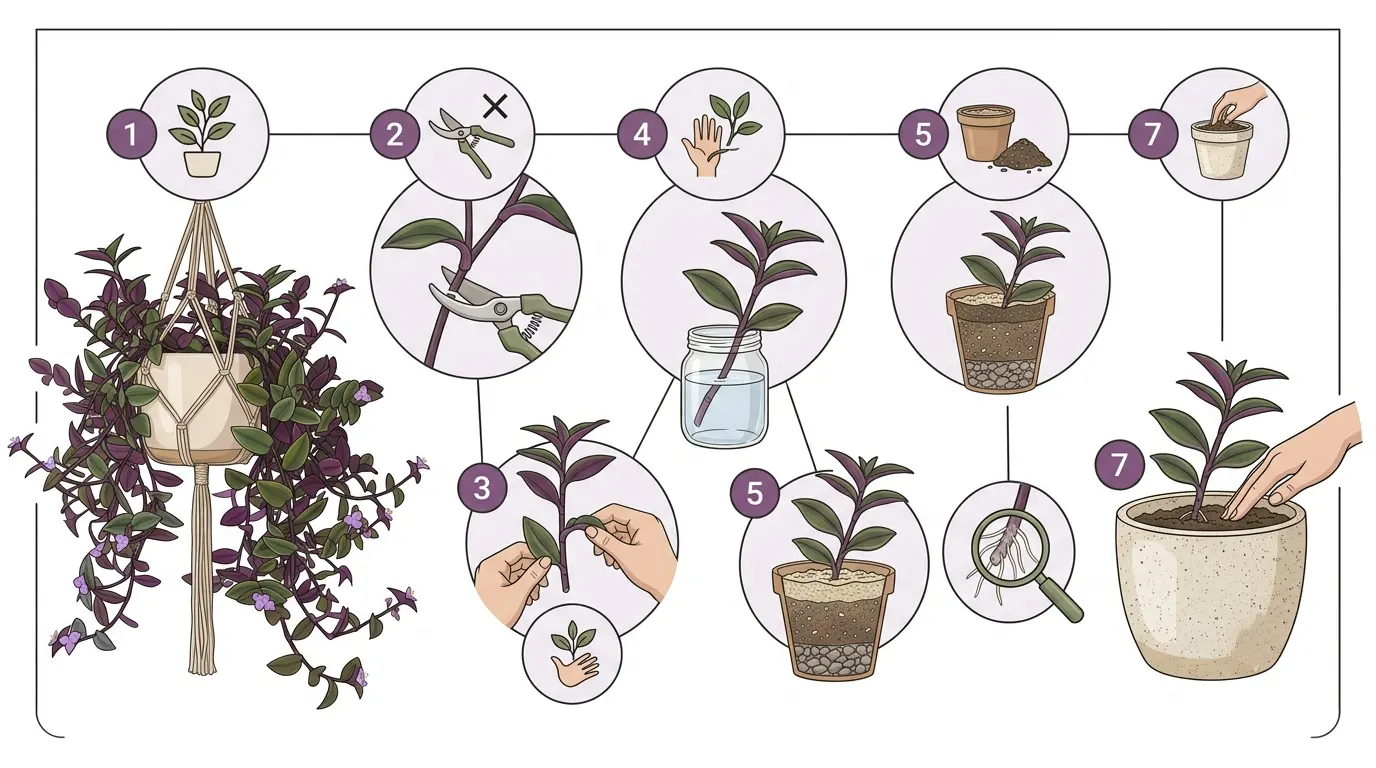
Purple bridal veil plants are easy to propagate because new roots can develop from stem cuttings. Stem propagation is the most common method and allows growers to create new plants from healthy sections of existing growth.
Similar Tradescantia varieties can also be propagated using stem cuttings, and the same techniques are useful when learning how to propagate plants like Tradescantia Nanouk through water or soil methods.
Step-by-step propagation method:
- Select a healthy stem with several leaves and visible nodes.
- Cut below a node using clean scissors.
- Remove lower leaves from the cutting.
- Place the cutting in water or moist soil.
- Keep it in bright indirect light.
- Wait for roots to develop.
- Transfer rooted cuttings into a container with well-draining soil.
Propagation options:
- Water propagation: Allows growers to observe root development and is beginner-friendly.
- Soil propagation: Produces stronger roots directly adapted to growing conditions.
Rooting usually occurs within a few weeks under warm, bright conditions.
After roots develop:
- Plant cuttings into fresh potting mix.
- Keep soil slightly moist while new roots establish.
- Gradually return the plant to normal watering.
How Do I Repot a Bridal Veil Plant?
Repotting a bridal veil plant helps maintain healthy root growth and provides fresh nutrients when the existing soil becomes depleted. This Tradescantia variety usually does not require frequent repotting, but it benefits from a larger container when roots become crowded or growth slows.
Signs that a bridal veil plant needs repotting include:
- Roots growing through drainage holes
- Soil drying out unusually quickly
- Slower-than-normal growth
- Roots forming a tight circle inside the pot
- Water running directly through the container without soaking the soil
Repotting steps:
- Choose a container one size larger than the current pot.
- Select a pot with drainage holes.
- Gently remove the plant while protecting the roots.
- Loosen tightly packed roots if necessary.
- Add fresh, well-draining potting mix.
- Place the plant at the same soil depth as before.
- Water lightly and allow the plant to adjust.
Avoid moving the plant into an excessively large pot because extra soil can retain moisture and increase the risk of root rot.
The best time to repot is during spring or early summer when the plant is actively growing. After repotting, temporary stress such as slower growth is normal while roots adapt to the new container.
Common Problems With Bridal Veil Plants (Problem-Solution Coverage)
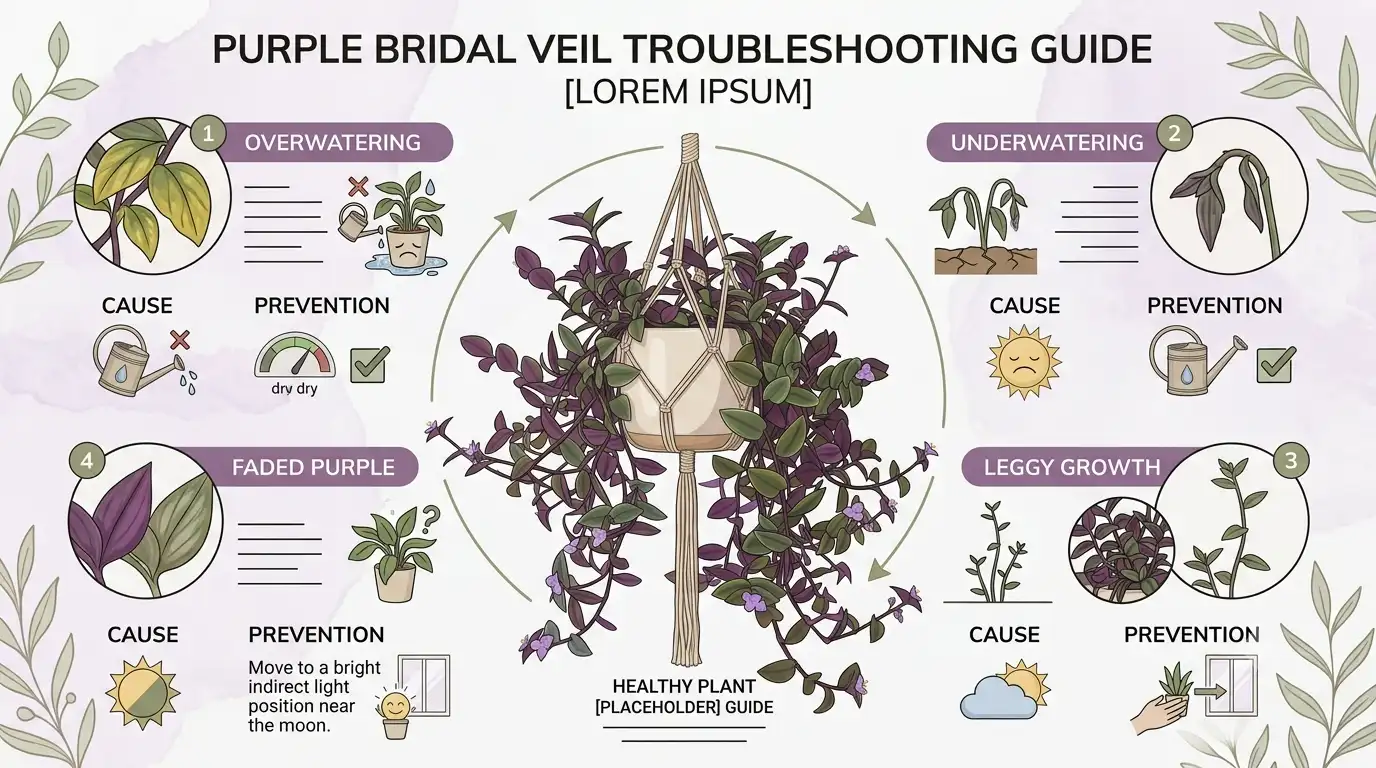
Purple bridal veil plants are generally easy to grow, but problems can occur when light, watering, soil, or maintenance conditions are not balanced. Most issues can be corrected by identifying the cause early and adjusting care practices.
Common problems include:
- Yellowing leaves
- Root rot from excessive moisture
- Weak or leggy growth
- Pest infestations
- Loss of purple leaf color
Why Is My Bridal Veil Plant Dying?
A bridal veil plant may appear to be dying because of overwatering, poor drainage, insufficient light, temperature stress, or root problems. The most common cause is water-related stress, especially when roots remain in wet soil for too long.
Common causes and solutions:
| Problem | Why It Happens | Fix | Prevention |
| Yellow leaves | Overwatering, poor drainage, or natural aging | Remove damaged leaves and adjust watering | Check soil moisture before watering |
| Root rot | Soil stays wet and roots lack oxygen | Remove affected roots and repot in fresh soil | Use drainage holes and avoid soggy soil |
| Leggy growth | Low light causes stretched stems | Move plant to brighter indirect light and prune | Provide consistent light exposure |
| Pest infestations | Stress or poor airflow attracts pests | Treat with appropriate plant-safe methods | Maintain airflow and inspect regularly |
| Faded purple color | Insufficient light reduces pigmentation | Increase light gradually | Provide bright filtered light |
Yellow leaves are one of the most common warning signs. While occasional older leaves naturally decline, widespread yellowing usually indicates an environmental issue.
Overwatering is especially harmful because Tradescantia roots require oxygen. Soil that remains constantly wet can weaken roots, leading to wilting, leaf loss, and eventual plant decline.
To prevent common problems:
- Use a well-draining soil mixture.
- Avoid watering on a fixed schedule without checking soil moisture.
- Provide enough light to maintain foliage color.
- Prune regularly to encourage healthy airflow.
- Check leaves periodically for pests.
Purple Bridal Veil vs. Other Tradescantia Varieties (Comparison Block)
Purple bridal veil plants belong to the broader Tradescantia group, which includes many decorative foliage plants with different colors, patterns, and growth habits. Comparing related varieties helps clarify differences between plants that are often sold under similar names.
Purple Bridal Veil vs. Tahitian Bridal Veil
Purple bridal veil and Tahitian bridal veil are closely related names often used for trailing Tradescantia plants with colorful foliage. The main differences usually involve cultivar characteristics, leaf coloration, and availability rather than completely separate plant types.
| Feature | Purple Bridal Veil | Tahitian Bridal Veil |
| Plant group | Tradescantia variety | Tradescantia variety/cultivar name |
| Leaf color | Purple, violet, or purple-green tones | Often purple-toned foliage depending on cultivar |
| Growth habit | Trailing and cascading | Trailing and spreading |
| Light needs | Bright indirect light | Bright indirect light |
| Main appeal | Colorful foliage and hanging growth | Decorative foliage and easy-care growth |
| Toxicity | Generally considered mildly irritating if eaten | Similar Tradescantia safety considerations |
Because common plant names vary between growers and retailers, botanical identification is the most reliable way to distinguish specific cultivars.
Bridal Veil Plant vs. Bridal Veil Fern
The bridal veil plant and bridal veil fern are not the same plant. Despite sharing a common name, they belong to completely different plant groups with different care requirements.
| Feature | Bridal Veil Plant | Bridal Veil Fern |
| Plant group | Tradescantia genus | Fern species |
| Family | Commelinaceae | Fern family groups |
| Leaf appearance | Purple or green trailing leaves | Fine, delicate fern-like foliage |
| Growth habit | Succulent-like trailing stems | Soft arching fronds |
| Light needs | Bright indirect light | Filtered light and higher humidity |
| Water needs | Moderate watering | More consistently moist conditions |
| Care style | Easier for beginners | Requires more humidity management |
This confusion occurs because both plants have cascading growth patterns and are commonly used in hanging baskets. However, their botanical classifications and care needs are different.
Is a Bridal Veil Plant Easy to Grow?
Yes, a bridal veil plant is considered easy to grow because it adapts well to indoor conditions, grows quickly, and can be propagated easily from stem cuttings. It is often recommended for beginners who want a colorful trailing plant with simple care requirements.
The plant’s beginner-friendly qualities include:
- Fast growth
- Simple propagation
- Flexible indoor placement
- Tolerance of average household conditions
- Attractive trailing foliage
However, beginners often make mistakes that affect appearance and growth.
Common beginner mistakes:
- Overwatering: Keeping soil constantly wet can cause root rot and yellow leaves.
- Insufficient light: Low light can reduce purple coloration and create weak, stretched growth.
- Ignoring pruning: Lack of trimming may result in a sparse or uneven plant.
- Poor drainage: Heavy soil can prevent healthy root development.
Pet and human safety:
Tradescantia plants are generally considered low-risk but may cause mild irritation if consumed by pets or humans. Contact with plant sap may also irritate sensitive skin in some individuals. Keeping plants away from pets and children is a practical precaution.
Conclusion
The purple bridal veil plant is a colorful, trailing Tradescantia variety valued for its purple foliage, delicate flowers, and easy-growing nature. Its success depends on a few essential care practices: providing bright indirect light, maintaining balanced watering, using well-draining soil, and pruning regularly to encourage fuller growth.
This fast-growing plant works especially well in hanging baskets and indoor containers because its cascading stems create an attractive display. With proper care, it can remain healthy for years, and simple stem propagation makes it easy to create new plants. For beginners and experienced growers alike, the purple bridal veil plant offers a low-maintenance option with strong decorative appeal.
FAQs
How do you care for a purple bridal veil plant?
A purple bridal veil plant grows best with bright indirect light, moderate watering, well-draining soil, and occasional pruning. Allow the top layer of soil to dry slightly between waterings and trim trailing stems to maintain a fuller shape.
Do bridal veil plants like sun or shade?
Bridal veil plants prefer bright indirect light or partial shade. They can tolerate some gentle morning sunlight, but intense direct sun may scorch leaves and reduce plant health.
Is bridal veil a Tradescantia?
Yes, many bridal veil plants belong to the Tradescantia genus within the Commelinaceae family. However, common names vary, so the exact botanical identity depends on the specific cultivar.
Is the bridal veil plant invasive?
A bridal veil plant may become invasive in some warm outdoor climates because Tradescantia varieties can spread easily through stem fragments. Growing it in containers and pruning regularly helps control unwanted spread.
How often should I water a bridal veil plant?
A bridal veil plant should usually be watered when the top layer of soil becomes slightly dry. Indoor plants often need water about once a week, but frequency depends on temperature, humidity, and container size.
Why is my bridal veil plant not flowering?
A bridal veil plant may not flower because of insufficient light, nutrient imbalance, stress, or immature growth. Increasing bright indirect light and maintaining healthy growing conditions can encourage blooming.
How do you propagate a purple bridal veil plant?
A purple bridal veil plant is propagated through stem cuttings. Cut a healthy stem below a node, place it in water or moist soil, allow roots to develop, and transplant the new plant into a suitable container.