
Introduction
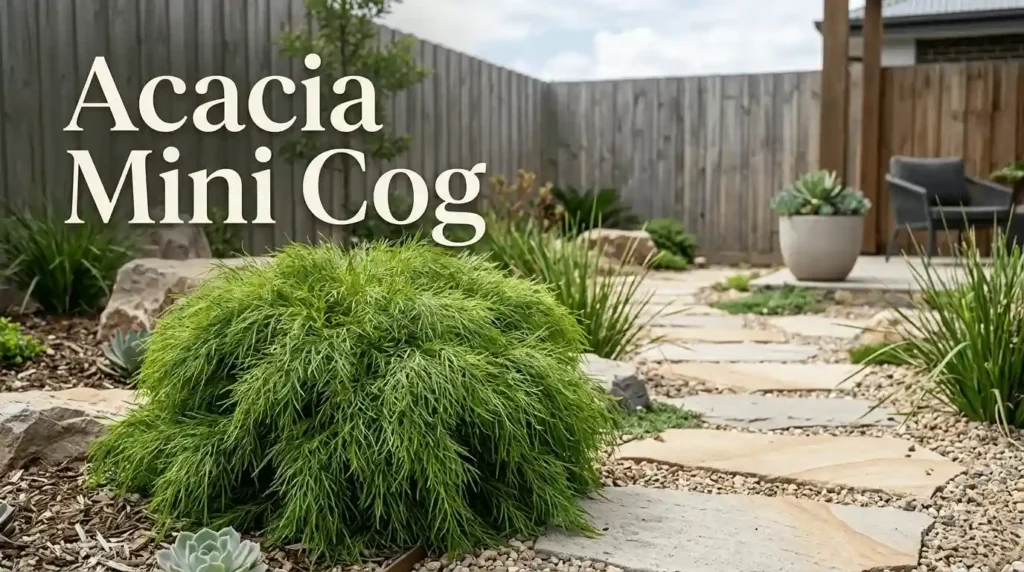
Acacia Mini Cog is a compact ornamental Australian native shrub valued for its soft cascading foliage, rounded growth habit, and low-maintenance nature. The mini cog plant is widely used in modern landscaping because it adapts well to borders, pots, courtyards, and drought-tolerant gardens. As a dwarf selection of Acacia cognata, the mini cog acacia offers a dense weeping form without the large size associated with standard acacia varieties. Many gardeners choose Acacia cognata Mini Cog for small spaces where texture and evergreen structure are important. This small acacia is especially popular in native gardens and contemporary landscapes due to its adaptability, fine foliage, and year-round ornamental appeal.
Quick Summary
- Acacia Mini Cog is a compact dwarf form of Acacia cognata with soft cascading foliage and a rounded shape.
- It is commonly used in borders, native gardens, pots, and low-maintenance landscapes.
- Mini Cog is often compared with Acacia Limelight due to similarities in size, texture, and growth habit.
- The plant thrives best in full sun to partial shade with well-draining soil.
- Proper drainage and moderate pruning help maintain healthy compact growth.
Acacia Mini Cog is also a valuable addition to broader native landscaping trends covered in our Plants: Benefits and Guides (Complete Care, Types & Growing Tips) resource for gardeners exploring low-maintenance ornamental plants.
What Is Acacia Mini Cog?
Botanical Classification and Plant Background
Acacia cognata Mini Cog is a dwarf evergreen cultivar belonging to the Acacia cognata species group within the Fabaceae family. This Australian native shrub was developed for compact landscaping applications where gardeners wanted the soft weeping appearance of larger acacias in a smaller form. Acacia Mini Cog belongs to the broader Acacia cognata species group, an Australian native shrub species known for its fine weeping foliage and ornamental landscape use.
The plant may also be labeled as:
- acacia mini cognata
- acacia cognata dwarf mini cog
- acacia mini cog dwarf acacia cognata
Unlike larger acacia trees, Mini Cog maintains a compact rounded structure with fine-textured foliage. Its controlled size makes it suitable for urban gardens, containers, and narrow landscape spaces where standard acacia varieties may become too large.
As part of the broader Acacia cognata group, Mini Cog shares the species’ characteristic soft green foliage and graceful appearance while offering improved manageability for residential gardens.
Key Characteristics of the Mini Cog Plant
| Feature | Description |
| Plant Type | Dwarf evergreen shrub |
| Mature Size | Compact and rounded |
| Foliage | Soft weeping green leaves |
| Growth Habit | Dense and cascading |
| Best Uses | Borders, pots, feature planting |
The compact structure of mini cogs plants makes them useful for layered landscaping. Gardeners often select this small acacia because it delivers texture without overwhelming surrounding plants.
Common characteristics include:
- Fine pendulous foliage
- Dense compact form
- Low pruning requirements
- Evergreen growth habit
- Drought tolerance after establishment
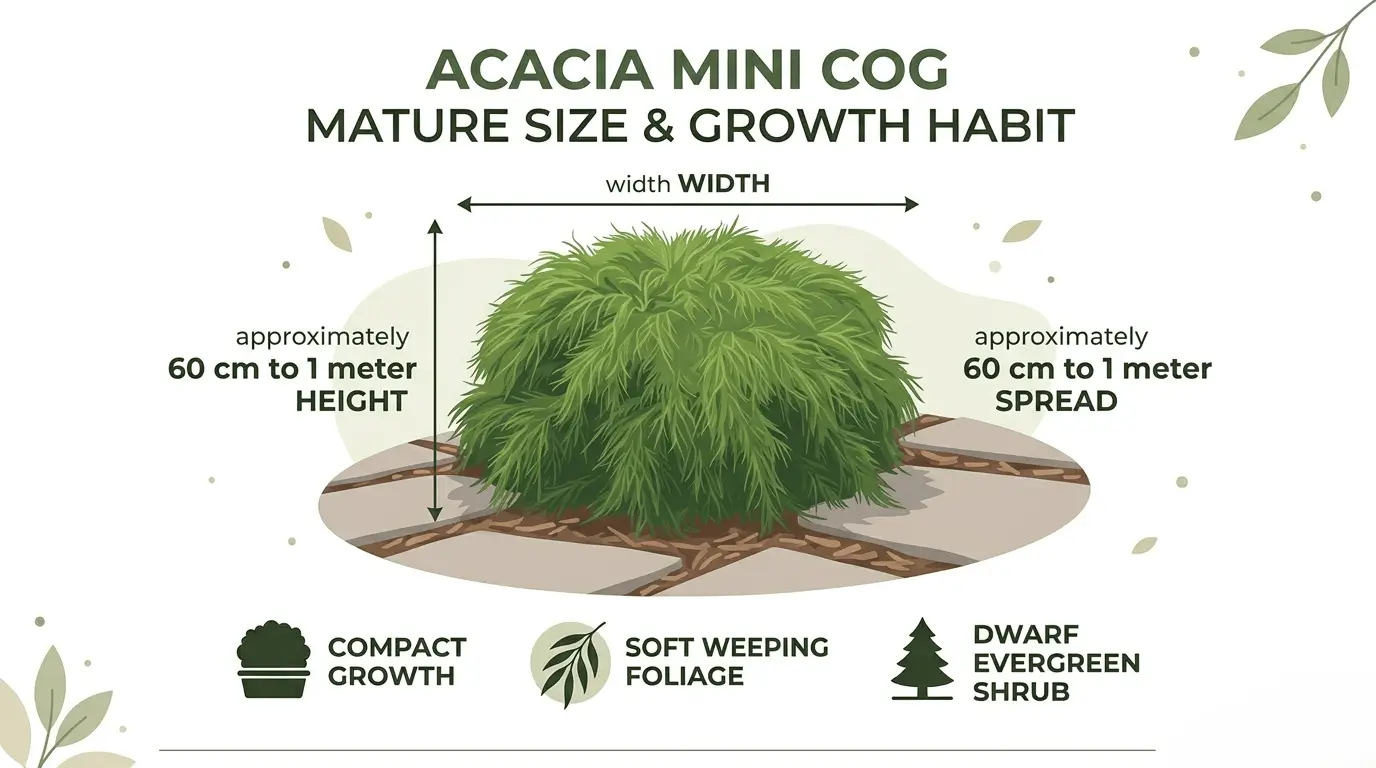
Typical acacia mini cog height ranges from 60 cm to 1.2 meters depending on climate and maintenance.
How Big Does Acacia Mini Cog Grow?
Mature Height and Width
Acacia Mini Cog generally reaches a mature height of approximately 60 cm to 1 meter with a similar spread. In ideal outdoor conditions, some plants may slightly exceed this size over time.
The compact dimensions distinguish it from larger standard acacia forms and make it highly suitable for:
- Small gardens
- Courtyard landscapes
- Border planting
- Containers
- Rock gardens
Typical acacia mini cog size varies based on:
- Sunlight exposure
- Soil drainage
- Water availability
- Pruning frequency
- Climate conditions
Indoor growing is uncommon because dwarf acacia varieties perform best outdoors with strong airflow and natural sunlight.
Growth Rate and Growth Habit
Acacia Mini Cog has a moderate growth rate. During active spring and summer periods, new foliage develops quickly under warm conditions.
Growth characteristics include:
- Dense cascading structure
- Rounded shrub form
- Soft pendulous foliage
- Seasonal flushes of new growth
Pruning strongly influences plant density and appearance. Light shaping encourages fuller branching, while excessive pruning may temporarily reduce the natural weeping effect.
Environmental conditions affecting size include:
- Soil quality
- Sunlight availability
- Drainage efficiency
- Frost exposure
- Watering consistency
Acacia Mini Cog Care Guide
Light Requirements and Best Growing Conditions
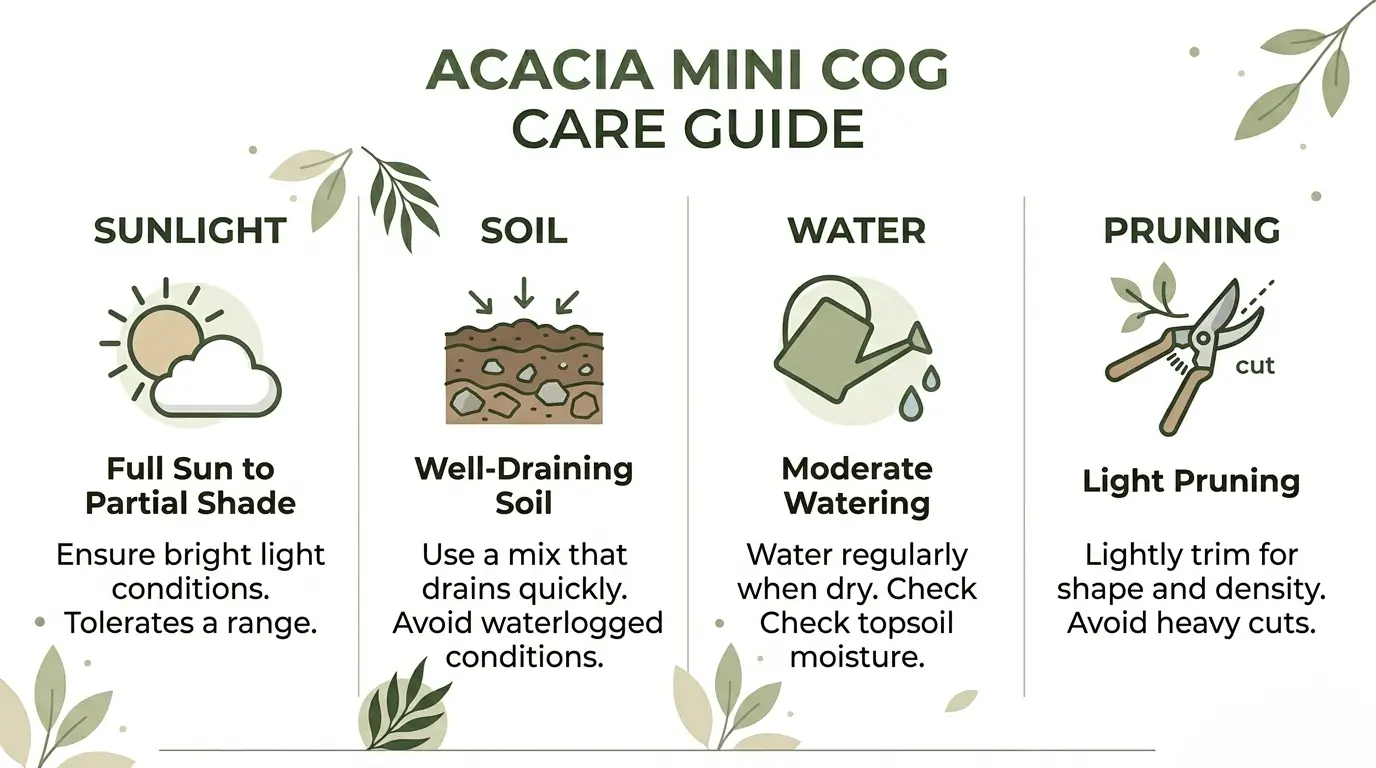
Acacia Mini Cog grows best in full sun to partial shade. In cooler climates, full sun encourages dense foliage and compact growth. In hotter regions, partial afternoon shade may reduce stress during extreme summer temperatures.
Acacia mini cog shade tolerance exists, but excessive shade can lead to:
- Sparse growth
- Reduced density
- Leggy branching
- Slower development
Ideal growing conditions include:
- Mild to warm climates
- Good airflow
- Well-draining soil
- Moderate watering during establishment
This dwarf acacia adapts well to many Australian-style landscapes and performs reliably in drought-tolerant gardens.
Soil, Watering, and Drainage Needs
Acacia Mini Cog requires excellent drainage to prevent root problems.
- Use well-draining soil with sandy or native planting mixes.
- Water regularly during the establishment phase.
- Reduce watering once the plant matures.
- Apply mulch to stabilize soil moisture and temperature.
Overwatering is one of the most common mistakes with Acacia cognata varieties. Poor drainage can lead to root stress, yellowing foliage, and reduced vigor. Unlike plants adapted to wet conditions, Acacia Mini Cog performs best in sharply draining soil, unlike species discussed in the Ultimate Guide to Trees That Like Wet Soil Australia.
Important drainage considerations:
- Avoid heavy clay soil
- Prevent standing water
- Use raised beds if necessary
- Improve aeration around roots
Once established, the plant demonstrates good drought tolerance.
Fertilizing and Pruning Tips
Mini Cog requires minimal fertilization. Excessive feeding may encourage overly soft growth and reduce the plant’s compact form.
Maintenance recommendations:
- Use low-phosphorus native plant fertilizer sparingly
- Prune lightly after active growth periods
- Remove dead or damaged branches as needed
Pruning improves:
- Shape consistency
- Air circulation
- Branch density
- Overall appearance
Regular light trimming maintains the rounded cascading habit preferred in landscape designs.
Growing Acacia Mini Cog in Pots and Small Spaces
Container Gardening Tips
| Potting Factor | Recommendation |
| Pot Size | Medium to large container |
| Soil Type | Free-draining native mix |
| Sunlight | Bright position |
| Watering | Moderate |
Mini Cog adapts very well to container growing. Many gardeners compare it with acacia limelight in pots because both cultivars remain compact and visually textured.
Container care tips:
- Choose pots with strong drainage holes
- Avoid waterlogged saucers
- Repot when roots become crowded
- Use native-friendly potting mix
Small acacias work especially well in balconies, patios, and urban courtyards where space is limited.
Best Landscape Uses for Mini Cog Acacia
Acacia Mini Cog is commonly used in:
- Borders
- Native gardens
- Rock gardens
- Courtyard landscapes
- Low hedging
The compact size fits modern urban gardens where low-maintenance structure is important. Fine foliage texture contrasts effectively against broad-leaf shrubs, grasses, and stone elements. Its cascading growth habit also softens hard landscape edges and paved areas. While Mini Cog is ideal for compact borders and texture planting, larger privacy-focused natives are explored in the 10+ Fast Growing Australian Native Screening Plants Guide.
Acacia Mini Cog vs Limelight
Differences Between Mini Cog and Limelight
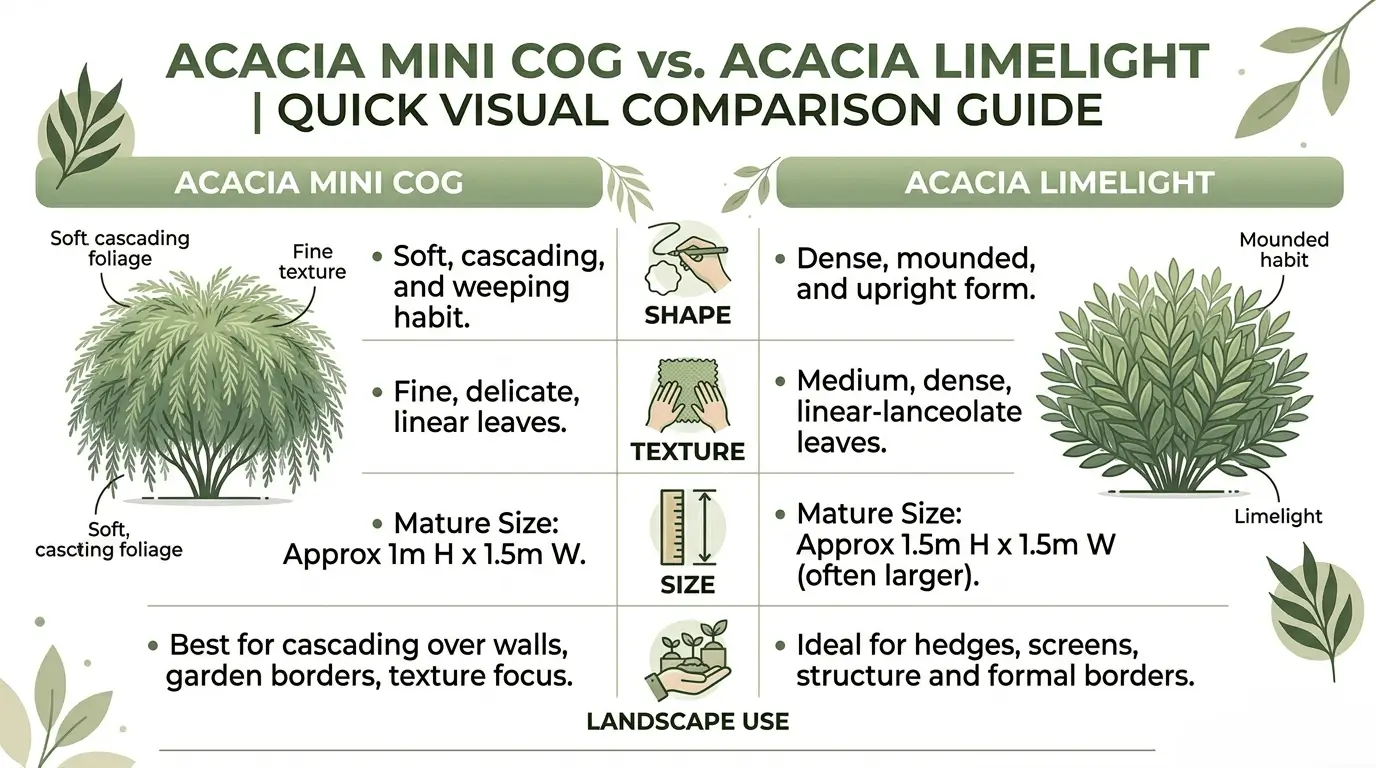
| Feature | Mini Cog | Limelight |
| Shape | Rounded cascading | Mounded |
| Texture | Fine foliage | Dense foliage |
| Size | Compact | Slightly wider |
| Landscape Use | Borders and pots | Feature planting |
The comparison between acacia mini cog vs limelight is common because both belong to the Acacia cognata group.
Acacia limelight vs mini cog differences mainly involve:
- Growth density
- Branch structure
- Overall width
- Visual texture
Many gardeners choose Mini Cog for softer cascading form, while Limelight is often selected for stronger mounded structure.
Which Acacia Cognata Variety Is Better for Different Gardens?
The best cultivar depends on landscape goals.
Mini Cog suits:
- Compact spaces
- Containers
- Narrow borders
- Minimal maintenance designs
Acacia cognata waterfall works better for dramatic weeping effects, while acacia cognata green mist and acacia cognata green magik provide different foliage textures and growth patterns.
Comparison overview:
- waterfall acacia: stronger cascading habit
- green mist plant: airy appearance
- green magik: dense compact structure
Popular Acacia Cognata Varieties Compared
Mini Cog vs Waterfall Acacia
Acacia waterfall varieties develop a more pronounced weeping habit compared with the tighter rounded form of Mini Cog.
Key differences:
- Waterfall acacia grows larger
- Mini Cog remains more compact
- Waterfall tree forms create stronger cascading effects
- Acacia waterfall standard forms are often used as feature specimens
Mini Cog works better in confined spaces where controlled growth is important.
Mini Cog vs Green Mist and Green Magik
- Acacia green mist has softer, more open foliage.
- Green Magik develops denser compact growth.
- Mini Cog balances fine texture with manageable size.
- Maintenance needs vary depending on density and growth speed.
- Different acacia cognata varieties suit different landscape themes.
Gardeners often choose based on:
- Available space
- Desired texture
- Pruning preferences
- Water requirements
Gardeners interested in other soft-textured Australian natives may also compare Mini Cog with species featured in the Weeping Wattle Australia: 10+ Essential Care Tips guide.
Does Acacia Mini Cog Flower?
Flower Appearance and Seasonal Blooming
Yes, Acacia Mini Cog produces small yellow flowers, although flowering is generally less prominent than its foliage display.
The acacia mini cog flower typically appears seasonally during cooler months or spring depending on climate conditions.
Important flowering characteristics:
- Small yellow blooms
- Mild ornamental impact
- Secondary visual feature
- Seasonal flowering patterns vary regionally
Most gardeners value the plant primarily for its soft cascading foliage rather than its flowers.
Common Problems With Acacia Mini Cog
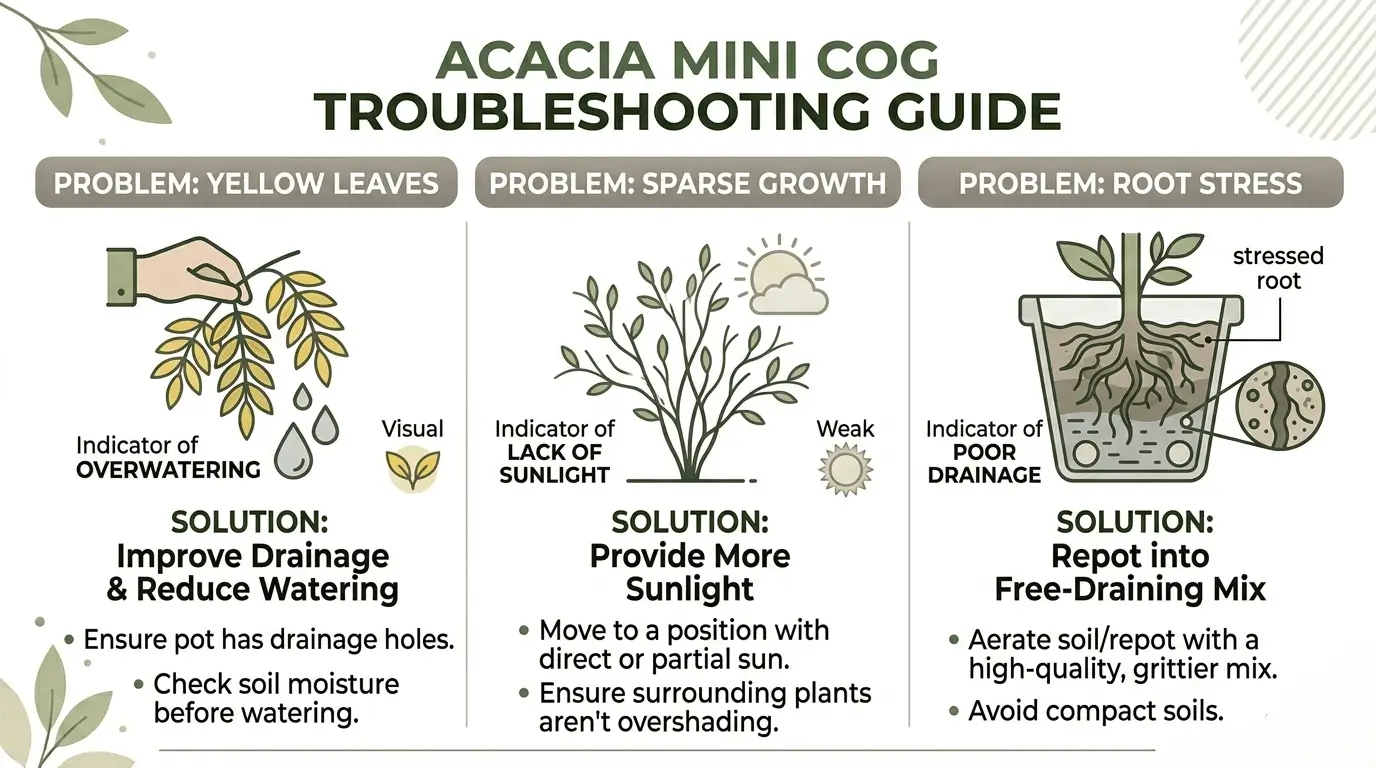
Why Acacia Mini Cog May Struggle
Common problems include:
- Overwatering
- Poor drainage
- Excess shade
- Frost stress
- Root disturbance
Beginner gardeners often underestimate the importance of drainage. Wet compacted soil is one of the leading causes of decline in dwarf acacia varieties.
Environmental limitations include:
- Heavy frost exposure
- Poor air circulation
- Prolonged waterlogging
- Deep shade conditions
Yellow Leaves, Sparse Growth, and Other Issues
| Problem | Possible Cause | Solution |
| Yellow leaves | Overwatering | Improve drainage |
| Sparse growth | Lack of sunlight | Increase sun exposure |
| Root stress | Compacted soil | Improve aeration |
Some issues resemble common acacia limelight problems because both cultivars share similar root sensitivities.
Regular monitoring helps prevent:
- Root rot
- Fungal stress
- Weak branching
- Declining foliage density
Seasonal Care for Acacia Mini Cog
Caring for Mini Cog Through Different Seasons
- Manage spring growth with light pruning.
- Increase watering slightly during hot summers.
- Protect young plants from severe winter frost.
- Apply mulch during temperature extremes.
Seasonal care improves plant longevity and appearance.
Practical maintenance advice:
- Avoid pruning during extreme heat
- Reduce watering during cooler dormant periods
- Refresh mulch annually
- Monitor drainage during rainy seasons
Acacia Mini Cog Standards and Shaped Forms
What Is an Acacia Mini Cog Standard?
An acacia mini cog standard is a grafted tree-form version where foliage is elevated on a single trunk.
Related forms include:
- acacia limelight standard
- acacia limelight tree
- acacia cognata limelight standard
- weeping acacia limelight
Standard forms create strong architectural features in landscapes and containers. Their elevated cascading foliage adds visual contrast in formal garden settings.
These forms are commonly used:
- Near entrances
- In decorative pots
- Along pathways
- As focal landscape elements
How Acacia Mini Cog Fits Into Native Garden Design
Companion Plants and Landscaping Ideas
Acacia Mini Cog pairs well with:
- Native grasses
- Compact shrubs
- Rock garden pairings
- Texture layering ideas
Its soft foliage contrasts effectively with structured landscaping plants and drought-tolerant species.
Popular companion choices include:
- Lomandra
- Dianella
- Kangaroo grass
- Native groundcovers
The plant integrates naturally into:
- Low-maintenance native planting
- Contemporary landscapes
- Drought-tolerant gardens
- Australian-style garden themes
Mini Cog works especially well in drought-tolerant landscapes and complements strategies discussed in the Easy Low Maintenance Australian Native Garden Guide 7+ Steps.
Conclusion
Acacia Mini Cog is valued for its compact growth habit, soft cascading foliage, and versatility in modern landscapes. As a dwarf form of Acacia cognata, it performs exceptionally well in borders, pots, native gardens, and small outdoor spaces. Compared with related cultivars such as Limelight, Waterfall, and Green Mist, Mini Cog offers a balanced combination of dense texture and manageable size.
Long-term success depends on providing full sun to partial shade, excellent drainage, moderate watering, and occasional light pruning. With proper care, this compact Australian native shrub remains an attractive low-maintenance feature plant suitable for contemporary and drought-tolerant garden designs.
FAQ
What is the difference between Acacia Mini Cog and Limelight?
Acacia Mini Cog has a softer cascading shape, while Limelight typically develops a denser mounded form. Mini Cog is often preferred for borders and pots, whereas Limelight is commonly used as a feature shrub.
How large does Acacia Mini Cog grow?
Acacia Mini Cog usually grows between 60 cm and 1 meter tall with a similar spread depending on climate and maintenance.
Can Acacia Mini Cog grow in shade?
Yes, it tolerates partial shade, but excessive shade may cause sparse growth and reduced foliage density.
Does Acacia Mini Cog flower?
Yes, it produces small yellow flowers seasonally, although the foliage remains the primary ornamental feature.
Is Acacia Mini Cog suitable for pots?
Yes, Mini Cog performs very well in containers when planted in free-draining soil with adequate sunlight.
How often should Mini Cog Acacia be watered?
Water regularly during establishment, then reduce frequency once mature. Avoid constantly wet soil.
What causes yellow leaves on Acacia Mini Cog?
Yellow leaves are commonly caused by overwatering, poor drainage, or root stress.