
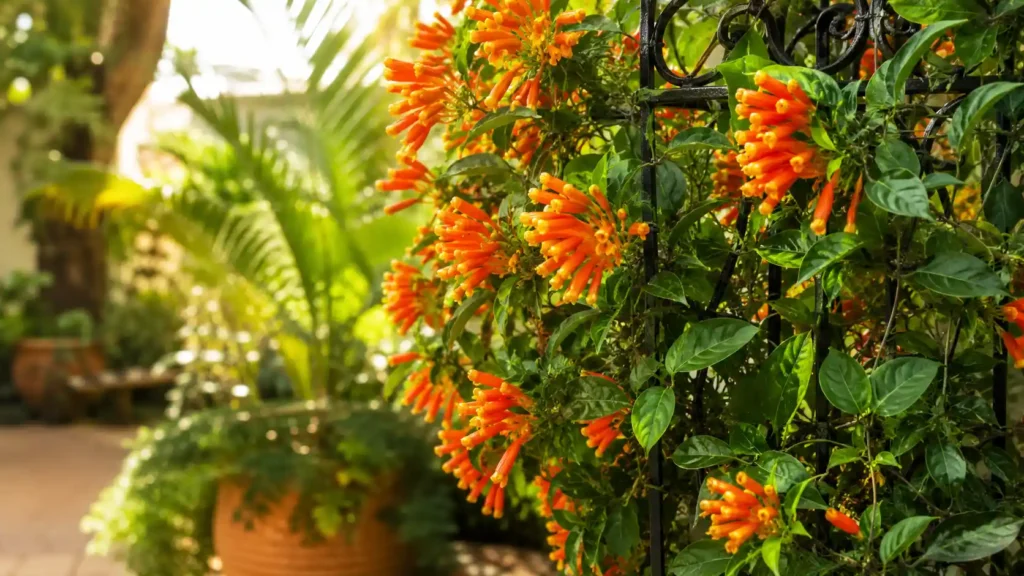
According to Manuela Nogueira, the candy corn plant vine is Manettia luteorubra, a twining evergreen member of the Rubiaceae (coffee) family native to South America. Its tubular red-orange flowers with yellow tips resemble candy corn. It climbs to 15 feet with trellis support, thrives in USDA zones 9-11, and prefers full to partial sun.
The genus, named after Italian botanist Saverio Manetti, contains over 120 species, though this one is often sold under the synonym Manettia inflata. It grows from tubers, is propagated mainly by cuttings rather than seed, and can be pruned into a compact shrub or groundcover instead of left to climb.
Quick Summary
- Candy corn vine (Manettia luteorubra) is a tender perennial vine that is often grown as an annual in colder climates.
- It grows best in full sun to partial shade with consistently moist, well-drained soil.
- Mature vines typically reach 3–6 feet, making them ideal for trellises, hanging baskets, and containers.
- Poor flowering is usually caused by insufficient sunlight, excessive nitrogen fertilizer, or incorrect pruning practices.
What Is a Candy Corn Vine?
A candy corn vine is a tropical flowering vine scientifically known as Manettia luteorubra, prized for its bright tubular flowers that resemble pieces of candy corn. It belongs to the Rubiaceae (coffee) family and produces continuous blooms during the warm growing season. The Rubiaceae family is a large group of flowering plants that includes coffee and many ornamental species. Its compact climbing habit and nectar-rich flowers make it an attractive choice for trellises, containers, and hanging baskets.
Unlike many ornamental vines that bloom briefly, candy corn vine flowers repeatedly from late spring through fall when provided with suitable growing conditions. The slender stems naturally twine around supports, allowing the plant to climb without requiring extensive tying.
The species is native to Brazil and neighboring parts of South America, where warm temperatures and moderate humidity support vigorous growth. In cultivation, it is appreciated for its manageable size, long flowering period, and ability to attract hummingbirds, butterflies, and other beneficial pollinators.
Despite its common name, the plant has no relationship to candy corn candy. Instead, the flowers feature bright orange tubes with yellow tips that closely resemble the familiar seasonal confection.
It is also important not to confuse candy corn vine with other ornamental plants that share similar names:
- Candy corn spirea is a colorful deciduous shrub grown mainly for its vibrant foliage.
- Sweet corn is an edible vegetable grown for its kernels.
- Candy corn vine (Manettia luteorubra) is a flowering tropical vine cultivated for ornamental blooms.
This distinction helps prevent confusion when selecting plants for landscaping or container gardening.
Other Common Names for the Plant
The candy corn vine is known by several common names depending on the region or gardening community. Although these names differ, they all refer to the same species, Manettia luteorubra.
Common names include:
- Manettia
- Firecracker vine
- Firecracker plant
- Candy corn plant
- Candy corn plant vine
Among these, firecracker vine is especially common because the flowers resemble tiny fireworks or firecrackers in addition to candy corn. Garden centers and nurseries may also simply label it as Manettia, using the plant’s botanical genus.
If someone asks, “What is another name for the candy corn vine?”, the most widely recognized alternatives are firecracker vine and Manettia.
Is Candy Corn Vine an Annual or Perennial?
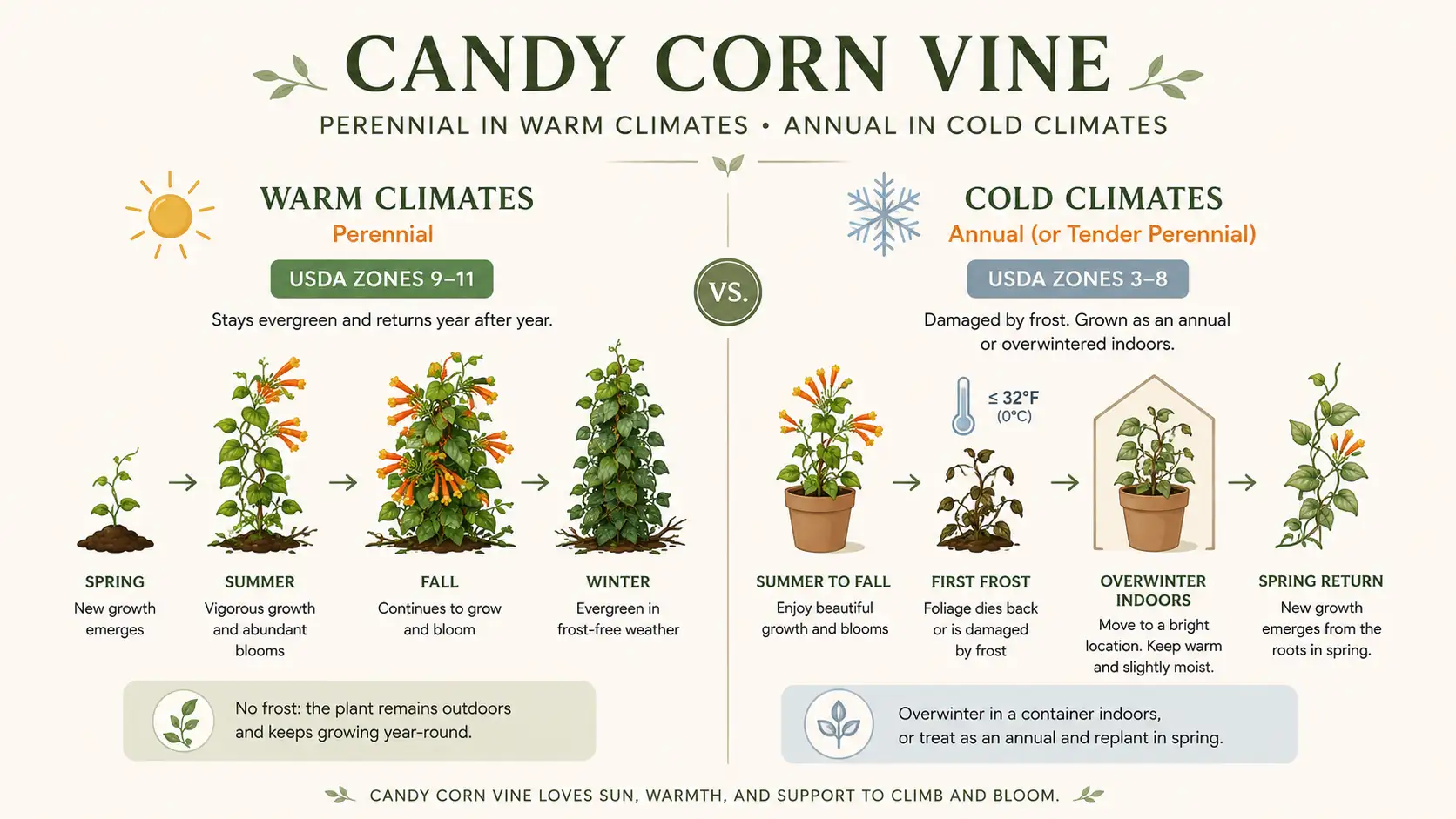
Candy corn vine is a tender perennial in warm climates but is commonly grown as an annual where winters are cold. It remains evergreen in frost-free regions, while freezing temperatures typically damage or kill the plant. Whether it returns each year depends largely on your USDA hardiness zone and winter protection.
In USDA Hardiness Zones 9–11, candy corn vine grows as a perennial. The roots and stems survive year-round, allowing the vine to flower again each growing season.
In cooler climates below Zone 9, frost usually prevents outdoor survival. Many gardeners grow it as a seasonal annual, enjoying its colorful blooms throughout summer before replacing it the following year.
If you wish to keep the plant for multiple seasons in colder areas, it can often be overwintered indoors before temperatures drop below freezing.
Key growing considerations include:
- Zones 9–11: Grows as a perennial and typically returns every year.
- Zones below 9: Usually grown as an annual because frost damages the plant.
- Containers: Easy to move indoors before winter arrives.
- Indoor overwintering: Place in a bright location and reduce watering during slower winter growth.
- Spring transition: Move outdoors only after all danger of frost has passed.
Many gardeners successfully treat candy corn vine as a long-lived container plant by bringing it indoors during winter and returning it outside once warm weather returns.
Candy Corn Vine Size and Growth Habits
Candy corn vine is a compact climbing vine that generally reaches 3–6 feet in length, although growing conditions can influence its final size. It climbs by twining its flexible stems around nearby supports and is well suited for trellises, obelisks, fences, hanging baskets, and decorative containers.
Its naturally slender growth habit allows it to fit into smaller gardens where larger vines may become overwhelming. Regular pruning and pinching encourage fuller branching and help maintain an attractive shape.
The plant produces continuous new shoots throughout the growing season when provided with warmth, sunlight, and adequate moisture.
Mature Size (Plant Size)
Most outdoor candy corn vines grow between 3 and 6 feet tall with a spread of approximately 2–3 feet, depending on support structures and pruning practices.
Plants grown directly in garden beds often become slightly larger than those grown in containers because their root systems have greater access to moisture and nutrients.
Typical mature size includes:
| Growing Location | Typical Size |
| Outdoor garden | 3–6 ft tall, 2–3 ft wide |
| Containers | 2–4 ft tall with compact growth |
| Hanging baskets | Cascading stems 2–4 ft long |
| Indoors | Usually 2–4 ft with regular pruning |
Several environmental factors influence plant size, including:
- Amount of sunlight received
- Soil fertility
- Available moisture
- Length of the growing season
- Frequency of pruning
- Container size and root space
A root-bound container may limit overall growth, while larger containers encourage stronger vines and more abundant flowering.
Growth Rate
Candy corn vine is considered a moderate-to-fast-growing vine during warm weather. Under favorable conditions, young plants establish quickly in spring and produce steady new growth throughout summer, with flowering often beginning within a few months of active growth.
Growth slows considerably as temperatures cool in autumn. In frost-free climates, the vine may continue growing slowly during winter, while plants in cooler regions typically become dormant or are grown as annuals.
Growth is fastest when the plant receives:
- Warm temperatures between 65–85°F (18–29°C)
- Plenty of bright sunlight
- Consistently moist, well-drained soil
- Balanced fertilization during the active growing season
- Adequate support for climbing
A common question is, “How long does it take candy corn to grow?” Most nursery-grown plants establish within several weeks after planting and develop into a flowering vine during the first growing season when provided with proper care. Seed-grown plants generally require a longer establishment period before reaching their mature size.
Candy Corn Vine Care Guide
Candy corn vine care focuses on providing the right balance of sunlight, moisture, soil quality, and support. Manettia luteorubra grows best when it receives bright light, consistent watering, fertile soil, and regular pruning to encourage branching and flowering. Although it is relatively easy to grow, incorrect watering, poor light, or excessive fertilizer can reduce blooms and weaken growth.
The main care requirements include:
- Bright sunlight with protection from extreme afternoon heat
- Evenly moist but well-drained soil
- Regular feeding during the active growing season
- Structural support for climbing stems
- Occasional pruning to maintain shape and encourage flowers
Candy corn vine performs best in warm, humid environments similar to its native tropical habitat. In colder climates, container growing is often the easiest method because the plant can be moved indoors before frost.
Sunlight Requirements
Candy corn vine prefers full sun to partial shade, with the best flowering usually occurring when the plant receives several hours of direct sunlight daily. A minimum of 4–6 hours of sunlight helps support strong growth and abundant blooms.
A common question is, “Do candy corn vines prefer sun or shade?” Candy corn vines prefer bright sun but can tolerate partial shade, especially in hot climates where afternoon shade protects the leaves and roots from excessive heat stress.
Light requirements vary depending on the growing environment:
- Full sun: Encourages the most flowers and stronger growth.
- Partial shade: Suitable in warmer regions with intense afternoon heat.
- Too much shade: May result in fewer blooms, weaker stems, and slower growth.
- Indoor growing: Requires bright indirect light near a sunny window.
If a candy corn vine is not blooming, insufficient light is one of the first conditions to check. Plants grown in low-light locations often produce healthy leaves but fewer flowers.
For outdoor planting, ideal locations include:
- East-facing areas with gentle morning sun
- South-facing locations with filtered afternoon protection in hot climates
- Trellises that receive adequate sunlight without excessive wind exposure
Watering Needs
Candy corn vine requires consistently moist soil but does not tolerate waterlogged conditions. The plant prefers regular watering during active growth because dry soil can reduce flowering and cause leaf stress.
A common question is, “How often do you water a candy corn plant?” Water when the top inch of soil feels slightly dry, usually once or twice weekly during warm growing periods, depending on temperature, rainfall, soil type, and container size.
Watering guidelines:
- Check soil moisture before watering.
- Keep soil evenly moist during spring and summer.
- Reduce watering during winter when growth slows.
- Allow excess water to drain completely from containers.
A common mistake is treating candy corn vine like a drought-tolerant plant. Extended dry periods can cause:
- Wilting leaves
- Reduced flower production
- Slower new growth
However, overwatering creates different problems, including:
- Yellowing leaves
- Root stress
- Increased risk of fungal issues
A practical watering schedule:
| Growing Situation | Watering Approach |
| Outdoor garden | Water deeply when the top layer of soil begins drying |
| Container plant | Check more frequently because pots dry faster |
| Indoor plant | Water less often and monitor drainage |
The goal is steady moisture without allowing the roots to remain saturated.
Soil and Fertilization
Candy corn vine grows best in well-drained, organically rich soil that holds moisture while allowing excess water to escape. A loose soil structure helps protect the roots from rot while providing access to nutrients.
Ideal soil characteristics include:
- Rich organic matter
- Good drainage
- Slightly acidic to neutral pH
- Moisture retention without sogginess
For container plants, a high-quality potting mix combined with drainage materials such as perlite or coarse sand helps prevent compacted roots.
During the active growing season, a balanced fertilizer can support healthy foliage and flowering. A fertilizer with balanced nutrients, such as a general-purpose formulation, is usually sufficient.
Fertilizing tips:
- Feed during spring and summer when growth is active.
- Avoid excessive nitrogen fertilizer.
- Reduce or stop feeding during winter dormancy.
- Follow product instructions to prevent nutrient buildup.
Too much nitrogen can encourage leafy growth while reducing flower production. If a candy corn vine appears healthy but produces few blooms, fertilizer balance may be the issue.
Pruning and Support
Candy corn vine is a climbing plant that benefits from regular pruning and structural support. Its thin, flexible stems naturally wrap around nearby structures, making it ideal for decorative climbing displays.
Suitable supports include:
- Small trellises
- Garden arches
- Fence sections
- Plant stakes
- Hanging basket supports
Pruning helps maintain a fuller shape and encourages more flowering branches. Pinching the growing tips during the active season stimulates side shoots, creating a bushier plant.
Pruning practices:
- Remove weak or damaged stems.
- Trim overly long growth to maintain shape.
- Pinch young shoots to encourage branching.
- Prune after flowering if major shaping is needed.
Avoid heavy pruning at the wrong time because removing too much new growth may reduce future blooms. Light maintenance pruning throughout the growing season is usually more effective.
Growing Candy Corn Vine Indoors
Candy corn vine can be grown indoors when provided with suitable light, warmth, and humidity. Growing a candy corn plant indoors is possible because the vine adapts well to containers and can be maintained as a compact ornamental plant.
Like other ornamental indoor plants with attractive foliage, candy corn vine can benefit from understanding leaf care, humidity, and indoor growing conditions. Similar care principles are discussed in our guide to house plants with waxy leaves, which explains how different leaf structures influence indoor plant maintenance.
Indoor growing requires conditions similar to its tropical origin:
- Bright indirect sunlight
- Warm temperatures
- Moderate humidity
- Well-draining container soil
- Regular pruning
A bright window with filtered sunlight is often the best indoor location. Insufficient indoor light is one of the most common reasons plants fail to bloom.
Indoor care differences compared with outdoor growing:
| Feature | Indoor Growing | Outdoor Growing |
| Light | Bright indirect light near windows | Full sun to partial shade |
| Growth | More compact due to limited space | Larger climbing habit |
| Watering | Less frequent due to slower drying | More frequent during heat |
| Support | Small trellis or stake | Fence or garden trellis |
Choose a container with drainage holes to prevent standing water. A pot that is slightly larger than the root system allows healthy growth without keeping excess wet soil around the roots.
Indoor candy corn vine may also benefit from occasional humidity increases through:
For more methods to improve indoor humidity naturally, see our guide on how to increase humidity for indoor plants without a humidifier.
- Grouping plants together
- Using a humidity tray
- Keeping away from dry heating vents
During winter, indoor plants may grow more slowly because of reduced light levels. This is normal and usually improves when spring growth begins.
Where to Plant Candy Corn Vine
The best place to plant candy corn vine depends on climate, available space, and the desired growing style. Candy corn vine grows well in locations where it can receive adequate sunlight and climb freely, such as trellises, hanging baskets, and container gardens.
For outdoor landscapes, good planting locations include:
- Along fences or garden walls
- Near decorative trellises
- In mixed flower beds with climbing support
- In containers placed on patios or balconies
When planting near other plants, provide enough spacing to prevent overcrowding. Good airflow around the leaves reduces moisture-related problems and supports healthier growth.
Candy corn vine is especially useful for:
- Small-space gardens
- Vertical gardening designs
- Pollinator-friendly areas
- Decorative container displays
For hanging baskets, allow the stems to cascade naturally while providing enough sunlight for flower production.
Ideal Growing Conditions
| Factor | Outdoor | Indoor |
| Light | Full sun–part shade | Bright indirect |
| Soil | Well-drained, rich | Potting mix with drainage |
| Watering | Regular, moderate | Slightly less frequent |
| Support | Trellis/fence | Small trellis/stake |
Common Candy Corn Vine Problems and Fixes
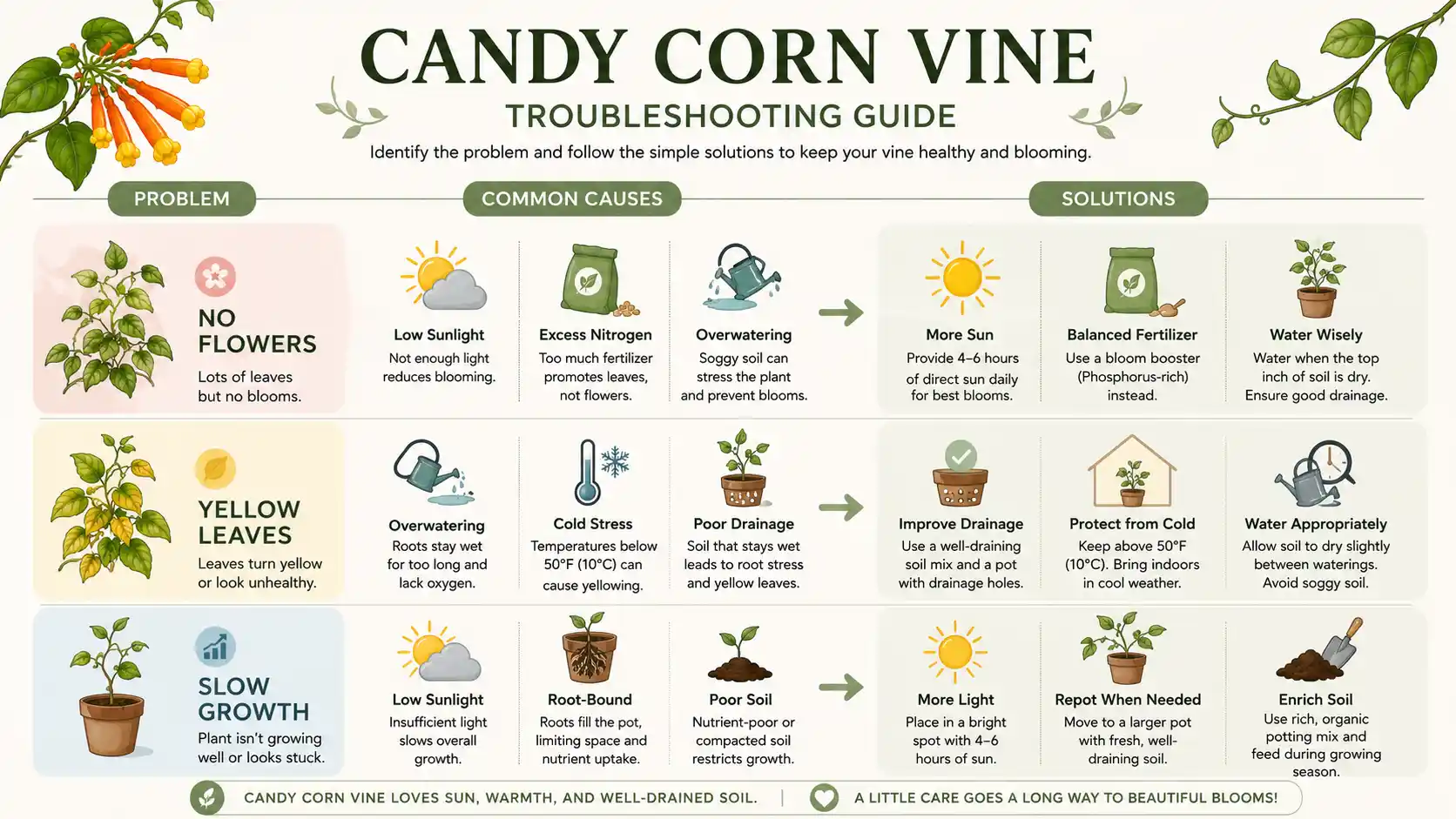
Candy corn vine problems are usually related to environmental conditions rather than serious plant diseases. The most common issues include lack of flowers, slow growth, and leaf problems caused by incorrect light, watering, temperature, or nutrient balance. Identifying the cause early helps restore healthy growth and flowering.
Why Isn’t My Candy Corn Vine Blooming?
A candy corn vine may fail to bloom because it is not receiving enough sunlight, is receiving too much nitrogen fertilizer, or has been pruned at the wrong time. Flower production depends on adequate light, balanced nutrition, and healthy new growth.
Common causes and solutions include:
| Problem | Why It Happens | How to Fix | How to Prevent |
| Lack of sunlight | Too much shade reduces energy for flower production | Move the plant to a brighter location | Provide 4–6 hours of sunlight daily |
| Excess nitrogen fertilizer | Nitrogen encourages leaves instead of flowers | Reduce high-nitrogen feeding and use balanced fertilizer | Avoid over-fertilizing |
| Incorrect pruning timing | Removing flowering stems at the wrong time can reduce blooms | Allow new growth to develop before heavy pruning | Use light pruning and pinching |
Other factors that can reduce flowering include:
- Young plants needing time to establish
- Cool temperatures slowing growth
- Root stress from poor drainage
- Insufficient moisture during active growth
A healthy candy corn vine usually produces more flowers when it receives warm temperatures, bright light, and consistent care.
Slow Growth
Slow growth in candy corn vine is commonly caused by limited root space, insufficient warmth, poor lighting, or nutrient deficiencies. Although the plant grows quickly during warm seasons, growth naturally slows during colder months.
Common causes include:
- Root-bound containers: Crowded roots limit water and nutrient absorption.
- Cool temperatures: Tropical vines grow slowly when temperatures drop.
- Low light: Reduced sunlight decreases photosynthesis.
- Poor soil quality: Compacted or nutrient-poor soil restricts growth.
Solutions include:
- Repot container plants when roots fill the pot.
- Move plants to warmer locations.
- Improve light exposure.
- Refresh old potting soil with nutrient-rich material.
To prevent slow growth, maintain warm conditions during the growing season and provide enough space for roots to expand.
Leaf Drop or Yellowing
Yellowing leaves or leaf drop usually indicate stress from watering problems, temperature changes, or unsuitable growing conditions. Candy corn vine prefers evenly moist soil but reacts poorly to constantly wet roots.
Common causes include:
Overwatering
- Roots remain saturated.
- Oxygen availability decreases.
- Leaves may turn yellow and fall.
Temperature stress
- Cold drafts or frost can damage foliage.
- Sudden environmental changes may trigger leaf loss.
Poor drainage
- Heavy soil prevents proper root function.
Fixes include:
- Allow excess water to drain completely.
- Reduce watering frequency if soil stays wet.
- Move plants away from cold temperatures.
- Use a well-draining soil mixture.
Preventive care includes checking soil moisture before watering and protecting the plant from temperatures below its tolerance range.
Propagating Candy Corn Vine
Candy corn vine can be propagated successfully through stem cuttings, allowing gardeners to create new plants from healthy parent vines. The best time to propagate is during the active growing season, especially spring and summer when the plant produces new growth.
To propagate candy corn vine:
- Select a healthy stem with fresh growth.
- Cut a section approximately 4–6 inches long.
- Remove the lower leaves while keeping a few leaves near the top.
- Place the cutting in water, moist potting mix, or another suitable rooting medium.
- Keep the cutting warm and consistently moist.
- Wait for roots to develop before transplanting.
Stem cutting propagation works because new roots can develop from nodes along the stem. Similar propagation techniques are used for many tropical houseplants, including plants covered in our guide on how to propagate a prayer plant.
Successful rooting conditions include:
- Warm temperatures
- Bright indirect light
- High humidity
- Moist but not soggy rooting medium
Water propagation allows gardeners to observe root development, while soil propagation often produces stronger transition into garden conditions. Gardeners interested in water and soil propagation methods can also explore our Syngonium propagation guide, which compares similar propagation approaches.
Common propagation mistakes include:
- Taking cuttings from unhealthy stems
- Allowing rooting media to dry completely
- Placing cuttings in direct harsh sunlight
- Overwatering newly rooted plants
Once roots are established, gradually acclimate the young plant to its permanent growing location.
Candy Corn Vine vs. Similar Plants (Comparison Block)
Candy corn vine is sometimes confused with other plants because of similar names or colorful appearances. Understanding the differences helps identify the correct species and prevents confusion between unrelated ornamental plants.
Table — Candy Corn Vine vs. Candy Corn Spirea vs. Chocolate Vine
| Plant | Type | Bloom/Foliage | Toxicity |
| Candy Corn Vine (Manettia luteorubra) | Flowering vine | Orange/yellow tubular flowers | Generally non-toxic |
| Candy Corn Spirea | Shrub | Orange-yellow foliage | Mildly toxic to pets (brief mention) |
| Chocolate Vine | Woody vine | Purple flowers, semi-evergreen winter foliage | Non-toxic |
Candy Corn Vine vs. Candy Corn Spirea
Candy corn vine and candy corn spirea are different plants. Candy corn vine is a climbing flowering plant grown for its tubular orange-and-yellow flowers, while candy corn spirea is a shrub valued mainly for colorful foliage.
Common questions about candy corn spirea include:
- Is candy corn spirea invasive?
Candy corn spirea is generally considered a manageable ornamental shrub, but invasive potential depends on location and local growing conditions. - Do deer like candy corn spirea?
Deer resistance varies by region, but spirea is often considered less preferred by deer compared with many other garden plants. - Is candy corn spirea poisonous to dogs?
Some spirea varieties may cause mild digestive upset if consumed by pets, so pet owners should monitor animals around ornamental plants.
Candy Corn Vine vs. Chocolate Vine
Chocolate vine (Akebia quinata) is another climbing plant but has very different characteristics. It produces purple flowers and has semi-evergreen foliage in mild climates. Unlike candy corn vine, it is a woody vine that can become much larger.
A common question is, “What does chocolate vine look like in winter?” Chocolate vine may retain leaves in mild climates but can lose foliage in colder regions before regrowing in spring.
These plants should not be confused because they differ in:
- Flower color
- Growth habit
- Climate requirements
- Maintenance needs
Companion Planting for Candy Corn Vine
Candy corn vine pairs well with plants that enjoy similar warm, sunny conditions. For gardeners creating warm-climate landscapes, native and tropical-friendly plants such as lemon myrtle can also provide valuable inspiration for companion planting and garden design. The best companion plants for candy corn vine are sun-loving species that tolerate similar moisture levels and do not compete aggressively for space.
Good companion choices include:
- Petunias
- Marigolds
- Salvia
- Verbena
- Lantana
- Sweet alyssum
For trellis gardens, candy corn vine can be combined with other ornamental climbers when adequate space and support are available. Avoid overcrowding because dense growth can reduce airflow and increase moisture-related issues.
When choosing companion plants, consider:
- Similar sunlight requirements
- Similar watering needs
- Compatible growth habits
- Adequate spacing between root systems
Conclusion
Candy corn vine (Manettia luteorubra) is a tropical flowering vine valued for its unusual orange-and-yellow blooms, climbing habit, and suitability for containers, hanging baskets, and trellises. It grows as a perennial in warm climates but is often treated as an annual in colder regions where frost limits survival.
Successful candy corn plant vine care depends on providing bright light, consistent moisture, well-drained soil, and proper support for climbing growth. Most flowering problems can be corrected by improving sunlight, adjusting fertilizer use, and maintaining healthy growing conditions.
With the right environment, candy corn vine rewards gardeners with reliable blooms and attractive vertical growth. The key takeaway is simple: the right balance of light, moisture, and care leads to stronger growth and more consistent flowering.
Candy corn vine is one example of how understanding plant characteristics, growing conditions, and care requirements helps gardeners successfully grow a wider range of ornamental plants. Explore more plant care information in our Plants Benefits and Guides collection.
FAQs
Is a candy corn vine an annual or perennial?
Candy corn vine is a tender perennial in USDA Zones 9–11 but is commonly grown as an annual in colder climates. Gardeners in cooler areas can overwinter container plants indoors to grow them again the following season.
How big does candy corn vine get?
Candy corn vine typically grows 3–6 feet long outdoors, with a spread of about 2–3 feet. Container-grown plants usually remain smaller because root space limits overall growth.
Do candy corn vines prefer sun or shade?
Candy corn vines prefer full sun to partial shade. They usually produce the most flowers with several hours of direct sunlight but can tolerate some afternoon shade in hot climates.
Why is my candy corn vine not blooming?
A candy corn vine may not bloom because of insufficient sunlight, excessive nitrogen fertilizer, poor pruning timing, or environmental stress. Improving light exposure and using balanced fertilizer can encourage flowering.
Can I grow a candy corn plant indoors?
Yes, candy corn vine can grow indoors when placed in bright indirect light with proper humidity, warm temperatures, and well-draining soil. Indoor plants often remain smaller and require regular pruning.
Can you propagate a candy corn plant?
Yes, candy corn plants can be propagated through stem cuttings. Healthy cuttings can root in water or moist growing media when kept warm and consistently hydrated.
What is another name for the candy corn vine?
Another name for candy corn vine is firecracker vine or Manettia. The botanical name is Manettia luteorubra, which identifies the tropical flowering vine known for its candy corn-like blooms.