
Introduction
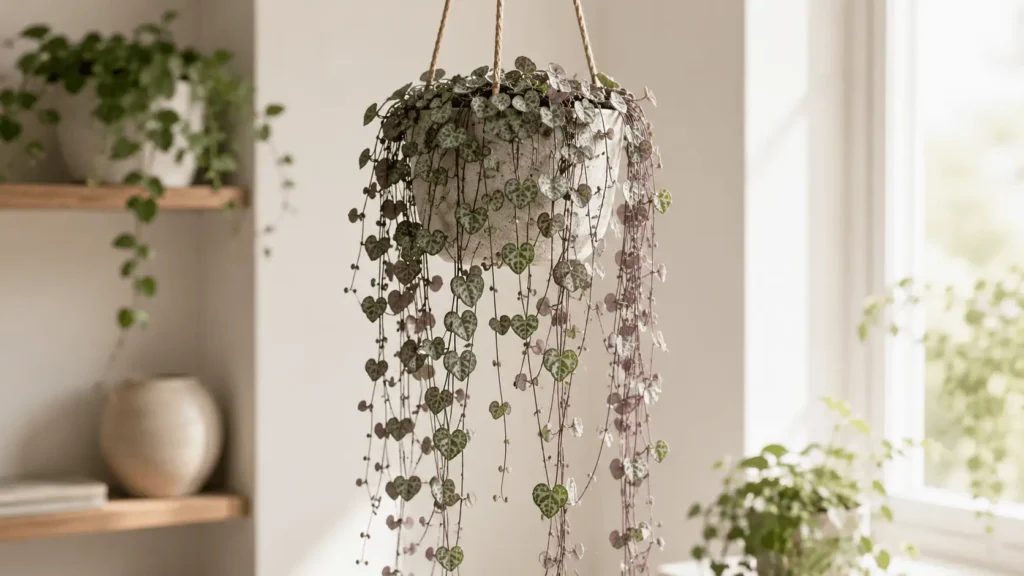
Ceropegia woodii, commonly known as the string of hearts plant, is a trailing succulent vine native to South Africa, valued for its heart-shaped, silver-marbled foliage and cascading growth habit. Botanically classified as Ceropegia linearis subsp. woodii, it belongs to the Apocynaceae family. This plant is widely grown as a decorative hanging houseplant due to its elegant vines and low maintenance requirements. Its taxonomic placement within the Ceropegia genus connects it to other ornamental species, but it remains the most popular due to its distinctive leaf morphology and adaptability.
Quick Summary
- Ceropegia woodii is a trailing succulent vine with heart-shaped, silver-patterned leaves.
- It belongs to the Apocynaceae family and is classified as Ceropegia linearis subsp. woodii.
- It is generally considered non-toxic to cats and dogs, making it pet-friendly.
- Popular varieties include standard, variegata, and Silver Glory.
- It thrives in bright indirect light with minimal watering and well-draining soil.
Plant Identity and Classification
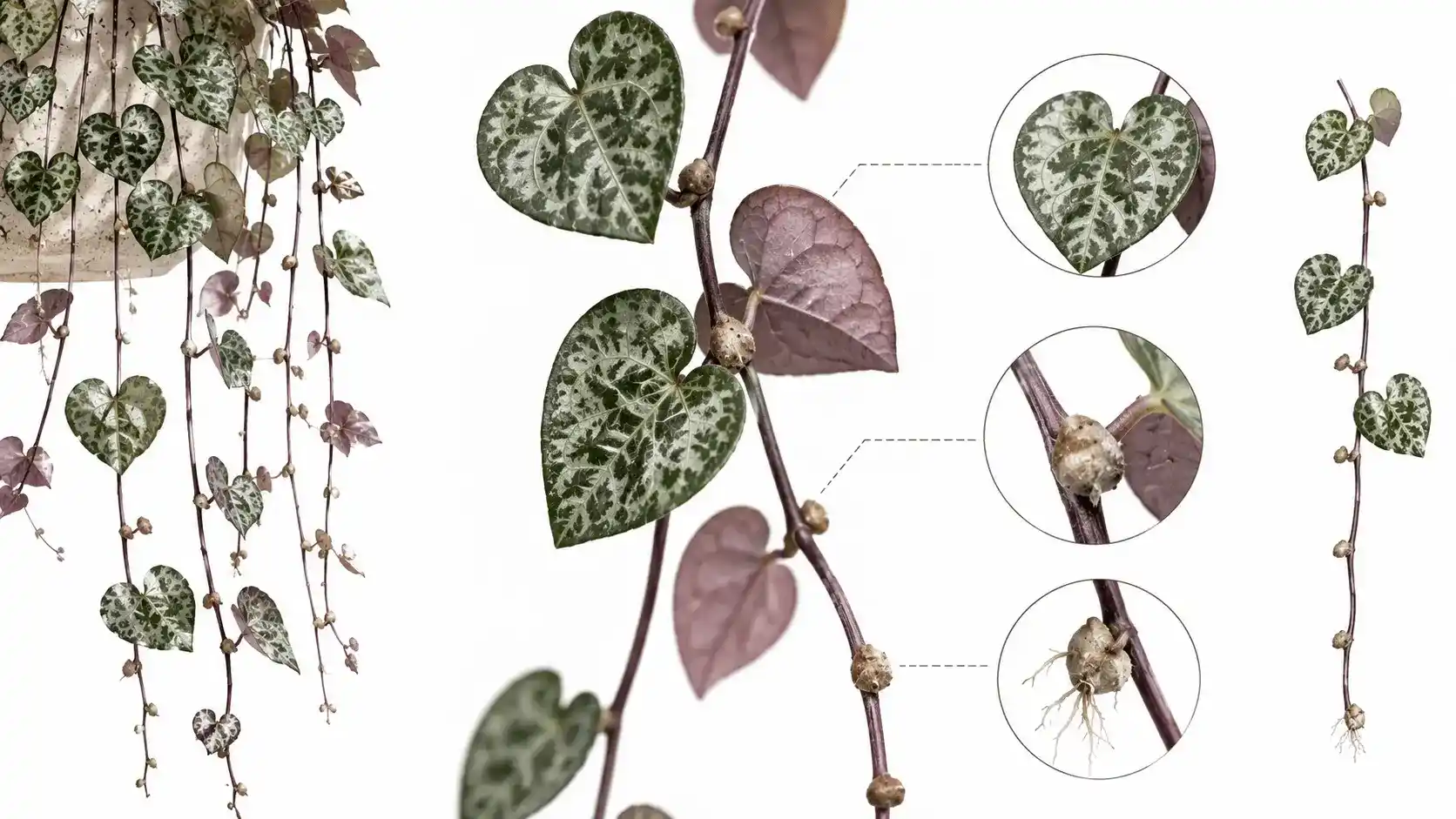
Ceropegia woodii is a semi-succulent trailing plant native to South Africa and Zimbabwe. It is commonly known as string of hearts, rosary vine, chain of hearts, and Leuchterblume in German. Taxonomically, it is classified under the genus Ceropegia within the Apocynaceae family. It is often treated as Ceropegia linearis subsp. woodii, and all these names refer to the same botanical entity. The plant is recognized for its adaptive trailing habit and tuber-forming stems.
According to the Royal Horticultural Society plant database, trailing succulent vines like Ceropegia species are classified under Apocynaceae for their specialized water-storing adaptations.
Many indoor plants share similar ornamental foliage patterns, such as those explained in Ultimate Guide to House Plants with Waxy Leaves: 7+ Easy Types, where leaf texture and moisture retention are compared across species.
Differences from Related Species
Ceropegia woodii differs from other members of the Ceropegia genus mainly in leaf shape, ornamental appeal, and indoor popularity. While the parent species Ceropegia linearis has more elongated foliage, C. woodii is defined by its heart-shaped leaves and decorative silver variegation. It also exhibits a stronger trailing habit, making it more suitable for hanging baskets and indoor decoration.
If you are exploring similar trailing indoor plants, you can also compare it with Peperomia Rotundifolia Care Guide: 6+ Proven Easy Tips, which shares similar cascading growth habits but differs in leaf texture and watering tolerance.
Varieties and Cultivars
- Standard form features green leaves with silver marbling and purple undersides.
- Variegated form displays cream, pink, and green patterns depending on light exposure.
- Silver Glory has predominantly silver leaves with minimal green pigmentation.
| Feature | Standard | Variegated | Silver Glory |
| Leaf color | Green + silver | Cream, pink, green | Mostly silver |
| Light needs | Medium–bright indirect | Bright indirect | Bright indirect |
| Growth rate | Moderate | Slightly slower | Moderate |
| Care difficulty | Easy | Easy–Moderate | Easy |
Size and Growth Behavior
Ceropegia woodii can produce trailing vines reaching 2–4 meters under ideal indoor conditions. Leaf size remains small, typically around 1–2 cm, while bead-like tubers form along the stems over time. Growth is moderate during spring and summer but slows significantly in autumn and winter. Light availability, temperature stability, and pot size strongly influence overall growth performance.
Care Requirements
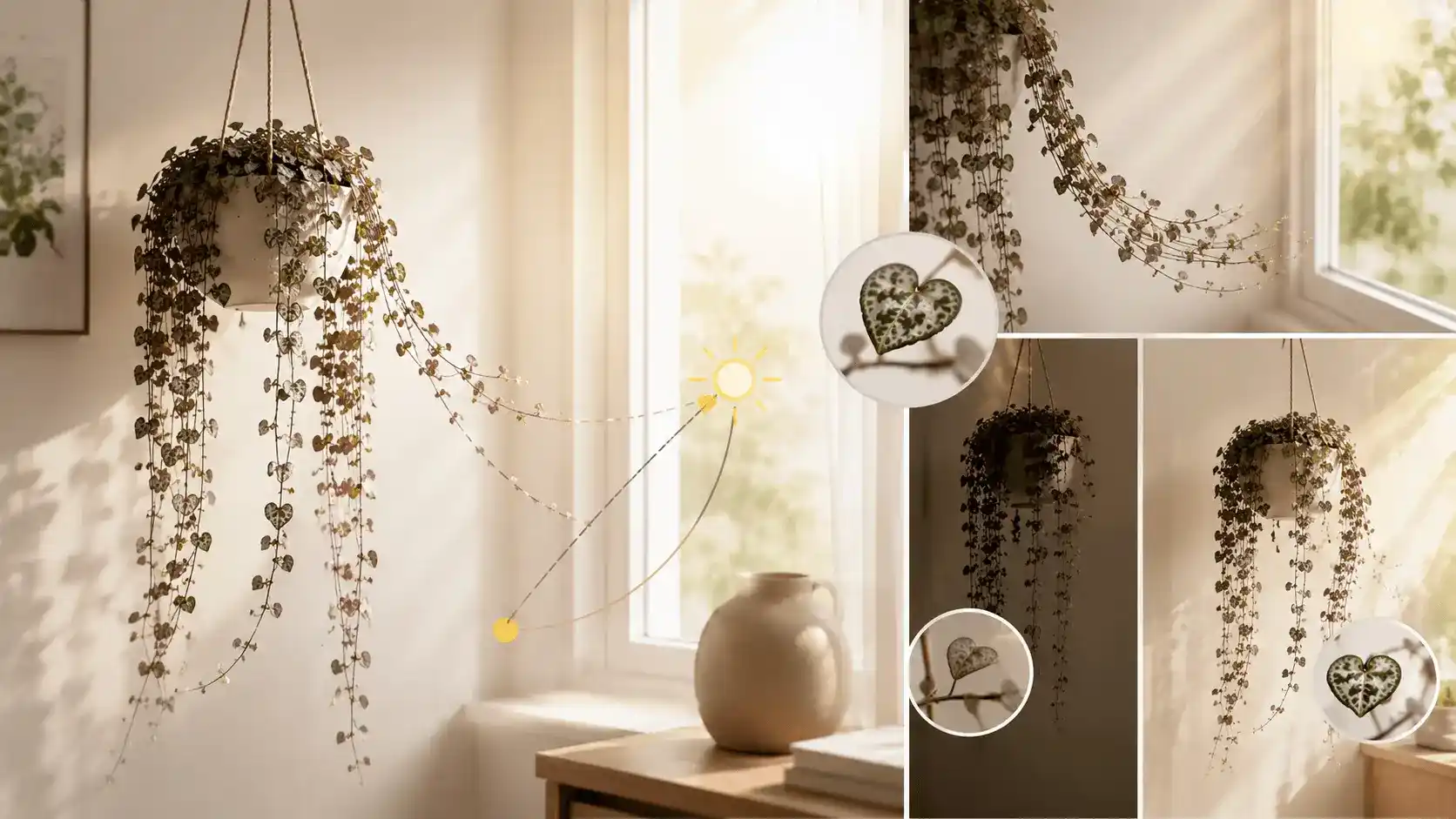
The plant thrives in bright indirect light, as low light conditions lead to sparse and weak growth. Watering should follow a soak-and-dry method, allowing soil to dry almost completely between watering cycles. It requires well-draining soil, ideally a cactus mix with added perlite, and pots with drainage holes.
Other indoor tropical plants like Dracaena fragrans Care Guide: Complete Indoor Growing Tips follow similar care principles but are more drought-tolerant compared to trailing succulents.
Preferred temperature range is 15–27°C, with no frost tolerance below 10°C. It adapts well to average household humidity levels. Fertilization is needed only during active growth, using diluted balanced fertilizer once or twice monthly, while feeding should stop in winter.
Propagation Methods
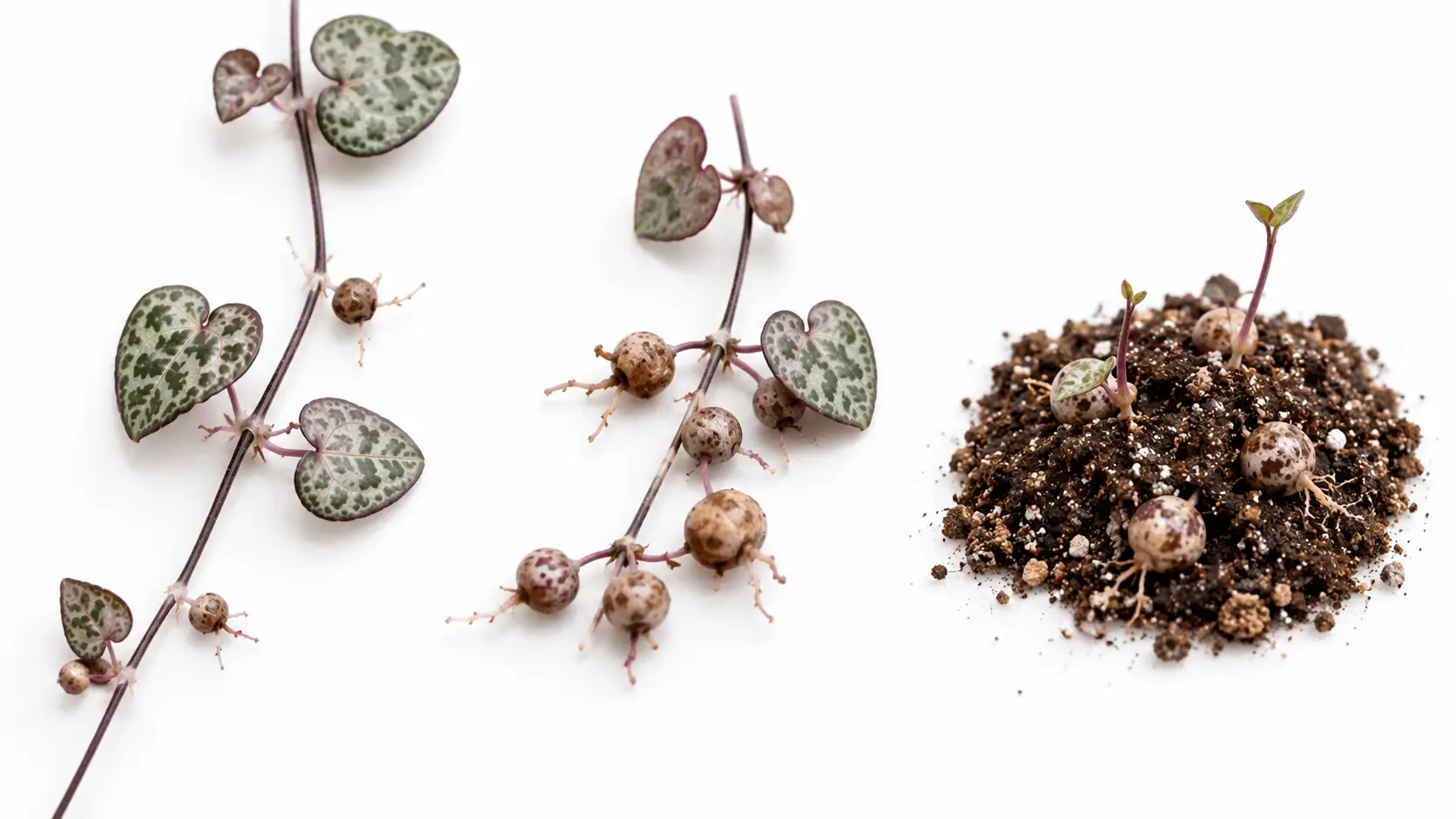
Stem cuttings are the most reliable method. A healthy vine section with 2–3 nodes is cut, allowed to callous, then placed in water or moist soil until roots develop. Aerial tubers can be planted directly into soil, where they root under warm, bright indirect light. Leaf cuttings are possible but significantly less reliable compared to stems or tubers.
Propagation techniques vary across indoor species, for example in Begonia Maculata Care Guide for Healthy Growth, where leaf-based propagation methods are more common than tubers or vines.
Flowering Characteristics
Ceropegia woodii produces tubular, lantern-shaped purple-pink flowers, typically in late summer to autumn. Flowering is encouraged by bright indirect light, mild stress from reduced watering, and slightly root-bound conditions. The flowers are small but highly distinctive, adding ornamental value.
Toxicity and Pet Safety
Ceropegia woodii is widely considered non-toxic to cats and dogs according to plant safety references. However, ingestion of large amounts may still cause mild gastrointestinal discomfort in sensitive pets. It is generally regarded as a safe option for households with animals.
Veterinary plant safety databases confirm that Ceropegia woodii is generally considered non-toxic to cats and dogs, though ingestion may still cause mild digestive discomfort.
Common Problems and Solutions
- Yellow leaves are usually caused by overwatering or poor drainage.
- Leggy growth results from insufficient light exposure.
- Root rot occurs when soil remains wet for too long and requires immediate repotting and root pruning.
- Pests such as mealybugs and fungus gnats can be managed using neem oil, insecticidal soap, and improved watering habits.
Similar pest and humidity-related issues also appear in Alocasia Amazonica Care Indoors, especially under low humidity indoor environments.
Similar Plants Comparison
Ceropegia woodii differs from string of pearls (Senecio rowleyanus) in leaf shape and watering tolerance, with pearls requiring slightly different care. Compared to string of turtles (Peperomia prostrata), C. woodii grows faster and prefers brighter light conditions.
Broader comparisons of indoor plant care styles can also be found in Paper Plant Care: Fatsia Japonica Guide, which focuses on large-leaf structural indoor plants.
Beginner Mistakes
- Overwatering is the most common cause of plant decline
- Low light leads to weak, sparse vines
- Heavy soil causes root suffocation and rot
- Ignoring tuber propagation limits plant multiplication
- Overpotting slows healthy root development
Ceropegia woodii shares care principles with many ornamental indoor plants featured in Plants: Benefits and Guides (Complete Care, Types & Growing Tips), which explores watering, light, and propagation strategies across multiple houseplant species.
Conclusion
Ceropegia woodii is a low-maintenance trailing succulent known for its heart-shaped foliage, elegant vines, and easy propagation. With proper light, minimal watering, and well-draining soil, it thrives indoors and produces long cascading growth. Its adaptability and pet-friendly nature make it one of the most popular ornamental houseplants worldwide.
FAQs
1. Is Ceropegia woodii safe for cats?
Yes, it is considered non-toxic to cats and dogs, though large ingestion may cause mild stomach upset.
2. How often should it be watered?
Every 7–14 days in summer and every 3–4 weeks in winter, depending on soil dryness.
3. Why are leaves turning yellow?
Usually due to overwatering or poor drainage, leading to root stress.
4. Can it grow in low light?
It survives but becomes leggy and loses compact growth in low light conditions.
5. How do tubers propagate the plant?
Tubers can be placed on moist soil where they naturally root and form new vines.
6. When does it flower?
Typically in late summer to autumn under bright light conditions.



One Response