

Introduction
Caring for a Ficus elastica is relatively simple when its basic environmental needs are met. Ficus elastica, commonly known as the rubber plant, rubber fig, or rubber ficus, is a tropical evergreen tree native to South and Southeast Asia. It is widely grown as a houseplant because of its glossy foliage, upright growth habit, and adaptability to indoor conditions. Popular cultivars include Robusta, known for its large deep-green leaves, and Tineke, valued for its attractive variegated foliage. Is Ficus elastica easy to care for? Yes. With proper light, careful watering, and well-draining soil, it is considered one of the most reliable indoor plants for beginners and experienced growers alike. Ficus elastica is one of many popular indoor plants featured in our comprehensive Plants Benefits and Guides resource, covering care, growth habits, and indoor gardening tips.
Like the ZZ plant, Ficus elastica is valued for its ability to tolerate occasional neglect while maintaining an attractive appearance.
Quick Summary
- Ficus elastica is a resilient indoor tree that thrives in bright indirect light and well-draining soil.
- Water only when the top 2–3 cm of soil are dry; overwatering is the most common care mistake.
- It can be pruned and propagated from stem cuttings, making it easy to shape and multiply.
- Indoor rubber plants offer decorative appeal, low-maintenance care, and potential air-quality benefits.
What Is a Ficus Elastica?
Ficus elastica is a tropical species in the Moraceae family and is commonly known as the rubber plant, rubber tree, rubber fig, rubber ficus, or Indian rubber fig. In its native habitat, it grows as a large evergreen tree, while indoors it is typically maintained as a compact ornamental houseplant.
Botanical classification and species information can be verified through the Missouri Botanical Garden plant database.
The plant is valued for its thick, leathery leaves and architectural appearance. Outdoors in suitable tropical climates, it can reach substantial heights, but indoors it remains manageable with routine pruning. With its thick, glossy foliage, Ficus elastica is often included among the most attractive house plants with waxy leaves grown indoors.
Ficus elastica and Ficus robusta are closely related. Robusta is generally regarded as a cultivar of Ficus elastica and is recognized by its larger, broader leaves and vigorous growth. Ficus Tineke is a variegated cultivar featuring cream, green, and pink-toned foliage.
As a houseplant, Ficus elastica performs exceptionally well indoors. Outdoors, it is best suited to frost-free tropical and subtropical regions.
Ficus Elastica vs Ficus Robusta vs Ficus Tineke
| Feature | Ficus Elastica | Ficus Robusta | Ficus Tineke |
| Leaf Appearance | Glossy green leaves | Larger, darker leaves | Variegated green, cream, and pink |
| Mature Indoor Size | Large | Slightly larger and fuller | Moderate |
| Light Tolerance | Bright indirect light | Moderate to bright indirect light | Requires brighter light |
| Care Intensity | Low | Low | Moderate |
| Growth Speed | Moderate | Fast-moderate | Moderate |
| Soil Needs | Well-draining soil | Well-draining soil | Well-draining, aerated soil |
For ficus robusta care, maintain similar conditions to standard Ficus elastica. Ficus Tineke requires brighter conditions and well-draining ficus tineke soil to preserve variegation.
Light Requirements for Ficus Elastica
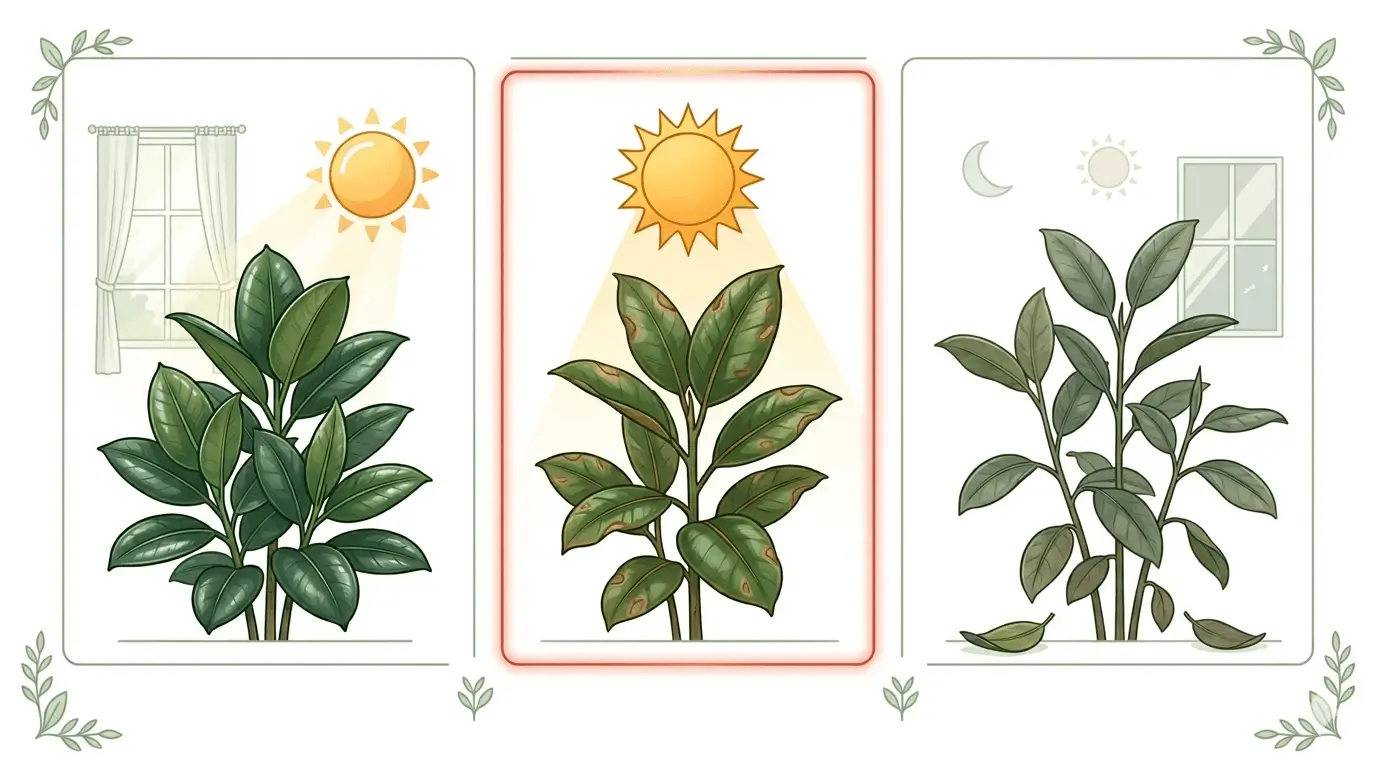
Bright indirect light is the ideal condition for healthy Ficus elastica growth. While the plant can tolerate lower light levels, insufficient light often leads to slower growth, elongated stems, and leaf drop. Compared with Alocasia Amazonica, Ficus elastica is generally more forgiving of minor fluctuations in indoor light conditions.
Direct afternoon sun can scorch foliage, especially on variegated cultivars. A location near an east-facing or filtered south-facing window is often ideal.
Quick light guidelines:
- Bright indirect light is optimal.
- Morning sun is generally safe.
- Harsh afternoon sun can damage leaves.
- Low light reduces growth and leaf production.
- Variegated Ficus Tineke needs more light than green varieties.
Light and soil work together. Even when using the correct ficus tineke soil mix, inadequate lighting can reduce plant vigor and variegation quality.
How Often to Water a Ficus Elastica
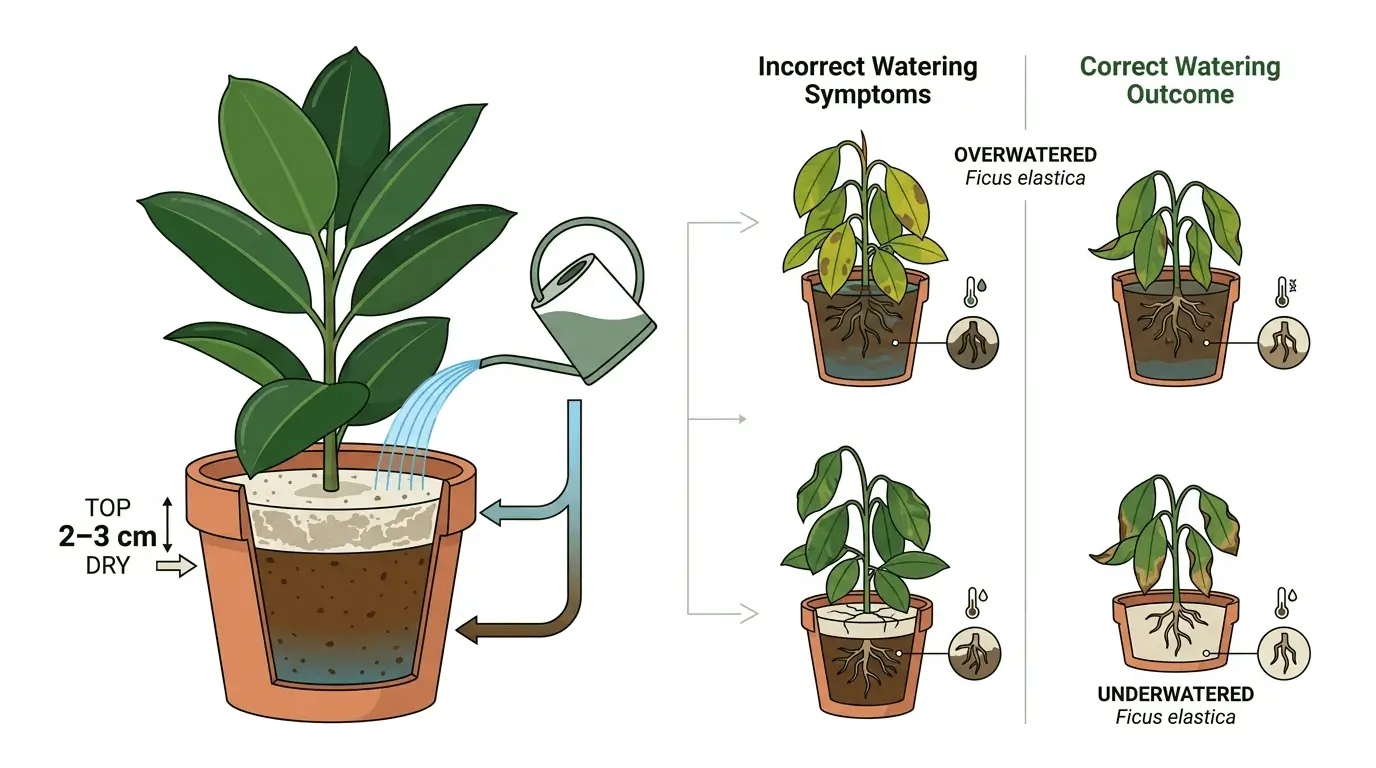
A Ficus elastica should be watered when the top 2–3 cm of soil become dry. The most effective approach is the soak-and-dry method, which allows roots to receive moisture without remaining constantly wet.
Watering frequency varies according to season, temperature, humidity, and pot size. Most indoor plants require more water during spring and summer and less during winter dormancy.
Watering checklist:
- Check soil moisture before watering.
- Water thoroughly until excess drains from the pot.
- Empty drainage trays after watering.
- Reduce watering during winter.
- Increase monitoring during hot weather.
| Overwatered Symptoms | Underwatered Symptoms |
| Yellow leaves | Dry soil |
| Leaf drop | Curling leaves |
| Soft stems | Crispy edges |
| Root rot odor | Drooping foliage |
| Constantly wet soil | Slow recovery after watering |
Pot material also affects watering frequency. Terracotta dries faster than plastic or glazed ceramic containers.
Best Soil for a Rubber Plant
The best soil for a rubber plant is well-draining, slightly acidic, and rich in aeration. Healthy roots require access to oxygen as well as moisture.
A quality rubber plant soil mix typically includes:
- Potting soil
- Perlite or pumice
- Orchid bark or coarse organic material
This combination helps prevent compaction and improves drainage.
DIY soil mix:
- 2 parts quality potting mix
- 1 part perlite
- 1 part orchid bark
Commercial indoor plant mixes can also work well when supplemented with additional drainage materials.
Avoid:
- Heavy clay soils
- Compacted garden soil
- Waterlogged mixes
- Containers without drainage holes
When caring for a Ficus elastica in pots, soil quality and container drainage are equally important for root health.
Complete Care Guide: Temperature, Humidity, and Feeding
Ficus elastica thrives in warm indoor conditions and moderate humidity levels. Consistency is more important than extreme warmth.
Temperature guidelines:
- Ideal range: 18–27°C
- Avoid temperatures below 13°C
- Protect from cold drafts
- Keep away from air-conditioning vents
Humidity preferences:
- Moderate household humidity is sufficient.
- Higher humidity encourages larger leaves.
- Occasional misting may help in dry environments.
Feeding schedule:
- Feed monthly during spring and summer.
- Use a balanced houseplant fertilizer.
- Reduce or stop fertilizing during winter.
- Avoid overfeeding, which may damage roots.
Ficus robusta care is similar, though Robusta may tolerate minor temperature fluctuations slightly better than more sensitive variegated cultivars. Unlike humidity-loving plants such as Begonia maculata, Ficus elastica adapts well to average household humidity levels.
| Season | Care Focus |
| Spring | Resume feeding and active watering |
| Summer | Peak growth period |
| Autumn | Gradually reduce feeding |
| Winter | Water less and avoid cold exposure |
Caring for a Ficus Elastica in Pots
Choosing the correct container is essential for long-term plant health.
Pot care recommendations:
- Select a pot with drainage holes.
- Increase pot size gradually when repotting.
- Repot every 2–3 years or as needed.
- Use a stable container for larger specimens.
Signs a plant is pot-bound include:
- Roots emerging from drainage holes
- Water draining too quickly
- Slowed growth
- Dense root mass inside the container
Pot size influences both watering frequency and root development, making it closely connected to soil and moisture management.
Many of the same container principles discussed in selecting the best pot for Monstera also apply to rubber plants, particularly regarding drainage and root space.
How Big Does a Ficus Elastica Grow Indoors?
A full grown rubber tree indoors typically reaches between 1.8 and 3 meters tall. Under ideal conditions, some specimens may grow even larger.
Outdoor plants in tropical climates can exceed 15 meters in height.
Factors influencing size include:
- Available light
- Pot size
- Fertilization
- Pruning frequency
- Indoor temperature
Regular pruning helps maintain a manageable size while encouraging branching.
Ficus Elastica Growth Rate
Ficus elastica is generally considered a moderate to fast-growing houseplant.
Most growth occurs during spring and summer when temperatures are warm and light levels are higher. Growth slows significantly during autumn and winter.
Factors affecting growth rate:
- Light intensity
- Nutrient availability
- Pot size
- Watering practices
- Temperature
A healthy plant often produces new leaves every few weeks during the active growing season.
How to Prune a Ficus Elastica
Yes, you can prune Ficus elastica. Pruning helps control height, improve shape, and encourage branching. The best time to prune is during spring or early summer. Important safety note: Ficus elastica produces a milky latex sap that can irritate skin and eyes.
Pruning steps:
- Wear gloves before pruning.
- Sterilize cutting tools.
- Identify the desired cutting point above a node.
- Make a clean cut.
- Wipe away excess sap.
- Allow wounds to dry naturally.
Ficus robusta responds particularly well to hard pruning and often produces vigorous new growth afterward.
How to Propagate a Ficus Elastica
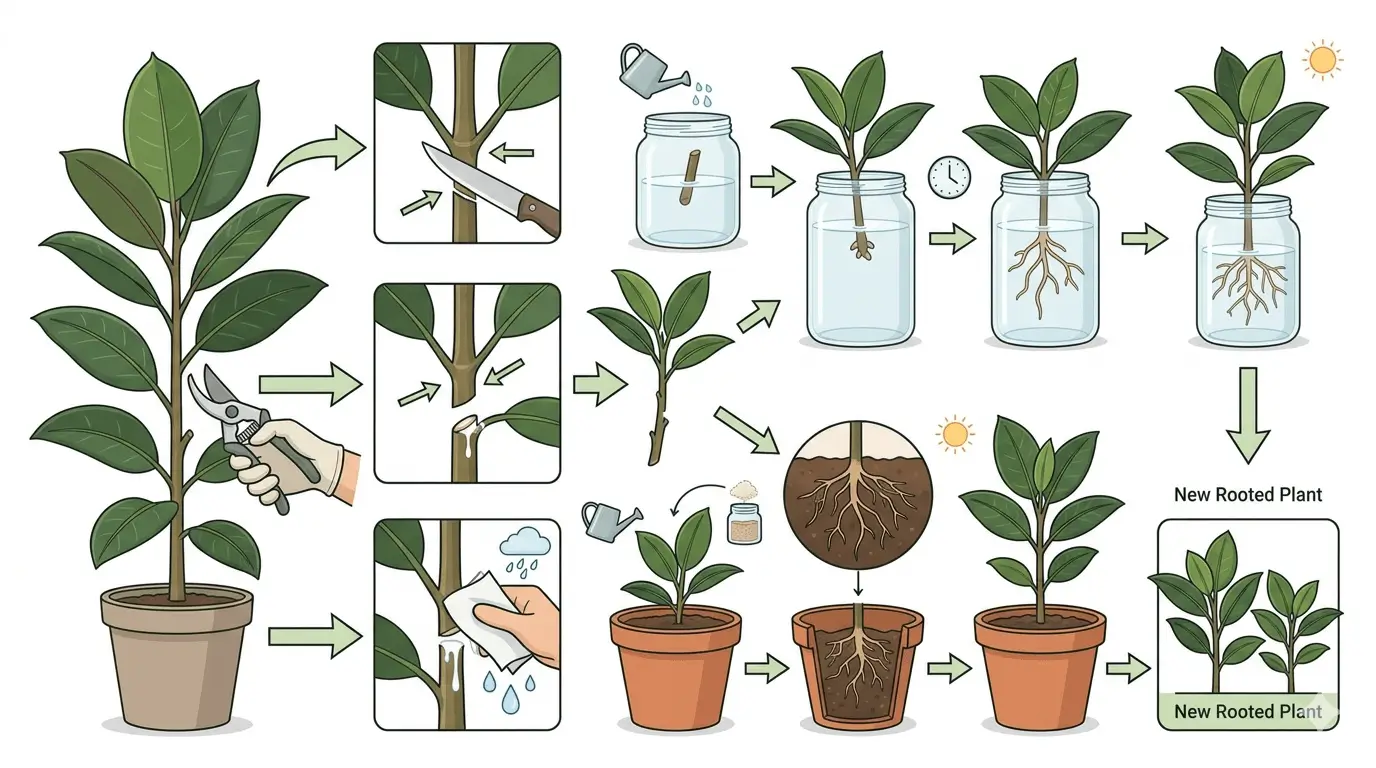
Ficus elastica propagation is commonly performed through stem cuttings or air layering.
Stem cuttings in water:
- Take a healthy cutting.
- Remove lower leaves.
- Place the stem in clean water.
- Change water regularly.
- Transplant once roots develop.
Stem cuttings in soil:
- Use a sterile propagation mix.
- Insert the cutting into moist soil.
- Maintain warmth and humidity.
- Keep in bright indirect light.
Air layering:
- Make a small incision on a mature stem.
- Wrap the area with moist sphagnum moss.
- Cover with plastic.
- Remove and plant once roots develop.
Successful rooting requires:
- Warm temperatures
- Consistent humidity
- Bright indirect light
- Healthy parent material
Common failures include excessive sap at the cut site, low humidity, and poor temperature conditions.
Taking a Rubber Plant Cutting
Proper cutting technique improves propagation success.
Guidelines:
- Cut just below a node.
- Select a healthy stem with multiple leaves.
- Remove lower leaves.
- Leave one or two leaves at the top.
- Allow excess sap to stop flowing.
- Place into water or propagation medium.
This method works well for rubber tree cuttings, rubber tree propagation, and creating a rubber plant from cutting.
Benefits of Growing a Ficus Elastica Indoors
Ficus elastica offers several practical and decorative benefits.
Key benefits include:
- Bold architectural foliage that enhances interior design.
- Relatively low-maintenance care requirements.
- Long lifespan when properly maintained.
- Potential air-quality benefits reported in indoor plant studies.
- Increased connection to nature indoors.
- Attractive focal point for homes and offices.
Many growers also value the psychological benefits associated with caring for indoor plants, including reduced stress and improved indoor atmosphere. Alongside popular indoor plants such as Dracaena fragrans, rubber plants are frequently chosen for their architectural form and low-maintenance care requirements.
Common Ficus Elastica Problems and How to Fix Them
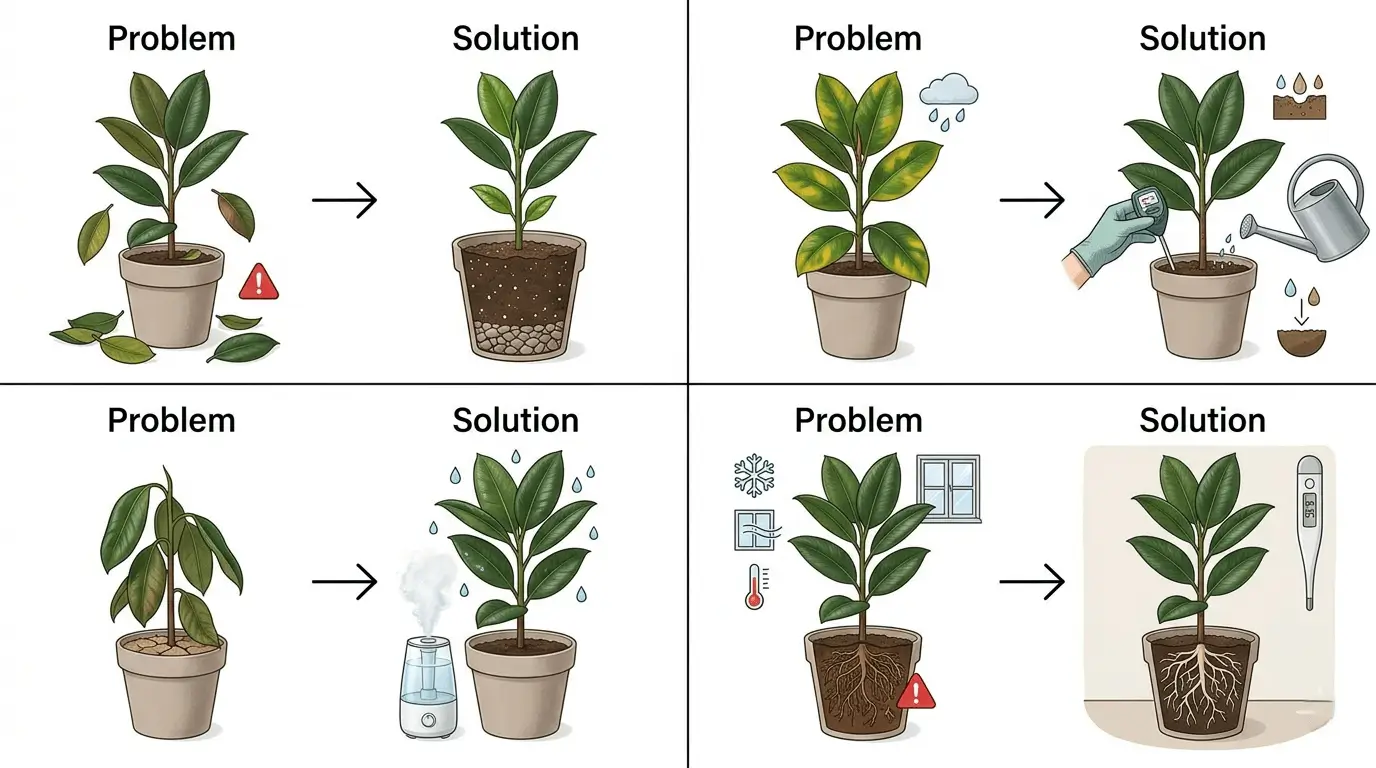
Many common problems can be resolved by adjusting light, watering, or environmental conditions.
Leaves Falling Off
Leaf drop is usually caused by environmental stress.
Common causes:
- Overwatering
- Cold drafts
- Sudden relocation
- Low humidity
Solutions:
- Check soil moisture.
- Stabilize growing conditions.
- Avoid abrupt environmental changes.
- Maintain moderate humidity.
Prevention:
- Follow a consistent watering routine.
- Protect from temperature fluctuations.
- Avoid moving the plant frequently.
Yellowing Leaves
Yellow leaves often indicate a watering or root issue.
Potential causes:
- Overwatering
- Nutrient deficiency
- Root rot
Solutions:
- Reduce watering frequency.
- Inspect roots.
- Improve drainage.
- Apply balanced fertilizer if needed.
Prevention:
- Use well-draining soil.
- Avoid constantly wet conditions.
- Monitor plant health regularly.
Drooping or Dull Leaves
Drooping foliage commonly indicates underwatering or low humidity.
Other contributing factors may include:
- Hot indoor air
- Winter heating systems
- Extended dry periods
Solutions:
- Water thoroughly when soil dries.
- Increase humidity if needed.
- Move away from heat sources.
Prevention:
- Monitor seasonal moisture changes.
- Maintain stable indoor conditions.
Many leaf-related issues seen in rubber plants are similar to the dry-leaf problems commonly observed in Chamaedorea elegans when environmental conditions become unfavorable.
Beginner Mistakes When Caring for a Ficus Elastica
Many issues arise from a few common mistakes.
Avoid:
- Overwatering the plant.
- Placing it near radiators or cold drafts.
- Repotting too frequently.
- Using dense, poorly draining soil.
- Ignoring seasonal watering changes.
- Allowing excessive dust to accumulate on leaves.
Wiping leaves periodically helps improve light absorption and keeps foliage looking healthy. Although both plants are considered beginner-friendly, Ficus elastica typically grows much larger than Peperomia rotundifolia and requires more long-term space planning.
Conclusion
Caring for a Ficus elastica is straightforward once you understand its core needs. Bright indirect light, careful watering, well-draining soil, and stable indoor temperatures create the foundation for healthy growth. Regular pruning helps maintain shape, while propagation allows gardeners to create new plants from existing specimens. Whether growing a classic rubber plant, a robust Ficus Robusta, or a variegated Ficus Tineke, following these essential care practices will support long-term health and attractive foliage indoors.
Frequently Asked Questions
1. How often should you water a rubber plant indoors?
Most indoor rubber plants require watering every 1–2 weeks during spring and summer and every 2–3 weeks during winter. Always check soil moisture first and water only when the top 2–3 cm of soil have dried.
2. Is Ficus elastica easy to care for as a houseplant?
Yes. Ficus elastica is considered one of the easier tropical houseplants to grow. Its main sensitivities are overwatering and exposure to cold drafts.
3. What is the best soil mix for a rubber plant?
The ideal mix is well-draining and slightly acidic, typically combining potting soil, perlite, and orchid bark. Ficus Tineke benefits from the same structure because healthy roots support strong variegation.
4. Why are my Ficus elastica's leaves falling off?
Leaf drop is commonly caused by overwatering, cold temperatures, relocation stress, or insufficient light. Reviewing recent environmental changes often helps identify the cause.
5. Can you propagate a rubber plant from a cutting?
Yes. Stem cuttings can be rooted in either water or soil. Warm temperatures, humidity, and bright indirect light improve rooting success.
6. How big does a rubber tree grow indoors?
Most indoor rubber trees reach between 1.8 and 3 meters tall. Growth depends on light levels, pot size, pruning, and overall care.



One Response