
Introduction
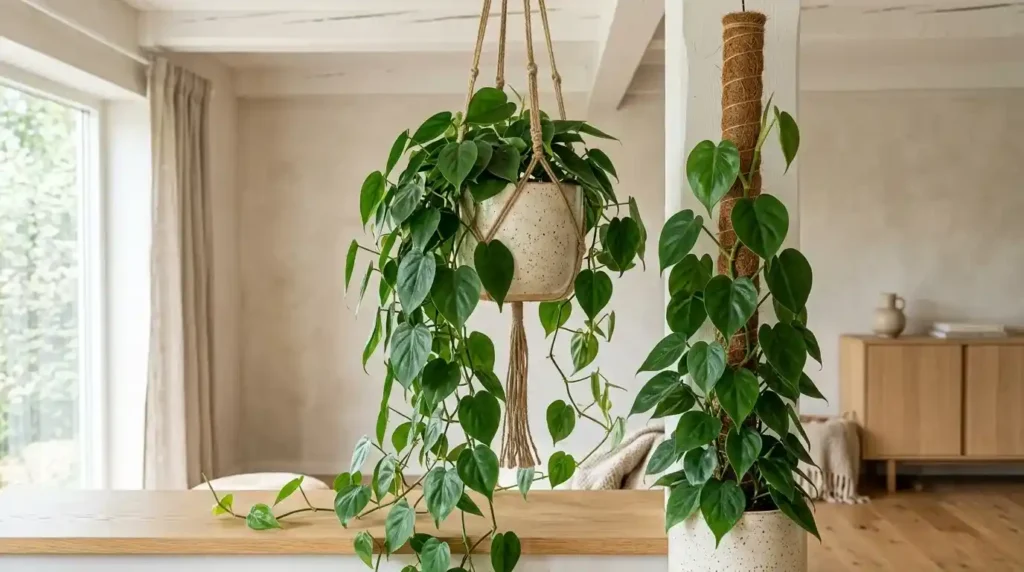
Philodendron scandens is a tropical climbing and trailing vine known for its glossy heart-shaped leaves and adaptable growth habit. Native to tropical regions of Central and South America, it belongs to the Araceae family and is one of the most widely grown indoor plants worldwide. The plant can trail gracefully from hanging baskets or climb upward using aerial roots when given support. Its forgiving nature, attractive foliage, and ability to thrive in typical indoor conditions make it a favorite among beginners and experienced plant enthusiasts. Whether grown for decoration, easy care, or propagation projects, philodendron scandens remains one of the most reliable houseplants available. Philodendron scandens belongs to the genus Philodendron, a widely studied group of tropical plants known for their ornamental foliage and climbing growth habits.
Like other easy indoor plants such as the Sansevieria Laurentii Care Guide, philodendron scandens is highly beginner-friendly and adaptable to indoor conditions.
Quick Summary
- Philodendron scandens is a fast-growing tropical vine suitable for climbing supports and hanging baskets.
- It grows best in bright indirect light with moderate watering and well-draining soil.
- Popular varieties include Green, Silver, Brasil, Variegatum, Micans, Lemon Lime, and Pictus.
- Regular pruning helps create a bushier and fuller appearance.
- It is one of the easiest and most forgiving indoor plants to maintain.
Is Philodendron Scandens a Hanging or Climbing Plant?
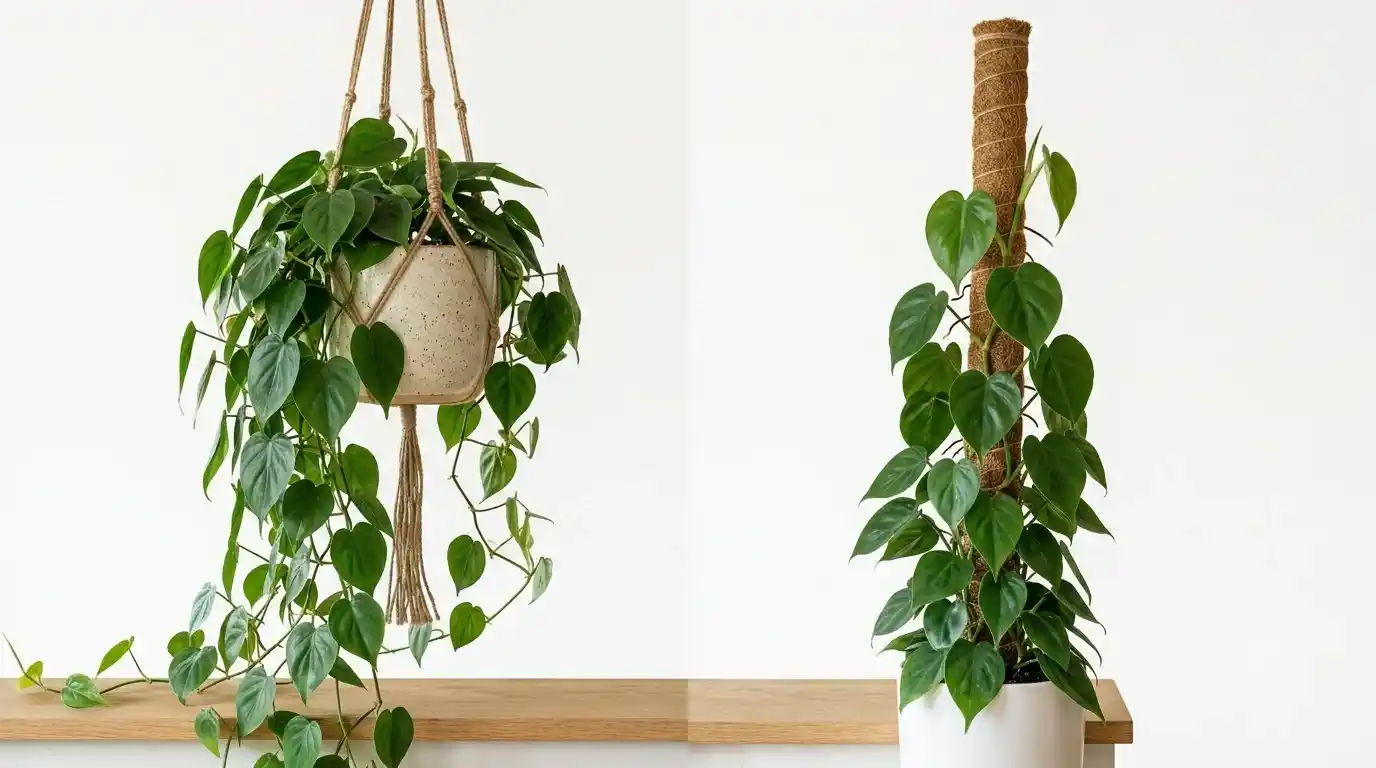
Philodendron scandens is both a hanging and climbing plant. In its natural habitat, it climbs trees using aerial roots, while indoors it can either trail from containers or climb moss poles, trellises, and supports. Many aroids such as Monstera Adansonii Hanging or Climbing share the same climbing behavior using aerial roots.
The plant naturally produces long vines that seek support. When no support is available, the stems trail downward, making it an excellent choice for hanging baskets and shelves. When provided with a climbing structure, the aerial roots attach to the surface and encourage upward growth.
Its growth habit influences display options, maintenance requirements, and overall appearance. Homeowners can choose between a cascading display or a vertical climbing specimen depending on available space and desired aesthetics.
Trailing plants such as Ceropegia woodii Care Guide & Plant Info are often used in hanging baskets in a similar way to philodendron scandens.
Trailing vs Climbing Growth: What Changes in Care
Trailing and climbing growth forms require slightly different management.
- Climbing plants often develop larger leaves.
- Moss poles help retain moisture around aerial roots.
- Hanging baskets create longer cascading vines.
- Climbing encourages stronger vertical growth.
- Trailing growth often appears bushier near the container when regularly pruned.
Plants grown on supports typically develop shorter internode spacing and more mature foliage, while trailing specimens emphasize vine length and decorative cascading growth.
Philodendron Scandens Care: Core Requirements at a Glance
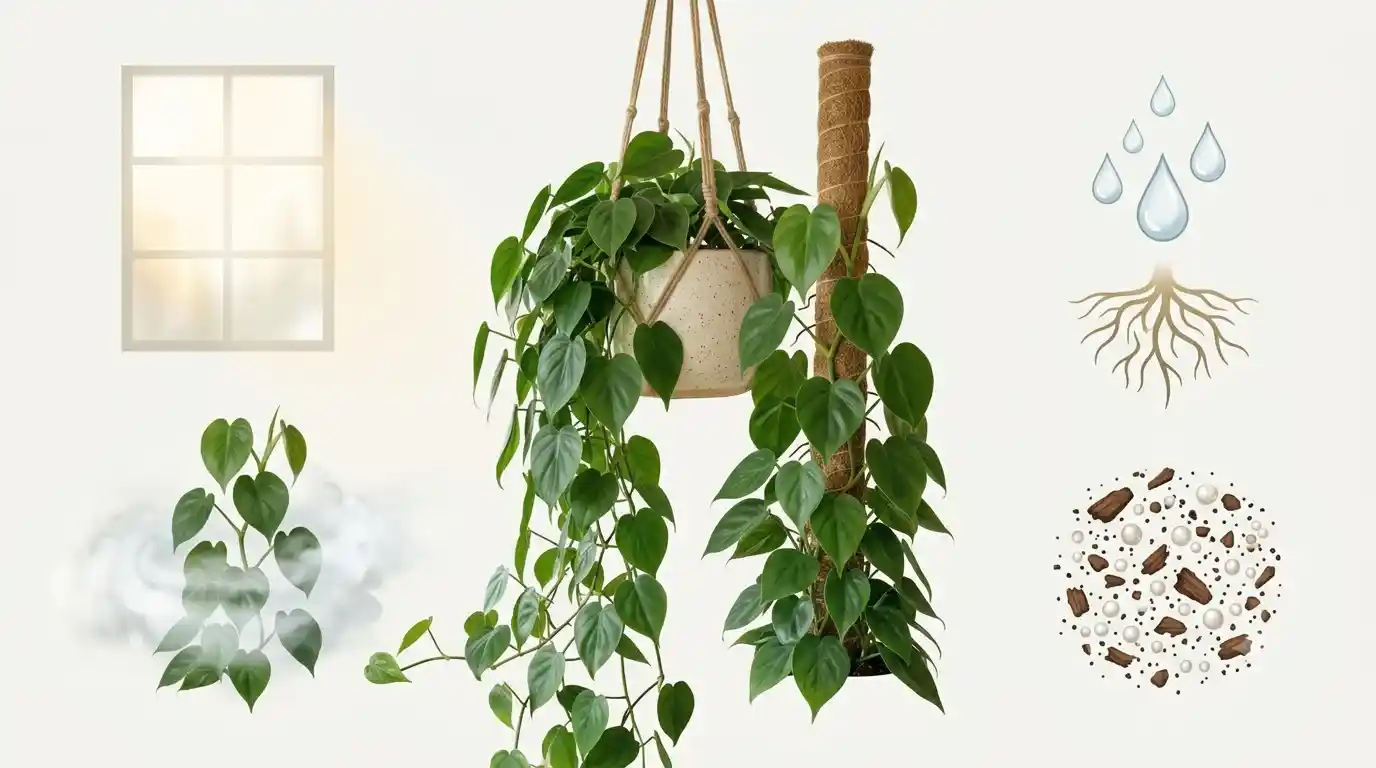
Philodendron scandens grows best in bright indirect light, evenly moist but not waterlogged soil, moderate humidity, and warm temperatures. It is considered one of the easiest aroids to maintain indoors.
| Care Factor | Requirement | Notes |
| Light | Bright indirect light | Tolerates lower light |
| Water | When top 1–2 inches dry | Avoid soggy soil |
| Humidity | 40–60%+ | Higher humidity preferred |
| Soil | Well-draining aroid mix | Prevents root rot |
| Fertilizer | Monthly in growing season | Balanced liquid fertilizer |
| Temperature | 60–85°F (15–30°C) | Protect from cold |
| Repotting | Every 1–2 years | Repot when rootbound |
Light Requirements for Philodendron Scandens
- Bright indirect light is ideal for philodendron scandens. This lighting condition supports healthy growth, vibrant foliage, and strong stem development.
- The plant tolerates medium and lower light conditions, but growth slows noticeably and vines may become leggy. Variegated cultivars generally require brighter conditions to maintain coloration.
- Avoid prolonged direct sunlight because it can scorch leaves, causing yellowing and brown patches.
- Indoor placement near east-facing windows or a few feet from south- or west-facing windows usually provides suitable light levels.
Watering Philodendron Scandens: How Often and How Much
Water philodendron scandens when the top 1–2 inches of soil become dry.
During spring and summer, watering is typically needed every 7–10 days depending on environmental conditions. During winter, watering frequency usually decreases to every 14–21 days.
Signs the plant needs water include:
- Slightly drooping leaves
- Dry upper soil layer
- Lightweight container
Overwatering remains the most common cause of plant decline and often leads to root rot.
Soil, Humidity, and Temperature Needs
Philodendron scandens prefers a loose, well-draining aroid soil mixture.
A suitable mix often contains:
- Potting soil
- Perlite
- Orchid bark
- Coco coir
Humidity levels between 40% and 60% support healthy growth, although higher humidity can improve foliage quality.
The ideal temperature range is 60–85°F (15–30°C). Exposure to frost, cold drafts, or temperatures below 50°F (10°C) can damage or kill the plant.
Fertilizing and Repotting Schedule
Apply a balanced liquid fertilizer once monthly during spring and summer. Reduce or stop feeding during winter when growth slows naturally.
Repot every 1–2 years or when signs of root restriction appear:
- Roots emerging from drainage holes
- Water draining too quickly
- Stunted growth
- Crowded root system
Moving the plant into a container one size larger typically provides sufficient room for continued growth.
How Big Does Philodendron Scandens Get?
Philodendron scandens can exceed 4–6 feet in length indoors and grow significantly longer outdoors in tropical climates.
Indoor size depends on:
- Available light
- Humidity levels
- Container size
- Fertilization
- Pruning frequency
Climbing plants often develop larger leaves than trailing specimens because vertical support mimics natural growth conditions.
Outdoor plants in frost-free environments may reach several meters in length when allowed to climb trees or structures.
Growth Rate and Seasonal Patterns of Philodendron Scandens
Philodendron scandens is considered a moderate-to-fast-growing houseplant.
Under ideal conditions, it produces steady vine extension throughout the growing season. Growth is strongest during spring and summer when temperatures are warm and daylight increases.
Factors that encourage rapid growth include:
- Bright indirect light
- Consistent moisture
- Warm temperatures
- Adequate humidity
- Regular fertilization
Growth slows significantly during autumn and winter. During this period, watering and fertilization should be reduced to match lower metabolic activity.
How to Make Philodendron Scandens Bushier and Fuller

The most effective way to make philodendron scandens bushier is through regular pruning and strategic propagation.
Cutting back long vines stimulates dormant nodes to develop new branches, resulting in denser growth.
Additional methods include:
- Pinching growing tips
- Providing adequate light
- Planting multiple cuttings in one pot
- Pruning leggy stems regularly
These techniques create a fuller and more compact appearance.
Pruning Techniques That Encourage Dense Growth
Prune stems just below a node because new shoots emerge from these growth points.
For best results:
- Identify a healthy node.
- Use clean pruning shears.
- Cut just below the node.
- Remove excessively long stems.
- Propagate removed cuttings if desired.
Spring and early summer are generally the best times for major pruning because active growth supports rapid recovery and branching.
Philodendron Scandens Varieties: Green, Silver, Brasil, Variegatum, and More
Philodendron scandens is available in numerous cultivars that vary in coloration, texture, and rarity. Velvet-textured foliage plants like Scindapsus Pictus Care Guide are often compared with philodendron micans due to their similar leaf texture.
| Variety | Leaf Appearance | Rarity | Care Differences |
| Green | Solid green | Common | Most tolerant |
| Silver | Silver markings | Moderate | Higher humidity preferred |
| Brasil | Green and lime variegation | Common | Needs brighter light |
| Variegatum | White and cream patterns | Rare | Sensitive to overwatering |
| Micans | Velvety bronze-green | Popular | Enjoys higher humidity |
| Lemon Lime | Bright chartreuse | Common | Requires good light |
| Pictus | Silver splashes | Popular | Benefits from humidity |
Philodendron Scandens Silver vs Green: Key Differences
Silver forms display attractive silver-blue markings across the foliage, while standard green forms maintain a solid green appearance.
Key differences include:
- Silver varieties show more decorative variegation.
- Green varieties tolerate environmental fluctuations better.
- Silver forms benefit from slightly higher humidity.
- Green varieties are generally easier for beginners.
Philodendron Scandens Brasil and Variegatum: Care Notes
Brasil features lime-yellow variegation running through the center of each leaf.
Variegatum displays irregular cream and white patterns.
Both require brighter indirect light than standard green forms because reduced chlorophyll limits energy production. Insufficient light may cause variegation to fade.
Philodendron Scandens Micans and Lemon Lime
Micans is prized for its velvety foliage and bronze-green coloration that develops an iridescent sheen under proper lighting.
Lemon Lime stands out with bright chartreuse foliage that creates a striking indoor display.
Both varieties appreciate:
- Bright indirect light
- Consistent watering
- Moderate humidity
- Well-draining soil
Philodendron Scandens vs Hederaceum vs Micans: What Is the Difference?
Philodendron scandens and philodendron hederaceum are often used interchangeably because scandens is an older botanical name commonly associated with the heartleaf philodendron group.
Today, Philodendron hederaceum is generally accepted as the correct scientific name.
| Name | Common Name | Leaf Texture | Leaf Color | Key Identifying Feature |
| Scandens | Heartleaf Philodendron | Smooth | Green | Older name |
| Hederaceum | Heartleaf Philodendron | Smooth | Green | Accepted name |
| Micans | Velvet Philodendron | Velvety | Bronze-green | Velvet foliage |
| Cordatum | Heartleaf type | Smooth | Green | Often confused in trade |
How to Propagate Philodendron Scandens

Philodendron scandens is one of the easiest houseplants to propagate through stem cuttings.
Healthy cuttings root readily in water or soil when a viable node is included.
Taking Stem Cuttings: Step-by-Step
- Select a healthy vine.
- Locate a node below a leaf.
- Cut just below the node.
- Retain 2–3 leaves.
- Remove excess lower foliage.
- Allow the cut end to dry briefly.
- Place in water or moist soil.
A healthy cutting should include at least one node because roots develop from this structure.
Propagating in Water vs Soil: Which Is Better?
Both methods can be successful.
Water propagation advantages:
- Easy root monitoring
- Faster visible progress
- Simple setup
Water propagation disadvantages:
- Roots can be fragile during transfer
Soil propagation advantages:
- Stronger root development
- Easier long-term establishment
Soil propagation disadvantages:
- Root development is not visible
When to Plant Cuttings and Can You Root a Single Leaf?
Spring and early summer provide the highest success rates because plants are actively growing.
A single philodendron leaf without a node cannot produce a new plant. While a leaf may remain alive temporarily, successful propagation requires at least one node.
Does Philodendron Scandens Flower Indoors?
Philodendron scandens rarely flowers indoors.
Blooming generally occurs only on mature plants growing under near-ideal environmental conditions.
Like other members of the Araceae family, the flower consists of:
- A spathe
- A spadix
Indoor flowering is uncommon and should not be expected as part of normal houseplant care.
Common Philodendron Scandens Problems and How to Fix Them
Common problems include yellow leaves, root rot, pests, leggy growth, and brown leaf tips. Most issues result from improper watering, inadequate lighting, or environmental stress. Similar stress symptoms like leaf drop can also be seen in Peperomia Leaves Falling Off: Causes, Fixes, and Prevention when care conditions are not ideal.
Yellow Leaves: Causes, Fixes, and Prevention
Why it happens:
- Overwatering
- Poor drainage
- Nutrient deficiencies
- Insufficient light
How to fix it:
- Reduce watering
- Improve drainage
- Increase light exposure
- Fertilize appropriately
How to prevent it:
- Monitor soil moisture regularly
- Use well-draining soil
- Maintain proper lighting
Root Rot and Overwatering: Signs and Recovery
Signs of root rot include:
- Mushy stems
- Foul-smelling soil
- Yellow leaves
- Wilting despite wet soil
Recovery steps:
- Remove the plant from its container.
- Trim affected roots.
- Discard old soil.
- Repot in fresh aroid mix.
- Adjust watering practices.
Pests: Spider Mites, Mealybugs, and Scale
Common pests include spider mites, mealybugs, and scale insects. Common houseplant pests like aphids are also discussed in Aphids on Houseplants: 8+ Proven Ways to Remove Them, which apply to philodendron care as well.
Treatment steps:
- Isolate affected plants.
- Remove visible pests manually.
- Apply neem oil or insecticidal soap.
- Repeat treatments weekly if needed.
- Improve air circulation.
Regular inspection helps prevent severe infestations.
Leggy Growth and Small Leaves: Environmental Causes
Leggy growth typically results from insufficient light.
Other contributing factors include:
- Infrequent pruning
- Nutrient deficiencies
- Overcrowded growth
Moving the plant to brighter conditions and pruning long stems encourages denser, healthier growth.
Beginner Mistakes to Avoid When Growing Philodendron Scandens
Common beginner mistakes include:
- Overwatering during winter dormancy periods.
- Exposing foliage to direct sunlight.
- Ignoring aerial roots rather than guiding them onto supports.
- Using oversized pots that retain excess moisture.
- Neglecting pruning, which encourages leggy growth.
Avoiding these mistakes significantly improves long-term plant health.
Philodendron Scandens vs Pothos: How to Tell Them Apart
Philodendron scandens and pothos are often confused because both are trailing tropical vines. However, several characteristics make identification straightforward.
| Feature | Philodendron Scandens | Pothos |
| Leaf Shape | Heart-shaped | Broader, less defined |
| Petiole | Smooth and slender | Grooved |
| Node | Thin aerial roots | Thicker nodes |
| New Growth | Protective sheath | Unfolds directly |
| Texture | Softer | Slightly thicker |
Philodendron leaves are generally softer and more distinctly heart-shaped, while pothos foliage tends to be thicker and waxier. Similar trailing plants like Scindapsus Pictus Care Guide are often confused with philodendron scandens due to their vine-like growth habit.
Conclusion: Is Philodendron Scandens the Right Plant for You?
Philodendron scandens is a versatile, low-maintenance, and highly adaptable houseplant that suits a wide range of indoor environments. Its ability to grow as both a climbing and trailing vine makes it useful for shelves, hanging baskets, and moss poles alike. With bright indirect light, moderate watering, proper humidity, and occasional pruning, the plant rewards growers with vigorous growth and attractive heart-shaped foliage. Whether you choose a classic green form or a unique variegated variety, philodendron scandens remains one of the most beginner-friendly and rewarding indoor plants available.
Frequently Asked Questions
1. How do you care for a Philodendron scandens?
Provide bright indirect light, water when the top inch of soil is dry, maintain humidity above 40%, and feed monthly during the active growing season with a balanced fertilizer.
2. Is Philodendron scandens the same as hederaceum?
They are closely related and often used interchangeably. Scandens is an older botanical name, while hederaceum is the currently accepted scientific name.
3. How do I make my Philodendron scandens bushier?
Prune leggy stems below a node, provide adequate light, and plant multiple rooted cuttings in the same container to encourage fuller growth.
4. Can Philodendron scandens grow in low light?
Yes, it tolerates low light, but growth slows significantly and leaves may become smaller. Medium to bright indirect light produces the best results.
5. How often should I water my Philodendron scandens?
Watering is typically needed every 7–10 days during summer and every 14–21 days during winter, depending on environmental conditions and soil moisture.
6. Why are my Philodendron scandens leaves turning yellow?
Overwatering is the most common cause. Other potential reasons include nutrient deficiencies, poor drainage, inadequate light, or natural aging of older leaves.



3 Responses