
Introduction
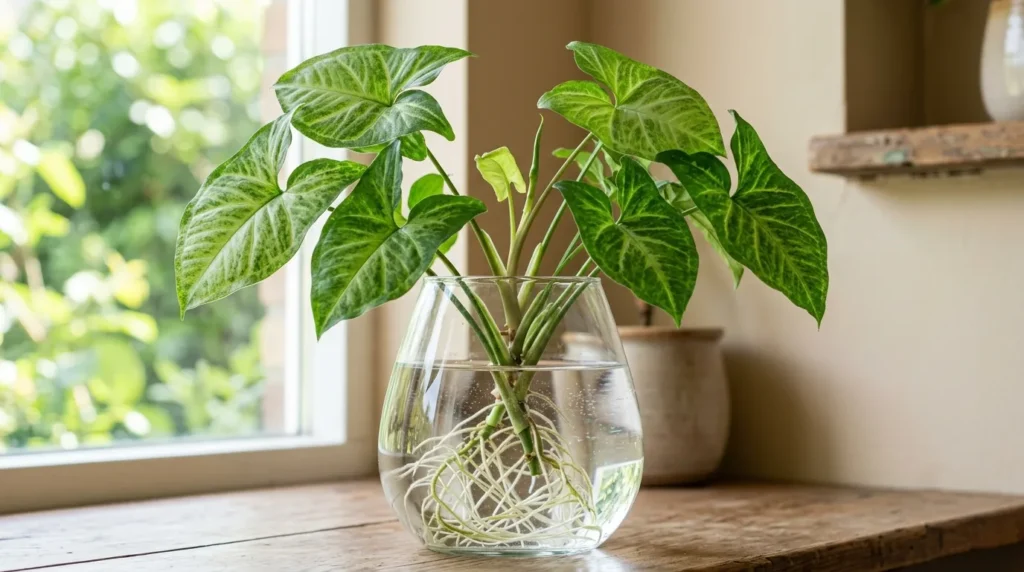
Syngonium, also known as the Arrowhead Plant or Nephthytis, is a popular aroid houseplant recognized for its attractive arrow-shaped leaves and easy-care nature. If you’re wondering can syngonium grow in water, the answer is yes. Syngonium can grow in water for both short-term propagation and long-term cultivation when provided with clean water, bright indirect light, and occasional nutrients. Because it naturally grows in moist tropical environments, it adapts well to water-based growing methods. While water-grown plants typically grow more slowly than those in soil, they can remain healthy for years with proper maintenance. Syngonium belongs to the aroid family Araceae and includes several tropical species commonly grown as ornamental houseplants. More botanical information is available on the Syngonium page on Wikipedia.
Quick Summary
- Syngonium (Arrowhead Plant) can grow in water indefinitely when provided with clean water, bright indirect light, and occasional nutrients.
- It develops roots easily in water, making it one of the simplest houseplants to propagate.
- Long-term water culture is possible, although growth is generally slower than in soil.
- Changing the water regularly and supplying diluted fertilizer helps prevent root rot and nutrient deficiencies.
Can Syngonium Grow in Water?
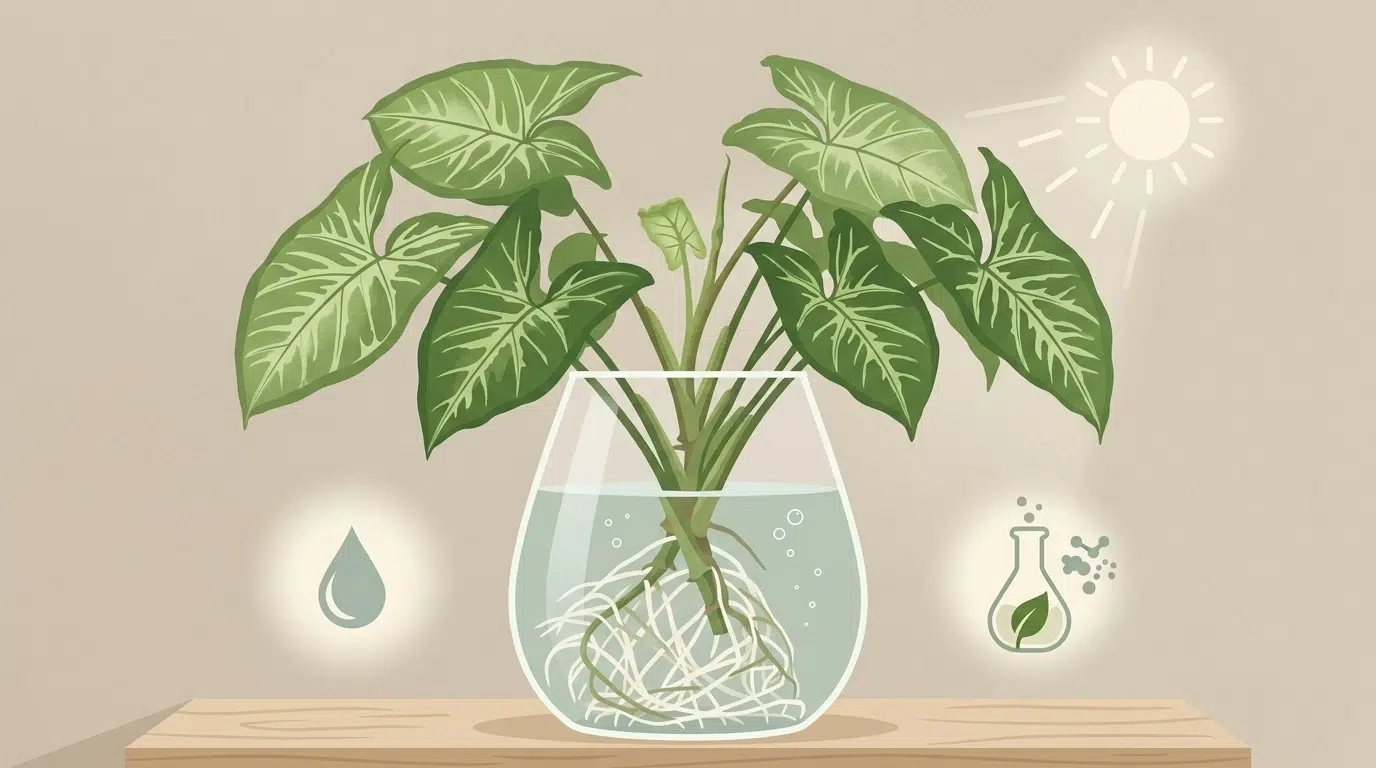
Yes, Syngonium can grow in water for both propagation and permanent cultivation. Unlike many houseplants that tolerate water only during rooting, Syngonium naturally adapts to hydroponic-style growing because it belongs to the aroid family, a group of tropical plants that often thrive in consistently moist environments. As long as the roots receive oxygen, the water stays clean, and nutrients are supplied periodically, the plant can remain healthy without soil.
It is helpful to distinguish between propagating and growing in water.
- Propagation refers to rooting fresh stem cuttings until new roots develop.
- Growing means maintaining the plant in water over the long term instead of transferring it into soil.
Many gardeners start by rooting cuttings in water and later decide to keep them there permanently. Others transfer rooted cuttings into potting mix once strong roots have formed. Both methods are successful, depending on the desired appearance and maintenance routine.
How Long Can Syngonium Live in Water?
A healthy Syngonium can live in water indefinitely when it receives consistent care. There is no fixed time limit for water-grown plants, provided they receive enough light, clean water, and periodic nutrients.
Without added nutrients, however, the plant gradually uses the minerals stored within its tissues.
Over time, this may lead to:
- Slower growth
- Smaller leaves
- Pale foliage
- Weak stems
- Reduced overall vigor
Replacing the water every one to two weeks and feeding with a diluted liquid houseplant fertilizer about once a month helps maintain healthy growth. Regular maintenance also reduces the risk of algae, bacteria, and unpleasant odors.
Soil vs. Water Growth — What Changes?
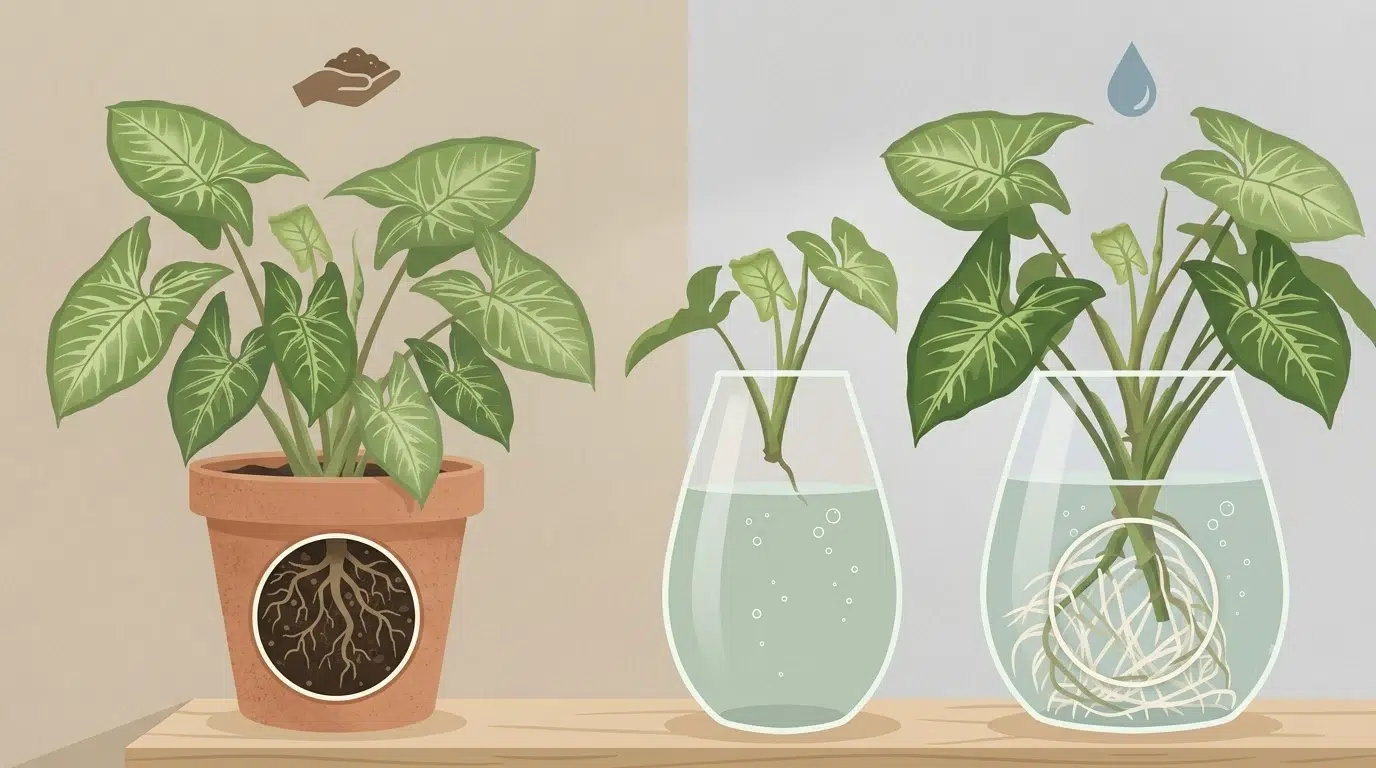
Although Syngonium performs well in water, its growth differs noticeably from plants grown in potting mix.
In soil, roots absorb moisture, nutrients, and oxygen from a balanced growing medium. Water-grown roots develop a different structure that is adapted to constant moisture. These roots are generally finer and less suited to immediate transfer into dry soil without an adjustment period.
Growth speed also changes. Soil-grown plants usually produce larger leaves and longer vines because nutrients are more readily available. Water-grown specimens remain attractive but often grow at a slower pace and require occasional feeding to stay vigorous.
Comparison Block: Syngonium in Soil vs. Syngonium in Water
| Feature | Soil | Water |
| Growth rate | Faster | Slower |
| Root type | Thick soil roots | Fine water roots |
| Maintenance | Regular watering | Regular water changes |
| Nutrient source | Potting mix and fertilizer | Liquid fertilizer only |
| Lifespan | Many years | Many years with proper care |
| Care Factor | Soil Growth | Water Growth |
| Light | Bright indirect light | Bright indirect light |
| Water changes | Not required | Every 1–2 weeks |
| Fertilizer | During growing season | Diluted monthly |
| Growth speed | Moderate to fast | Slow to moderate |
| Longevity | Long-term | Long-term with proper maintenance |
Can Arrowhead Plants (Syngonium) Grow in Water Long-Term?
Yes, Arrowhead Plants can grow in water long-term because they are the same plant as Syngonium, also commonly known as Nephthytis. Whether the plant is labeled Arrowhead Vine, Arrowhead Plant, or Syngonium, its growing requirements remain essentially the same.
Long-term water cultivation works best when the roots remain submerged while the stems and leaves stay above the waterline. This setup provides the roots with continuous access to moisture while allowing the foliage to receive adequate air circulation and light.
Compared with soil-grown plants, water-grown Arrowhead Plants generally require:
- More frequent water replacement
- Occasional liquid fertilizer
- Bright indirect light
- Clean containers to reduce bacterial growth
With these simple care practices, many growers successfully maintain Syngonium in decorative glass containers for years.
What Type of Water Works Best?
Filtered or dechlorinated water is generally the best choice for growing Syngonium in water. Allowing tap water to sit overnight can also help chlorine dissipate in many locations, making it gentler on plant roots.
Room-temperature water is preferred because sudden temperature changes may stress the roots.
For long-term growth, avoid relying exclusively on distilled water unless nutrients are added regularly. Distilled water contains almost no dissolved minerals, so plants eventually require supplemental fertilizer to replace essential nutrients needed for healthy foliage and root development.
How to Grow Syngonium in Water (Step-by-Step)
Growing Syngonium in water is a simple process because the plant produces roots easily from stem nodes. The most important factor is selecting a healthy cutting with an active node, because roots develop from these points rather than from the leaf itself. With proper light, clean water, and occasional feeding, Syngonium can establish a strong water-grown root system.
To grow Syngonium in water successfully:
- Select a healthy stem node with at least one leaf attached.
- Cut below the node using clean scissors or pruning shears.
- Submerge the node in water while keeping the leaves above the surface.
- Place the container in bright, indirect light.
- Change the water every 1–2 weeks to maintain oxygen levels and cleanliness.
- Add diluted liquid fertilizer monthly once roots are established.
If you want a more detailed technical breakdown of water-rooting timelines and node care, our Syngonium water-growing reference guide documents the full process with checklists and troubleshooting notes for hobbyists.
The first roots usually appear within a few weeks, although the exact timing depends on temperature, light, and plant health. Warmer conditions and adequate indirect light generally encourage faster root development.
How to Propagate Syngonium in Water
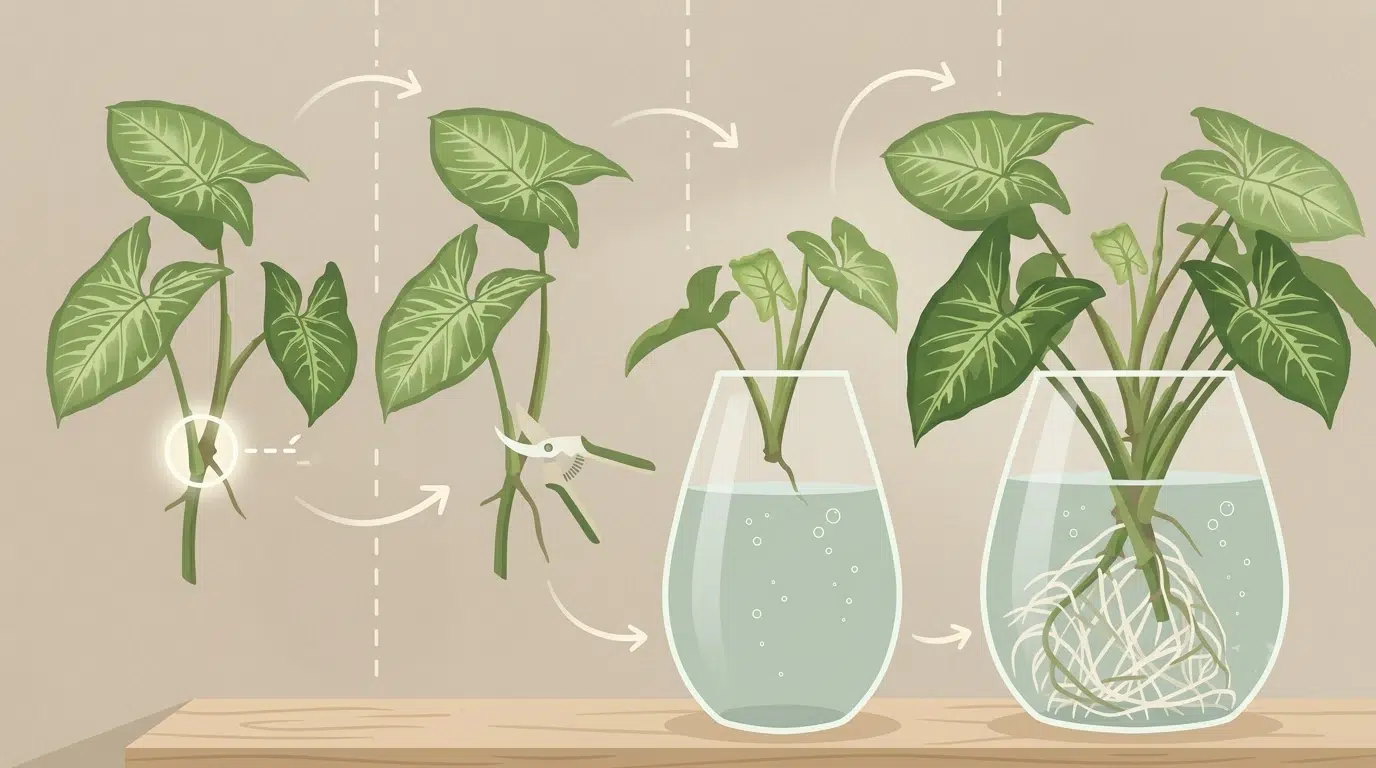
Syngonium propagation in water is one of the easiest ways to create new plants. The key to successful propagation is making the correct cut because Syngonium roots grow from nodes, not from stems without growth points.
To propagate Syngonium in water:
- Choose a healthy stem with a visible node.
- Cut approximately 1–2 inches below the node.
- Remove any leaves that would sit below the waterline.
- Place the node into a clean glass or container filled with water.
- Keep the cutting in bright, indirect light.
- Replace the water regularly until roots develop.
Water propagation is a common technique used for many tropical houseplants, and similar methods can be applied across different species. You can also explore our guide on how to propagate a Prayer Plant for more propagation techniques. A Syngonium node is the small area on the stem where leaves, aerial roots, or new growth points emerge. When learning where to cut Syngonium for propagation, always include at least one node because a leaf-only cutting will not produce a new plant.
Once the roots become several inches long and appear healthy, the cutting can either remain in water or be transferred into soil. If moving it into soil, gradual adjustment helps reduce transplant stress because water roots and soil roots function differently.
Can Syngonium Grow in an Aquarium?
Syngonium can grow in an aquarium setup when only the roots are submerged and the leaves remain above water. It is not a fully aquatic plant and should not be completely underwater for long periods. A partially submerged setup, such as a paludarium, is better suited for its natural growth habits.
In aquarium environments, Syngonium can be used as a decorative plant by:
- Allowing roots to grow into the water.
- Keeping stems and leaves above the surface.
- Providing adequate light from above.
- Maintaining clean, oxygenated water.
Fully submerging Syngonium leaves and stems may cause tissue breakdown because the plant is adapted for growing above water rather than living entirely underwater. For this reason, Syngonium works better as an emersed plant with water-accessible roots rather than as an aquatic species.
Other Houseplants That Grow in Water (Related Comparison)
Several common houseplants can grow successfully in water because they produce roots that adapt well to moisture-rich environments. Many plants in the aroid family, including Syngonium, Philodendron, and Pothos, are especially popular for water propagation and decorative water displays. Pothos is another popular houseplant that can grow in water and shares similar indoor care needs with Syngonium. Understanding its lighting requirements can help improve water-growing success, as explained in our Neon Pothos Light Requirements guide.
These plants can often survive in water permanently when they receive:
- Adequate indirect light
- Clean water
- Essential nutrients
- Regular maintenance
However, not all houseplants are suitable for permanent water growth. Plants that naturally require dry soil conditions or specialized root environments usually perform poorly when kept only in water.
Common Water-Friendly Houseplants Comparison
| Plant | Light Needs | Water Requirements | Growth Habit |
| Syngonium | Bright indirect light | Change water every 1–2 weeks | Climbing/trailing aroid |
| Philodendron | Medium to bright indirect light | Clean water with occasional fertilizer | Climber or crawler |
| Pothos | Low to bright indirect light | Adaptable to water growth | Trailing vine |
Philodendron in Water vs. Syngonium in Water
Philodendron and Syngonium are both members of the aroid family and share similar water-growing characteristics. Both can develop roots in water and are commonly propagated using stem cuttings with nodes. Like Syngonium, many Philodendron varieties adapt well to indoor environments and are popular choices for water propagation. Learn more about Philodendron Scandens care, growth, and varieties in our detailed guide. For a broader look at which houseplants adapt best to water culture, browse our Water Growing Houseplants Database, a categorized reference covering light needs, rooting time, and long-term care across dozens of species.
The main difference is their growth habit. Many Philodendron species are natural climbers or crawlers, often producing larger leaves and stronger climbing structures. Syngonium usually has a more compact growth pattern when young but can also climb when provided with support.
When grown in water:
- Both plants require clean water and indirect light.
- Both benefit from occasional liquid fertilizer.
- Philodendron may develop larger foliage depending on species.
- Syngonium often remains easier to manage in small containers.
Is Syngonium a Climber or Crawler?
Syngonium is naturally a climbing plant, although its growth habit can appear different depending on its age and growing conditions. In tropical environments, Syngonium species use aerial roots to attach themselves to trees and other surfaces as they climb. When grown indoors, they can either trail from containers or climb with support.
Understanding this growth habit is useful for water-grown Syngonium because mature plants may need additional support as stems become longer.
Syngonium can be encouraged to grow upward by providing:
- A moss pole or plant support.
- A structure for aerial roots to attach to.
- Regular pruning to control length.
- Bright indirect light to encourage healthy growth.
Young Syngonium plants often appear compact, making them suitable for small water jars. As they mature, they naturally produce longer stems and may develop a climbing form with larger leaves.
Common Syngonium Problems When Grown in Water (Problem-Solution Coverage)
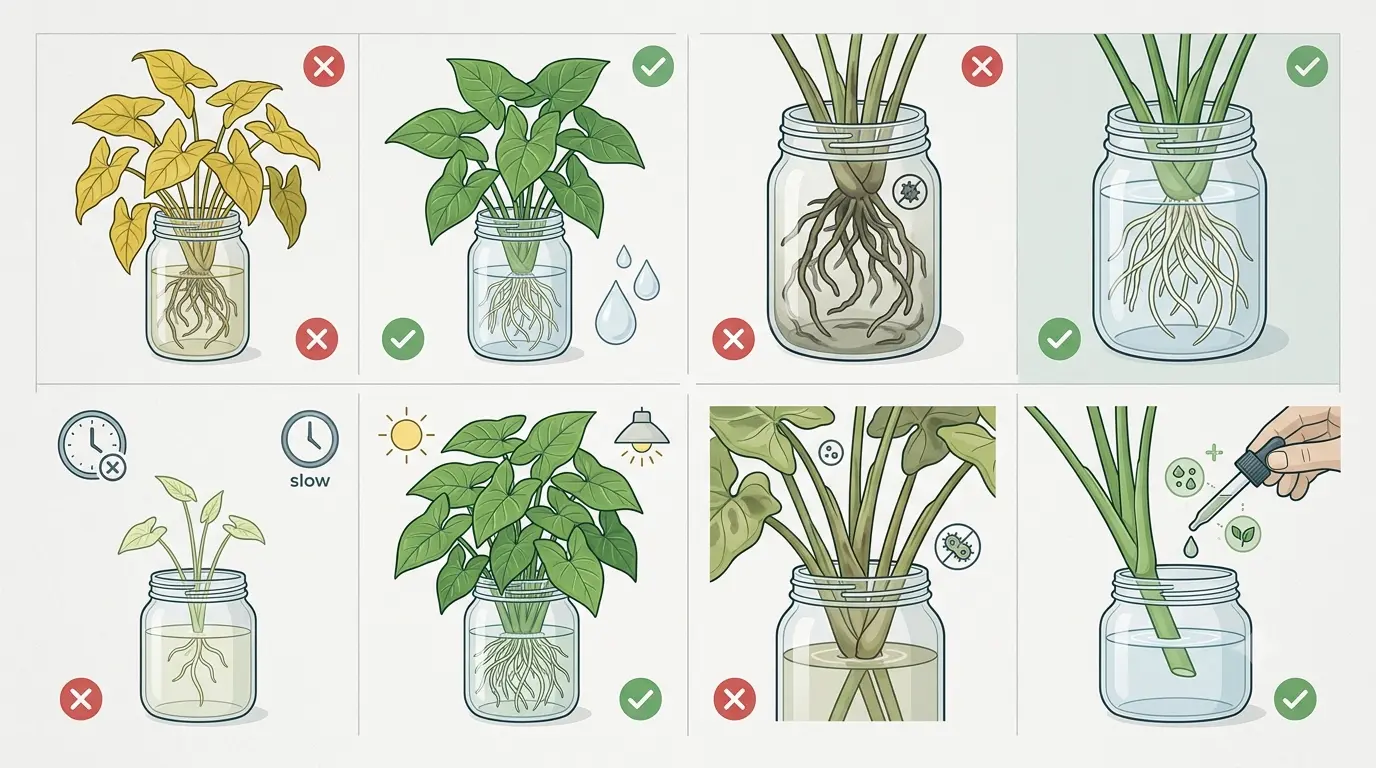
Although Syngonium is considered easy to grow in water, problems can occur when water quality, nutrients, or environmental conditions are not suitable. Most issues are related to poor maintenance rather than the plant’s inability to survive without soil. Yellow leaves can be caused by several factors, and understanding the common reasons behind this issue can help prevent further damage. For a deeper look at this problem, see our guide on Syngonium Leaves Turning Yellow: Causes and Solutions.
Identifying the cause early helps prevent long-term damage.
| Problem | Cause | Solution |
| Yellowing leaves | Overfeeding, old water, or stress | Replace water, reduce fertilizer, check light |
| Root rot | Dirty water or low oxygen levels | Clean container, remove damaged roots, refresh water |
| Slow growth | Low light or nutrient deficiency | Increase indirect light and provide diluted fertilizer |
| Mushy stems | Bacterial buildup or damaged tissue | Trim affected areas and sanitize container |
Common issues include:
- Yellowing leaves: Yellow leaves often appear when fertilizer levels become too high or water remains unchanged for too long. Excess nutrients can damage roots, while stagnant water reduces oxygen availability. Refreshing the water and reducing fertilizer concentration usually helps.
- Root rot: Even water-grown plants need oxygen around their roots. Dirty containers, warm stagnant water, or decaying plant material can encourage bacterial growth. Healthy water roots are usually firm and light-colored, while damaged roots may become soft or brown.
- Slow or stunted growth: Syngonium grown only in water may grow slower because nutrients are limited compared with soil. Low light can also reduce growth speed. Providing brighter indirect light and occasional diluted fertilizer supports stronger development.
- Mushy stems: Soft stems usually indicate bacterial problems or tissue damage. Removing affected sections and placing the plant in fresh, clean water can help prevent the issue from spreading.
To track your own plant’s health over time, you can copy our Syngonium water-care tracking sheet, which logs water changes, fertilizer doses, and root condition for easy diagnosis.
Beginner Mistakes When Growing Syngonium in Water
Many beginners successfully root Syngonium in water but struggle when trying to maintain it long-term. Most failures happen because water culture requires a different approach from traditional soil care.
Common mistakes include:
- Using distilled water long-term without minerals: Distilled water lacks naturally occurring minerals that plants need. If used permanently, nutrients must be added through a balanced liquid fertilizer.
- Not changing water often enough: Old water can become low in oxygen and encourage bacterial growth. Regular water replacement keeps roots healthier.
- Keeping the plant in low light: While Syngonium tolerates lower light conditions, water-grown plants still need sufficient indirect light for healthy growth.
- Never adding nutrients: Water alone provides hydration but does not supply all essential plant nutrients. Occasional feeding prevents deficiency symptoms.
- Expecting soil-level growth speed: Syngonium grown in water often grows more slowly than plants grown in nutrient-rich soil. A slower growth rate does not necessarily mean the plant is unhealthy.
How to Make Syngonium Bushy in Water
To make Syngonium bushier in water, focus on pruning, encouraging multiple stems, and maintaining healthy growing conditions. A single long stem often creates a trailing appearance, while multiple cuttings in one container create a fuller display.
Ways to encourage bushier growth include:
- Trim growing tips to encourage branching.
- Place several healthy cuttings together in one container.
- Rotate the container so all sides receive balanced light.
- Remove weak or damaged growth.
- Provide enough nutrients for new leaves.
Pruning above a node encourages new shoots to develop from lower growth points. Over time, this creates a fuller plant rather than a single stretched vine.
Does Syngonium Like Small Pots or Containers?
Syngonium can grow well in small containers, especially during water propagation, because its root system can adapt to limited spaces. However, extremely crowded containers may restrict root development and reduce water quality.
For water-grown Syngonium:
- Choose a container large enough for roots to spread.
- Avoid overcrowding multiple plants in a very small jar.
- Use transparent containers to monitor root health.
- Clean containers regularly to prevent algae buildup.
Small glass containers are popular because they allow growers to observe root development and maintain a decorative indoor display. However, larger mature plants may require bigger containers as their root systems expand.
Is Syngonium Easy to Keep Alive in Water?
Yes, Syngonium is one of the easier houseplants to maintain in water, making it a good choice for beginners. Its ability to produce roots from stem nodes, tolerate different indoor conditions, and adapt to moisture-rich environments makes it suitable for simple water-growing setups. Keeping leaves clean also supports healthy indoor plant growth by allowing better light absorption and improving the plant’s appearance. Learn more about proper leaf maintenance in our guide on how to clean plant leaves for healthy houseplants.
The basic requirements are:
- Bright indirect light.
- Clean water.
- Occasional fertilizer.
- Regular root and stem checks.
Compared with many houseplants, Syngonium requires less complicated care when grown in water. The main difference is that water-grown plants depend on the grower to provide nutrients that soil would normally supply.
A healthy water-grown Syngonium should have:
- Firm roots.
- Green leaves.
- Stable stems.
- Consistent new growth.
When these conditions are maintained, Syngonium can remain attractive and healthy as a permanent water-grown plant.
Frequently Confused Topic — Is It Illegal to Propagate Plants?
Propagating Syngonium for personal use is generally legal, especially when using a plant you own. Taking stem cuttings to create new plants for your home is a common gardening practice.
However, some specific cultivated varieties may have legal protections, such as plant patents or commercial propagation restrictions. These restrictions usually apply to selling or commercially reproducing protected cultivars rather than keeping propagated plants for personal enjoyment.
For home gardeners, basic Syngonium propagation through water rooting is typically considered a normal plant-care activity.
Conclusion
Syngonium can grow in water successfully for both propagation and long-term display when it receives the right conditions. The plant can survive indefinitely in water with bright indirect light, regular water changes, and occasional diluted fertilizer to replace nutrients normally supplied by soil.
Growing Syngonium in water is a low-maintenance and beginner-friendly alternative to traditional soil planting. While water-grown plants may develop more slowly and produce smaller growth compared with soil-grown specimens, they can remain healthy and attractive for years when properly maintained. For many plant lovers, keeping Syngonium in water is an easy way to enjoy its arrow-shaped leaves while simplifying routine care.
Syngonium is one of many indoor plants valued for its easy-care nature and decorative appeal. Explore more plant care information, benefits, and growing guides in our complete Plants Benefits and Guides resource.
FAQs
Can Syngonium grow in water permanently, or only for propagation?
Yes, Syngonium can grow in water permanently when provided with proper light, clean water, and nutrients. While many people use water only for propagation, established Syngonium plants can remain healthy in water long-term with regular maintenance.
How often should I change the water for a Syngonium?
Syngonium water should generally be changed every 1–2 weeks to maintain oxygen levels and prevent bacterial buildup. More frequent changes may be needed if the water becomes cloudy, develops an odor, or shows algae growth.
Can Syngonium survive in low light while growing in water?
Syngonium can tolerate lower light conditions, but it grows best in bright indirect light when kept in water. Low light may slow root development, reduce leaf production, and increase the risk of weak, stretched growth.
Does Syngonium need fertilizer when grown in water only?
Yes, Syngonium needs occasional fertilizer when grown only in water because water does not naturally provide enough nutrients. A diluted liquid houseplant fertilizer applied about once a month helps support healthy leaves, roots, and new growth.
Can I move a water-grown Syngonium back into soil later?
Yes, a water-grown Syngonium can be transferred back into soil. The plant may need an adjustment period because water roots and soil roots function differently. Moving it gradually into a well-draining potting mix helps reduce transplant stress.
Why are my Syngonium's leaves turning yellow in water?
Syngonium leaves may turn yellow in water due to several factors, including stagnant water, excessive fertilizer, low light, or damaged roots. Replacing old water, reducing fertilizer strength, and checking root health can often correct the problem.