
Introduction
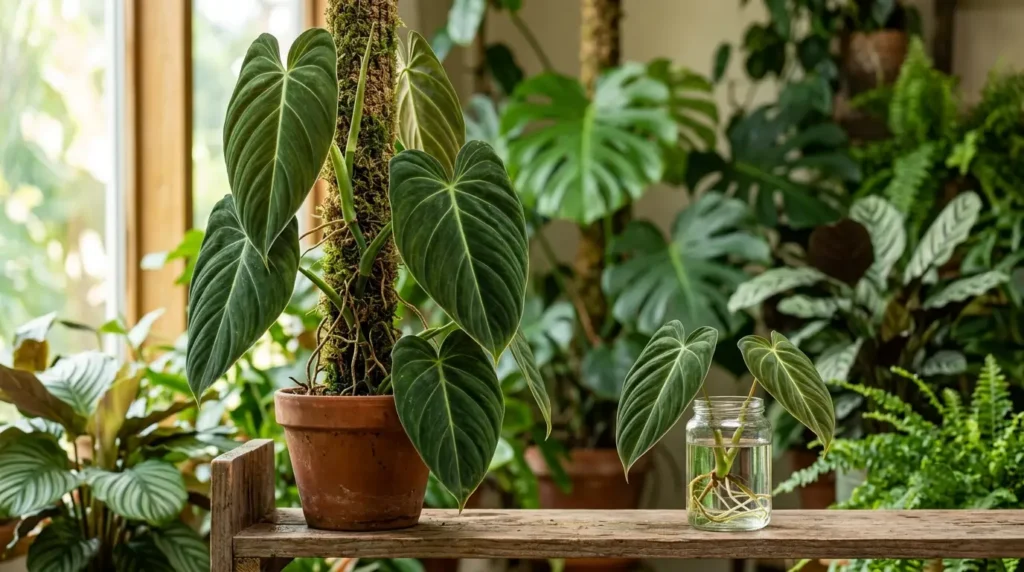
Philodendron melanochrysum propagation is a popular topic among houseplant collectors because this velvet-leaved aroid is valued for its dark, heart-shaped foliage and climbing growth habit. The Philodendron melanochrysum, also known as the velvet philodendron, is a tropical plant from the Araceae family that develops long leaves with a deep green to almost black appearance. Propagation allows growers to create new plants from healthy stems while preserving the unique characteristics of the parent plant. This guide explains the best propagation methods, rooting timelines, ideal conditions, care requirements, and common mistakes to help improve success.
Quick Summary
- Philodendron melanochrysum is propagated most reliably through stem cuttings containing at least one healthy node.
- Cuttings can be rooted in water or directly in a moist, well-draining soil mix, usually within 2–6 weeks.
- This philodendron is a slow-to-moderate grower, which contributes to its popularity and collector value.
- Successful propagation depends on proper node placement, warmth, humidity, indirect light, and balanced moisture.
What Is Philodendron Melanochrysum?
Philodendron melanochrysum is a tropical climbing aroid in the Araceae family, recognized for its velvety, elongated heart-shaped leaves that develop deep green, bronze, and black tones as they mature. Native to the humid rainforests of Colombia, this species naturally grows by climbing trees and using aerial roots for support.
Philodendrons belong to a large group of tropical plants known for their climbing growth habits and diverse leaf forms. You can learn more about the genus background and classification through this overview of Philodendron.
The melanochrysum plant is highly valued among collectors because of its unique leaf texture, dramatic coloration, and climbing growth habit. Unlike many common houseplant philodendrons, it requires more specific humidity and environmental conditions to maintain healthy growth. Like other climbing philodendrons, Philodendron melanochrysum benefits from vertical support and similar tropical growing conditions. Exploring other climbing philodendron varieties can help collectors compare growth habits and care needs.
The melano philodendron is often grown with a moss pole or climbing support because mature plants produce larger leaves when allowed to climb vertically.
Is Philodendron Melanochrysum Rare?
Yes, Philodendron melanochrysum is considered a relatively rare and desirable philodendron, mainly because it grows slower than many popular houseplant varieties and has historically had limited availability.
Its rarity is influenced by:
- Slow natural growth rate
- High collector demand
- Limited availability of large, mature specimens
- More specialized propagation requirements
Although it is considered rare, it is not always classified as the rarest philodendron. Other species and cultivars with extremely limited availability may command higher prices among collectors.
What Is the “Holy Grail” of Philodendrons?
The phrase “holy grail of philodendrons” is commonly used by plant collectors to describe exceptionally rare or highly desirable philodendron varieties. It does not refer to one official botanical species.
Philodendron melanochrysum is sometimes included in discussions about prized philodendrons because of its velvet leaves and collector appeal. However, the term is often used for other ultra-rare species, hybrids, or unique variegated plants depending on collector communities.
How to Propagate Philodendron Melanochrysum From Cuttings
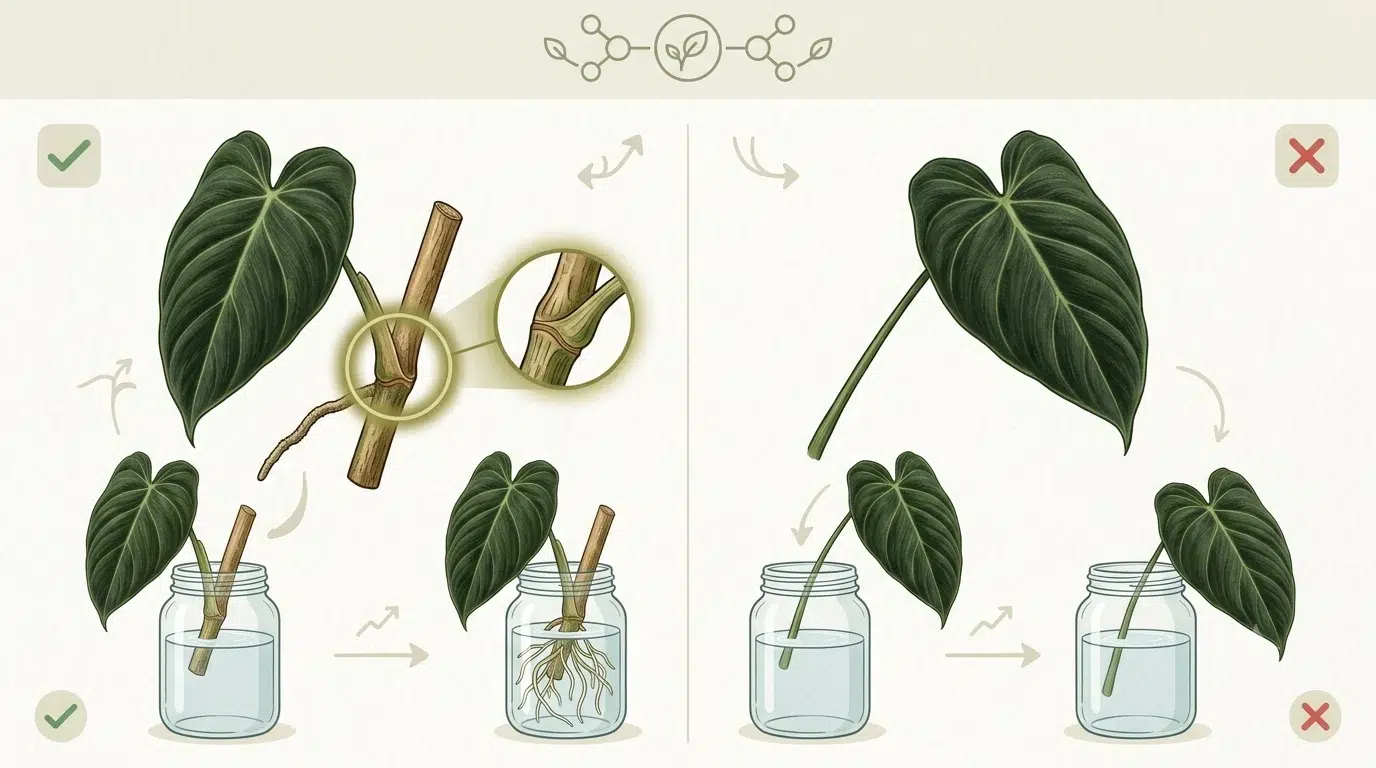
The most reliable method for philodendron melanochrysum propagation is stem cutting propagation. A successful cutting must include at least one node because the node contains the growth point needed to develop new roots and shoots.
Follow these steps:
- Select a healthy stem with active growth.
- Identify a node with an aerial root if possible.
- Use sterilized scissors or pruning shears to make a clean cut below the node.
- Choose water or soil propagation.
- Place the cutting in warm, humid conditions with indirect light.
- Monitor moisture levels while roots develop.
A single leaf without a node cannot create a new plant because the leaf lacks the necessary growth tissue. Similar propagation principles are used with other tropical aroids, although some species rely on different structures such as corms or offsets. Learning how propagation methods work for other aroid plants can help growers understand how different houseplants reproduce.
Water Propagation vs. Soil Propagation
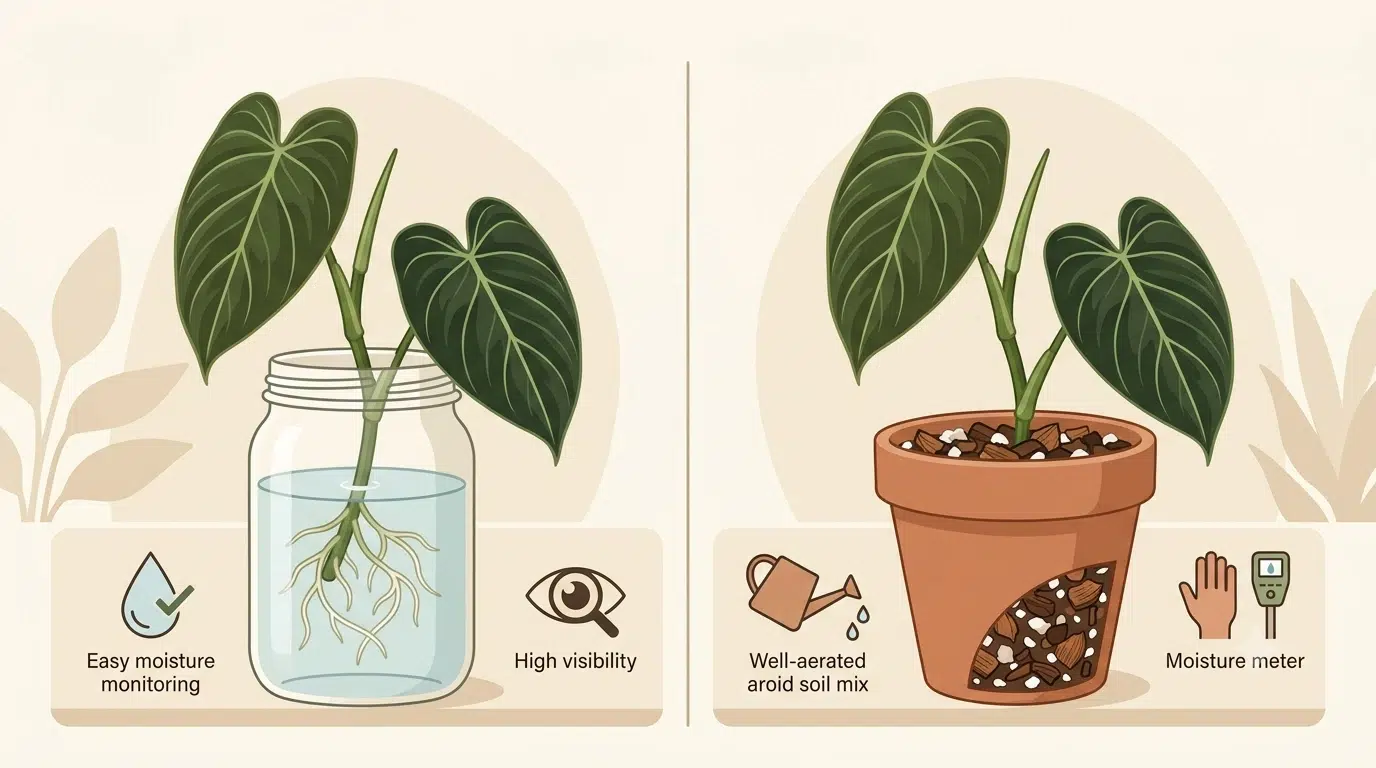
| Method | Root Visibility | Speed | Risk of Rot | Transplant Shock | Best For |
| Water Propagation | Roots are easy to monitor | Often faster to observe | Higher if water becomes stagnant | Possible after transfer | Beginners and root monitoring |
| Direct Soil Propagation | Roots remain hidden | Can be slightly slower | Lower with proper drainage | Usually less | Growers wanting less disturbance |
Philodendron cuttings can root successfully in water when the node remains submerged and the water is changed regularly. Direct soil propagation also works well when the cutting is placed in a loose, airy aroid mix that prevents excess moisture.
How Long Does It Take Philodendron Cuttings to Root?
Philodendron cuttings usually take about 2–6 weeks to develop roots, although some may require longer depending on environmental conditions. Rooting speed varies by node health, temperature, and method, which is why cross-checking timelines against a dedicated comparison tool is useful. For a sortable breakdown of rooting windows across different aroid cutting methods, see this aroid propagation rooting timeline comparison.
Factors affecting rooting speed include:
- Temperature
- Humidity levels
- Cutting health
- Light exposure
- Propagation method
Warm temperatures around 70–80°F (21–27°C) and consistent humidity generally encourage faster root development.
Is September Too Late to Take Cuttings?
September is not necessarily too late to propagate Philodendron melanochrysum. While spring and summer are the most active growth periods, indoor propagation can succeed throughout the year if conditions remain stable.
For fall cuttings, growers can improve success by maintaining:
- Warm temperatures
- Higher humidity
- Bright indirect light
- Consistent moisture
A humidity dome or heat mat can help compensate for slower seasonal growth.
Ideal Growing Conditions for Rooting Success
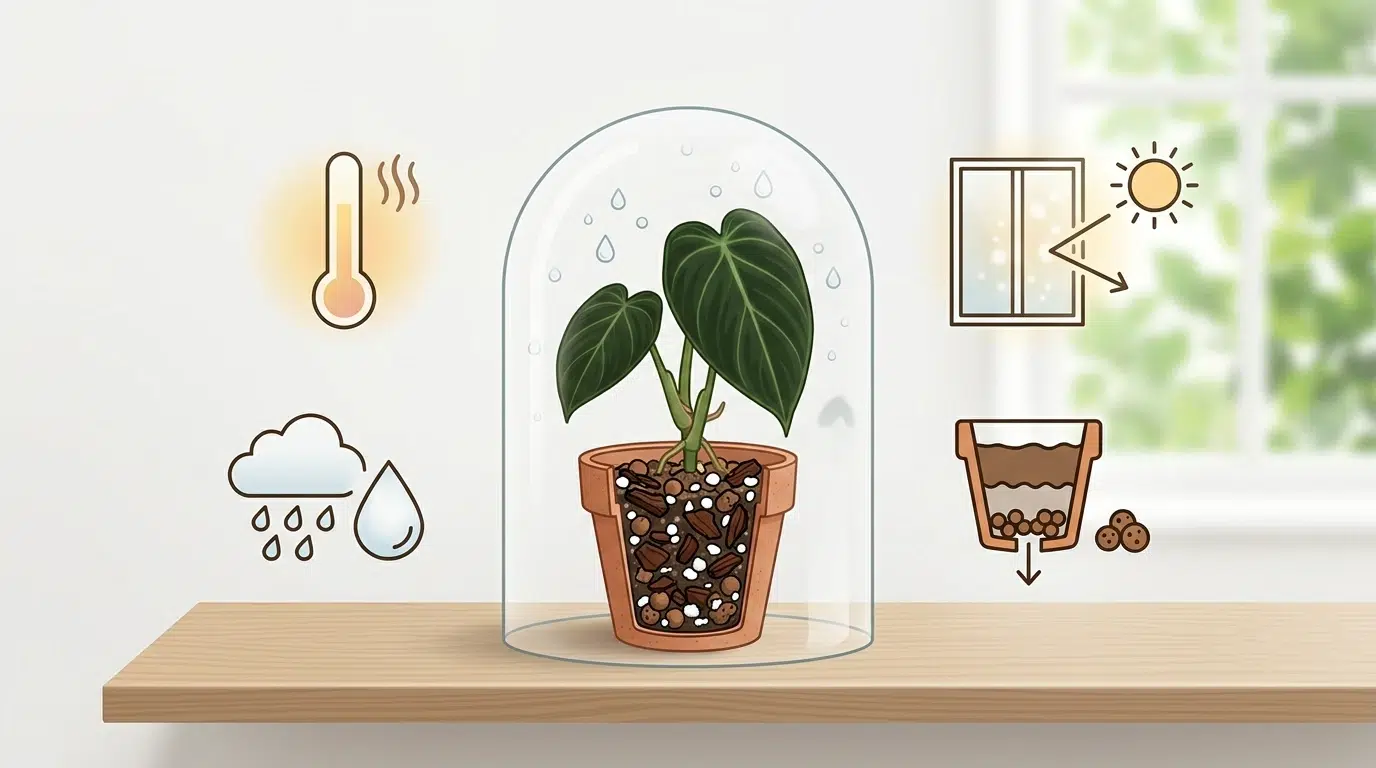
Successful propagation depends on creating conditions similar to the plant’s natural tropical environment. Humidity, temperature, and soil texture all interact to determine rooting success, and small adjustments can significantly change outcomes. Growers comparing conditions across multiple velvet aroids may find this velvet aroid propagation conditions database helpful for cross-referencing.
Key requirements include:
- Humidity: 60% or higher is preferred
Since Philodendron melanochrysum naturally grows in humid rainforest environments, growers may need to increase humidity for indoor plants to encourage stronger rooting and healthier new growth.
- Light: Bright indirect light
- Temperature: 70–80°F (21–27°C)
- Soil: Chunky, well-draining aroid mix
Avoid placing new cuttings in direct sunlight because intense rays can stress developing roots and damage leaves. Providing the correct lighting is essential during propagation because young cuttings are sensitive to stress. Understanding bright indirect light requirements helps prevent leaf damage while supporting healthy root development.
Do Philodendrons Prefer Deep or Shallow Pots?
Philodendrons generally prefer shallow-to-medium pots with excellent drainage rather than very deep containers. Their root systems need airflow, and overly large pots can hold excess moisture for too long.
Deep pots may increase the risk of:
- Slow drying soil
- Root rot
- Poor oxygen availability around roots
A pot that matches the root size is usually the best choice.
Do Philodendrons Benefit From Coffee Grounds?
Coffee grounds are not recommended as a primary fertilizer for Philodendron melanochrysum. While they contain some nitrogen, fresh grounds can affect soil structure, attract pests, and encourage mold growth.
Safer alternatives include:
- Balanced liquid fertilizer diluted according to instructions
- Slow-release plant fertilizer
- Organic compost used appropriately
Is Philodendron Melanochrysum a Fast Grower?
Philodendron melanochrysum is generally considered a slow-to-moderate grower. Juvenile plants grow especially slowly, while mature plants can produce larger leaves when provided with climbing support and ideal conditions.
Growth improves with:
- Bright indirect light
- High humidity
- Warm temperatures
- Regular feeding during active growth
Mature Size and Growth Expectations
A mature Philodendron melanochrysum can develop large, elongated leaves and a climbing vine structure. Indoor plants often remain smaller than greenhouse-grown specimens because of differences in humidity, space, and light intensity.
Providing a moss pole or support structure encourages larger leaves and healthier climbing growth.
Common Problems With Philodendron Melanochrysum
Philodendron melanochrysum can experience problems when moisture, light, or humidity levels are unsuitable.
Yellow leaves:
Yellowing leaves are commonly caused by overwatering, poor drainage, or root problems. Allow the soil to dry slightly between watering and improve drainage if needed.
Slow growth:
Limited light, low humidity, or insufficient nutrients can slow development. Increasing humidity and improving light conditions often helps.
Root or stem rot in cuttings:
Cuttings may rot when kept constantly wet without airflow. Remove damaged sections and restart propagation using a cleaner, better-draining setup.
New leaf problems:
New leaves may struggle to unfurl properly when humidity is low or care conditions change suddenly.
Care Guide for Philodendron Melanochrysum
Philodendron melanochrysum care focuses on maintaining tropical conditions while preventing excess moisture.
- Watering: Allow the top layer of soil to dry slightly before watering. Avoid keeping soil constantly soggy.
- Light: Provide bright, indirect light and protect leaves from harsh direct sun.
- Soil: Use a chunky aroid mix containing bark, perlite, and peat or coco coir.
- Fertilization: Feed with a diluted balanced fertilizer during active growth.
- Pruning: Remove damaged leaves and control excessive leggy growth.
- Climate: Keep the plant warm and avoid cold drafts.
Philodendron Melanochrysum vs. Black Gold Philodendron
| Feature | Philodendron Melanochrysum | Black Gold Philodendron |
| Leaf Texture | Velvet-like surface | Often smoother texture |
| Color | Deep green to dark tones | Dark leaves with golden characteristics |
| Growth Habit | Climbing aroid | Depends on cultivar |
| Care | High humidity preferred | Similar tropical care |
The names are sometimes confused in plant markets, but they are not always the same plant.
Variegated Philodendron Melanochrysum Care Differences
Variegated Philodendron melanochrysum forms require slightly different care because areas without chlorophyll produce less energy.
They typically need:
- More bright indirect light
- Careful protection from leaf scorch
- Slower growth expectations
- More consistent conditions
Is It Illegal to Propagate Certain Philodendrons?
Some patented plant cultivars have restrictions on commercial propagation and selling. Plant patents or plant variety protections may limit how certain cultivars can be reproduced. Personal propagation for non-commercial use is generally allowed in many regions, but rules vary by location. This information is general guidance and not legal advice.
Similar challenges occur with other rare variegated aroids, where reduced chlorophyll can affect growth speed and light requirements. Understanding the care requirements of other rare variegated aroids can help collectors manage these plants successfully.
Is Philodendron Melanochrysum Safe for the Bedroom?
Philodendron melanochrysum can be kept in bedrooms, but it should be placed carefully in homes with pets or children. Like many plants in the Araceae family, it contains calcium oxalate crystals that can cause irritation if eaten.
The main safety concerns are:
- Chewing leaves may cause mouth irritation
- Pets and children should not ingest plant material
- Placement should reduce accidental contact
Common Beginner Mistakes When Propagating Melanochrysum
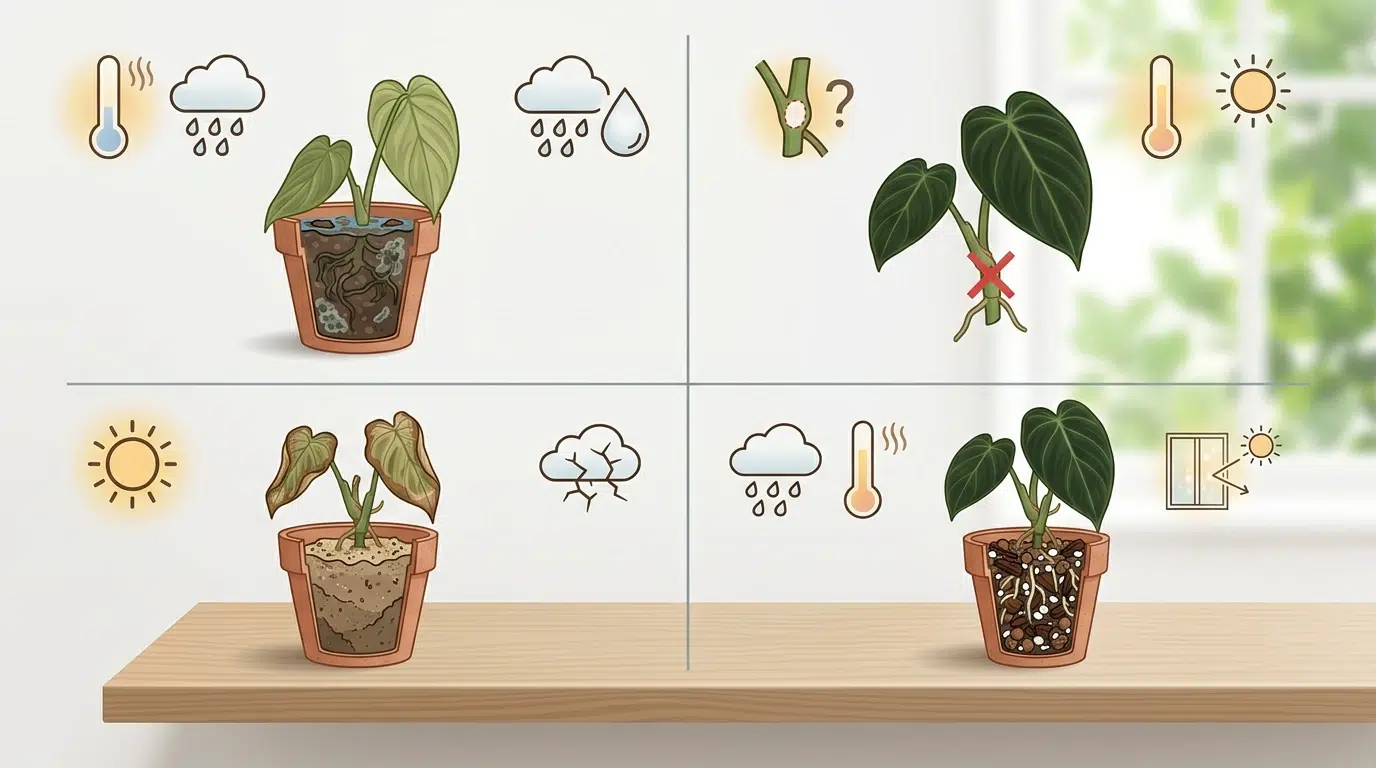
Common propagation mistakes include:
- Taking cuttings without a node
- Keeping cuttings too wet
- Providing insufficient humidity
- Moving cuttings before roots are established
- Using poor-quality water with high mineral content
Patience is important because melanochrysum develops roots more slowly than many common philodendrons. Many propagation failures trace back to inconsistent tracking of watering, humidity, or node condition over time. Keeping a structured aroid propagation tracking reference sheet can help catch problems before cuttings decline.
Conclusion
Philodendron melanochrysum propagation is most successful when growers use healthy stem cuttings with clear nodes, maintain warm humid conditions, and choose a suitable rooting method. Water propagation allows easy root monitoring, while soil propagation can reduce transplant stress. Although this philodendron is a slow-to-moderate grower, proper care can encourage strong climbing growth and larger leaves. Consistent moisture, bright indirect light, and high humidity are the key factors for successful propagation and long-term plant health. For more information about plant care routines, propagation techniques, and growing requirements across different species, explore our complete plant care and growing guides.
FAQs
Can you propagate philodendron melanochrysum from a single leaf without a node?
No, a single leaf without a node cannot produce a new Philodendron melanochrysum plant because it lacks the growth point required for new roots and shoots.
Will philodendron melanochrysum cuttings root in water before soil?
Yes, Philodendron melanochrysum cuttings can root in water when the node is submerged and the cutting receives warmth, humidity, and indirect light.
How do I know if my melanochrysum cutting is rooting successfully?
A rooting cutting usually shows new white or light-colored roots emerging from the node. Healthy leaves and firm stems are also positive signs.
What's the best time of year to propagate philodendron melanochrysum?
Spring and summer are usually the best times because the plant is actively growing, but indoor propagation can succeed year-round with proper conditions.
Why are my philodendron melanochrysum leaves turning yellow after propagation?
Yellow leaves after propagation are often caused by overwatering, root stress, poor drainage, or sudden environmental changes.
Is philodendron melanochrysum pet-safe?
No. Philodendron melanochrysum is not considered pet-safe because it contains calcium oxalate crystals that can irritate the mouth and digestive system if ingested.



One Response