
Introduction
Calathea Flamestar, also known as Calathea Flame Star, Flamestar Calathea, or Goeppertia veitchiana ‘Flamestar’, is a tropical foliage plant valued for its striking patterned leaves. It belongs to the prayer-plant family and is known for its decorative appearance as well as its sensitivity to environmental conditions. While many houseplant enthusiasts admire its dramatic foliage, proper care is important to prevent common issues such as browning leaves, drooping, and poor growth. This guide explains what Calathea Flamestar needs to thrive, the most common problems owners encounter, and practical solutions for maintaining a healthy plant indoors. Calathea Flamestar is one of many tropical foliage plants that thrive indoors when their environmental needs are understood, making it a useful example within broader plant care principles covered in our Plants Benefits and Guides resource.
Quick Summary
- Calathea Flamestar needs bright, indirect light, high humidity (60%+), and consistently moist but not soggy soil.
- It is sensitive to tap water and cold drafts, both of which commonly cause leaf damage.
- Most declining plants suffer from overwatering, low humidity, or mineral buildup from hard water.
- Moderate watering, filtered water, and stable temperatures help prevent most problems.
- Despite its reputation for being fussy, it can be successfully grown by beginners with consistent care.
What Is a Calathea Flamestar?
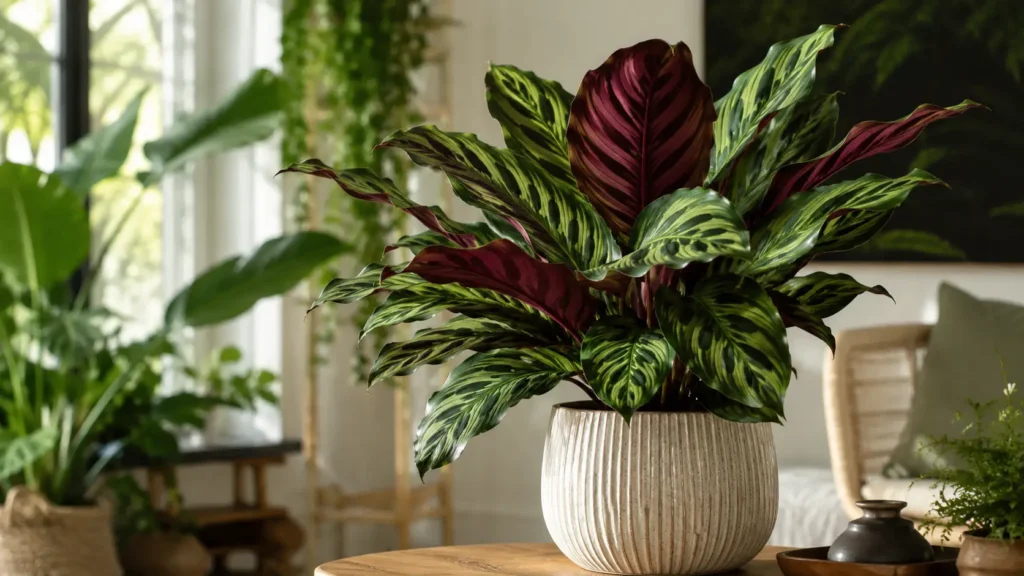
Calathea Flamestar belongs to the Marantaceae family, a group of tropical plants commonly known as prayer plants because of their distinctive leaf movements. It originates from the rainforest understories of South America, particularly regions of Brazil where warm temperatures, filtered light, and high humidity are common.
The plant is recognized for its dramatic foliage. Mature leaves display a flame-like pattern across the center, wavy leaf margins, and rich burgundy undersides. Like many members of the prayer-plant family, its leaves may slightly move throughout the day in response to light conditions. Gardeners familiar with other Calathea species may also benefit from comparing care requirements with Calathea Orbifolia, another humidity-loving member of the prayer plant family.
Its ornamental foliage rather than flowers makes it a popular indoor houseplant.
Calathea Flamestar vs. Other Calathea Varieties
Calathea Flamestar stands out because of its bold flame-shaped leaf markings and highly textured foliage. While many Calatheas feature striped or circular patterns, Flamestar often displays stronger contrasts between dark green margins and lighter central markings. The burgundy underside further distinguishes it from many related varieties.
Calathea Flamestar Size and Growth Rate
Calathea Flamestar typically reaches 12–24 inches (30–60 cm) in height and width when grown indoors. Its leaves commonly grow between 6 and 12 inches long, creating a full, bushy appearance when mature. Seasonal changes can significantly influence growth speed, especially during winter when many tropical houseplants naturally slow down.
Growth is generally moderate to fast during spring and summer when environmental conditions are favorable. During fall and winter, growth naturally slows. To better understand how quickly your Calathea Flamestar may develop under different conditions, use our plant growth calculator to estimate growth patterns and track progress over time.
Key growth characteristics include:
- Mature height: 12–24 inches indoors
- Mature width: 12–24 inches
- Leaf length: 6–12 inches
- Growth rate: Moderate to fast during active growing seasons
- Winter growth: Slow or nearly dormant
Factors that influence growth include:
- Quality of indirect light
- Humidity levels
- Consistent watering
- Nutrient availability
- Temperature stability
Plants grown outdoors in tropical climates may become slightly larger than indoor specimens due to higher humidity and stronger filtered light.
Calathea Flamestar Care Guide
Light Requirements
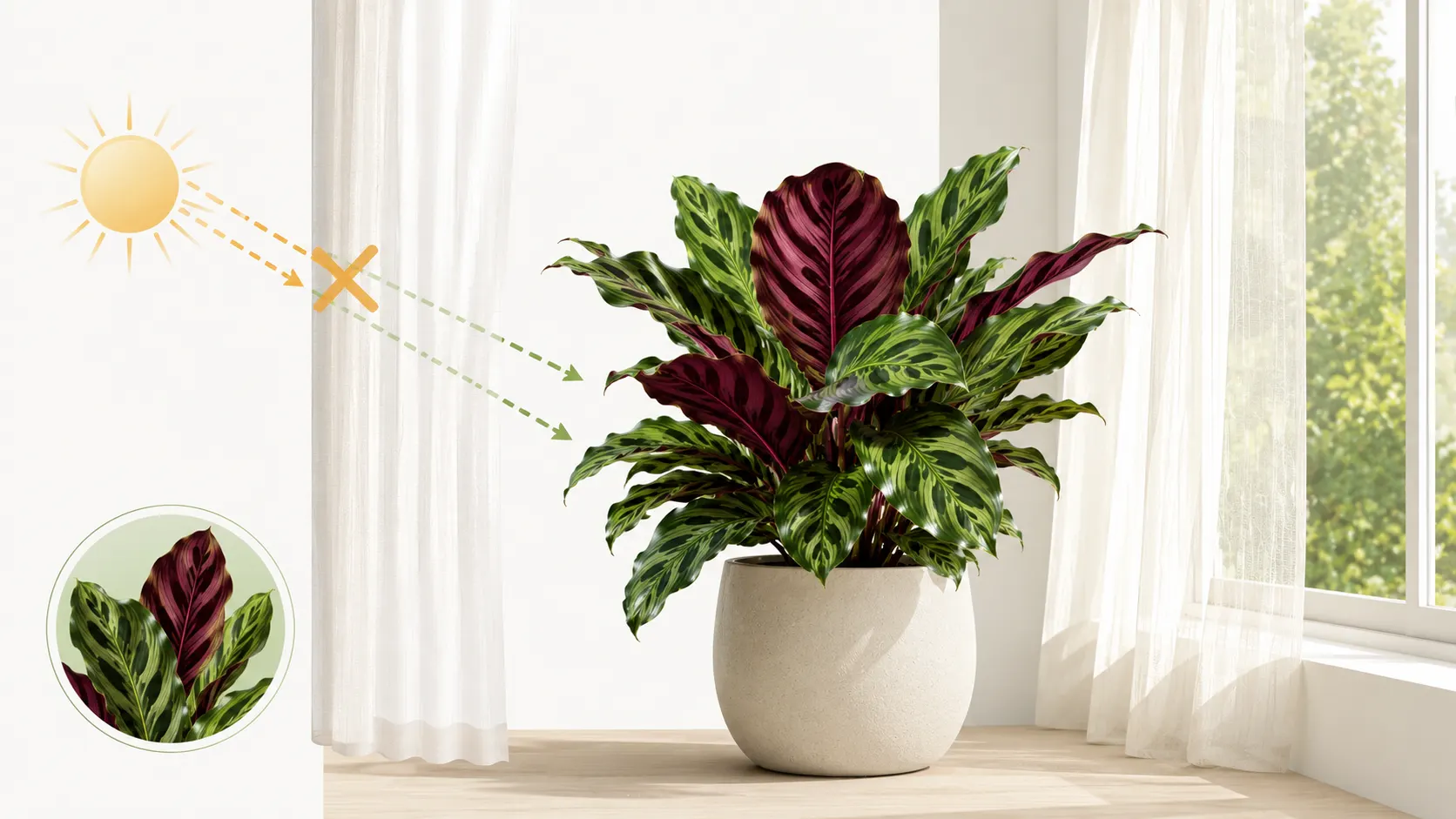
Calathea Flamestar grows best in bright, indirect light. Direct sunlight can scorch leaves, fade colors, and damage the distinctive patterns. Extremely low light may slow growth and reduce foliage vibrancy.
Ideal locations include:
- East-facing windows
- Bright rooms with filtered light
- Areas several feet from south-facing windows
A balance of brightness without direct sun exposure produces the healthiest foliage.
Watering Needs (and How Often to Water a Calathea)
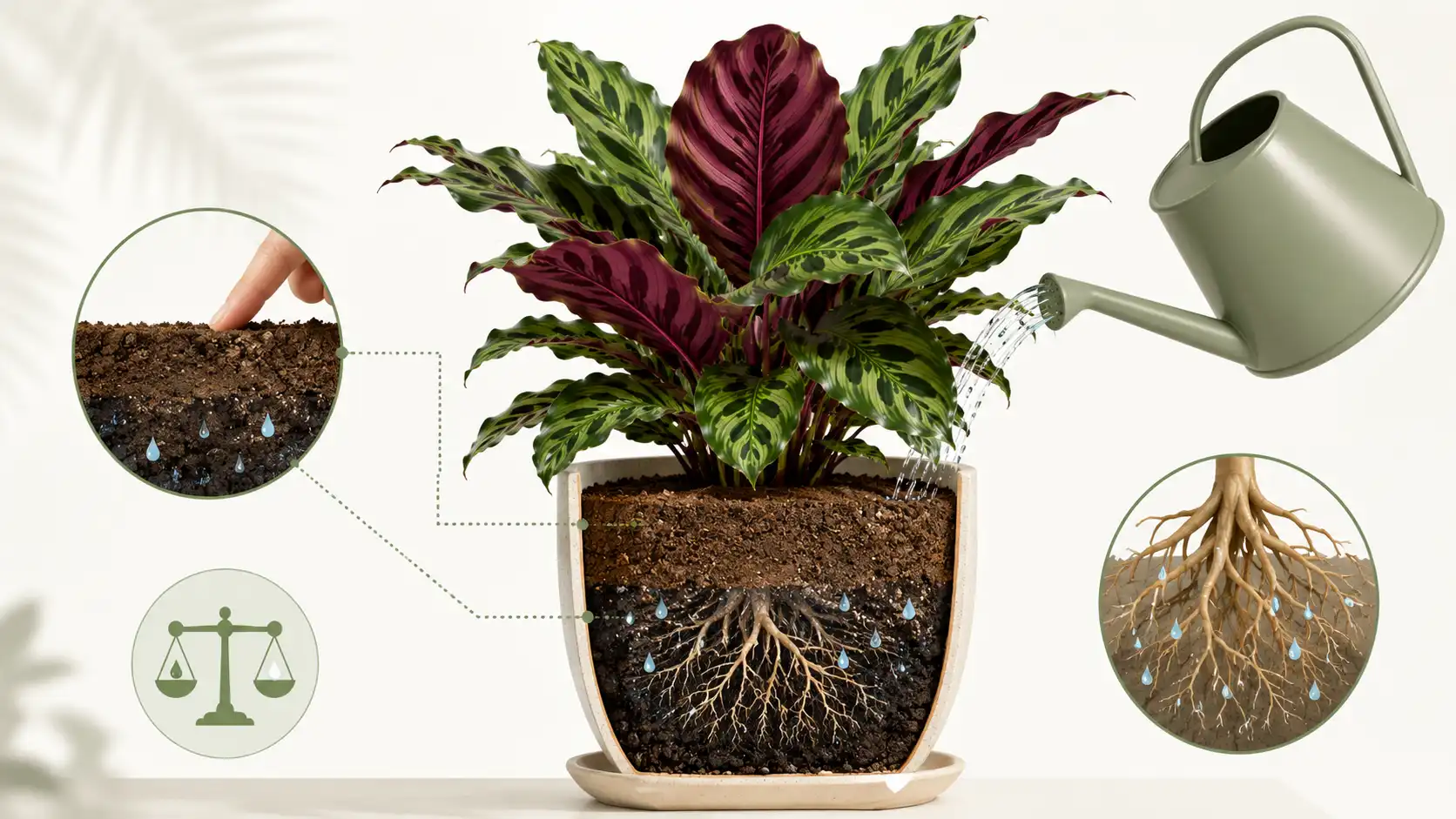
Water a Calathea Flamestar when the top inch of soil feels slightly dry. The soil should remain evenly moist but never saturated.
In most homes:
- Spring and summer: Every 5–7 days
- Fall and winter: Every 7–14 days
However, watering frequency should always be based on soil moisture rather than a fixed schedule.
Checking the soil before watering helps prevent both underwatering and overwatering.
Why Tap Water Is a Problem
Tap water can cause leaf damage in Calatheas because it often contains minerals, salts, chlorine, and fluoride.
When Calathea Flamestar is repeatedly watered with hard tap water, symptoms may include:
- Brown leaf edges
- Brown spots
- Reduced foliage quality
- Mineral buildup in soil
Filtered water, distilled water, or collected rainwater are often better options for maintaining healthy foliage.
Humidity and Temperature
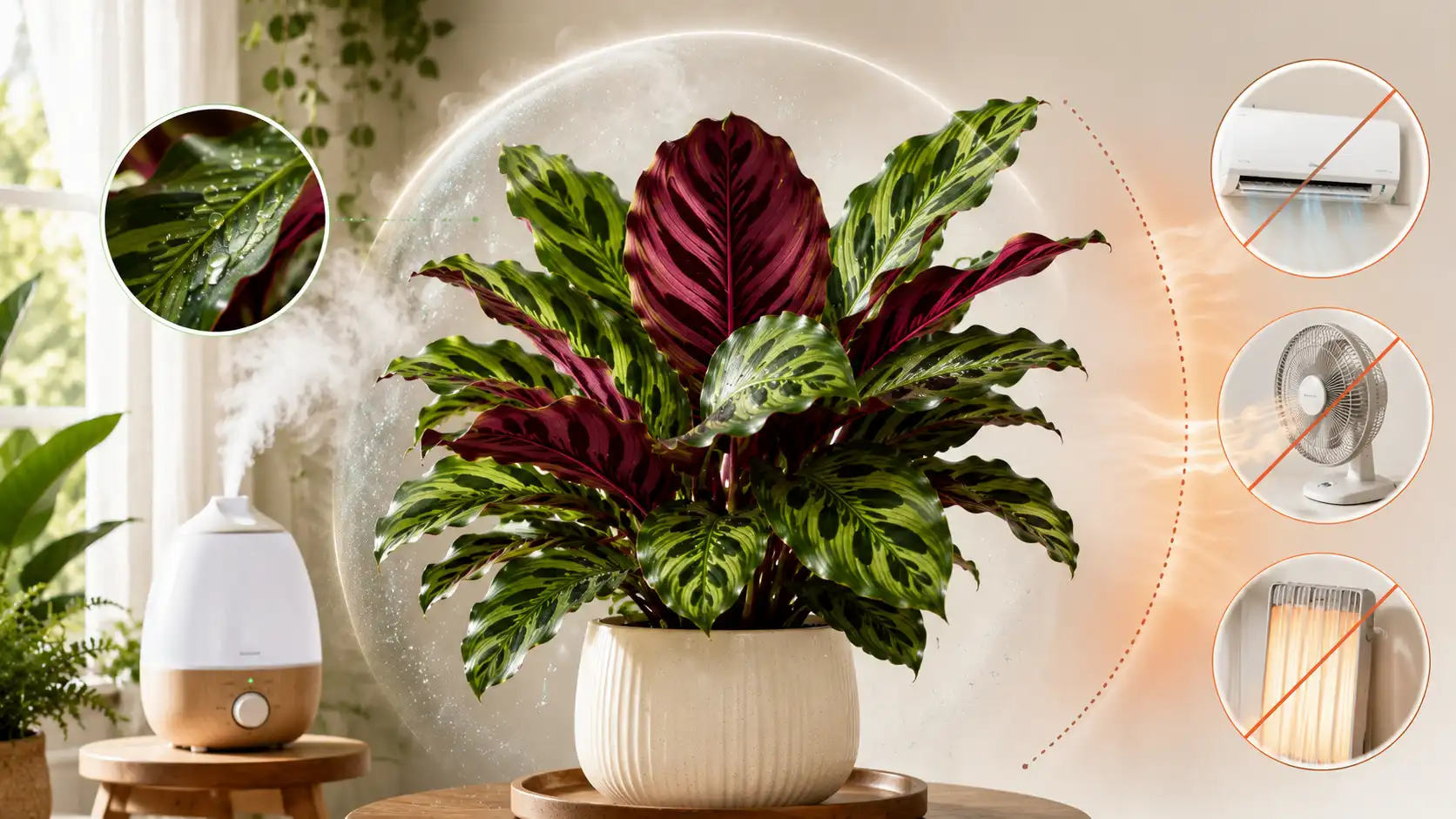
Calathea Flamestar thrives in humidity levels between 60% and 70%.
Low humidity frequently causes:
- Crispy leaf edges
- Curling leaves
- Browning tips
Ideal temperatures range between 18°C and 24°C (65°F–75°F).
Avoid exposing the plant to:
- Cold drafts
- Air conditioning vents
- Heating vents
- Sudden temperature fluctuations
Stable conditions are important for long-term health.
Soil, Pot, and Drainage
Calathea Flamestar prefers a moisture-retentive but well-draining soil mix.
A suitable mixture may include:
- Peat moss or coco coir
- Perlite
- Fine bark
Drainage holes are essential because standing water around roots increases the risk of root rot.
Calatheas generally prefer shallow-to-medium depth pots because they possess shallow rhizomatous root systems. Oversized deep containers may retain excess moisture for too long.
Bottom Watering Method
Bottom watering can help maintain even soil moisture.
Steps:
- Fill a shallow tray with water.
- Place the pot into the tray.
- Allow the soil to absorb water through the drainage holes.
- Leave the pot for approximately 15–30 minutes.
- Remove the pot and allow excess water to drain completely.
- Return the plant to its growing location.
This method reduces the chance of uneven watering and soil disturbance.
Fertilizing
Feed Calathea Flamestar during spring and summer using a balanced liquid fertilizer diluted to half strength.
Recommended schedule:
- Every 4–6 weeks during active growth
- Stop or reduce feeding during winter
Overfertilization may cause:
- Brown leaf tips
- Salt accumulation
- Root stress
Applying fertilizer lightly is usually more beneficial than frequent heavy feeding.
Do Calatheas Like Bathrooms?
Yes, Calatheas often grow well in bathrooms because these spaces usually provide higher humidity levels.
However, adequate lighting remains essential. A bathroom with poor natural light may not support healthy growth despite its humidity advantages.
The best bathroom environment combines:
- Bright indirect light
- Warm temperatures
- Consistent humidity
Common Calathea Flamestar Problems and How to Fix Them
Droopy Leaves
Droopy leaves are commonly caused by underwatering, low humidity, temperature stress, or sudden environmental changes.
Fix:
- Check soil moisture immediately.
- Water if the soil is dry.
- Increase humidity levels.
- Move away from drafts.
Prevent:
- Maintain consistent watering.
- Monitor humidity regularly.
- Avoid abrupt location changes.
Signs of Overwatering
An overwatered Calathea typically shows:
- Yellow leaves
- Soft stems
- Persistently wet soil
- Musty or sour odors
- Root rot symptoms
Fix:
- Reduce watering frequency.
- Improve drainage.
- Remove severely damaged roots if necessary.
Prevent:
- Allow the top inch of soil to dry before watering.
- Use containers with drainage holes.
Signs Your Calathea Is Dying
Common signs of a dying Calathea include:
- Extensive leaf collapse
- Blackened stems
- Foul-smelling roots
- Severe root rot
- Progressive decline despite watering
Normal aging may cause occasional leaf loss, but widespread decline usually signals a care issue requiring immediate attention.
How to Bring a Calathea Back to Life
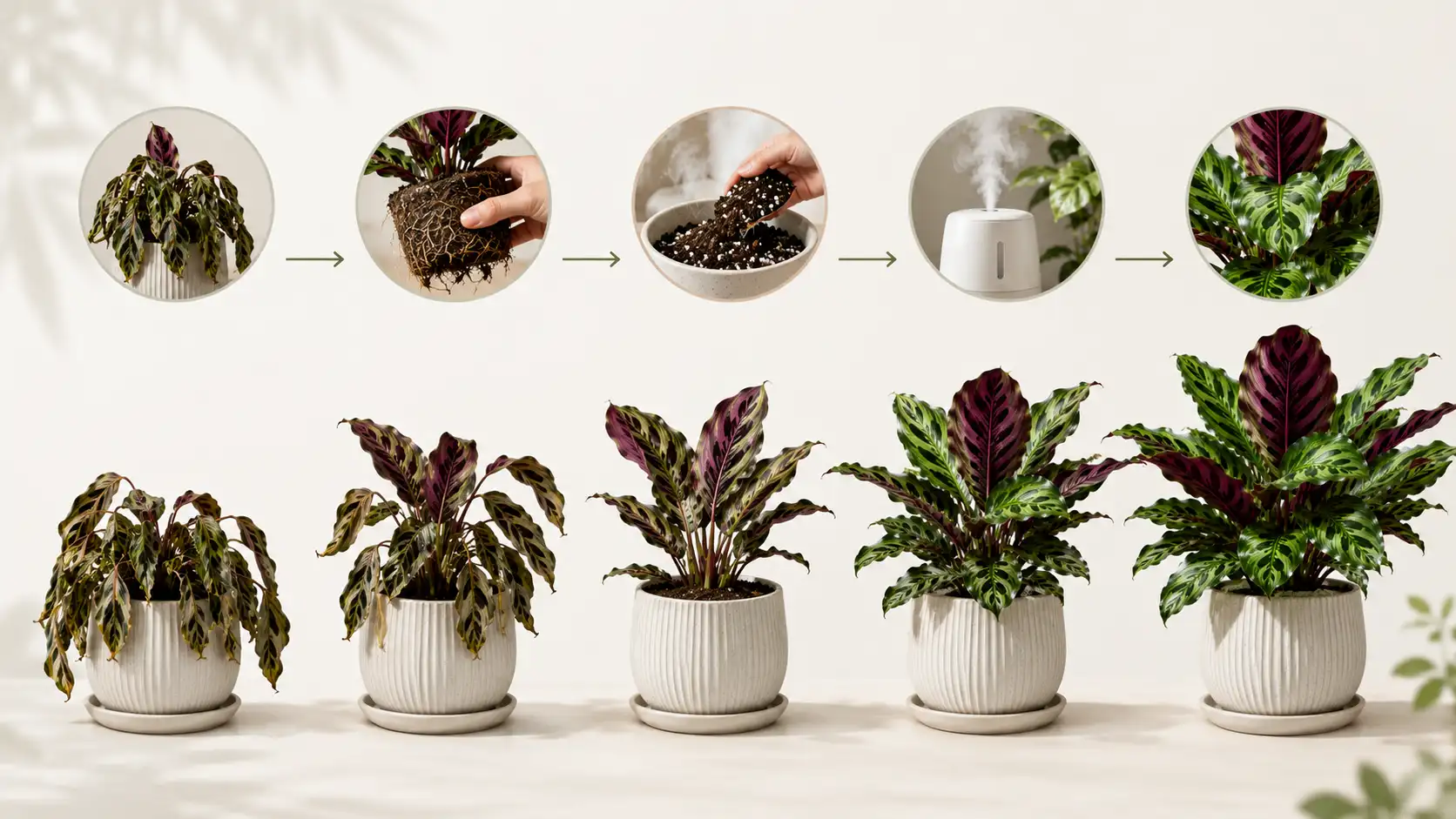
To revive a struggling Calathea:
- Inspect roots for rot.
- Remove damaged roots.
- Repot into fresh, well-draining soil.
- Increase humidity.
- Adjust watering practices.
- Provide bright, indirect light.
- Remove dead foliage.
Recovery may take several weeks as new growth develops.
Should You Cut Off Dying Leaves?
Yes, dying Calathea leaves should be removed using clean, sterilized pruning shears. Proper pruning techniques help maintain plant health and appearance, particularly when removing damaged foliage from prayer plants.
Benefits include:
- Improved appearance
- Reduced energy waste
- Better air circulation
- Easier monitoring of new growth
Cut leaves near the base without damaging healthy stems.
How to Make a Calathea Bushy
A bushier Calathea develops through consistent care and healthy growth.
Helpful strategies include:
- Providing stable indirect light
- Feeding during active growth
- Rotating the pot regularly
- Maintaining high humidity
- Dividing mature plants when appropriate
Consistent environmental conditions encourage fuller foliage production.
Why Are Calatheas So Difficult? (SERP Gap Coverage)
Calatheas are considered difficult because they have a relatively narrow tolerance range for water quality, humidity, temperature, and lighting conditions.
Unlike more forgiving houseplants, Calathea Flamestar often reacts quickly to environmental stress.
Common beginner mistakes include:
- Watering on a fixed schedule
- Ignoring soil moisture levels
- Using untreated tap water
- Allowing humidity to drop too low
Environmental limitations also contribute to challenges.
Examples include:
- Dry indoor heating during winter
- Air-conditioned rooms
- Frequent temperature fluctuations
Seasonal changes are equally important. Between October and February, growth slows naturally, meaning the plant requires less water and fewer nutrients than during spring and summer.
Understanding these seasonal adjustments helps prevent many care-related problems.
Calathea Flamestar vs. Similar Calathea Varieties
| Variety | Leaf Pattern | Light Need | Difficulty | Mature Size |
| Flamestar | Flame-like central pattern, burgundy underside | Bright indirect | Moderate | 12–24 inches |
| Medallion | Rounded decorative markings | Bright indirect | Moderate | 18–24 inches |
| White Fusion | White and green variegation | Bright indirect | High | 12–24 inches |
| Pinstripe (Ornata) | Pink pinstripes | Bright indirect | Moderate-High | 18–24 inches |
| Beauty Star | Feathered striping pattern | Bright indirect | Moderate | 12–24 inches |
| Rufibarba | Long narrow fuzzy leaves | Medium to bright indirect | Moderate | 24–36 inches |
Calathea Flamestar vs. Medallion
Flamestar typically displays stronger flame-shaped patterns and more pronounced leaf texture. Medallion is known for its rounded foliage and circular markings. Both require similar humidity and watering conditions. For a deeper look at one of the most commonly compared varieties, see our detailed Calathea Roseopicta Medallion care guide.
Calathea Flamestar vs. White Fusion
White Fusion is generally considered more demanding due to its variegation. It requires careful light management to maintain coloration. Flamestar tends to be slightly easier to maintain while still offering dramatic foliage.
Calathea Flamestar vs. Pinstripe (Ornata)
Pinstripe Calathea features elegant pink stripes across dark leaves. Flamestar has broader leaf markings and more textured foliage. Care requirements remain largely similar, though Ornata may be slightly more sensitive to humidity fluctuations.
Is Calathea Flamestar Toxic to Pets?
No, Calathea Flamestar is generally considered non-toxic to cats and dogs.
Although it is not classified as poisonous, pets that chew on leaves may still experience mild digestive upset such as vomiting or stomach irritation.
For safety:
- Keep plants out of reach when possible.
- Monitor pets that frequently chew foliage.
- Contact a veterinarian if concerning symptoms occur.
This makes Calathea Flamestar a popular option among pet owners seeking decorative indoor plants.
Conclusion
Calathea Flamestar is one of the most visually striking foliage houseplants available, thanks to its patterned leaves, textured surfaces, and rich burgundy undersides. While it has a reputation for being sensitive, its care requirements are manageable when key conditions remain consistent. Bright indirect light, filtered water, adequate humidity, and proper watering practices are the foundation of healthy growth. Most issues, including drooping, yellowing, and browning leaves, can be corrected when identified early. With attentive care and stable growing conditions, Calathea Flamestar can remain a vibrant and attractive indoor plant for many years.
FAQs
How often should I water a Calathea Flamestar?
Water when the top inch of soil feels dry. Most plants require watering every 5–7 days during active growth and less frequently during winter.
Why are my Calathea Flamestar's leaves curling?
Leaf curling is commonly caused by underwatering, low humidity, temperature stress, or excessive sunlight. Checking moisture levels and increasing humidity often resolves the issue.
Can I use tap water on my Calathea?
You can, but many Calatheas react negatively to minerals, chlorine, and fluoride in tap water. Filtered, distilled, or rainwater is usually preferred.
Is Calathea Flamestar safe for pets?
Yes. Calathea Flamestar is generally regarded as non-toxic to cats and dogs, although chewing plant material may still cause mild digestive upset.
Why is my Calathea Flamestar not growing?
Slow growth may result from insufficient light, low humidity, nutrient deficiencies, cold temperatures, or normal seasonal dormancy during winter.
How do I know if my Calathea needs repotting?
Signs include roots emerging from drainage holes, water running through the pot too quickly, slowed growth, or roots becoming tightly crowded within the container.