
Introduction
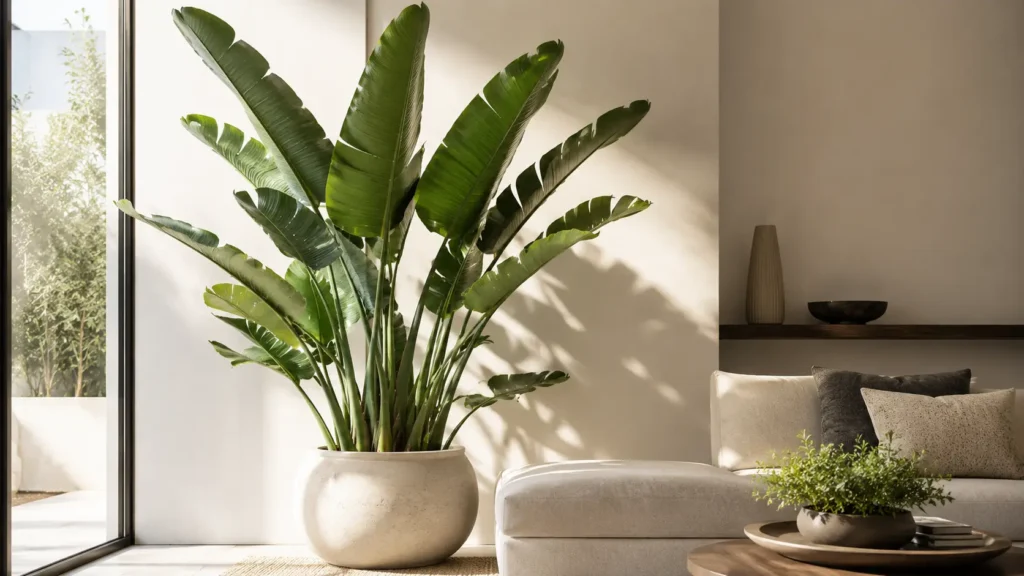
Strelitzia nicolai indoor care focuses on providing bright light, consistent moisture, and warm temperatures that mimic the plant’s tropical origins. Commonly known as the giant white bird of paradise, Strelitzia nicolai is a large ornamental plant valued for its dramatic foliage and architectural appearance. Unlike many outdoor bird of paradise varieties, it is frequently grown indoors in homes, offices, and conservatories. It is also distinct from Strelitzia reginae, a smaller species known for its orange and blue flowers. Whether referred to as strelitzia nicolai, nicolai strelitzia, giant white bird of paradise, or the commonly misspelled strilitzia, this guide covers everything needed for successful indoor cultivation. Strelitzia nicolai is one of many popular tropical houseplants featured in our comprehensive Plants Benefits and Guides resource, which covers plant care, growth habits, and maintenance tips for indoor and outdoor species.
Quick Summary
- Strelitzia nicolai thrives indoors with bright indirect light, consistent moisture, and warm temperatures.
- It is a moderate-to-fast grower that can be partially controlled through pot size and pruning.
- Repotting every 2–3 years helps maintain healthy root development.
- Division is the most reliable propagation method for new plants.
- Most issues such as yellow leaves and slow growth can be corrected through simple care adjustments.
What Is Strelitzia Nicolai?
Strelitzia nicolai is a tropical evergreen plant in the Strelitziaceae family that is commonly known as the giant white bird of paradise or white bird of paradise. Native to South Africa, it grows naturally in warm coastal forests where it receives abundant sunlight and moisture.
For additional botanical information and taxonomy details, readers can reference the Wikipedia article on Strelitzia nicolai.
The plant develops large banana-like leaves that emerge from upright stems, creating a bold architectural appearance. While mature outdoor specimens can produce striking white and blue flowers, flowering indoors is uncommon.
If you are unsure whether your plant is a giant white bird of paradise or the smaller orange-flowering species, see our detailed guide on Strelitzia Reginae vs Nicolai: Key Differences Explained.
Compared to Strelitzia reginae, Strelitzia nicolai is significantly larger and is grown primarily for its foliage rather than its flowers.
In regions with cold winters, including much of the UK, Strelitzia nicolai is usually grown indoors or in conservatories because it lacks frost tolerance.
Strelitzia Nicolai vs Strelitzia Reginae (Comparison Block)
| Feature | Strelitzia Nicolai | Strelitzia Reginae |
| Mature Size | Up to 20–30 ft outdoors | Typically 3–6 ft |
| Flower Color | White and blue | Orange and blue |
| Indoor Suitability | Excellent for large spaces | Excellent for smaller spaces |
| Light Needs | Bright indirect to direct sun | Bright light |
| Growth Speed | Moderate to fast | Moderate |
Benefits of Growing Strelitzia Nicolai Indoors
Growing Strelitzia nicolai indoors offers both practical and aesthetic benefits.
Its large leaves contribute to improved indoor environments by increasing humidity through transpiration. While it should not be viewed as a primary air purifier, its foliage can support overall indoor air quality.
The plant is especially valued in interior design because it creates a tropical focal point. Its upright structure works well in modern, minimalist, and contemporary spaces.
Once established, Strelitzia nicolai is relatively durable compared to many tropical houseplants. It tolerates occasional missed waterings and adapts well to indoor conditions when basic needs are met.
Light Requirements for Indoor Strelitzia Nicolai
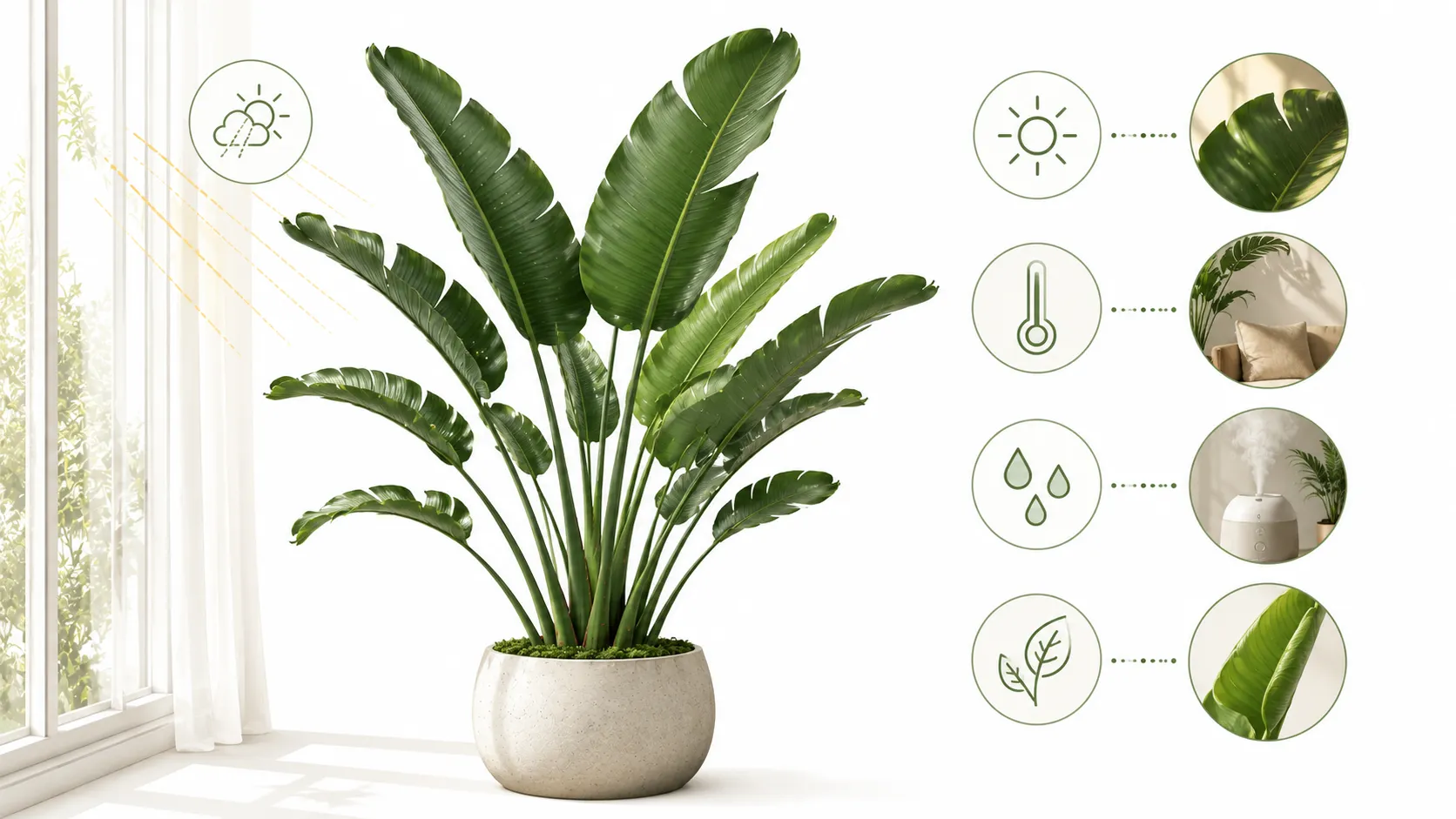
Strelitzia nicolai grows best in bright indirect light. A location near a south-facing or east-facing window often provides ideal conditions. Although the plant can tolerate lower light levels, growth slows significantly. Leaves may become smaller, and new growth may emerge less frequently.
Too much intense direct sunlight, especially through glass during summer afternoons, can damage foliage. Understanding how much sunlight bird of paradise plants can tolerate helps prevent leaf scorch, and our Do Bird of Paradise Like Full Sun? Light Guide explains ideal light exposure in more detail.
Signs of excessive light include:
- Brown leaf edges
- Bleached patches
- Crispy leaf tips
- Leaf scorch
For maximum growth and health, provide several hours of bright filtered light each day.
How to Water Strelitzia Nicolai Indoors
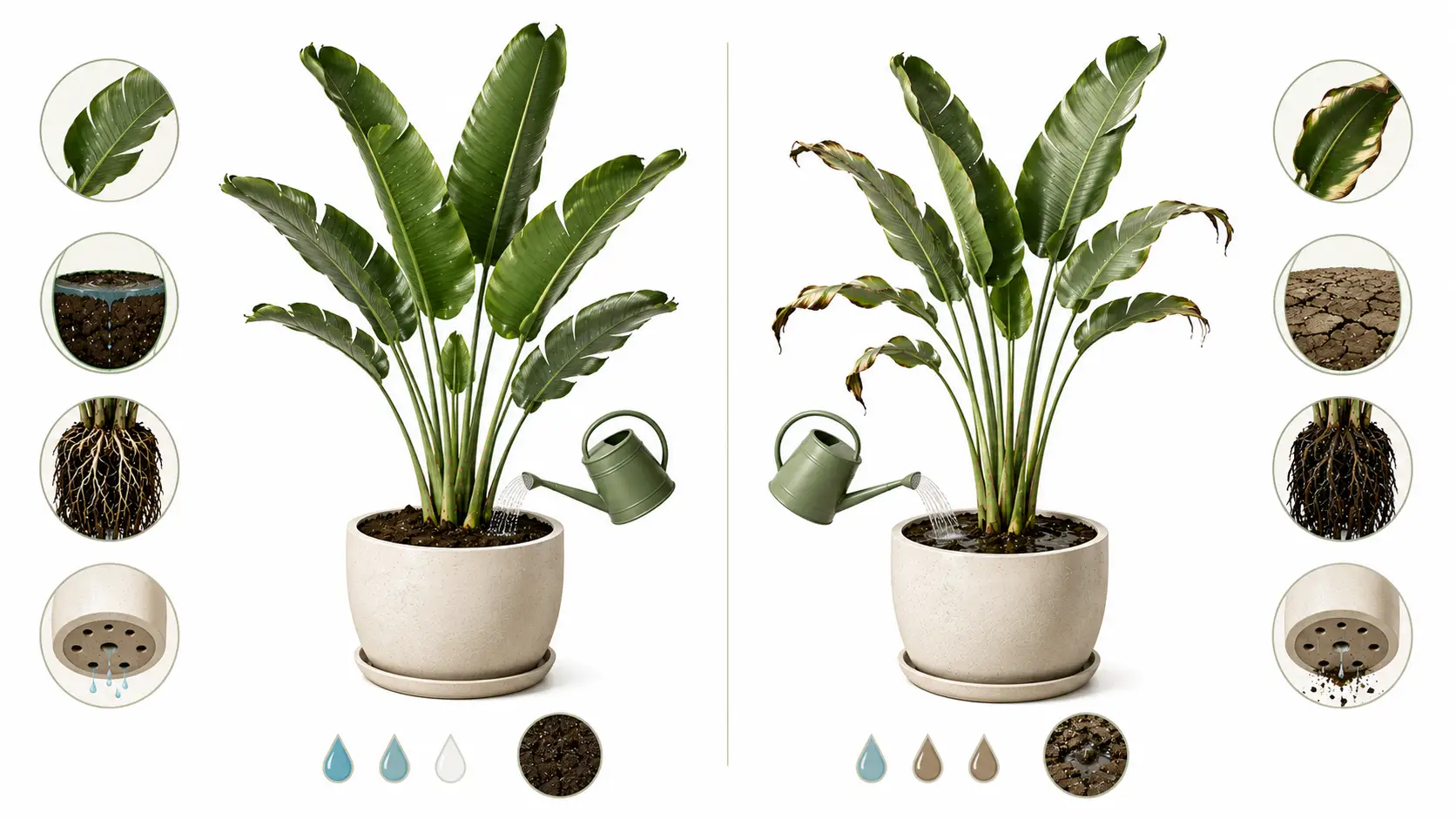
Strelitzia nicolai should be watered based on soil moisture rather than a fixed schedule. Allow the top 1–2 inches of soil to dry before watering thoroughly.
During spring and summer, watering is generally more frequent because the plant is actively growing. During winter, growth slows and water requirements decrease.
Proper drainage is essential. Containers should always have drainage holes to prevent water accumulation around the roots.
Signs of Overwatering vs Underwatering
Overwatering
- Yellow leaves
- Soft stems
- Soggy soil
- Root rot odor
- Wilting despite wet soil
Underwatering
- Dry soil
- Curling leaves
- Brown leaf edges
- Drooping foliage
- Slow growth
Maintaining evenly moist but not saturated soil produces the best results.
Soil, Feeding, and Climate Conditions
- Strelitzia nicolai performs best in rich, well-draining soil. A mix containing potting soil, perlite, and coarse bark provides both moisture retention and airflow.
- Feed the plant with a balanced liquid fertilizer every 4–6 weeks during spring and summer. Reduce or stop fertilization during winter dormancy.
- Ideal indoor temperatures range between 65°F and 85°F (18°C–29°C). Temperatures below 50°F (10°C) can stress the plant.
- Humidity levels between 40% and 60% are generally sufficient, though higher humidity supports healthier foliage.
- Outdoor cultivation in the UK is limited because prolonged cold temperatures and frost can damage leaves and roots. Most growers achieve better results indoors or in protected conservatories.
Choosing the correct feeding schedule can improve plant health, and our Bi-Weekly vs Monthly Fertilizing for Houseplants guide compares common fertilization approaches for indoor plants.
Indoor vs Outdoor Care Differences (Comparison Block)
| Care Factor | Indoor Growing | Outdoor Growing |
| Temperature | Controlled year-round | Weather dependent |
| Watering | Regular monitoring | Influenced by rainfall |
| Light | Bright indirect preferred | Can tolerate more sun |
| Winter Care | Minimal growth indoors | Cold protection required |
| Humidity | Often lower | Naturally higher outdoors |
How to Keep Strelitzia Nicolai Small (Size Management)
The most effective way to keep Strelitzia nicolai small is by limiting root expansion through careful pot selection. Keeping the plant slightly root-bound slows growth without harming overall health. Avoid placing young plants into excessively large containers.
Pot selection plays a major role in growth control, and our Does Pot Size Affect How Fast a Plant Grows? Complete Guide explains how container size influences root development and overall plant size.
Selective pruning can also help maintain shape and remove oversized leaves.
However, realistic expectations are important. Strelitzia nicolai is naturally a large species and cannot be permanently maintained at a very small size.
Plant Size
Indoors, Strelitzia nicolai commonly reaches 6–10 feet in height with a spread of 3–5 feet.
Outdoors in tropical climates, mature plants can exceed 20 feet tall and develop large clumps.
Indoor specimens remain smaller because they receive less intense light, have limited root space, and experience controlled environmental conditions.
Factors influencing size include:
- Pot size
- Available light
- Nutrient availability
- Root space
- Temperature
Understanding how quickly a plant may increase in height and spread can help with indoor placement planning. You can use our plant growth calculator to estimate future growth patterns and better manage available space.
Growth Rate
Strelitzia nicolai is considered a moderate-to-fast-growing plant. Seasonal changes significantly influence growth rates, and our How Does Season Affect Indoor Plant Growth guide explains why many tropical houseplants slow down during winter.
Most growth occurs during spring and summer when temperatures are warm and light levels are high.
Growth slows considerably during autumn and winter as the plant enters a semi-dormant period.
Factors that encourage faster growth include:
- Bright light
- Regular feeding
- Warm temperatures
- Proper watering
- Adequate root space
Poor lighting and nutrient deficiencies commonly slow development.
Pruning Strelitzia Nicolai
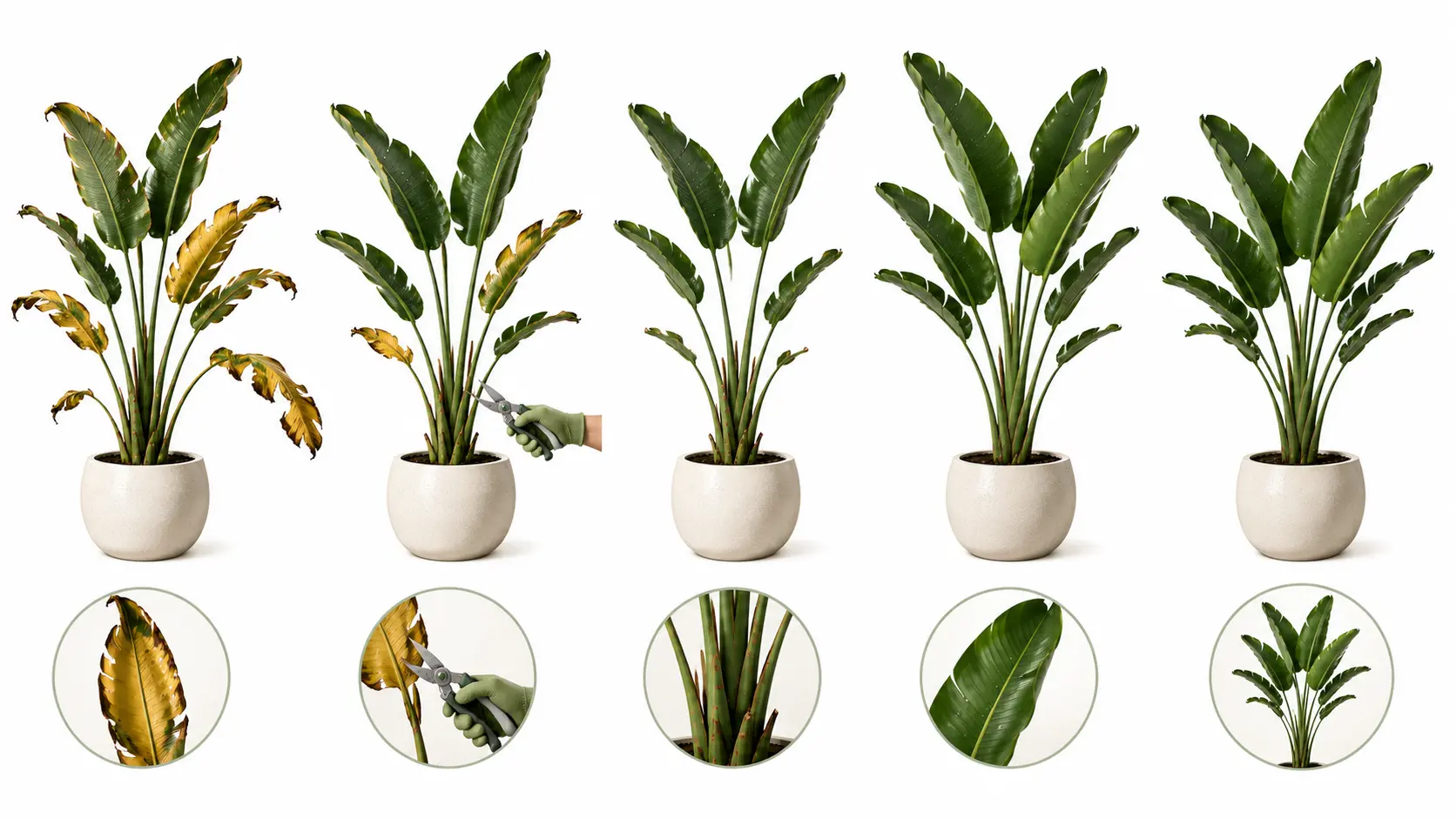
Pruning helps maintain appearance and remove damaged foliage.
The best time to prune is during spring or early summer when active growth allows faster recovery.
Remove leaves that are yellow, brown, broken, or heavily damaged.
Step-by-Step Pruning Process
- Sterilize pruning tools.
- Inspect the plant for damaged foliage.
- Cut unwanted leaves close to the base.
- Remove dead stems completely.
- Avoid removing excessive healthy growth.
- Dispose of plant debris.
Common pruning mistakes include over-pruning, tearing leaves, and using unclean tools.
How to Propagate Strelitzia Nicolai
Division is the most reliable propagation method for Strelitzia nicolai.
Mature plants often develop multiple stems or offsets that can be separated during repotting. Each division should contain healthy roots and active growth.
Propagation from cuttings is much less reliable because Strelitzia nicolai does not root easily from stem sections alone.
Attempts to propagate without roots typically fail because new divisions require established root systems to support growth.
After propagation, place divisions in bright indirect light and maintain lightly moist soil until new growth appears.
Division vs Cutting Propagation (Comparison Block)
| Method | Success Rate | Speed | Difficulty |
| Division | High | Faster | Easy to Moderate |
| Cutting | Low | Slow | Difficult |
When and How to Repot Strelitzia Nicolai
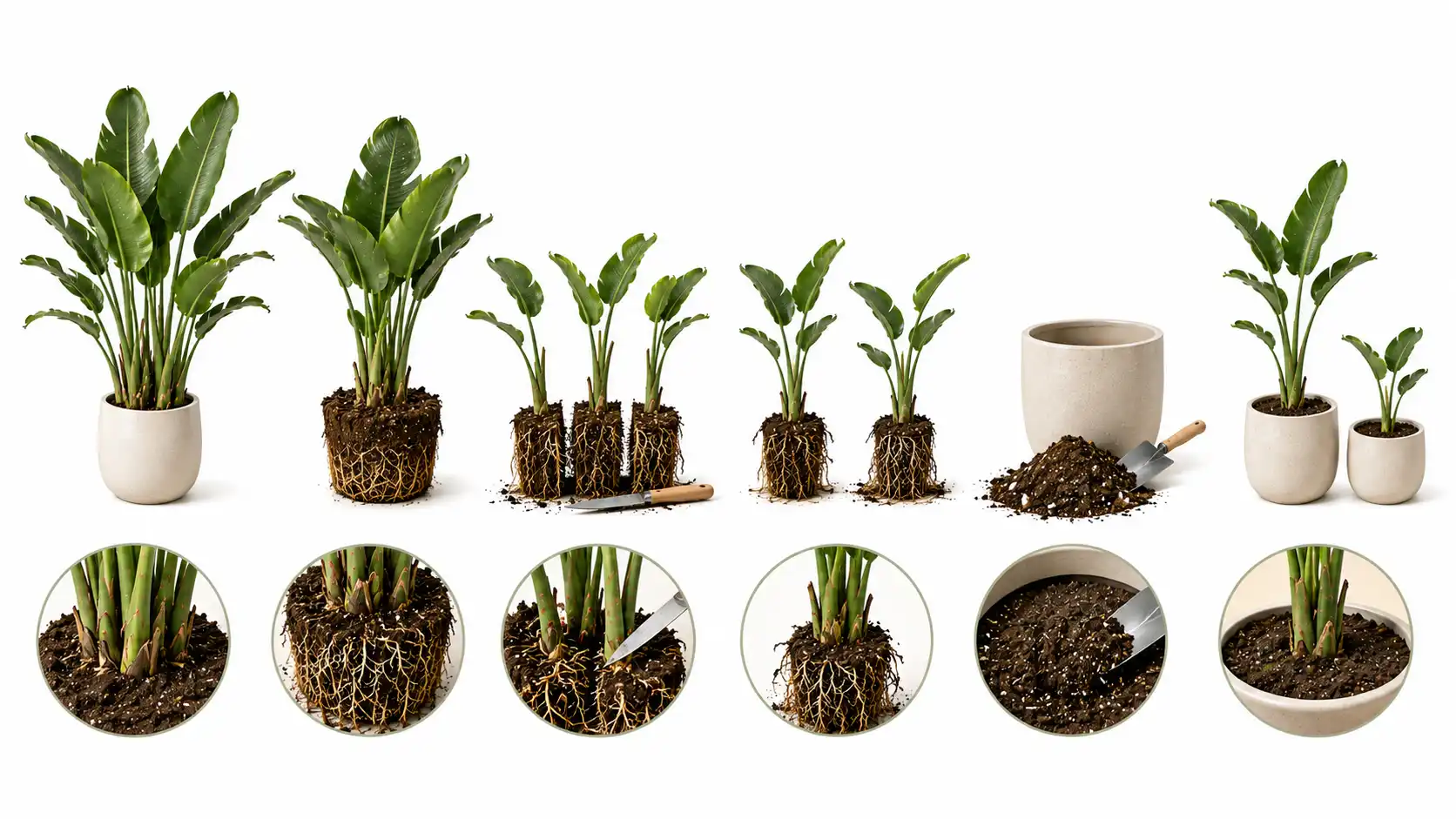
Most Strelitzia nicolai plants benefit from repotting every 2–3 years.
Signs that repotting is needed include roots circling the container, slowed growth, and roots emerging from drainage holes.
Repotting Process
- Water the plant one day before repotting.
- Remove it carefully from the existing pot.
- Inspect roots for damage.
- Choose a container 1–2 inches larger.
- Add fresh well-draining soil.
- Replant at the same depth.
- Water thoroughly.
Avoid moving the plant into an excessively large container, as excess soil can retain unnecessary moisture.
Care Guide Summary
| Care Factor | Recommendation |
| Light | Bright indirect light |
| Watering | Water when top soil dries |
| Soil | Well-draining mix |
| Fertilizer | Every 4–6 weeks during growth |
| Temperature | 65°F–85°F (18°C–29°C) |
| Humidity | Moderate to high |
| Repotting | Every 2–3 years |
| Pruning | Remove damaged leaves as needed |
Common Strelitzia Nicolai Problems and How to Fix Them
Yellowing Leaves
Yellow leaves commonly result from overwatering, poor drainage, or light stress.
To fix the issue, inspect watering practices and improve drainage if necessary. Move the plant to a brighter location if inadequate light is suspected.
Prevent recurrence by monitoring soil moisture before watering.
Slow or Stunted Growth
Slow growth is usually caused by insufficient light, nutrient deficiencies, or restricted root systems.
Improve growth by increasing light exposure, feeding during the growing season, and repotting if the plant is severely root-bound.
Consistent care prevents future growth issues.
Overwatering and Root Rot
Root rot occurs when roots remain in saturated soil for extended periods.
Warning signs include yellow leaves, foul odors, black roots, and persistent wilting.
Recovery involves removing damaged roots, replacing wet soil, and improving drainage.
Using well-draining soil and containers with drainage holes is the best prevention strategy.
Pests on Indoor Strelitzia
Common indoor pests include spider mites and scale insects.
Treat infestations by wiping leaves, using insecticidal soap, and isolating affected plants when necessary.
Preventive measures include:
- Regular leaf inspections
- Cleaning foliage
- Maintaining plant health
- Avoiding excessively dry conditions
Beginner Mistakes to Avoid With Strelitzia Nicolai
Many care problems arise from avoidable mistakes.
Common beginner errors include:
- Overestimating the plant’s tolerance for low light
- Repotting too frequently
- Using oversized pots
- Watering inconsistently
- Ignoring winter dormancy
- Applying excessive fertilizer
Understanding these issues helps maintain healthier plants and prevents unnecessary stress.
Conclusion
Strelitzia nicolai indoor care centers on providing bright light, consistent watering, well-draining soil, and warm temperatures. Although this giant white bird of paradise can eventually become a large houseplant, its growth can be managed through proper pot selection, pruning, and regular maintenance. Successful cultivation depends on recreating tropical growing conditions as closely as possible indoors. With consistent care, Strelitzia nicolai can remain a healthy, long-lasting focal point that adds dramatic foliage and architectural beauty to indoor spaces.
FAQs
How often should you water strelitzia nicolai indoors?
Water when the top 1–2 inches of soil become dry. Frequency varies depending on season, temperature, and light levels.
Can strelitzia nicolai survive outdoors in the UK?
It can survive outdoors only in very mild, sheltered locations. Most UK growers keep it indoors or in conservatories because it is not frost-hardy.
How do you keep a bird of paradise plant small indoors?
Use a moderately sized pot, avoid excessive root space, and prune damaged or oversized leaves when necessary.
When is the best time to repot a strelitzia nicolai?
Spring is generally the best time because active growth allows the plant to recover more quickly.
Can you propagate strelitzia nicolai without roots?
Propagation without roots is difficult and often unsuccessful. Division with established roots provides the highest success rate.
Why are my strelitzia nicolai leaves turning yellow?
Yellowing leaves are commonly caused by overwatering, poor drainage, insufficient light, or environmental stress.
How is strelitzia nicolai different from strelitzia reginae?
Strelitzia nicolai is much larger and produces white and blue flowers, while Strelitzia reginae is smaller and known for its orange and blue blooms.