
Introduction
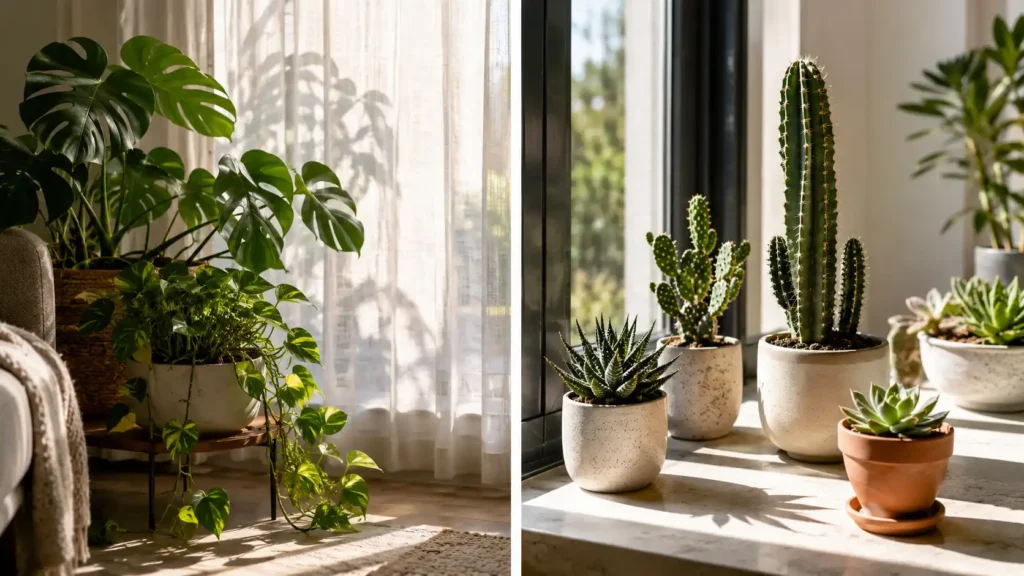
Bright indirect light vs direct sunlight is one of the most important concepts for indoor plant care because different plants require different levels of light exposure. Bright indirect light refers to strong natural light that reaches a plant after being filtered, reflected, or diffused, while direct sunlight means the sun’s rays hit the leaves without obstruction. Neither type is universally better; the correct choice depends on the plant species and its natural growing environment. Understanding how to identify light conditions in your home helps prevent common issues such as leaf scorch, weak growth, yellowing leaves, and poor plant health. Understanding light requirements is one of the most important parts of successful indoor gardening, and our complete Plants Benefits and Guides resource covers essential plant care information, growing tips, and benefits for different plant varieties.
Quick Summary
- Bright indirect light means sunlight is filtered, reflected, or softened before reaching plant leaves.
- Direct sunlight occurs when unobstructed sun rays hit a plant surface directly.
- Most tropical houseplants, including pothos, monsteras, and peace lilies, prefer bright indirect light.
- Sun-loving plants like cacti and many succulents usually need several hours of direct sunlight.
- Identifying your home’s light level helps prevent plant stress and improves growth.
What Is Bright Indirect Light for Plants?
Bright indirect light means strong but filtered sunlight that does not directly hit the plant’s leaves.
Bright indirect light is a high-quality light condition where a plant receives plenty of brightness without being exposed to intense, direct sun rays. The light may come through a sheer curtain, bounce off a nearby wall, or enter from a window without creating a concentrated sunbeam on the plant. Many decorative indoor plants, including spotted-leaf varieties such as Begonia Maculata Wightii, prefer bright indirect light because it provides enough energy without causing leaf damage.
The bright indirect light meaning is different from low light or shade. A room with bright indirect light is still well illuminated, but the plant is protected from the intensity of direct sunlight.
Bright indirect light for plants usually provides enough energy for photosynthesis while reducing the risk of leaf damage. Many indoor plants evolved under forest canopies where sunlight was naturally filtered by taller plants.
Examples of plants that commonly prefer bright indirect light include:
- Monstera
- Pothos
- Philodendron
- Peace lily
- Calathea
- Fiddle-leaf fig
How to Recognize Bright Indirect Light in a Room
Bright indirect light is identified by a bright space with soft shadows and no direct sun patch on the plant.
A practical way to recognize bright indirect light is to observe how light behaves in the room.
Signs include:
- You can comfortably read without turning on artificial lights.
- Shadows appear soft, blurry, and less defined.
- There is no strong beam of sunlight directly touching leaves.
- The room feels bright but not intensely hot.
A bright indirect light example would be placing a plant near an east-facing window behind a thin curtain, where sunlight enters but is softened.
Other examples of bright indirect light include:
- Light reflected from a white wall onto a plant.
- A plant placed a few feet away from a sunny window.
- Filtered sunlight passing through curtains.
Where Is Bright Indirect Light Found Indoors?
Bright indirect light is commonly found near bright windows but away from direct sun rays.
Indoor locations with bright indirect light usually include areas about 1–5 feet away from a bright window, depending on the window size, season, and direction.
Common placements include:
- Beside an east-facing window.
- Near a south-facing window with a sheer curtain.
- A few feet back from a west-facing window.
- Rooms with strong natural daylight but no direct sun exposure.
Many bright indirect light houseplants perform best in these areas because they receive enough brightness without overheating.
What Is Direct Sunlight for Plants?
Direct sunlight occurs when unobstructed sunlight rays hit a plant’s leaves or surface directly.
Direct sunlight is the strongest natural light available indoors. It happens when the sun’s rays travel directly from the window to the plant without being filtered, reflected, or diffused.
What is considered direct sunlight for plants? A visible sun patch on the floor, furniture, or plant leaves is a strong indicator. The light is usually intense, warm, and creates sharp shadows.
Direct sunlight is ideal for plants adapted to open environments, such as:
- Cacti
- Succulents
- Aloe
- Some herbs
- Certain tropical plants
However, many common indoor plants can suffer from leaf scorch when exposed to too much direct sun.
What Does Direct Sunlight Feel Like vs Look Like?
Direct sunlight feels warmer and creates sharp, high-contrast shadows compared with indirect light.
Direct sunlight is easy to identify because it has a stronger visual and physical impact.
Characteristics include:
- A clear sunbeam visible on surfaces.
- Dark, sharp shadows created by leaves.
- Noticeable warmth when placing your hand in the light.
- A moving patch of sunlight as the sun changes position.
The difference between direct vs indirect sunlight is mainly the path of the light. Direct light travels straight from the sun to the plant, while indirect light reaches the plant after being softened or redirected.
Direct and Indirect Sunlight Diagrams: Visualizing the Difference
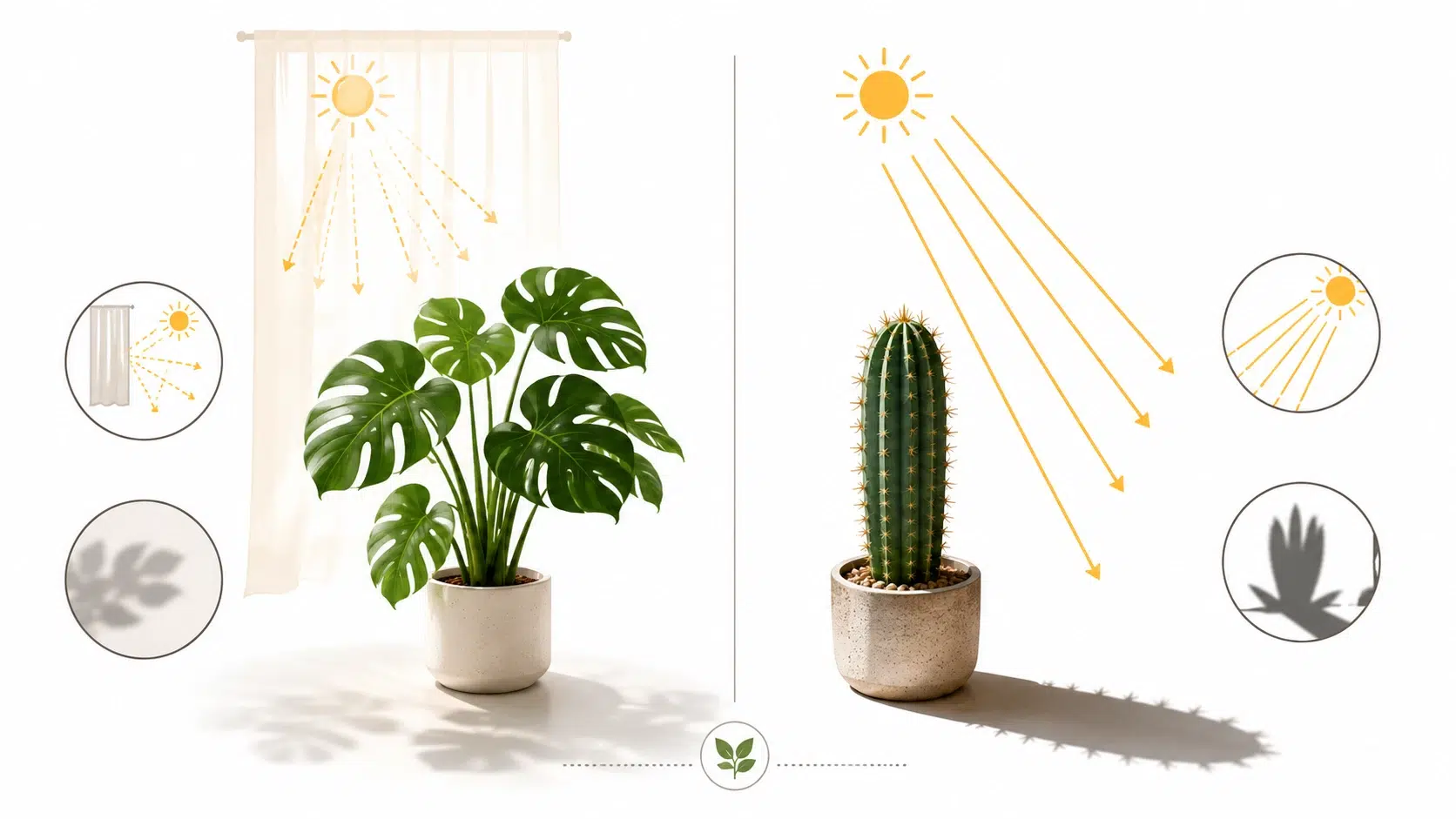
A direct and indirect sunlight diagram shows how sunlight reaches plants differently.
A helpful diagram would show:
- Direct sunlight: straight rays traveling from the sun and hitting the leaf surface directly.
- Bright indirect light: rays passing through curtains, bouncing from walls, or being scattered before reaching the plant.
- Low light: weak ambient light far from the main light source.
| Light Type | Ray Behavior | Shadow Appearance | Typical Intensity |
| Direct sunlight | Unobstructed rays hit plant directly | Sharp and defined | Very high |
| Bright indirect light | Filtered, reflected, or diffused rays | Soft and blurry | Moderate–high |
| Low/indirect light | Minimal light far from window | Barely visible | Low |
Which Window Provides Which Light Type?
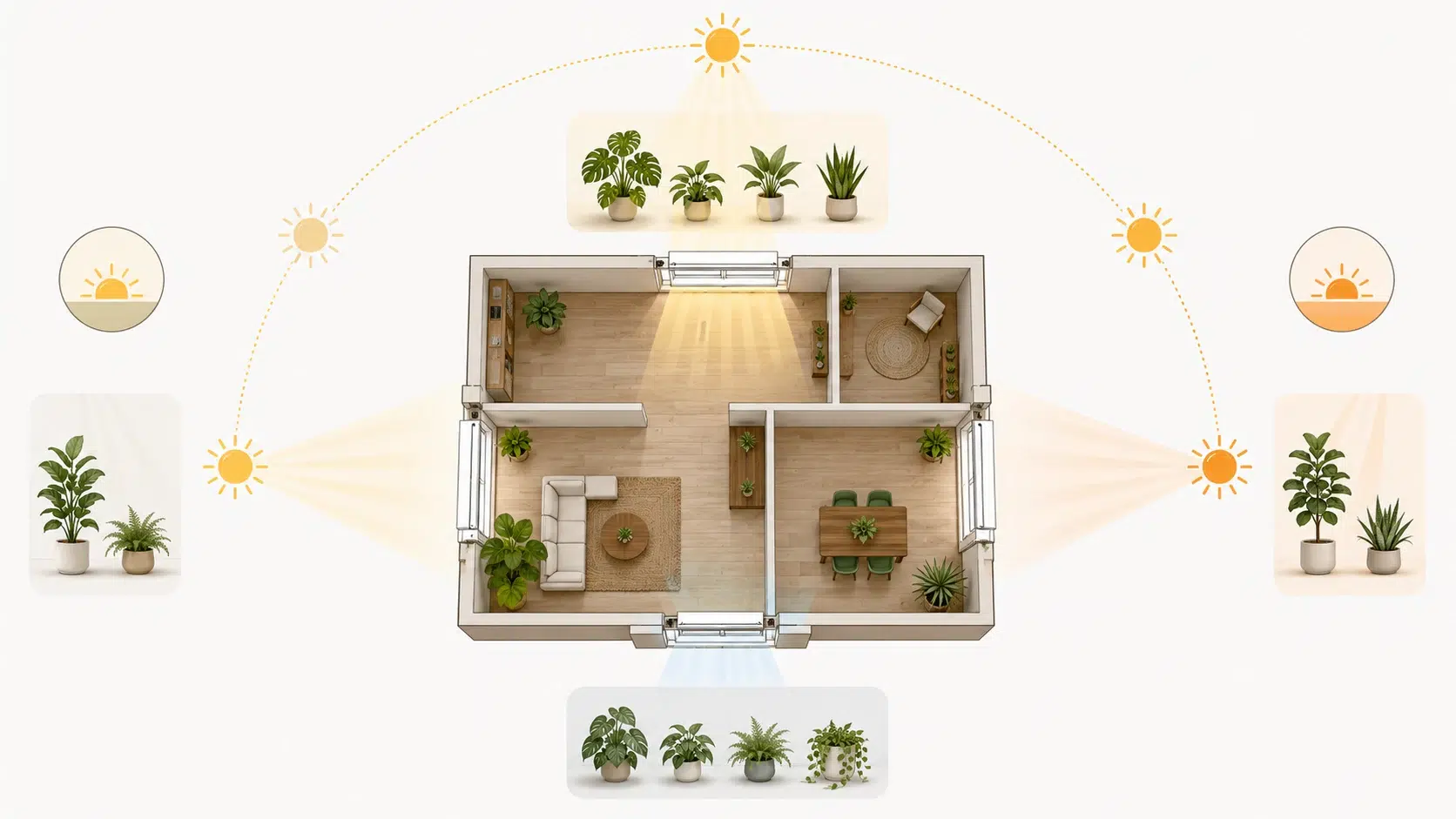
Window direction determines the quality and intensity of indoor sunlight.
The direction a window faces strongly affects whether plants receive direct or indirect light.
South-Facing Windows
South-facing windows usually provide the strongest direct sunlight in the Northern Hemisphere.
These windows receive long periods of intense sunlight and are often the best choice for sun-loving plants.
They work well for:
- Cacti
- Succulents
- Herbs
For bright indirect light plants, use:
- Sheer curtains
- Greater distance from the window
East-Facing Windows
East-facing windows provide gentle morning sunlight and are suitable for many houseplants.
Morning sun is usually softer than afternoon sunlight, making east-facing windows one of the safest options for indoor plants.
They often provide:
- Soft direct light in the morning
- Bright indirect light during other hours
West-Facing Windows
West-facing windows provide strong afternoon sunlight that can become intense.
West windows may create direct sunlight conditions during peak afternoon hours.
Plants placed farther from the window may receive bright indirect light instead.
North-Facing Windows
North-facing windows usually provide low indirect light, not bright indirect light.
A north-facing window does not generally provide bright indirect light because it receives little or no direct sun.
It is better suited for:
- ZZ plants
- Snake plants
- Cast iron plants
- Other low-light houseplants
Examples of Indirect Sunlight in a Home
Indirect sunlight occurs when natural light reaches plants without direct sun exposure.
Common examples include:
- Sunlight bouncing off a white wall.
- Light passing through sheer curtains.
- A plant sitting near a bright window but outside the sunbeam.
- Light entering through a skylight without a direct angle.
These situations create bright indirect light conditions suitable for many indoor plants. Plants such as spider plants are often placed in bright indoor areas where filtered sunlight supports healthy growth while avoiding harsh direct exposure.
Bright Indirect Light vs Direct Sunlight: Side-by-Side Comparison
Bright indirect light and direct sunlight differ mainly in intensity, plant suitability, and risk of damage.
| Feature | Bright Indirect Light | Direct Sunlight |
| Intensity | Moderate to high | Very high |
| Risk of leaf scorch | Low | Higher for sensitive plants |
| Suitable plants | Tropical houseplants | Cacti, succulents, herbs |
| Placement | Near windows but away from direct rays | South/west window sill |
| Duration | 6–8 hours | 2–6 hours depending on species |
Houseplants That Thrive in Bright Indirect Light
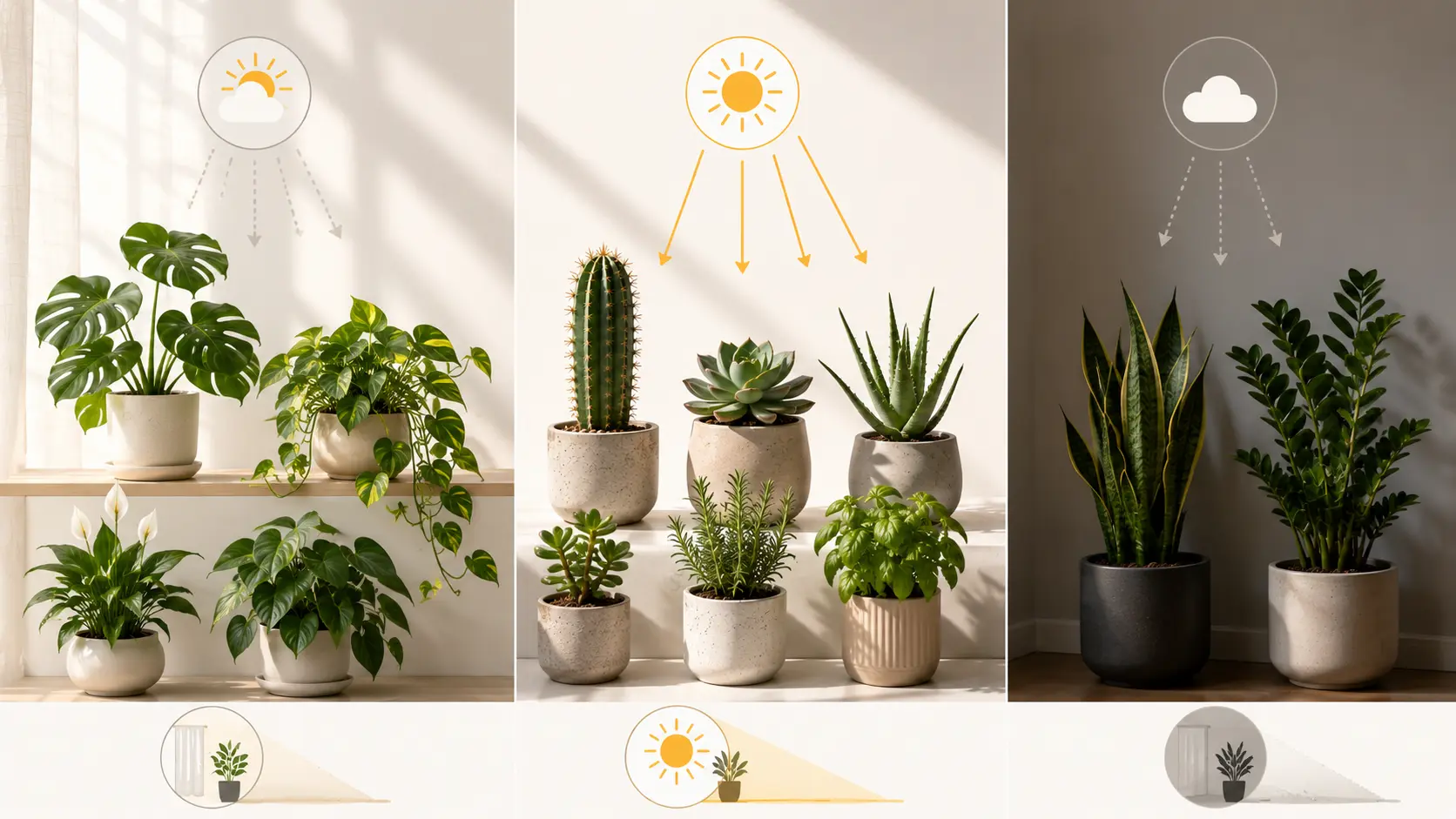
Many popular houseplants grow best in bright indirect light because it matches their natural forest environments.
Plants that like bright indirect light include:
- Monstera: Prefers strong filtered light for large healthy leaves.
- Pothos: Tolerates different conditions but grows best in bright indirect light.
- Philodendron: Produces healthier growth with consistent filtered light.
- Peace lily: Performs well away from harsh direct sun.
- Calathea: Needs bright but gentle light to maintain leaf patterns.
- Snake plant: Adaptable and can handle lower light.
Monsteras are popular bright indirect light plants, and species like Monstera Adansonii grow especially well when given filtered light and proper indoor support.
Plants That Like Bright Direct Light Indoors
Plants needing bright direct light usually come from naturally sunny environments.
Examples include:
- Cacti
- Succulents
- Basil
- Rosemary
- Croton
- Bird of paradise
When moving plants into direct sunlight, increase exposure gradually to prevent stress. Fiddle leaf figs are another example of indoor plants that perform best with consistent bright indirect light and stable growing conditions.”
Low Light Houseplants: When Neither Direct Nor Bright Indirect Is Available
Low light plants survive with limited natural light but still require some ambient brightness.
Suitable low-light plants include:
- ZZ plants
- Snake plants
- Cast iron plants
- Pothos
“No light plants” do not truly exist because all plants require light for photosynthesis.
Can You Use a Grow Light to Supplement Bright Indirect Light?
Grow lights can replace or supplement natural bright indirect light when sunlight is insufficient.
Grow lights are useful for:
- North-facing rooms
- Basements
- Winter months
- Homes with limited windows
Full-spectrum LED grow lights placed about 6–24 inches above plants can provide suitable artificial lighting. Plants require light because photosynthesis allows them to convert light energy into chemical energy needed for growth.
Common Mistakes: Misidentifying Your Light Level
Many beginners overestimate how bright their indoor spaces actually are.
Common mistakes include:
- Placing plants too far from windows.
- Assuming outdoor sunlight equals indoor sunlight.
- Ignoring seasonal changes.
- Keeping sun-loving plants in dim corners.
How to Measure Light Levels at Home
Light levels can be estimated using simple tests or tools.
Methods include:
- Shadow test: Sharp shadows indicate stronger light.
- Lux meter: Measures actual light intensity.
- Phone apps: Provide approximate readings.
Check light at different times because sunlight changes throughout the day.
Besides checking light intensity, plant owners can also track overall growing conditions to understand how environmental factors affect plant development. Use our Plant Growth Calculator to estimate growth patterns and make better plant care decisions based on your plant’s needs.
Seasonal Changes in Indoor Light
Indoor light conditions change throughout the year because the sun angle changes.
During winter, sunlight enters homes at a lower angle. A location that provides bright indirect light in summer may become much darker in winter.
Recheck plant placement seasonally.
Troubleshooting: Signs Your Plant Is Getting the Wrong Light
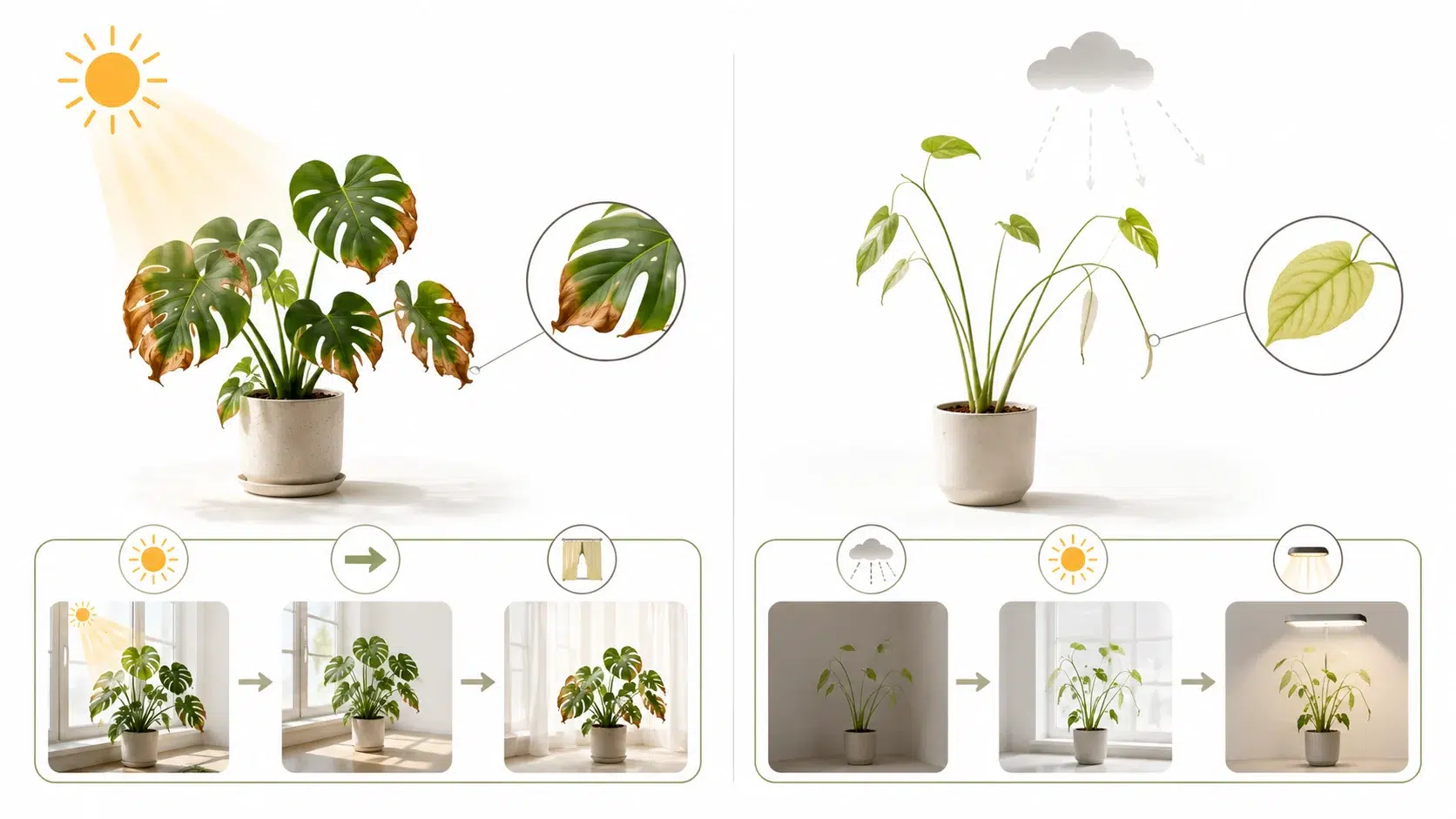
Plant symptoms often reveal whether the light level is too strong or too weak.
Signs of Too Much Direct Sunlight
Too much direct sunlight causes leaf damage from excessive intensity.
Symptoms include:
- Bleached leaves
- Crispy edges
- Brown patches
- Soil drying too quickly
Fixes:
- Move the plant farther from the window.
- Add a sheer curtain.
Signs of Too Little Light
Insufficient light causes slow growth and weak plant development.
Signs include:
- Leggy stems
- Small new leaves
- Pale color
- Yellowing leaves
- Wet soil that stays too long
Solutions:
- Move plants closer to windows.
- Add a grow light.
Conclusion
Bright indirect light vs direct sunlight is not about choosing one universally better option; the correct light depends on the plant’s natural requirements. Bright indirect light works best for many tropical houseplants because it provides strong energy without causing damage, while direct sunlight benefits plants adapted to intense outdoor conditions. By understanding window direction, observing plant symptoms, and adjusting placement throughout the year, you can create healthier growing conditions for indoor plants.
Frequently Asked Questions
What is the difference between indirect light and direct light for plants?
Indirect light is filtered, reflected, or diffused before reaching a plant, while direct light means sunlight hits the plant’s surface without obstruction.
Is a north-facing window bright indirect light?
No. A north-facing window usually provides low indirect light rather than bright indirect light and is better for low-light plants.
How far from a window is considered bright indirect light?
Bright indirect light is commonly found about 3–5 feet from a large bright window, although conditions vary by season and window direction.
Can I use a grow light instead of natural bright indirect light?
Yes. Full-spectrum LED grow lights can effectively provide artificial bright indirect light conditions when natural sunlight is limited.
Which houseplants need direct sunlight indoors?
Cacti, succulents, basil, rosemary, croton, and some aloe plants prefer several hours of direct sunlight.
How do I know if my plant is getting enough light?
Healthy leaf color, steady growth, and upright stems usually indicate good lighting. Leggy growth and pale leaves often suggest insufficient light.
What is considered bright indirect light for plants in practical terms?
Bright indirect light means a room is bright enough to read comfortably without extra lighting, with soft shadows and no direct sun patch on the plant.



11 Responses