
Introduction
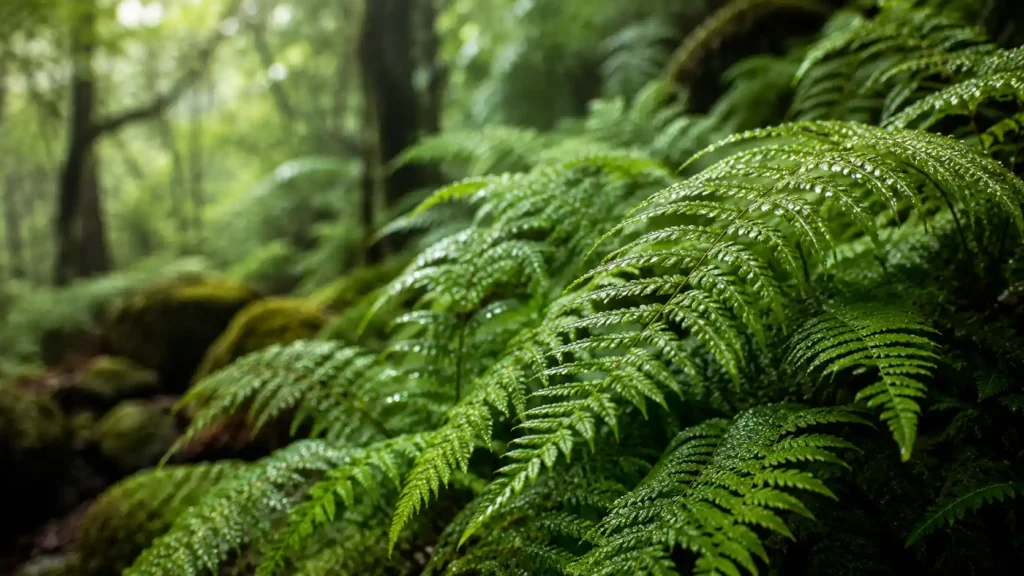
Learning how to look after a fern is easier when you understand its natural growing conditions. Ferns are non-flowering plants that reproduce through spores and thrive in moist, shaded environments. Their lush green foliage makes them popular as both houseplants and garden plants. Successful fern plant care focuses on providing consistent moisture, indirect light, high humidity, and well-draining soil. Whether you are growing a fern indoors in a decorative pot or outdoors in a shaded garden, understanding its basic care requirements helps maintain healthy growth throughout the year. This guide explains essential indoor and outdoor fern care, seasonal maintenance, common problems, and practical tips for long-lasting plants. Ferns are vascular plants belonging to the group Pteridophyta, widely studied for their unique reproduction through spores.
Quick Summary
- Ferns grow best in bright, indirect light with consistently moist but well-drained soil.
- High humidity is essential, especially for indoor ferns.
- Indoor and outdoor ferns have similar needs but require different seasonal care.
- Most fern species are beginner-friendly when watering, humidity, and light are managed correctly.
What Do Ferns Need to Thrive?
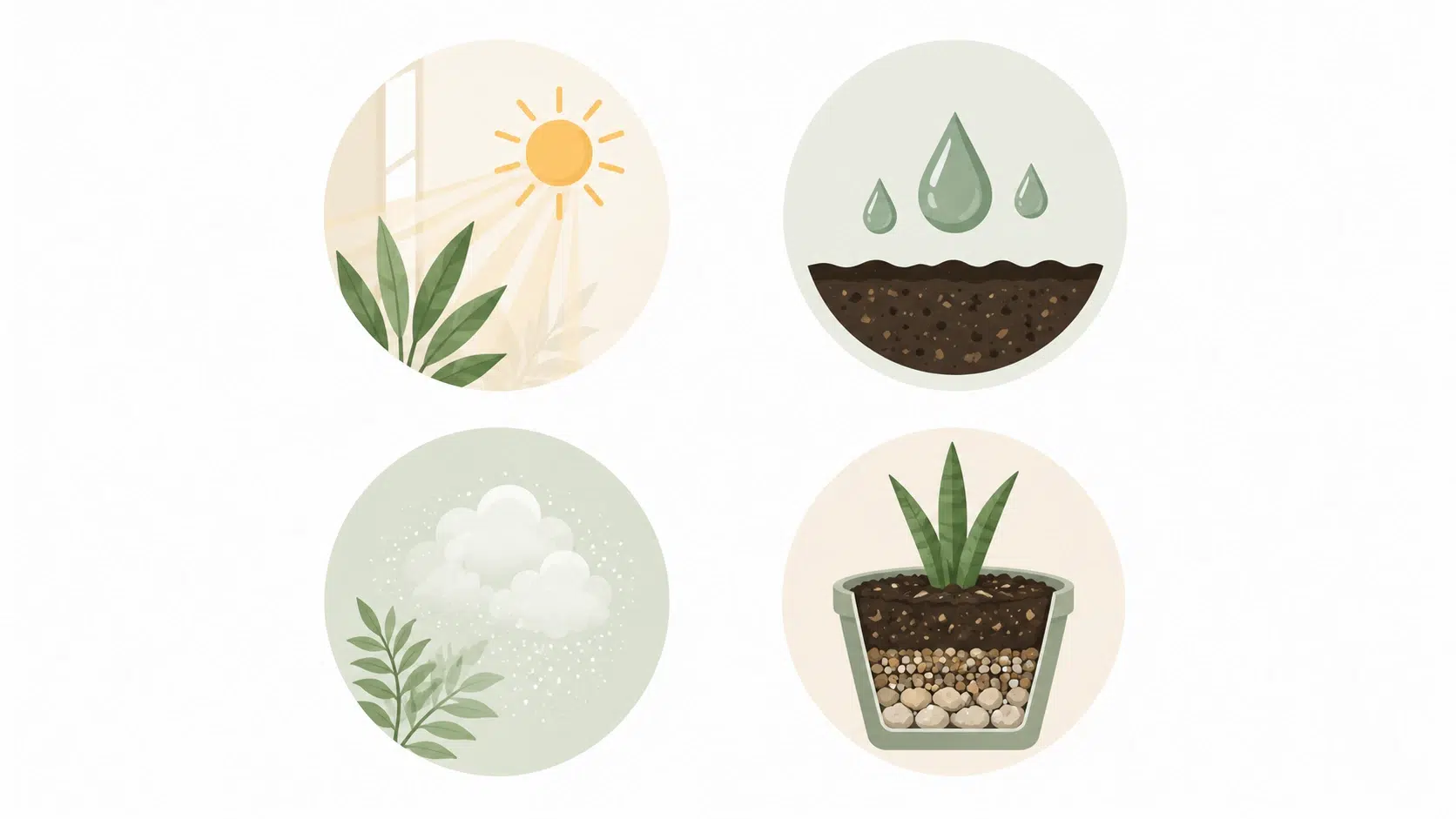
Ferns thrive when their environment closely resembles the shaded, humid forest floors where many species naturally grow. Healthy growth depends on balanced light, moisture, humidity, soil quality, and suitable temperatures rather than excessive fertilizer or direct sunlight. Understanding the difference between light types is essential, especially since ferns are highly sensitive to direct sunlight.
Key growing requirements include:
- Bright, indirect light
- Evenly moist soil without standing water
- High humidity levels
- Well-draining, organic-rich soil
- Temperatures between 15–24°C (59–75°F) for most indoor varieties
Best Place for an Indoor Fern
The best place for an indoor fern is a location with bright, indirect sunlight and consistently high humidity.
Ideal locations include:
- Bathrooms with natural light
- Kitchens with moderate humidity
- East-facing windows
- North-facing windows
- Shelves away from heating vents
- Areas protected from cold drafts and air conditioners
Avoid placing ferns in direct afternoon sunlight, which can scorch delicate fronds.
Do Ferns Need a Lot of Water?
Yes. Ferns prefer consistently moist soil, but they should never remain waterlogged. Allow only the top layer of soil to begin drying before watering again.
Signs of proper watering include:
- Soil feels slightly damp
- Fronds remain green and upright
Signs of underwatering:
- Crispy brown leaf edges
- Dry soil
- Drooping fronds
Signs of overwatering:
- Yellow leaves
- Mushy stems
- Root rot
- Musty soil odor
How to Care for an Indoor Fern
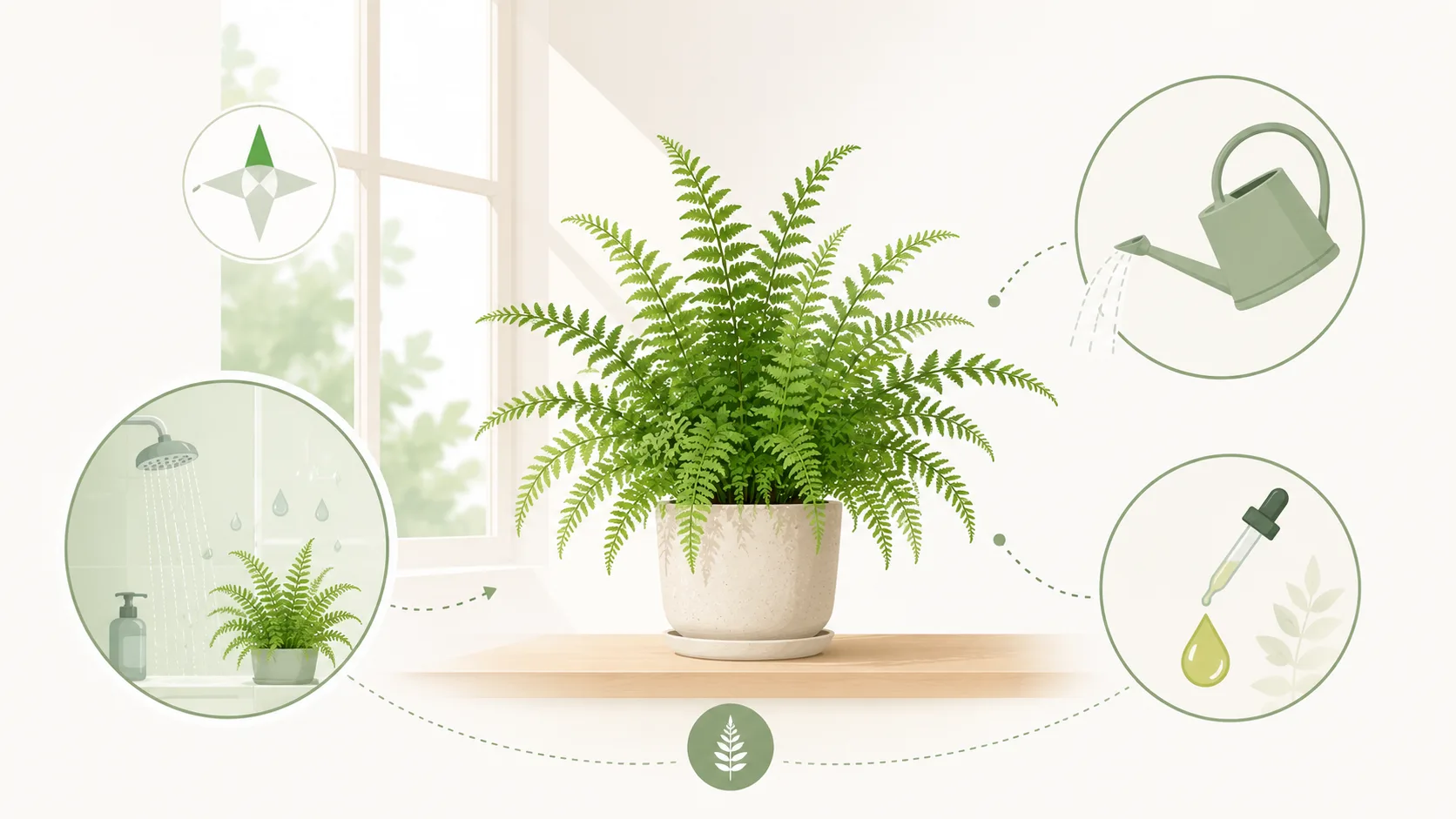
Indoor fern care involves choosing an appropriate container, maintaining humidity, watering consistently, and feeding lightly during active growth. Most common houseplant ferns belong to tropical species that appreciate stable indoor conditions. Indoor ferns often behave similarly to other shade-loving species, such as indoor natives that thrive in humidity-rich environments.
Do Ferns Like Shallow or Deep Pots?
Ferns generally prefer shallow to moderately deep pots because their fibrous root systems spread outward more than downward.
Choose containers that provide:
- Excellent drainage holes
- Slightly wider than deep dimensions
- Enough room for root expansion
- High-quality potting mix rich in organic matter
Repot every two to three years or when roots become crowded. Many indoor plant care principles overlap across species, especially tropical houseplants like ferns and fiddle leaf figs.
Feeding Indoor Ferns
Indoor ferns benefit from light feeding during spring and summer.
For best results:
- Apply a balanced liquid fertilizer at half strength every 4–6 weeks.
- Avoid fertilizing during winter dormancy.
- Flush soil occasionally to prevent salt buildup.
Miracle-Gro: A diluted balanced fertilizer can support healthy growth when used sparingly. Excess fertilizer may burn sensitive fern roots.
Coffee grounds: Used in moderation, composted coffee grounds may contribute organic matter and a small amount of nitrogen. Fresh coffee grounds should not be applied heavily because they may compact soil and alter moisture balance.
Do Ferns Like to Be Crowded?
Yes, many ferns tolerate slightly crowded roots better than oversized containers. However, severe root binding eventually limits growth.
Repot when:
- Roots emerge through drainage holes.
- Water drains unusually fast.
- Growth slows despite proper care.
- The plant becomes unstable in its container.
How to Care for Ferns Outdoors (UK Climate Considerations)
Outdoor fern care in the UK focuses on selecting sheltered, partially shaded locations and maintaining consistent soil moisture. Many hardy fern species tolerate British winters when planted in suitable garden conditions.
Can You Plant Ferns in October?
Yes. October is often a suitable planting month because cooler temperatures reduce transplant stress while soil remains warm enough for root establishment.
Best planting periods include:
- Early spring
- Early autumn
- Mild October weather before severe frost
Mulching helps protect newly planted roots during winter.
Caring for Outdoor Ferns in Pots
Outdoor potted ferns require additional attention because containers dry more quickly than garden soil.
Care recommendations include:
- Water regularly during dry weather.
- Use containers with drainage holes.
- Place pots in partial or full shade.
- Protect from drying winds.
- Raise pots slightly to improve drainage.
Winter Care for Ferns (Indoor and Outdoor)
Winter care focuses on protecting ferns from freezing temperatures while reducing watering and fertilizer as growth naturally slows.
What to Do With Potted Ferns in Winter
Move tender potted ferns indoors before frost if they are not winter-hardy.
Winter care includes:
- Reduce watering frequency.
- Stop fertilizing.
- Increase indoor humidity.
- Keep away from radiators.
- Insulate outdoor containers if left outside.
Hardy outdoor species generally remain dormant until spring.
Should Ferns Be Cut Down in the Fall?
Not always. Remove only dead or damaged fronds in autumn. Healthy fronds often provide natural insulation that protects the crown during winter.
In spring:
- Remove winter-damaged foliage.
- Trim dead fronds.
- Allow fresh growth to emerge naturally.
Fern Growth Rate and Lifespan
Most ferns grow at a moderate rate when provided with proper care.
Growth speed depends on:
- Species
- Available light
- Humidity
- Watering consistency
- Fertilization
- Temperature
Typical expectations:
- New fronds emerge mainly during spring and summer.
- Indoor potted ferns often live for many years.
- Well-maintained specimens may remain healthy for decades through regular division and repotting.
Common Fern Problems and How to Fix Them
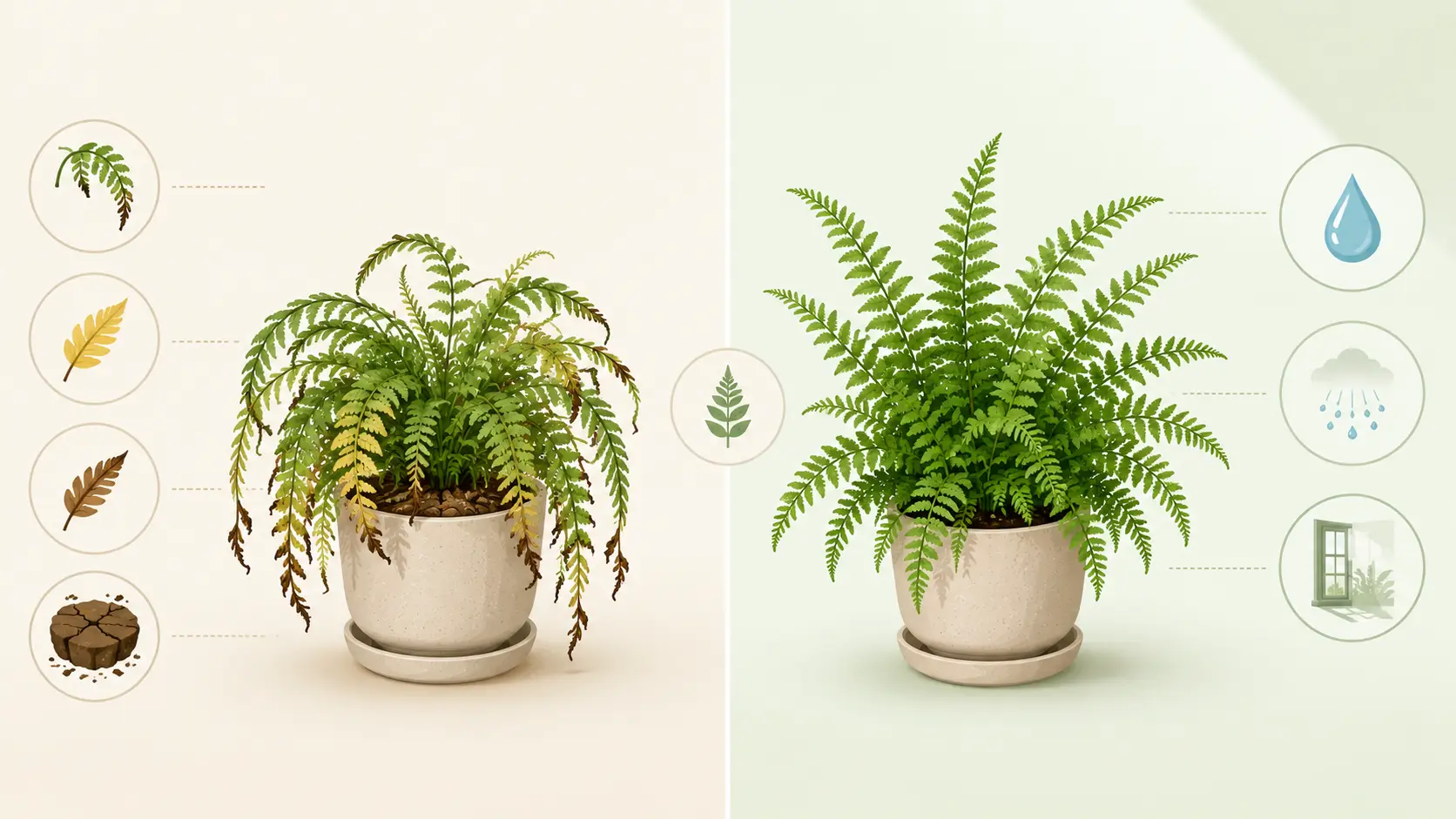
Many fern problems result from incorrect watering, insufficient humidity, or unsuitable light rather than disease. Identifying the cause early usually allows successful recovery. If pests or soil issues appear, similar to other indoor plants, early identification is key to preventing long-term damage.
Reviving a Dying Fern
A dying fern can often recover if the underlying problem is corrected promptly.
Steps to revive it:
- Check soil moisture.
- Inspect roots for rot.
- Remove dead fronds.
- Increase humidity.
- Move to indirect light.
- Adjust watering schedule.
- Repot if drainage is poor.
What Kills Ferns Permanently
Several conditions can permanently damage ferns.
Common causes include:
- Prolonged drought
- Severe root rot
- Continuous waterlogging
- Extreme freezing temperatures
- Intense direct sunlight
- Complete root destruction
Early intervention greatly improves recovery chances.
Does Epsom Salt Really Help Ferns?
Epsom salt only benefits ferns with a confirmed magnesium deficiency. Routine use is unnecessary and excessive applications may upset soil nutrient balance.
Healthy growth is better supported through:
- Proper watering
- Suitable humidity
- Organic-rich soil
- Balanced fertilization
| Problem | Likely Cause | Fix |
| Yellow leaves | Overwatering | Improve drainage and reduce watering |
| Brown tips | Low humidity | Increase humidity and mist if appropriate |
| Wilting | Underwatering | Water thoroughly and maintain moisture |
| Slow growth | Poor light or nutrient deficiency | Move to brighter indirect light and feed lightly |
| Black roots | Root rot | Remove affected roots and repot |
Types of Indoor Ferns (With Pictures)
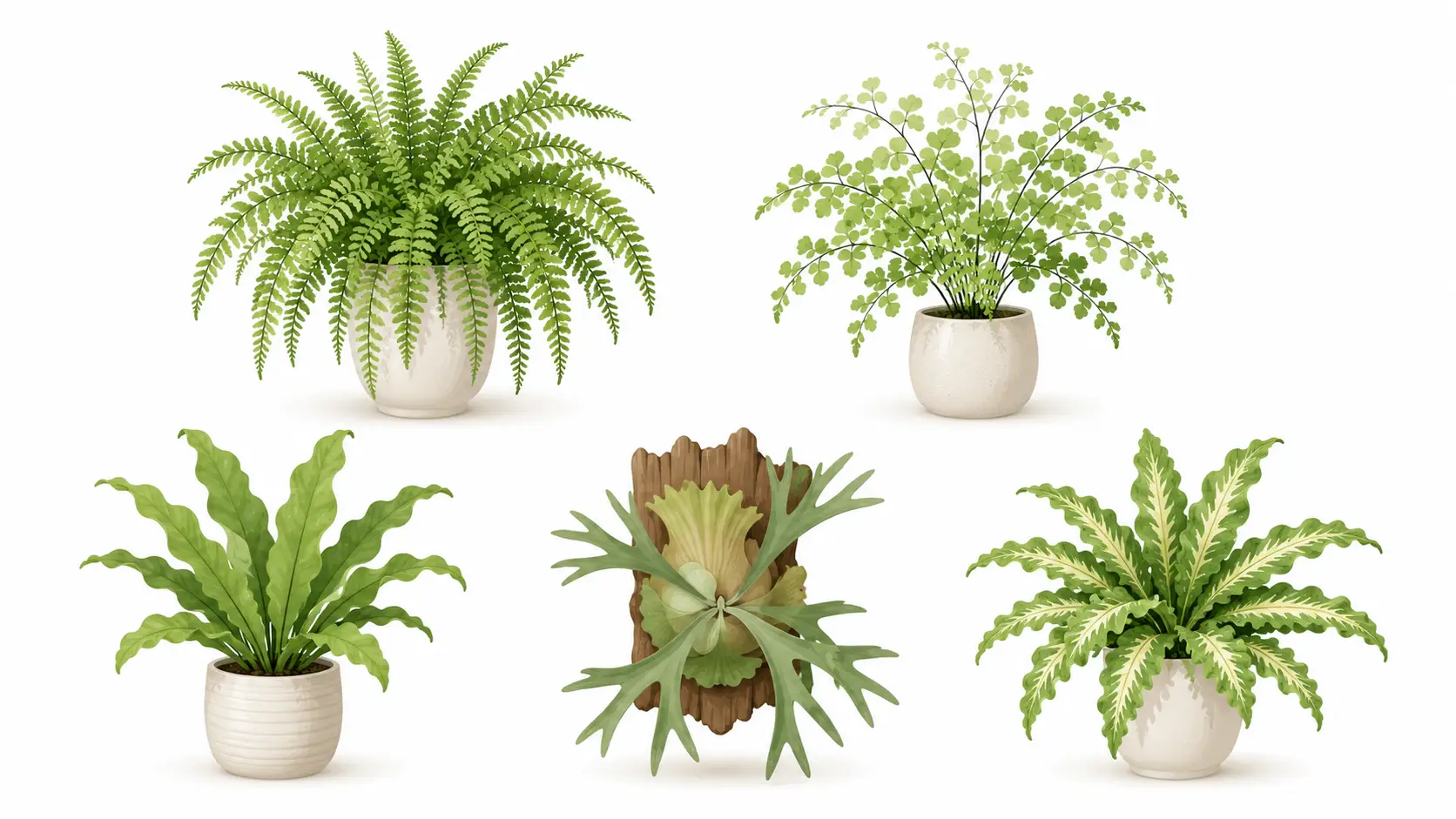
Several fern species adapt well to indoor environments, although their humidity and light preferences vary slightly.
Common indoor fern types include:
- Boston Fern
- Maidenhair Fern
- Bird’s Nest Fern
- Staghorn Fern
- Rabbit’s Foot Fern
- Kimberly Queen Fern
- Blue Star Fern
| Fern Type | Light Needs | Humidity Needs | Difficulty |
| Boston Fern | Bright indirect | High | Easy |
| Maidenhair Fern | Bright indirect | Very high | Moderate |
| Bird’s Nest Fern | Medium to bright indirect | Moderate to high | Easy |
| Staghorn Fern | Bright filtered | High | Moderate |
| Kimberly Queen Fern | Bright indirect | Moderate | Easy |
| Blue Star Fern | Medium indirect | Moderate | Easy |
Once you’ve picked your fern type, half the fun is giving it a personality to match — if you want inspiration, check out these funny plant names for ferns and philodendrons.
Beginner Mistakes When Caring for Ferns
Many beginners lose ferns because of environmental conditions rather than watering alone.
Common mistakes include:
- Placing ferns in direct sunlight instead of filtered light.
- Allowing soil to become completely dry.
- Keeping humidity too low indoors.
- Applying excessive fertilizer.
- Using pots without adequate drainage.
Correcting these issues early helps maintain vigorous, healthy growth. Beginners often benefit from comparing fern care with other low-maintenance plant options that are more forgiving of mistakes.
Conclusion
Understanding how to look after a fern begins with recreating the moist, shaded conditions these plants naturally prefer. Consistent watering, bright indirect light, high humidity, and well-draining soil are the foundations of successful fern plant care. Seasonal adjustments, careful fertilization, and prompt attention to common problems further improve plant health. Whether growing ferns indoors or outdoors, following these core care principles helps them produce lush, vibrant foliage for many years. For broader plant care strategies and related guides, you can explore comprehensive plant resources covering benefits and growing tips.
FAQs
How do I care for an indoor fern?
Place an indoor fern in bright, indirect light, keep the soil consistently moist, maintain high humidity, and feed lightly during the growing season.
How long will potted ferns last?
With proper care, many potted ferns can live for decades through regular repotting, division, and appropriate seasonal maintenance.
Do ferns like shallow or deep pots?
Most ferns prefer shallow to moderately deep pots because their fibrous roots spread outward rather than growing deeply.
Should ferns be cut down in the fall?
Only dead or damaged fronds should be removed in autumn. Healthy foliage often protects the plant during winter.
What kills ferns permanently?
Prolonged drought, severe root rot, continuous waterlogging, intense direct sunlight, and extreme freezing temperatures are the most common causes of permanent damage.
Do ferns like to be crowded?
Yes. Ferns generally tolerate slightly crowded roots, but they should be repotted once growth slows or roots become heavily bound.



One Response