
Introduction
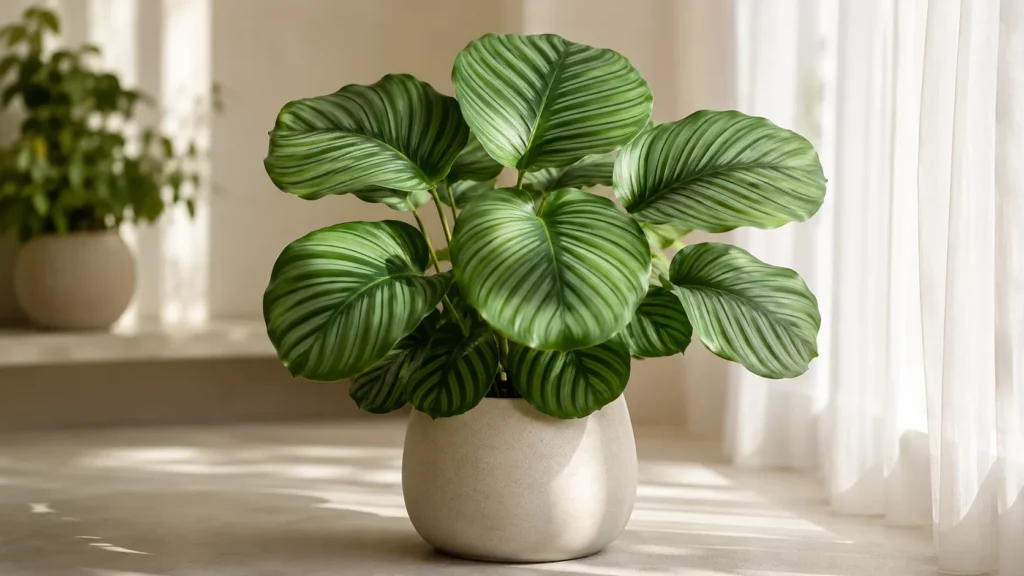
Calathea is a tropical foliage houseplant known for its highly patterned leaves, belonging to the Marantaceae family. Many people ask are calathea low light plants, calathea, calathea plant when choosing indoor greenery. Calathea features nyctinastic movement, meaning its leaves rise and lower with day and night cycles. This plant originates from rainforest floors where light is filtered through dense canopy. The key question is whether calathea truly tolerates low light or simply survives it while losing vibrancy and growth quality indoors. Calathea belongs to the Marantaceae family, and more botanical details can be found in Calathea (Wikipedia).
Quick Summary
- Calathea tolerates low-to-medium indirect light but grows best in bright, indirect light
- Direct sun scorches leaves; deep shade reduces growth and pattern quality
- Calathea is not a true no-light plant and needs ambient light to thrive
- Best placement is a few feet from an east- or north-facing window
Are Calathea Low Light Plants?
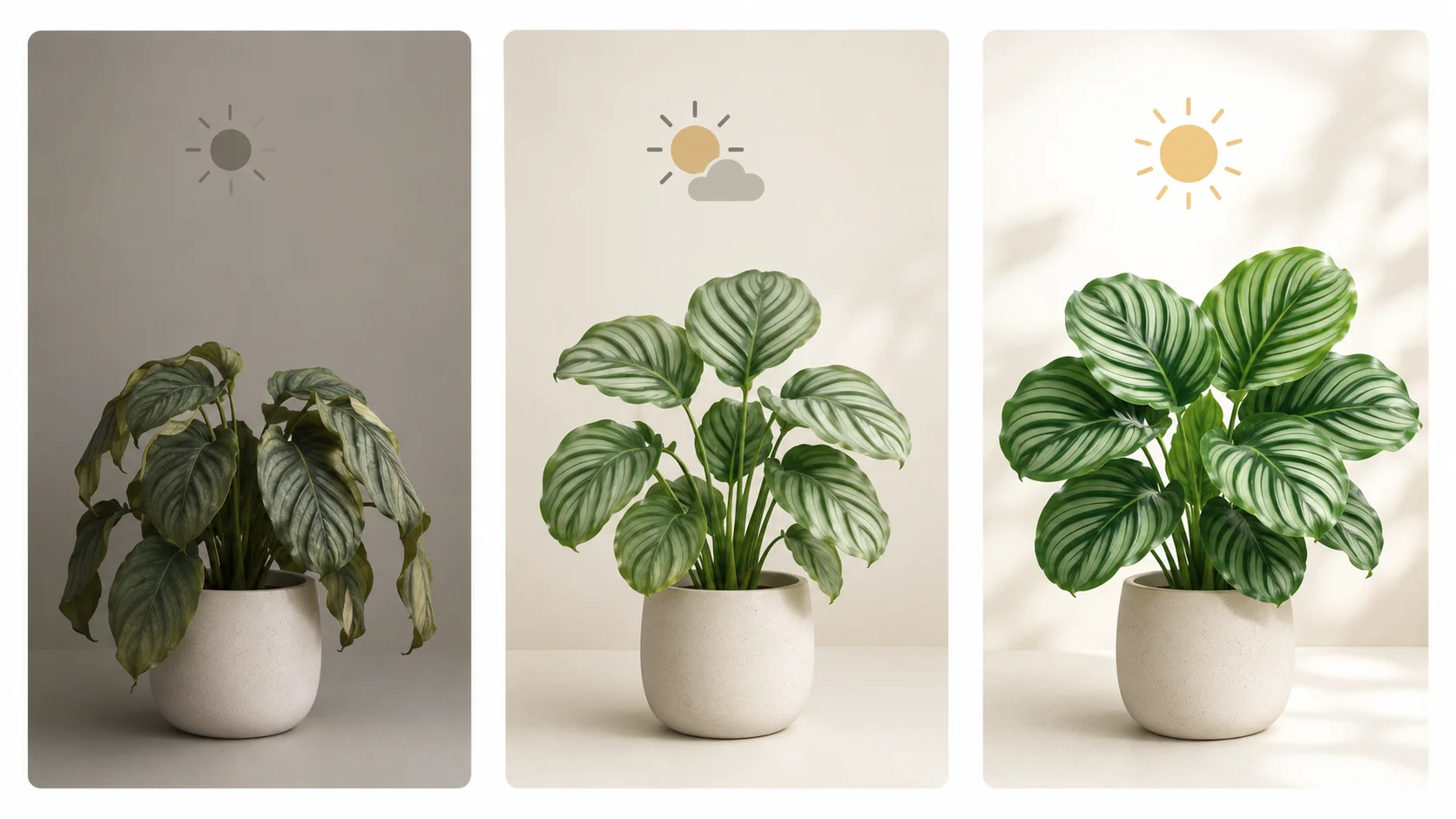
Calatheas are often labeled as are calathea low light plants, calathea low light, low light calathea, but they are not true low-light specialists. They can survive in lower light conditions but do not thrive in them. In nature, calatheas grow on rainforest floors where light is filtered, not absent.
When placed in very low light, calatheas show clear stress signs:
- Slower growth or no new leaves
- Faded or dull leaf patterns
- Weak, leggy stems
- Curling or drooping foliage
So, while calatheas can handle low light better than sun-loving plants, they still require consistent indirect light for healthy growth.
Calathea Orbifolia Light Needs
Calathea orbifolia prefers bright, indirect light around 1000–2500 lux. In lower light, its large leaves lose their bold silver-green striping. Unlike smaller calathea varieties, orbifolia has broader leaves that require more light exposure for maintaining strong coloration and structural firmness. Calathea orbifolia requires stable humidity and filtered light conditions similar to other Calathea varieties such as Calathea Orbifolia Care Guide: Light, Water & Growth Tips.
Where Is the Best Place to Put Calathea?
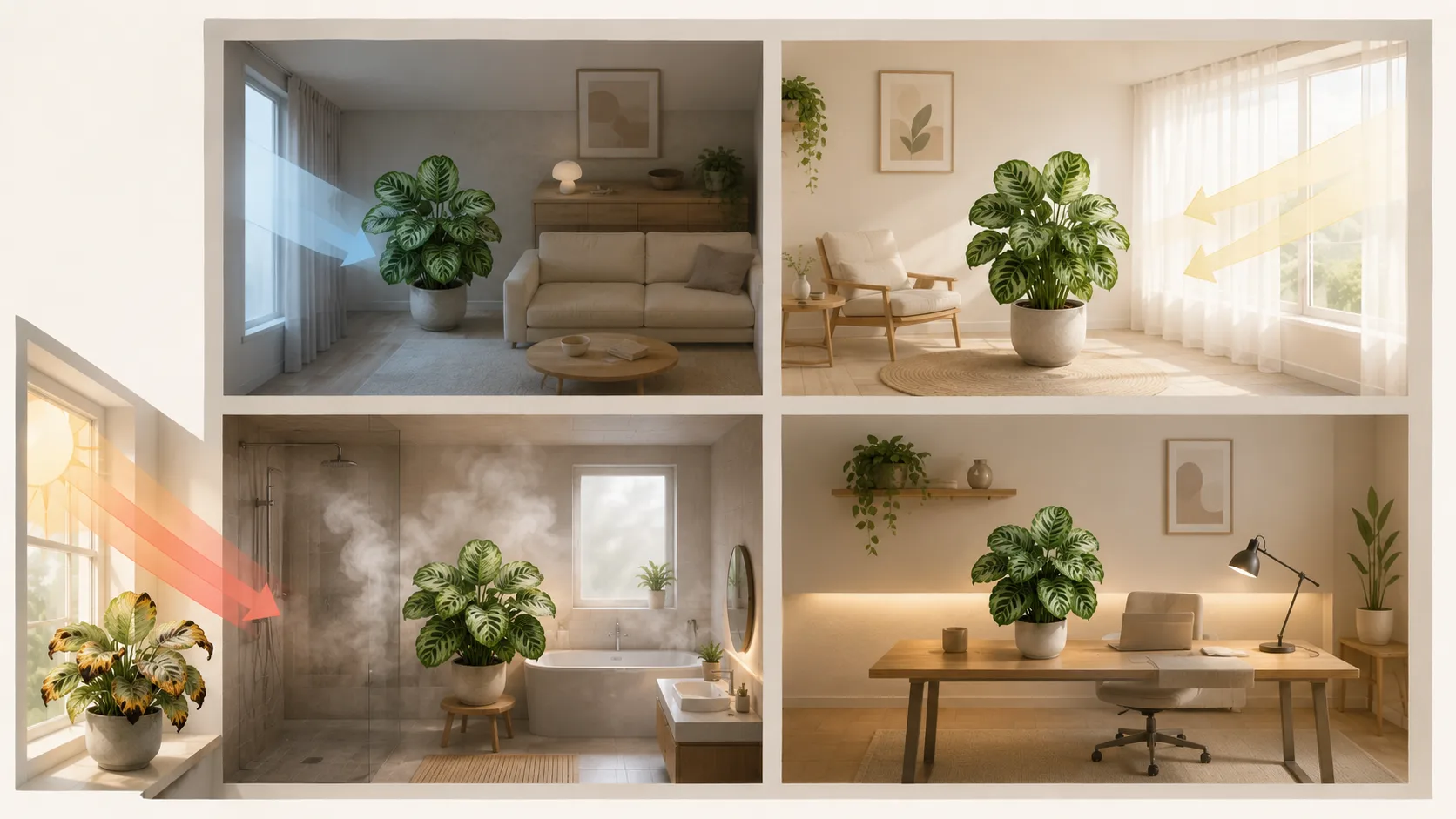
The best placement for calathea is in a location with filtered, indirect sunlight and stable humidity.
Ideal spots include:
- North-facing window (soft, indirect light)
- East-facing window (gentle morning sun)
- A few feet away from bright windows with sheer curtains
Avoid:
- Direct south-facing sun (leaf burn risk)
- Cold drafts near doors or AC vents
Best indoor locations:
- Bathroom (high humidity environment)
- Bedroom or office desk with indirect light
- Hallways with ambient natural light
Calathea vs. Other Low Light Houseplants
Calathea is often confused with true low-light survivors, but it is more light-sensitive than hardy plants like pothos or snake plant.
| Plant | Light Tolerance | Care Difficulty | Pet Safe |
| Calathea | Low–Medium Indirect | High | Yes |
| Pothos | Low Indirect | Low | No |
| Snake Plant | Very Low | Very Low | No |
| ZZ Plant | Very Low | Very Low | No |
Unlike true “low-light house plants,” calatheas still require stable indirect light and humidity to remain healthy.
What Is a Prayer Plant Calathea?
Calatheas are commonly called prayer plant calathea, praying plant calathea, calathea maranta, due to their leaf movement behavior. This movement is called nyctinasty, where leaves fold upward at night and open during the day.
Calathea and Maranta are often confused but are different genera within the same plant family. Both show prayer-like movement, but calatheas generally have larger, more decorative foliage.
Do Calathea Plants Only Perk Up at Night?
Calatheas follow a circadian rhythm. Their leaves rise in low light (night) and flatten during daylight. This movement helps optimize moisture retention and light absorption.
How to Care for Calathea
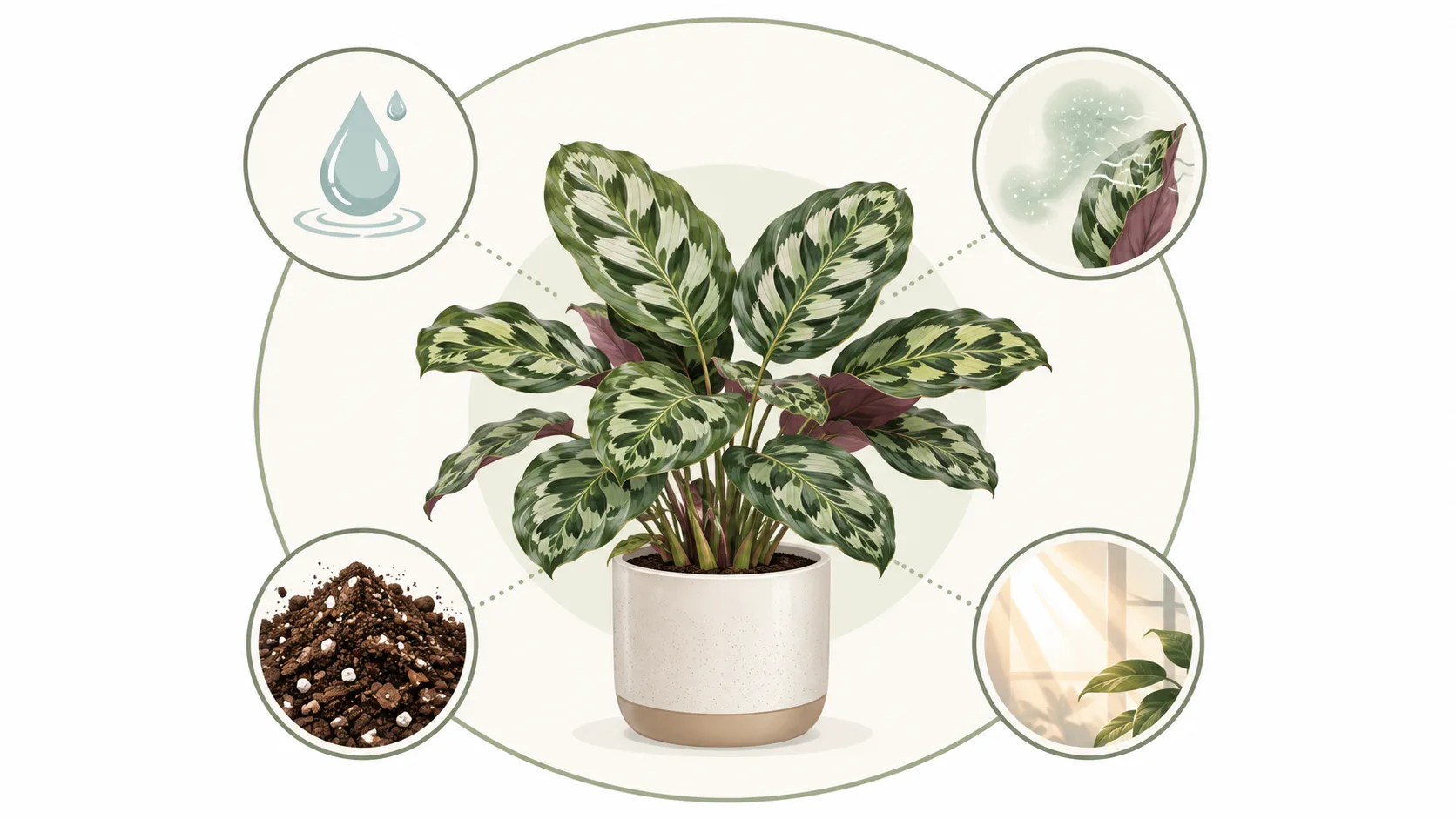
Calathea care requires consistency in water, humidity, and light.
Watering Needs
Calatheas prefer consistently moist soil but not soggy conditions. Water when the top inch of soil feels dry. Always use filtered or distilled water when possible.
- Water frequency: 1–2 times per week (season-dependent)
- Avoid chlorine-heavy tap water
- Bottom watering is acceptable but not required
- Calathea cannot survive in just water long-term
Light Requirements
Calatheas need bright, indirect light. Too little light reduces growth, while direct sunlight burns leaves. Understanding lighting differences is crucial, as explained in Bright Indirect Light vs Direct Sunlight for Plants, which helps prevent leaf burn and fading in Calathea.
Humidity Needs
Calathea humidity should be high, ideally above 50–60%. Low humidity leads to brown edges and curling leaves. If natural humidity is low, practical methods described in How to Increase Humidity for Indoor Plants Without a Humidifier can help maintain healthy Calathea growth.
Should I Mist Calathea Every Day?
Misting alone is not enough. It offers temporary moisture but does not replace consistent humidity.
Better options:
- Humidifier (most effective)
- Pebble tray (moderate effect)
- Misting (temporary support only)
Soil, Pot Size and Fertilization
Calatheas prefer well-draining soil rich in organic matter.
- Slightly shallow pots are preferred (do calatheas like deep pots → not necessary)
- Avoid heavy fertilizer use
- Diluted liquid fertilizer once a month in growing season
- Coffee grounds are not recommended due to acidity imbalance
- Miracle-Gro can be used only in diluted form
Pruning Calathea
Trim damaged or yellow leaves at the base using clean scissors. Regular pruning improves airflow and appearance.
Why Are Calatheas Difficult to Care For?
Calatheas are sensitive due to their tropical origin and environmental requirements.
Common stress factors:
- Hard tap water minerals
- Low humidity levels
- Overwatering or inconsistent watering
- Direct sunlight exposure
- Temperature fluctuations
Common Calathea Problems and Fixes
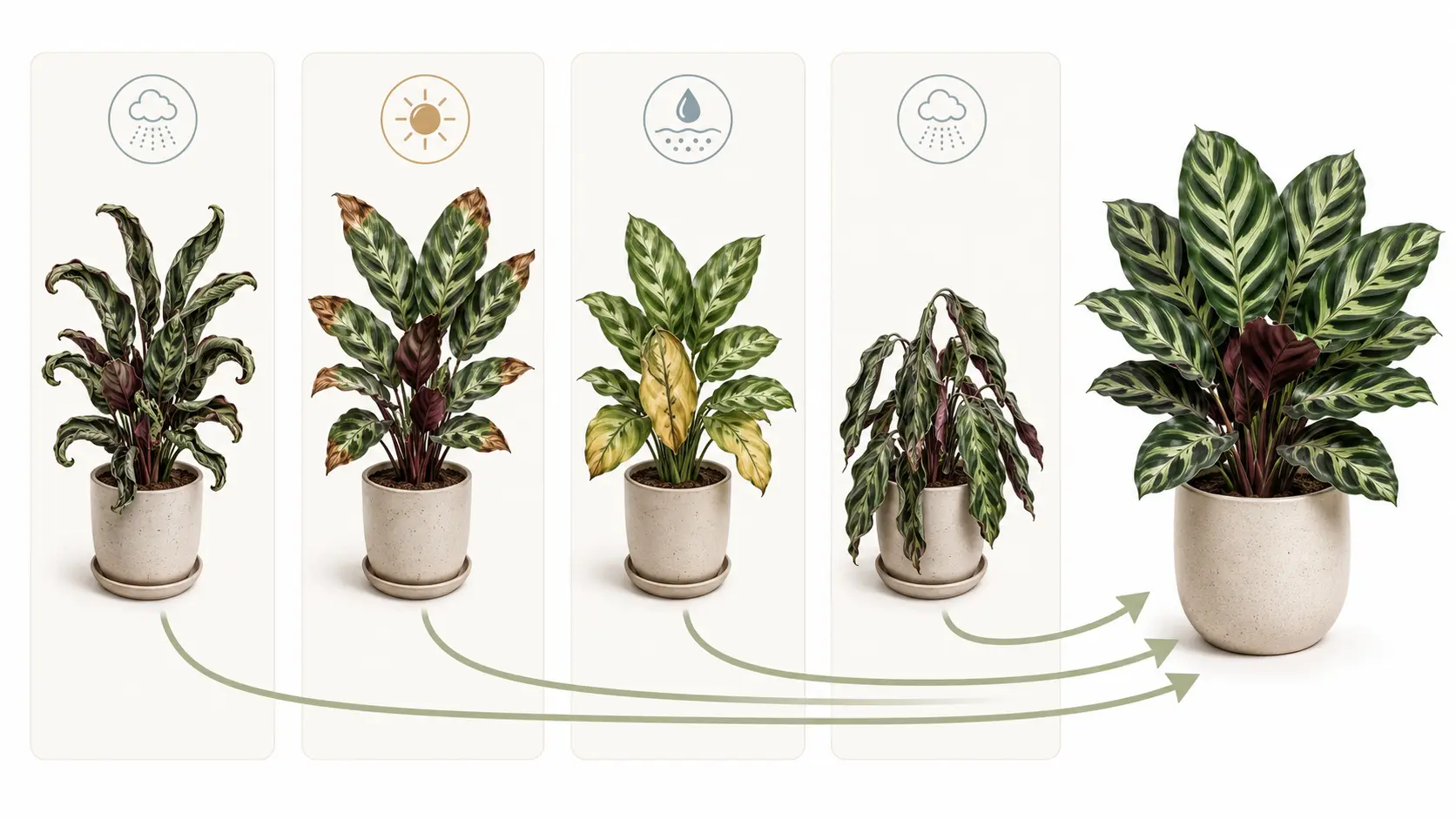
Curling Leaves
Cause: underwatering, low humidity, excess light
Fix: increase humidity, stabilize watering schedule
Prevention: maintain consistent soil moisture
Brown Tips or Burnt Leaves
Cause: dry air, chemical-heavy water, sun exposure
Fix: use filtered water, move plant to indirect light
Yellowing or Drooping Leaves
Cause: overwatering or root rot
Fix: check roots, reduce watering frequency
Reviving a Dying Calathea
Steps:
- Check and trim rotting roots
- Increase humidity immediately
- Move to bright indirect light
- Stabilize watering routine
Calathea Toxicity — Is It Safe for Pets?
Calatheas are non-toxic to cats and dogs according to widely accepted botanical safety references. They are safe indoor plants for pet-friendly households and do not contain harmful compounds that affect animals when ingested in small amounts.
Calathea Varieties and Identification
Calathea Zebrina Care: Complete Growing Guide explains why this zebra-patterned variety is especially sensitive to humidity changes and inconsistent watering.
Common calathea varieties include:
- Orbifolia (large silver-striped leaves)
- Medallion (round patterned leaves)
- Rattlesnake (wavy green patterns)
- Zebrina (striped velvet texture)
- Ornata (pinstripe leaves)
- White Fusion (rare variegation)
Some varieties are more sensitive than others, with Orbifolia and White Fusion requiring more care. One of the most popular decorative varieties is Calathea Roseopicta Medallion Care Guide, known for its striking circular leaf patterns and indoor adaptability.
Calathea Care in Winter
In winter, calathea care changes significantly:
- Reduce watering frequency
- Increase humidity due to indoor heating
- Avoid cold drafts
- Provide more indirect light as days shorten
Benefits of Growing Calathea Indoors
Calatheas offer:
- Decorative, patterned foliage
- Pet-safe indoor greenery
- Natural humidity indicator (leaf curling signals dryness)
- Aesthetic enhancement for interior spaces
Beginner Mistakes With Calathea
Common mistakes include:
- Overwatering due to caution
- Using tap water without filtration
- Placing in direct sunlight
- Ignoring humidity needs
- Over-fertilizing the plant
Conclusion
Calathea is best described as a low-to-medium light tolerant plant rather than a true no-light houseplant. The answer to are calathea low light plants is partially yes, but they still require consistent indirect light and high humidity to thrive. Stable environmental conditions, especially moisture and light balance, determine long-term plant health.
FAQs
Can calatheas survive in low light?
Yes, calatheas can survive in low light but may grow slowly and lose vibrant leaf patterns.
Where is the best place to put a Calathea?
Near north- or east-facing windows with indirect light and high humidity environments like bathrooms.
Can Calathea live in just water?
No, calatheas cannot survive long-term in water-only conditions as they require soil nutrients.
How often should a Calathea be watered?
Typically once or twice per week depending on temperature and humidity levels.
Why are calatheas difficult to care for?
They are sensitive to water quality, humidity changes, and inconsistent environmental conditions.
Are calathea plants toxic to cats?
No, calatheas are non-toxic and safe for cats and dogs.
What is the easiest Calathea variety to care for?
Calathea orbifolia and medallion are often considered more forgiving than rarer varieties.