
Introduction
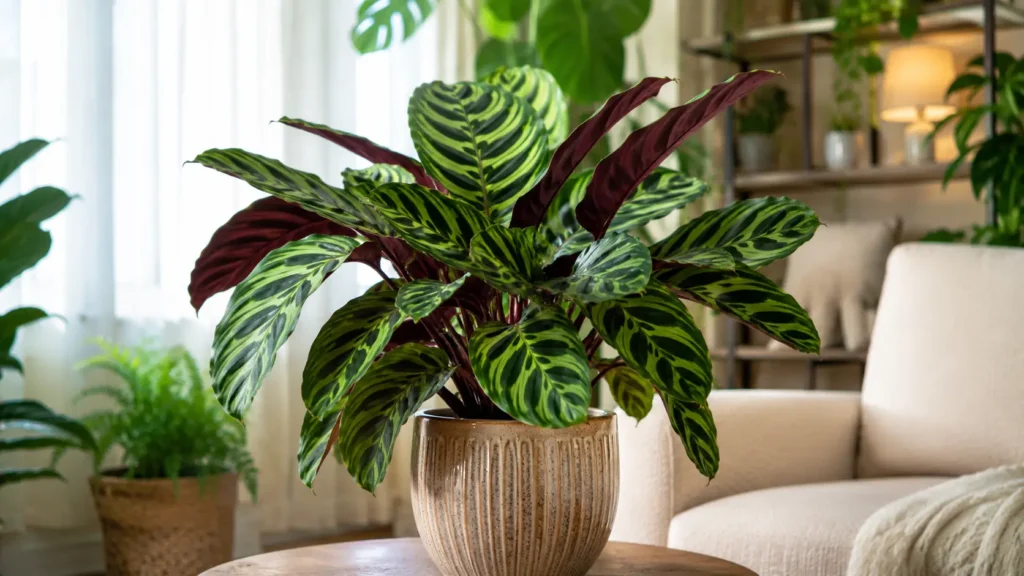
Calathea Zebrina, also known as the zebra calathea or Goeppertia zebrina, is a tropical foliage plant native to Brazil that is prized for its dramatic striped leaves and velvety texture. Popular among houseplant enthusiasts, it features bold green foliage marked with lighter zebra-like patterns that create a striking indoor display. Although calathea zebrina care requires more attention than some common houseplants, it rewards growers with lush growth and beautiful foliage when its tropical needs are met. Understanding light, watering, humidity, soil, and temperature requirements is the key to successfully growing this elegant plant indoors.
Quick Summary
- Calathea Zebrina (Goeppertia zebrina) thrives in bright indirect light, high humidity, and consistently moist but well-draining soil.
- It is primarily grown as an indoor plant but can grow outdoors in warm, frost-free tropical climates.
- Brown edges, yellow leaves, and curling foliage are usually linked to humidity, watering, or lighting issues.
- The plant prefers filtered or distilled water because it can be sensitive to chemicals found in tap water.
- With proper care, this velvet zebra plant can remain healthy and attractive for many years.
What Is Calathea Zebrina?
The calathea zebrina plant, now scientifically classified as Goeppertia zebrina, is a tropical perennial native to southeastern Brazil and a member of the Marantaceae family. Although many gardeners still refer to it as Calathea Zebrina, botanical reclassification moved it into the Goeppertia genus. The leaf movement of Calathea Zebrina is an example of nyctinasty, a plant movement response where leaves change position between day and night.
Similar tropical foliage plants, such as Alocasia Zebrina, also feature dramatic leaf patterns and require careful attention to humidity, light, and watering conditions.
Its most recognizable feature is its large velvety leaves decorated with alternating dark and light green zebra stripes. The undersides of the leaves often display rich purple coloration, adding visual interest from every angle.
Common names include:
- Zebra calathea
- Zebra plant calathea
- Velvet zebra plant
- Prayer plant zebra
Like other prayer plants, it displays nyctinasty, a natural movement where leaves rise at night and lower during the day. In some cultures, Calathea Zebrina symbolizes new beginnings, unity, growth, and good fortune.
Calathea Zebrina Care Overview
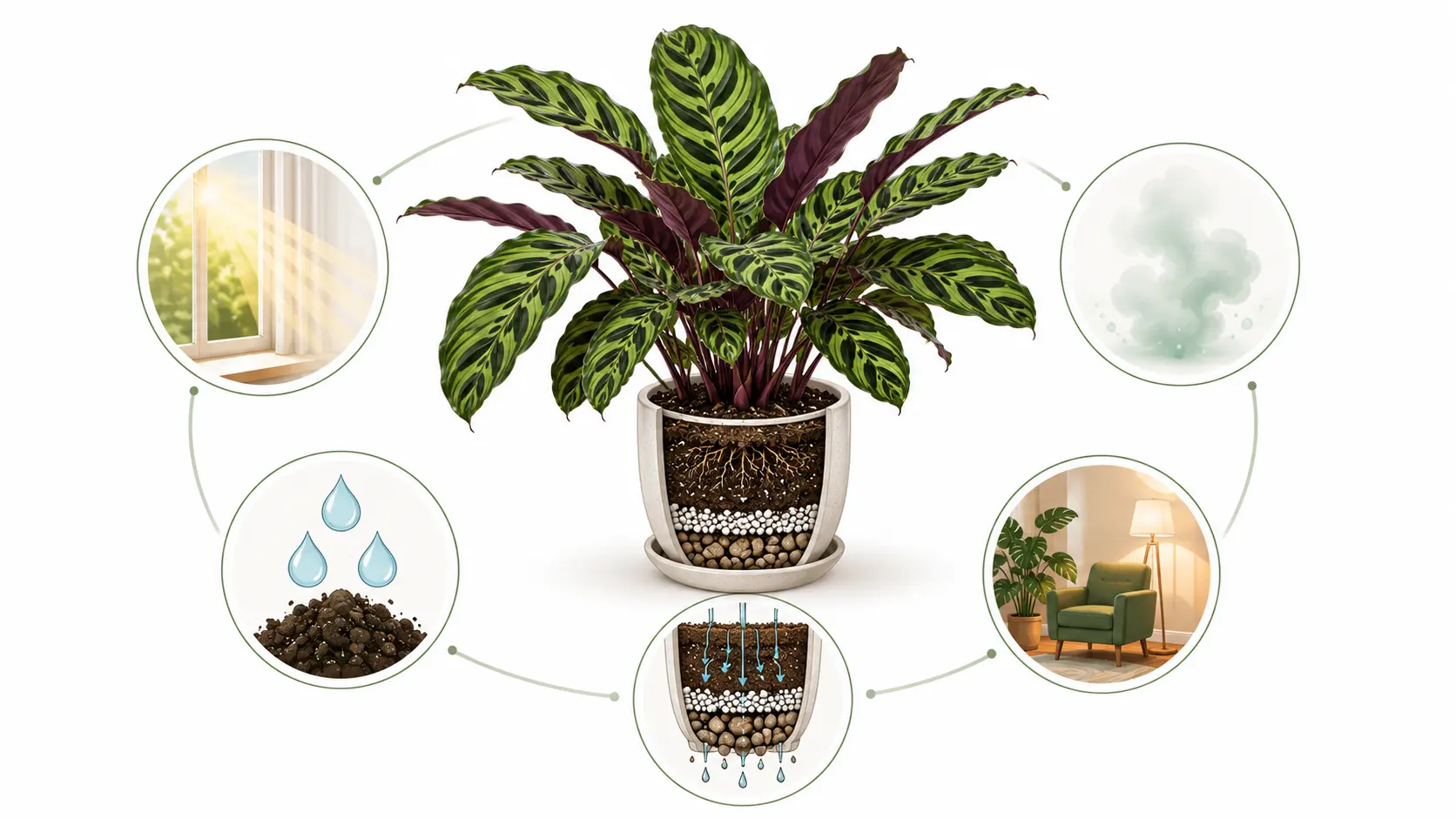
Calathea zebrina care is centered around recreating its tropical environment with bright indirect light, consistent moisture, high humidity, and warm temperatures. Consistency matters more than perfection, as sudden changes often stress the plant.
Other Calathea varieties, including Calathea Orbifolia, follow similar indoor care principles such as indirect lighting, moisture control, and humidity management.
Many growers ask, “How do you care for Calathea Zebrina indoors?” The answer is simple: provide stable conditions, avoid direct sun, maintain moisture without waterlogging the soil, and keep humidity levels high.
Table 1: Calathea Zebrina Quick Care Reference
| Care Factor | Requirement |
| Light | Bright indirect light; no direct sun |
| Watering | Keep soil moist; never waterlogged |
| Humidity | 60%+ preferred |
| Temperature | 65–80°F (18–27°C) |
| Soil | Well-draining, peat-based mix |
| Fertilizer | Balanced liquid feed monthly during growing season |
| Pot Type | Shallow pot with drainage holes |
Light Requirements for Calathea Zebrina
Does Calathea Zebrina need sunlight? Yes, but only indirect sunlight. Bright indirect light helps maintain healthy growth and vibrant leaf patterns without damaging the foliage.
Direct sunlight can bleach, scorch, or fade the distinctive zebra-striped leaves. For best results, place the plant:
- Near a north-facing window
- Near an east-facing window
- Several feet back from bright south or west-facing windows
Low light conditions are tolerated, but growth may slow and leaf markings can become less vibrant over time.
Artificial grow lights can successfully supplement natural light, especially in darker rooms or during winter months.
Watering Calathea Zebrina
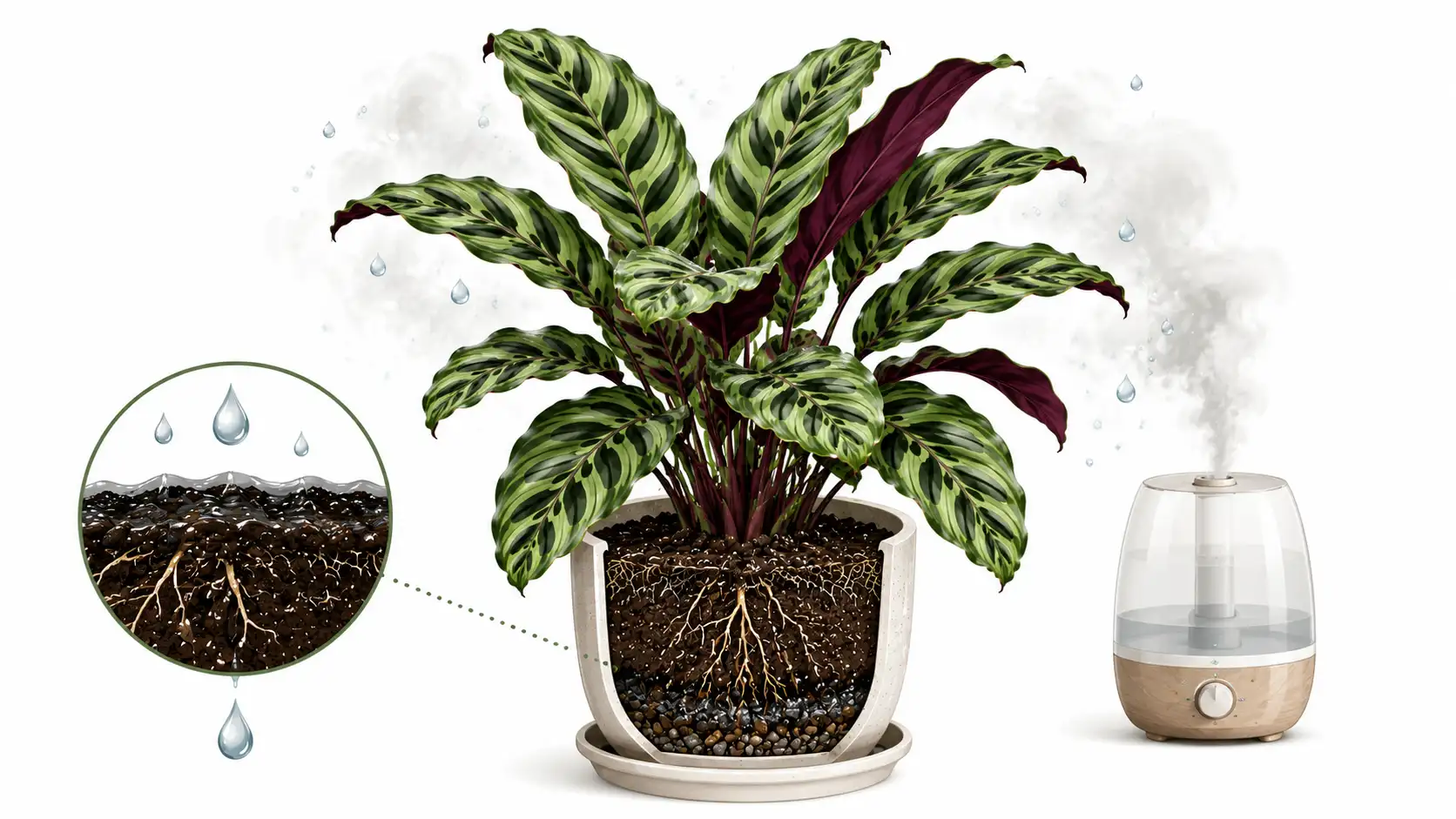
Calathea Zebrina prefers consistently moist soil but should never sit in soggy conditions. The goal is to keep the root zone evenly moist while allowing proper drainage.
Do you water Calathea from top or bottom? Both methods work.
Top watering:
- Flushes excess salts from the soil
- Ensures even moisture distribution
Bottom watering:
- Encourages strong root growth
- Helps reduce leaf spotting
Can calathea have tap water? While it may survive with tap water, many calatheas are sensitive to fluoride, chlorine, and mineral buildup. Filtered water, distilled water, or rainwater is usually preferred.
Before watering:
- Check the top 1–2 inches of soil.
- Water when the surface feels slightly dry.
- Avoid allowing the entire root ball to dry out.
Seasonal adjustments are important. Plants generally need more water during spring and summer growth and less during winter dormancy.
Humidity and Temperature Needs
How do you make a calathea happy? High humidity is one of the most important factors.
Calathea Zebrina thrives in humidity levels between 60% and 80%. Because it originates from tropical forests, dry indoor air frequently causes stress.
Should I put my calathea in the bathroom? A bathroom with natural light can be an excellent location because steam naturally increases humidity.
Ways to increase humidity include:
- Using a humidifier
- Setting the pot on a pebble tray
- Grouping plants together
- Occasional misting, although misting alone is usually insufficient
Ideal temperatures range between 65–80°F (18–27°C). Avoid:
- Cold drafts
- Air conditioning vents
- Heating vents
- Sudden temperature fluctuations
Soil and Potting for Calathea Zebrina
Can you use indoor potting mix for calathea? Yes, but standard indoor potting soil should be amended for better drainage.
A suitable mix often includes:
- Peat moss or coco coir
- Perlite
- Orchid bark
Do calatheas like deep or shallow pots? They generally prefer shallow pots because their roots naturally spread outward rather than deeply downward.
Important potting considerations:
- Always use drainage holes
- Avoid oversized containers
- Prevent standing water around roots
Repotting is typically needed every 1–2 years during spring when active growth resumes.
Fertilizing Calathea Zebrina
Can I use Miracle-Gro on calathea? Yes, but it should be diluted to reduce the risk of fertilizer burn and salt buildup.
A balanced liquid fertilizer works best when applied monthly during spring and summer.
Avoid fertilizing during:
- Fall
- Winter
- Periods of plant stress
Signs of over-fertilization include:
- Brown leaf tips
- Salt crust on soil
- Reduced growth
- Root damage
Organic fertilizers can provide a gentler feeding option while reducing salt accumulation.
Calathea Zebrina Size and Growth Rate
How Big Does Calathea Zebrina Get?
How big does a Calathea Zebrina get? Mature indoor plants typically reach 2–3 feet (60–90 cm) in height and width.
Seasonal changes can influence indoor plant growth patterns, especially during winter when many tropical plants naturally slow down.
Outdoors in ideal tropical environments, plants may grow 3–4 feet tall.
Factors affecting size include:
- Pot dimensions
- Humidity levels
- Light exposure
- Nutrient availability
- Overall care consistency
How Fast Does Calathea Zebrina Grow?
Calathea Zebrina is considered a moderate grower.
Most growth occurs during:
- Spring
- Summer
Growth slows significantly during cooler months.
How do you make zebrina bushy? To encourage dense growth:
- Provide bright indirect light
- Maintain high humidity
- Feed regularly during active growth
- Repot when root-bound
Calathea Zebrina Indoor vs Outdoor Care
Is Calathea Zebrina indoor or outdoor? In most regions, it is primarily grown indoors.
Outdoor cultivation is only suitable in USDA Zones 11–12 or comparable tropical climates.
Outdoor requirements include:
- Deep shade
- High humidity
- Consistently warm temperatures
- Frost-free conditions
Table 2: Calathea Zebrina — Indoor vs Outdoor Comparison
| Factor | Indoors | Outdoors |
| Climate suitability | All climates | Tropical/subtropical only |
| Light control | Easier to manage | Requires deep shade placement |
| Humidity | Needs supplementing | Naturally higher in humid regions |
| Frost risk | None | Plant will die below 60°F (15°C) |
| Pest exposure | Lower | Higher |
Calathea Zebrina Propagation
How to Propagate Calathea Zebrina
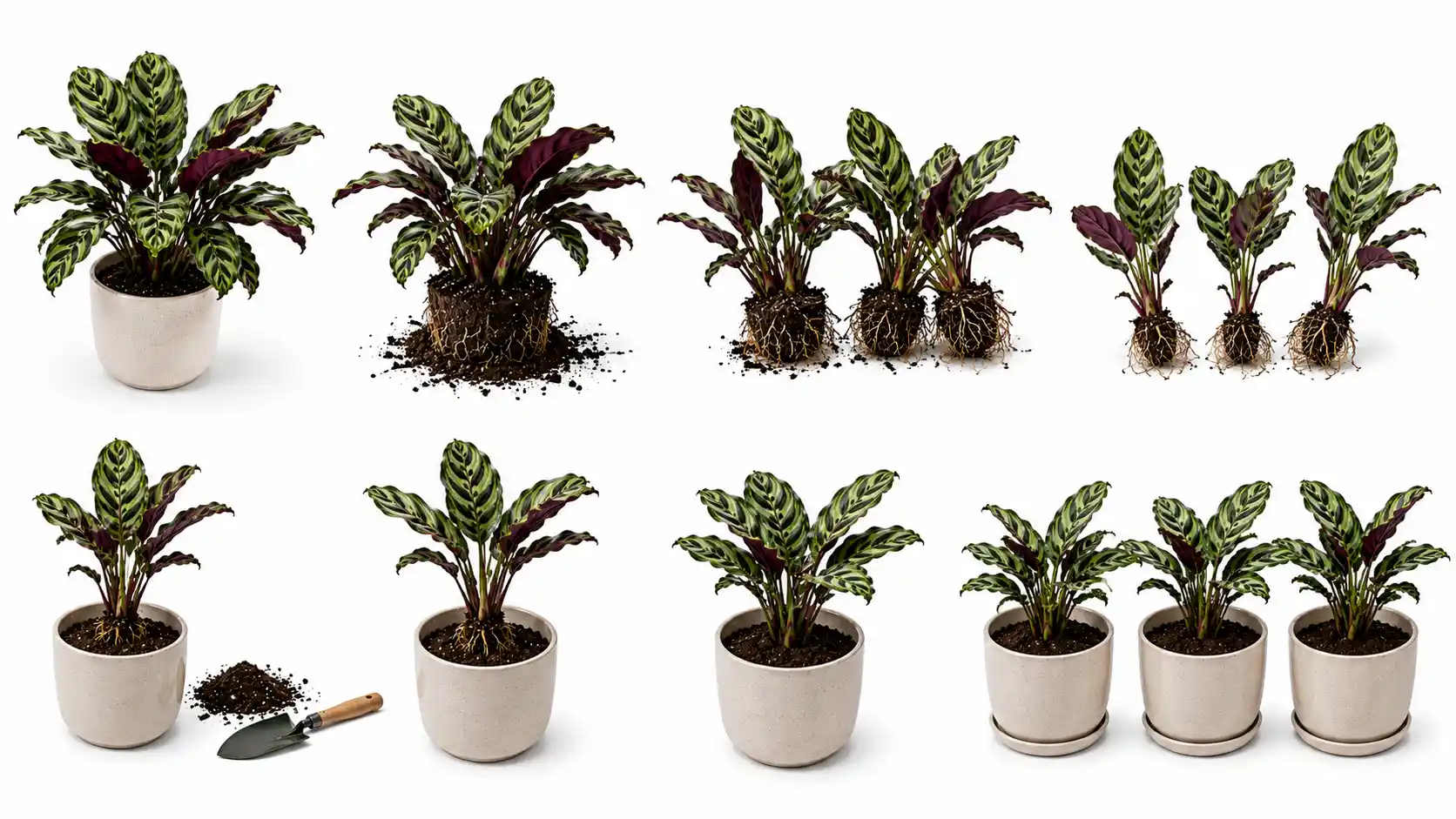
Calathea Zebrina is propagated through division rather than stem or leaf cuttings.
Steps:
- Remove the plant from its container.
- Identify natural clumps with established roots.
- Separate divisions carefully by hand or with a sterile knife.
- Place each division into fresh, moist soil.
- Maintain high humidity while roots establish.
Unlike some houseplants, calathea water propagation is generally unsuccessful because the plant grows from rhizomatous root structures rather than nodes suitable for rooting in water.
The best time for propagation is spring during active growth.
Common Calathea Zebrina Problems and How to Fix Them
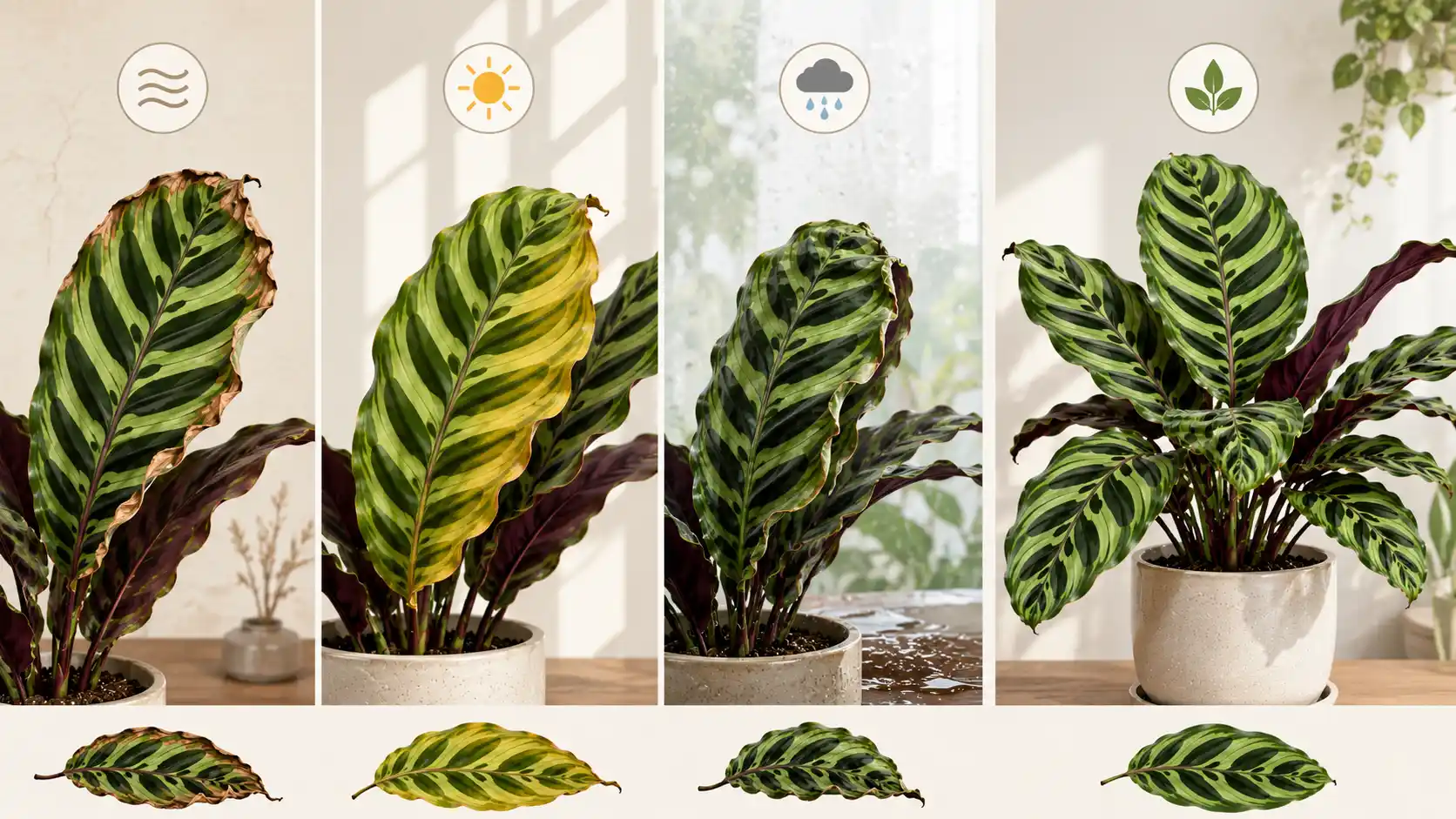
Why Does Calathea Zebrina Get Brown Edges?
Brown leaf edges are most commonly caused by:
- Low humidity
- Tap water chemicals
- Over-fertilization
- Direct sunlight
Solutions include:
- Increasing humidity
- Switching to filtered water
- Flushing accumulated fertilizer salts
- Moving the plant away from direct sun
Indoor growers should also monitor for common houseplant pests and soil issues that can affect tropical plants like Calathea Zebrina.
Why Are Calathea Zebrina Leaves Turning Yellow?
Yellow leaves often result from:
- Overwatering
- Underwatering
- Low light
- Natural aging of older leaves
To diagnose the issue:
- Check soil moisture
- Inspect root health
- Evaluate lighting conditions
Occasional yellowing of older lower leaves is normal. Widespread yellowing typically signals a care issue.
Why Are Calathea Zebrina Leaves Curling?
Calathea Zebrina leaves curling usually indicates moisture stress.
Common causes include:
- Underwatering
- Low humidity
- Heat stress
- Root-bound conditions
Upward curling often points to dehydration, while downward curling may suggest overwatering or cold stress.
If leaves curl after repotting, transplant shock may be responsible. Stable humidity and consistent moisture generally help recovery.
Table 3: Calathea Zebrina Problem Diagnosis Guide
| Symptom | Likely Cause | Fix |
| Brown edges | Low humidity / tap water | Humidifier + filtered water |
| Yellow leaves | Overwatering or low light | Reduce watering + improve light |
| Curling leaves | Underwatering or heat stress | Water thoroughly + raise humidity |
| Drooping leaves | Root rot or cold drafts | Check roots + move away from drafts |
| Pale leaf color | Too much direct light | Move to indirect light position |
How to Revive a Struggling Calathea Zebrina
How do I bring my calathea back to life? Begin by identifying the underlying stress factor and correcting it gradually.
Revival steps:
- Inspect roots for rot or severe dryness.
- Replace compacted or poorly draining soil.
- Prune dead or heavily damaged leaves.
- Increase humidity levels.
- Move the plant into bright indirect light.
- Establish a consistent watering routine.
Signs recovery is possible include:
- Healthy roots
- New leaf growth
- Firm stems
Recovery often takes several weeks to a few months depending on the severity of the damage.
Calathea Zebrina Benefits
Calathea Zebrina benefits extend beyond appearance.
Advantages include:
- Attractive tropical foliage
- Strong visual impact in interiors
- Contribution to biophilic design
- Increased connection to nature indoors
While houseplants can contribute to a healthier indoor environment, claims about major air purification effects should not be overstated.
The plant is also valued for its symbolism of unity, prosperity, and renewal.
Importantly, Calathea Zebrina is considered non-toxic to cats, dogs, and humans, making it a pet-friendly houseplant.
Calathea Zebrina Lifespan
What is the lifespan of a Calathea Zebrina? With proper care, Calathea Zebrina can live for many years because it is a long-lived perennial.
Factors that shorten lifespan include:
- Chronic overwatering
- Low humidity
- Temperature extremes
- Root damage
Factors that extend lifespan include:
- Regular repotting
- Consistent care
- Proper watering practices
- Routine propagation
Propagated divisions effectively continue the plant’s genetic line, allowing growers to maintain the plant indefinitely.
Calathea Zebrina vs Similar Calathea Varieties
Many calathea varieties share similar care requirements but differ in appearance. Another popular prayer plant relative is the Calathea Roseopicta Medallion, which has a different leaf pattern but shares similar humidity and watering preferences.
Table 4: Calathea Zebrina vs Similar Varieties
| Variety | Leaf Pattern | Care Difficulty | Notable Feature |
| Calathea Zebrina | Green zebra stripes, velvety | Moderate | Velvet texture |
| Calathea Ornata | Pink/white pinstripes | Moderate–High | Elegant pinstripe foliage |
| Calathea Makoyana | Peacock-eye pattern | Moderate | Translucent leaves |
| Calathea Medallion | Medallion rosette pattern | Moderate | Bold round leaves |
| Rattlesnake Calathea | Wavy, spotted pattern | Moderate | Lancifolia leaf shape |
Compared with varieties such as Calathea Beauty Star, Calathea Vittata, Calathea Dottie, Calathea Leopardina, and Calathea Warscewiczii, Calathea Zebrina stands out for its distinctive velvet texture and bold zebra-striping.
Conclusion
Successful calathea zebrina care comes down to replicating the plant’s tropical origins. Bright indirect light, consistently moist soil, filtered water, high humidity, good drainage, and stable temperatures create the conditions this zebra calathea needs to thrive. Most common problems, including brown edges, yellow leaves, and curling foliage, can be traced to inconsistent watering, low humidity, or environmental stress. With patience and a reliable care routine, Calathea Zebrina can become a long-lasting, lush focal point in any indoor space. Understanding its natural habitat is the foundation for keeping this striking tropical plant healthy and vibrant. Calathea Zebrina is part of a wider group of tropical houseplants that require specific growing conditions, and understanding general plant benefits, care routines, and growing tips can help indoor gardeners maintain healthier plants.
Frequently Asked Questions
Q1: How do you care for Calathea Zebrina indoors?
Provide bright indirect light, keep the soil consistently moist but not soggy, maintain humidity above 60%, use well-draining soil, and protect the plant from drafts and direct sunlight.
Q2: Does Calathea Zebrina need sunlight?
Yes. Calathea Zebrina needs bright indirect light to grow well. Direct sunlight can scorch or fade its leaves, while very low light may reduce growth and leaf color vibrancy.
Q3: How big does a Calathea Zebrina get?
Most indoor plants reach 2–3 feet (60–90 cm) in height and width. In ideal outdoor tropical conditions, they can grow up to 3–4 feet tall.
Q4: Can calathea have tap water?
Calatheas are sensitive to fluoride, chlorine, and mineral buildup commonly found in tap water. Filtered water, distilled water, or rainwater is generally recommended.
Q5: Why are my Calathea Zebrina leaves curling?
Leaf curling is usually caused by underwatering, low humidity, heat stress, or root restriction. Water thoroughly, increase humidity, and check environmental conditions to resolve the problem.
Q6: How do you make Calathea Zebrina bushy?
Provide bright indirect light, maintain high humidity, fertilize regularly during active growth, and avoid stress from inconsistent watering. These conditions encourage fuller growth.
Q7: What is the lifespan of a Calathea Zebrina?
With proper care, Calathea Zebrina can live for many years. Propagation through division allows growers to continually refresh and extend the plant's lifespan indefinitely.