
Introduction
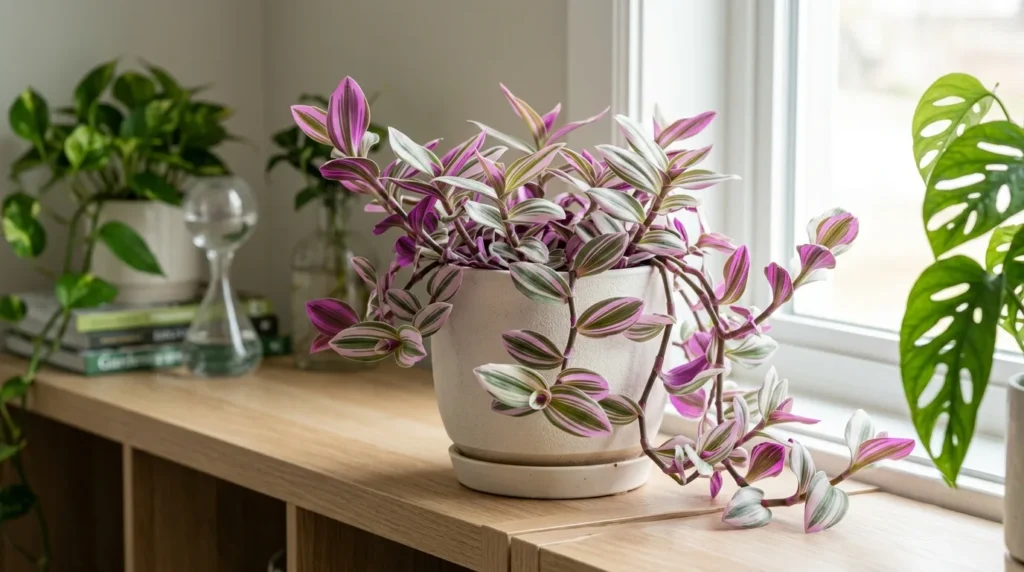
Learning how to propagate Tradescantia Nanouk is a simple way to grow more plants from an existing one. Tradescantia Nanouk, also known as Tradescantia albiflora Nanouk or pink Tradescantia, is a trailing houseplant admired for its striped pink, cream, and green foliage. This colorful cultivar belongs to the wider Tradescantia genus and is popular because it grows quickly and produces easy-to-root stems. Propagation allows plant owners to create new plants, refresh leggy growth, or share cuttings with others. With healthy stems, proper cutting techniques, and suitable light and moisture, even beginners can successfully multiply this attractive indoor plant.
Quick Summary
- Tradescantia Nanouk can be propagated through stem cuttings placed in water or directly into soil.
- The best cuttings include a healthy stem section with at least one visible node.
- Water propagation usually shows roots within 1–3 weeks under suitable conditions.
- Bright indirect light helps maintain compact growth and enhances pink leaf coloration.
What Is Tradescantia Nanouk?
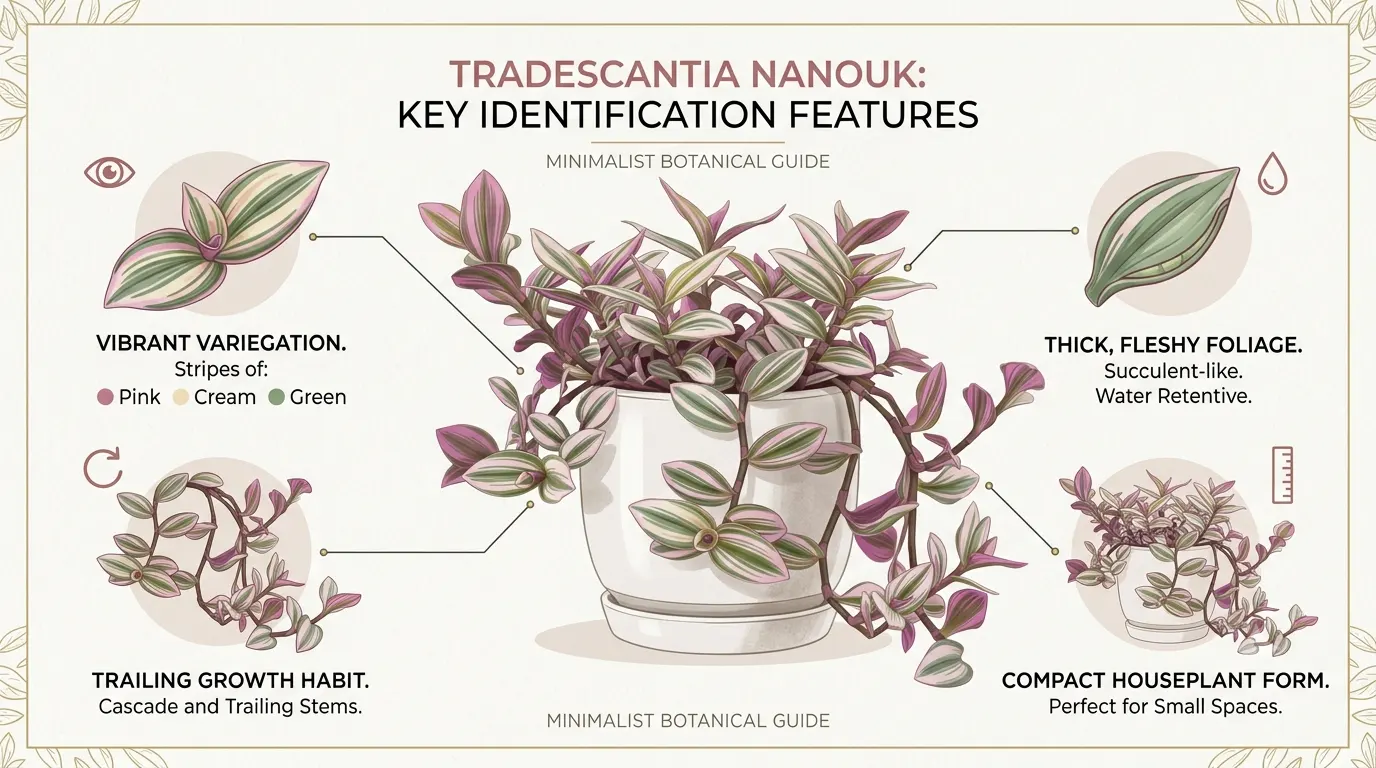
Tradescantia Nanouk is a colorful trailing houseplant cultivar scientifically known as Tradescantia albiflora ‘Nanouk’. It was developed as a selected cultivar for its highly decorative foliage featuring shades of pink, green, and cream. Like other Tradescantia plants, it belongs to the spiderwort family (Commelinaceae) and is valued for its fast growth and simple care requirements. Tradescantia Nanouk belongs to the broader Tradescantia plant group, a genus of flowering plants known for colorful foliage and trailing growth habits. You can learn more about the genus background and classification on Wikipedia’s page about Tradescantia.
Common names associated with this plant include Nanouk wandering jew, spiderwort Nanouk, fantasy Venice plant, and pink Tradescantia. Unlike some Tradescantia varieties grown mainly for striped leaves, Nanouk is especially recognized for its thick leaves and pastel coloration. Like other easy-to-propagate houseplants, Tradescantia Nanouk can be multiplied through stem cuttings using simple techniques similar to those used for other indoor plants such as the prayer plant. Learn more about how to propagate a prayer plant for another beginner-friendly propagation method.
How Tradescantia Nanouk Differs From Other Tradescantia Varieties
Tradescantia Nanouk and Tradescantia zebrina share similar trailing growth habits and can both be propagated through stem cuttings. However, their appearance and growth patterns differ.
| Feature | Tradescantia Nanouk | Tradescantia Zebrina | Standard Tradescantia |
| Leaf pattern | Pink, cream, and green variegation | Silver-green stripes with purple tones | Depends on species |
| Growth habit | Compact trailing stems | Fast-growing trailing vines | Varies by variety |
| Light needs | Bright indirect light for best color | Bright indirect light | Moderate to bright light |
| Propagation | Easy from stem cuttings | Easy from stem cuttings | Usually easy |
Similar trailing houseplants, such as Peperomia varieties, are also popular choices for indoor collections because of their compact growth habits and easy-care nature. Explore the Peperomia Rotundifolia care guide for another low-maintenance trailing plant.
Best Time and Conditions to Propagate Tradescantia Nanouk
The best time to propagate Tradescantia Nanouk is during spring and summer when the plant is actively growing. Warmer temperatures, longer daylight hours, and increased plant metabolism help cuttings develop roots faster.
However, indoor propagation can succeed throughout the year if the plant receives enough light and stable temperatures. Many growers successfully take cuttings in September or other cooler months when indoor conditions remain suitable. Providing the right lighting conditions is essential during propagation because too much direct sun can stress young cuttings, while insufficient light may slow root development. Understanding the difference between bright indirect light and direct sunlight can help improve propagation success.
Does Season Affect Propagation Success?
Season influences rooting speed because environmental conditions affect plant activity.
- Spring and summer: Faster rooting due to stronger light and active growth.
- Autumn: Propagation is still possible indoors but may take longer.
- Winter: Reduced growth and shorter daylight can slow root development.
- Temperature: A range of about 65–75°F (18–24°C) supports healthy rooting.
Where to Cut Tradescantia Nanouk for Propagation
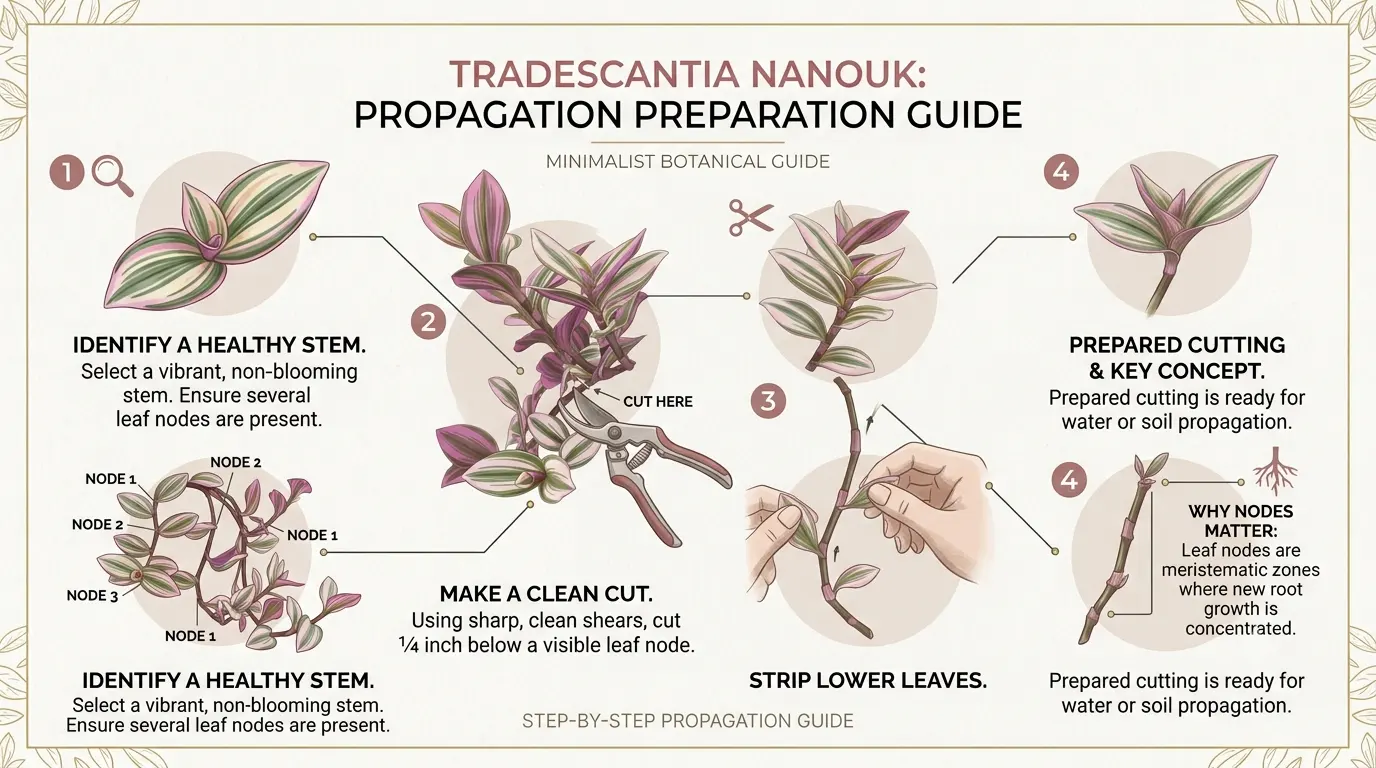
To propagate Tradescantia Nanouk successfully, cut just below a leaf node because the node contains the tissues needed for new roots and growth. A healthy cutting should usually be around 3–6 inches long and taken from a strong, non-damaged stem. For a visual, step-by-step breakdown of ideal node spacing and cutting placement, check our Tradescantia Nanouk Propagation Reference Database on Notion. It catalogs node positions, stem health indicators, and cutting success patterns specific to this cultivar.
Follow these steps:
- Select a healthy stem with several leaves.
- Identify a node where leaves attach to the stem.
- Cut about ¼ inch below the node using clean scissors.
- Make a slight 45-degree cut to increase the surface area.
- Remove lower leaves that would sit underwater or below the soil.
Clean cutting tools reduce the risk of transferring bacteria or causing stem rot.
How to Propagate Tradescantia Nanouk in Water
Water propagation is one of the easiest methods for growing Tradescantia Nanouk cuttings. It allows growers to observe root development and is especially useful for beginners. If you’d like a more detailed, node-by-node breakdown of rooting timelines and success rates, our trailing houseplant propagation reference on GitHub documents real rooting data across multiple trailing species. It’s a handy technical cross-check if you want to compare Tradescantia Nanouk’s water-rooting speed against other trailing houseplants.
To propagate in water:
- Place the cutting in a container filled with clean water.
- Make sure at least one node is submerged.
- Keep leaves above the water line.
- Place the container in bright indirect light.
- Change the water every few days to maintain freshness.
- Transfer the cutting to soil when roots reach about 1–2 inches long.
Tradescantia Nanouk can grow in water for extended periods, but soil-grown plants usually develop stronger roots and better long-term growth.
Water vs. Soil Propagation
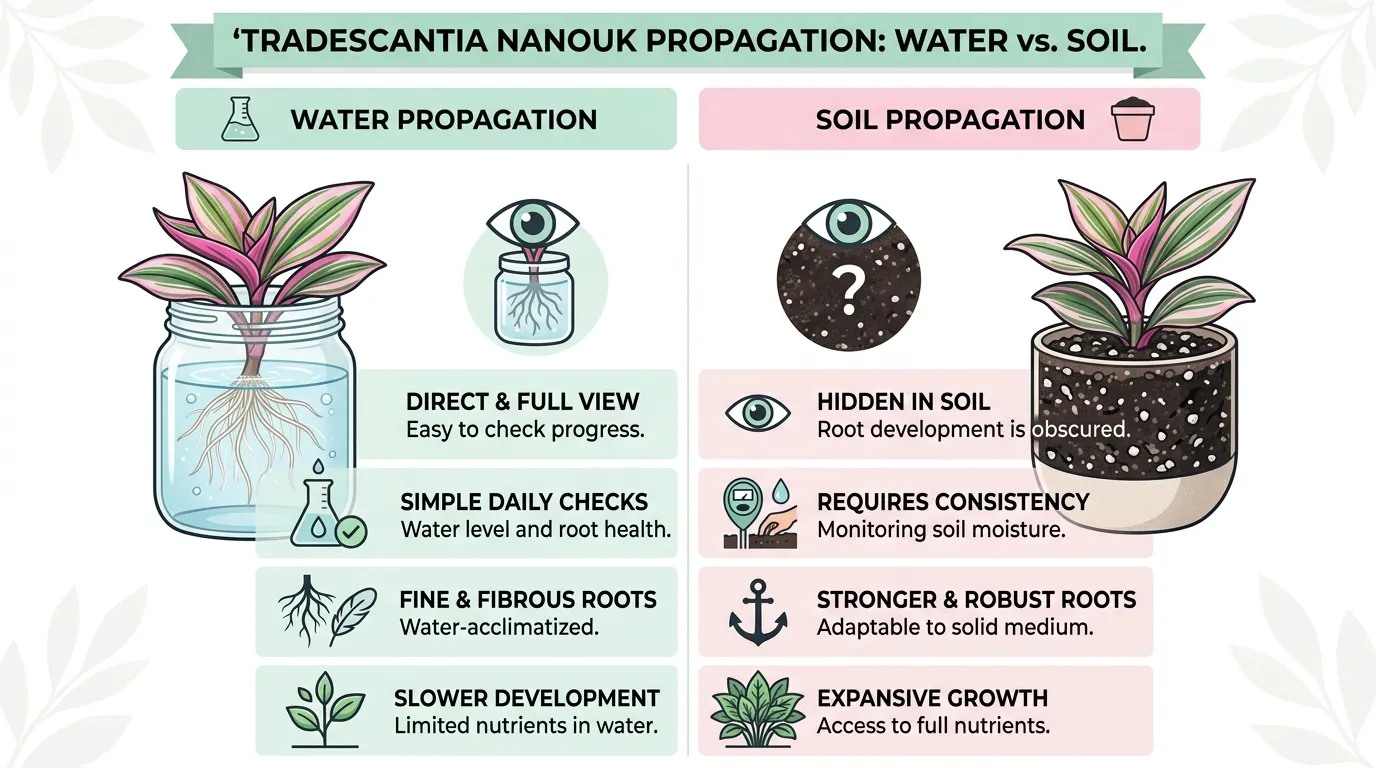
| Factor | Water Propagation | Soil Propagation |
| Root visibility | Roots are easy to observe | Roots develop underground |
| Rooting speed | Often faster to observe | Can be slower initially |
| Difficulty | Beginner-friendly | Requires moisture control |
| Long-term growth | May need soil transfer | Stronger permanent growth |
How to Propagate Tradescantia Nanouk in Soil
Tradescantia Nanouk can also be propagated directly in soil. This method allows roots to develop in their permanent growing environment and avoids transplant stress.
Steps for soil propagation:
- Prepare a light, well-draining potting mix.
- Insert the node-end of the cutting into the soil.
- Keep the soil slightly moist but not waterlogged.
- Place the pot in bright indirect light.
- Test root development by gently pulling the cutting after several weeks.
A humid environment can encourage faster rooting, but excessive moisture should be avoided because it may cause stem rot. Maintaining suitable humidity can support new root formation and reduce stress on fresh cuttings. Indoor growers can explore ways to increase humidity for indoor plants without a humidifier to create a more favorable growing environment.
Can You Propagate Tradescantia Nanouk From a Leaf?
No, Tradescantia Nanouk usually cannot be propagated from a single leaf. Unlike some succulents that can grow from leaf cuttings, Tradescantia requires a stem section containing a node. The node is essential because it contains growth points where roots and new shoots can form.
A leaf without a node may remain green temporarily but typically will not develop into a new plant.
Can You Replant Broken Tradescantia Pieces?
Yes, broken Tradescantia Nanouk stems can often be replanted if they contain a node. A damaged stem piece can be treated like a normal cutting by placing the node in water or soil.
Before planting, remove any damaged sections and ensure the remaining stem is healthy. Broken pieces with no node usually cannot produce new growth.
Tradescantia Nanouk Care After Propagation
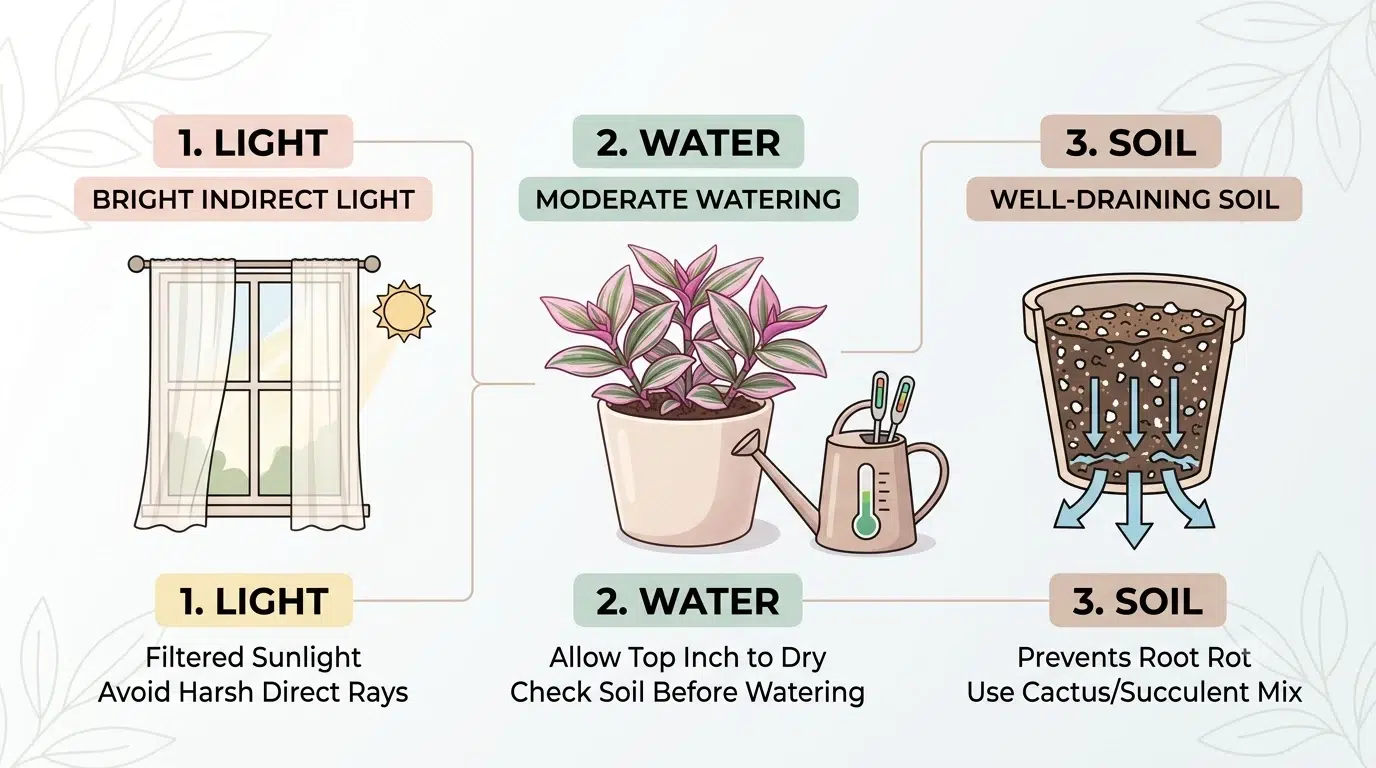
After cuttings establish roots, proper care helps maintain healthy growth and vibrant pink coloration. Tradescantia Nanouk requires similar conditions to other Tradescantia varieties, including bright light, moderate watering, and loose soil.
Light, Water, and Soil Needs
- Light: Bright indirect light encourages stronger growth and better pink coloration.
- Water: Keep soil lightly moist, allowing the top layer to dry slightly between watering.
- Soil: Use a well-draining potting mix that prevents excess moisture buildup.
How to Prevent Leggy Growth and Boost Pink Color
Tradescantia Nanouk becomes leggy when it does not receive enough light. Low light causes longer stems, wider spacing between leaves, and reduced pink coloration.
To encourage fuller growth:
- Provide brighter indirect light.
- Rotate the plant regularly for even growth.
- Prune long stems to encourage branching.
- Avoid keeping the plant in dark corners.
More light generally increases pink pigmentation, although genetics also influence leaf coloration.
Pruning Tradescantia Nanouk
Pruning Tradescantia Nanouk helps maintain a bushier shape and provides additional propagation material. Pinching stem tips encourages the plant to produce more side shoots.
Pruning steps:
- Remove long or weak stems.
- Cut just above a leaf node.
- Use healthy removed sections as new cuttings.
Common Problems When Propagating and Growing Tradescantia Nanouk
Tradescantia Nanouk is easy to propagate, but several issues can slow growth or damage cuttings. To track and troubleshoot issues like leggy stems or failed rooting attempts systematically, our Tradescantia Nanouk propagation tracking sheet logs common causes, solutions, and prevention steps in one place. It’s a practical companion for growers propagating multiple cuttings at once.
| Problem | Cause | Solution | Prevention |
| Yellow or brown leaves | Overwatering or poor light | Adjust watering and improve light | Use well-draining soil |
| Leggy stems | Insufficient light | Move to brighter location | Maintain consistent light |
| Failure to root | Cutting lacks node | Use node-containing stems | Check cutting placement |
| Slow growth | Seasonal slowdown or low nutrients | Improve conditions | Provide proper care |
Does Tradescantia Like Shallow Pots?
Yes, Tradescantia Nanouk generally performs well in shallow, wide pots because its trailing root system spreads horizontally. Deep containers can hold excess moisture and increase the risk of root problems.
How Fast Does Tradescantia Nanouk Grow?
Tradescantia Nanouk is a moderate-to-fast growing plant under ideal conditions. During spring and summer, it can produce new stems and leaves quickly when provided with sufficient light, water, and nutrients.
Growth slows during colder months because reduced light levels decrease plant activity.
Beginner Mistakes to Avoid With Nanouk Propagation
Common mistakes that prevent successful propagation include:
- Taking cuttings that are too short.
- Using stems without a node.
- Overwatering newly rooted plants.
- Providing insufficient light.
- Moving water-rooted cuttings into soil too early.
Allowing roots to develop properly and maintaining stable conditions improves propagation success.
Conclusion
Propagating Tradescantia Nanouk is a simple and effective way to grow new plants from existing stems. Whether using water or soil propagation, the most important step is choosing a healthy cutting with a node. With bright indirect light, proper moisture, and regular aftercare, Tradescantia Nanouk can develop into a full, colorful trailing plant. By following the correct propagation method and avoiding common mistakes, growers can successfully expand their collection of this attractive pink Tradescantia. Tradescantia Nanouk is one of many popular indoor plants that combine decorative beauty with easy maintenance. Explore more houseplant benefits, care tips, and growing guides in our complete Plants Benefits and Guides collection.
FAQs
Where do I cut Tradescantia Nanouk for propagation?
Cut Tradescantia Nanouk just below a healthy leaf node because the node contains the growth tissue needed for root development. A 3–6 inch stem cutting usually works best.
Can I put Tradescantia cuttings directly into soil?
Yes, Tradescantia cuttings can be planted directly into soil as long as the cutting includes a node. Keep the soil lightly moist and provide bright indirect light.
How long does it take Tradescantia to root in water?
Tradescantia Nanouk cuttings usually develop visible roots within 1–3 weeks in water when kept in warm conditions with adequate indirect light.
Can you propagate Tradescantia with just a leaf?
No, a single Tradescantia leaf usually cannot produce a new plant because it lacks the node required for root and stem development.
How do I make my Tradescantia Nanouk more pink?
To increase pink coloration, provide brighter indirect light and maintain healthy growth conditions. Low light often causes reduced pink tones and greener foliage.
Does Tradescantia Nanouk like shallow pots?
Yes, Tradescantia Nanouk prefers shallow, wider pots because its trailing roots spread outward and benefit from good drainage.



3 Responses