
Introduction
Learning how to propagate staghorn fern is a practical way to grow new plants from an existing specimen. Staghorn ferns (Platycerium) are unique epiphytic ferns that naturally reproduce through two methods: producing small offsets called pups and releasing spores from fertile fronds. Pup division is the easiest and fastest method for most home growers, while spore propagation requires patience and specialized care. This guide explains both propagation techniques, including separation, mounting, growing conditions, and long-term care, so beginners and experienced gardeners can successfully multiply staghorn ferns.
Quick Summary
- Staghorn ferns are propagated through pups (division) or spores.
- Pup division is the fastest and most reliable method for home growers.
- Spores can take months or years to produce mature plants.
- Staghorn pups need roots before separation to establish successfully.
- Proper mounting, humidity, light, and watering improve propagation results.
What Is Staghorn Fern Propagation?
How Do Staghorn Ferns Multiply?
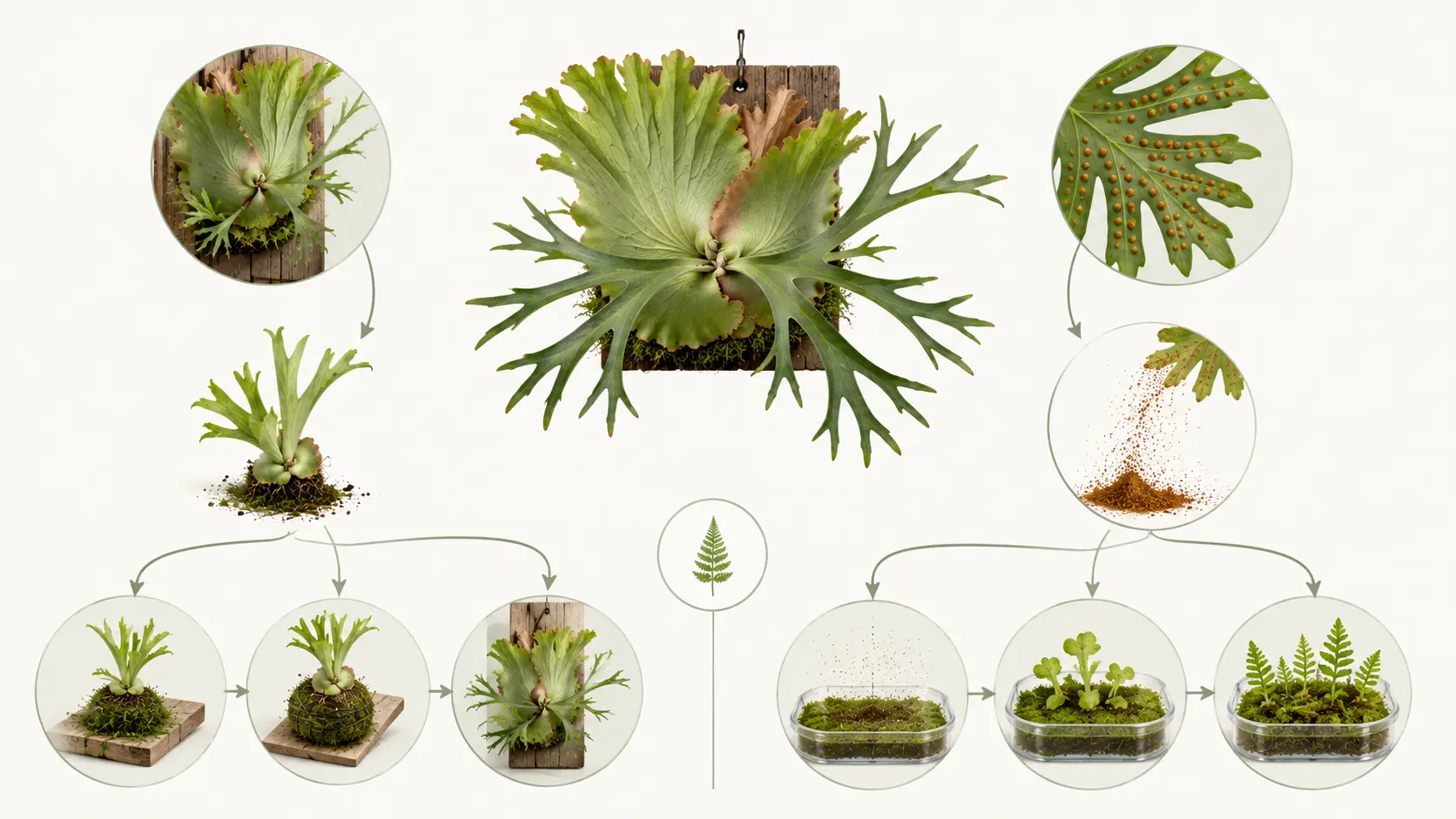
Staghorn ferns multiply in two natural ways: by producing offsets called pups and by spreading spores from fertile fronds. In nature, pups grow from the parent plant’s rhizome, while spores are released from brown reproductive patches called sporangia. Gardeners usually propagate Platycerium through division because it produces a new plant much faster. Many indoor plants require different propagation approaches, and learning about propagation techniques for other houseplants can help gardeners understand how plant reproduction methods vary between species.
Staghorn fern propagation involves separating or growing new plants from:
- Pups: Small plantlets that develop beside the parent plant.
- Spores: Microscopic reproductive cells produced on fertile fronds.
- Division: Separating a mature plant into independent sections.
- Mounting: Attaching the fern to a surface that supports its natural epiphytic growth.
Unlike ordinary houseplants, staghorn ferns do not grow from traditional cuttings because they lack typical stems that easily develop roots.
Can You Grow a Staghorn Fern From a Cutting?
No, staghorn ferns cannot be successfully propagated from normal leaf or stem cuttings. A detached frond does not contain the necessary growing points to produce a new plant. Searches for “propagate staghorn fern from leaf” often come from this misunderstanding.
The reliable propagation methods are:
- Separating established pups from the parent plant.
- Growing new plants from spores.
How Hard Is It to Grow a Staghorn Fern?
Growing a staghorn fern is relatively easy when using pups but much more challenging from spores. Pup division is beginner-friendly because the new plant already has developed tissue and roots. Spore propagation requires careful humidity control, sterile growing conditions, and long waiting periods.
How to Propagate Staghorn Fern From Pups
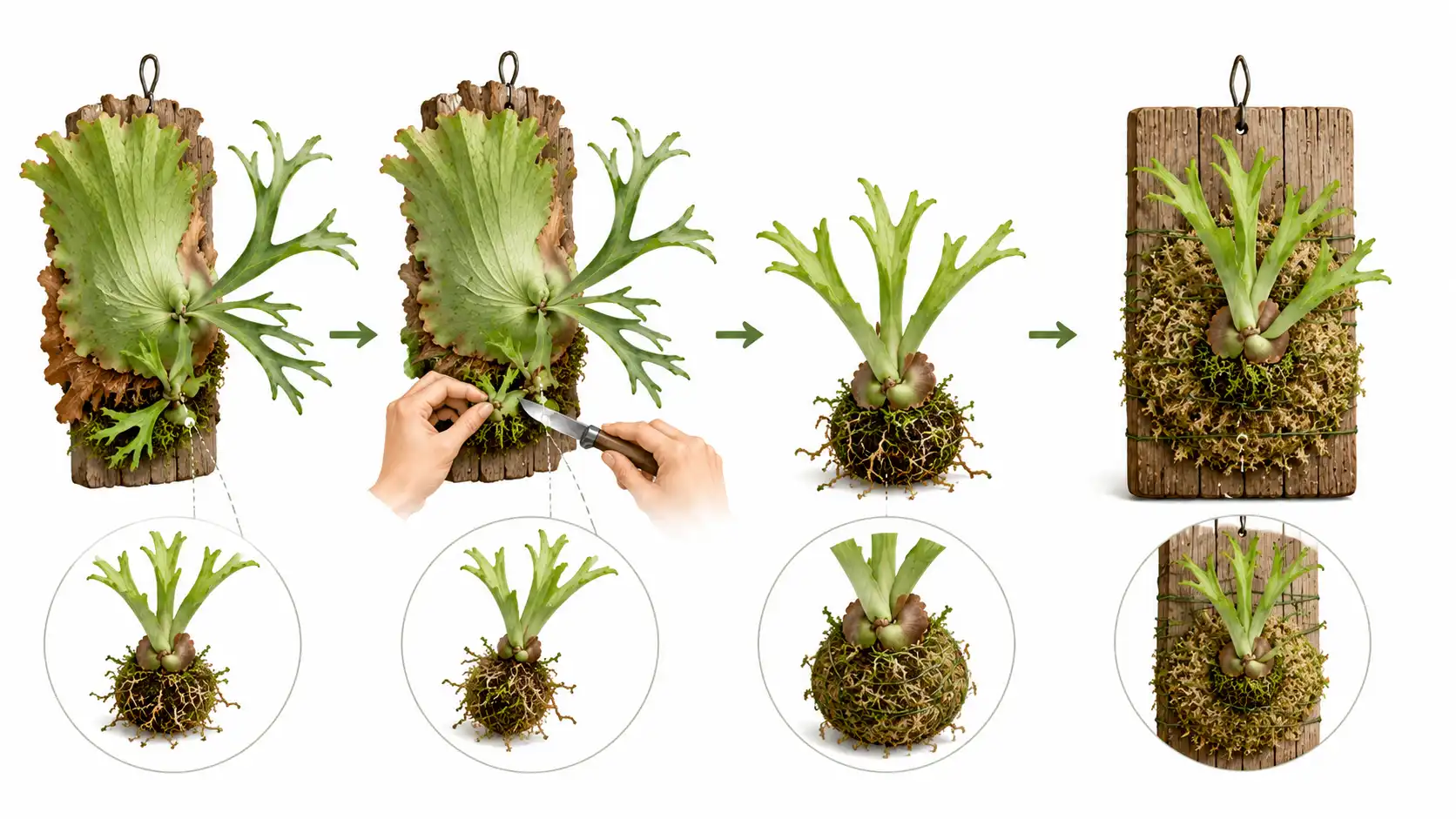
Propagating staghorn fern pups is the most common method because it produces a genetically identical plant in a shorter time. A healthy mature staghorn fern often creates pups around the base as it grows.
To separate a pup successfully:
- Choose a pup with visible roots or a developed root system.
- Use a clean, sharp knife to separate it from the parent plant.
- Cut carefully near the rhizome while protecting the mother plant.
- Keep as much root material attached as possible.
- Allow the cut area to dry slightly before mounting or planting.
Healthy pups establish faster because they already contain mature plant structures.
Where to Cut a Staghorn Fern to Propagate
The best cutting location is at the base of the pup, close to the rhizome where it connects to the parent plant. Avoid cutting into the mother plant’s shield fronds because these protective leaves help hold moisture and support the fern’s growth.
A clean cut reduces damage and lowers the risk of infection.
Mounting or Potting a Separated Pup
A separated pup can be grown in several ways:
- Mounted on a wooden board.
- Attached to sphagnum moss in a basket.
- Planted temporarily in a container with suitable material.
Because staghorn ferns are epiphytes, mounting usually provides the most natural growing environment.
How to Propagate Staghorn Fern From Spores
Staghorn fern spores are an advanced propagation method that mimics natural reproduction. Ferns do not produce seeds; instead, they create spores on fertile fronds.
The process involves:
- Collecting mature spores from fertile fronds covered with sporangia.
- Spreading spores onto a moist sterile medium such as peat, sphagnum moss, or fern-spore mix.
- Keeping the container humid using a cover or propagator.
- Waiting for green prothalli (young fern stages) to appear before mature plants develop.
Spore propagation requires patience because the early growth stages are extremely small and slow. Because spore germination timelines vary so much by species and conditions, many growers cross-check their progress against a structured staghorn fern propagation reference that logs prothalli development stages. This kind of open-source tracking helps beginners recognize whether their spore batch is progressing normally or needs adjusted humidity.
How Long Do Staghorns Take to Grow From Spores?
Staghorn ferns grown from spores usually take six months to several years before producing noticeable pups or mature growth. The timeline depends on humidity, temperature, light, and growing conditions.
Compared with pup division, spores require significantly more time and attention.
Why Is a Staghorn Fern So Expensive?
Staghorn ferns can be expensive because mature specimens take many years to develop. Plants grown from spores require especially long growing periods before they reach a size suitable for display. Large mounted specimens also require careful cultivation and maintenance.
Planting and Mounting a Staghorn Fern
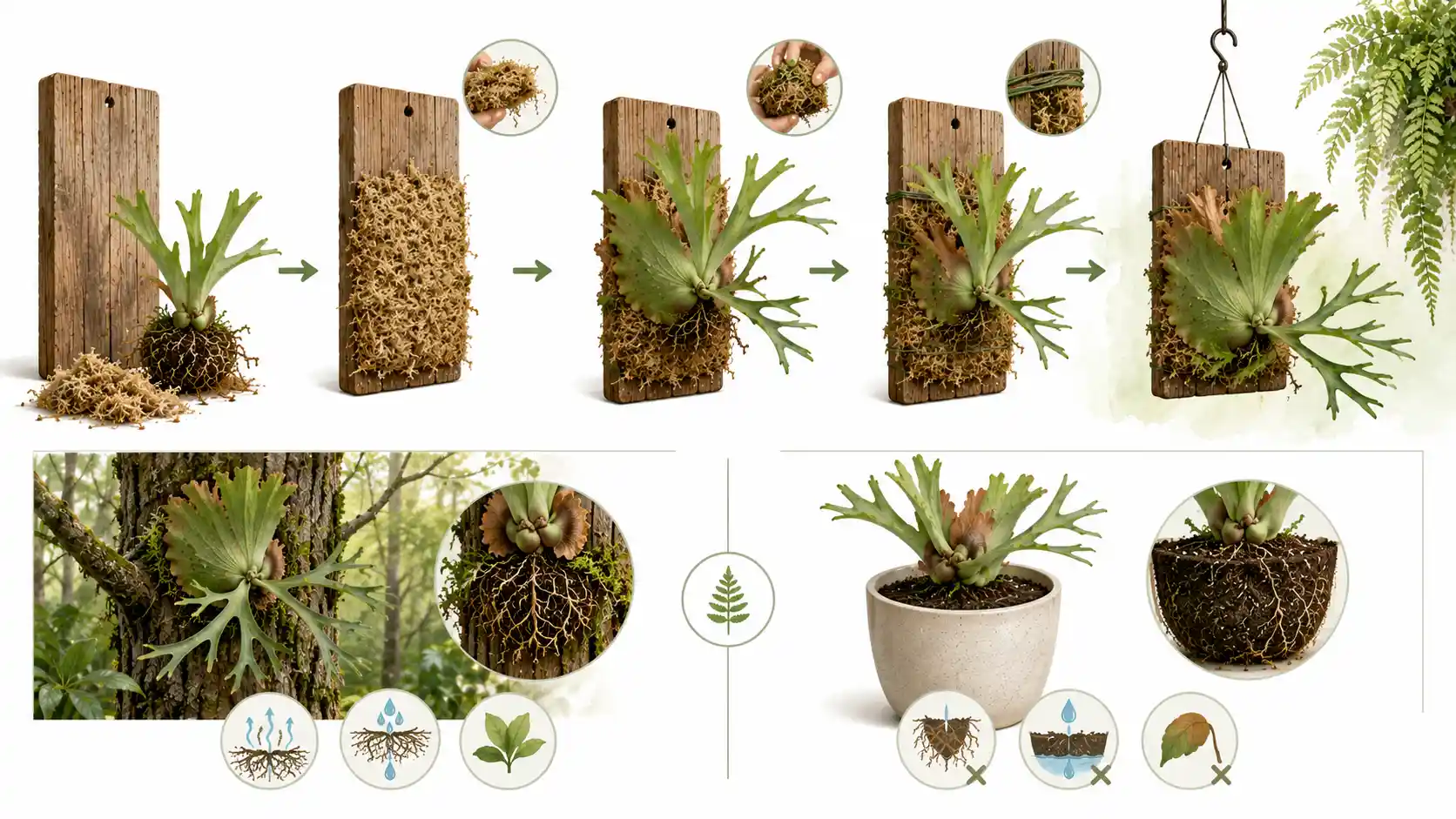
Staghorn ferns naturally grow attached to trees in tropical forests, making mounting the preferred method for mature plants. Mounting allows airflow around the roots and imitates their natural habitat. Staghorn ferns are popular for indoor spaces because of their unique appearance, similar to other easy-care indoor plants that add greenery to homes with minimal maintenance.
Common mounting materials include:
- Wooden boards.
- Sphagnum moss.
- Wire or fishing line.
- Hanging baskets.
To mount a staghorn fern:
- Place moist sphagnum moss on a board or basket.
- Position the fern with roots against the moss.
- Secure it gently using wire or fishing line.
- Hang it in bright indirect light with good airflow.
Planting directly in soil is possible for young plants, but heavy soil can hold excess moisture around the roots.
Repotting a Staghorn Fern in a Hanging Basket
Repot or remount a staghorn fern when it becomes too large for its current support. Carefully remove the plant while disturbing the roots as little as possible.
A larger basket or mount should provide:
- Better airflow.
- More space for shield fronds.
- Stable support for continued growth.
Can Staghorn Ferns Stay in Pots?
Yes, staghorn ferns can stay in pots, especially when young. However, long-term growth is usually better on a mount or hanging basket because their natural growth habit is epiphytic rather than soil-based.
Pups vs. Spores: Which Propagation Method Is Best?
| Method | Speed | Difficulty | Result |
| Pups/Division | Weeks to establish | Easy | Genetic clone of parent plant |
| Spores | Months to years | Advanced | Possible genetic variation |
For most growers, pups are the best propagation choice because they provide faster and more predictable results. For a deeper side-by-side breakdown of timelines, success rates, and difficulty across both methods, our fern propagation reference database compiles grower-submitted results you can filter by species. It’s a useful second opinion before committing to a method for your specific plant.
Staghorn Fern Care Essentials for Propagation Success
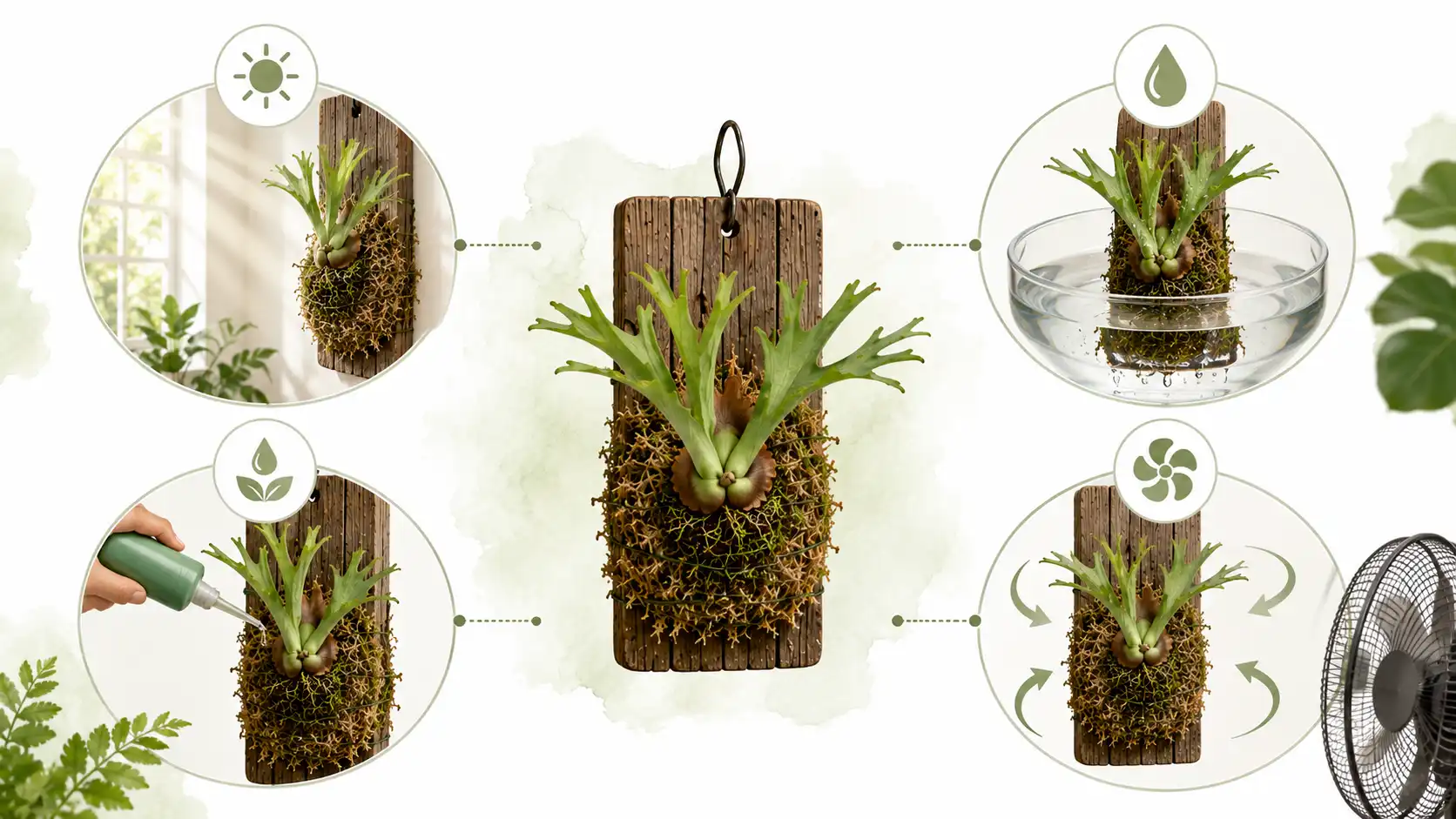
Successful propagation depends on maintaining proper growing conditions. Staghorn ferns prefer bright indirect light, moderate humidity, and controlled watering. For broader fern care practices, including watering, humidity, and general maintenance techniques, understanding how to look after a fern can help growers maintain healthier plants after propagation.
Can I Water Staghorn Fern Daily If Dry?
No, daily watering is usually unnecessary and can cause root problems. Staghorn ferns prefer soak-and-dry cycles where the growing medium or moss is allowed to partially dry before watering again. If you’re propagating multiple pups or spore batches at once, keeping a simple propagation tracking spreadsheet for watering dates and humidity checks makes it far easier to catch problems before they affect root development.
When Staghorns Get Very Dry, Can You Soak Them in Water?
Yes, a dehydrated staghorn fern can be revived by soaking the mount or root area in water for about 10–20 minutes. Allow excess water to drain before returning it to its growing location.
What Is the Best Fertilizer for Staghorn Ferns?
A diluted balanced liquid fertilizer works well for staghorn ferns. Apply lightly during active growth because these plants are not heavy feeders.
Do Banana Peels Help Staghorn Ferns?
Banana peels contain potassium, but they are not a complete fertilizer. Small amounts may provide nutrients as they break down, but excessive use can encourage mold and unpleasant odors.
Are Coffee Grounds Good for Staghorn Ferns?
Coffee grounds contain nitrogen, but they should be used carefully. Too much can create moisture problems, acidity changes, or mold growth. Balanced fertilizers are usually safer.
Should I Cut Dead Leaves Off Staghorn Fern?
Brown shield fronds should usually remain because they protect roots and help retain moisture. Completely dead fertile fronds can be trimmed carefully.
Following reliable indoor plant care guides can help gardeners understand how light, feeding, and watering routines influence healthy plant growth.
Common Problems With Staghorn Ferns
What Are the Common Problems With Staghorn Ferns?
Common staghorn fern problems usually involve watering, light, pests, or incorrect propagation timing.
| Problem | Cause | Solution |
| Yellowing leaves | Overwatering or poor drainage | Improve airflow and adjust watering |
| Slow growth | Low light or insufficient nutrients | Provide bright indirect light and light feeding |
| Pest infestation | Scale or mealybugs | Isolate and treat with insecticidal soap |
| Pup failure | Separation too early | Wait until roots develop |
Staghorn Fern Lifespan and Long-Term Growth
A healthy staghorn fern can live for decades with proper care. Mature plants often continue producing new pups throughout their lifespan, allowing gardeners to repeatedly propagate new specimens. Like many tropical species, staghorn ferns benefit from conditions similar to those used for tropical houseplant care, including stable humidity and suitable light levels.
Beginner Mistakes When Propagating Staghorn Ferns
Common propagation mistakes include:
- Removing pups before they develop roots.
- Overwatering newly mounted pups.
- Growing mature plants in heavy soil instead of mounts.
- Expecting quick results from spore propagation.
Conclusion
Staghorn fern propagation is most successful through pup division because it is faster, easier, and more reliable than growing from spores. Learning how to propagate staghorn fern allows gardeners to expand their collection using proper separation, mounting, and care techniques. While spore propagation offers an interesting advanced method, beginners usually achieve better results by starting with healthy pups and maintaining suitable light, moisture, and airflow conditions. This propagation guide is part of a broader collection of Plants Benefits and Guides, covering plant care methods, growing techniques, and helpful information for indoor and outdoor gardeners.
Frequently Asked Questions
Can you grow a staghorn fern from a cutting?
No. Staghorn ferns do not grow from typical stem or leaf cuttings. They are propagated through pups or spores.
How long does it take for a staghorn fern to grow from spores?
A staghorn fern grown from spores can take six months to several years before visible pups or mature growth appear.
How do staghorn ferns multiply?
Staghorn ferns multiply through pups that grow from the parent plant or through spores released from fertile fronds.
Can staghorn ferns stay in pots, or do they need to be mounted?
They can stay in pots, especially when young, but mounting better supports their natural epiphytic growth habit.
Can I propagate a staghorn fern in water?
No. Staghorn ferns do not propagate effectively in standing water. Mounting or moss-based methods provide better conditions for growth.