
Introduction
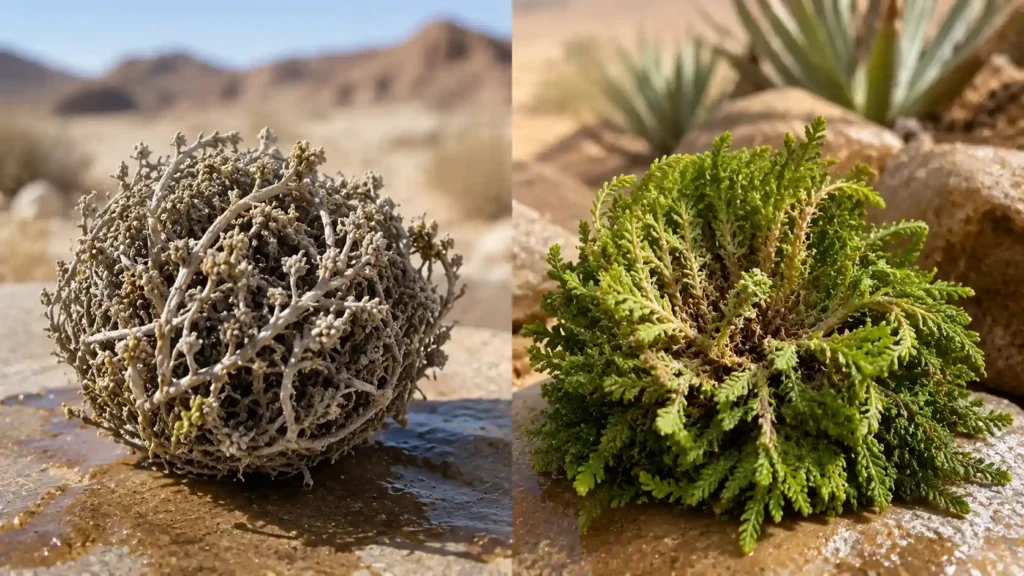
The name Rose of Jericho vs false Rose of Jericho refers to two different desert plants that are often confused because they share the same common name. The true Rose of Jericho (Anastatica hierochuntica) is a tumbleweed-like plant from the mustard family, while the false Rose of Jericho (Selaginella lepidophylla) is a spikemoss from the Chihuahuan Desert. Understanding their differences helps buyers choose the correct plant and provide proper care.
Understanding the botanical identity and care requirements of unusual plants is important for healthy growth, and our complete guide to Plants: Benefits and Guides (Complete Care, Types & Growing Tips) covers essential plant care information, benefits, and growing tips for different plant species.
Quick Summary
- The true Rose of Jericho (Anastatica hierochuntica) belongs to the mustard family and originates from Middle Eastern and North African deserts.
- The false Rose of Jericho (Selaginella lepidophylla) is the actual resurrection plant because it can revive after complete drying without roots.
- Both plants curl into dry balls and open when exposed to water, but their biology is completely different.
- Most plants sold commercially as “Rose of Jericho” are actually the false variety, Selaginella lepidophylla.
- Correct identification is important because their watering and growth requirements differ.
What Is the Rose of Jericho?
The Rose of Jericho is a common name used for two unrelated desert plants: Anastatica hierochuntica and Selaginella lepidophylla. Both are known for their ability to curl into a dry ball during drought and expand when exposed to moisture, which has earned them the nickname “resurrection plant.” The confusion exists because sellers often use the same name for both species.
What Is the True Rose of Jericho?
The true Rose of Jericho is Anastatica hierochuntica, a desert plant belonging to the mustard family (Brassicaceae). It is native to dry regions of the Middle East and North Africa.
This plant is a seasonal tumbleweed. During dry conditions, it dries out, curls inward, and can be moved by wind. When moisture returns while the plant is still capable of growth, it can reopen and release seeds.
Important characteristics of the true Rose of Jericho include:
- Scientific name: Anastatica hierochuntica
- Family: Brassicaceae
- Native range: Middle East and North Africa
- Growth habit: Desert annual tumbleweed
- Resurrection ability: Requires the plant to remain alive and rooted
Unlike the false Rose of Jericho, the true species is not a permanently revived plant once completely uprooted and dried.
What Is the False Rose of Jericho?
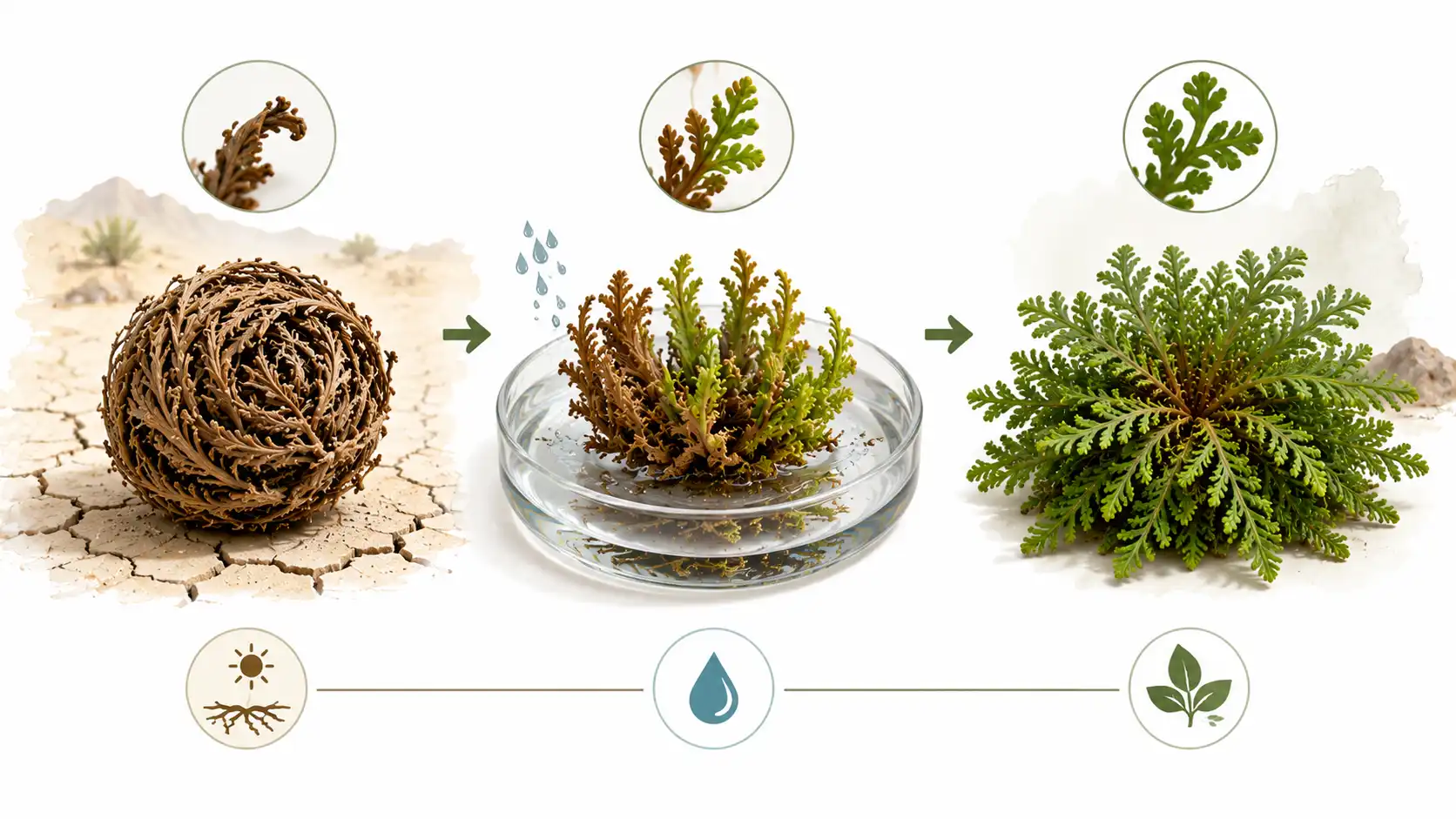
The false Rose of Jericho is Selaginella lepidophylla, a spikemoss species from the Chihuahuan Desert of Mexico and the southwestern United States. It belongs to the family Selaginellaceae. This plant is considered a true resurrection plant because it can survive extreme dehydration. It can lose most of its water, curl into a brown ball, and later reopen when exposed to water—even after being separated from its roots.
Key facts about the false Rose of Jericho:
- Scientific name: Selaginella lepidophylla
- Family: Selaginellaceae
- Native region: Chihuahuan Desert
- Growth type: Desert spikemoss
- Resurrection ability: Can revive repeatedly after drying
Because of its dramatic revival process, Selaginella lepidophylla is the plant most people mean when they search for a resurrection plant. For readers who want a structured, at-a-glance breakdown of Selaginella lepidophylla’s classification and traits, our complete Rose of Jericho reference database organizes these facts in one place. It’s a handy technical companion for anyone comparing species data side by side.
Rose of Jericho vs False Rose of Jericho: Key Differences
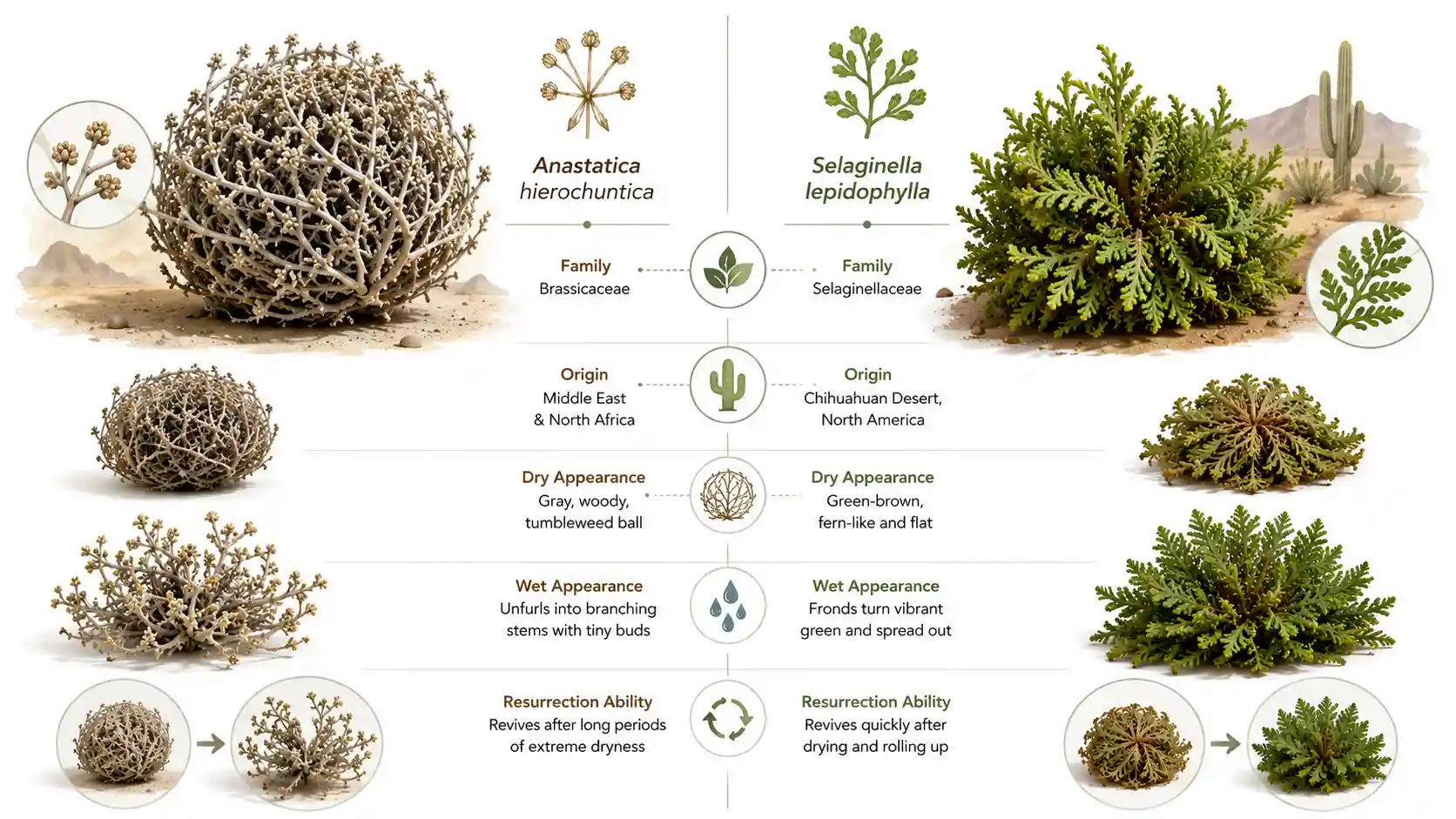
The main difference between the Rose of Jericho and false Rose of Jericho is their biology. Although both plants appear to “come back to life” after water exposure, only Selaginella lepidophylla is naturally adapted to survive repeated complete dehydration without roots.
| Feature | True Rose of Jericho (Anastatica hierochuntica) | False Rose of Jericho (Selaginella lepidophylla) |
| Family | Brassicaceae | Selaginellaceae |
| Native region | Middle East and North Africa | Chihuahuan Desert |
| Resurrection ability | Revives only if still alive and rooted | Revives after extreme drying without roots |
| Dry appearance | Gray, woody, brittle ball | Brown-green, curled fern-like ball |
| Wet appearance | Opens with small branches | Opens into green moss-like fronds |
| Common names | True Rose of Jericho, resurrection plant | False Rose of Jericho, resurrection plant, dinosaur plant |
| Toxicity | Generally considered non-toxic | Generally considered non-toxic |
If you’d like to explore this comparison in more depth, our Resurrection & Drought-Dormant Plants Reference Database catalogs dozens of similar resurrection and drought-tolerant species. It’s a great next stop for anyone curious how Anastatica and Selaginella compare to other dormant plants.
How to Tell Them Apart Visually
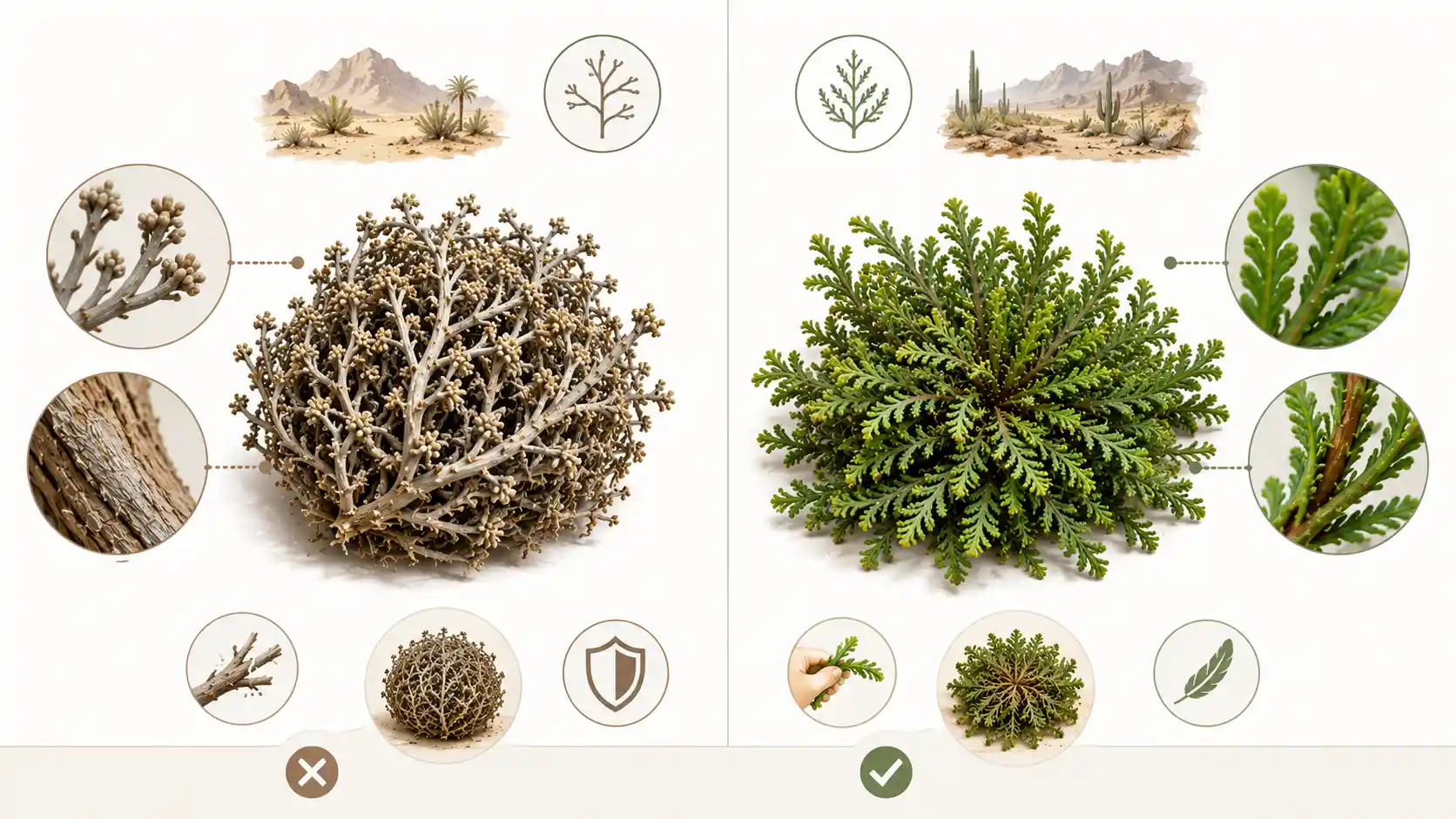
The easiest way to identify them is by texture and structure.
The true Rose of Jericho has:
- Grayish-green or brown woody branches
- A brittle, tumbleweed-like structure
- A more rigid appearance
The false Rose of Jericho has:
- Soft, delicate, fern-like fronds
- A mossy green color after revival
- A lighter, more flexible texture
Most commercial products labeled simply “Rose of Jericho” are usually Selaginella lepidophylla, so checking the scientific name before purchasing is important.
What Is Another Name for the Rose of Jericho?
The Rose of Jericho has several alternative names because of its unique drying and revival behavior. Common names include resurrection plant, resurrection moss, stone flower, dinosaur plant, siempre viva, doradilla, and Jericho flower.
The name “siempre viva,” meaning “always alive” in Spanish, reflects the plant’s cultural association with endurance and survival.
Rose of Jericho Uses and Benefits
The Rose of Jericho is used mainly for decoration, cultural traditions, and spiritual practices. Some traditional uses are based on symbolism rather than scientifically proven effects.
Common uses include:
- Decorative desert plant displays
- Educational demonstrations of plant adaptation
- Cultural and spiritual rituals
- Traditional folk practices
Spiritual and Metaphysical Uses
In many traditions, the Rose of Jericho symbolizes renewal, protection, prosperity, and resilience. Some people use it in spiritual practices associated with rebirth and positive energy.
Cultural uses include:
- Hoodoo traditions involving prosperity and protection
- Santeria practices connected with spiritual symbolism
- Christian traditions where it represents resurrection, especially around Easter
These meanings are cultural beliefs and are not scientifically proven properties of the plant.
Can You Drink Rose of Jericho Water?
Rose of Jericho water has been used in some folk medicine traditions, including preparations for colds, sore throats, and other conditions. In some Mexican traditions, infusions made from the plant have been associated with supporting childbirth.
However, these uses are traditional rather than medically confirmed. Drinking water from a plant kept for decoration may also introduce contaminants, so it should not be considered a proven health remedy.
How to Use Rose of Jericho to Attract Money
Some spiritual traditions place the Rose of Jericho in homes as a symbol of abundance and prosperity. Common practices include placing it near entrances, keeping it with coins, or using it during prosperity rituals.
These practices represent cultural and spiritual beliefs rather than scientifically demonstrated effects.
Where to Place a Rose of Jericho in the House
The best place for a Rose of Jericho depends on whether the goal is plant care or symbolic placement. For healthy growth and revival cycles, both types generally perform best in a bright location with indirect light.
Like other decorative indoor plants, such as Alocasia Amazonica Care Indoors, understanding light conditions and indoor placement helps plants maintain healthier growth and appearance.
Practical placement recommendations include:
- Place it near a bright window with filtered sunlight.
- Avoid intense direct afternoon sun, which can dry and damage the plant.
- Keep it away from cold drafts, air conditioners, and heaters.
- Use a shallow dish or container that allows proper airflow.
Some cultural traditions place the Rose of Jericho near an entrance, altar, or meditation area because it is associated with protection, renewal, and prosperity. These placements are symbolic and vary by tradition.
Rose of Jericho Care Guide
Rose of Jericho care depends on the species because the true and false varieties have different natural adaptations. The false Rose of Jericho is usually easier to maintain as a decorative resurrection plant, while the true Rose of Jericho has a more specific life cycle. For a quick printable reference, we’ve compiled care specs — watering cycles, light needs, and dormancy periods — into a downloadable Rose of Jericho care spreadsheet. It’s useful for tracking soak-and-dry schedules if you own multiple plants.
Watering Needs
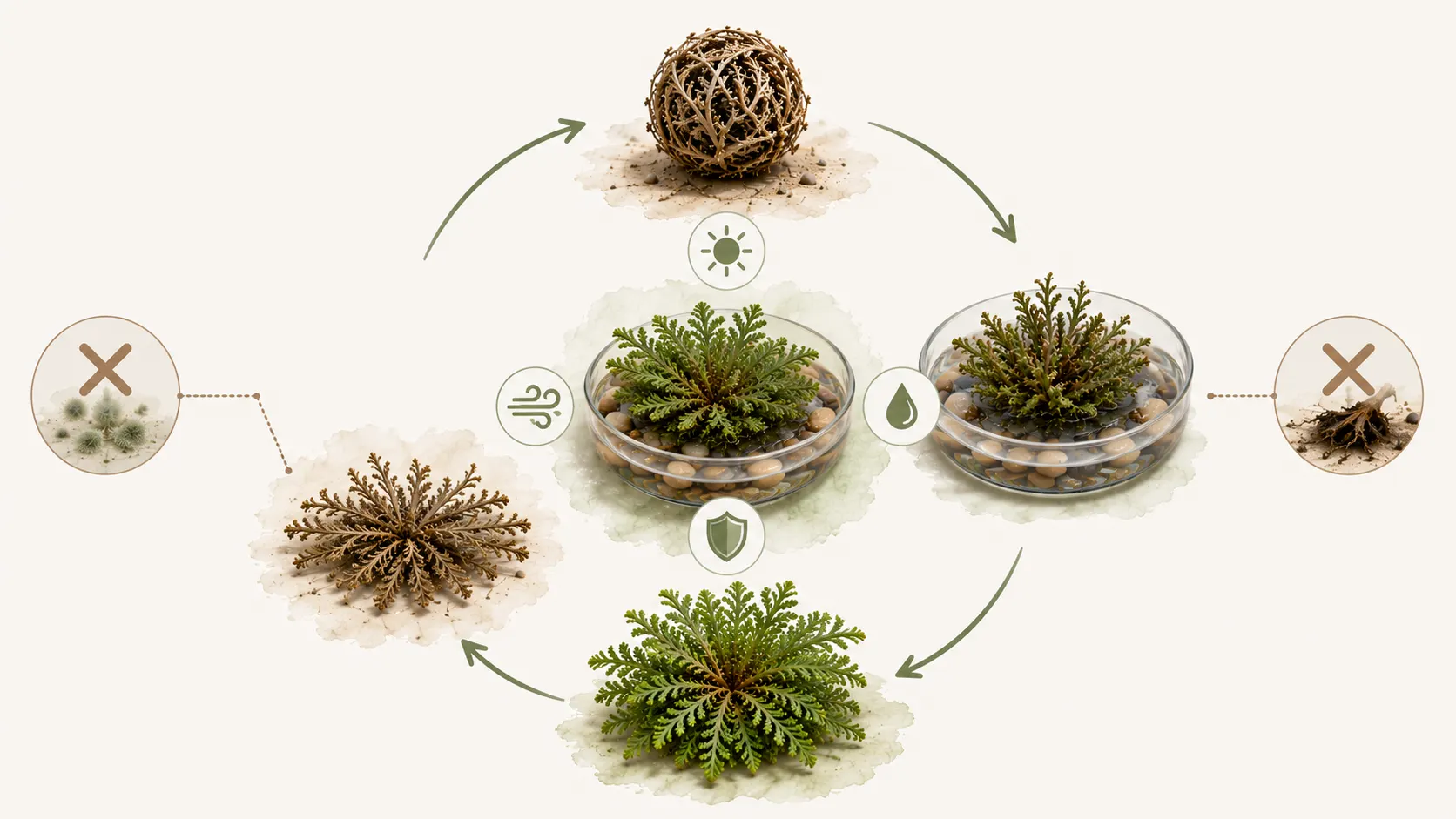
The Rose of Jericho follows a soak-and-dry cycle rather than traditional houseplant watering. Allowing the plant to fully dry between hydration periods helps prevent damage.
For the false Rose of Jericho (Selaginella lepidophylla):
- Place the dried plant in a shallow dish with pebbles and water.
- Use enough water to touch the lower part of the plant without completely submerging it.
- It usually begins opening within several hours.
- Allow it to dry completely after a few days to prevent mold and rot.
For the true Rose of Jericho (Anastatica hierochuntica):
- It may require several days of moisture exposure if it is still viable.
- A common cycle is around 4–7 days of hydration followed by a long dry rest period.
- It should remain dry for at least two weeks between cycles.
A common beginner mistake is keeping the plant constantly wet. These desert plants are adapted to drought and need periods of dryness.
Light and Temperature
Rose of Jericho plants prefer bright but indirect light. Their desert origins mean they tolerate dry environments, but indoor conditions should avoid extreme temperatures. Providing the correct lighting is essential for indoor plants, and understanding the difference between bright indirect light vs direct sunlight for plants can help prevent stress caused by unsuitable light exposure.
Ideal conditions include:
- Bright indirect sunlight
- Warm indoor temperatures
- Protection from frost
- Good air circulation
The false Rose of Jericho is generally sensitive to cold temperatures because it comes from warm desert regions. The true Rose of Jericho also prefers warm, dry conditions similar to its natural habitat.
Neither plant should be placed outdoors in freezing climates without protection.
Soil and Fertilization
Both types of Rose of Jericho can survive without soil during their dormant display phase. They are often sold as dried plants that are revived in water.
For long-term care:
- Use a sandy, well-draining growing medium if needed.
- Avoid heavy soils that retain excess moisture.
- Fertilizer is usually unnecessary.
- If fertilized, use a highly diluted amount only during active growth.
Overfertilizing can harm these plants because they naturally grow in nutrient-limited desert environments.
Can a Rose of Jericho Be Planted in Soil?
A Rose of Jericho does not require soil to demonstrate its resurrection behavior, but planting depends on the species.
The false Rose of Jericho (Selaginella lepidophylla) can be grown in a container with suitable moisture and soil conditions, but it does not behave like a typical rooted houseplant. It is mainly kept for its dehydration and revival ability.
The true Rose of Jericho can only grow as a normal plant if it is still alive and planted during its active growth stage. A dried tumbleweed-like specimen sold in stores usually cannot become a rooted plant again.
How Long Does a Rose of Jericho Last?
A Rose of Jericho can last for many years when handled correctly. The dried forms are naturally adapted to survive long periods without water. Environmental changes can influence plant behavior over time, and understanding how season affects indoor plant growth helps explain how temperature and seasonal conditions impact plant cycles.
The false Rose of Jericho may survive repeated revival cycles for years if:
- It is allowed to dry completely between uses.
- It receives good airflow.
- It is protected from mold and rot.
The true Rose of Jericho can remain dormant for months, years, or even decades under suitable dry conditions. However, repeated soaking may eventually reduce its ability to reopen.
The lifespan depends on storage conditions, plant quality, and how often it is hydrated.
Does the Rose of Jericho Smell?
A dry Rose of Jericho usually has little to no noticeable scent. When exposed to water, some plants may develop an earthy, moss-like smell caused by moisture interacting with dried plant material.
A strong unpleasant odor usually indicates a problem, such as:
- Mold growth
- Bacterial activity
- Poor airflow
- Excessive soaking
The natural scent should be mild rather than strong. Products marketed as “Rose of Jericho oil” or “Rose of Jericho perfume” are separate fragrance products and are not the same as the actual plant.
Common Problems With a Jericho Rose
Many Rose of Jericho problems happen because people treat these desert plants like regular aquatic plants. Understanding their natural dry periods is essential for keeping them healthy.
Rot or Mold From Overwatering
Rot and mold usually occur when the plant remains wet for too long without a drying period. Desert resurrection plants need cycles of moisture followed by complete dryness. Maintaining clean plant conditions also helps reduce common indoor plant issues, and simple practices like how to clean plant leaves for healthy houseplants can support better plant hygiene.
Common causes include:
- Leaving the plant sitting in water continuously
- Poor air circulation
- Using dirty containers
- Skipping drying periods
To fix the problem:
- Remove the plant from water immediately.
- Allow it to dry completely.
- Clean the container before restarting the cycle.
- Provide better airflow.
Prevent mold by following a soak-and-dry routine rather than permanent moisture.
Plant Won’t Revive or Turn Green
A Rose of Jericho may fail to revive for several reasons, including incorrect identification, old plant material, or improper soaking.
Possible causes include:
- Buying a dead or poor-quality specimen
- Purchasing a true Rose of Jericho expecting false Rose behavior
- Not allowing enough hydration time
- Using extremely cold water
Solutions include:
- Confirming the scientific name before buying.
- Giving the plant adequate time to respond.
- Using clean, room-temperature water.
- Avoiding repeated stress from unnecessary handling.
Fading Color or Slow Revival Over Time
A Rose of Jericho may naturally become slower to reopen after many revival cycles. Aging plant material and repeated dehydration can gradually reduce its appearance.
Other causes of fading include:
- Too much direct sunlight
- Incomplete drying between cycles
- Poor water quality
- Mold damage
A slower revival does not always mean the plant is dead. Some decline is a natural part of aging.
Content Differentiation: Beginner Mistakes When Buying a Rose of Jericho
Many beginners purchase a Rose of Jericho without checking the scientific name, which leads to confusion about care and expectations.
Common buying mistakes include:
- Assuming every Rose of Jericho is the same species.
- Buying a false Rose of Jericho while searching specifically for the true species.
- Expecting the true Rose of Jericho to revive indefinitely after being uprooted.
- Choosing based only on appearance rather than botanical identity.
The best way to avoid mistakes is to look for the scientific name:
- Anastatica hierochuntica = true Rose of Jericho
- Selaginella lepidophylla = false Rose of Jericho and true resurrection plant
Conclusion
The term Rose of Jericho vs false Rose of Jericho describes two completely different desert plants that share a popular nickname. The true Rose of Jericho (Anastatica hierochuntica) is a tumbleweed from the mustard family, while the false Rose of Jericho (Selaginella lepidophylla) is a resurrection spikemoss capable of repeated revival after dehydration.
The most important step when buying a Rose of Jericho is checking the scientific name. Understanding the difference between these plants ensures proper care, realistic expectations, and a better appreciation of their unique desert survival adaptations.
FAQs
What is the difference between the Rose of Jericho and the false Rose of Jericho?
The main difference is their biology and revival ability. The true Rose of Jericho (Anastatica hierochuntica) is a desert tumbleweed that only revives while still viable and rooted, while the false Rose of Jericho (Selaginella lepidophylla) is a true resurrection plant that can revive after complete drying without roots.
What are common problems with a Jericho Rose?
Common problems include mold, rot, failure to reopen, and fading color. These issues usually happen because the plant is kept wet too long, lacks airflow, or is incorrectly identified.
What is another name for the Rose of Jericho?
Other names for the Rose of Jericho include resurrection plant, resurrection moss, stone flower, dinosaur plant, siempre viva, doradilla, and Jericho flower.
Does the Rose of Jericho smell?
A Rose of Jericho usually has little smell when dry. When wet, it may produce a mild earthy or moss-like scent. A strong unpleasant odor usually indicates mold or decay.
How long does a Rose of Jericho last?
A Rose of Jericho can last many years with proper care. The false Rose of Jericho can survive repeated revival cycles, while the true Rose of Jericho can remain dormant for years under dry conditions.
Can you drink Rose of Jericho water?
Rose of Jericho water has been used in some traditional practices, but these uses are based on folklore rather than proven medical benefits. It should not be considered a medical treatment.
What is the true Rose of Jericho?
The true Rose of Jericho is Anastatica hierochuntica, a desert plant in the mustard family (Brassicaceae) native to the Middle East and North Africa. It is different from the false Rose of Jericho, Selaginella lepidophylla, which is the well-known resurrection spikemoss.