Introduction
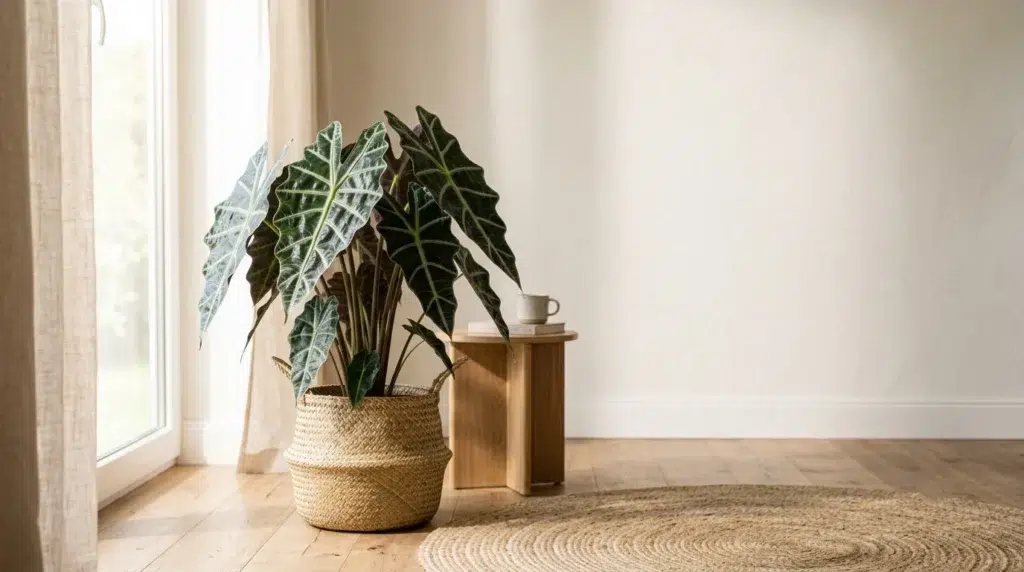
Alocasia plant care depends on replicating the warm, humid, filtered-light conditions of a tropical understory. These striking foliage plants, known for their arrow- or shield-shaped leaves, are prized as houseplants but have a reputation for being finicky. With consistent moisture, bright indirect light, and well-draining soil, Alocasia can thrive indoors year-round. This guide covers every core requirement, common problem, and care distinction across popular varieties, so you can grow a healthy, long-lived Alocasia.
Quick Summary
- Alocasia needs bright, indirect light, evenly moist (not soggy) soil, and humidity above 60% to thrive.
- Most care problems—yellowing leaves, drooping, or dormancy—trace back to overwatering, low humidity, or inconsistent light.
- Alocasia goes dormant in low light or cool temperatures; this is normal and reversible with proper care.
- Different varieties (Amazonica, Zebrina, Stingray, Sarian) share the same core needs but vary in size, light tolerance, and growth habit.
- Alocasia is propagated primarily through corm division, not stem cuttings.
What Is Alocasia?
Alocasia is a genus of rhizomatous, tropical perennial plants in the family Araceae, native to Asia and Eastern Australia. Commonly called “elephant ear” plants, Alocasia species are grown for their large, dramatically shaped leaves, which range from arrow-shaped to shield-like, often with prominent veining or metallic coloring. Horticultural sources classify Alocasia within the Araceae family, alongside Philodendron and Monstera, which explains why these plants share similar humidity and drainage sensitivities despite their different leaf shapes.
There are over 90 recognized Alocasia species, along with numerous hybrids and cultivars sold as houseplants. Popular varieties include Alocasia Amazonica, Alocasia Zebrina, Alocasia Stingray, and Alocasia Sarian, each with distinct leaf shapes but similar underlying care needs. Alocasia is a genus of rhizomatous, tropical perennial plants in the family Araceae, native to Asia and Eastern Australia” gets “family Araceae“.
Alocasia grows from an underground corm, a starchy storage stem that allows the plant to survive dormancy and regenerate new growth. This corm structure is also the basis for propagation, covered later in this guide.
How Do You Care for Alocasia Indoors?
Alocasia care indoors centers on four consistent factors: bright indirect light, evenly moist soil, high humidity, and warm, stable temperatures between 65–80°F (18–27°C). Meeting all four simultaneously—rather than just one or two—is what determines whether the plant thrives or struggles.
Indoor growers should avoid two extremes: drying the plant out between waterings, and leaving it in cold, drafty, or low-humidity rooms. Alocasia is more sensitive to inconsistency than to any single factor in isolation. A stable routine matters more than any one “perfect” condition.
- Place near an east- or north-facing window, or a few feet back from a south/west window
- Water when the top 1–2 inches of soil are dry
- Maintain humidity above 60% using a humidifier, pebble tray, or bathroom placement
- Keep away from cold drafts, air conditioning vents, and heaters
Light Requirements for Alocasia
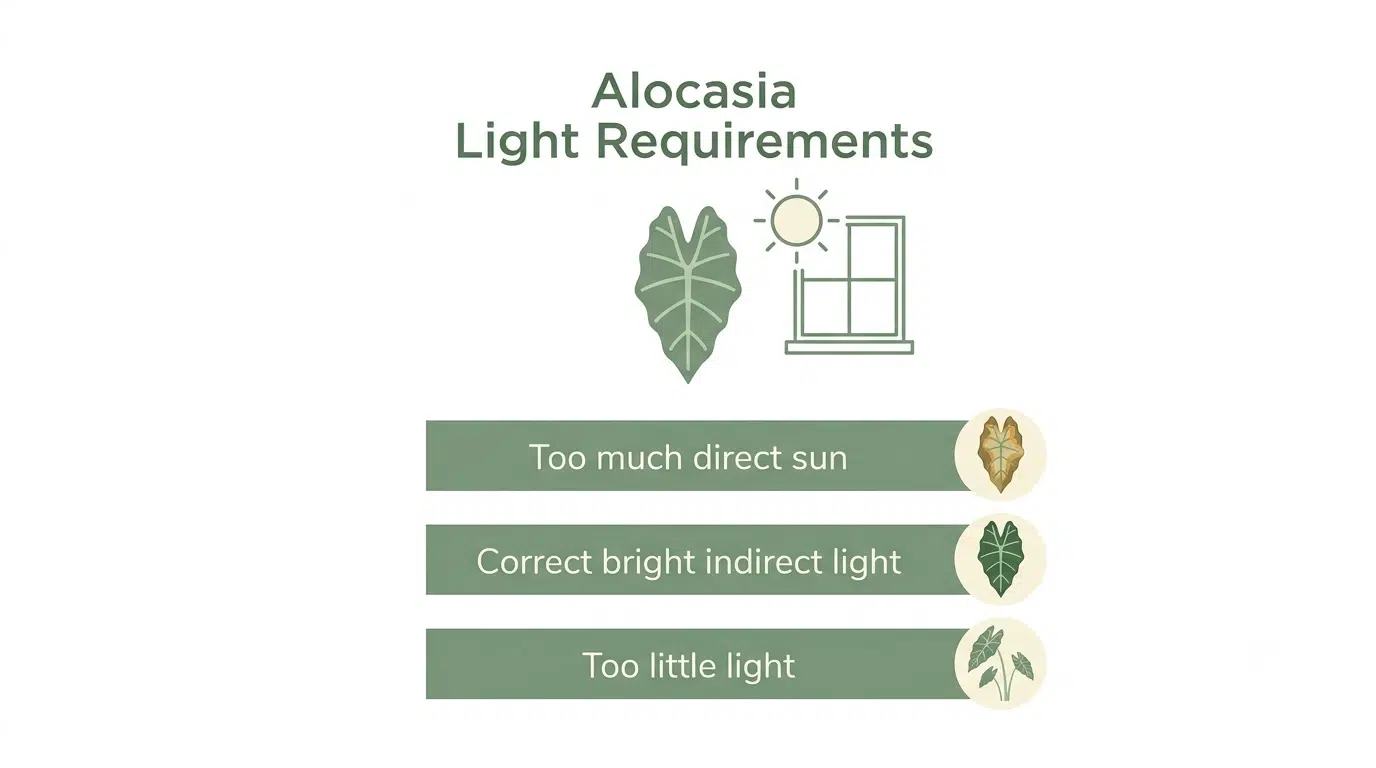
Alocasia needs bright, indirect light for at least 6–8 hours a day. Direct, unfiltered sunlight—especially through south- or west-facing windows in summer—can scorch the leaves, while too little light causes leggy growth and smaller leaves.
Signs of Incorrect Light
- Too much direct light: Brown, crispy patches or bleached spots on leaves
- Too little light: Slow growth, small new leaves, and a stretched, sparse appearance
- Correct light: Rich, even leaf color and steady production of new leaves
An unobstructed east-facing window is generally ideal, providing gentle morning sun without the intensity of afternoon light. Grow lights are a practical substitute in low-light rooms, particularly during winter months when natural light is weaker.
Watering Alocasia: Top or Bottom?
Alocasia should be watered from the top, allowing water to flow through the soil and out the drainage holes, rather than watered from the bottom. Top watering flushes out mineral buildup and salts that accumulate from fertilizer and tap water, which bottom watering does not address.
The general rule is to water when the top 1–2 inches of soil feel dry to the touch, then water thoroughly until it drains from the pot’s base. Never let the pot sit in standing water, as this leads to root rot—one of the most common causes of Alocasia decline.
Practical Watering Schedule
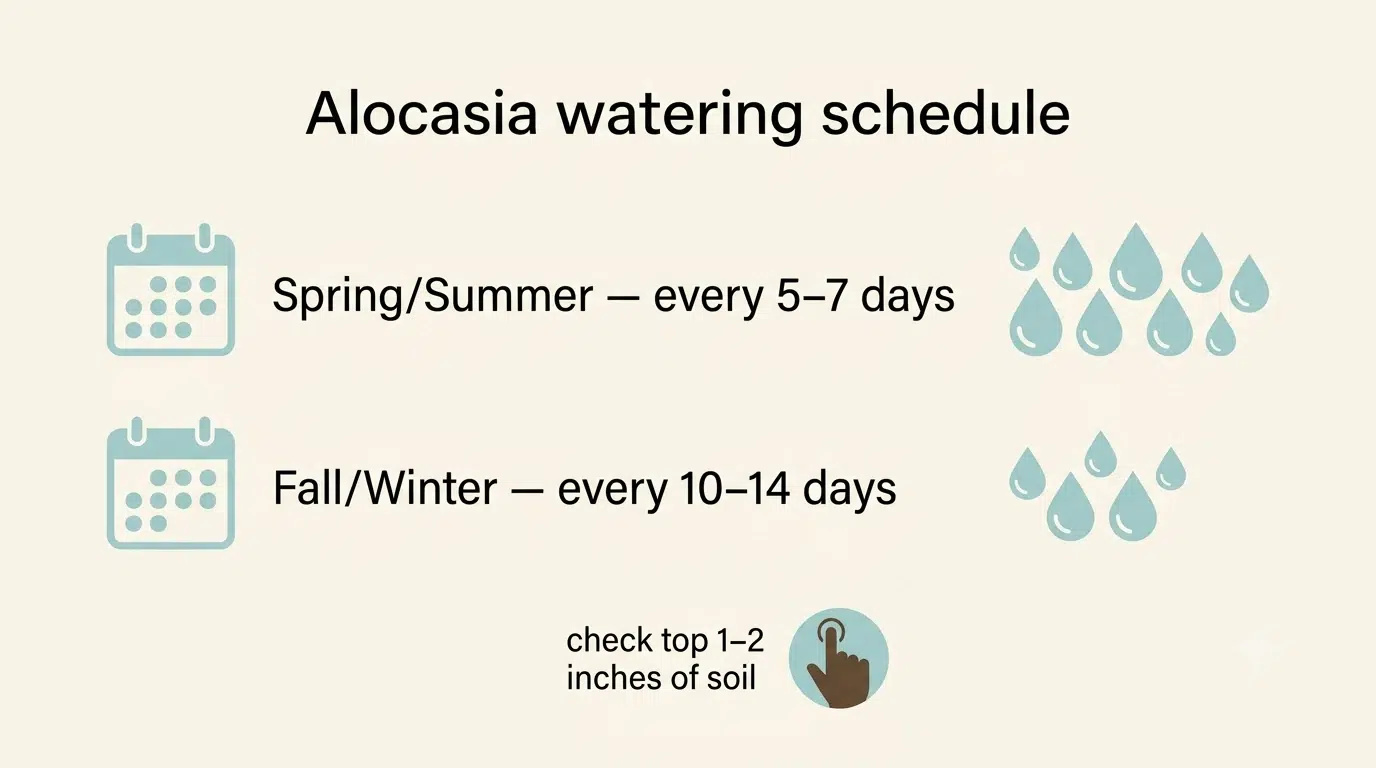
- Spring/summer (active growth): Roughly every 5–7 days, adjusted for pot size and light
- Fall/winter (slower growth or dormancy): Every 10–14 days, or less if the plant has gone dormant
- Signs of overwatering: Yellowing lower leaves, mushy stems, soggy soil that stays wet for days
- Signs of underwatering: Curling, drooping leaves and dry, pulling-away soil
A common beginner mistake is watering on a fixed calendar schedule rather than checking soil moisture directly, which does not account for seasonal changes in light, temperature, and humidity.
Best Soil and Pot Type for Alocasia
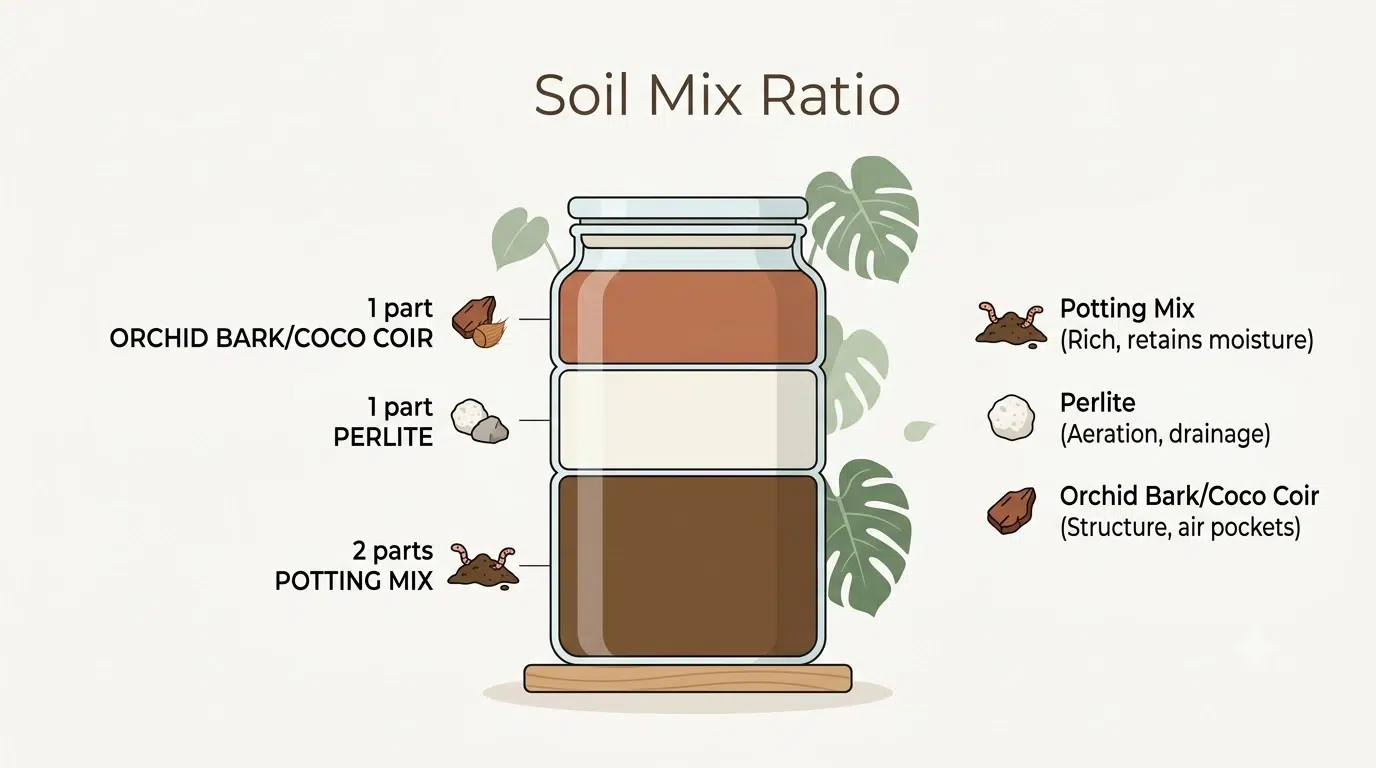
Alocasia needs a light, well-draining, chunky soil mix that retains some moisture without becoming compacted or waterlogged. A standard houseplant potting mix is usually too dense on its own.
Recommended Soil Mix
- 2 parts standard potting mix
- 1 part perlite or pumice (for drainage and aeration)
- 1 part orchid bark or coco coir (for structure and moisture retention)
Do Alocasia like deep or shallow pots? Alocasia prefers a pot that is only slightly larger than its root ball and corm, rather than a deep or oversized container. Excess unused soil retains moisture longer than the roots can absorb, increasing the risk of root rot. A pot with ample drainage holes is essential regardless of depth.
Humidity and Temperature Needs
Alocasia requires humidity levels of 60% or higher and consistent warmth between 65–80°F (18–27°C) to maintain healthy, unblemished leaves. Native to humid tropical forests, these plants are highly sensitive to dry indoor air, especially during winter when heating systems reduce ambient humidity.
Ways to Increase Humidity
- Run a humidifier near the plant
- Group plants together to create a shared humid microclimate
- Use a pebble tray with water beneath (not touching) the pot
- Avoid placing Alocasia near heat vents, radiators, or drafty windows
Should I put my Alocasia in the bathroom? A bright, humid bathroom can work well for Alocasia if it receives adequate indirect natural light, since bathrooms typically have higher ambient humidity from showers. Without sufficient light, however, the plant will decline regardless of humidity levels.
Fertilizing Alocasia: What Is the Best Food for Alocasia?
The best fertilizer for Alocasia is a balanced, water-soluble houseplant fertilizer (such as a 20-20-20 or similar NPK ratio) applied at half strength every 4–6 weeks during the active growing season (spring through early fall). Alocasia should not be fertilized during dormancy or winter slowdown, as the plant cannot use the nutrients and excess fertilizer can burn the roots. If you’d rather track feeding dates and strength across seasons instead of memorizing them, this printable Alocasia feeding and care schedule spreadsheet lays out fertilizer strength and frequency by month. It works well as a copyable reference sheet for your own plant journal.
Are coffee grounds good for Alocasia? Coffee grounds are not recommended as a primary fertilizer for Alocasia, since they acidify soil unevenly, can promote mold in indoor pots, and lack a balanced nutrient profile. A diluted, balanced liquid fertilizer is a more reliable and controllable source of nutrition.
Table: Alocasia Feeding Schedule
| Season | Feeding Frequency | Fertilizer Strength |
| Spring | Every 4 weeks | Half strength |
| Summer | Every 4–6 weeks | Half strength |
| Fall | Every 6–8 weeks, tapering off | Quarter strength |
| Winter/Dormancy | None | N/A |
Why Is Alocasia So Hard to Keep Alive?
Alocasia has a reputation for being difficult primarily because it requires several specific conditions—high humidity, consistent moisture without waterlogging, warm temperatures, and bright indirect light—to be met simultaneously, and it reacts visibly and quickly when any one of them is off. Unlike more forgiving houseplants, Alocasia does not tolerate wide swings in care.
The plant’s sensitivity to overwatering is often the biggest hurdle: many growers respond to drooping leaves (a sign of both over- and under-watering) by adding more water, which worsens root rot if the actual cause was excess moisture. Learning to check soil moisture directly, rather than reacting to leaf appearance alone, resolves most of these issues. After years of troubleshooting Alocasia in home growing conditions, the most overlooked fix is checking soil moisture by hand rather than reacting to how the leaves look.
Common Alocasia Problems and How to Fix Them
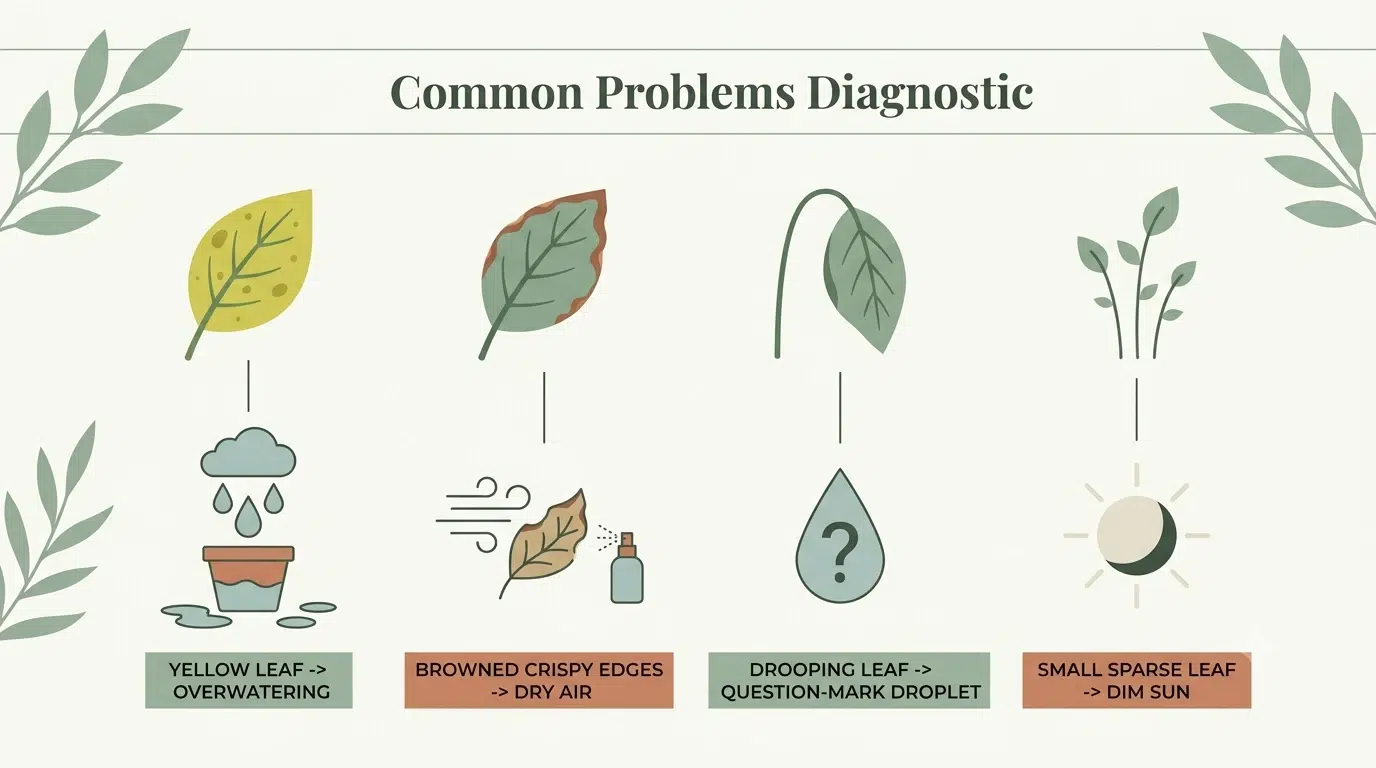
Most Alocasia problems stem from watering inconsistency, low humidity, insufficient light, or pest infestations, and each presents with distinct, identifiable symptoms. For a deeper diagnostic breakdown beyond this table, the Aroid Alocasia houseplant care database on Notion organizes symptoms, causes, and treatment notes by species in a searchable format. It’s a handy bookmark if you’re troubleshooting a specific Alocasia variety rather than general symptoms.
Table: Alocasia Problems, Causes, and Fixes
| Symptom | Likely Cause | Fix |
| Yellow leaves (lower/older first) | Overwatering or natural aging | Check soil moisture; let dry before next watering |
| Brown, crispy leaf edges | Low humidity or underwatering | Increase humidity; water more consistently |
| Drooping leaves | Over- or under-watering | Check soil moisture directly before acting |
| Small, sparse new growth | Insufficient light | Move to brighter indirect light |
| Sudden leaf loss / plant going bare | Dormancy or shock | Reduce watering; wait for regrowth (see Dormancy section) |
| Sticky residue, webbing, or spots | Pest infestation (spider mites, aphids) | Isolate plant; treat with insecticidal soap |
How to tell if Alocasia is happy: A healthy Alocasia produces new leaves regularly during the growing season, holds firm and upright foliage, and shows even, rich leaf coloring without curling, spotting, or crisping at the edges.
Alocasia Dormancy: How to Wake It Up
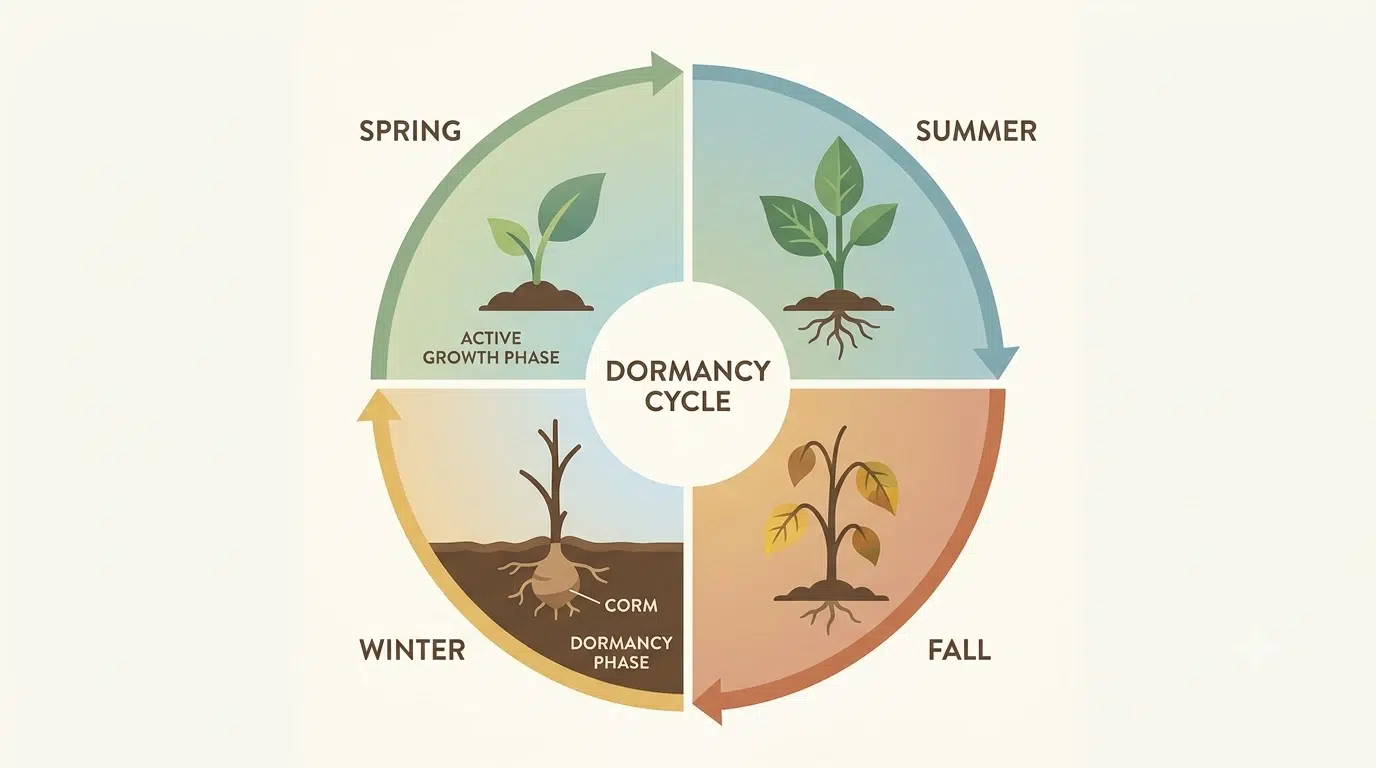
Alocasia dormancy is a natural rest period, typically triggered by shorter days, cooler temperatures, or reduced light in fall and winter, during which the plant drops some or all of its leaves and growth stops. This is a survival mechanism, not a sign the plant is dying, and the corm remains alive underground.
How to Wake Up a Dormant Alocasia
- Reduce watering significantly, allowing soil to dry out more between waterings
- Keep the corm in its pot in a warm spot (above 60°F / 15°C)
- Resume normal watering and light exposure once new growth or increasing day length signals the plant is exiting dormancy, usually in spring
- Avoid fertilizing until active new growth appears
Patience is essential during dormancy; overwatering a dormant Alocasia in an attempt to “help” it is one of the most common causes of corm rot.
How to Revive a Dying Alocasia
Reviving a dying Alocasia starts with correctly identifying whether the cause is overwatering, underwatering, low humidity, or dormancy, since the fix for each is different and applying the wrong one can accelerate decline.
Step-by-Step Revival Process
- Inspect the roots and corm. Remove the plant from its pot and check for firm, white-to-tan roots. Dark, mushy, or foul-smelling roots indicate rot.
- Trim any rotten roots or corm tissue with a clean, sharp tool, cutting back to healthy material.
- Repot in fresh, well-draining soil (see soil mix above), using a pot only slightly larger than the root mass.
- Adjust watering based on the diagnosed cause—less frequent if rot was present, more consistent if the soil was bone-dry.
- Increase humidity and light to reduce ongoing stress while the plant recovers.
- Wait. Recovery can take several weeks to months, particularly if the plant is regrowing from a surviving corm.
If all leaves are lost but the corm remains firm, the plant is likely dormant or recovering rather than dead, and new growth can still emerge.
Alocasia Varieties and Their Care Differences
While all Alocasia varieties share the same core care requirements, they differ in size, light tolerance, and growth habits, which affects placement and maintenance.
Table: Alocasia Variety Comparison
| Variety | Notable Feature | Size | Light Tolerance | Detailed Guide |
| Alocasia Amazonica | Deep green, arrow-shaped leaves with white veins | Medium (2–3 ft) | Bright indirect | Alocasia Amazonica care guide |
| Alocasia Zebrina | Distinctive zebra-striped stems | Medium–large (2–4 ft) | Bright indirect, tolerates slightly lower light | Alocasia Zebrina care guide |
| Alocasia Stingray | Unique stingray-tail-shaped leaves | Medium (2–3 ft) | Bright indirect | Alocasia Stingray care guide |
| Alocasia Sarian | Large leaves with bold white veining | Large (3–5 ft) | Bright indirect | Alocasia Sarian care guide |
What is the easiest Alocasia to care for? Alocasia Zebrina and Alocasia Amazonica are generally considered among the easier varieties, as they tolerate a slightly wider humidity and light range than more sensitive types like Alocasia Frydek. For variety-specific watering schedules, leaf care, and troubleshooting, see the linked guides above. Growers who want a technical, structured breakdown of variety-by-variety requirements — light lux ranges, soil pH, humidity thresholds — can check this open-source Alocasia care reference database for raw, comparative specs across cultivars. It’s especially useful if you’re cross-checking multiple varieties side by side rather than reading guide-by-guide.
Alocasia Care Indoors vs. Outdoors
Alocasia can be grown outdoors in USDA hardiness zones 10–11, where temperatures stay reliably above 50°F (10°C), but is grown as a houseplant everywhere else due to its intolerance of cold and frost.
Table: Indoor vs. Outdoor Alocasia Care
| Factor | Indoor | Outdoor (Zones 10–11) |
| Light | Bright indirect near a window or grow light | Filtered sun or partial shade |
| Humidity | Requires supplemental humidification | Naturally higher, less maintenance needed |
| Temperature control | Managed via heating/cooling | Dependent on climate; frost-sensitive |
| Watering | More frequent monitoring needed | Rainfall may supplement watering |
| Dormancy | Common in low-light winters | Less pronounced in consistently warm climates |
Outdoor Alocasia grown in marginal climates should be brought indoors or given corm protection before the first frost, since even brief cold exposure can kill the corm.
How to Propagate Alocasia
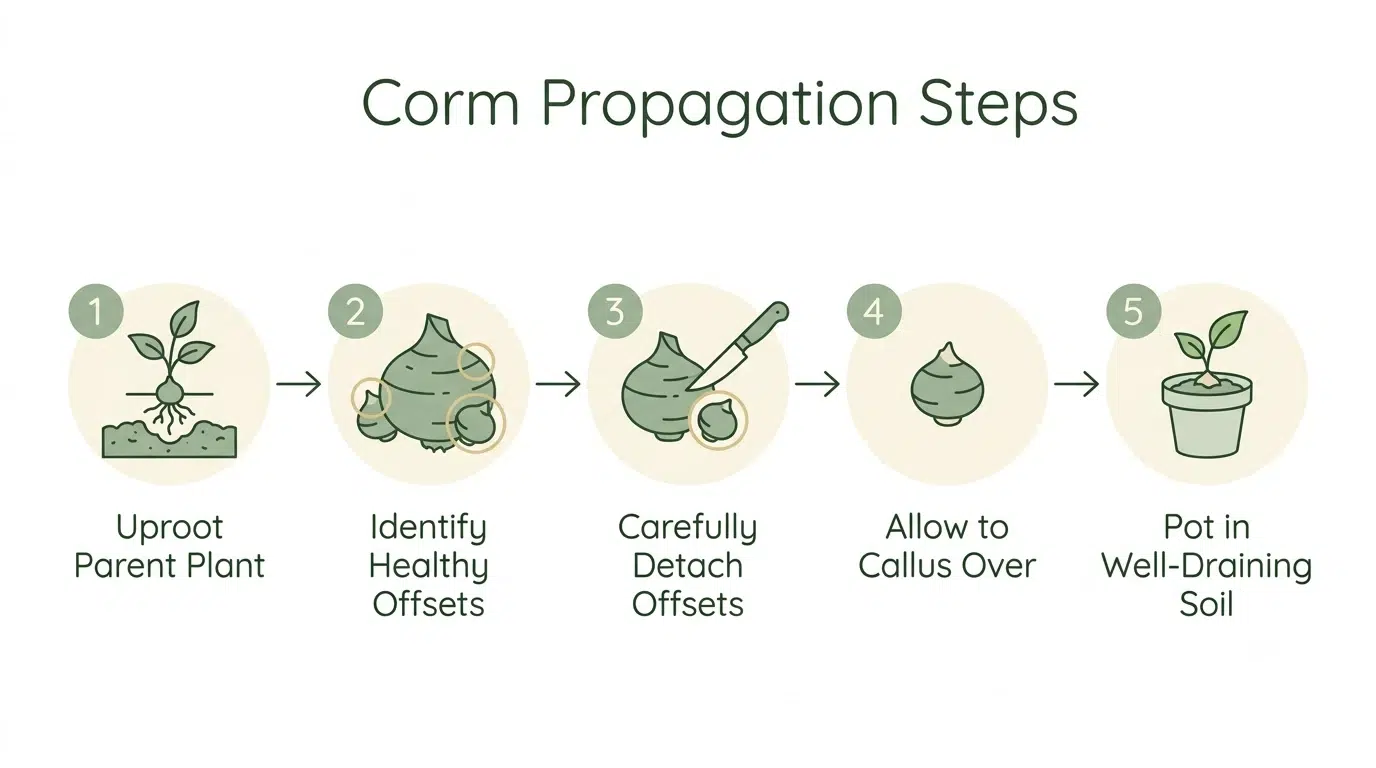
Alocasia is propagated primarily through corm division, since the plant grows from an underground rhizomatous corm rather than producing viable stem cuttings like many other houseplants.
Corm Division Overview
- Remove the parent plant from its pot and gently clear soil from the root and corm area.
- Locate offset corms (small, bulb-like growths attached to the main corm), which often already have small roots or emerging shoots.
- Separate offset corms using a clean, sharp knife, ensuring each division has some root material attached where possible.
- Allow cut surfaces to callus for a few hours before planting.
- Pot each division in a well-draining mix and maintain high humidity until new growth appears.
Corms without visible roots or shoots can still be viable; they may take several weeks to sprout under warm, humid conditions. For a full step-by-step walkthrough, including how to identify healthy corms and aftercare timelines, see the complete guide to propagating Alocasia corms.
Conclusion
Alocasia plant care comes down to consistency: bright indirect light, evenly moist soil, humidity above 60%, and stable warm temperatures. Most problems that make Alocasia seem difficult—yellowing leaves, drooping, dormancy, or slow decline—trace back to a gap in one of these core needs rather than a fundamentally fragile plant. Once watering habits are calibrated to soil moisture rather than a fixed schedule, and humidity is properly managed, Alocasia can be a resilient, long-lived houseplant that regularly produces striking new foliage. Understanding variety-specific differences and propagation through corm division further extends how the plant can be grown, shared, and maintained over the years.
Frequently Asked Questions
How do you care for Alocasia indoors?
Alocasia indoors needs bright indirect light, soil kept evenly moist but not soggy, humidity above 60%, and stable temperatures between 65–80°F, with fertilizing limited to the active growing season.
Will Alocasia grow in just water?
Alocasia can grow in water for a limited time, particularly during propagation, but it is not a sustainable long-term growing method since the plant needs the aeration and nutrient access that soil provides for healthy corm and root development.
What is the lifespan of an Alocasia?
Alocasia can live for many years, often 5–10 years or longer indoors, with proper care, since the plant regenerates through its corm system even after periods of dormancy or leaf loss.
What's the hardest houseplant to keep alive?
Alocasia is frequently cited among the hardest common houseplants to keep alive, due to its narrow tolerance for inconsistent watering, low humidity, and unstable temperatures compared to more forgiving houseplants like pothos or snake plants.
How quickly does Alocasia grow?
Alocasia grows at a moderate to fast rate during its active growing season in spring and summer, often producing a new leaf every few weeks, but growth slows or stops entirely during dormancy in fall and winter.
Does Alocasia need a lot of sunlight?
Alocasia needs bright, indirect sunlight for 6–8 hours daily, but not direct, intense sunlight, which can scorch its leaves; too little light instead causes weak, leggy growth.
Is Miracle-Gro potting mix good for Alocasia?
Standard Miracle-Gro potting mix is generally too dense and moisture-retentive for Alocasia on its own, and performs better when amended with perlite and orchid bark to improve drainage and prevent root rot.