
Introduction
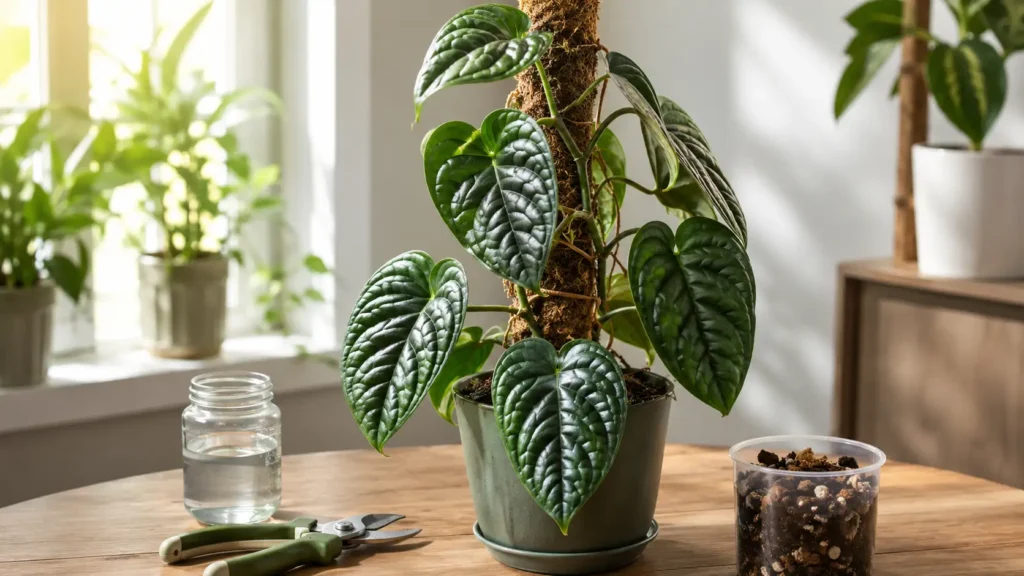
Monstera Peru, scientifically known as Monstera karstenianum, is a tropical climbing plant prized for its thick, deeply textured leaves. Learning how to propagate Monstera Peru is one of the most effective ways to multiply healthy plants or rejuvenate a mature specimen. Unlike some houseplants that root from leaves alone, Monstera Peru requires stem cuttings containing at least one node. Whether you choose water or soil propagation, understanding proper cutting selection, rooting conditions, and post-propagation care greatly improves success. This guide explains each step clearly, helping beginners and experienced plant enthusiasts propagate Monstera Peru confidently.
Quick Summary
- Monstera Peru, also called Peru Monstera or Monstera karstenianum, is best propagated using stem cuttings with at least one healthy node.
- Water propagation allows you to monitor root development, while soil propagation minimizes transplant shock.
- The plant grows at a slow-to-moderate pace and thrives in warm temperatures, bright indirect light, and moderate to high humidity.
- Most propagation failures result from missing nodes, excess moisture, stagnant water, or inadequate humidity rather than the plant being difficult to grow.
What Is Monstera Peru?
Monstera Peru, or Monstera karstenianum, is a distinct species within the Monstera genus of the Araceae family. It is not a hybrid or marketing nickname but a recognized tropical aroid native to parts of Central and South America. Its signature feature is its thick, leathery foliage with a heavily textured, almost quilted appearance. The thick, waxy texture of Monstera Peru leaves is also a characteristic found in several other indoor plants, which are covered in the Ultimate Guide to House Plants with Waxy Leaves: 7+ Easy Types.
A common question is, “Is Monstera Peru a true Monstera?” The answer is yes. It belongs to the Monstera genus, although its leaves differ significantly from species that develop large splits or holes. The Monstera genus belongs to the Araceae family and includes several tropical climbing plants with diverse leaf structures and growth habits. More botanical information about the genus can be found on Wikipedia.
Monstera Peru vs Other Monstera Varieties
Compared with other popular Monstera species:
- Monstera deliciosa develops large fenestrated leaves as it matures.
- Monstera adansonii has thinner leaves with numerous natural holes.
- Monstera karstenianum (Monstera Peru) produces thick, glossy, textured leaves that typically remain entire without developing dramatic fenestrations.
Although their appearance differs, all share similar tropical growing preferences, including bright indirect light and support for climbing.
Is Monstera Peru Rare or Expensive?
Monstera Peru is not considered a truly rare houseplant, although availability varies by region. It was once uncommon in cultivation, but increased commercial propagation has made it much easier to purchase.
Some people associate Monstera Peru with reports of Monstera plants selling for thousands of dollars. Those record-breaking sales involved rare variegated Monstera cultivars, particularly highly variegated forms of Monstera deliciosa, rather than Monstera Peru itself. While healthy Monstera Peru plants may cost more than common houseplants, they are generally far less expensive than rare collector varieties.
Monstera Peru Growth Habits
Monstera Peru is a climbing vine rather than a crawling plant. In its natural habitat, it climbs trees using aerial roots to reach brighter light. Indoors, it benefits from moss poles, wooden stakes, or trellises that encourage larger leaves and healthier growth.
Many growers ask whether Monstera Peru is a slow grower. It is best described as slow to moderate, with growth depending on warmth, light, humidity, and nutrition.
Its climbing habit also affects propagation:
- Nodes are spaced along the stem.
- Aerial roots often emerge near nodes.
- Cuttings with active aerial roots frequently establish faster.
Growth Rate and Seasonal Patterns
Monstera Peru grows most actively during spring and summer when temperatures are warm and daylight is abundant.
Growth characteristics include:
- Faster vine extension during the growing season.
- Slower growth during autumn.
- Partial dormancy throughout winter.
- Better propagation success during active growth because cuttings produce roots more readily.
How to Propagate Monstera Peru (Step-by-Step)
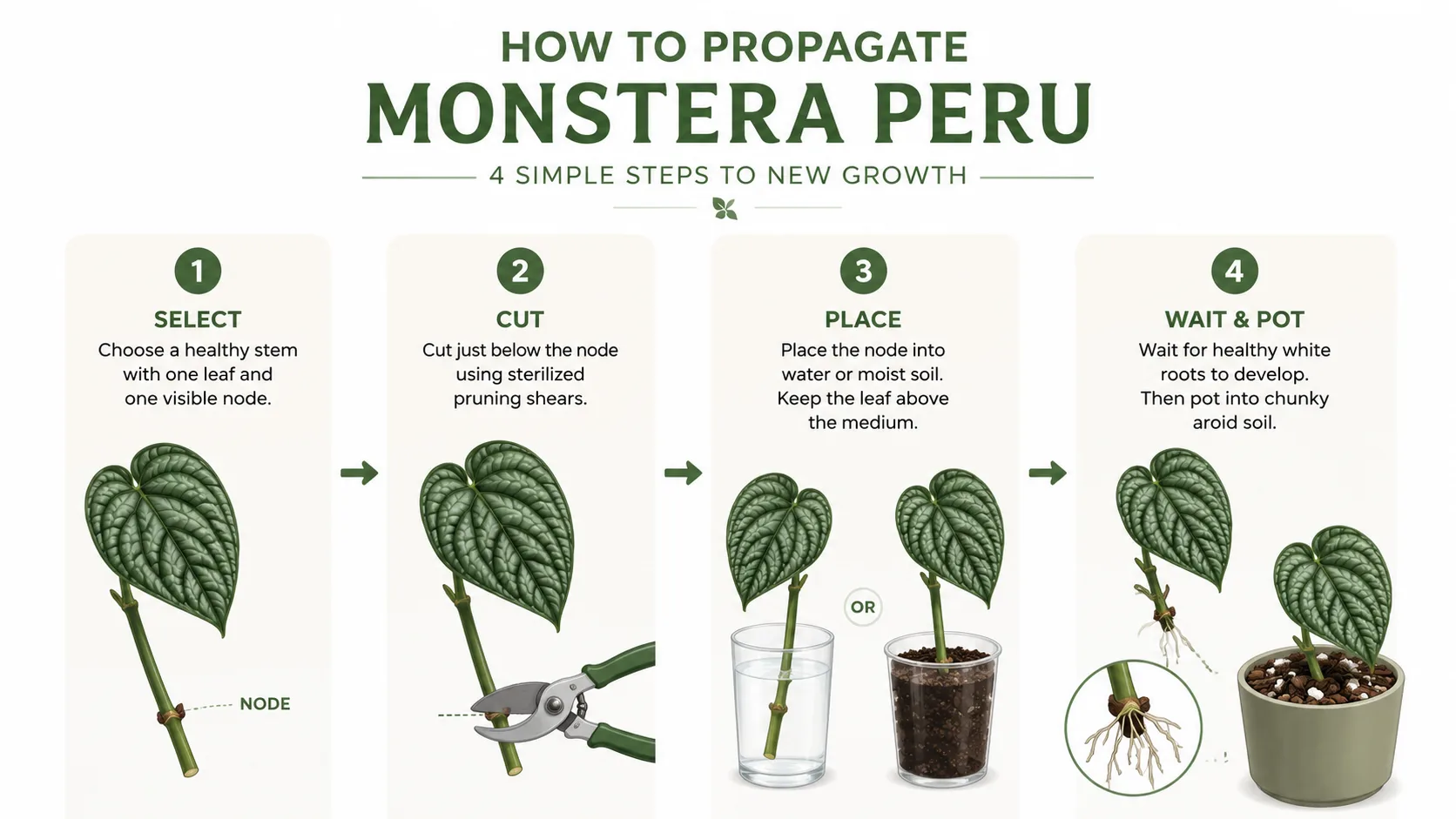
The best way to propagate Monstera Peru is by taking a healthy stem cutting that contains at least one node. Leaves alone cannot produce a new plant. Understanding how to identify a healthy node is essential for successful propagation, as the Monstera Plant Node: Identification, Propagation & Care Guide explains how nodes develop and support new root growth.
Follow these steps:
- Select a healthy vine with mature leaves.
- Identify a node below a leaf.
- Sterilize sharp pruning shears.
- Cut just below the node.
- Place the cutting in water or moist potting mix.
- Keep the cutting warm with bright indirect light.
- Wait for roots to develop.
- Pot the rooted cutting into a well-draining aroid soil mix.
Propagating Monstera Peru in Water
Yes, Monstera Peru roots well in water when the node remains submerged.
For successful water propagation:
- Place only the node under water.
- Keep leaves above the waterline.
- Replace the water every 5–7 days.
- Use clean containers to reduce bacterial growth.
- Maintain temperatures between 20–27°C (68–80°F).
Root development commonly begins within 2–6 weeks, although timing depends on environmental conditions. Similar propagation techniques are used across other tropical aroids, although plants such as Alocasia require different methods, including corm propagation, as explained in the How to Propagate Alocasia Corms Guide.
Propagating Monstera Peru Directly in Soil
Yes, you can propagate Monstera Peru directly in soil.
This method involves planting the cutting in a lightly moist, well-draining substrate while keeping humidity relatively high. Covering the cutting with a humidity dome or clear plastic bag can help reduce moisture loss during early rooting.
Direct soil propagation often produces roots already adapted to potting media, reducing transplant stress later.
Water Propagation vs Soil Propagation
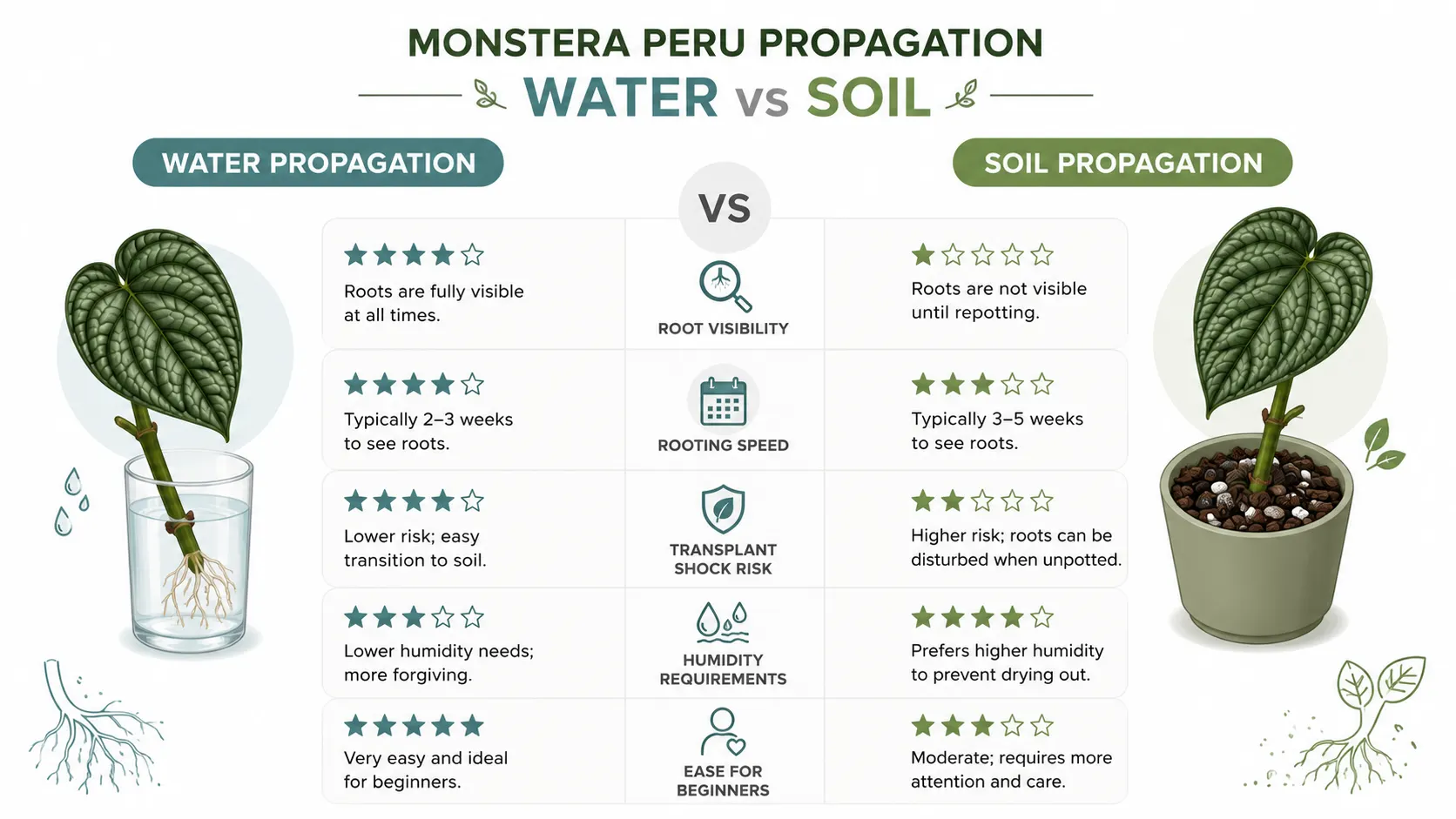
| Factor | Water Propagation | Soil Propagation |
| Root visibility | High | None until unpotted |
| Speed to rooting | Moderate | Slower initial signs |
| Transplant shock risk | Higher during transition | Lower |
| Humidity needs | Lower | Higher; humidity dome often helpful |
Why Is My Monstera Peru Cutting Not Rooting?
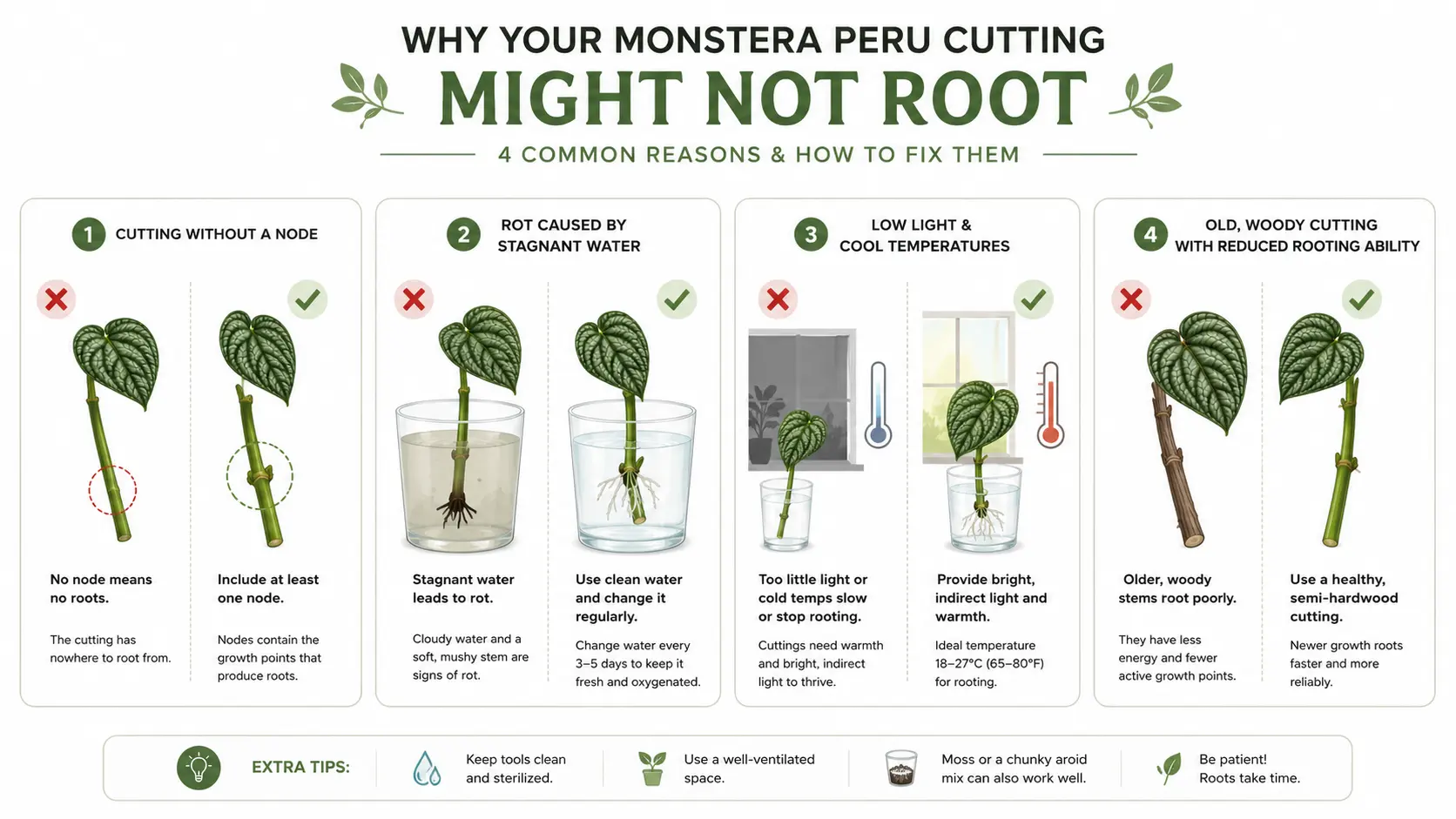
Most Monstera Peru cuttings fail because one or more rooting conditions are missing rather than because the plant is difficult.
Common problems, causes, and solutions include:
| Problem | Likely Cause | Recommended Fix |
| No roots forming | Cutting lacks a node | Use a cutting with at least one node |
| Stem becoming soft | Rot from stagnant water | Change water regularly or improve drainage |
| Very slow rooting | Low temperatures or insufficient light | Increase warmth and provide bright indirect light |
| Old woody cutting | Reduced vigor | Select younger, healthier vines |
Checking these factors usually resolves rooting problems before replacing the cutting.
Common Mistakes in Monstera Propagation
Several avoidable mistakes reduce propagation success.
Common mistakes include:
- Taking cuttings without a node.
- Overwatering the rooting medium.
- Leaving propagation water unchanged for long periods.
- Providing insufficient indirect light.
- Moving cuttings into soil before roots develop adequately.
- Planting into oversized pots that retain excessive moisture.
- Ignoring humidity during early root formation.
Many beginners assume watering more frequently speeds rooting, but excessive moisture often encourages stem rot instead.
Monstera Peru Care After Propagation
Once roots become established, ongoing Monstera Peru care, Monstera karstenianum care, or Monstera sp. Peru care focuses on maintaining stable environmental conditions that encourage continued growth.
Light, Water, and Humidity Needs
After propagation:
- Provide bright indirect sunlight.
- Water when the top few centimeters of soil become dry.
- Use well-draining aroid soil.
- Maintain humidity around 60% or higher when possible.
- Fertilize lightly during spring and summer with a balanced houseplant fertilizer.
Avoid prolonged direct afternoon sun, which may scorch leaves.
Do Monsteras Go Into Shock After Repotting?
Yes. Monsteras can experience transplant shock after repotting.
Symptoms may include:
- Temporary drooping.
- Slight yellowing.
- Slower growth.
- Mild leaf curling.
Most healthy plants recover within one to three weeks when watering remains consistent and environmental conditions stay stable.
How Long Can Monstera Peru Go Without Water?
Many people ask whether a Monstera can survive two weeks without water.
A healthy Monstera Peru may tolerate about one to two weeks between waterings depending on temperature, humidity, pot size, and soil type. However, repeated drought stress reduces growth and may damage roots.
Signs of underwatering include:
- Curling leaves.
- Dry soil.
- Limp stems.
- Crispy leaf edges.
Pot Size and Depth Preferences
Monsteras generally prefer pots that are slightly larger than their root system rather than excessively deep containers.
Choose pots with:
- Excellent drainage.
- Moderate depth.
- Space for root expansion without excessive unused soil.
Repotting only one pot size larger helps prevent overly wet soil around young roots. Choosing the correct container is important for preventing root problems, and the Best Pot for Monstera: 7+ Proven Size & Material Tips provides additional guidance on selecting suitable pots.
What Makes Monstera Peru Happy? (Ideal Growing Conditions)
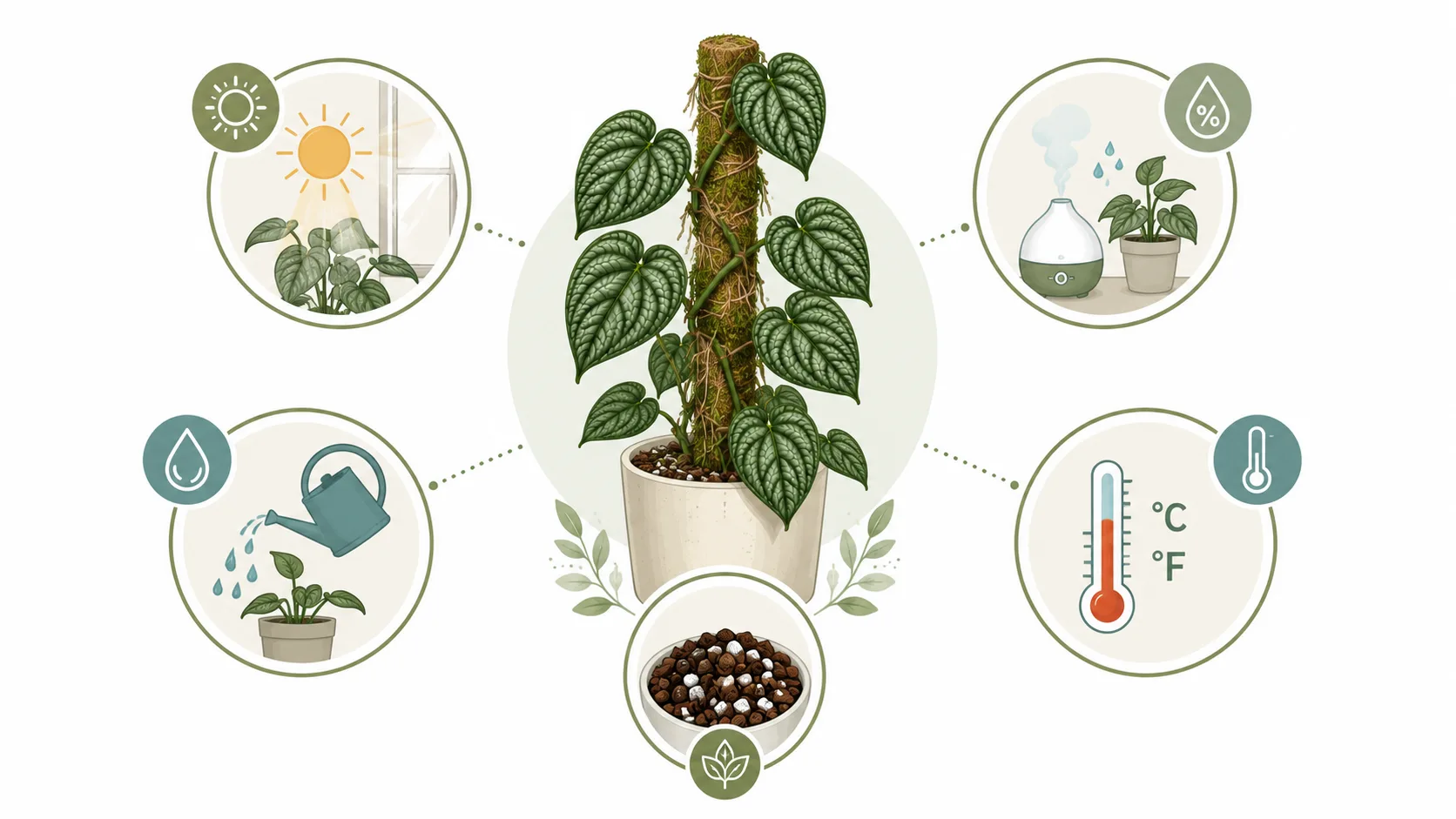
Monstera Peru grows best when environmental conditions resemble its tropical habitat.
Ideal conditions include:
- Bright indirect light.
- Temperatures between 18–29°C (65–85°F).
- Moderate to high humidity.
- Well-draining chunky aroid mix.
- Regular but moderate watering.
- Climbing support such as a moss pole.
Providing consistent care usually produces healthier foliage and stronger climbing growth.
Monstera Peru as a Hanging or Climbing Plant
Monstera Peru can be grown either as a hanging plant or a climbing vine. Other Monstera species also show different climbing and hanging behaviors, which can be explored further in the Ultimate Hanging Monstera Guide: Care, Varieties & Tips.
When grown in hanging baskets, vines trail downward, creating an attractive cascading display. However, because the species naturally climbs, training it on a moss pole or similar support often results in stronger stems, larger leaves, and more vigorous growth.
Gardeners seeking the plant’s natural appearance generally achieve the best results by encouraging vertical climbing.
Do Coffee Grounds Help Monstera Peru?
Coffee grounds are not recommended as a routine fertilizer for Monstera Peru.
Although used coffee grounds contain small amounts of nutrients, applying them directly to indoor plant soil may:
- Reduce soil aeration.
- Hold excess moisture.
- Encourage fungal growth.
- Create uneven nutrient availability.
A balanced houseplant fertilizer provides more predictable nutrition. If composted coffee grounds are incorporated into finished compost, they can contribute organic matter, but fresh grounds should not be relied upon as a primary fertilizer.
Conclusion
Learning how to propagate Monstera Peru is straightforward when healthy stem cuttings with at least one node are used. Both water and soil propagation methods can produce successful results, provided warmth, humidity, and bright indirect light remain consistent throughout rooting. Ongoing care—including proper watering, suitable pot size, and climbing support—helps newly rooted plants establish quickly. Most propagation failures are caused by poor cutting selection or environmental conditions rather than the plant being unusually rare or difficult. With patience and proper care, Monstera Peru can become a vigorous, long-lived tropical houseplant. For more information about indoor plant care, propagation methods, and growing requirements across different species, explore the Plants: Benefits and Guides (Complete Care, Types & Growing Tips).
FAQs
Will Monstera Peru root in water?
Yes. Monstera Peru roots readily in water when the node remains submerged, the water is changed regularly, and the cutting receives bright indirect light.
Is Monstera Peru a slow grower?
Monstera Peru is generally considered a slow-to-moderate grower. Growth accelerates during spring and summer under warm temperatures and adequate humidity.
Is a Peru Monstera rare?
No. Monstera Peru is no longer considered truly rare, although availability and pricing differ depending on local plant markets.
Can I propagate Monstera straight into soil?
Yes. Direct soil propagation is effective when using a healthy nodal cutting, maintaining lightly moist soil, and providing elevated humidity during rooting.
Do monsteras go into shock after repotting?
Yes. Temporary transplant shock is common after repotting. Most healthy Monsteras recover within several weeks when environmental conditions remain stable.
Do coffee grounds help Monstera Peru grow?
Not usually. Fresh coffee grounds can negatively affect soil structure and moisture levels. Balanced fertilizers and nutrient-rich compost are safer choices for long-term plant health.