
Introduction
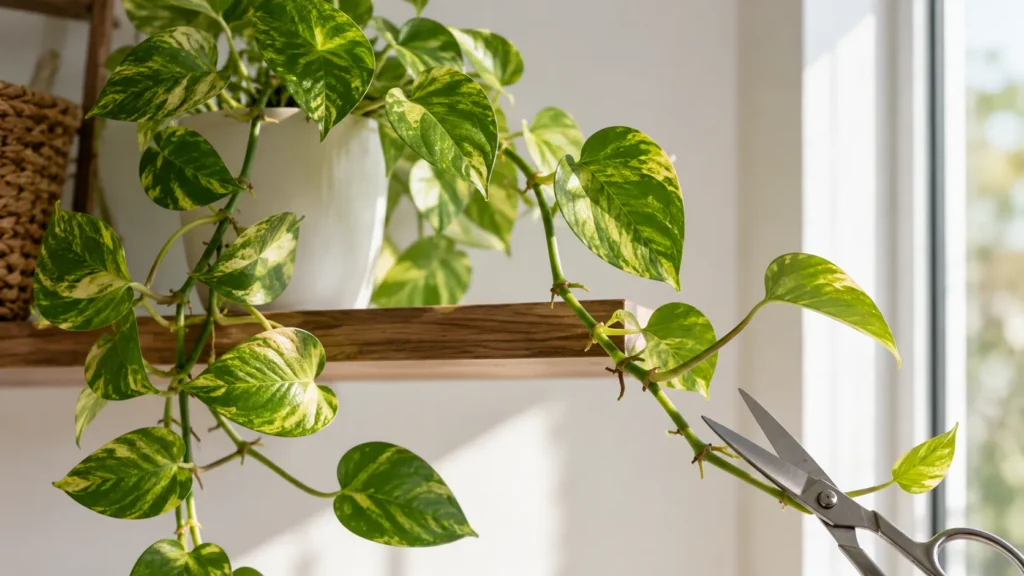
Pothos is one of the easiest houseplants to prune, but knowing where to cut pothos to encourage growth makes all the difference. Unlike some plants, pothos produces new stems and leaves only from its nodes, which are the points where leaves and aerial roots emerge. Cutting in the correct location encourages branching, fuller vines, and healthier regrowth, while cutting in the wrong place may leave bare stems. Understanding node placement, proper pruning techniques, and basic aftercare helps maintain a vigorous, attractive pothos throughout the growing season.
Quick Summary
- Pothos regrows only when cuts are made near a healthy node, not in the middle of a stem.
- Proper pruning stimulates branching, creating a fuller and bushier plant.
- New growth commonly appears within 2–4 weeks under good growing conditions.
- Spring and summer are the best seasons for regular pruning and fastest recovery.
What Is a Pothos Node (and Why It Matters for Cutting)
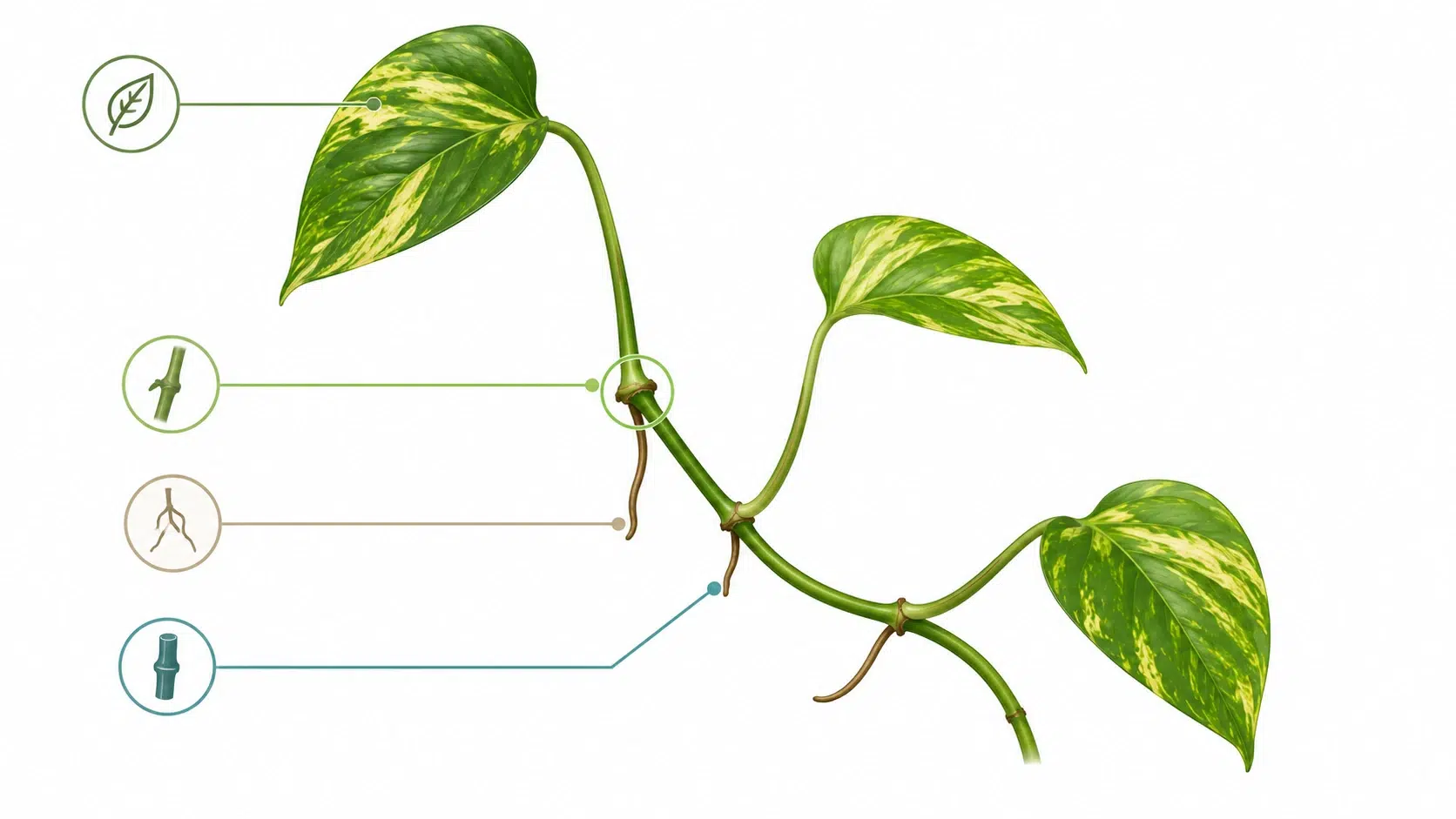
A pothos node is the point on the vine where leaves, aerial roots, and new stems develop. Because all new growth originates from nodes, identifying them correctly is the key to successful pruning. Understanding plant nodes is important for propagation success, as similar node-based growth principles are also used when propagating other tropical houseplants such as Monstera.
How to Identify a Node on the Vine
A healthy node appears as a slightly swollen section of the vine where:
- A leaf joins the stem
- A small brown aerial root emerges
- Future shoots can develop
Nodes are spaced along the vine and are easy to recognize once you know what to look for.
Node vs. Internode — Why the Difference Matters
The node is the plant’s active growth point, while the internode is the smooth stem section between two nodes.
Cutting through an internode does not stimulate new branching from that section. For healthy regrowth, pruning should always be planned around visible nodes.
Where to Cut Pothos to Encourage Growth
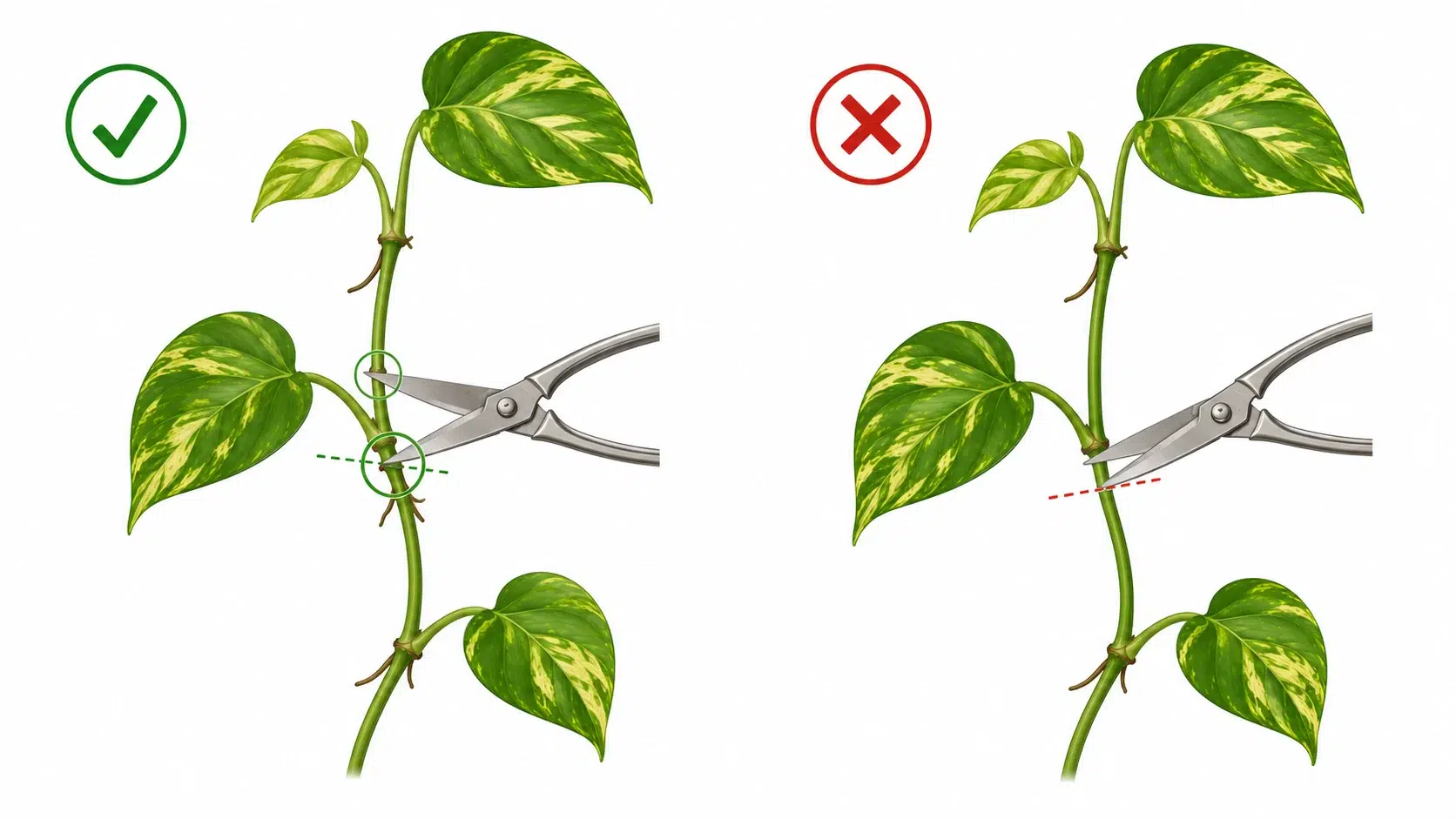
To encourage new growth, cut the vine about ¼ inch (5–10 mm) above a healthy node. Leaving the node attached to the remaining plant allows dormant buds to activate and produce new stems.
Follow these simple steps:
- Choose a healthy vine.
- Locate a mature node.
- Use clean, sharp pruning scissors.
- Cut slightly above the node at a slight angle.
- Remove damaged or leggy sections as needed.
Cutting Above vs. Below the Node — What Happens to Each
- Above the node: The remaining plant produces new shoots and becomes bushier.
- Below the node: The removed cutting contains a node and can be rooted for propagation.
When to Prune Pothos for Best Results
The best time to prune pothos is during active growth in spring and summer. Warm temperatures and longer daylight hours help the plant recover quickly and produce fresh vines.
Pruning in Spring/Summer vs. Winter Dormancy
| Season | Growth Response |
| Spring | Excellent regrowth |
| Summer | Fast branching |
| Autumn | Moderate recovery |
| Winter | Slow growth and delayed regrowth |
Winter pruning is possible but usually results in slower development because the plant grows less actively.
Does Pruning or Cutting Pothos Actually Promote Growth?
Yes. Pruning promotes fuller growth by reducing apical dominance, the natural tendency of the vine tip to suppress side shoots. Once the growing tip is removed, dormant buds near the remaining nodes become active, producing additional branches instead of one long vine.
Although pruning does not increase the plant’s overall growth rate, it redistributes growth into multiple stems, making the pothos appear denser and healthier.
How Long Does It Take for Pothos to Grow After Cutting?
Most pothos plants begin showing new shoots within 2 to 4 weeks after proper pruning.
Growth speed depends on several factors:
- Bright indirect light
- Warm temperatures
- Healthy nodes
- Consistent watering
- Active growing season
Plants pruned during spring generally recover much faster than those cut during winter.
How to Prune Pothos to Make It Bushier
Regular pruning encourages multiple growing points and prevents long, sparse vines.
Helpful techniques include:
- Trim overly long vines every few months.
- Pinch growing tips to encourage branching.
- Remove yellow or damaged leaves.
- Rotate the plant for even light exposure.
- Avoid removing more than one-third of the plant at one time.
Fixing a Leggy Pothos Through Strategic Cuts
Leggy pothos usually results from insufficient light and infrequent pruning.
To improve fullness:
- Cut above several healthy nodes.
- Move the plant to bright indirect light.
- Continue light pruning during the growing season.
- Allow multiple new shoots to develop before trimming again.
Cutting to Propagate vs. Cutting to Encourage Growth
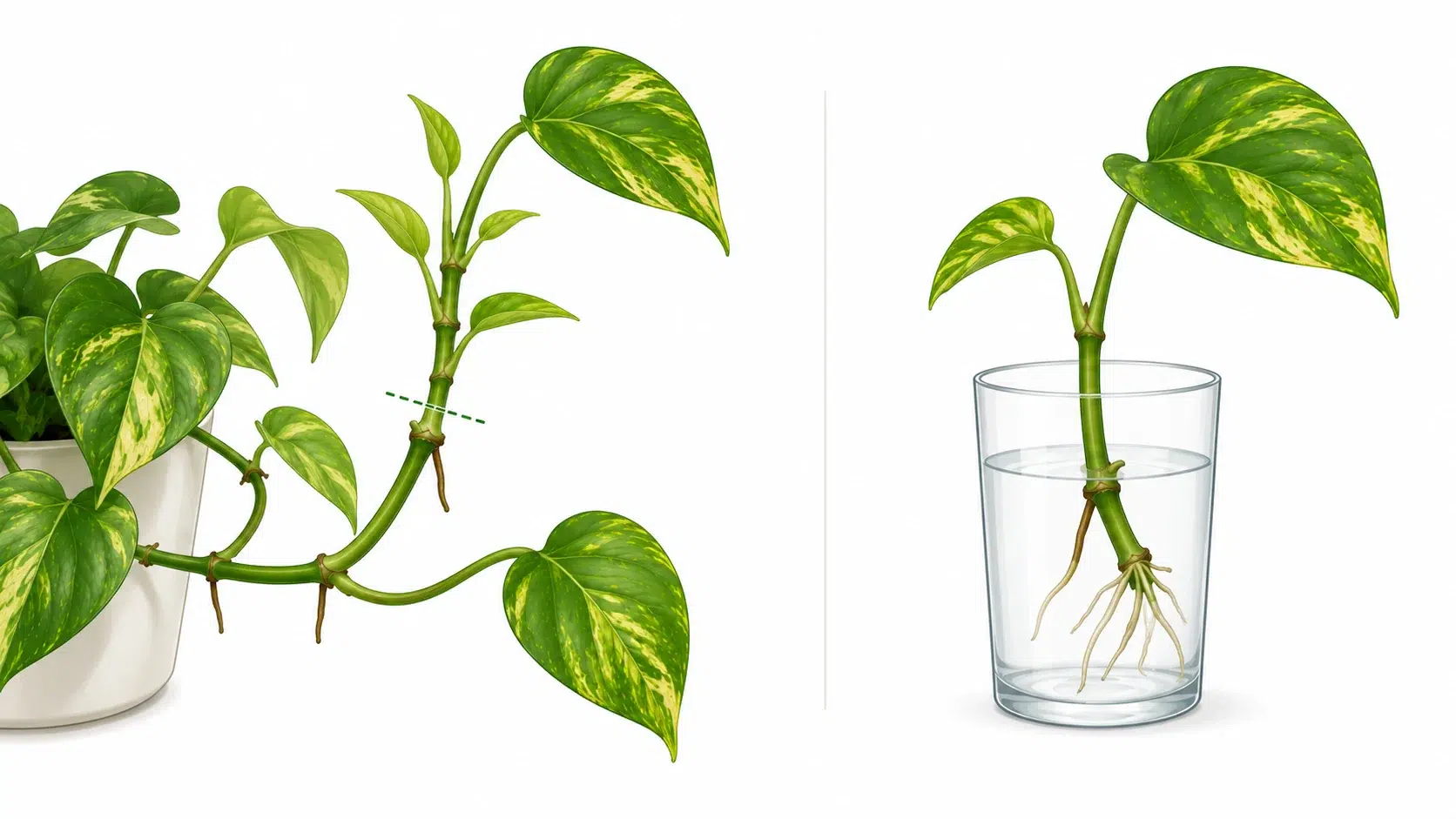
Although both techniques involve cutting near nodes, they serve different purposes.
| Cut Type | Where to Cut | Goal | Next Step |
| Growth/Bushiness Cut | Above a node | Stimulate branching | Leave on plant |
| Propagation Cut | Below a node (include node and aerial root) | Root a new plant | Place in water or soil |
Propagation techniques vary between plants, but many tropical houseplants rely on identifying healthy growth points before taking cuttings.
Pothos Care Factors That Support Healthy Regrowth
Pruning works best when combined with proper care.
Watering Frequency and Its Effect on New Growth
Water pothos when the top 1–2 inches of soil become dry. Overwatering immediately after pruning can stress the roots and slow recovery, while underwatering limits new growth. Keeping foliage clean can also support healthier indoor plants by improving leaf function and reducing dust buildup.
Pot Depth, Climbing Support, and Fertilization (Coffee Grounds)
Pothos grows well in moderately deep pots with good drainage. Moss poles or trellises encourage larger leaves because the plant naturally climbs in the wild.
Coffee grounds should not be added directly to potted pothos. Instead, use a balanced houseplant fertilizer during spring and summer to support healthy foliage and regrowth.
Common Pothos Pruning Mistakes and Fixes
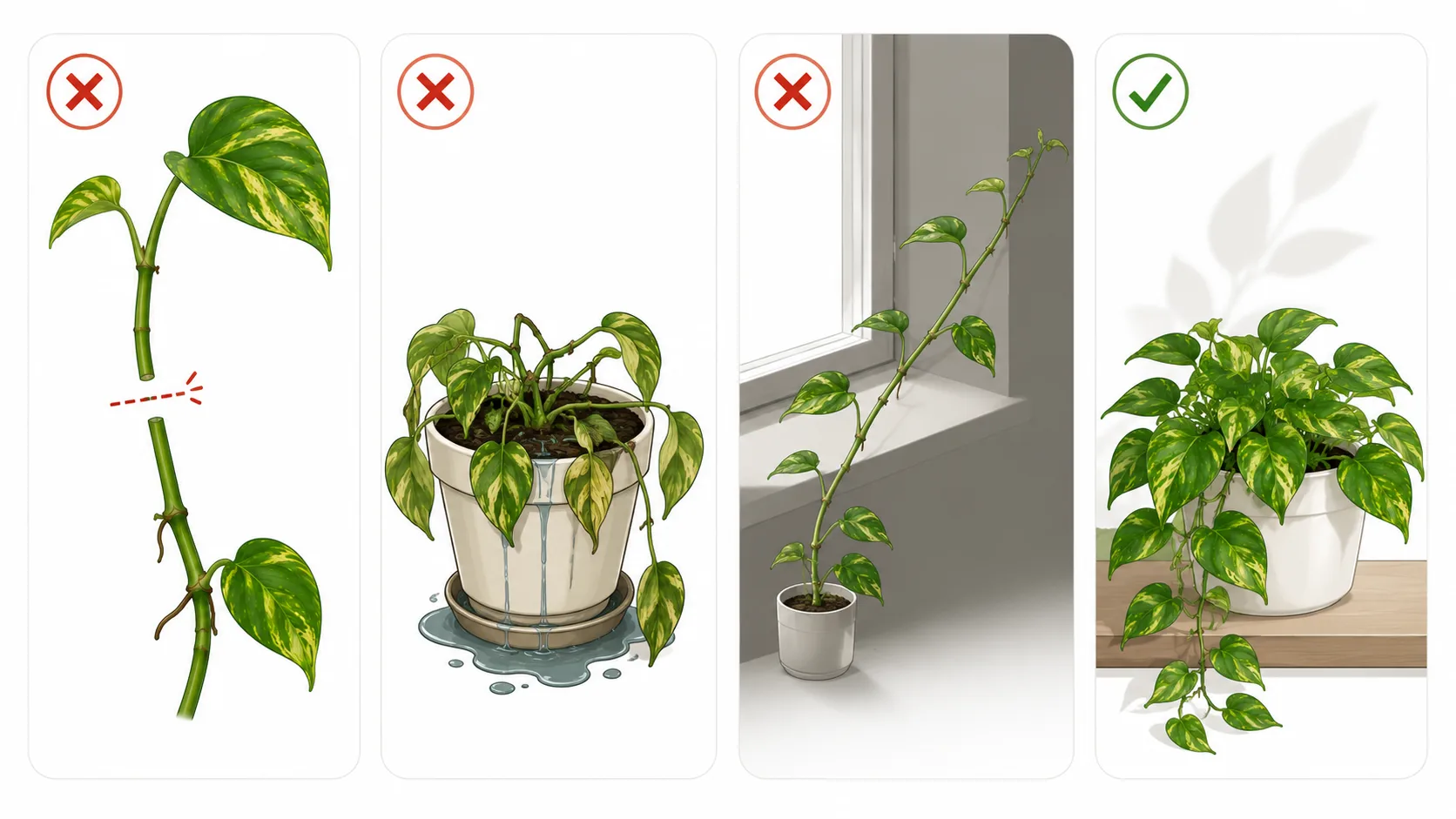
Beginners often make a few common mistakes that reduce pruning success.
- Cutting mid-internode: New shoots will not emerge from the cut section. Recut just above a healthy node.
- Overwatering after pruning: Wet soil can lead to root problems. Water only when needed.
- Insufficient light: Low light causes leggy growth. Move the plant to bright, indirect sunlight.
- Slow regrowth: Check light, temperature, watering, and overall plant health before pruning again.
Proper lighting is also essential after pruning, and understanding pothos light requirements helps maintain healthy new growth and prevent leggy vines.
Pothos Varieties and Legal Propagation Considerations
Most houseplant pothos belong to Epipremnum aureum, commonly known as golden pothos.
Golden Pothos (Epipremnum aureum) vs. Other Common Varieties
Popular varieties include:
- Golden Pothos
- Marble Queen
- Neon Pothos
- Jade Pothos
- Manjula Pothos
- Cebu Blue
Their pruning requirements are essentially the same because all produce new growth from nodes.
Patented/Trademarked Cultivars and Propagation Restrictions
Standard pothos varieties can generally be propagated for personal use. However, some newly patented or trademarked cultivars may have legal restrictions on commercial propagation while patent protection remains active. Personal home pruning is generally not affected, but commercial growers should verify propagation rights.
What Is the Lifespan of a Pothos Plant?
With proper care, a pothos can live for 10 years or more, and many indoor specimens remain healthy for decades. Regular pruning, adequate light, proper watering, and occasional fertilization help maintain vigorous growth and extend the plant’s lifespan.
Conclusion
Knowing where to cut pothos to encourage growth is the most important part of successful pruning. Always identify a healthy node before making a cut, prune above the node to encourage branching, and combine pruning with bright indirect light and proper watering. Regular maintenance during spring and summer produces a fuller, healthier pothos while preventing leggy vines. By following node-based pruning techniques, you can encourage consistent regrowth and keep your pothos attractive for many years. Pothos care is part of broader indoor plant maintenance, where understanding watering, light, pruning, and growth patterns helps gardeners successfully grow a wide range of houseplants. Explore more plants benefits and complete care guides for additional growing information.
FAQs
1. Do you cut pothos above or below the node?
Cut above the node to encourage the existing plant to branch. Cut below the node only when taking cuttings for propagation.
2. How long does it take for pothos to grow after cutting?
Most pothos begins producing new growth within two to four weeks under warm temperatures and bright indirect light.
3. Does trimming pothos make it bushier?
Yes. Regular trimming activates dormant buds at the nodes, encouraging multiple new shoots and a fuller appearance.
4. Will pothos grow back after cutting the vine?
Yes. If the remaining vine contains healthy nodes, new stems will emerge from those nodes during the active growing season.
5. How often should a pothos be watered after pruning?
Water only when the top layer of soil has dried. Avoid overwatering, as consistently wet soil can slow recovery.
6. Which pothos varieties are illegal to propagate?
Common pothos varieties are generally suitable for personal propagation. However, some patented cultivars may have restrictions on commercial propagation until patent protection expires.



3 Responses