
Introduction
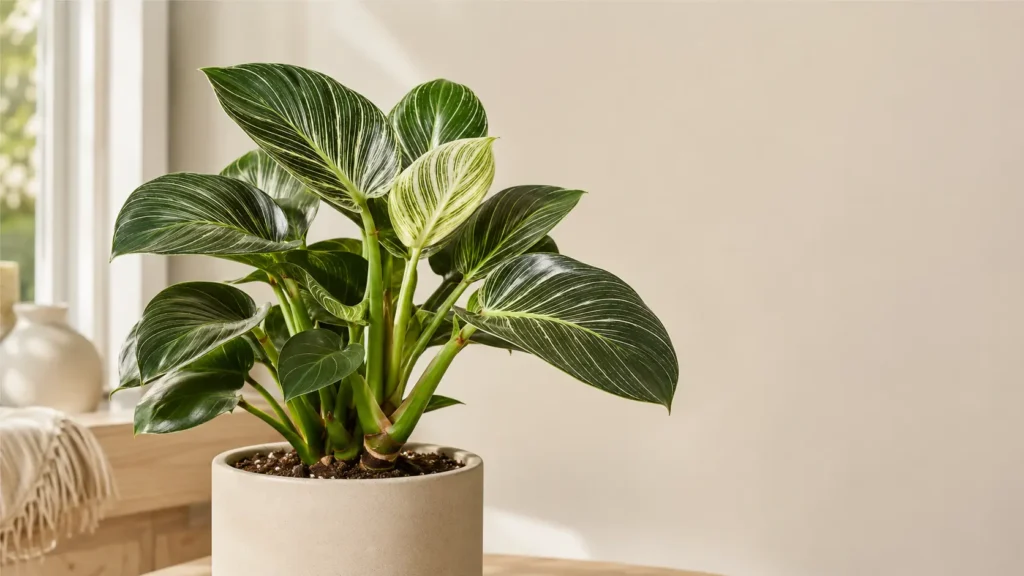
Learning how to propagate a philodendron Birkin involves creating a new plant from a healthy stem cutting containing at least one node. Philodendron Birkin propagation is a simple process where a section of the mother plant develops new roots and grows into an independent plant. The Birkin can be propagated through stem cuttings placed in either water or soil. This complete guide explains the correct cutting method, rooting timelines, propagation techniques, and aftercare steps needed to successfully grow a new Birkin philodendron.
Quick Summary
- Philodendron Birkin is propagated through stem cuttings with a healthy node, not from leaf cuttings alone.
- Water propagation usually shows roots within 2–4 weeks, while soil propagation commonly takes 3–6 weeks.
- The best cutting location is just below a node, preferably with an aerial root attached.
- New Birkin plants typically reach mature growth within 2–3 years with proper light, humidity, and care.
What Is Philodendron Birkin Propagation?
Philodendron Birkin propagation is the process of growing a new Birkin plant from a section of the parent plant’s stem. The method relies on a stem node because the node contains the growth points needed to produce roots and new leaves.
The philodendron Birkin, also called the Birkin plant or Birkin philodendron, is a cultivated variety of Philodendron known for its dark green leaves with creamy white variegation. Philodendrons belong to the Araceae family, a large group of flowering plants commonly known as aroids. Unlike some plants that can grow from individual leaves, Birkin requires a stem cutting with an active node for successful reproduction. Other philodendron species, including climbing varieties, share similar requirements for light, watering, and root development, making their care practices useful for comparison.
Is a Philodendron Birkin a Climber or a Creeper?
A Philodendron Birkin is an upright-growing philodendron with semi-climbing characteristics. It develops aerial roots along its stem, which help it attach to supports and absorb moisture from the environment.
This growth habit makes stem sections containing nodes ideal for propagation because those aerial root areas can develop into a new root system.
How Rare Is Philodendron Birkin?
Philodendron Birkin originated as a natural mutation of Philodendron ‘Rojo Congo’. Its attractive white-striped leaves made it popular among indoor plant collectors.
The plant is valued for its unique appearance, and propagation allows growers to create new plants from existing specimens. Concerns about whether propagating Birkin plants is illegal usually relate to protected plant varieties rather than normal home propagation.
What You Need Before Propagating a Philodendron Birkin
Before starting propagation, prepare clean tools and the correct growing environment. Proper preparation reduces infection risks and improves rooting success.
Required materials include:
- Sterilized scissors or pruning shears
- Glass jar or propagation container
- Filtered water or a well-draining soil mix
- Bright indirect light source
- Optional rooting hormone for faster root development
Clean cutting tools are especially important because bacteria or fungi introduced during cutting can cause stem rot.
Where to Cut a Philodendron Birkin for Propagation
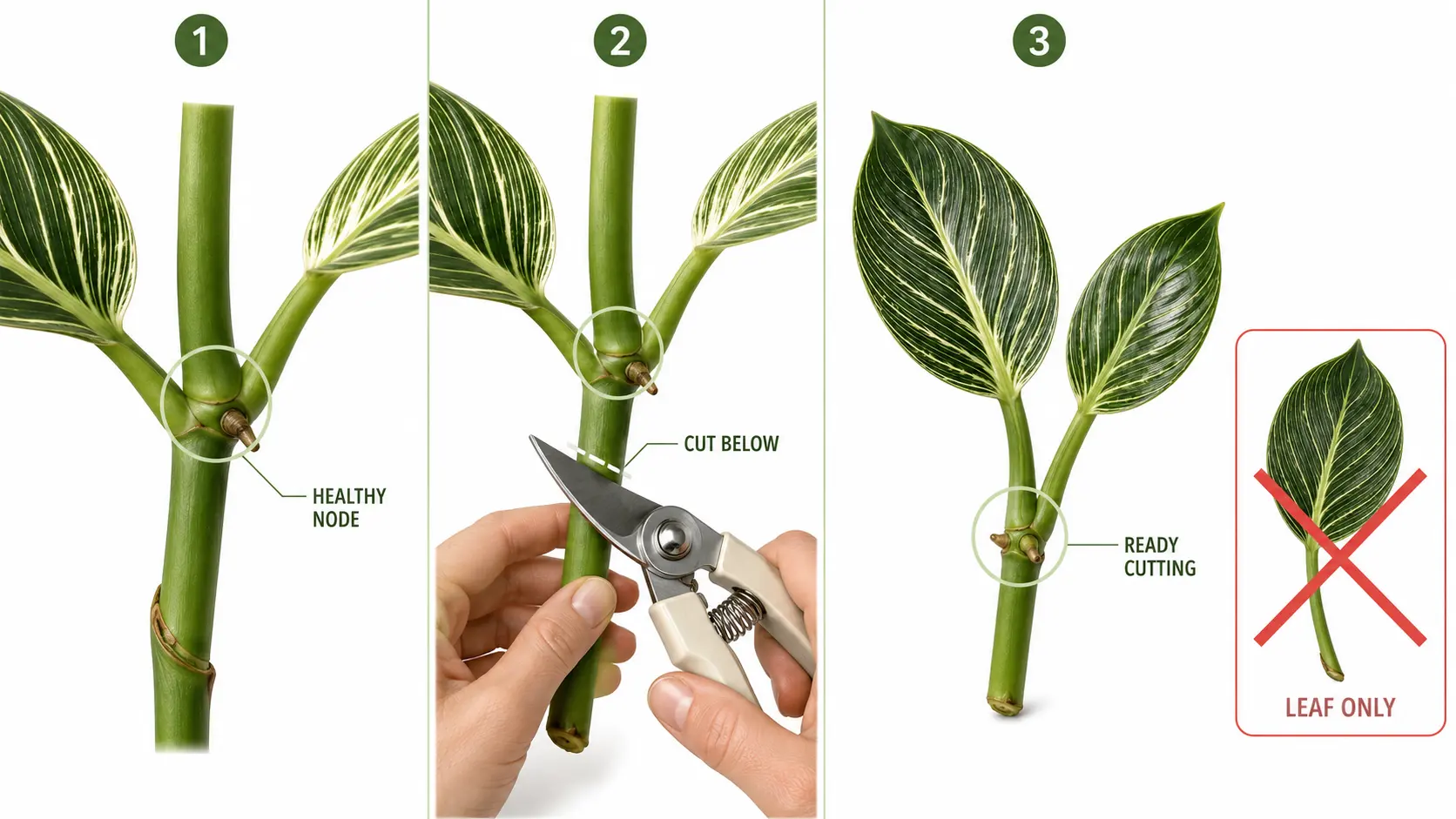
The correct cutting point is directly below a healthy node. A node is the small section on the stem where leaves, aerial roots, or future growth points develop.
For a successful philodendron Birkin cutting:
- Select a healthy stem section with at least one node.
- Cut about 0.5–1 inch below the node.
- Keep one or two healthy leaves attached.
- Include an aerial root if available.
The node is the most important part because it contains the plant tissue required for new root development.
Can You Propagate Philodendron With Just a Leaf?
No, a Philodendron Birkin cannot be propagated successfully from a leaf alone. A leaf without a stem node may remain green for some time but will not create a new plant because it lacks the growth tissue needed for root and stem production.
How to Propagate a Philodendron Birkin in Water
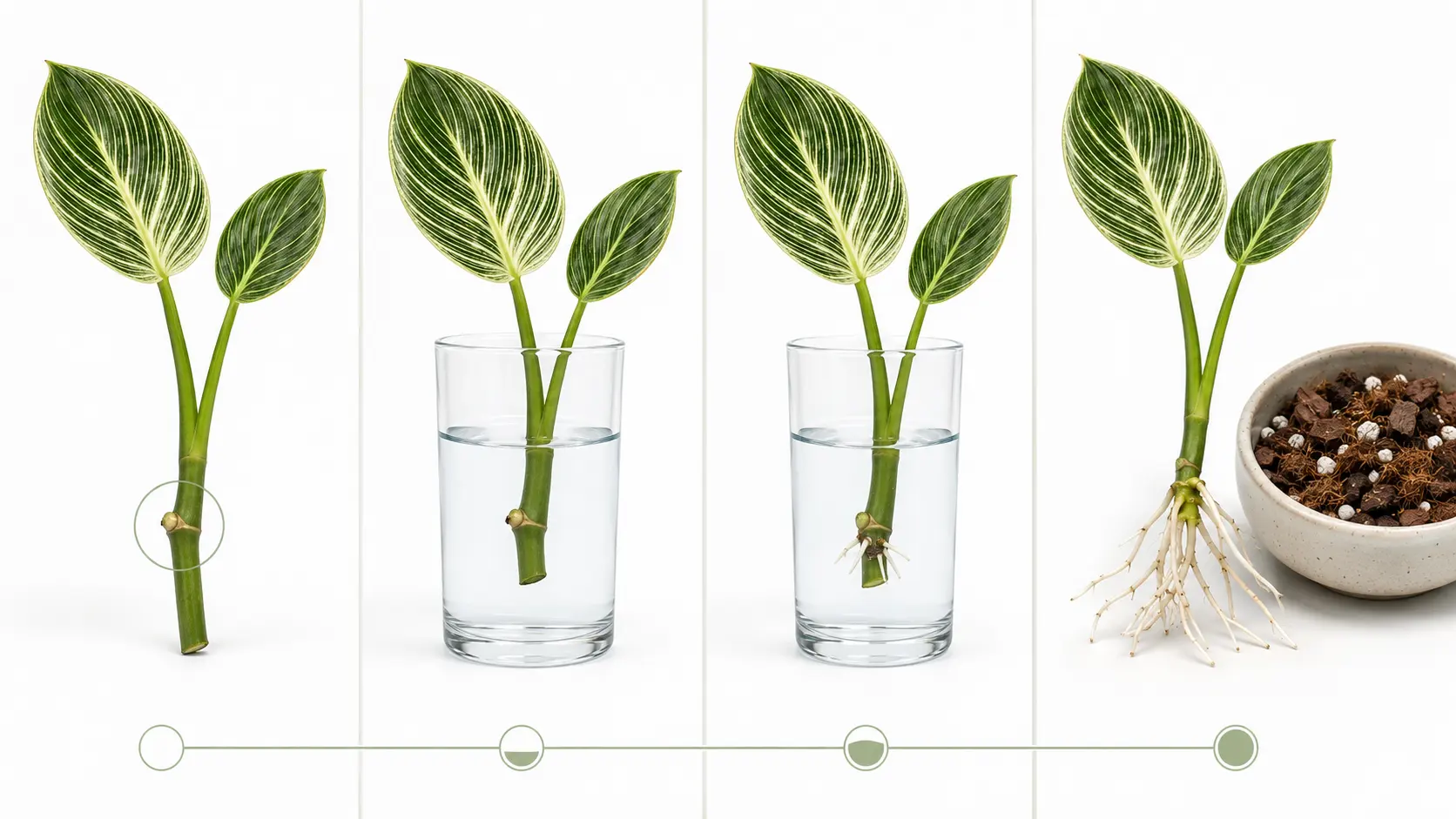
Water propagation is one of the easiest methods because it allows growers to observe root development directly. Similar propagation techniques are also used for other philodendron varieties, such as the heartleaf philodendron, which can be propagated through water and soil methods using healthy stem cuttings.
Steps for water propagation:
- Take a healthy stem cutting with a node.
- Submerge the node section in clean water.
- Place the container in bright indirect light.
- Change the water every 3–5 days.
- Monitor root growth until roots are established.
Keep leaves above the water surface to prevent rotting. Once roots become strong enough, the cutting can be transferred into soil.
How Long Does It Take a Philodendron to Propagate in Water?
A Philodendron Birkin cutting usually begins producing visible roots within 1–2 weeks under suitable conditions. It is generally ready for potting when roots reach about 1–2 inches long, which often takes around 4–6 weeks.
Warm temperatures, bright indirect light, and clean water help encourage faster root growth.
How to Propagate a Philodendron Birkin in Soil
Soil propagation involves placing the cutting directly into a suitable growing medium. This method allows roots to develop in their final environment, reducing transplant adjustment later.
Steps include:
- Place the node into moist, well-draining soil.
- Keep the cutting stable and upright.
- Maintain humidity using a clear cover or humidity dome if needed.
- Provide bright indirect light.
- Keep soil slightly moist but never waterlogged.
Soil propagation often creates stronger roots because the plant adapts directly to soil conditions.
Water Propagation vs. Soil Propagation — Which Is Better?
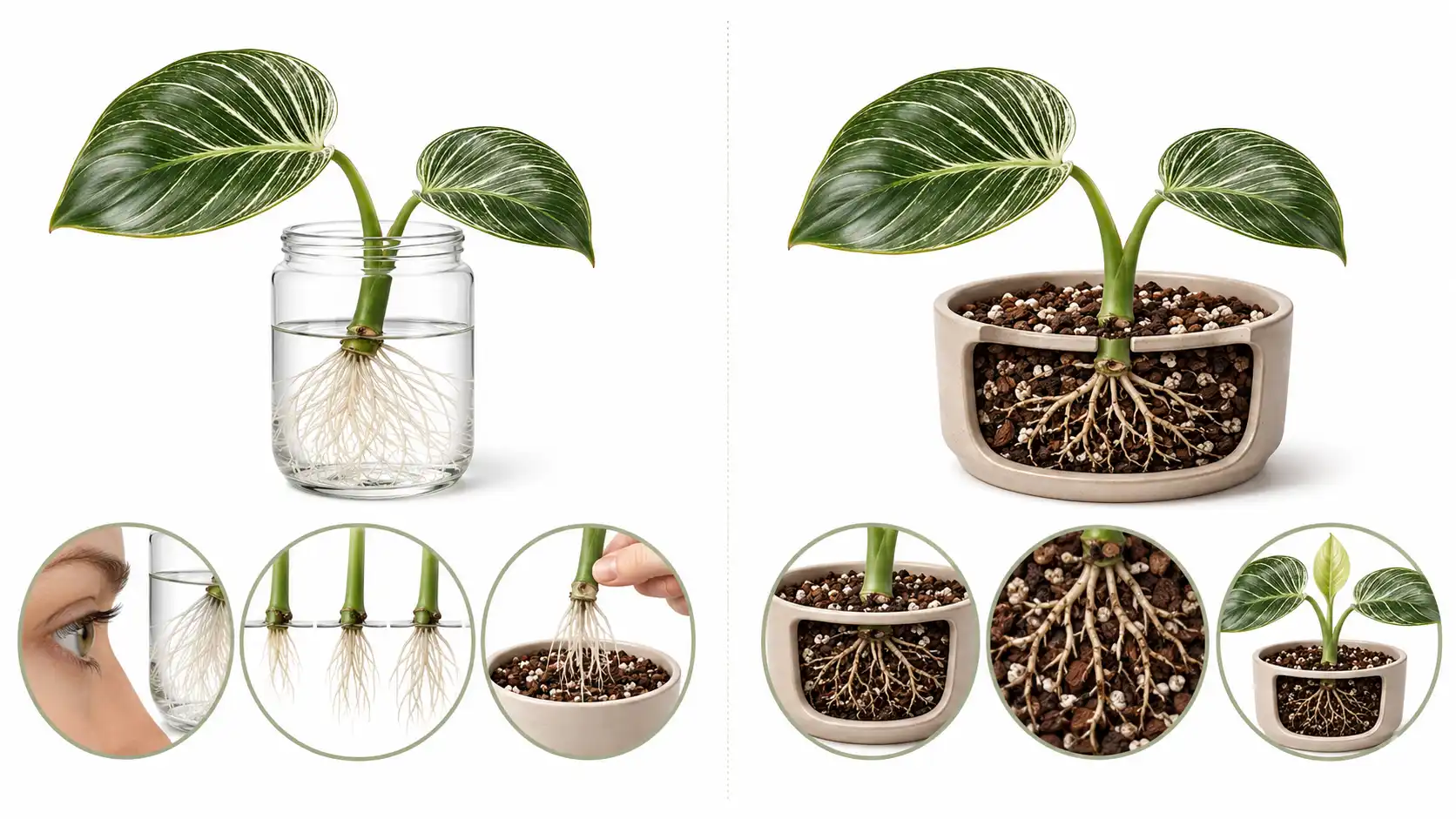
Both methods can successfully propagate a Philodendron Birkin. The better choice depends on whether the grower prefers visibility or stronger early soil adaptation.
| Factor | Water Propagation | Soil Propagation |
| Root visibility | High | None |
| Root strength | Weaker, needs adjustment | Stronger, soil-adapted |
| Time to establish | 4–6 weeks | 3–6 weeks |
| Risk of shock when transplanting | Higher | Lower |
| Best for | Beginners monitoring progress | Long-term plant health |
How to Care for a Newly Propagated Philodendron Birkin
Newly propagated Birkins need stable conditions while developing roots.
Important care requirements:
- Provide bright indirect light.
- Maintain moderate to high humidity.
- Avoid overwatering.
- Keep temperatures warm and consistent.
- Delay heavy fertilization until active growth begins.
Do Philodendrons Like Deep or Shallow Pots?
Philodendron Birkins generally prefer wider, slightly shallow pots rather than very deep containers. Their root systems spread outward, and excessive soil depth can hold extra moisture that increases the risk of root problems. Choosing the correct container size is important for many tropical houseplants because pot depth, drainage, and root space influence overall plant health.
How to Repot a Philodendron Birkin
Repot a propagated Birkin when roots are established and the plant begins active growth.
Steps:
- Choose a pot slightly larger than the root system.
- Use fresh, well-draining aroid soil.
- Position the plant at the same depth as before.
- Water lightly after repotting.
Common Problems When Propagating Philodendron Birkin (Problem-Solution Section)
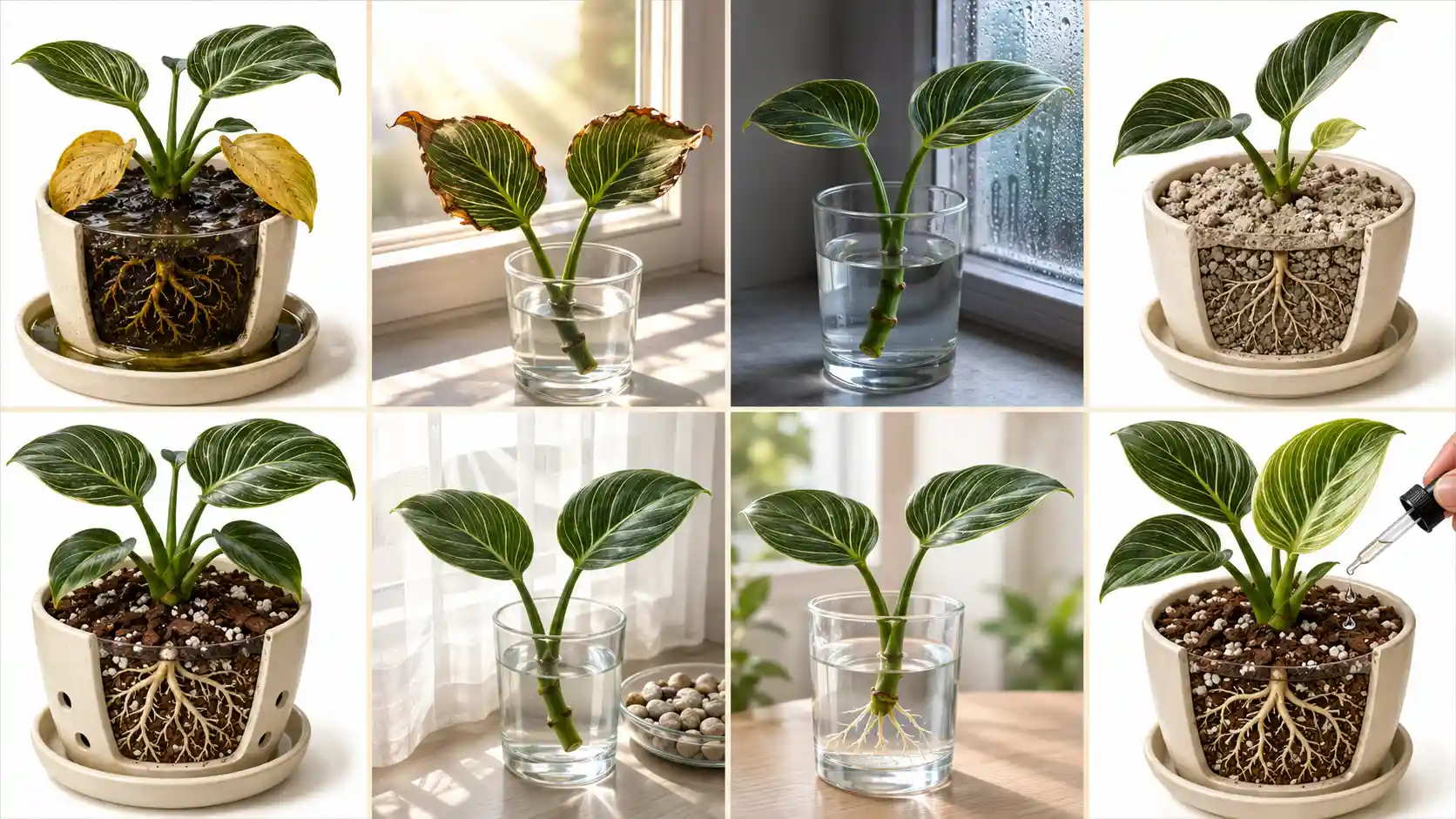
Common propagation issues usually result from incorrect moisture levels, poor cutting technique, or unsuitable conditions.
- Yellow leaves: Often caused by overwatering or poor drainage. Improve drainage and adjust watering frequency.
- Brown leaves: May result from underwatering, low humidity, or excessive direct sunlight. Move the plant to better conditions.
- Slow or no root growth: Can happen due to missing nodes, cold temperatures, or low light. Provide warmth and brighter indirect light.
- Small leaves after propagation: Usually linked to low nutrients or insufficient light. Use balanced fertilizer during active growth.
Soil-related problems can also attract pests or create unhealthy growing conditions, so regular inspection of indoor plant soil is important.
Beginner Mistakes to Avoid When Propagating a Birkin
Common beginner mistakes include:
- Cutting a stem without a node.
- Using untreated or chlorinated water.
- Forgetting regular water changes.
- Placing cuttings in low-light areas.
- Moving new cuttings into harsh conditions too quickly.
Correct cutting selection and stable care conditions are the biggest factors in propagation success.
How Big Do Philodendron Birkins Get When They Mature?
A mature Philodendron Birkin typically grows around 1–3 feet tall indoors, depending on light, pot size, humidity, and care quality. Outdoor growth can be larger in suitable tropical environments.
Proper spacing and container selection help prevent overcrowding as propagated plants mature.
What Is the Philodendron Birkin’s Growth Rate?
Philodendron Birkin is considered a moderate grower. Growth is usually fastest during spring and summer when temperatures, light levels, and humidity are favorable.
During winter, growth commonly slows because lower light and cooler temperatures reduce plant activity.
How Do I Make My Birkin More Colorful?
Bright indirect light helps maintain Philodendron Birkin’s white variegation. Low light can cause leaves to become greener because the plant produces more chlorophyll to capture energy. Similar to other variegated houseplants, maintaining proper light levels is important for preserving leaf patterns and supporting healthy growth.
Avoid direct sunlight because intense rays can damage variegated leaves.
Philodendron Birkin Care Guide (Ongoing, Post-Propagation)
Once established, a Birkin requires consistent indoor plant care.
| Care Factor | Requirement |
| Watering | Allow the top inch of soil to dry before watering |
| Light | Bright, indirect light |
| Soil | Well-draining aroid mix |
| Fertilization | Balanced liquid fertilizer during growing season |
| Pruning | Remove damaged or yellow leaves |
| Climate | 65–85°F with moderate-high humidity |
How Long Do Philodendron Birkins Live?
Philodendron Birkins can live for many years with proper care. Since philodendrons can be continuously propagated through healthy cuttings, growers can extend the plant’s genetic lifespan by creating new generations from existing plants.
Is Propagating Plants From Cuttings Legal?
Propagating plants from cuttings for personal use is generally legal. However, some patented or protected cultivars may have restrictions on commercial propagation and selling without permission.
Certain branded plant varieties may be protected under plant patent laws, so commercial growers should check applicable regulations before mass propagation.
Conclusion
Learning how to propagate a philodendron Birkin starts with selecting a healthy stem cutting containing a node. Water propagation provides easy root monitoring, while soil propagation encourages direct root adaptation. With proper cutting technique, suitable light, humidity, and ongoing care, propagated Birkin plants can grow into healthy mature specimens. The key takeaway is simple: use node-based cuttings, maintain stable conditions, and provide consistent care for successful propagation.
FAQs
Can you propagate a Philodendron Birkin in water?
Yes, a Philodendron Birkin can be propagated in water by placing a stem cutting with a node into clean water until roots develop.
Is it better to propagate philodendron in water or soil?
Water propagation is easier for monitoring roots, while soil propagation usually creates stronger soil-adapted roots with less transplant shock.
Can you propagate philodendron with just a leaf?
No, a Philodendron cannot be propagated from a leaf alone because a new plant requires a stem node containing growth tissue.
How long does it take a philodendron to propagate in water?
A Philodendron Birkin typically develops visible roots within 1–2 weeks and is often ready for soil after about 4–6 weeks.
Is a Philodendron Birkin hard to grow?
No, a Philodendron Birkin is considered moderately easy to grow when provided with bright indirect light, proper watering, and suitable humidity.
The term “holy grail” usually refers to rare Philodendron cultivars valued by collectors for unusual variegation or scarcity. It is different from Philodendron Birkin, which is a more widely available ornamental variety.