
Introduction
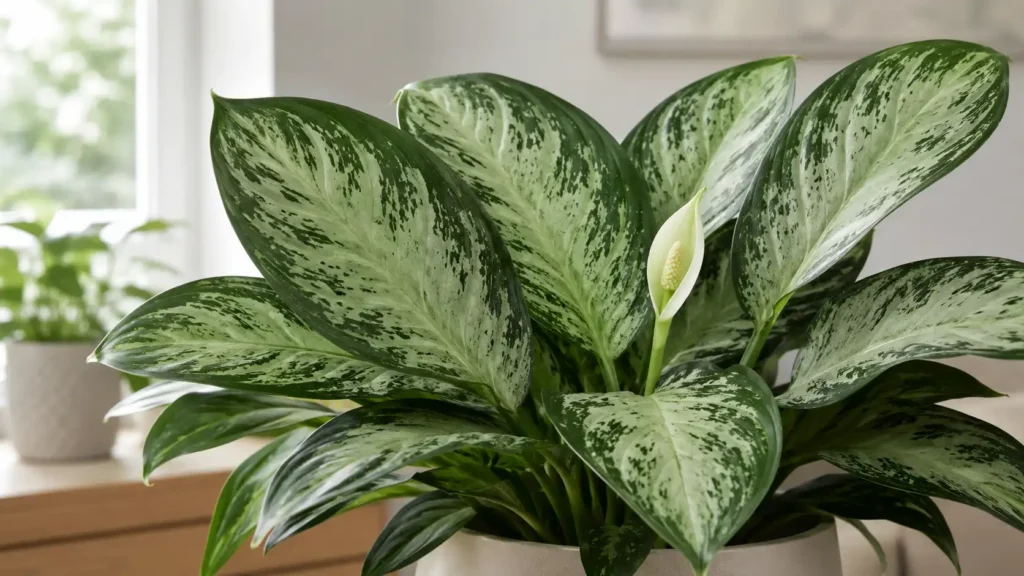
Aglaonema Silver Bay is a popular Chinese Evergreen cultivar known for its attractive silver-green foliage and easy-care nature. The aglaonema silver bay flower is a small, natural bloom that can occasionally appear when the plant reaches maturity. Also called the silver bay plant or aglaonema silver bay, this houseplant is valued more for its patterned leaves than its flowers. This guide explains whether Aglaonema Silver Bay flowering is normal, what the bloom means, when to remove it, and how to provide proper care for healthy foliage growth. Aglaonema Silver Bay is one of many popular indoor plants valued for easy care, attractive foliage, and adaptability, making it a useful addition to a broader collection of plant care guides.
Quick Summary
- Aglaonema Silver Bay can flower, although blooms are uncommon indoors and usually appear on mature plants.
- The flower looks like a small white or pale green spathe and resembles a peace lily bloom.
- Flowering is generally a natural response to maturity, light conditions, or seasonal changes.
- Removing the flower can help redirect energy toward leaf production, but leaving it does not usually harm the plant.
- Proper light, watering, soil, and humidity management keep the Silver Bay plant healthy.
What Is Aglaonema Silver Bay?
Aglaonema Silver Bay is a cultivated variety of Aglaonema, a genus in the Araceae family. Its scientific name is commonly written as Aglaonema ‘Silver Bay’. It belongs to the Chinese Evergreen group, which includes many popular indoor foliage plants. Aglaonema belongs to a tropical plant genus commonly known as Chinese Evergreen, with many species and cultivated varieties grown as ornamental houseplants.
The aglaonema silver bay plant is recognized by its broad oval leaves with a dark green border and a large silvery-gray center pattern. The Chinese Evergreen Silver Bay variety is especially popular because it tolerates lower indoor light better than many tropical plants while maintaining attractive foliage.
The silver bay plant is primarily grown as an ornamental foliage plant. Its flowers are secondary compared with its decorative leaves.
Aglaonema Silver Bay vs. Other Popular Varieties
Aglaonema varieties differ mainly in leaf patterns, colors, and growth habits. Aglaonema Silver Bay belongs to the same Chinese Evergreen group as other popular cultivars such as Silver Queen, which has its own unique leaf patterns and growing requirements.
Related cultivars include:
- Silver Moon: Similar silver markings but usually has a brighter, more reflective leaf appearance.
- Silver King: Known for more extensive silver coloration and narrower leaf patterns.
- Silver Queen: One of the most recognized Chinese Evergreen varieties with strong silver striping.
- Red Aglaonema: Features red or pink tones instead of primarily silver-green foliage.
Does Aglaonema Silver Bay Flower?
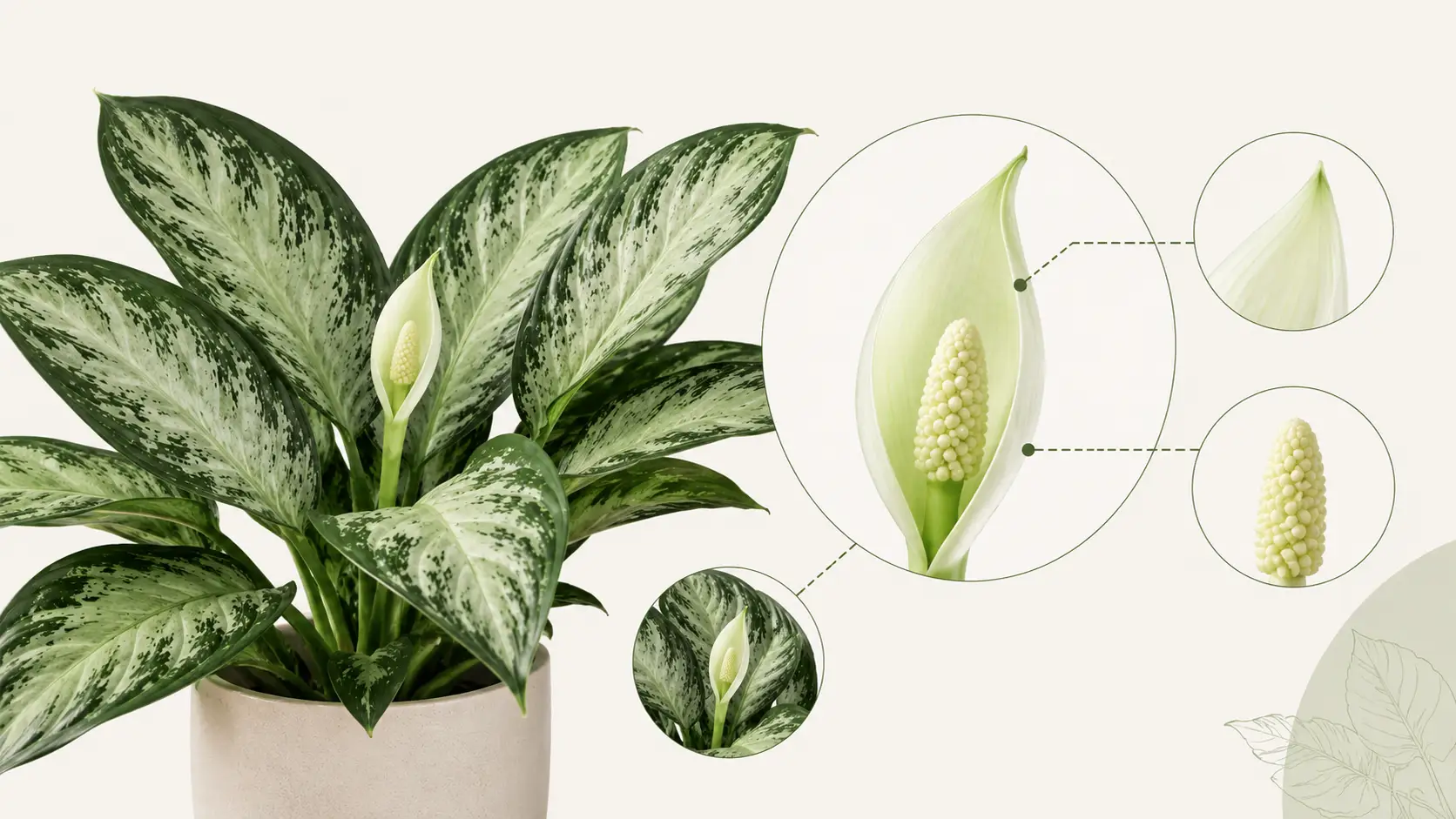
Yes, Aglaonema Silver Bay can flower, although the silver bay aglaonema flower is relatively uncommon, especially in indoor conditions. Most growers notice flowers only when plants are mature and receiving favorable growing conditions.
The aglaonema silver bay bloom is not the main attraction of the plant. Like other members of the Araceae family, its flower structure is subtle rather than showy.
Flowering is more likely when:
- The plant receives bright indirect light.
- The plant has reached maturity.
- The roots become slightly crowded in the pot.
- Seasonal changes encourage blooming.
- The plant experiences mild environmental stress.
What Does the Aglaonema Flower Look Like?
An Aglaonema flower has the typical Araceae structure: a spadix surrounded by a spathe. The spadix is a small central spike containing tiny flowers, while the spathe is a leaf-like covering around it.
The bloom is usually:
- White, cream, or pale green.
- Small compared with the foliage.
- Similar in appearance to a miniature peace lily flower.
Unlike flowering plants grown mainly for blooms, Aglaonema flowers are usually simple and understated.
What Triggers a Plant to Flower?
Plants flower when environmental signals indicate the right conditions for reproduction. Common triggers include increased light exposure, maturity, seasonal changes, and mild stress.
For Aglaonema, flowering may happen because:
- The plant has developed enough energy reserves.
- Light levels have increased.
- The plant experiences natural seasonal changes.
- Slight root restriction encourages reproductive growth.
Flowering does not automatically mean the plant is unhealthy.
Why Is My Aglaonema Flowering?
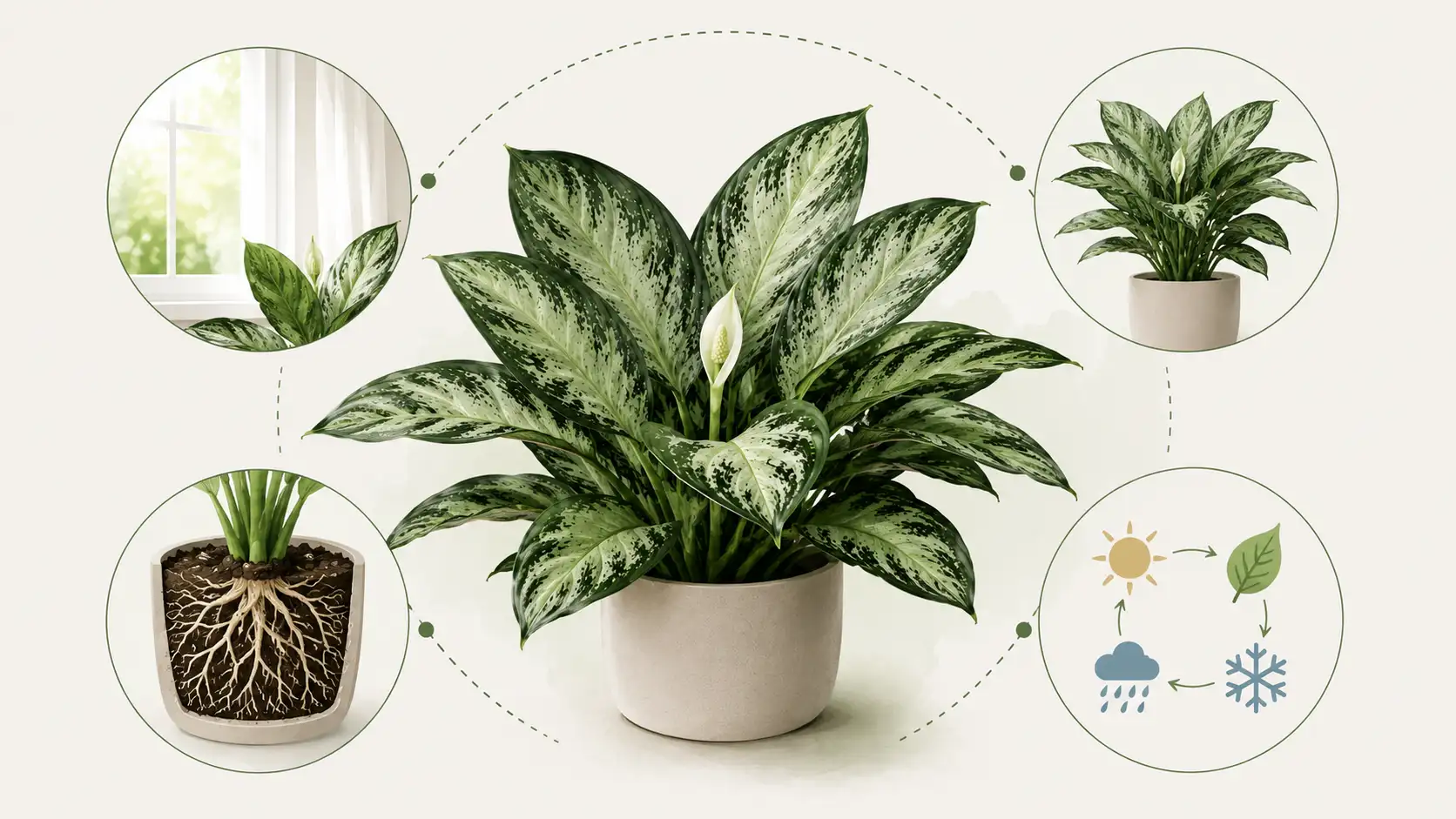
Your Aglaonema may be flowering because it has reached maturity or because growing conditions have changed. Increased indirect light, a root-bound pot, or seasonal shifts can encourage blooming.
Common reasons include:
- Plant maturity: Older plants are more likely to produce flowers.
- Improved lighting: More suitable light can support blooming.
- Minor stress: Slight drought or crowded roots may trigger flowering responses.
In most cases, flowering is natural and does not indicate a problem.
Should I Let My Aglaonema Flower? (What to Do With the Flower)
You can either leave the flower or remove it depending on your goal. The bloom does not usually damage a healthy Aglaonema, but it uses some plant energy.
Reasons to remove the flower:
- Redirects energy toward leaf growth.
- Helps maintain a foliage-focused appearance.
- Prevents seeds from forming if unwanted.
Reasons to leave the flower:
- Allows you to enjoy a rare bloom.
- Provides a natural look.
- Does not significantly harm a healthy plant.
If your main goal is a bushier plant with larger leaves, removing the flower is often preferred.
Aglaonema Silver Bay Flower Meaning
The aglaonema silver bay flower meaning is often associated with growth, renewal, and good fortune in general plant symbolism. While these meanings are cultural rather than scientific, flowering is commonly viewed by growers as a sign that a plant has reached maturity.
For Aglaonema owners, the flower mainly represents a natural stage of the plant’s life cycle.
How to Care for Aglaonema Silver Bay

Proper aglaonema silver bay care focuses on providing balanced light, moisture, soil, and temperature conditions. The silver bay aglaonema care routine is simple, making it suitable for beginner plant owners.
Light Requirements
Aglaonema Silver Bay grows best in bright indirect light but can tolerate medium and lower light conditions. Avoid harsh direct sunlight because it can scorch the leaves.
Ideal placement:
- Near an east or north-facing window.
- Away from intense afternoon sun.
- In filtered indoor light.
Watering Needs — Should You Bottom Water?
Yes, you can bottom water an Aglaonema. Bottom watering allows roots to absorb moisture evenly and can encourage deeper root growth.
Advantages:
- Reduces surface dryness.
- Helps avoid uneven watering.
- Limits water sitting on leaves.
However, top watering is also effective if excess water drains properly. Avoid keeping the soil constantly wet.
Soil and Pot Size — Do Aglaonema Like Big Pots?
No, Aglaonema generally do not like oversized pots. They prefer slightly snug containers because large pots hold excess moisture and increase the risk of root rot.
Use:
- Well-draining potting mix.
- Containers with drainage holes.
- Repotting every 1–2 years when roots become crowded.
Fertilizing and Feeding Schedule
Feed Aglaonema Silver Bay during spring and summer with a balanced houseplant fertilizer. Reduce feeding during colder months when growth slows.
Humidity and Temperature Tolerance
Aglaonema prefers warm temperatures and moderate humidity. If indoor air is too dry, methods such as grouping plants together or increasing natural humidity can help tropical houseplants maintain healthier foliage.
Ideal conditions:
- Temperature: 65–80°F (18–27°C).
- Moderate to high humidity.
- Protection from cold drafts.
Can Aglaonema Grow in Just Water?
Aglaonema can grow in water temporarily, especially through water propagation. However, long-term growth is usually better in soil because nutrients and root support are more stable.
| Care Factor | Requirement |
| Light | Bright indirect light |
| Water | Allow soil to partially dry |
| Soil | Well-draining mix |
| Humidity | Moderate to high |
| Temperature | 65–80°F |
| Fertilizer | Balanced feeding during growth season |
Plant Size
Aglaonema Silver Bay usually reaches about 2–3 feet tall indoors with a similar spread. Outdoor plants in warm climates may grow larger when given ideal conditions.
Size depends on:
- Pot size.
- Light availability.
- Fertilizer use.
- Growing environment.
Growth Rate
Aglaonema has a moderate growth rate. Growth is usually faster during spring and summer and slows during colder months.
Factors affecting growth include:
- Bright indirect light.
- Proper watering.
- Regular feeding.
- Healthy roots.
How to Make Aglaonema Bushy
To encourage bushier growth:
- Provide better indirect light.
- Remove damaged leaves.
- Prune leggy stems.
- Rotate the plant for even growth.
- Fertilize during active growth.
How to Propagate Aglaonema Silver Bay
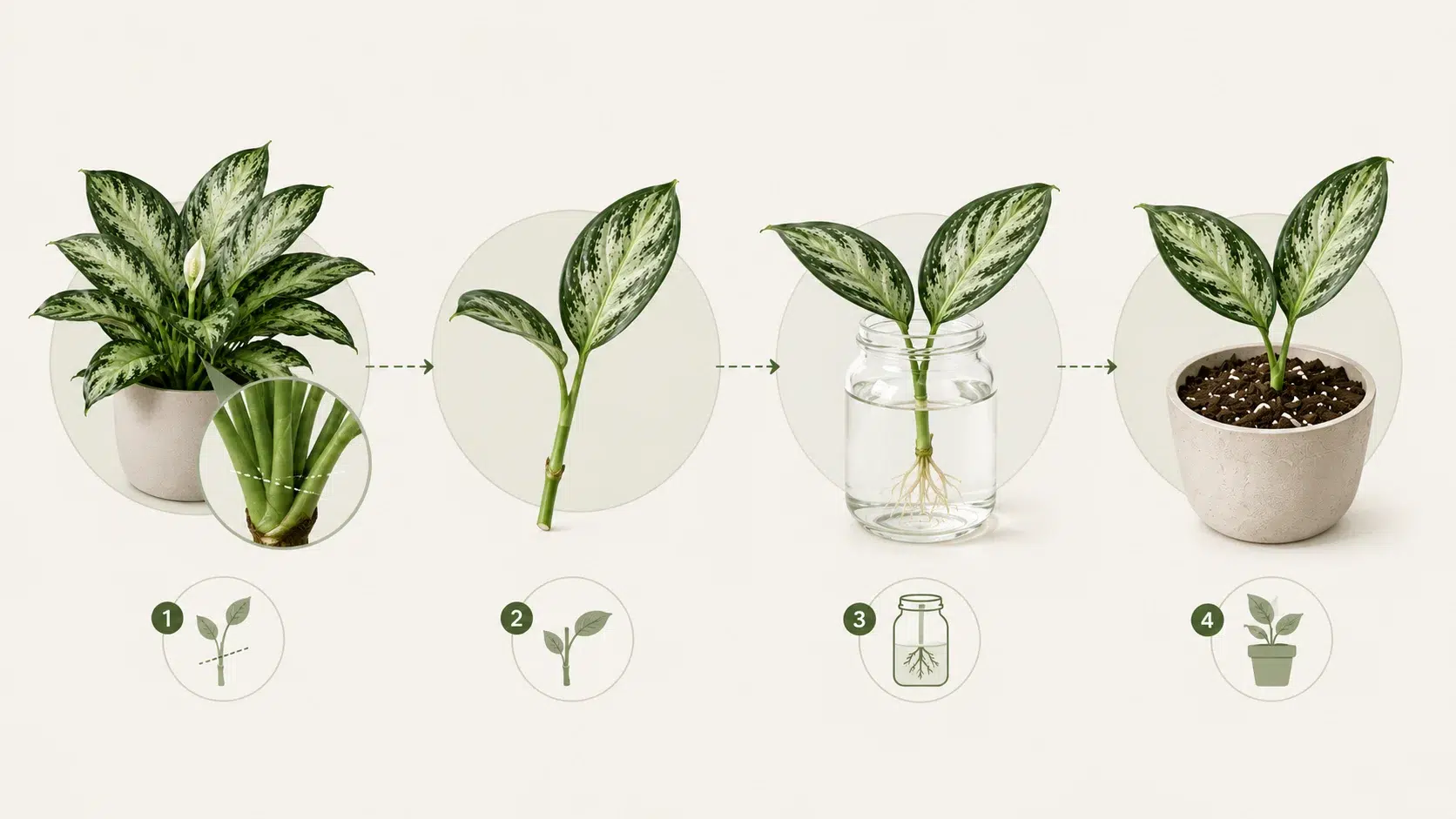
Aglaonema Silver Bay propagation can be done through stem cuttings or division. These methods are commonly used for propagating Aglaonema from stem cuttings and Aglaonema plant propagation.
Steps:
- Cut a healthy stem section with nodes.
- Place the cutting in water or moist soil.
- Allow roots to develop.
- Transfer rooted cuttings into a suitable pot.
Water Propagation vs. Soil Propagation
Water propagation is easier to monitor because root development is visible. Soil propagation usually produces stronger roots adapted directly to growing conditions. Water and soil propagation are common techniques for many tropical houseplants, including other popular indoor plants that can be multiplied through stem cuttings.
| Method | Benefit |
| Water propagation | Easy root observation |
| Soil propagation | Stronger long-term transition |
Common Problems With Aglaonema Silver Bay
Yellowing Leaves — Causes and Fixes
Yellow leaves usually result from overwatering, poor drainage, or insufficient light.
Fix:
- Reduce watering frequency.
- Improve drainage.
- Check root health.
Overwatering and Root Rot
Overwatering keeps roots oxygen-starved and can cause rot.
Prevent it by:
- Using drainage holes.
- Allowing soil to dry slightly.
- Avoiding frequent watering schedules.
Pest Infestations (Mealybugs, Spider Mites)
Common pests include mealybugs and spider mites.
Regularly cleaning plant leaves can help remove dust, improve photosynthesis, and make it easier to notice early signs of pests such as mealybugs or spider mites.
Treatment:
- Wipe leaves clean.
- Isolate affected plants.
- Use appropriate pest control methods.
Slow or Stalled Growth
Slow growth may happen because of low light, poor nutrition, or root problems.
Improve growth by:
- Increasing indirect light.
- Feeding during growing seasons.
- Checking soil conditions.
Leaf discoloration is one of the most common concerns among indoor plant owners, and understanding causes like watering problems and environmental stress can help prevent issues such as brown or yellow leaves.
Beginner Mistakes to Avoid With Aglaonema Silver Bay
Common mistakes include:
- Overwatering.
- Placing the plant in direct sunlight.
- Using pots without drainage.
- Ignoring flower removal when focusing on foliage.
- Applying too much fertilizer.
Aglaonema Silver Bay vs. Similar Varieties
| Variety | Leaf Pattern | Growth Rate | Light Needs | Rarity |
| Silver Bay | Silver center with green edges | Moderate | Medium indirect | Common |
| Silver Queen | Strong silver streaks | Moderate | Medium | Common |
| Silver Moon | Bright silver leaves | Moderate | Medium | Less common |
| Silver King | More silver coloration | Moderate | Medium | Less common |
| Red Aglaonema | Red and pink tones | Moderate | Bright indirect | Popular |
What Is the Rarest Aglaonema?
Some rare Aglaonema cultivars include varieties such as Aglaonema Pictum Tricolor, Aglaonema Rotundum, and other limited-edition hybrids. Silver Bay is widely available compared with these rare types.
Lifespan of Aglaonema Silver Bay
The lifespan of Aglaonema can reach many years indoors with proper care. Healthy plants may continue growing for a decade or longer.
Factors affecting lifespan:
- Correct watering.
- Good lighting.
- Pest prevention.
- Healthy soil.
Conclusion
Aglaonema Silver Bay flowering is a natural process and usually not a cause for concern. The aglaonema silver bay flower is a small bloom that appears mainly on mature plants and does not replace the plant’s main appeal: its attractive foliage. Proper light, careful watering, suitable pot size, and regular care help maintain a healthy silver bay plant. With easy propagation and reliable growth, Aglaonema Silver Bay remains one of the most beginner-friendly Chinese Evergreen cultivars.
FAQs
Do Aglaonema Silver Bay flower?
Yes, Aglaonema Silver Bay can flower, but blooms are uncommon indoors and usually appear on mature plants under suitable conditions.
Should I let my Aglaonema flower, or cut it off?
You can leave the flower or remove it. Cutting it off may redirect energy toward leaf growth, while leaving it does not usually harm the plant.
Can Aglaonema Silver Bay grow in just water?
Aglaonema Silver Bay can grow in water temporarily, but long-term health is usually better when grown in nutrient-rich soil.
What is the rarest Aglaonema variety?
Some rare Aglaonema varieties include Pictum Tricolor and Rotundum, which are less commonly available than Silver Bay.
How do you make an Aglaonema Silver Bay bushier?
To make Aglaonema Silver Bay bushier, provide good indirect light, prune leggy stems, remove damaged leaves, and fertilize during active growth.
Should I bottom water my Aglaonema?
Yes, bottom watering can work well for Aglaonema because it allows even moisture absorption, but proper drainage and avoiding soggy soil are still essential.