
Introduction
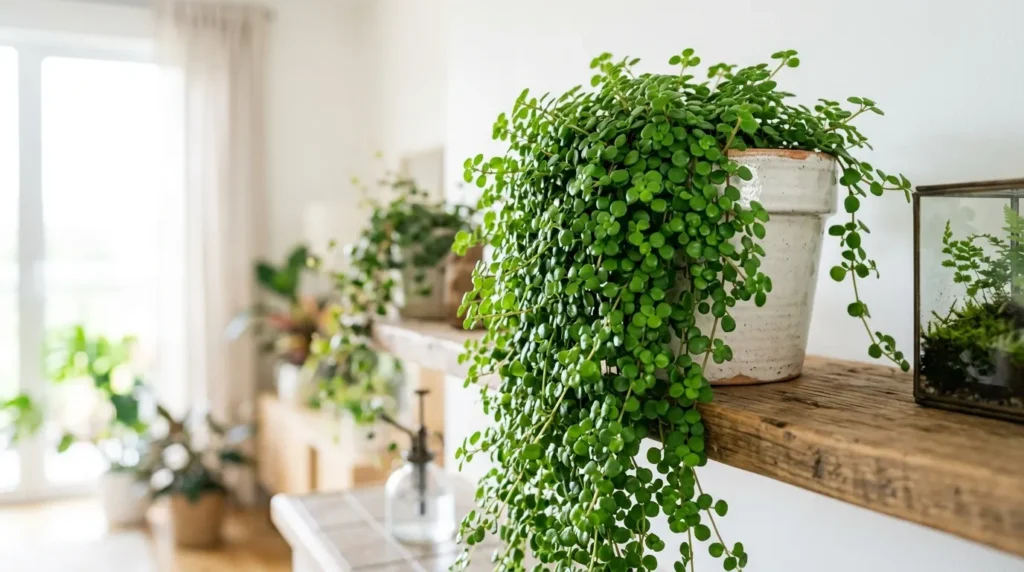
Himalaya Pilea depressa is a small-leaved trailing houseplant from the genus Pilea in the Urticaceae family. Also known as depressed clearweed, it is valued for its dense green foliage, spreading growth habit, and suitability for indoor gardens. This compact plant is commonly grown in terrariums, hanging baskets, and as a living ground cover because of its ability to form a soft carpet of tiny leaves. Understanding Himalaya Pilea depressa care, propagation methods, uses, and common problems helps growers maintain a healthy and attractive plant in different indoor environments.
Quick Summary
- Himalaya Pilea depressa is a low-maintenance trailing houseplant prized for its tiny, dense foliage.
- It grows best in bright, indirect light, high humidity, and consistently moist but well-draining soil.
- The plant is considered non-toxic to pets and humans, making it suitable for many homes.
- Stem cuttings allow easy propagation in water or soil.
- It is widely used in terrariums, hanging baskets, and indoor plant displays.
What Is Himalaya Pilea Depressa?
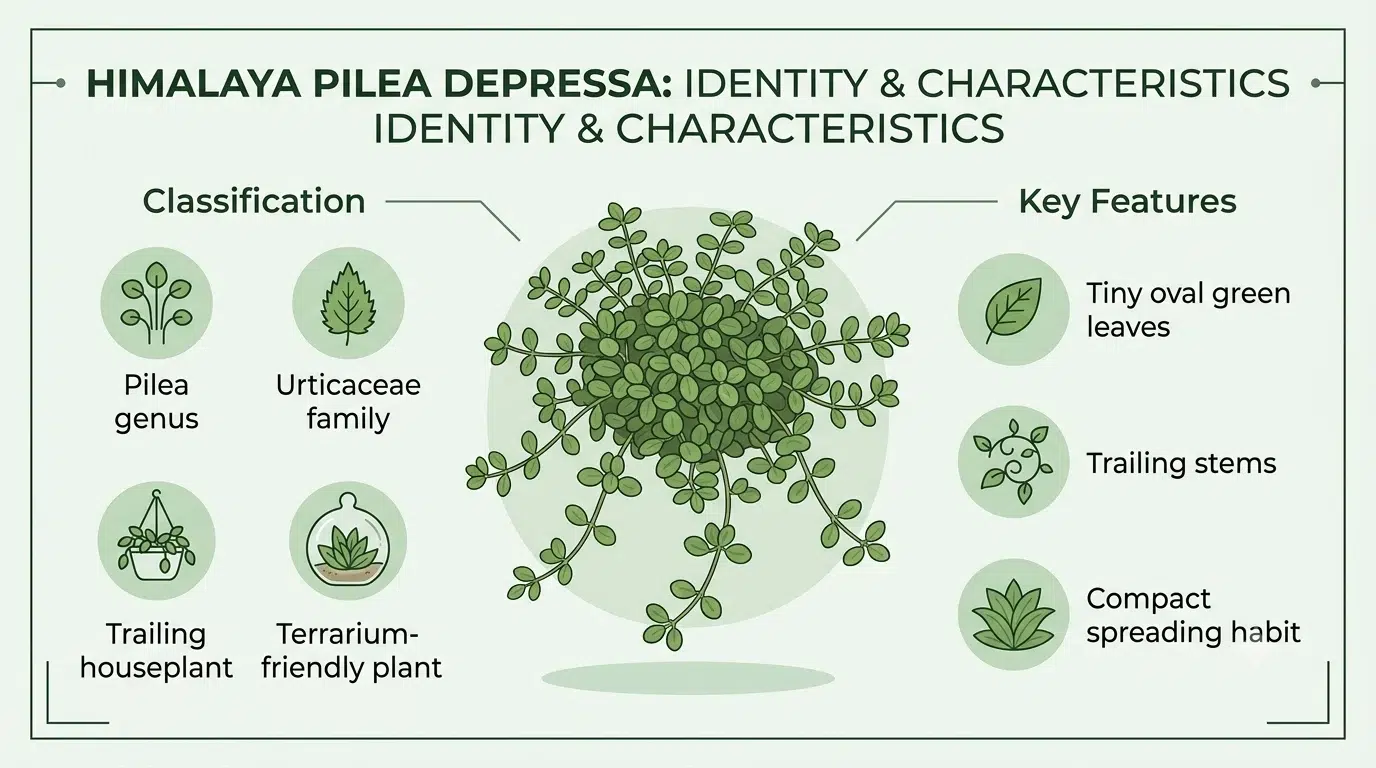
Himalaya Pilea depressa is a trailing perennial plant belonging to the Pilea genus and the Urticaceae (nettle) family. The species name depressa refers to its low-growing, spreading growth habit. It is sometimes called depressed clearweed and is often confused with other small-leaved plants such as Baby Tears (Soleirolia soleirolii). Himalaya Pilea depressa belongs to the Pilea genus, a group of flowering plants in the nettle family (Urticaceae) with many species grown as ornamental plants.
This plant naturally grows in warm, humid environments where it develops a creeping habit along forest floors and moist areas. As a houseplant, it is appreciated for its small, rounded to oval leaves, thin stems, and ability to spread outward rather than grow tall.
Mature Himalaya Pilea depressa typically forms a dense green mat with trailing stems that can cascade from containers or fill small terrariums.
Its compact size makes it suitable for:
- Indoor plant shelves
- Closed and open terrariums
- Hanging baskets
- Decorative ground cover arrangements
Himalaya Pilea Depressa vs. Other Pilea Varieties
Himalaya Pilea depressa differs from other popular Pilea varieties in appearance and growth style.
| Plant | Main Features | Growth Habit |
| Pilea depressa | Tiny leaves, trailing stems, dense growth | Creeping/trailing |
| Pilea glauca | Small blue-green leaves on delicate stems | Cascading |
| Pilea peperomioides | Large round coin-shaped leaves | Upright |
Unlike the popular Chinese money plant (Pilea peperomioides), Himalaya Pilea depressa does not produce large circular leaves or a tree-like form. It is mainly valued as a ground-covering and trailing plant. Similar trailing houseplants with small leaves, such as Peperomia rotundifolia, are also popular for indoor displays because of their compact growth and easy-care nature.
Himalaya Pilea Depressa Care Guide
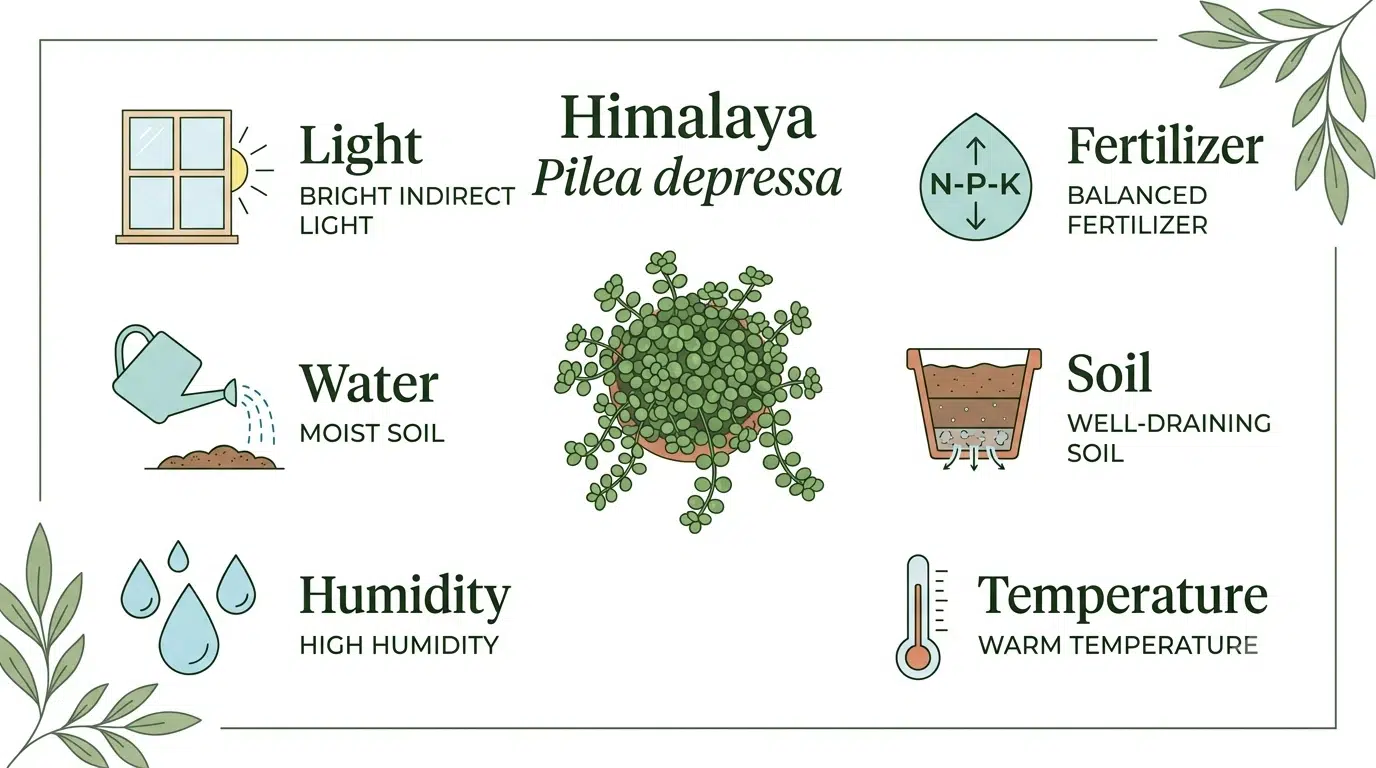
Himalaya Pilea depressa care is relatively simple because the plant adapts well to indoor conditions when its basic needs are met. The most important factors are moisture control, humidity, indirect light, and well-draining soil.
| Care Factor | Requirement |
| Light | Bright, indirect light |
| Water | Keep soil lightly moist but avoid soggy conditions |
| Humidity | Moderate to high humidity preferred |
| Temperature | About 18–26°C (65–80°F) |
| Soil | Moisture-retaining but well-draining mix |
| Fertilizer | Balanced fertilizer during active growth |
Light Requirements
Himalaya Pilea depressa grows best in bright, indirect light. It can tolerate lower light conditions, but growth may become slower and stems may become stretched or leggy.
Direct sunlight, especially strong afternoon sun, can damage the delicate leaves and cause:
- Leaf scorch
- Brown patches
- Faded foliage
A location near an east or north-facing window with filtered light is often suitable.
Watering Needs
Pilea depressa prefers consistently moist soil but does not tolerate waterlogged roots. Water when the top layer of soil begins to feel slightly dry.
Signs of watering problems include:
- Yellow leaves from excessive moisture
- Drooping leaves from dehydration
- Soft stems from root stress
During warmer months, watering may be needed more frequently because evaporation increases. In cooler seasons, reduce watering because plant growth slows.
Humidity and Temperature
This plant prefers humid environments similar to its natural tropical habitat. Ideal humidity is generally around 50–70%, making it a good choice for terrariums. If indoor humidity is consistently low, methods such as grouping plants together or using natural humidity-boosting techniques can help tropical houseplants perform better.
Suitable temperature conditions:
- Avoid temperatures below 10°C (50°F)
- Protect from cold drafts
- Keep away from direct heat sources
Higher humidity helps maintain healthy leaf growth and prevents crispy leaf edges.
Soil and Fertilizing
A lightweight, well-draining soil mix works best for Himalaya Pilea depressa. A combination of regular potting soil, peat or coco coir, and perlite can improve moisture balance.
Fertilizing recommendations:
- Apply a diluted balanced fertilizer every 4–6 weeks during spring and summer.
- Reduce feeding during winter when growth slows.
- Avoid overfertilizing, which can damage roots.
Pruning and Maintenance
Regular pruning keeps Pilea depressa compact and encourages fuller growth. Trim long trailing stems to maintain shape or remove damaged leaves.
Basic maintenance includes:
- Removing dead foliage
- Checking for pests
- Rotating the pot for even growth
- Maintaining proper moisture levels
How to Propagate Himalaya Pilea Depressa
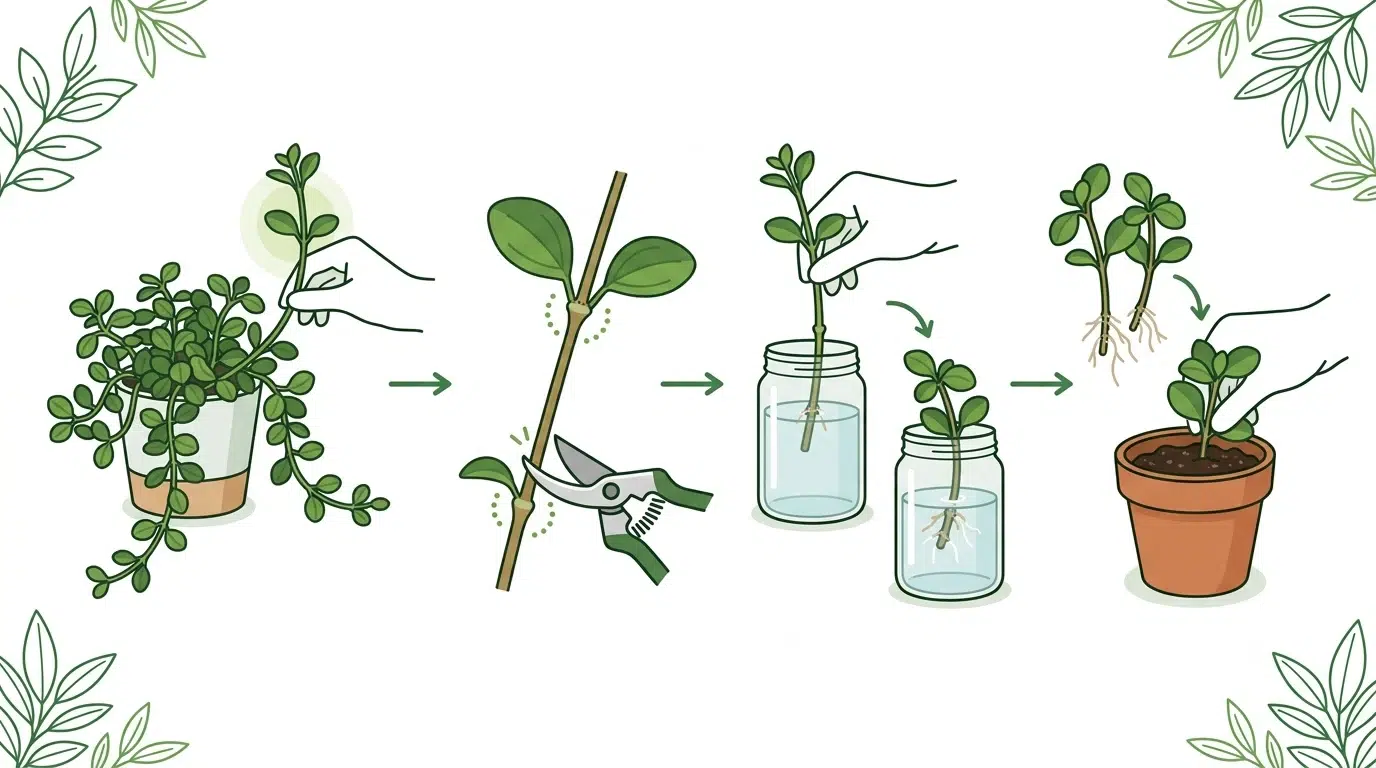
Himalaya Pilea depressa propagation is easy because the plant naturally produces spreading stems that can develop roots. Stem cuttings are the most common method. Propagation methods vary between houseplant species, but stem cutting techniques are commonly used for many easy-care indoor plants.
Propagating in Water
To propagate in water:
- Cut a healthy stem section with several leaves.
- Remove leaves from the lower portion.
- Place the cutting in clean water.
- Change water regularly.
- Transfer to soil once roots develop.
Water propagation allows growers to observe root development before planting.
Propagating in Soil
Soil propagation is also effective:
- Take a healthy stem cutting.
- Place it directly into moist, well-draining soil.
- Keep humidity high while roots develop.
- Maintain consistent moisture.
New growth usually appears after successful rooting.
What Is Pilea Depressa Used For?
Pilea depressa is mainly used as a decorative indoor plant because of its trailing growth and small leaves.
Common uses include:
- Terrariums: Its compact size and humidity preference make it ideal for enclosed plant displays.
- Hanging baskets: Trailing stems create a cascading appearance.
- Ground cover: It can spread across soil surfaces in decorative arrangements.
- Fairy gardens: Small leaves create a miniature landscape effect.
It is especially popular among indoor gardeners looking for a low-growing plant that adds texture.
Benefits of the Pilea Plant
Pilea plants are valued for their easy care, decorative appeal, and ability to improve indoor plant collections. Many indoor gardeners combine Pilea depressa with other decorative foliage plants, including species with unique leaf textures and waxy foliage characteristics.
Himalaya Pilea depressa offers several practical benefits:
- Requires minimal maintenance compared with many tropical plants.
- Adds greenery to small indoor spaces.
- Works well in creative plant designs.
- Can be easily propagated and shared with others.
Is Pilea an Air Purifier?
Pilea plants contribute to indoor greenery and may support a healthier indoor environment by adding moisture through natural transpiration. However, strong scientific evidence does not classify Pilea depressa as a major air-purifying plant.
Its primary benefit is aesthetic and environmental enrichment rather than significant air filtration.
Why Is Pilea Called a “Friendship Plant”?
Some Pilea species are associated with the idea of a friendship plant because they are easy to propagate and share. Gardeners often give new plant cuttings to friends, creating a tradition of plant sharing.
Pilea Plant Symbolism and Common Beliefs
Pilea plants are connected with various cultural beliefs, but these ideas are symbolic rather than scientifically proven. Some people associate Pilea plants with luck, prosperity, and positive energy.
Is Pilea Plant Lucky?
Many plant enthusiasts consider Pilea lucky because of its attractive appearance and association with growth and abundance. However, luck-related meanings are cultural beliefs rather than botanical facts.
Is Pilea a Money Plant?
Himalaya Pilea depressa is not the traditional Chinese money plant. The name “money plant” usually refers to Pilea peperomioides, which has round coin-shaped leaves.
| Plant | Common Name | Leaf Shape |
| Pilea depressa | Depressed clearweed | Small oval leaves |
| Pilea peperomioides | Chinese money plant | Large round leaves |
Is Pilea Plant Safe?
Pilea plants are generally considered safe for households and are commonly grown around people and pets.
Can You Eat Pilea?
Pilea depressa is not grown as an edible plant. While it is not considered highly toxic, it should not be intentionally eaten because it has no recognized culinary use.
Is Pilea Safe for Bedrooms?
Pilea can be kept in bedrooms because it is a compact indoor plant that does not release harmful substances under normal growing conditions.
Common Problems With Himalaya Pilea Depressa
Leaves Turning Yellow or Drooping
Yellow or drooping leaves often result from:
- Overwatering
- Poor drainage
- Low humidity
- Insufficient light
Improve conditions by adjusting watering habits, increasing indirect light, and checking soil drainage.
Root Rot and Overwatering Issues
Root rot occurs when roots remain wet for too long.
Prevention includes:
- Using drainage holes
- Avoiding standing water
- Allowing excess moisture to escape
Affected roots should be removed and the plant repotted in fresh soil.
Pests (Aphids, Fungus Gnats)
Common pests include aphids and fungus gnats.
Control methods include:
- Removing infected leaves
- Improving airflow
- Allowing the soil surface to dry slightly
- Using appropriate insect treatments if needed
Aphids are common indoor plant pests that can affect many houseplants, and early identification helps prevent leaf damage and slow growth.
Slow or Leggy Growth
Leggy growth usually happens because of insufficient light. Move the plant to brighter indirect light and prune stretched stems to encourage bushier growth.
How to Make a Pilea Happy
A healthy Pilea depressa needs stable conditions rather than frequent changes.
Common Beginner Mistakes
Common mistakes include:
- Watering too often
- Placing the plant in harsh sunlight
- Using heavy soil with poor drainage
- Ignoring humidity needs
Seasonal Care Adjustments
During spring and summer, increase watering and fertilizing as growth becomes active. In autumn and winter, reduce watering and fertilizer because the plant naturally grows more slowly.
Can I Put Pilea in Water?
Yes, Pilea depressa can grow in water temporarily and may survive in long-term water culture if conditions are maintained. However, plants grown permanently in water require regular water changes, nutrients, and monitoring to prevent decline.
Himalaya Pilea Depressa Varieties and Similar Plants
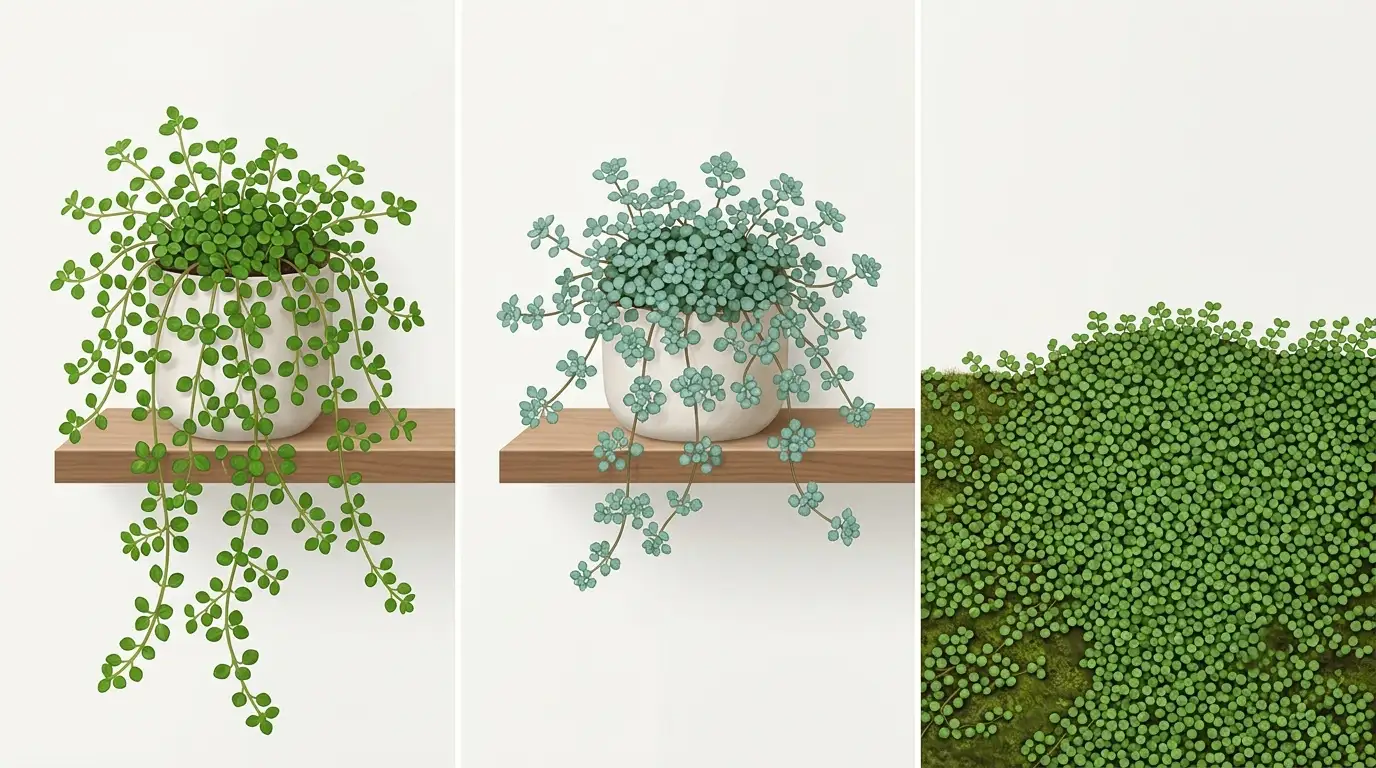
Different small-leaved plants are often compared with Pilea depressa because of their similar appearance.
Comparison Table — Pilea Depressa vs. Pilea Glauca vs. Soleirolia soleirolii
| Feature | Pilea Depressa | Pilea Glauca | Soleirolia soleirolii |
| Leaf Size | Tiny | Tiny | Very tiny |
| Growth Style | Trailing | Cascading | Carpet-forming |
| Common Use | Terrariums, baskets | Hanging displays | Ground cover |
| Care Needs | Humidity and moisture | Similar humidity needs | Moist soil preference |
Conclusion
Himalaya Pilea depressa is a beginner-friendly trailing houseplant known for its tiny leaves, compact growth, and versatility in indoor gardening. With bright indirect light, consistent moisture, good humidity, and well-draining soil, it can thrive in homes, terrariums, and hanging containers. Understanding Himalaya Pilea depressa care, propagation, and common problems helps growers maintain a healthy plant that adds natural texture and greenery to indoor spaces. Indoor plants like Himalaya Pilea depressa are part of a wider category of houseplants valued for their care requirements, decorative appeal, and growing benefits. Explore more plant care information in our complete Plants: Benefits and Guides resource.
FAQs
What is Pilea depressa used for?
Pilea depressa is used mainly for terrariums, hanging baskets, indoor plant displays, fairy gardens, and decorative ground cover because of its trailing growth and small leaves.
Is Pilea depressa the same as Chinese money plant?
No. Pilea depressa is different from the Chinese money plant (Pilea peperomioides). The Chinese money plant has large round leaves, while Pilea depressa has tiny trailing leaves.
How often should I water Himalaya Pilea depressa?
Water Himalaya Pilea depressa when the top layer of soil starts drying. The soil should remain lightly moist but never waterlogged.
Can Pilea depressa live in water permanently?
Pilea depressa can grow in water for extended periods, but permanent water culture requires regular maintenance, nutrient supply, and clean water conditions.
Why are my Pilea depressa leaves turning yellow?
Yellow leaves are commonly caused by overwatering, poor drainage, low light, or insufficient humidity. Adjusting care conditions usually helps restore healthy growth.
Is Himalaya Pilea depressa safe for pets?
Yes, Himalaya Pilea depressa is generally considered non-toxic and is commonly grown in homes with pets.



One Response