
Introduction
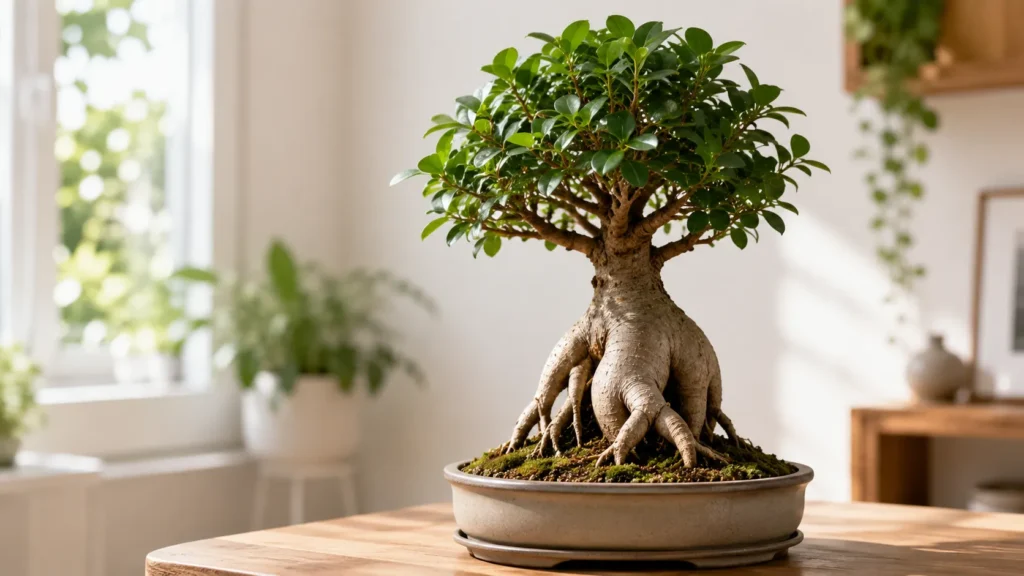
Ficus ginseng bonsai is one of the most recognizable and beginner-friendly bonsai trees available today. Known for its thick, bulbous aerial roots and compact canopy, it combines an exotic appearance with relatively simple care requirements. The plant originates from Ficus microcarpa, a tropical fig species native to parts of Asia and Australia. Unlike many bonsai species that require advanced maintenance, the ficus ginseng adapts well to indoor environments and tolerates occasional care mistakes. Whether you are new to bonsai cultivation or looking to expand your collection, this guide explains everything from growth habits and symbolism to watering, pruning, and long-term care. Ficus ginseng bonsai is part of a wider collection of indoor and outdoor plant care topics covered in our complete Plants Benefits and Guides (Complete Care, Types & Growing Tips) resource.
Quick Summary
- The ficus ginseng bonsai (Ficus microcarpa) is a tropical fig species prized for its dramatic exposed root system and low-maintenance nature.
- It thrives indoors in bright, indirect light and needs watering only when the topsoil begins to dry out.
- Despite its exotic appearance, it is considered one of the most beginner-friendly bonsai trees available.
- It carries cultural symbolism tied to good luck, longevity, and positive energy in several Asian traditions.
What Is a Ficus Ginseng Bonsai?
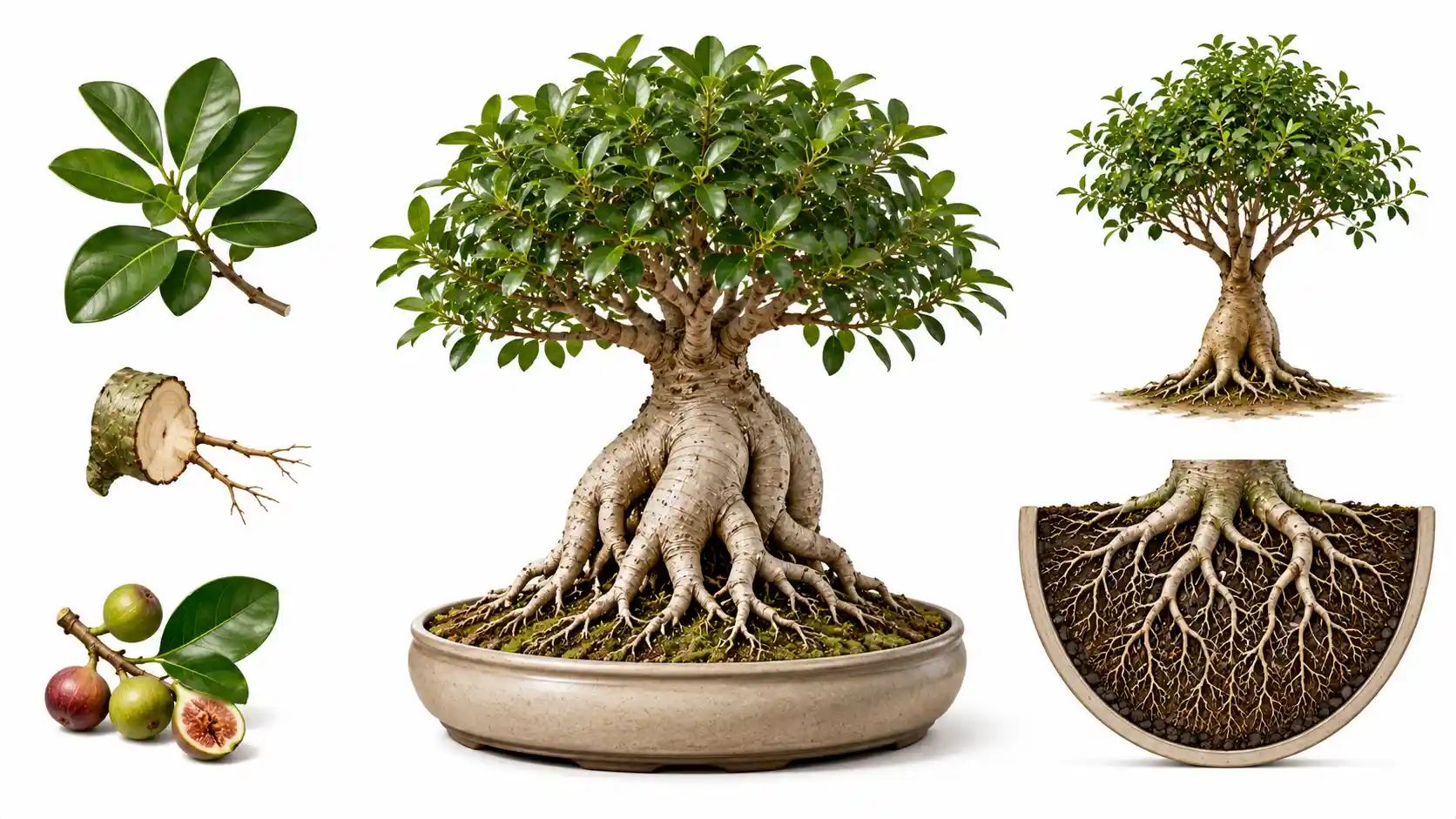
A ficus ginseng bonsai is a cultivated form of Ficus microcarpa, a tropical evergreen fig tree. The term “ginseng” refers to the plant’s swollen, root-like trunk structure, which resembles the shape of traditional ginseng roots. It is not related to the medicinal ginseng herb. Ficus ginseng bonsai follows the traditional principles of bonsai, the Japanese art of cultivating miniature trees in containers.
Ficus microcarpa belongs to the Moraceae family, commonly known as the fig family. The species is native to tropical regions of Asia and Australia, where it can grow into a large tree. Bonsai growers cultivate it in containers and train it into miniature forms while preserving its mature tree appearance.
The names ginseng ficus, ginseng bonsai, ginseng ficus bonsai, and ficus microcarpa ginseng all generally refer to the same plant.
Ficus Ginseng vs. Other Bonsai Trees
The ficus ginseng bonsai is often compared to the Chinese elm bonsai because both are suitable for beginners.
| Feature | Ficus Ginseng Bonsai | Chinese Elm Bonsai |
| Scientific Name | Ficus microcarpa | Ulmus parvifolia |
| Best Environment | Indoors | Indoors / Outdoors |
| Watering Frequency | Moderate | Moderate |
| Beginner Friendly | ✅ Yes | ✅ Yes |
| Leaf Drop Sensitivity | High (stress-related) | Seasonal |
| Root Aesthetic | Bulbous, dramatic | Standard |
Ficus Ginseng Bonsai Meaning and Symbolism
A ficus ginseng bonsai is commonly associated with good luck, harmony, balance, prosperity, and longevity. In many East Asian traditions, bonsai trees symbolize patience, resilience, and the connection between nature and human care. Similar to other popular symbolic houseplants such as the Japanese money plant, ficus ginseng bonsai is often associated with positive energy, prosperity, and thoughtful home placement.
Is a ficus ginseng bonsai good luck? Many people consider it a lucky plant because it represents stability, abundance, and positive energy. It is frequently used in homes and offices as a decorative symbol of growth and success. Many indoor plants have cultural meanings connected with luck and harmony, including the lucky money plant, which is also commonly linked with feng shui traditions.
What is the luckiest bonsai tree? While different traditions vary, ficus species are often included among the bonsai trees believed to attract prosperity and positive energy.
Receiving a bonsai tree as a gift often symbolizes:
- Respect
- Friendship
- Long-term well-being
- Patience and growth
- Good fortune
Many people also consider it auspicious to keep a ficus ginseng bonsai in living rooms, offices, and other well-lit spaces.
Is It Good to Keep a Ginseng Bonsai in Your Room?
Yes, it is generally good to keep a ginseng bonsai in your room if the space receives adequate bright, indirect light. The plant adapts well to indoor environments and can contribute to a calming atmosphere. Other easy-care indoor plants, such as spider plants, are also commonly grown in homes because of their low-maintenance nature and indoor greenery benefits.
For best results:
- Place it near a bright window.
- Avoid dark corners.
- Protect it from cold drafts.
- Maintain moderate humidity levels.
How Big Can a Ficus Ginseng Bonsai Grow?
A ficus ginseng bonsai typically grows between 10 and 40 inches (25–100 cm) tall when cultivated indoors. In its natural habitat, Ficus microcarpa can grow several meters tall and develop an extensive canopy.
Several factors influence size:
- Pot dimensions
- Pruning frequency
- Light exposure
- Root management
- Temperature and humidity
The canopy spread often increases alongside trunk development, although regular pruning can maintain a compact appearance.
Training techniques and bonsai styling significantly influence the tree’s long-term shape and size.
Ficus Ginseng Growth Rate
Ficus ginseng has a moderate to relatively fast growth rate under favorable conditions. Growth is strongest during warm seasons when temperatures, humidity, and light levels are high.
Factors affecting growth include:
- Bright light exposure
- Consistent watering
- Warm temperatures
- Regular fertilization
Indoor cultivation generally slows growth compared to tropical outdoor environments.
Ficus Ginseng Bonsai Care Guide
Proper care focuses on maintaining healthy roots, balanced moisture, sufficient light, and regular pruning.
Light Requirements
Ficus ginseng bonsai grows best in bright, indirect light. A position near an east-facing or south-facing window is usually ideal.
Insufficient light can cause:
- Leaf drop
- Weak growth
- Sparse foliage
- Elongated stems
During warm summer months, outdoor placement in a sheltered location can encourage vigorous growth.
How Often to Water a Ficus Ginseng Bonsai
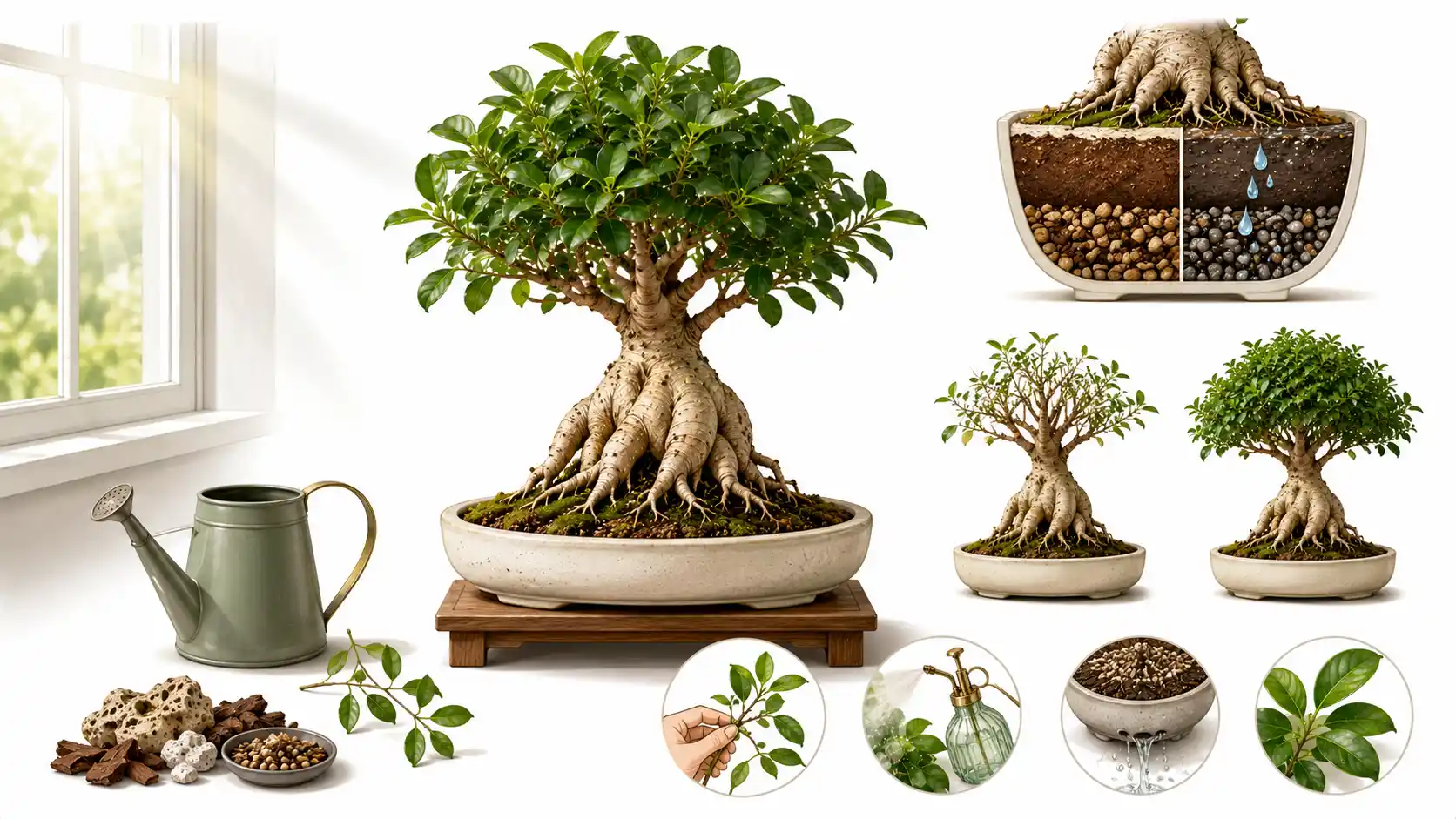
Water a ficus ginseng bonsai when the top inch of soil feels dry. Watering should always be based on soil moisture rather than a fixed schedule.
Typical frequency:
- Every 3–5 days during warm seasons
- Every 5–10 days during cooler periods
Does ficus ginseng need a lot of water? No. It prefers evenly moist soil but does not tolerate waterlogged conditions.
Signs of overwatering:
- Yellow leaves
- Soft roots
- Fungal issues
- Persistent wet soil
Signs of underwatering:
- Dry soil
- Wilting
- Leaf drop
- Crispy foliage edges
Should you mist ginseng ficus? Misting can help increase humidity temporarily, especially in dry indoor environments, but it should not replace proper watering.
Soil and Potting
Ficus microcarpa performs best in a well-draining bonsai soil mix that allows airflow around the roots.
An effective bonsai soil mix often contains:
- Akadama
- Pumice
- Lava rock
- Coarse organic material
Repotting is usually recommended every 2–3 years.
Are coffee grounds good for ficus? Coffee grounds may provide nutrients and influence soil acidity, but excessive use can create drainage problems. Small amounts of composted coffee grounds are generally safer than fresh grounds.
Temperature and Humidity
The ideal temperature range is approximately 60–75°F (15–24°C). Tropical indoor plants such as Alocasia Amazonica also require attention to humidity, temperature stability, and protection from dry indoor air.
Avoid placing the bonsai near:
- Heating vents
- Air conditioners
- Cold windows during winter
- Drafty doors
As a tropical species, ficus ginseng appreciates moderate to high humidity.
Practical humidity solutions include:
- Humidity trays
- Plant grouping
- Room humidifiers
- Occasional misting
Fertilization
Apply a balanced liquid fertilizer during the active growing season.
General schedule:
- Every 2–4 weeks in spring and summer
- Reduce feeding in autumn
- Stop or significantly reduce fertilization in winter
Both organic and synthetic fertilizers can be effective when used according to label instructions.
Pruning and Shaping
Regular pruning maintains the bonsai’s structure and encourages dense branching.
Pruning goals include:
- Removing unwanted growth
- Controlling size
- Improving branch structure
- Encouraging ramification
Remove weak, crossing, or overcrowded branches. Consistent pruning promotes back-budding and creates a fuller canopy over time.
Ficus Ginseng Bonsai — Indoors or Outdoors?
Ficus ginseng bonsai is primarily an indoor bonsai in temperate climates but benefits from outdoor placement during warm weather.
Outdoor placement is generally safe when temperatures remain above 60°F (15°C).
Tips for outdoor transitions:
- Move gradually to avoid shock.
- Introduce sunlight slowly.
- Monitor moisture more frequently.
- Bring the tree indoors before temperatures drop.
Regional climate plays a major role in determining whether outdoor cultivation is possible year-round.
What Is the Lifespan of a Ficus Ginseng?
A ficus ginseng bonsai can live for decades and may exceed 100 years with proper care.
Factors that support longevity include:
- Healthy root systems
- Proper repotting
- Consistent watering
- Effective pest management
- Appropriate pruning
Poor drainage, chronic stress, and neglect can significantly shorten lifespan.
Common Problems with Ginseng Ficus and How to Fix Them
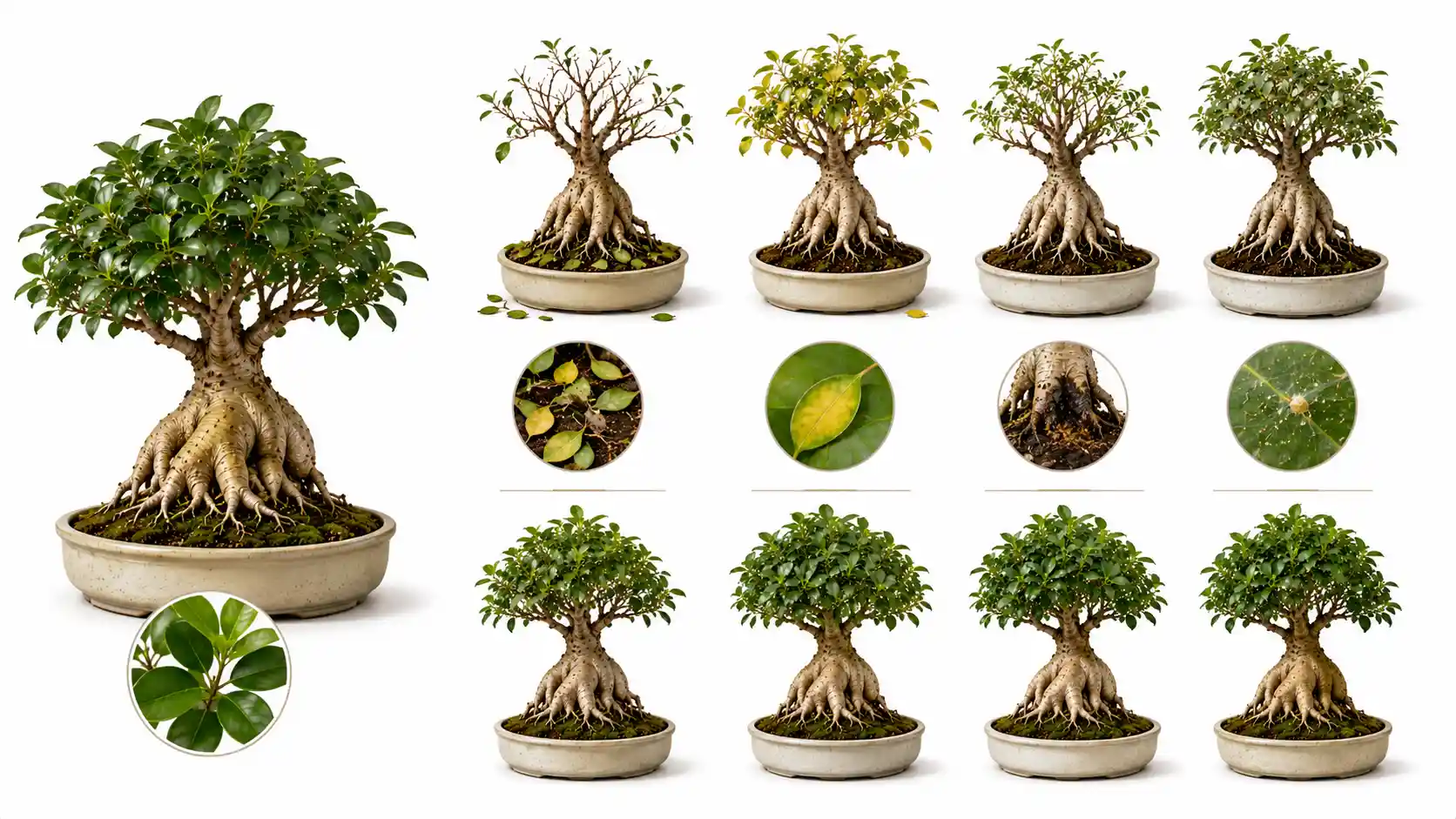
Several issues can affect ficus ginseng bonsai, but most are preventable through proper care.
Leaves Falling Off
Why:
- Sudden environmental changes
- Low light
- Drafts
- Overwatering
Fix:
- Stabilize growing conditions
- Adjust watering practices
- Improve lighting
Prevention:
- Avoid frequent relocation
Yellowing Leaves
Why:
- Excess water
- Nutrient deficiency
- Poor drainage
Fix:
- Improve drainage
- Adjust watering
- Apply balanced fertilizer
Root Rot
Why:
- Waterlogged soil
Fix:
- Remove affected roots
- Repot into fresh, well-draining soil
Pest Infestations (Scale and Spider Mites)
Why:
- Dry indoor conditions
- Plant stress
Fix:
- Neem oil treatments
- Increased humidity
- Manual removal when necessary
Prevention:
- Regular inspections
- Good airflow
- Consistent care
Pest prevention is an important part of indoor plant care, and similar approaches are useful when managing common houseplant insects such as aphids.
Can a Bonsai Survive 2 Weeks Without Water?
No, most bonsai trees, including ficus ginseng, cannot reliably survive two full weeks without water under normal indoor conditions.
Survival depends on:
- Pot size
- Soil composition
- Humidity levels
- Season
- Temperature
Vacation solutions include:
- Self-watering trays
- Water-retaining moss layers
- Automated watering systems
- Asking someone to water the tree
The Biggest Mistake Bonsai Beginners Make
The most common mistake bonsai beginners make is overwatering. Many new growers water on a fixed schedule rather than checking soil moisture.
Other common mistakes include:
- Placing the tree in low-light areas
- Repotting too frequently
- Ignoring humidity requirements
- Moving the tree repeatedly between locations
These mistakes often lead to leaf loss, weak growth, and root problems.
Are Ginseng Bonsai Hard to Grow?
No, ginseng bonsai are not hard to grow. Ficus ginseng is widely considered one of the easiest bonsai species for beginners. Like the ZZ plant, ficus ginseng bonsai is popular among beginners because it adapts well to indoor conditions when basic care requirements are met.
Its popularity comes from several advantages:
- Adaptability to indoor conditions
- Tolerance for occasional care errors
- Strong recovery ability
- Attractive appearance year-round
Compared with many traditional bonsai species, ficus ginseng requires less specialized care.
Ficus Ginseng Bonsai Styles and Aesthetics
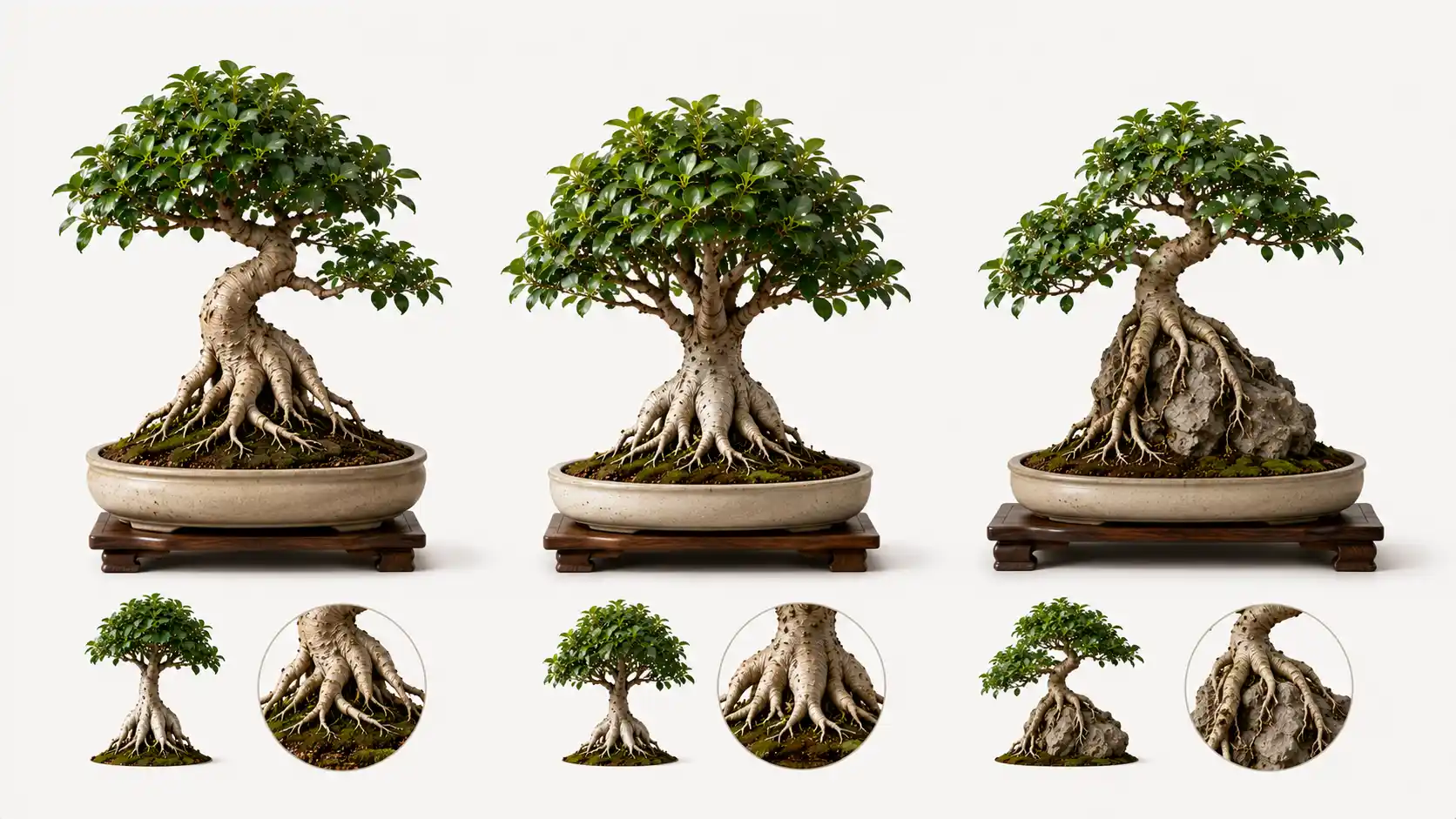
The unique root structure of the ficus ginseng bonsai lends itself to several classic bonsai styles.
Exposed Root Style (Neagari)
This style emphasizes elevated roots that appear above the soil surface, highlighting the dramatic root structure.
Informal Upright (Moyogi)
A gently curved trunk creates a natural and balanced appearance while maintaining an upright form.
Rock Over Root (Seki-joju)
Roots grow over and around rocks before entering the soil, creating a striking visual effect.
Styling develops gradually through pruning, wiring, and long-term training.
Does Ficus Ginseng Flower?
Yes, Ficus microcarpa can produce flowers, but they are rarely visible on indoor bonsai specimens.
The flowers develop inside specialized fig-like structures called syconia. Because the flowers are enclosed, most growers never see them directly.
Flowering is more likely when the tree experiences ideal growing conditions, including:
- Strong light
- Warm temperatures
- Healthy root development
- Stable environmental conditions
Although uncommon indoors, flowering generally indicates a healthy and mature plant.
Conclusion
The ficus ginseng bonsai combines striking aesthetics with relatively simple care requirements, making it one of the best bonsai trees for beginners and experienced growers alike. Success depends on providing bright indirect light, proper watering, adequate humidity, regular pruning, and consistent maintenance. Beyond its ornamental appeal, the tree carries cultural associations with good luck, prosperity, and longevity. With attentive care and patience, a ficus ginseng bonsai can thrive indoors for decades and become a lasting focal point in any home or workspace.
Frequently Asked Questions
How do you take care of a ficus ginseng bonsai tree?
Provide bright indirect light, water when the topsoil begins to dry, fertilize during the growing season, maintain moderate humidity, and prune regularly to preserve shape and health.
How often should I water a ficus ginseng bonsai?
Water when the top inch of soil feels dry. Most indoor trees need watering every 3–7 days, depending on temperature, humidity, and pot size.
Why are the leaves falling off my ficus ginseng bonsai?
Leaf drop is usually caused by environmental stress, including sudden temperature changes, low light, drafts, or overwatering. Stable conditions typically help the tree recover.
Is a ficus ginseng bonsai good for beginners?
Yes. Ficus ginseng is considered one of the best beginner bonsai species because it adapts well to indoor conditions and tolerates minor care mistakes.
What does it mean when someone gives you a bonsai tree?
A bonsai tree gift often symbolizes respect, patience, friendship, good fortune, and long-term well-being. It is considered a meaningful and thoughtful gesture.
Can a ficus ginseng bonsai survive indoors year-round?
Yes. Ficus ginseng is highly suitable for indoor cultivation throughout the year, although it may benefit from outdoor placement during warm summer months.
How long does a ficus ginseng bonsai live?
With proper care, a ficus ginseng bonsai can live for several decades. Some well-maintained specimens have survived for more than 100 years.



2 Responses