
Introduction
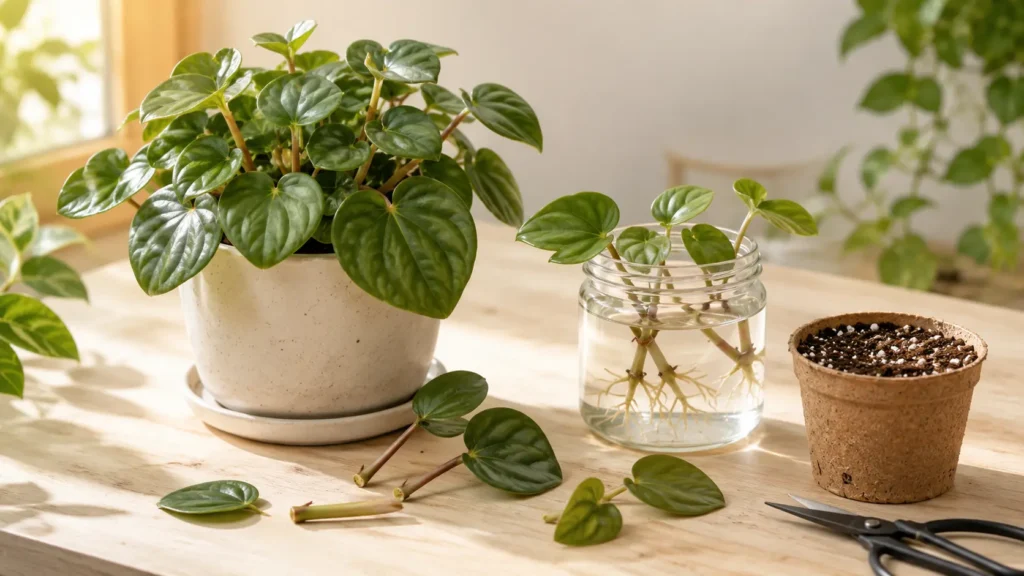
Peperomia leaf propagation is a simple, beginner-friendly way to grow new peperomia plants from a single leaf or leaf cutting. Propagation means creating a new plant from an existing plant part, such as a leaf, stem, or cutting. Because many peperomia varieties have thick, moisture-storing leaves, they can often develop roots and new growth through leaf propagation. This guide explains how peperomia propagation works, the difference between water and soil methods, stem versus leaf cuttings, watermelon peperomia and Peperomia obtusifolia propagation, and how to avoid common problems during the rooting process.
Quick Summary
- Peperomia can often be propagated from a leaf, although leaf-plus-petiole or stem cuttings usually root faster.
- Water and soil propagation methods both work; water provides visibility while soil encourages stronger root adaptation.
- Watermelon peperomia and Peperomia obtusifolia typically develop roots within 3–8 weeks.
- New growth forms from the base of the cutting, not by transforming the original leaf into a mature plant.
- Healthy cuttings need warmth, indirect light, and controlled moisture to prevent rot.
What Is Peperomia Leaf Propagation?
Peperomia leaf propagation is the process of growing a new peperomia plant from a leaf or leaf cutting instead of seeds. Peperomia plants belong to the family Piperaceae and are often considered semi-succulent because their thick leaves store water and nutrients that support new root development.
Peperomia plants belong to the Piperaceae plant family, a botanical group that includes many tropical flowering plants known for their diverse leaf forms.
Unlike some plants that require a stem node to grow, many peperomia varieties can produce roots from leaf tissue. This makes peperomia propagation accessible for beginners who want to multiply their plants using small cuttings.
Different peperomia varieties may respond differently to propagation methods, so learning about specific types such as Variegated Cupid Peperomia care can help growers understand their unique needs.
Leaf Propagation vs. Stem Propagation
Leaf-only cuttings can successfully root, but they usually take longer to develop into complete plants because they must create new growth points before producing stems and leaves.
Stem cuttings are often more reliable because they already contain a node, which is the growth point where roots and new shoots develop.
- Leaf cutting: Can root but may take longer to form a full plant.
- Stem cutting: Usually establishes faster because it contains a node.
- Leaf with petiole: Often provides better success than a leaf blade alone.
Peperomia can grow from stems, and stem propagation is generally the preferred method when faster results are desired.
Can You Propagate Peperomia From Just a Leaf?
Yes, many peperomia varieties can be propagated from just a leaf, although success depends on the variety and cutting method. Thick-leaved types such as Peperomia obtusifolia, watermelon peperomia (Peperomia argyreia), Peperomia caperata, and Peperomia rotundifolia are among the best candidates.
A leaf without a node may develop roots, but it does not always produce a new plantlet. Including a small section of petiole—the stalk connecting the leaf to the stem—increases the chance of successful propagation.
Peperomia rotundifolia is another variety that can be propagated successfully, and understanding its growing conditions through a Peperomia rotundifolia care guide can improve propagation success.
The most reliable leaf propagation candidates include:
- Peperomia obtusifolia
- Watermelon peperomia
- Peperomia caperata
- Peperomia rotundifolia
Where to Cut the Stem When Propagating Peperomia
When using a stem cutting, cut just below a healthy leaf node using clean, sharp scissors or a sterilized blade. The node contains the plant tissue needed for new roots and shoots.
For better results:
- Keep 1–2 inches of stem attached to the leaf when possible.
- Remove damaged or unhealthy leaves.
- Allow the cut end to dry and callous for several hours to one day before planting.
Allowing the cutting to callous reduces the risk of rot, especially when propagating in moist soil.
How to Propagate Peperomia in Water
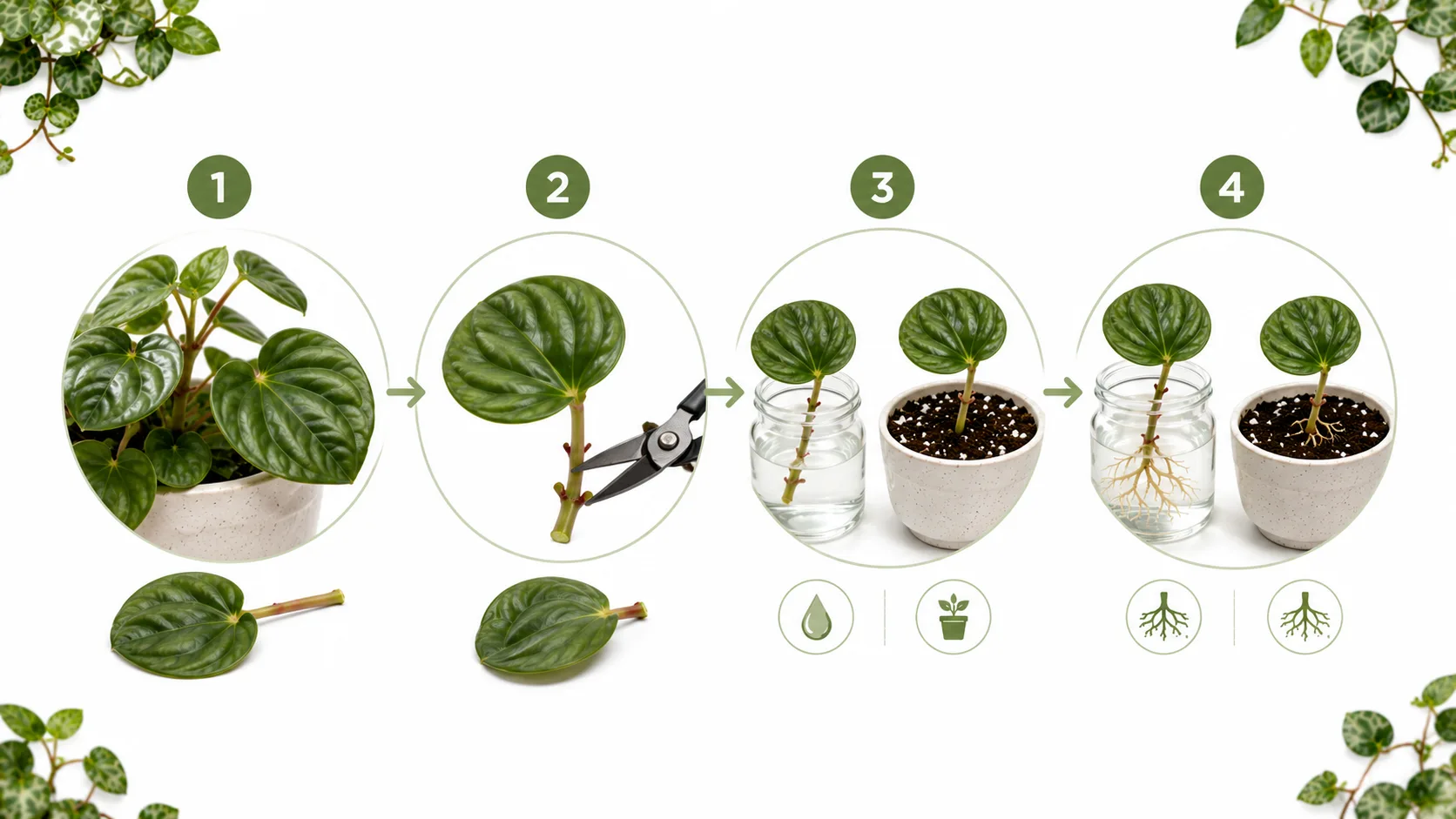
Peperomia water propagation is one of the easiest methods because it allows you to monitor root development. It works best with leaf-plus-petiole or stem cuttings.
Steps for water propagation:
- Cut a healthy leaf with a petiole or stem section.
- Place the cut end into clean water.
- Keep the leaf blade above the waterline.
- Use a clear container to monitor root growth.
- Replace water every 5–7 days.
- Transfer the cutting to soil when roots reach about 1–2 inches.
Roots usually appear within 2–4 weeks, although environmental conditions can affect timing.
How Long Does It Take to Propagate Watermelon Peperomia in Water?
Watermelon peperomia usually takes around 3–6 weeks to produce visible roots in water. After rooting, the plant may need another 4–6 weeks to become fully established after being moved into soil.
How to Propagate Peperomia in Soil
Soil propagation allows peperomia cuttings to develop directly in their growing environment. This method can create stronger soil-adapted roots and reduce transplant adjustment later.
Steps:
- Allow the cutting end to callous.
- Insert the cutting into moist, well-draining potting mix.
- Place it in a small pot with drainage holes.
- Keep the soil lightly moist but never saturated.
- Provide bright, indirect light.
A small amount of rooting hormone can be used to encourage faster root formation, although it is not required for most peperomia varieties.
Water vs. Soil Propagation — Which Is Better for Peperomia?
Both methods are effective, but they provide different advantages.
| Factor | Water Propagation | Soil Propagation |
| Root visibility | Easy to monitor | Roots remain hidden |
| Root strength | Softer water roots initially | Stronger soil-adapted roots |
| Transplant risk | Higher after moving to soil | Lower |
| Best for | Beginners and monitoring growth | Long-term establishment |
Water propagation is useful for beginners who want to observe root growth, while soil propagation often creates a smoother transition into mature plant growth.
How to Propagate Watermelon Peperomia
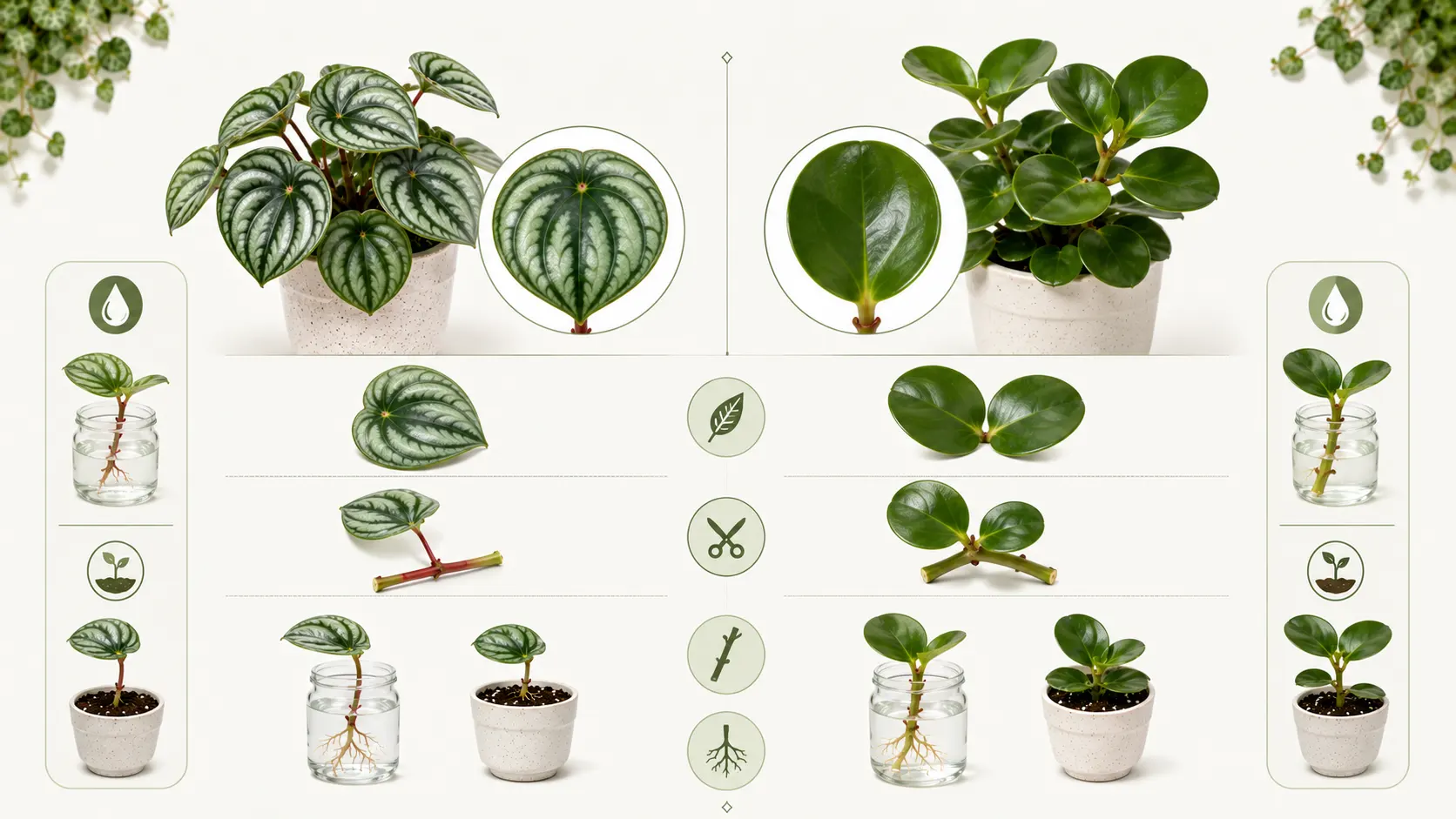
Watermelon peperomia propagation works best using a healthy mature leaf with a short petiole. The cutting can be rooted in either water or soil using standard peperomia propagation methods.
Watermelon peperomia (Peperomia argyreia) is sensitive to excess moisture, so drainage is essential. Use a well-draining mix and avoid keeping the soil constantly wet.
How to Propagate Peperomia Obtusifolia
Peperomia obtusifolia, also called the baby rubber plant, is one of the easiest peperomia varieties to propagate. Its thick, rubbery leaves store moisture, allowing successful rooting in both water and soil.
For best results:
- Choose healthy mature leaves.
- Use leaf-plus-petiole or stem cuttings.
- Avoid excessive watering during rooting.
If you want a more detailed process for this popular variety, see our complete guide on how to propagate Peperomia obtusifolia, including water and soil propagation techniques.
Other Houseplants You Can Propagate From a Leaf
Several other plants can also be propagated from leaves, including:
- Echeveria and sedum succulents
- African violets
- Snake plants
- Begonias
Each plant has different propagation requirements, but leaf-based propagation is common among many moisture-storing species. Many beginner-friendly houseplants can also be multiplied through simple cuttings, including learning propagation methods for other easy houseplants like string of pearls.
Do Peperomia Like Deep Pots?
No, peperomia generally prefer shallow, wide pots because they have naturally shallow root systems. Deep pots can hold excess moisture around unused soil, increasing the risk of root rot.
A pot with drainage holes and a well-draining soil mix is ideal for healthy peperomia growth.
How to Make Peperomia Bushy
To encourage bushier growth:
- Pinch growing tips to stimulate branching.
- Plant multiple cuttings together for a fuller appearance.
- Provide bright, indirect light to support compact growth.
Regular pruning helps maintain a dense shape and prevents leggy growth.
Common Peperomia Propagation Problems
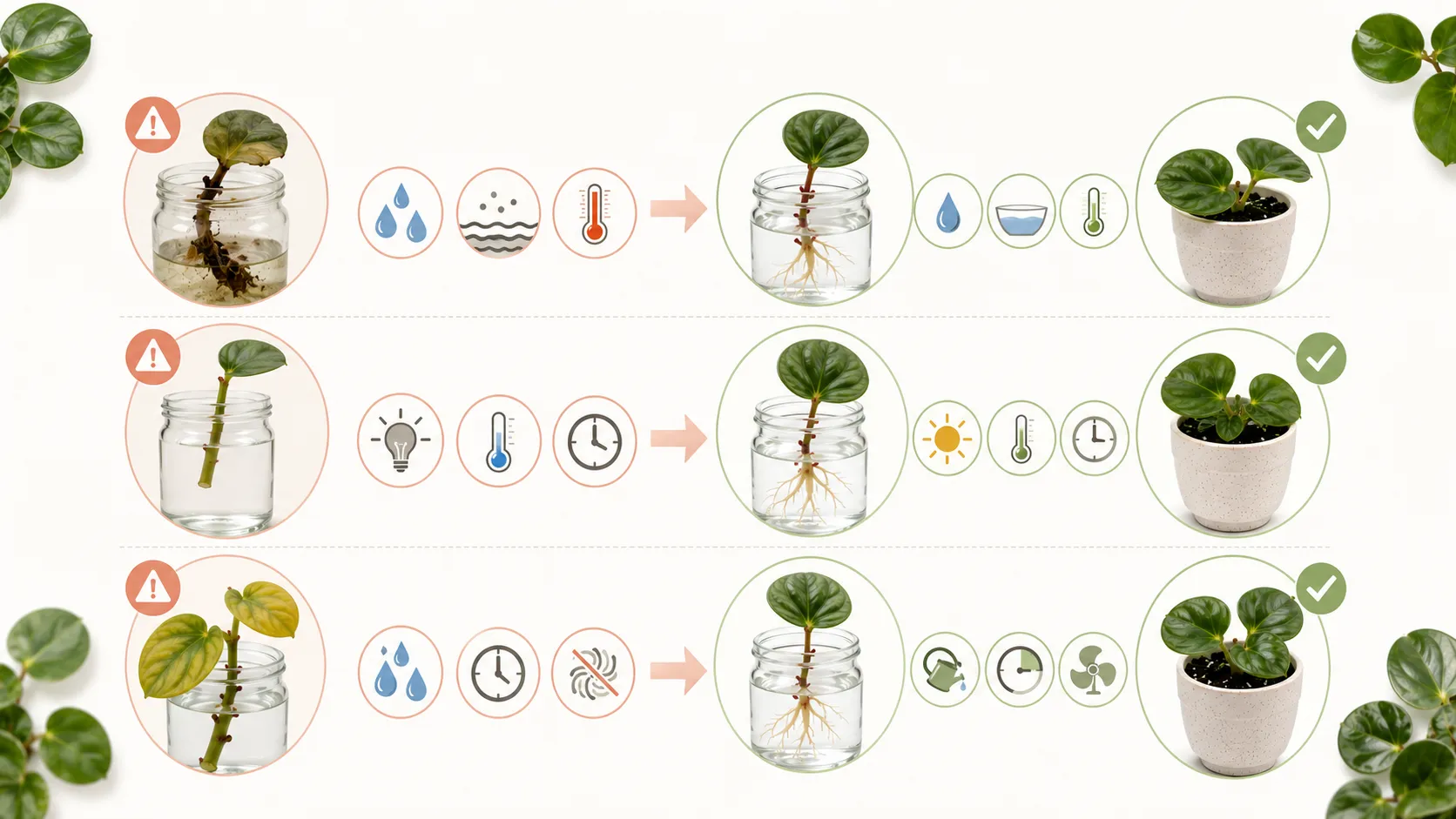
Cutting Is Rotting Instead of Rooting
Rot usually occurs because of excess moisture or because leaf tissue remains submerged.
Fix:
- Remove rotten sections.
- Restart in fresh water or soil.
- Keep leaves above the waterline.
Prevent rot by using clean tools and well-draining materials.
No Root Growth After Several Weeks
Slow rooting can happen due to low light, cold temperatures, or missing growth points.
Fix:
- Move the cutting to bright, indirect light.
- Maintain temperatures between 65–75°F.
- Use a cutting with a petiole or stem section.
Leaves Turning Yellow
Yellow leaves usually indicate overwatering or poor drainage.
Fix:
- Reduce watering frequency.
- Check for root damage.
- Allow the soil surface to dry before watering again.
Is Propagating Peperomia Hard?
No, propagating peperomia is considered beginner-friendly, but common mistakes can reduce success.
Avoid:
- Overwatering cuttings.
- Using leaf pieces without a petiole.
- Providing insufficient light.
- Moving cuttings before roots are established.
Patience and proper moisture control are the keys to successful propagation.
Why Is Peperomia Called the Radiator Plant?
Peperomia is called the radiator plant because older gardening references associated it with warm indoor environments, similar to homes where plants were placed near radiators. The name also reflects its preference for warmth and compact growth habits.
Is Peperomia a Succulent?
Peperomia is not a true succulent, but many varieties are considered semi-succulent. Their thick leaves store water, which helps them survive short dry periods and supports propagation from leaves.
Which Plants Are Illegal to Propagate?
Propagation restrictions usually apply to patented plant varieties protected under plant variety rights or similar protections. Common peperomia species are generally not restricted, but patented cultivars may have limitations on commercial propagation.
Plant Size
Peperomia plants are generally compact houseplants.
Typical sizes:
- Peperomia obtusifolia: around 6–12 inches tall indoors.
- Watermelon peperomia: usually 6–8 inches tall.
- Peperomia caperata: commonly 6–12 inches wide.
- Peperomia rotundifolia: grows as a trailing plant.
Light, pot size, and growing conditions influence final size.
Growth Rate
Peperomia are slow-to-moderate growers. They grow most actively during spring and summer and often slow down during winter.
Growth speed depends on:
- Bright indirect light.
- Warm temperatures.
- Proper watering.
- Adequate nutrients.
Care Guide
Peperomia care after propagation focuses on maintaining balanced conditions.
- Watering: Allow the top inch of soil to dry before watering.
- Light: Provide bright, indirect light.
- Soil: Use a chunky, well-draining mix.
- Fertilization: Feed lightly during the growing season.
- Pruning: Pinch tips to encourage branching.
- Climate: Keep temperatures around 65–80°F and avoid cold drafts.
Conclusion
Peperomia leaf propagation is an easy and effective way to grow new plants from existing peperomia leaves or cuttings. Methods such as water propagation and soil propagation both work well when moisture, light, and temperature are controlled. Varieties like watermelon peperomia and Peperomia obtusifolia are especially suitable for beginners. Choosing a healthy cutting, using proper techniques, and allowing enough time for root development will help create strong new peperomia plants. Once you understand peperomia propagation, you can apply similar techniques when you learn how to propagate other tropical houseplants such as prayer plants.
Peperomia is one of many popular indoor plants covered in our broader Plants: Benefits and Guides (Complete Care, Types & Growing Tips) resource, where you can explore care requirements, varieties, and growing tips for different plants.
FAQs
Can you propagate Peperomia from just a leaf?
Yes, many peperomia varieties can grow from a leaf, especially thick-leaved types like Peperomia obtusifolia and watermelon peperomia. A leaf with a petiole usually has a higher success rate than a leaf blade alone.
Is it better to propagate Peperomia in water or soil?
Both methods work. Water propagation makes root growth easy to observe, while soil propagation often creates stronger roots that are already adapted to growing conditions.
How long does it take to propagate watermelon peperomia?
Watermelon peperomia usually takes about 3–6 weeks to develop visible roots in water, followed by several weeks of adjustment after planting in soil.
Can Peperomia grow from stems?
Yes, peperomia can grow from stem cuttings. Stem cuttings with a healthy node usually root faster and more reliably than leaf-only cuttings.