
Introduction
How fast do string of turtles grow depends on care conditions, but the string of turtles plant (Peperomia prostrata) is generally a slow-to-moderate growing trailing succulent-like houseplant that develops new vines gradually. Native to tropical regions of South America, this unique peperomia is valued for its turtle-shell-patterned leaves and delicate trailing stems. While it does not grow as quickly as many common vines, proper light, watering, soil, and humidity can noticeably improve its growth speed. This guide explains string of turtles growth rate, size expectations, propagation methods, and the care factors that help this plant stay healthy and fuller. For more detailed information about different houseplant types, care requirements, and growing tips, explore our complete Plants Benefits and Guides resource.
Quick Summary
- String of Turtles is a slow-to-moderate grower, usually producing noticeable trailing growth during active seasons.
- Healthy plants may extend several inches over a growing season depending on light, water, and soil conditions.
- Bright indirect light, well-draining soil, and careful watering are the biggest factors affecting growth speed.
- String of Turtles is beginner-friendly but requires avoiding overwatering and heavy soils.
What Is String of Turtles?
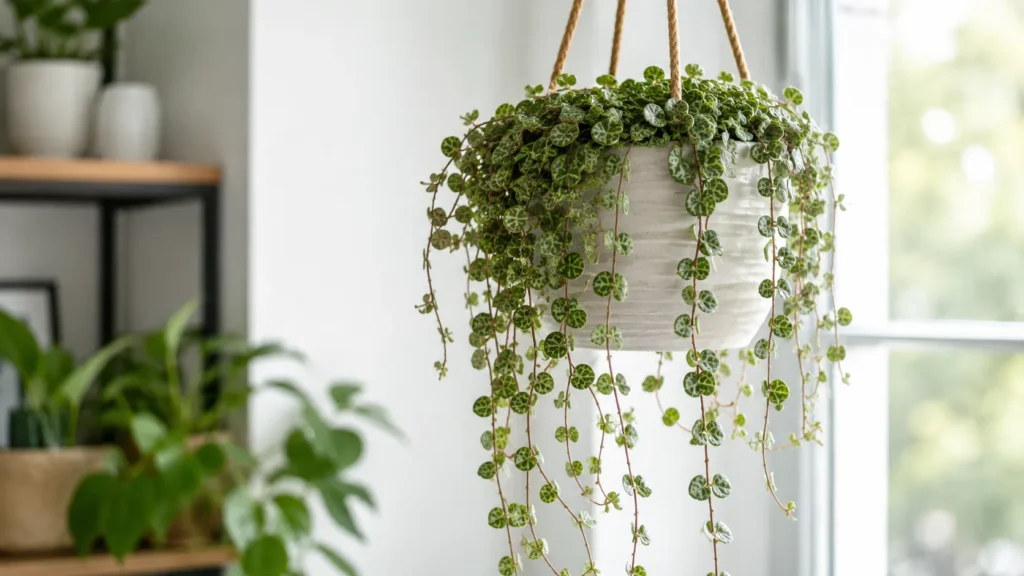
String of Turtles, scientifically known as Peperomia prostrata, is a trailing plant from the Piperaceae family. It is also called the chain of turtles, turtle plant, or succulent turtles because its small round leaves display raised patterns that resemble miniature turtle shells. String of Turtles belongs to the Peperomia genus, a group of flowering plants known for their diverse leaf shapes and compact growth habits.
This plant grows naturally as a creeping vine, producing thin stems covered with paired, coin-shaped leaves. Unlike true succulents, String of Turtles stores some moisture in its leaves but prefers tropical-style conditions with controlled watering. String of Turtles belongs to the Peperomia genus, which includes several trailing varieties such as Peperomia Rotundifolia, another easy-care species with similar compact growth habits.
The plant is popular as a hanging basket plant because its vines slowly cascade downward while maintaining a compact appearance. Its unique leaf texture and trailing growth habit make it different from many ordinary houseplants.
String of Turtles vs. Similar Trailing Peperomias
| Plant | Main Difference | Growth Habit |
| String of Turtles (Peperomia prostrata) | Small turtle-pattern leaves on thin vines | Slow trailing growth |
| String of Pearls | Round bead-like leaves | Faster cascading succulent vine |
| String of Hearts | Heart-shaped leaves with longer vines | Moderate trailing growth |
| Peperomia rotundifolia | Smooth round leaves without turtle patterns | Compact trailing growth |
String of Turtles is often confused with other trailing succulents, but its textured leaves and peperomia classification make it unique. Another popular trailing succulent is String of Pearls, which has a different bead-like leaf structure and faster cascading growth compared with String of Turtles.
How Fast Do String of Turtles Grow?
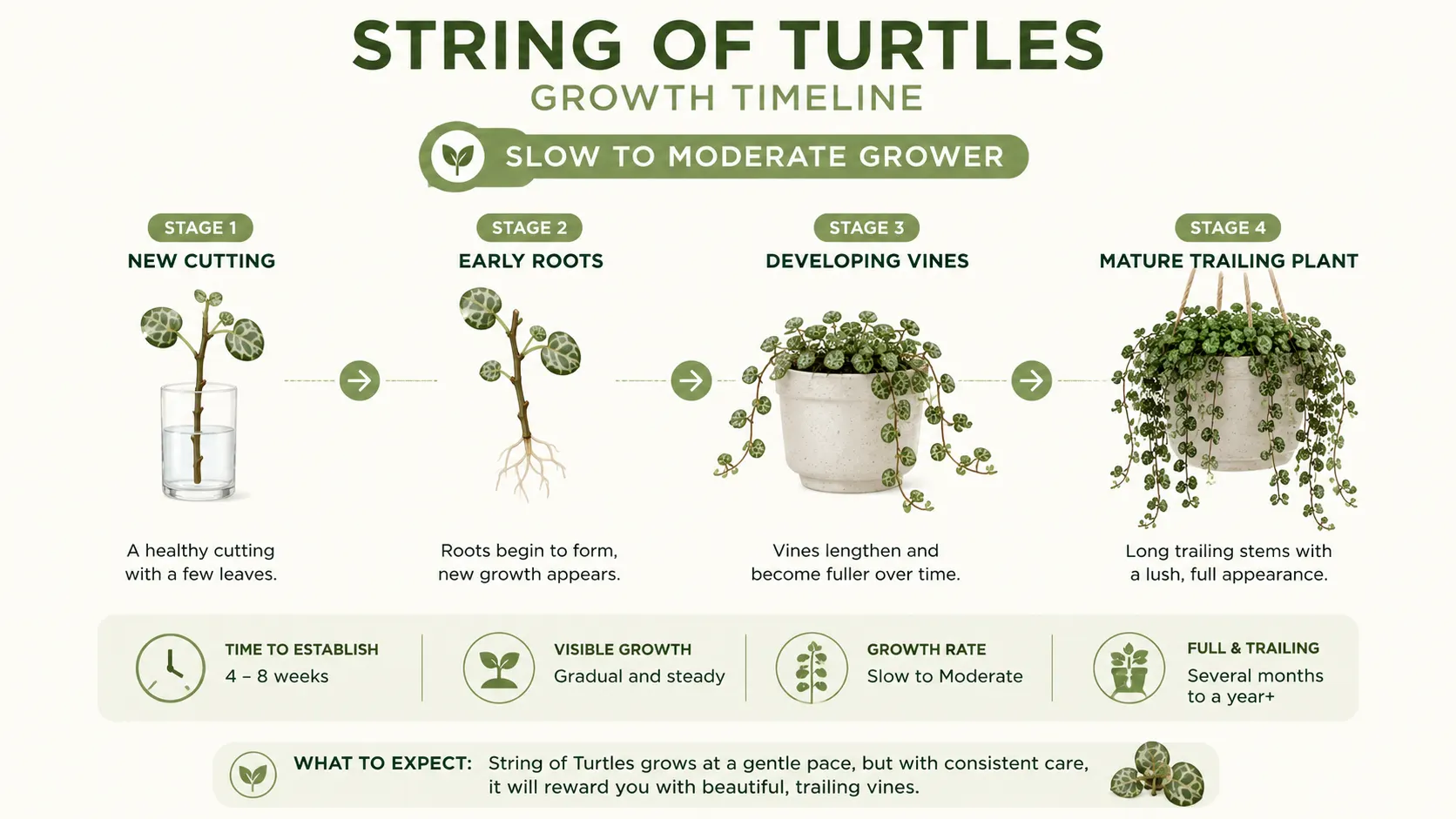
String of Turtles grow slowly to moderately, usually producing gradual vine extension rather than rapid leafy growth. Under ideal indoor conditions, a healthy plant may grow several inches during the active growing season, while poor light or incorrect watering can significantly slow development.
The string of turtles growth rate depends heavily on environmental conditions. Unlike fast-growing vines, this plant naturally focuses energy on maintaining compact stems and patterned leaves.
Typical growth expectations include:
- New leaves appearing every few weeks during active growth.
- Longer trailing stems developing over several months.
- Faster growth in spring and summer compared with winter dormancy.
- More compact growth under brighter indirect light.
String of Turtles does not usually become bushy on its own because it naturally grows as a trailing vine.
Growth Rate Indoors vs. In Water
String of turtles can grow indoors in soil or temporarily in water during propagation, but growth speed differs.
| Method | Growth Speed | Details |
| Soil growth | Moderate | Provides nutrients for long-term development |
| Water propagation | Slow | Mainly supports root formation before planting |
How fast do string of turtles grow indoors depends on light exposure, temperature, and care consistency. Water propagation can successfully produce roots, but permanent growth is usually better in a suitable soil mix.
How Big Do String of Turtles Get?
A mature String of Turtles plant typically develops trailing stems around 12–24 inches long indoors, although older plants in hanging baskets can produce longer vines under excellent conditions.
Size depends on:
- Container size
- Light availability
- Pruning frequency
- Growing environment
Hanging baskets often encourage longer vines, while tabletop pots usually maintain a shorter, compact appearance.
Factors That Affect String of Turtles Growth Speed
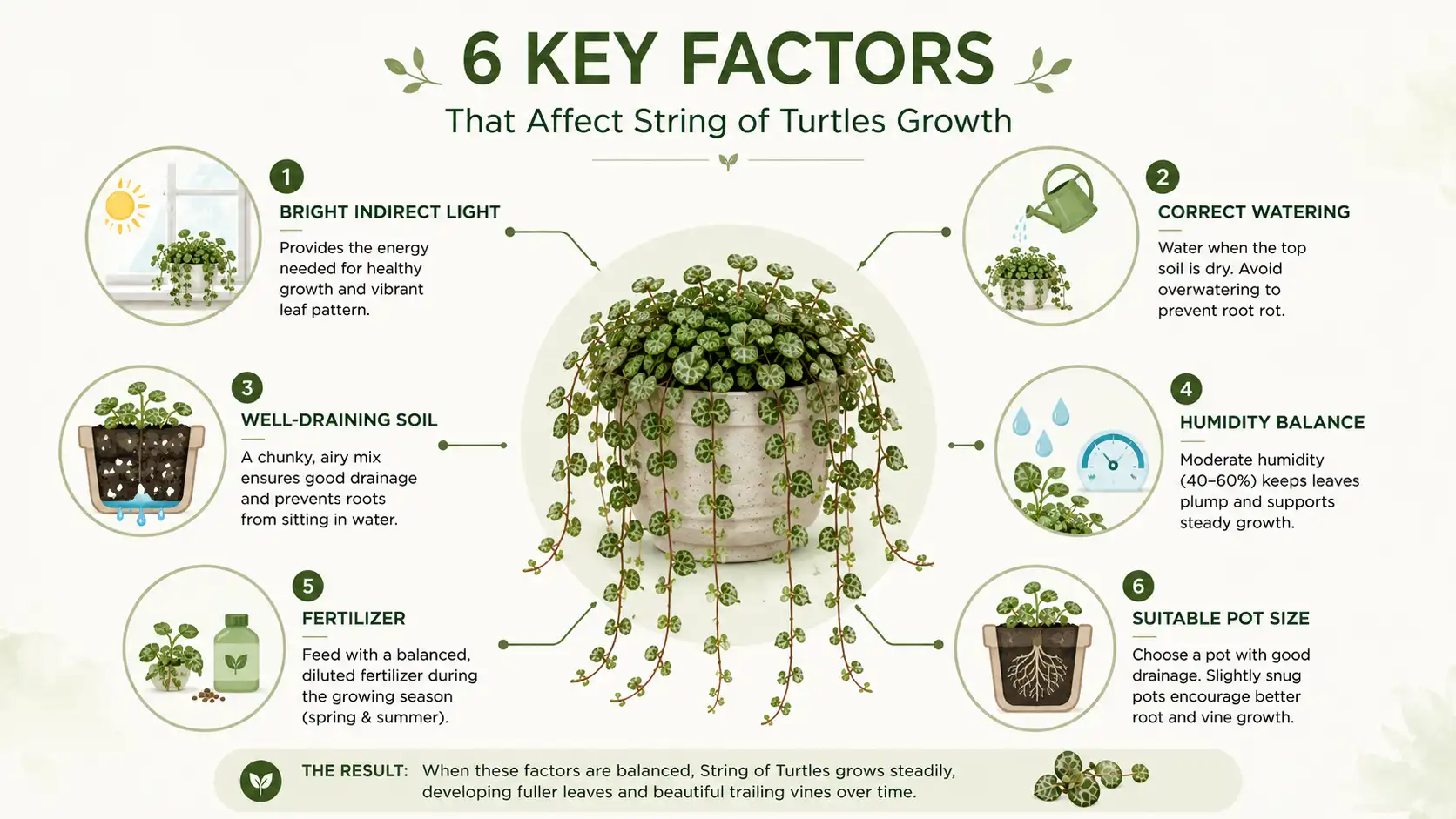
String of Turtles growth is controlled by several environmental factors. The right balance of light, moisture, soil, nutrients, and pot size helps the plant grow steadily.
Light Requirements
String of Turtles light requirements are one of the most important factors affecting growth. The plant grows best in bright indirect light, although it can tolerate medium light.
Signs of insufficient or incorrect lighting include:
- Pale leaves or string of turtles light green coloring.
- Weak, stretched stems.
- Slow or stopped growth.
Direct harsh sunlight can damage leaves, while very low light reduces growth speed. A bright window with filtered sunlight is usually ideal.
Watering, Soil & Humidity
The best soil for String of Turtles is a loose, well-draining mix that prevents excess moisture around the roots. A typical string of turtles soil mix may include succulent soil, perlite, and organic material. Learning how to identify when indoor plants actually need water can help prevent common problems like root rot and yellow leaves.
Best practices include:
- Water only when the top portion of soil dries.
- Avoid keeping the roots constantly wet.
- Bottom watering can help evenly hydrate dry soil.
- Misting is usually unnecessary because wet leaves can increase fungal risks.
- Moderate household humidity is generally sufficient.
String of Turtles does like some humidity, but it does not require extremely humid conditions.
Fertilizer & Pot Considerations
Choosing the correct pot and fertilizer supports healthier growth.
| Factor | Recommendation |
| Pot depth | Shallow to medium-depth pots work best |
| Root-bound tolerance | Can tolerate being slightly root bound |
| Fertilizer type | Balanced liquid houseplant fertilizer |
| Feeding frequency | Monthly during spring and summer |
String of Turtles generally does not like deep pots because excess soil holds moisture longer and increases root rot risk. Choosing the correct container size is important for many indoor plants, as pot depth, drainage, and root space can influence growth speed and overall plant health.
How to Make String of Turtles Fuller and Bushier
To make String of Turtles fuller, regular pruning and pinching are important. Cutting back long vines encourages branching and creates a denser appearance.
Helpful techniques include:
- Pinch growing tips to encourage side shoots.
- Place healthy cuttings back into the pot to increase fullness.
- Remove weak or damaged stems.
Pruning does not make vines grow faster, but it redirects growth into a fuller shape.
How to Propagate String of Turtles
String of Turtles propagation is commonly done through stem cuttings. Each cutting should contain healthy leaves and a section of stem where roots can develop. Similar trailing plants can also be propagated through stem cuttings, such as String of Pearls, making propagation techniques useful across many vine-forming houseplants.
Water Propagation vs. Soil Propagation
| Method | Benefits | Limitations |
| Water propagation | Easy to monitor root development | Requires transplanting later |
| Soil propagation | Creates stronger long-term roots | Root progress is harder to see |
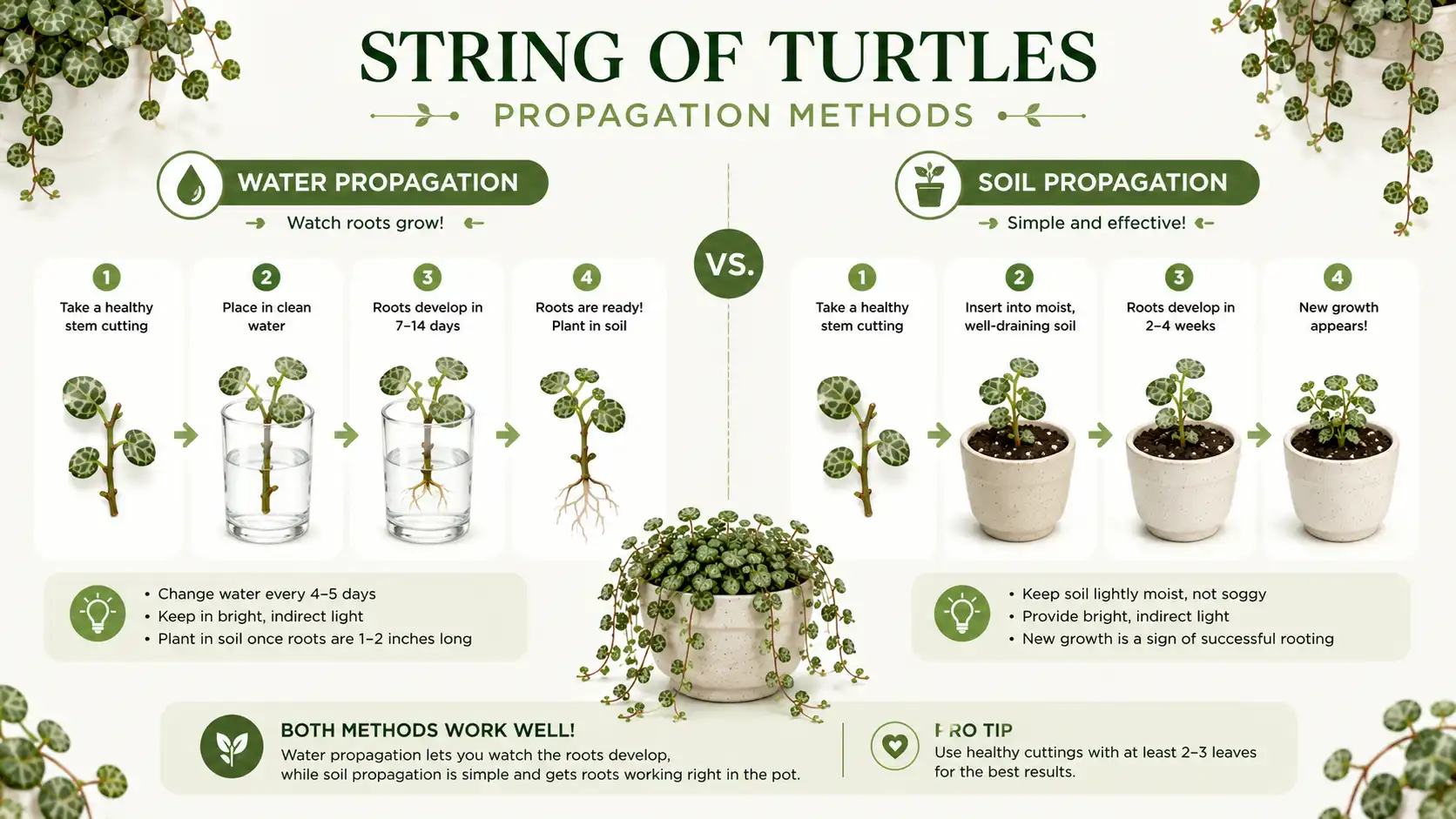
Both methods can successfully propagate String of Turtles when moisture and light are controlled.
Step-by-Step Propagation Process
- Cut a healthy stem section with several leaves.
- Place the cutting in water or moist propagation soil.
- Keep it in bright indirect light.
- Wait several weeks for roots to develop.
- Transfer water-rooted cuttings into soil once roots are established.
Rooting commonly takes several weeks depending on temperature and care.
String of Turtles Care Guide
Light Requirements
Provide bright indirect light daily. Adequate lighting supports stronger vines and maintains the green turtle-like leaf patterns.
Watering Needs
Water when the soil begins drying. Overwatering causes yellow leaves, soft stems, and root problems, while underwatering may cause shriveled leaves.
Soil Preferences
Use a fast-draining succulent-style mix that allows airflow around roots.
Fertilization Practices
Feed lightly during spring and summer when growth is active. Reduce or stop fertilizer during winter dormancy.
Pruning Considerations
Regular trimming helps maintain a fuller shape and prevents excessively long, sparse vines.
Climate Tolerance & Outdoor Care
String of Turtles can be grown outdoors in warm climates but should be protected from cold temperatures. It performs best between approximately 65–80°F (18–27°C).
Repotting String of Turtles
Repot String of Turtles when roots become crowded, water drains too quickly, or growth slows despite proper care.
Steps:
- Choose a slightly larger pot with drainage holes.
- Use fresh, well-draining soil.
- Gently remove the plant without damaging delicate vines.
- Avoid excessive watering immediately after repotting.
Repotting is usually needed every few years rather than annually.
Does String of Turtles Flower?
String of Turtles can flower, but its blooms are small and not the main attraction. The plant produces thin, spike-like flowers rather than colorful blossoms.
Most growers do not remove flowers unless they want the plant to focus energy on leaf and vine growth.
Common String of Turtles Problems
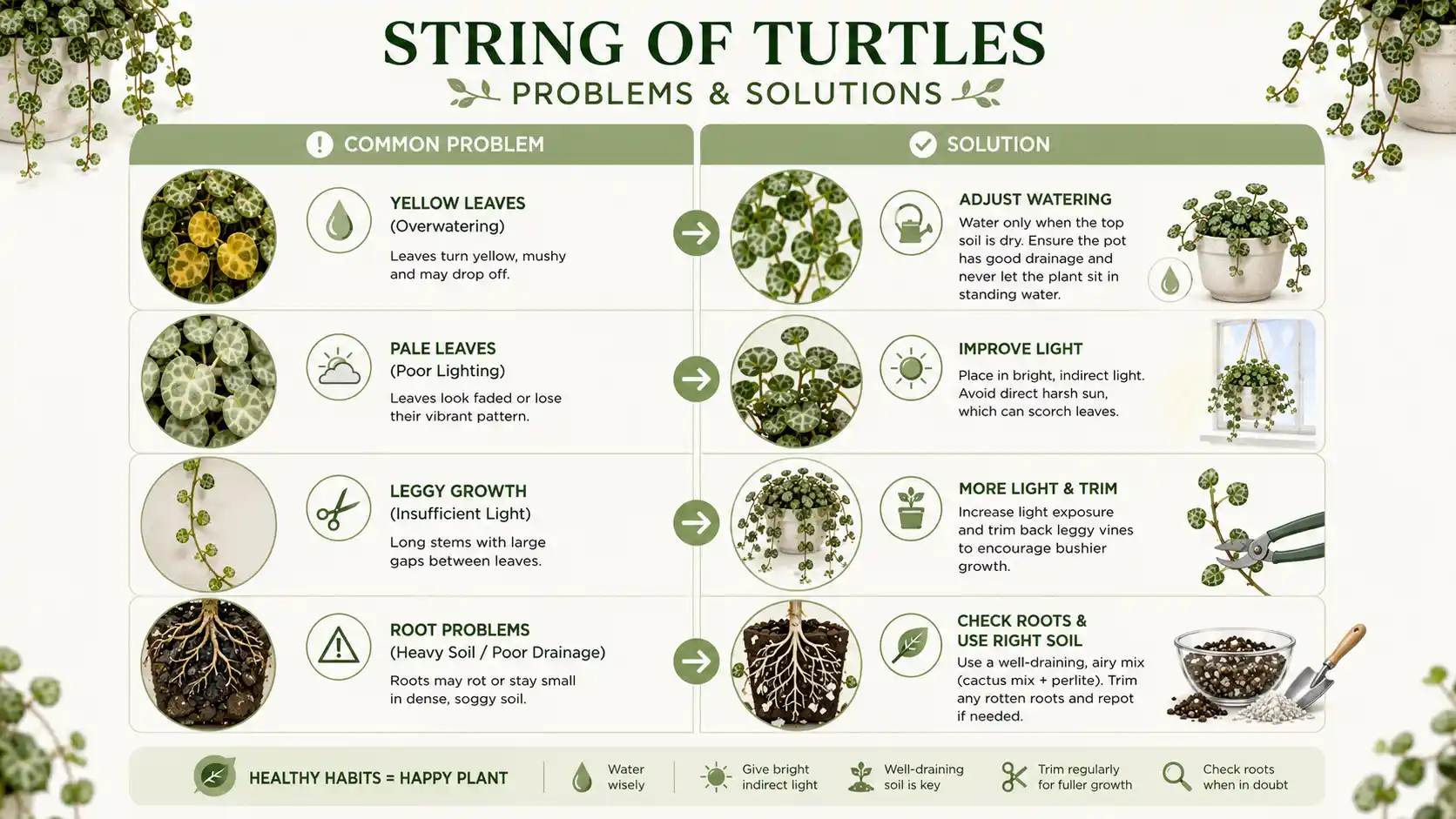
Common problems usually come from watering mistakes, poor lighting, or unsuitable soil.
- String of Turtles Not Growing: Slow growth may happen because of low light, winter dormancy, or being heavily root bound. Improve lighting and check root health.
- Yellowing or Pale Leaves: Pale leaves often indicate overwatering, poor drainage, or lighting stress. Allow soil to dry more between watering.
- Other Common Problems: Root rot, pests, and leggy growth can occur when conditions are unsuitable.
Is String of Turtles Hard to Take Care Of?
String of Turtles is not difficult to care for when its basic needs are met. Beginners commonly struggle because they water too frequently, use heavy soil, or place the plant in low light.
Its drought tolerance and compact size make it a relatively low-maintenance houseplant.
Best Placement for String of Turtles
The best place for String of Turtles is near a bright window with indirect sunlight. Hanging baskets are ideal because they allow trailing stems to grow naturally.
Avoid:
- Dark corners
- Hot direct afternoon sun
- Areas with cold drafts
Can String of Turtles Be Left Unattended?
String of Turtles can usually handle short periods without care because its leaves store moisture. A healthy plant can often tolerate being left alone for about a week, provided it was watered properly beforehand.
Variegated String of Turtles
Variegated String of Turtles is a cultivar with lighter leaf patterns caused by reduced chlorophyll. It usually grows slower than the standard variety because less chlorophyll can reduce photosynthesis efficiency.
Care requirements are similar, but variegated plants often need slightly brighter indirect light.
Conclusion
How fast do string of turtles grow depends mainly on light, watering habits, soil quality, and overall care. This slow-to-moderate growing Peperomia prostrata develops trailing vines gradually rather than rapid bushy growth. Providing bright indirect light, well-draining soil, and controlled watering creates the best conditions for healthy growth. With proper pruning and propagation, String of Turtles can become a fuller and more attractive hanging plant over time.
FAQs
Is String of Turtles hard to take care of?
String of Turtles is relatively easy to care for because it tolerates some drought and requires simple maintenance. The main challenges are avoiding overwatering and providing enough indirect light.
How to make String of Turtles bushier?
String of Turtles becomes bushier through regular pruning, pinching growing tips, and replanting healthy cuttings into the same pot to increase density.
What are the common problems with string of turtle plants?
Common problems include slow growth, yellow leaves, root rot, pale foliage, pests, and stretched vines caused by improper light or watering.
Where is the best place to put String of Turtles?
The best location is a bright indoor spot with indirect sunlight, such as near an east or north-facing window or in a hanging basket with filtered light.
Do strings of turtles like deep pots?
No, String of Turtles generally prefers shallow or medium-depth pots because deep containers can retain excess moisture and increase root problems.
Do strings of turtles like to be root bound?
String of Turtles can tolerate being slightly root bound, but severe root crowding may slow growth and indicate that repotting is needed.