
Introduction
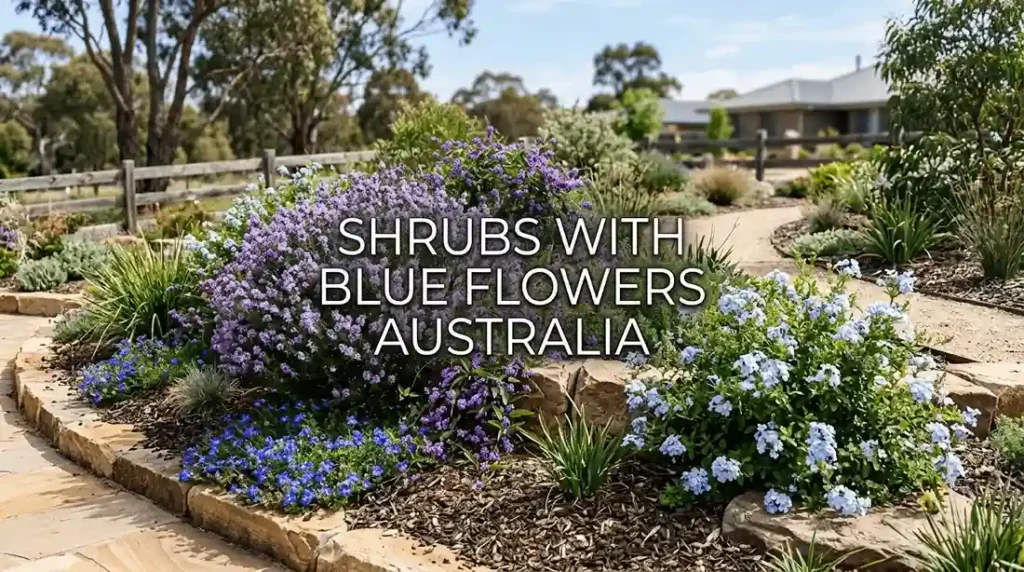
Australia is home to a wide range of shrubs with blue flowers Australia gardeners use for hedges, borders, coastal landscapes, and native gardens. These shrubs include both Australian native species and adaptable exotic plants that produce blue, lilac, violet, or purple-blue blooms. Blue flowering shrubs are especially valued because naturally blue flowers are relatively uncommon in nature, making them visually striking in garden design. Many Australian gardeners choose these plants for their drought tolerance, pollinator attraction, and year-round colour. From compact dwarf shrubs to large screening varieties, blue and purple flowering shrubs can suit almost every Australian climate zone and landscaping style.
Quick Summary
- Blue and purple flowering shrubs grow successfully in coastal, temperate, tropical, and dry Australian climates
- Native Australian shrubs such as Hardenbergia and Westringia are low-maintenance and drought tolerant
- Popular exotic varieties like Plumbago and Caryopteris also adapt well to Australian gardens
- Choosing the right shrub depends on sunlight, soil drainage, mature size, and climate conditions
- Evergreen blue flowering shrubs provide year-round structure and screening in Australian landscapes
What Are Shrubs with Blue Flowers and Why Are They Popular in Australian Gardens?
Blue flowering shrubs are woody perennial plants that produce blue to blue-purple flowers during part or all of the year. In Australia, this category includes both native species and introduced ornamental shrubs adapted to local climates. Blue pigmentation in flowers is relatively rare in nature, which is why some plants have become symbolic in regions around the world, similar to concepts discussed in floral emblem classifications.
Blue flower plant varieties are considered visually distinctive because true blue pigmentation is relatively rare in nature. Many flowers described as blue are technically blue-purple or violet, which is why blue and purple flower varieties are often grouped together in Australian gardening.
These shrubs are popular because they provide:
- Strong colour contrast against green foliage
- Pollinator attraction for bees and butterflies
- Long flowering seasons
- Coastal and drought tolerance
- Year-round garden structure in evergreen forms
Many blue flowers Australia gardeners choose are also suitable for low-water landscaping and native garden designs.
Best Australian Native Shrubs with Blue and Purple Flowers
Australian native shrubs are highly valued because they are naturally adapted to local soil, rainfall, and temperature conditions. Many purple native flowers Australia gardeners grow require less watering and fertiliser once established.
Popular native purple flowers Australia landscapes feature include:
- Hardenbergia violacea
- Westringia fruticosa
- Dampiera species
- Lechenaultia biloba
These native purple flowers Australia gardeners use are commonly planted in coastal gardens, bush-style landscapes, and drought-tolerant designs. These plants are a key part of broader Australian native garden plants that are widely used in drought-tolerant and wildlife-friendly landscaping designs.
Hardenbergia (Purple Coral Pea)
Hardenbergia violacea is a climbing or trailing native shrub known for its masses of purple-blue flowers. It naturally grows in eastern Australian woodlands and forests.
This purple flower Australian native shrub works well as:
- A flowering hedge
- Ground cover
- Fence climber
- Retaining wall softener
Its dense growth and long flowering season make it popular in flowering hedges Australia gardeners design for privacy and colour. Hardenbergia is one of the most popular species featured in guides to purple native flowers Australia, especially for native hedging and groundcover planting.
Dampiera and Lechenaultia
Dampiera and Lechenaultia are among the truest-blue native Australian flowering plants. They are especially valued in native gardens because intensely blue flowers are uncommon in nature.
Dampiera species thrive in sandy, well-drained soils and tolerate coastal conditions. Lechenaultia biloba, often called Blue Lechenaultia, produces vivid electric-blue flowers and grows best in low-humidity climates with excellent drainage.
Westringia (Coast Rosemary)
Westringia fruticosa is an evergreen Australian native shrub with pale blue-lilac flowers and dense grey-green foliage.
It is widely used for:
- Formal hedges
- Coastal gardens
- Windbreaks
- Low-maintenance screening
Because of its compact habit and drought tolerance, it is one of the most reliable flowering hedges Australia gardeners use.
Top Non-Native Blue Flowering Shrubs That Thrive in Australia
Several non-native blue flowering plants Australia gardeners grow have adapted exceptionally well to Australian climates.
Popular choices include:
- Plumbago auriculata
- Caryopteris × clandonensis
- Vitex trifolia
- Shrubby Salvias
- Agapanthus africanus
These blue flowering shrubs perform well because many tolerate:
- Heat
- Dry periods
- Coastal winds
- Poor soils
Plumbago is especially popular for long flowering seasons, while Caryopteris is valued for compact blue-purple blooms in temperate gardens.
Shrubs with Blue Flowers by Size — Tall, Medium, and Dwarf Varieties
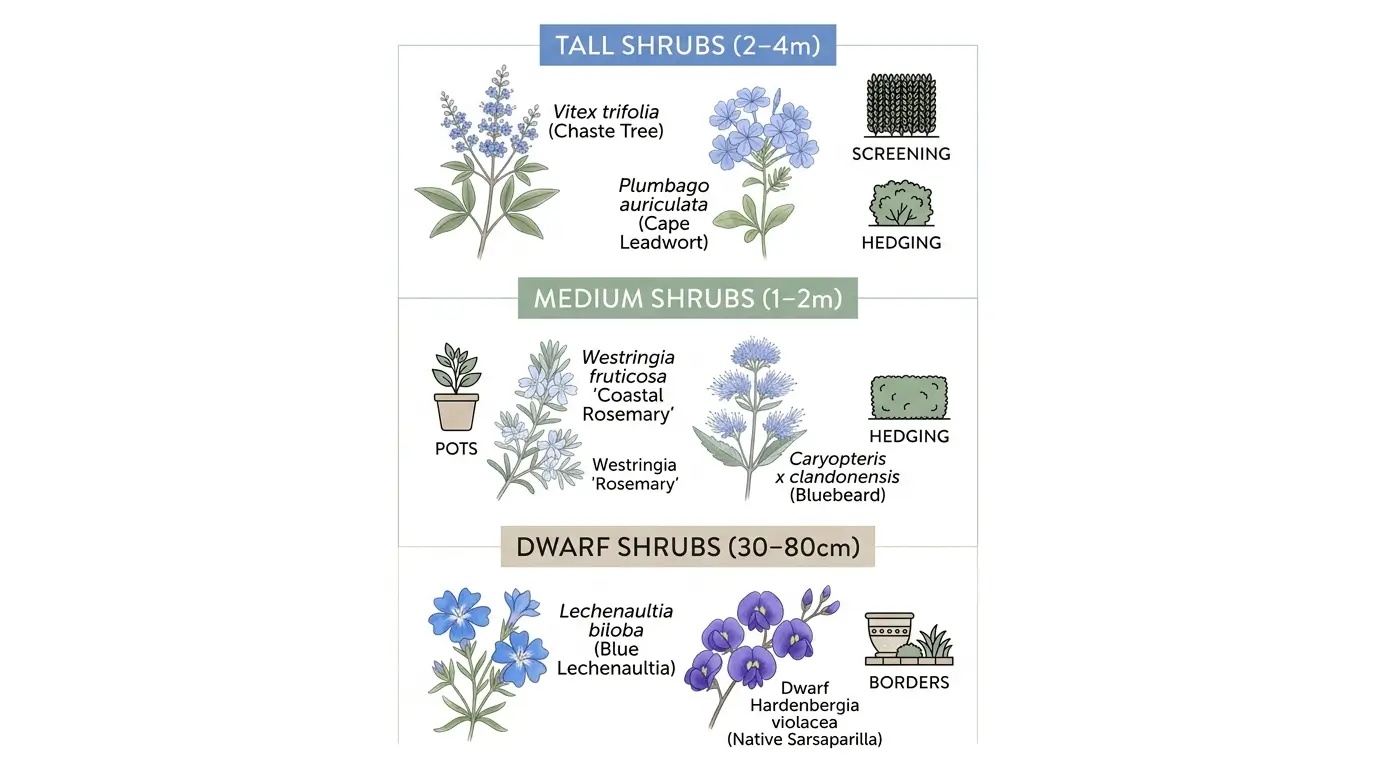
Australian gardeners often choose blue flowering shrubs based on mature size and landscape purpose.
| Size Category | Example Shrubs | Mature Height | Best Use |
| Tall (2m+) | Vitex trifolia, Plumbago auriculata | 2–4m | Screening, back borders |
| Medium (1–2m) | Westringia, Caryopteris | 1–2m | Feature planting, hedges |
| Dwarf / Compact | Lechenaultia biloba, Dwarf Hardenbergia | 30–80cm | Edging, pots, rockeries |
Tall shrubs with blue flowers Australia gardeners use are commonly planted for privacy screening, while dwarf shrubs with blue flowers Australia gardeners favour suit courtyards and containers.
Evergreen vs Deciduous Blue Flowering Shrubs in Australia
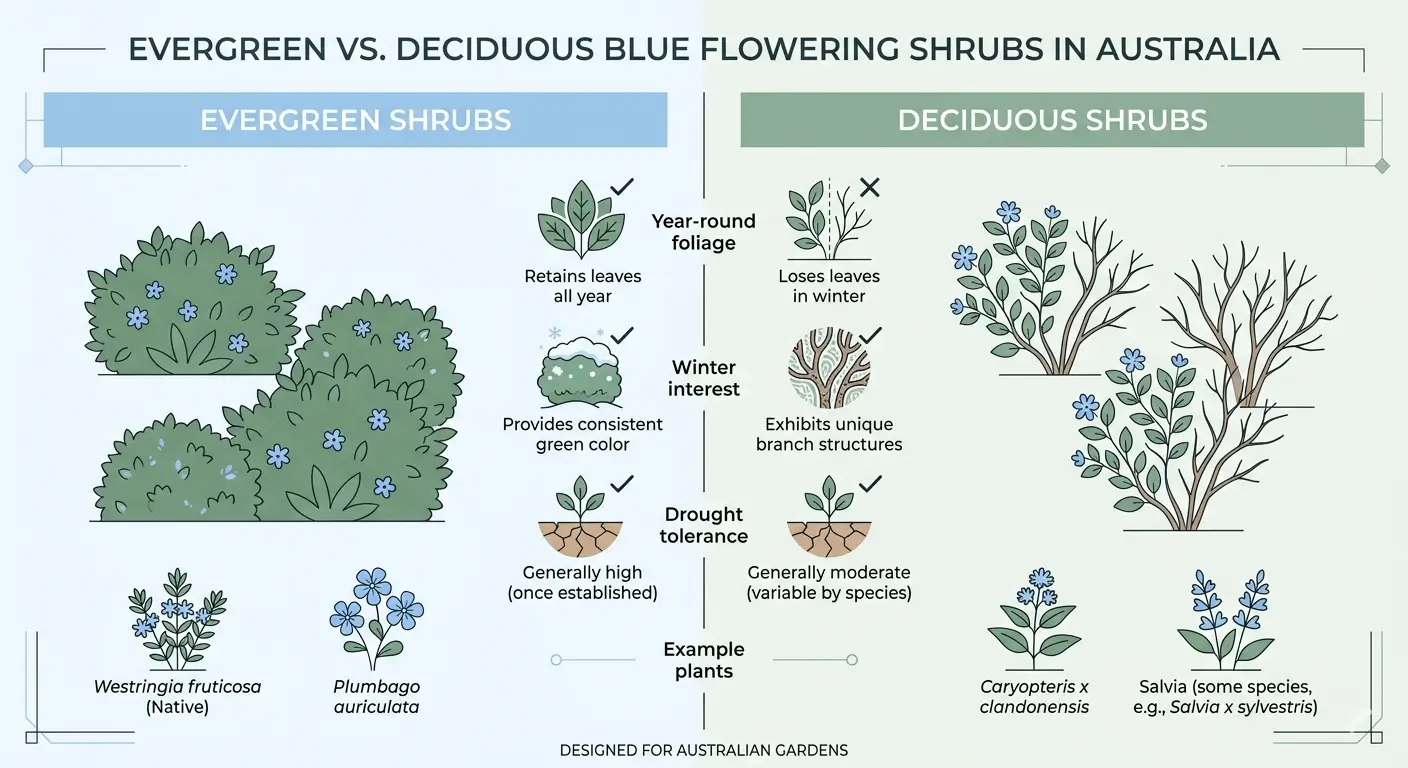
Evergreen shrubs with blue flowers Australia gardeners grow provide year-round foliage and structure, while deciduous varieties lose leaves seasonally.
| Feature | Evergreen Blue Shrubs | Deciduous Blue Shrubs |
| Year-round foliage | ✅ Yes | ❌ No |
| Winter interest | ✅ High | ❌ Low |
| Drought tolerance | Generally high | Variable |
| Examples | Westringia, Plumbago | Caryopteris, some Salvia |
Evergreen shrubs are commonly chosen for screening and shrubs that bloom all year. Deciduous varieties may provide stronger seasonal flowering displays but often lose structure during winter.
Blue Flowering Shrubs for Full Sun in Australian Gardens
Many shrubs with blue flowers Australia full sun gardens require perform best in exposed locations with excellent drainage.
Strong full-sun performers include:
- Westringia
- Plumbago
- Vitex
- Dampiera
- Lechenaultia
These shrubs generally prefer:
- At least 6 hours of sunlight daily
- Free-draining soil
- Deep but infrequent watering during establishment
Mulching around roots helps reduce summer heat stress and improves moisture retention in hotter Australian regions.
Low Maintenance Blue and Purple Flowering Shrubs for Australian Conditions
Low maintenance shrubs with blue flowers Australia gardeners prefer are typically drought tolerant and resistant to pests.
Reliable low-care varieties include:
- Westringia
- Hardenbergia
- Plumbago
- Vitex
- Dampiera
Most blue flowering shrubs require:
- Minimal fertilising
- Occasional pruning
- Deep watering during prolonged drought only
Native species are especially suited to low-maintenance gardens because they evolved under Australian climate conditions.
How to Use Blue and Purple Flowering Shrubs in Australian Garden Design
Blue and purple flowering shrubs are widely used for colour contrast and layered planting schemes.
Common landscaping uses include:
- Flowering hedges Australia gardens use for privacy
- Mixed cottage garden borders
- Coastal planting designs
- Native habitat gardens
- Mass planting for colour repetition
Purple and blue flowers pair effectively with:
- Silver foliage plants
- White flowering shrubs
- Native grasses
- Yellow-flowering contrast plants
A shrub with purple flowers can also soften hard landscaping while creating depth in mixed borders.
Complete Care Guide for Blue Flowering Shrubs in Australia
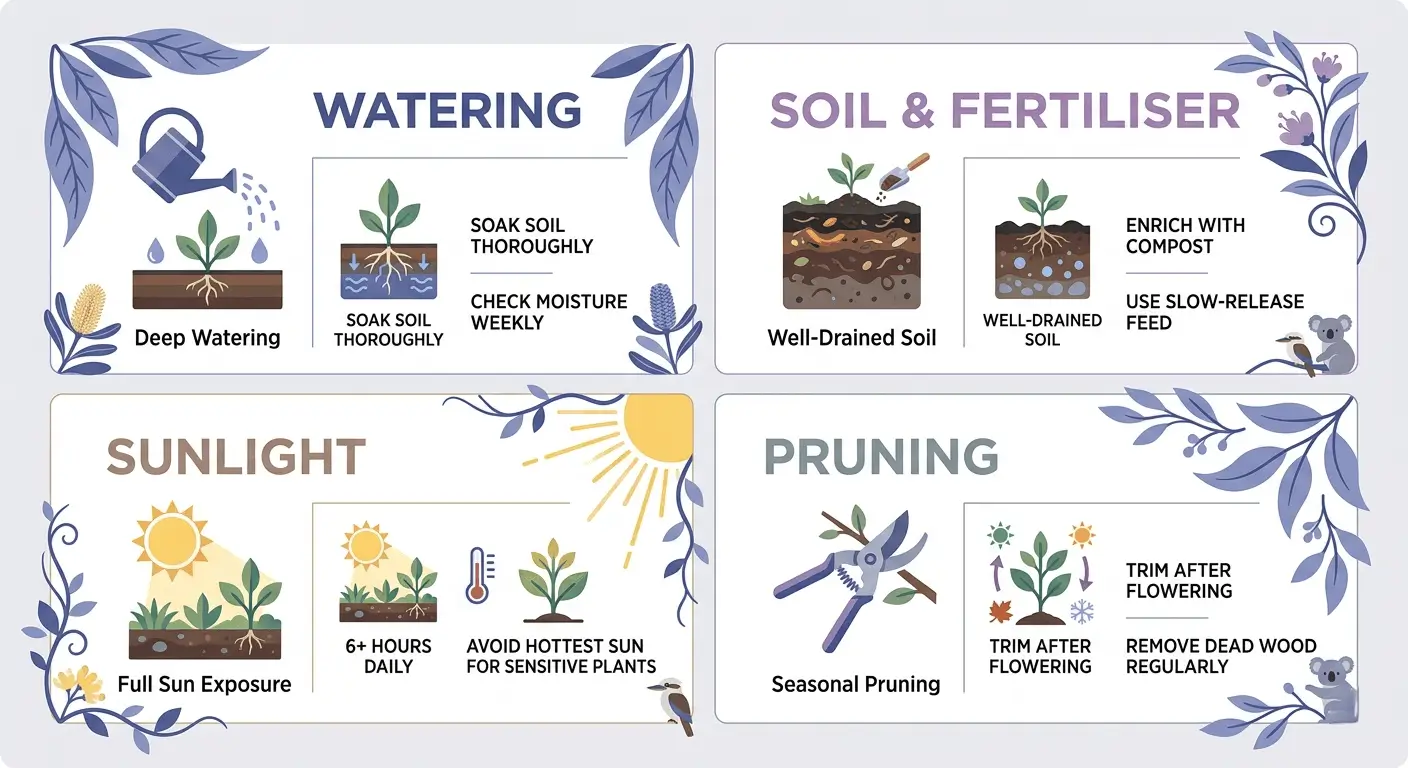
Watering Requirements
Newly planted shrubs require regular establishment watering for the first 6–12 months. Mature plants are generally more drought tolerant.
Best practice includes:
- Deep watering
- Less frequent irrigation
- Avoiding shallow daily watering
Overwatering is one of the most common causes of root problems in native Australian shrubs.
Soil and Fertilisation
Most blue flowering shrubs prefer:
- Well-drained soil
- Slightly acidic to neutral pH
- Low waterlogging risk
Native Australian plants often require low-phosphorus fertilisers because excessive phosphorus can damage roots.
Sunlight and Positioning
Most varieties flower best in full sun, although some tolerate partial shade.
Poor positioning may cause:
- Reduced flowering
- Weak growth
- Increased fungal disease risk
Proper airflow is especially important in humid regions.
Pruning Blue and Purple Flowering Shrubs
Pruning encourages dense growth and repeat flowering.
General guidelines include:
- Light tip pruning after flowering
- Removing dead stems annually
- Avoiding hard pruning on sensitive native shrubs
Incorrect pruning timing may remove developing flower buds.
Climate Tolerance Across Australian Regions
Different varieties suit different Australian climate zones.
- Tropical north: Plumbago, Salvias
- Temperate south: Caryopteris, Westringia
- Arid inland: Dampiera, native drought-tolerant species
- Cool climates: Hardenbergia with frost protection when young
Frost-sensitive plants benefit from protected planting positions.
Plant Size and Growth Rate of Blue Flowering Shrubs
Typical Mature Size
Blue flowering shrubs range from compact edging plants to large screening shrubs over 4 metres tall.
Typical ranges include:
- Dwarf varieties: 30–80cm
- Medium shrubs: 1–2m
- Large screening shrubs: 2–4m+
Pot-grown plants generally remain smaller than those grown directly in garden soil.
Growth Rate — Slow, Moderate, or Fast?
Growth rates vary significantly by species.
- Native shrubs are often moderate growers
- Plumbago establishes quickly
- Caryopteris grows rapidly in warm seasons
Seasonal rainfall, sunlight, and soil quality strongly influence growth speed in Australian gardens.
Common Problems with Blue Flowering Shrubs and How to Fix Them
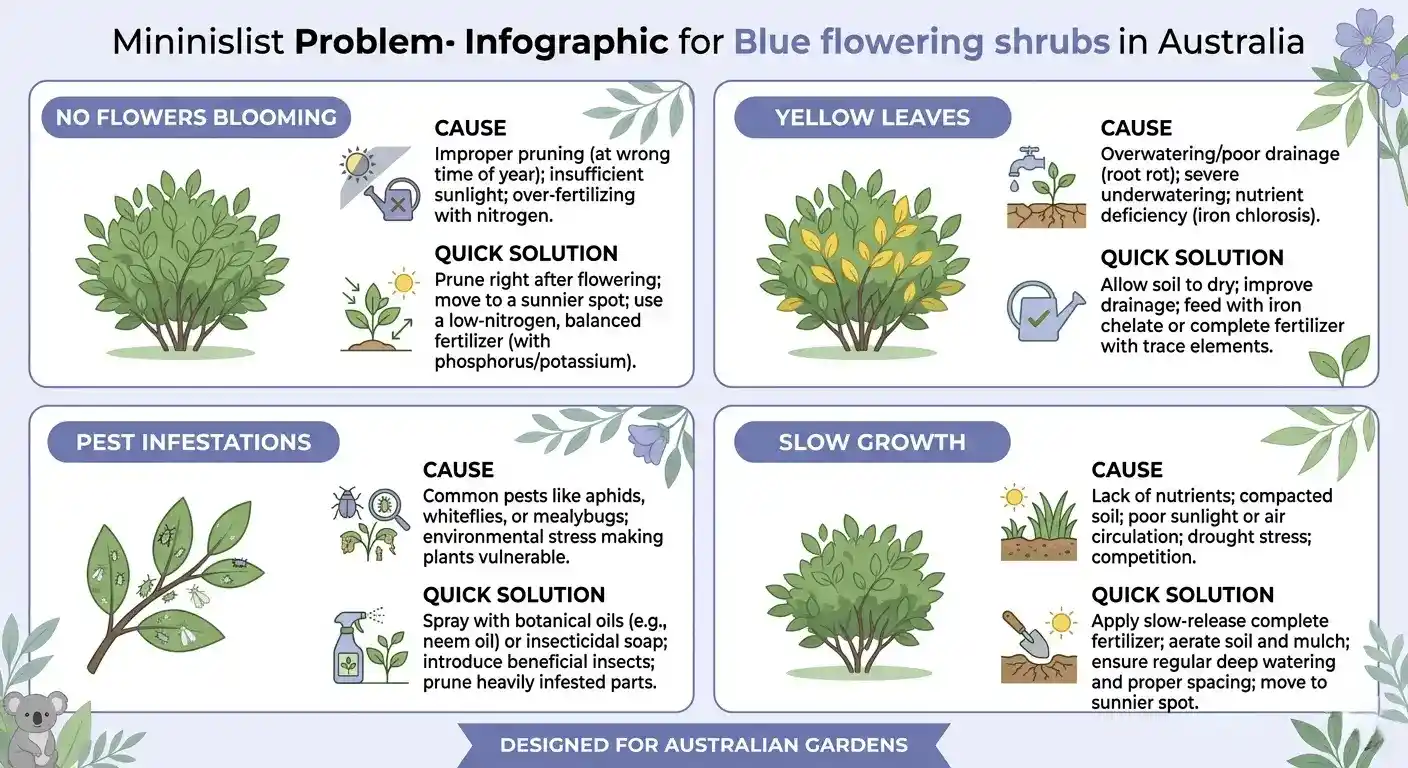
Why Is My Blue Flowering Shrub Not Blooming?
The most common causes are insufficient sunlight, excessive nitrogen fertiliser, and incorrect pruning timing.
Solutions include:
- Increasing sun exposure
- Using lower-nitrogen fertilisers
- Pruning only after flowering
Leaves Turning Yellow or Dropping
Yellow leaves usually indicate overwatering or drainage issues.
Solutions include:
- Improving soil drainage
- Reducing watering frequency
- Applying suitable fertiliser if nutrient deficiency exists
Pest and Disease Issues
Common pests include:
- Aphids
- Whitefly
- Scale insects
Plumbago and Hardenbergia are particularly susceptible to sap-sucking insects.
Both organic oils and targeted insecticides may help manage infestations.
Slow Growth or Failure to Establish
Poor establishment commonly results from:
- Shade planting
- Incorrect soil type
- Water stress
Improving drainage and choosing climate-appropriate species significantly improves long-term growth.
Beginner Mistakes When Growing Blue Flowering Shrubs in Australia
Common beginner mistakes include:
- Overwatering native shrubs
- Planting unsuitable varieties for local climates
- Using high-phosphorus fertilisers on natives
- Pruning at the wrong time
- Choosing decorative plants with poor drought tolerance
Many Australian native shrubs naturally prefer lean soils and lower watering frequencies.
Comparison — Blue Flowering Shrubs vs Purple Flowering Shrubs in Australian Gardens
Many blue and purple flower varieties overlap because true blue flowers often appear violet or blue-purple under different lighting conditions.
| Feature | Blue Flowering Shrubs | Purple Flowering Shrubs |
| Visual impact | Cool, calming tone | Bold, vibrant contrast |
| Native examples | Dampiera, Lechenaultia | Hardenbergia, Bursaria |
| Pollinator attraction | High | Very high |
| Design use | Feature, borders | Hedges, mass planting |
Shrubs with purple flowers Australia gardeners use are often selected for stronger visual contrast, while blue flowering shrubs create softer landscape tones.
Australian Native Blue and Purple Flowers — A Regional Guide
Australian native blue flowers vary significantly by region.
- Queensland: Hardenbergia, native Salvias
- New South Wales: Westringia, Dampiera
- Victoria: Hardenbergia, Lechenaultia
- Western Australia: Lechenaultia, Dampiera diversifolia
- South Australia: Coastal Westringia and drought-tolerant natives
Many species flower most heavily during spring, although coastal climates may support longer flowering periods.
Australian bush flowers list examples often include blue-flowering natives because of their ecological value and pollinator support.
What Is the Name of a Bush with Blue Flowers? — Identification Guide
Several shrubs are commonly identified as blue flowering bushes in Australia.
| Common Name | Botanical Name | Flower Colour | Native to Australia? |
| Purple Coral Pea | Hardenbergia violacea | Purple-blue | ✅ Yes |
| Blue Lechenaultia | Lechenaultia biloba | Bright blue | ✅ Yes |
| Plumbago | Plumbago auriculata | Pale blue | ❌ No |
| Blue Mist Shrub | Caryopteris × clandonensis | Blue-purple | ❌ No |
| Coast Rosemary | Westringia fruticosa | Pale blue-lilac | ✅ Yes |
| Agapanthus | Agapanthus africanus | Blue-purple | ❌ No |
This guide helps answer common questions such as “what is the name of a bush with blue flowers” and “what shrub has blue flowers.”
Flowering Hedges in Australia Using Blue and Purple Shrubs
Blue and purple flowering shrubs are commonly used in Australian hedging because they provide privacy while adding seasonal colour.
Popular hedge choices include:
- Westringia
- Hardenbergia
- Plumbago
- Large Salvias
Formal hedges require more regular trimming, while informal flowering hedges need lighter maintenance. Climate suitability is important when selecting hedge species for coastal, tropical, or inland regions. Many blue flowering shrubs used in hedging are also included in lists of fast growing Australian native screening plants, especially for privacy and wind protection.
Conclusion
Australia offers an extensive selection of shrubs with blue flowers Australia gardeners can grow across coastal, temperate, tropical, and inland climates. Both native Australian shrubs and adaptable exotic varieties provide long-lasting blue, violet, and purple-blue blooms suitable for hedges, borders, feature planting, and pollinator-friendly gardens. Choosing the right shrub depends on climate, sunlight, soil drainage, mature size, and maintenance requirements. Native species such as Hardenbergia, Westringia, Dampiera, and Lechenaultia remain among the most reliable low-maintenance options for Australian conditions. With proper positioning and care, blue and purple flowering shrubs can provide year-round structure, seasonal colour, and ecological value in almost any Australian garden style.
FAQs
What shrubs have blue flowers in Australia?
Common blue flowering shrubs Australia gardeners grow include Westringia, Hardenbergia, Plumbago, Caryopteris, Lechenaultia, and Dampiera. These include both native Australian shrubs and adaptable exotic species.
What is the name of an Australian native bush with blue or purple flowers?
Hardenbergia violacea, commonly called Purple Coral Pea, is one of the best-known Australian native shrubs with purple-blue flowers. Lechenaultia biloba is another native species valued for its vivid blue blooms.
Are there evergreen shrubs with blue flowers suitable for Australian gardens?
Yes. Evergreen shrubs with blue flowers Australia gardeners commonly grow include Westringia, Plumbago, and some shrubby Salvias. These plants provide year-round foliage and seasonal flowering.
What is the easiest low-maintenance blue flowering shrub to grow in Australia?
Westringia fruticosa is one of the easiest low maintenance shrubs with blue flowers Australia gardeners can grow because it is drought tolerant, evergreen, coastal hardy, and requires minimal pruning.
Do blue flowering shrubs attract pollinators in Australian gardens?
Yes. Many blue and purple flowering shrubs attract bees, butterflies, and beneficial insects because their flowers provide nectar and pollen during active flowering seasons.