Introduction
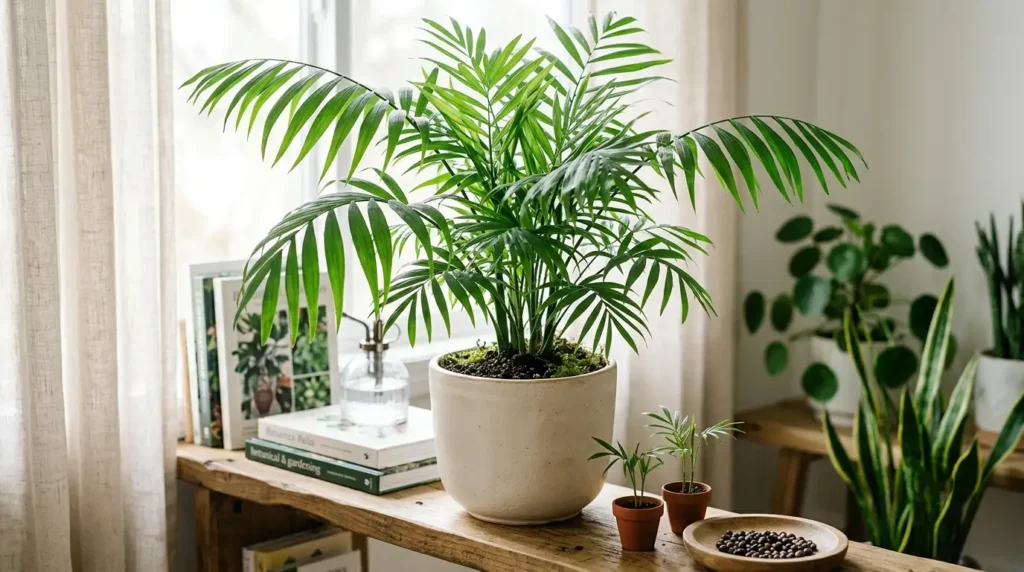
Parlor palm propagation is the process of creating new plants from the popular indoor palm species Chamaedorea elegans, also known as the Neanthe Bella palm. This species belongs to the palm family Arecaceae and is widely cultivated as an indoor ornamental plant. Unlike many houseplants, parlor palms cannot usually be reproduced from stem cuttings because their stems do not contain rooting nodes. The most reliable method is seed propagation, while division may work for mature clumping plants. This guide explains how parlor palm seeds develop, why water propagation is ineffective, how to separate established plants, and how proper care helps new and mature palms grow successfully indoors.
For more detailed information about indoor plant care, growing methods, and different plant varieties, explore this complete Plants: Benefits and Guides (Complete Care, Types & Growing Tips) resource.
Quick Summary
- Parlor palms (Neanthe Bella / Chamaedorea elegans) are propagated mainly from seeds or by separating mature clumps, not stem cuttings.
- Seeds usually require warm, humid conditions and may take 1–3+ months to germinate.
- Water propagation does not work for palm stems because they lack the nodes needed for root development.
- Proper light, watering, soil, and humidity help parlor palms develop into healthy indoor specimens over time.
What Is Parlor Palm Propagation?
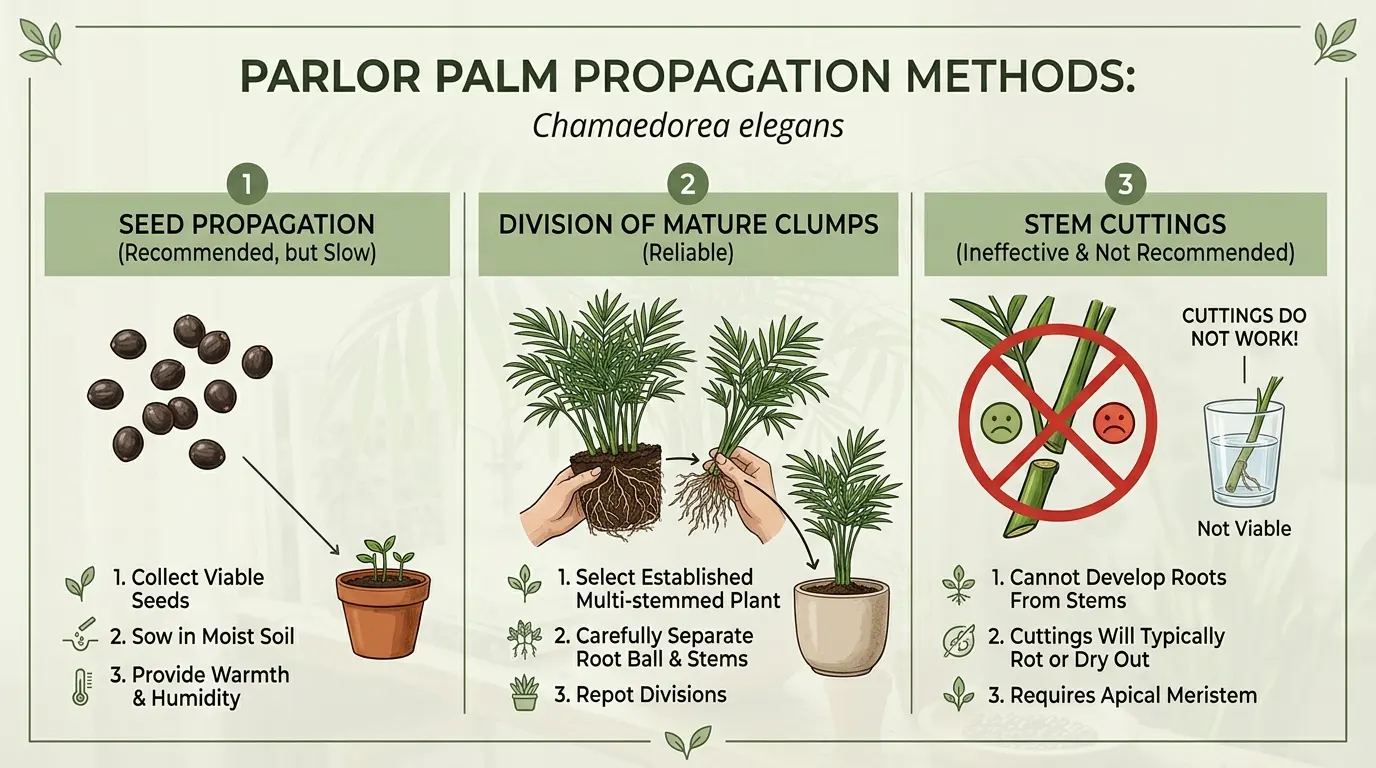
Parlor palm propagation is the process of producing new Chamaedorea elegans plants through reproduction methods that match the biology of this palm species. The two main methods are seed germination and separation of established clumps. Unlike vining plants, palms have a different growth structure and cannot regenerate easily from cut stems.
The Neanthe Bella palm naturally grows as a clumping palm, often with multiple individual seedlings planted together in one container. Seed propagation is the primary method used to produce new plants because palms reproduce through seeds rather than branching stems.
Propagation methods vary greatly between plant families. For example, some tropical plants reproduce through specialized structures such as corms, as explained in this How to Propagate Alocasia Corms Guide.
Propagation methods include:
- Seed germination: Growing a new palm from mature seeds.
- Division/separation: Separating existing seedlings or clumps with their own roots.
- Stem cuttings: Generally unsuccessful because palms lack the required growth points.
Why Parlor Palms Can’t Be Propagated From Stem Cuttings
Parlor palms cannot usually be propagated from stem cuttings because each palm stem has a single central growing point called the apical meristem. This growing point produces new leaves and maintains the plant’s growth.
When a palm stem is cut:
- The removed stem does not develop new roots.
- The original growing point is damaged or removed.
- The cut section cannot create new shoots like pothos, philodendrons, or other branching plants.
This differs from common houseplants that contain nodes where roots and new growth can develop.
Can You Propagate Parlor Palms in Water?
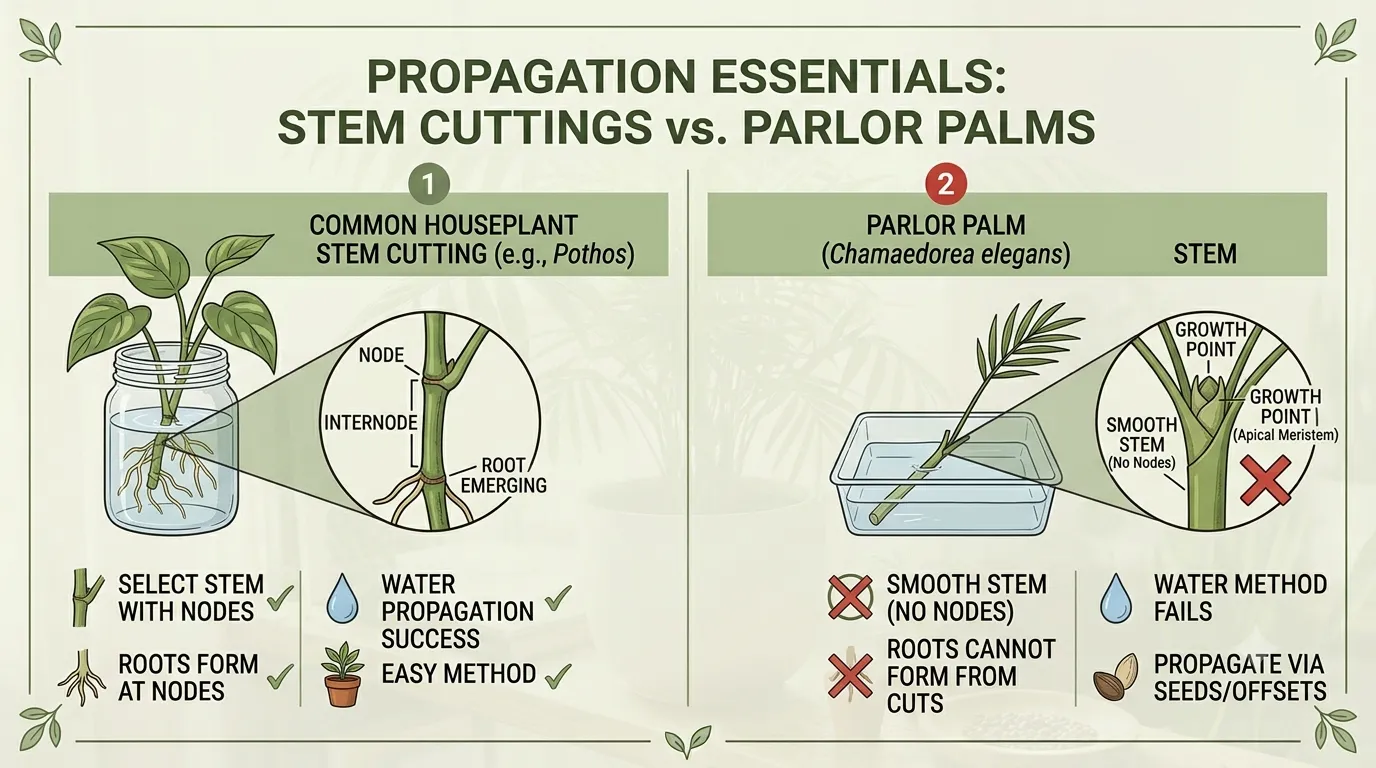
No, you cannot successfully propagate a parlor palm in water using stem cuttings because palm stems do not have nodes capable of producing roots. Water propagation works for plants with flexible stems and visible growth points, but it does not apply to most palms.
Water propagation usually requires:
- A stem cutting with active nodes.
- The ability to produce adventitious roots.
- A growth structure that can regenerate.
Parlor palms have:
- A single growing point.
- Smooth stems without rooting nodes.
- A growth pattern unsuitable for cutting propagation.
However, an already-rooted parlor palm can sometimes grow in water-based systems such as semi-hydroponics when the roots are established.
Is It Better to Propagate in Water or Soil?
For parlor palms, soil or seed-starting mix is better than water because seeds require a stable growing medium for successful germination.
| Method | Suitable for Parlor Palm? | Reason |
| Water propagation | No | Stems cannot form roots |
| Seed-starting mix | Yes | Supports seed germination |
| Soil growing | Yes | Provides long-term root development |
How to Propagate a Parlor Palm From Seed
Propagating a parlor palm from seed is the most reliable method. Seeds require patience because Chamaedorea elegans is naturally a slow-growing palm.
Successful germination depends on:
- Fresh seeds.
- Warm temperatures.
- High humidity.
- Consistent moisture.
- Proper soil conditions.
What Do Parlor Palm Seeds Look Like?
Parlor palm seeds develop from flowers and seed pods produced by mature plants. The small round seeds are usually found inside clusters of fruit.
Seed pods commonly:
- Start green when immature.
- Change color as they ripen.
- Become orange, yellow, or dark-colored depending on maturity.
These seeds form after flowering, which is why mature blooming plants are needed for seed collection.
Where to Get Parlor Palm Seeds
Parlor palm seeds can come from:
- A mature flowering Chamaedorea elegans plant.
- Specialized seed suppliers.
- Indoor plant seed sellers.
Fresh seeds generally have better germination rates than older dried seeds because viability decreases over time.
Step-by-Step Germination Process
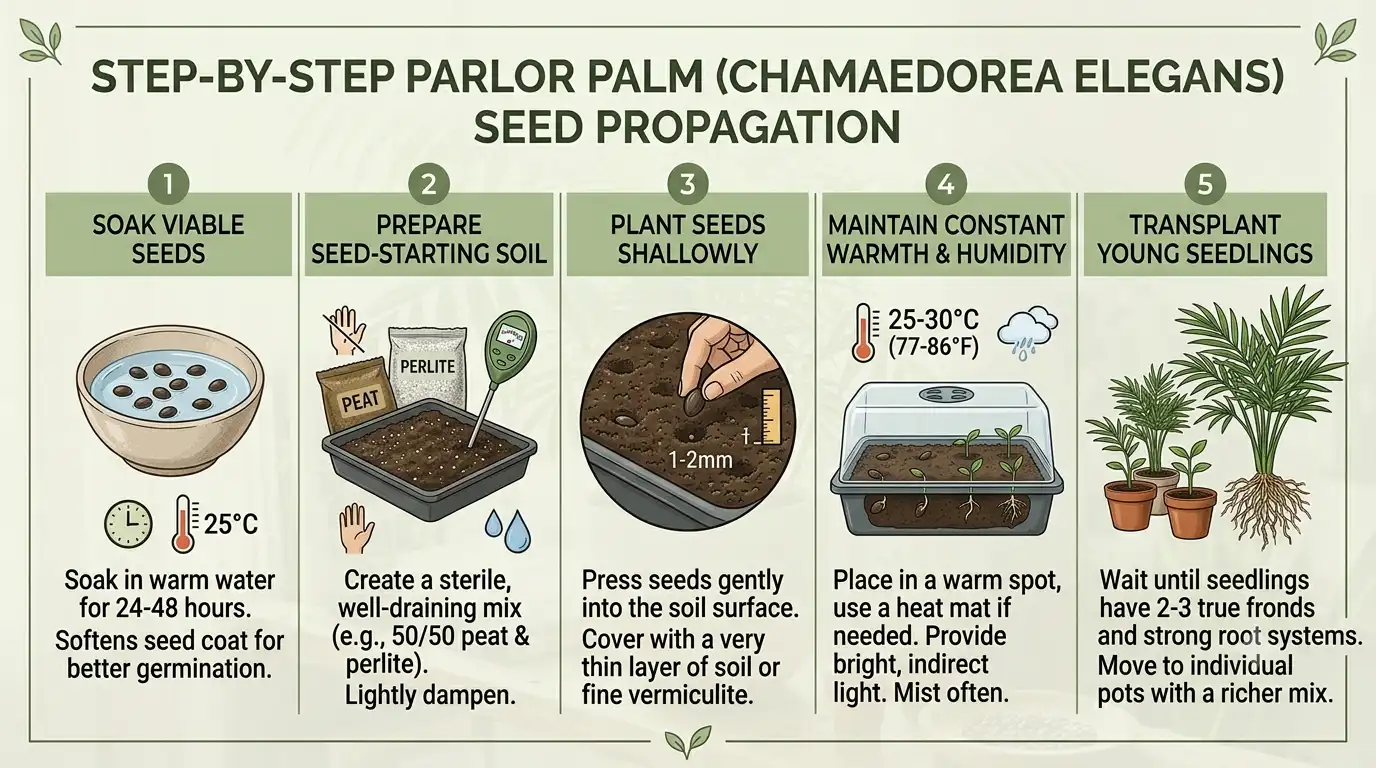
- Prepare seeds: Soak seeds in warm water for several hours to soften the outer coating.
- Use suitable soil: Plant seeds in a light, well-draining seed-starting mix.
- Plant correctly: Cover seeds lightly rather than burying them deeply.
- Maintain warmth: Keep temperatures around 75–85°F (24–29°C).
- Increase humidity: Use a propagator or plastic cover to maintain moisture.
- Provide indirect light: Avoid harsh direct sunlight during germination.
- Wait patiently: Germination may take 1–3 months or longer.
- Transplant seedlings: Move young palms into individual containers once they develop stronger roots.
How to Tell if a Palm Tree Is Male or Female
Parlor palms are generally not separated into male and female plants in the same way as some dioecious palm species. Individual Chamaedorea plants may produce flowers that differ in function, but seed production depends on successful pollination.
Male flowers mainly produce pollen, while female flowers develop into fruit containing seeds after pollination. For home growers collecting seeds, flowering and pollination are necessary steps.
Can You Divide or Propagate an Indoor Palm by Separation?
Yes, a mature indoor parlor palm can sometimes be divided by separating naturally growing clumps. This is not the same as taking cuttings because each separated section must already have roots and growing points.
Many store-bought parlor palms contain multiple seedlings growing together. These can occasionally be separated carefully if the root system is healthy.
Division requires:
- Healthy rooted sections.
- Gentle handling of roots.
- Individual pots with suitable soil.
How Fast Do Parlor Palms Grow?
Parlor palms are slow-to-moderate growers. Indoor plants usually grow slowly because household conditions provide less light and space than their natural tropical environment.
Growth is affected by:
- Light availability.
- Temperature.
- Water consistency.
- Fertilizer use.
- Root space.
Growth Rate
Typical growth patterns:
- Active growth occurs during spring and summer.
- Growth slows during winter.
- Seed-grown plants may take several years to become mature specimens.
To encourage faster growth:
- Provide bright indirect light.
- Maintain consistent watering.
- Feed lightly during the growing season.
- Avoid environmental stress.
How Big Do Parlor Palms Get?
A mature parlor palm usually reaches about 4–6 feet indoors, although larger specimens can grow with excellent care and enough space.
Outdoor plants in suitable tropical climates may become larger.
Plant size depends on:
- Pot size.
- Root development.
- Light exposure.
- Growing conditions.
Do Indoor Palms Like to Be Root Bound?
Yes, parlor palms tolerate being slightly root bound and often prefer not to be disturbed frequently. Repotting is usually only needed when roots completely fill the container or growth becomes restricted.
Parlor Palm Care Guide
Parlor palms are considered beginner-friendly because they tolerate indoor conditions well.
Important care requirements include:
- Water: Keep soil slightly moist but avoid constant sogginess.
- Light: Bright indirect light is ideal, although they tolerate lower light.
- Soil: Use a well-draining indoor palm or general potting mix.
- Fertilizer: Feed lightly during spring and summer.
- Pruning: Remove damaged or yellow leaves only.
- Temperature: Prefer warm indoor temperatures above 55°F (13°C).
- Humidity: Moderate humidity supports healthier foliage.
What Does Epsom Salt Do for a Palm Tree?
Epsom salt provides magnesium, which may help plants with magnesium deficiency symptoms such as yellowing between leaf veins. However, it should not be used routinely unless deficiency is suspected because excess salts can damage roots.
How Do You Keep a Parlor Palm Happy?
To keep a parlor palm healthy:
- Avoid overwatering.
- Keep it away from cold drafts.
- Provide filtered or indirect light.
- Maintain moderate humidity.
- Avoid frequent repotting.
Repotting a Parlor Palm
Repot only when necessary. Choose a container slightly larger than the current pot and avoid heavily disturbing the roots. Spring is usually the best time for repotting.
Table — Parlor Palm Care at a Glance
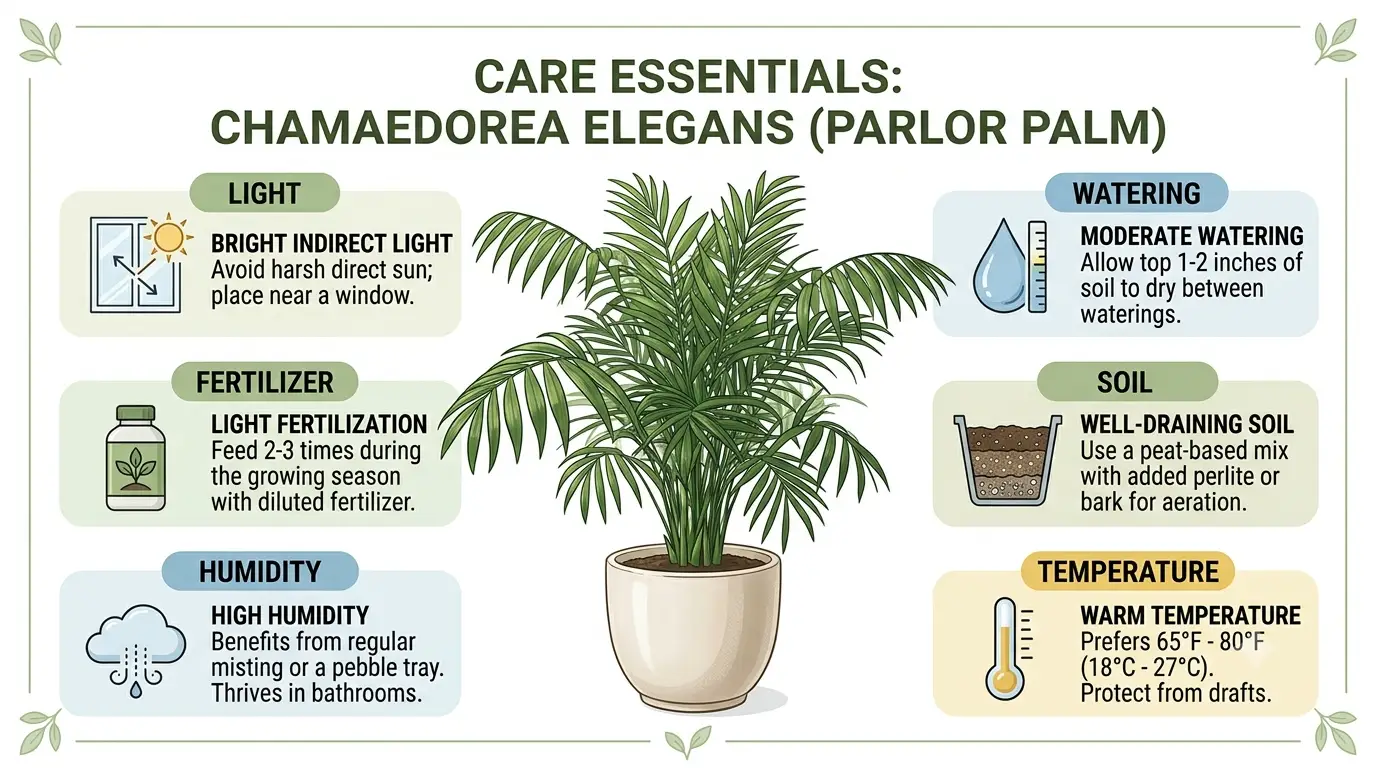
| Care Factor | Requirement |
| Light | Bright indirect light; tolerates low light |
| Water | Moderate moisture; avoid soggy soil |
| Soil | Well-draining palm or houseplant mix |
| Temperature | Warm indoor temperatures |
| Humidity | Moderate humidity |
| Fertilizer | Light feeding during growing season |
| Toxicity/Pet Safety | Generally considered pet-safe |
Are Parlor Palms Difficult to Grow? (Pros, Cons & Common Mistakes)
Parlor palms are not difficult to grow when basic care requirements are followed. They are adaptable indoor plants but can suffer from watering mistakes and poor environmental conditions.
Advantages of Growing Parlor Palms
- Tolerates lower light conditions.
- Suitable for indoor environments.
- Generally safe around pets.
- Compact compared with many palms.
Disadvantages of Parlor Palms
- Slow growth rate.
- Sensitive to overwatering.
- Brown leaf tips can develop easily.
- Fertilizer buildup may cause stress.
Common Beginner Mistakes (What Not to Do)
Avoid:
- Watering too frequently.
- Placing the plant in strong direct sunlight.
- Applying too much fertilizer.
- Using mineral-heavy water continuously.
- Exposing the plant to cold drafts.
Common Parlor Palm Problems and How to Fix Them
Yellowing Leaves
Yellow leaves often result from overwatering, nutrient issues, or natural aging. Improve drainage, adjust watering frequency, and remove older damaged leaves.
Brown Tips and Brown/Dry Leaves
Brown tips commonly occur because of dry air, underwatering, or mineral buildup. Increase humidity and use cleaner water when possible. If your parlor palm develops persistent dry leaves or crispy foliage, understanding the common causes and solutions can help. Read this guide on Chamaedorea Elegans Dry Leaves Causes & Fix for more detailed troubleshooting.
Drooping or Wilting Fronds
Drooping leaves may indicate root stress or inconsistent watering. Check soil moisture and correct watering habits.
Fungal Leaf Spots
Fungal spots develop from excess moisture and poor airflow. Remove affected leaves and improve ventilation.
Why Is My Parlor Palm Dying? (Troubleshooting Checklist)
Check:
- Is the soil constantly wet?
- Is the plant receiving enough indirect light?
- Are roots healthy?
- Are leaves showing pests or fungal damage?
- Has fertilizer buildup occurred?
Similar indoor palms can experience comparable issues with watering, light stress, and leaf damage. This Kentia Palm Problems: Causes, Fixes and Care Tips guide provides additional troubleshooting insights.
What Is the Lifespan of a Parlor Palm?
A healthy parlor palm can live for many years indoors, often several decades with proper care. Good watering practices, suitable light, and protection from stress help extend its lifespan.
Parlor Palm vs. Similar Palms (Comparison)
Another popular indoor palm option is the areca palm, which has different size, light, and watering requirements. Learn more in this Areca Palm Care Guide: Complete Growing & Maintenance Tips.
| Feature | Parlor Palm | Areca Palm | Bamboo Palm |
| Size | Compact | Larger | Medium-large |
| Light Needs | Low to bright indirect | Bright indirect | Medium indirect |
| Growth Rate | Slow | Faster | Moderate |
| Care Difficulty | Easy | Moderate | Easy |
Conclusion
Parlor palm propagation is mainly achieved through seed germination rather than water propagation or stem cuttings. Chamaedorea elegans grows slowly but rewards patience with attractive indoor foliage. Providing proper light, watering, soil, and humidity conditions helps seedlings and mature plants develop into healthy specimens. For most growers, understanding the palm’s unique growth structure is the key to successful propagation and long-term care.
FAQs
Can you propagate a parlor palm in water?
No. Parlor palms cannot be propagated from stem cuttings in water because their stems lack nodes needed for root development.
How long does it take for parlor palm seeds to germinate?
Parlor palm seeds usually germinate within 1–3 months, although some may take longer depending on temperature and moisture conditions.
Why is my parlor palm turning yellow or brown?
Yellow or brown leaves are commonly caused by overwatering, low humidity, mineral buildup, underwatering, or natural leaf aging.
How big does a parlor palm get indoors?
A parlor palm typically grows around 4–6 feet tall indoors, depending on light, pot size, and growing conditions.
Is a parlor palm easy to care for as a beginner plant?
Yes. Parlor palms are beginner-friendly because they tolerate lower light and adapt well to indoor environments.
What is the lifespan of a parlor palm?
A well-maintained parlor palm can live for many years indoors, often several decades with proper care.
Can you propagate a parlor palm by division?
Yes. Mature clumping parlor palms can sometimes be separated by division if each section has healthy roots and a growing point.