Introduction
An IKEA Detolf greenhouse is a DIY plant cabinet created by converting the IKEA Detolf glass display cabinet into an enclosed growing space for humidity-loving plants. Although the Detolf was originally designed as a display cabinet for collectibles and glassware, plant enthusiasts adapted its glass structure to create a mini indoor greenhouse cabinet with improved humidity and light retention. The IKEA Detolf is no longer widely available in the UK and Europe and has been replaced by the smaller BLÅLIDEN cabinet, creating new searches around discontinued models, alternatives, and replacement options. This guide explains the Detolf greenhouse hack, availability, setup, and plant-growing considerations.
Quick Summary
- A Detolf greenhouse is a DIY conversion of IKEA’s glass Detolf display cabinet into a humidity-controlled plant cabinet.
- The IKEA Detolf has been discontinued in the UK and Europe, with BLÅLIDEN serving as the closest official replacement.
- Detolf shelves support limited weight, so pot size and plant container materials must be considered carefully.
- A successful conversion requires grow lights, airflow management, and humidity control rather than simply sealing the cabinet.
- Humidity-loving tropical plants generally perform best in a Detolf-style greenhouse environment.
What Is an IKEA Detolf Greenhouse?
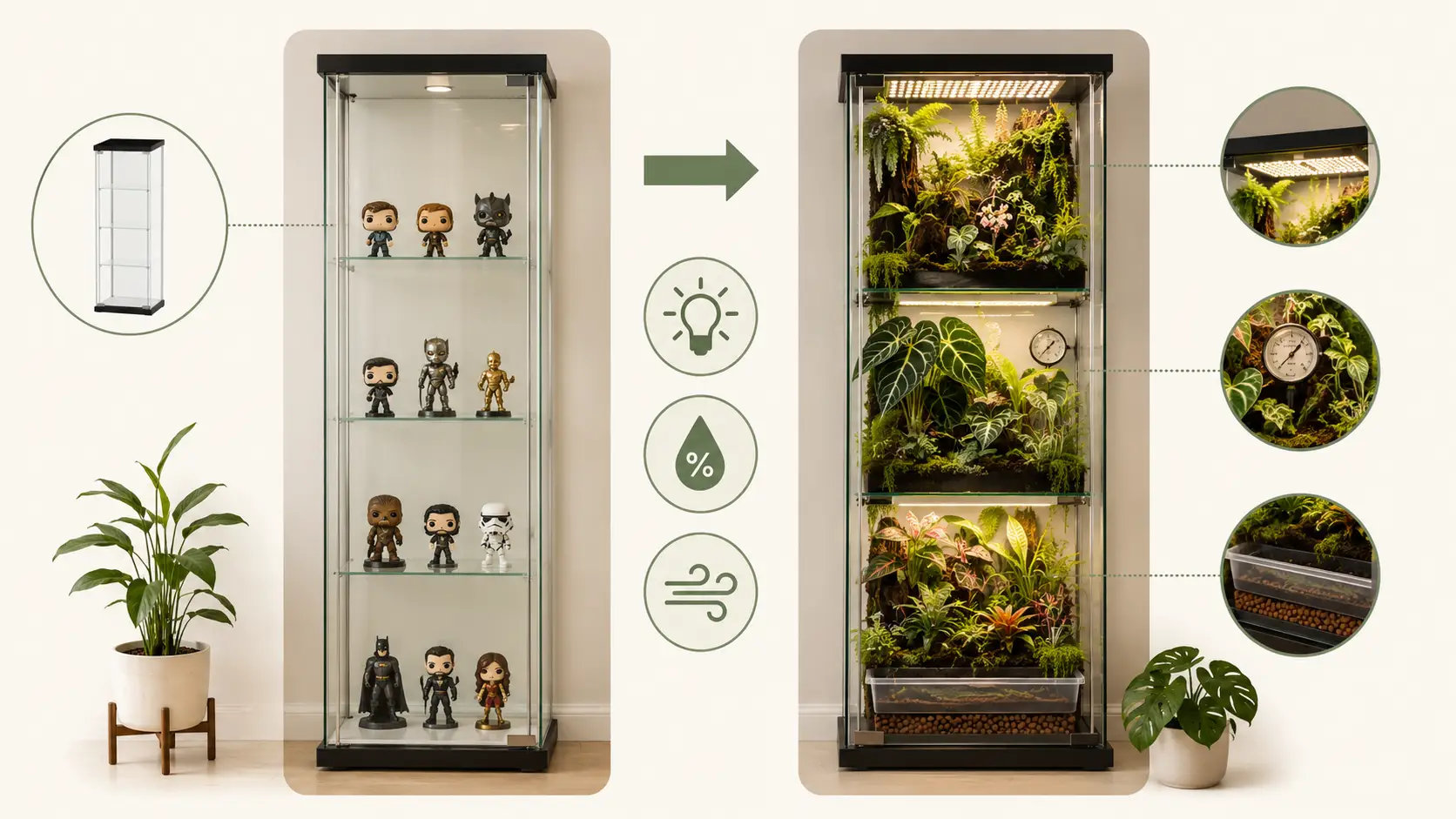
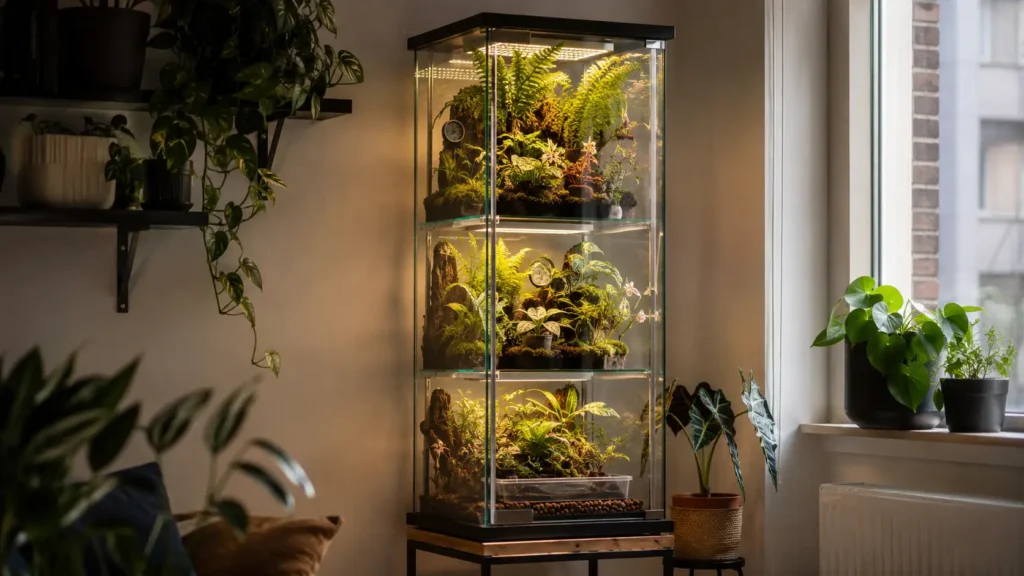
An IKEA Detolf greenhouse is a modified IKEA Detolf glass display cabinet that has been converted into a small indoor greenhouse or plant cabinet. The conversion typically involves adding LED grow lights, humidity monitoring tools, ventilation adjustments, and plant-friendly accessories to create a controlled environment for tropical plants.
The IKEA Detolf was not originally designed as a greenhouse. It was a tall, narrow glass display cabinet intended for showcasing collectibles, ornaments, and decorative items. However, its mostly glass construction, vertical design, and compact footprint made it popular among plant collectors looking for an affordable alternative to purpose-built greenhouse cabinets.
A Detolf greenhouse works by using the cabinet’s enclosed structure to slow moisture loss and maintain higher humidity than a normal open-room environment. This makes it suitable for plants that naturally grow in warm, humid environments, especially tropical foliage plants that may struggle in dry indoor air.
Common modifications include:
- Installing low-heat LED grow lights inside the cabinet.
- Adding a hygrometer to monitor humidity and temperature.
- Creating small ventilation gaps to prevent stagnant air.
- Using humidity trays or moisture-retaining materials.
- Raising the cabinet to improve airflow underneath.
The concept is similar to a greenhouse cabinet or terrarium cabinet, but on a smaller indoor scale. Many indoor growers also use similar principles found in closed DIY terrarium layering systems when designing enclosed plant environments. It does not create a fully self-sustaining ecosystem; instead, it provides a more controlled growing environment that requires regular care.
The IKEA Detolf greenhouse became especially popular because it combines several useful features:
- A glass display cabinet appearance suitable for home interiors.
- A vertical structure that saves floor space.
- Better humidity retention compared with open shelving.
- Clear visibility from multiple sides for plant displays.
- A customizable setup for different tropical plant collections.
Because the Detolf was discontinued in some regions, many current searches combine greenhouse-related questions with availability topics, replacement options, and alternative cabinet choices.
Why Collectors and Plant Owners Both Use the Detolf
The IKEA Detolf became popular among both collectible enthusiasts and plant hobbyists because its original display purpose overlaps with the needs of a decorative plant cabinet. Its glass walls provide visibility, while its compact structure allows users to create a dedicated display environment.
Originally, the Detolf was designed for displaying:
- Glassware
- Figurines
- Collectibles
- Decorative objects
Plant owners later adapted it because the same features that protect collectibles also benefit certain indoor plants.
Key reasons collectors and plant owners use the Detolf include:
| Feature | Benefit for Plant Cabinets |
| Glass construction | Allows light penetration and full plant visibility |
| Tall vertical shape | Provides space for climbing and upright plants |
| Small footprint | Fits apartments and limited indoor spaces |
| Display-style design | Creates an attractive plant showcase |
The Detolf’s approximate footprint of around 43 cm wide and 37 cm deep makes it useful for homes where larger greenhouse cabinets are impractical. Its tall height also allows multiple plant levels through added shelves or hanging accessories.
For plant collectors, the cabinet provides a way to display humidity-loving species together rather than spreading them throughout different rooms. This can make plant care easier because environmental conditions are more consistent inside one enclosed area.
However, the Detolf’s design also creates limitations. It was not engineered for heavy plant loads, constant moisture exposure, or greenhouse conditions. Users must consider shelf weight limits, ventilation, and moisture management before converting one into a plant cabinet.
Is the IKEA Detolf Still Available?
The IKEA Detolf is no longer widely available in the UK and Europe. IKEA removed the Detolf from its product range, although secondhand units, marketplace listings, and remaining regional stock may still appear depending on location.
For people searching for an IKEA Detolf greenhouse today, availability depends heavily on country and local inventory. Some areas may still have used cabinets available through resale platforms, while others may only have newer IKEA display cabinet alternatives.
The discontinuation has increased interest in Detolf alternatives because many plant enthusiasts and collectors still prefer its fully glass design and compact vertical shape.
Before purchasing a secondhand Detolf for greenhouse conversion, users should check:
- Glass condition and cracks.
- Door alignment and sealing.
- Shelf condition.
- Included hardware.
- Previous exposure to moisture or damage.
A used Detolf can still work well as a greenhouse cabinet, but older units may require repairs or additional modifications before plant use.
What Replaced the Detolf?
IKEA’s closest official replacement for the Detolf is the BLÅLIDEN cabinet. However, the BLÅLIDEN is not an identical replacement because it has a smaller design and uses wood-framed construction instead of the Detolf’s nearly all-glass structure.
The main differences include:
| Feature | IKEA Detolf | IKEA BLÅLIDEN |
| Design | Mostly glass display cabinet | Wood-framed glass cabinet |
| Appearance | Minimal frame, open viewing style | More traditional cabinet appearance |
| Size | Taller and larger footprint | Smaller overall design |
| Plant visibility | Better multi-angle viewing | More limited due to frame structure |
| Shelf weight capacity | Around 3.5–4 kg (about 8 lb) | Around 3 kg |
The BLÅLIDEN can work for smaller plant displays, but it provides less interior space and does not replicate the Detolf greenhouse setup exactly.
For plant collectors, the main differences are:
- Less vertical growing space.
- More visible framing around glass panels.
- Lower weight capacity.
- Reduced ability to create a large tropical plant display.
Because of these differences, many enthusiasts continue searching for used Detolf cabinets rather than switching immediately to the BLÅLIDEN.
Why Was the Detolf Discontinued?
IKEA has not provided a detailed public explanation for why the Detolf was discontinued. The change occurred during a broader update of IKEA’s display cabinet lineup around 2023–2024.
The replacement appears to be part of IKEA’s product range refresh rather than a change related specifically to plant use or collector demand.
Possible reasons companies commonly update product lines include:
- Redesigning product categories.
- Introducing newer manufacturing approaches.
- Adjusting product availability across regions.
- Simplifying furniture ranges.
Because IKEA has not published a specific reason, claims about the exact cause of discontinuation remain uncertain.
Detolf vs. BLÅLIDEN vs. Billy Bookcase Comparison
| Feature | Detolf | BLÅLIDEN | Billy (Glass-Door) |
| Structure | Fully glass, minimal frame | Wood-framed edges with glass panels | Wood bookcase body with glass door add-on |
| Approx. shelf weight limit | ~3.5–4 kg | ~3 kg | Varies by shelf material |
| Visibility | 360° viewing | Reduced by wood edges | Mainly front-facing |
| Availability | Discontinued in UK/EU | Current IKEA product | Currently sold |
| Greenhouse potential | High with modifications | Moderate | Limited without major changes |
The Detolf remains popular for greenhouse conversions because its glass construction provides a display-focused design that newer replacements do not completely match. However, availability limitations mean many users now explore alternatives such as BLÅLIDEN or other glass display cabinets.
How to Turn an IKEA Detolf Into a Greenhouse (Hack Guide)
Converting an IKEA Detolf into a greenhouse cabinet requires more than placing plants inside a glass case. The cabinet must be modified to provide suitable lighting, humidity management, and airflow. A successful Detolf greenhouse balances moisture retention with ventilation to create a stable environment for tropical plants.
The basic conversion process involves:
- Preparing and cleaning the cabinet.
- Installing suitable grow lighting.
- Creating controlled airflow.
- Adding humidity-supporting features.
- Arranging plants based on their light and environmental needs.
A properly modified Detolf can function as a compact indoor greenhouse cabinet, but it still requires regular monitoring because enclosed environments can quickly develop problems such as excess condensation, mold, or overheating.
Tools and Materials Needed
A Detolf greenhouse conversion usually requires a combination of lighting equipment, monitoring tools, and humidity-control accessories. The exact setup depends on the plant species being grown and the room conditions.
Common materials include:
| Material | Purpose |
| LED grow light strip | Provides artificial light for indoor plant growth |
| Hygrometer/thermometer | Measures humidity and temperature levels |
| Weatherstripping or shelf liner | Helps manage moisture loss and protect surfaces |
| Riser feet or stand | Improves airflow under the cabinet |
| Humidity tray | Supports higher moisture levels around plants |
| Small fan (optional) | Improves air circulation and reduces stagnant air |
Low-heat LED grow lights are generally preferred because traditional bulbs can increase cabinet temperatures and stress plants. The lighting system should provide enough intensity for the plants selected without creating excessive heat inside the enclosed space.
A hygrometer is one of the most useful tools because humidity levels inside a greenhouse cabinet can change quickly. Tropical plants often benefit from higher humidity, but continuously wet conditions without airflow can encourage fungal problems.
Step-by-Step Conversion Overview
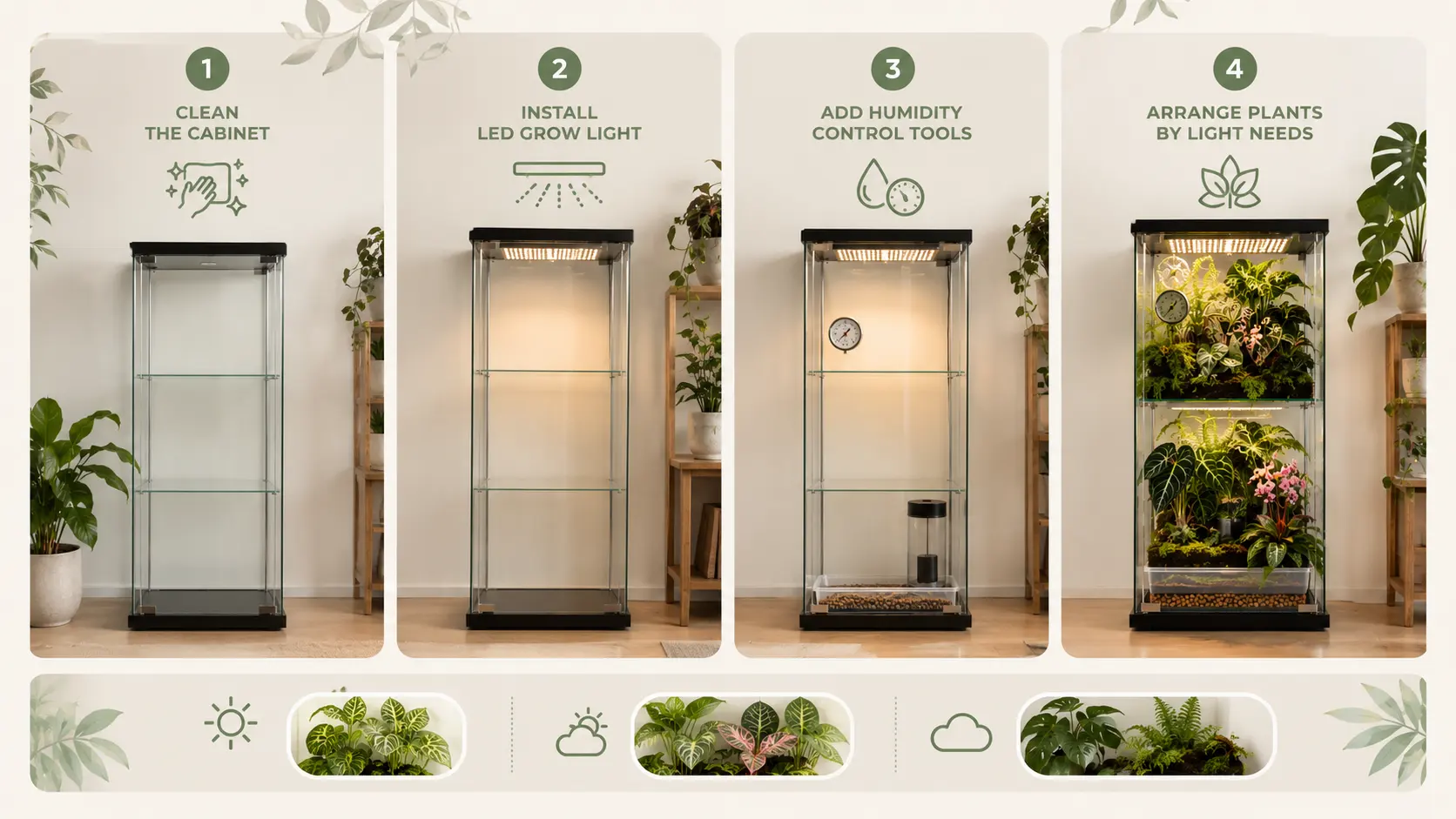
Creating an IKEA Detolf greenhouse involves adapting the cabinet into a controlled plant environment while maintaining safety and airflow.
- Clean and prepare the cabinet
Before adding plants or equipment:
- Remove dust and debris from glass panels and shelves.
- Clean surfaces with a mild solution that leaves no harmful residue. Regular plant maintenance also includes keeping foliage clean, as clean plant leaves help indoor plants absorb light more effectively and stay healthier.
- Inspect seals, doors, and shelves for damage.
- Confirm the cabinet is stable before adding plant weight.
A clean starting environment reduces the chance of introducing pests or mold into the enclosed space.
- Install LED grow lighting
Lighting is one of the most important parts of a Detolf greenhouse conversion because glass cabinets usually do not provide enough natural light intensity indoors.
When installing grow lights:
- Choose low-heat LED lighting.
- Position lights close enough for plants to receive adequate intensity.
- Avoid placing lights directly against leaves.
- Adjust the lighting schedule based on plant requirements.
Most tropical foliage plants perform well with consistent artificial lighting because indoor conditions often lack the intensity of outdoor sunlight.
- Add ventilation points
A common mistake is sealing the cabinet completely. Although enclosed spaces maintain humidity, plants also require fresh air exchange.
Ventilation can be created by:
- Leaving small gaps around doors.
- Opening the cabinet periodically.
- Installing a small circulation fan.
- Avoiding airtight sealing materials.
Good airflow helps reduce condensation buildup and lowers the risk of fungal diseases.
- Add humidity-supporting features
Humidity control can be improved through:
- Humidity trays filled with water and pebbles.
- Grouping plants with similar moisture needs.
- Using humidity meters to track changes.
- Choosing plants naturally adapted to humid environments.
The goal is stable humidity rather than maximum humidity. Extremely high moisture levels without airflow can create unhealthy growing conditions.
- Arrange plants according to light requirements
Plant placement inside the cabinet affects growth.
A practical arrangement includes:
- High-light plants closer to grow lights.
- Lower-light tolerant plants on lower shelves.
- Smaller plants positioned where they are visible.
- Plants with similar care requirements grouped together.
This creates a more efficient environment and prevents some plants from receiving too much or too little light.
Raising the Cabinet Off the Ground
Raising an IKEA Detolf or Detolf-style cabinet on a stand or risers improves both function and appearance. Although the cabinet can sit directly on the floor, elevation provides several practical benefits for indoor plant setups.
Benefits of raising the cabinet include:
- Improved airflow underneath the cabinet.
- Reduced risk of moisture damage to flooring.
- Easier cleaning around the base.
- Better viewing height for plant displays.
Air circulation underneath the cabinet helps prevent moisture accumulation, especially when humidity trays or frequent watering are used. A raised base also makes the greenhouse cabinet feel more like a dedicated plant display rather than ordinary furniture.
Common methods include:
- Furniture riser feet.
- A stable wooden platform.
- A reinforced plant stand.
- A custom cabinet base.
Any raised support must be strong enough to handle the cabinet’s weight, including glass panels, accessories, and plants.
What Grows Well in a Detolf-Style Mini Greenhouse
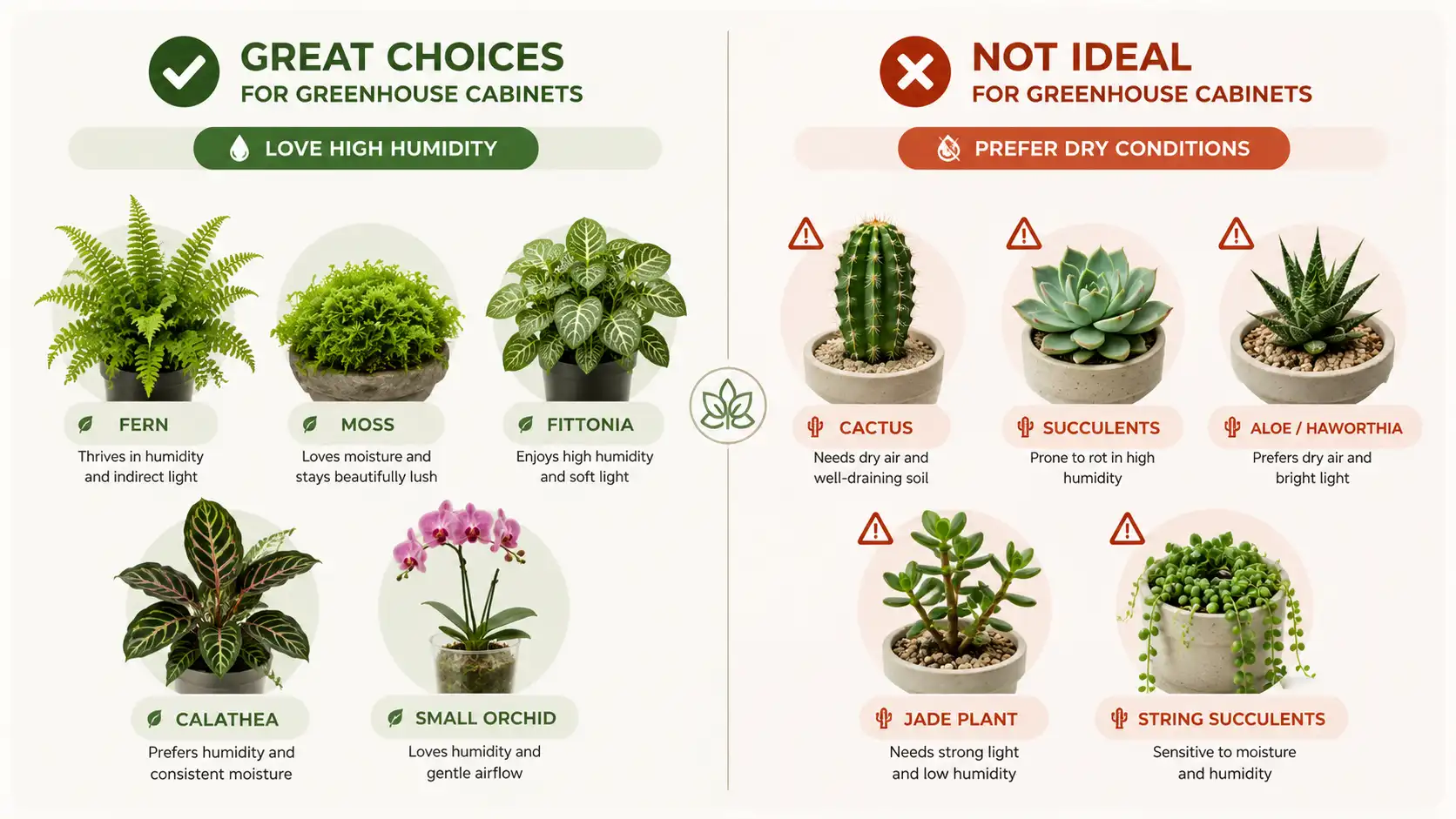
A Detolf-style mini greenhouse works best for plants that naturally prefer warm, humid environments. The enclosed glass structure helps maintain moisture levels, but plant selection remains important because not all houseplants benefit from higher humidity.
Plants suited for greenhouse cabinets usually come from tropical forest environments where humidity is naturally higher and light is filtered rather than direct. Understanding humidity needs is important for indoor species because plants such as spider plants have specific humidity requirements that affect leaf health and growth.
Plants That Thrive
Humidity-loving tropical plants are usually the best choices for a Detolf greenhouse cabinet.
Suitable plants include:
- Ferns
- Mosses
- Small orchids
- Fittonia
- Calathea species
- Other tropical foliage plants
Ferns and mosses often perform well because they naturally grow in moist environments and benefit from consistent humidity. Many greenhouse cabinet collectors grow tropical aroids such as Monstera deliciosa, a species known for its large leaves and popularity as an indoor ornamental plant.
Small orchids can adapt to greenhouse cabinets when airflow and light levels are appropriate. Compact orchid varieties are usually better choices because large specimens may quickly outgrow the available space.
Fittonia, also known as nerve plant, is especially popular because it prefers higher humidity and remains relatively compact.
Calathea species and other tropical foliage plants can also benefit from cabinet conditions because they often respond positively to stable humidity levels. Other tropical plants, including Alocasia varieties, can also perform well in controlled indoor environments when their light and humidity needs are met.
Other suitable characteristics for Detolf greenhouse plants include:
- Compact growth habits.
- Moderate light requirements.
- Preference for consistent moisture.
- Ability to tolerate indoor conditions.
What Not to Grow in a Greenhouse Cabinet
Some plants are poorly suited for enclosed greenhouse cabinets because the increased humidity conflicts with their natural growing requirements.
Plants that often struggle include:
Succulents and cacti
These plants generally prefer dry conditions with strong airflow. High humidity inside a Detolf greenhouse can increase the risk of:
- Root rot.
- Soft tissue damage.
- Fungal problems.
Plants requiring strong direct sunlight
Some sun-loving plants may not perform well because glass cabinets indoors usually provide limited light intensity. Even with grow lights, the available space may not replicate outdoor sunlight conditions.
Fast-spreading vines
Aggressive growers can quickly exceed the cabinet’s limited footprint. Examples include plants that produce long trailing stems or require frequent pruning.
Problems with unsuitable plants include:
- Overcrowding.
- Blocked airflow.
- Increased maintenance.
- Competition for light.
Choosing plants based on their natural habitat and growth pattern is one of the most important factors in creating a successful Detolf greenhouse. A cabinet should support the plants’ environmental needs rather than forcing unsuitable species into a humid enclosure.
Plant Size in a Detolf Greenhouse
The size of plants grown in an IKEA Detolf greenhouse is limited by the cabinet’s compact interior dimensions. A standard Detolf cabinet is approximately 43 cm wide, 37 cm deep, and 163 cm tall, meaning it provides vertical space but limited horizontal room for large root systems and spreading foliage.
Because of this restricted footprint, the best plants for a Detolf greenhouse are usually:
- Compact tropical foliage plants.
- Slow-growing species.
- Small climbing plants that can be trained.
- Plants that tolerate regular pruning.
The same plant species may behave differently inside a cabinet compared with outdoor conditions. A tropical plant that becomes several feet wide outdoors may remain smaller indoors because of limited root space, reduced light intensity, and controlled growing conditions.
Humidity can also influence plant appearance. Higher humidity often helps tropical plants produce healthier leaves and reduces stress caused by dry indoor air. However, humidity alone does not create unlimited growth.
Plants still require:
- Adequate light.
- Proper nutrition.
- Suitable root space.
- Regular maintenance.
Examples of plants that usually fit well include:
| Plant Type | Suitability for Detolf Greenhouse |
| Fittonia | Excellent due to compact size and humidity preference |
| Small ferns | Suitable because they stay manageable |
| Mini orchids | Suitable when airflow and lighting are correct |
| Mosses | Excellent for humid cabinet environments |
| Large climbing aroids | May require frequent pruning |
Indoor growth is generally more controlled than outdoor growth because temperature, humidity, and available space limit expansion. Regular pruning helps maintain a balanced display and prevents plants from blocking light or airflow.
Growth Rate Inside an Enclosed Cabinet
Plants inside a Detolf greenhouse may grow faster than they would in a dry indoor environment because the cabinet creates more stable humidity and temperature conditions. However, growth speed depends on the plant species, lighting quality, nutrients, and airflow.
Tropical plants often respond positively to greenhouse cabinet conditions because many originate from humid forest environments. Consistent moisture levels can reduce stress and allow plants to focus more energy on producing new leaves.
Factors that influence growth rate include:
- Light intensity: Adequate grow lighting encourages healthy photosynthesis.
- Humidity levels: Stable humidity supports tropical foliage development.
- Temperature: Warm conditions generally support active growth.
- Nutrients: Regular but controlled fertilization provides essential minerals.
- Air movement: Proper airflow prevents stress from stagnant conditions.
Growth patterns can still change throughout the year. Even indoors, many plants experience seasonal slowdowns due to:
- Shorter daylight periods.
- Lower indoor temperatures.
- Reduced plant activity during cooler months.
Poor cabinet management can also reduce growth. For example, excessive humidity without airflow may create unhealthy conditions that slow development.
Common signs of poor growth include:
- Small new leaves.
- Yellowing foliage.
- Weak stems.
- Long spaces between leaves.
- Slow recovery after watering problems.
A well-maintained Detolf greenhouse creates a stable environment, but it does not replace proper plant care. Light, water, and nutrition remain essential for consistent growth.
Care Guide for a Detolf Greenhouse
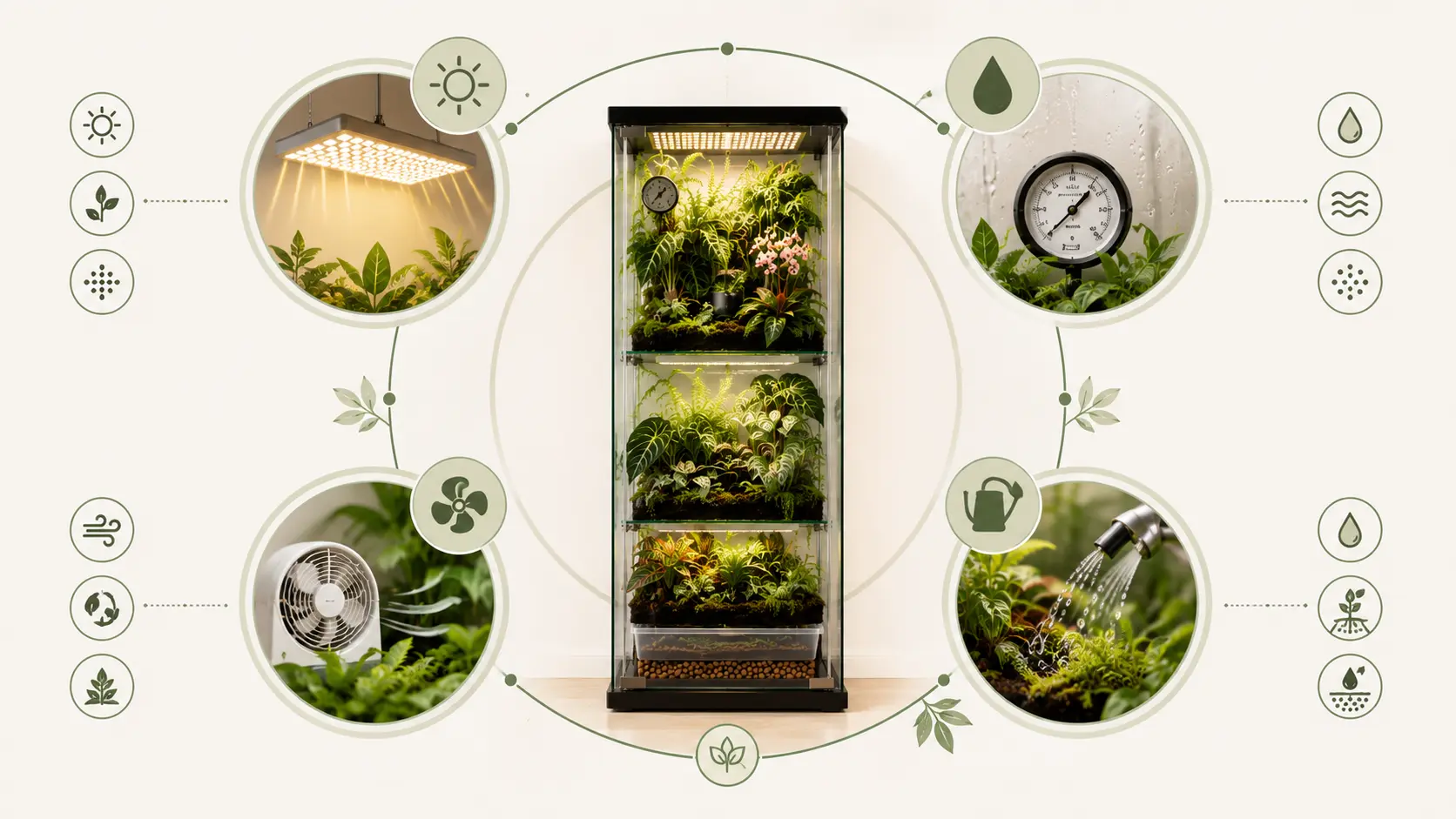
A Detolf greenhouse requires balanced care because enclosed environments behave differently from open shelves. Water evaporates more slowly, humidity remains higher, and small mistakes can affect plants quickly.
Proper care focuses on controlling:
- Watering habits.
- Lighting conditions.
- Soil structure.
- Fertilizer use.
- Plant size management.
- Air circulation.
Watering Requirements
Plants inside a Detolf greenhouse often need less frequent watering than plants kept in open rooms because humidity reduces moisture loss.
Helpful watering practices include:
- Checking soil moisture before watering.
- Avoiding constantly wet soil.
- Using pots with drainage holes.
- Adjusting watering frequency based on plant type.
Misting can increase temporary humidity, but it should not replace proper watering. Excessive misting may leave leaves constantly wet, increasing the risk of fungal issues.
Humidity trays can support moisture levels, but plants should not sit directly in standing water unless they are species that tolerate those conditions. For other indoor plants, growers can also explore methods for increasing humidity naturally without a humidifier to maintain suitable moisture levels.
Light Requirements
Lighting is one of the most important parts of a successful Detolf greenhouse.
Most indoor cabinets require artificial lighting because normal room light is usually insufficient for healthy plant growth.
Recommended practices include:
- Use full-spectrum LED grow lights.
- Position lights according to plant height.
- Monitor leaf response.
- Adjust distance if plants show stress.
Signs of insufficient light include:
- Slow growth.
- Pale leaves.
- Long, stretched stems.
- Smaller new growth.
Signs that lights may be too close include:
- Leaf discoloration.
- Dry patches.
- Heat stress.
Soil Conditions
The best soil mixes for Detolf greenhouse plants are usually moisture-retentive but well-draining.
A suitable mix may include:
- Quality potting soil.
- Coco coir or peat-based materials.
- Perlite for airflow.
- Orchid bark for tropical plants needing extra drainage.
Because humidity is already high inside the cabinet, soil should not remain saturated for long periods.
Fertilizing Needs
Plants inside greenhouse cabinets benefit from light, consistent fertilization rather than heavy feeding.
General practices include:
- Using diluted fertilizer during active growth.
- Reducing feeding during slower growth periods.
- Avoiding fertilizer buildup in small pots.
Over-fertilizing can damage roots, especially in enclosed environments where salts may accumulate.
Pruning Practices
Regular pruning helps maintain healthy plants in a limited cabinet space.
Pruning helps:
- Control plant size.
- Improve airflow.
- Remove damaged leaves.
- Prevent overcrowding.
Fast-growing plants may require trimming more frequently because the Detolf’s interior dimensions restrict expansion.
Climate Tolerance Inside a Semi-Sealed Cabinet
A Detolf greenhouse creates a more stable microclimate than a normal room, but it is still affected by the surrounding environment.
Important factors include:
- Room temperature.
- Seasonal humidity changes.
- Placement near windows or heating sources.
- Duration of grow light use.
Most tropical cabinet plants perform best when temperatures remain warm and stable. Sudden temperature changes can stress plants even inside an enclosed cabinet.
Common Problems in a Detolf Greenhouse (and How to Fix Them)
A Detolf greenhouse can provide excellent conditions for tropical plants, but incorrect setup can create problems. The most common issues involve excess moisture, poor airflow, incorrect lighting, and overcrowding.
Leaves Turning Yellow
Yellow leaves in a Detolf greenhouse are commonly caused by overwatering or insufficient light. Because enclosed cabinets slow evaporation, soil can stay wet longer than expected.
Possible causes include:
- Watering too frequently.
- Poor drainage.
- Low light levels.
- Natural aging of older leaves.
Solutions include:
- Check soil moisture before watering.
- Increase light exposure if growth is weak.
- Improve drainage.
- Remove severely damaged leaves.
Prevention involves creating a consistent watering routine rather than following a fixed schedule without checking plant conditions.
Mold or Excess Condensation
Mold and heavy condensation usually indicate insufficient ventilation. While humidity benefits tropical plants, stagnant air creates conditions where fungi can spread.
Common causes include:
- Cabinet sealed too tightly.
- No air movement.
- Excessive misting.
- Wet leaves staying damp.
Solutions include:
- Opening cabinet doors periodically.
- Adding a small circulation fan.
- Reducing unnecessary misting.
- Removing decaying plant material.
Healthy greenhouse cabinets maintain humidity while still allowing fresh air exchange.
Pest Infestations
Humidity-rich environments can attract pests, especially when new plants are introduced without inspection.
Common pests include:
- Fungus gnats.
- Spider mites.
- Scale insects.
Prevention methods include:
- Inspecting new plants before adding them.
- Isolating new additions temporarily.
- Keeping leaves clean.
- Monitoring plants regularly.
Early detection makes pest control much easier in an enclosed cabinet.
Slow or Stalled Growth
Slow growth can occur when plants do not receive the right balance of light, nutrients, or space.
Common causes include:
- Weak grow lights.
- Incorrect light distance.
- Overcrowding.
- Poor airflow.
- Nutrient deficiencies.
Solutions include:
- Adjusting grow light placement.
- Removing overcrowded plants.
- Providing balanced fertilization.
- Improving ventilation.
A Detolf greenhouse works best when environmental conditions remain stable and each plant has enough space to grow.
Beginner Mistakes and Practical Tips
A successful IKEA Detolf greenhouse depends on balancing humidity, light, airflow, and plant weight. Many beginner mistakes happen because the cabinet looks like a sealed greenhouse, but it still requires careful management to prevent plant stress and structural issues.
Common mistakes include:
- Completely sealing the cabinet without ventilation.
- Adding too many heavy pots without checking shelf capacity.
- Overwatering because the environment appears dry.
- Placing grow lights too close to foliage.
- Choosing plants that do not suit humid cabinet conditions.
Understanding these limitations helps beginners create a healthier and more stable plant cabinet.
Sealing the Cabinet Completely With No Airflow
One of the most common mistakes is treating the Detolf greenhouse like a fully sealed terrarium. Although a closed environment can maintain humidity, plants still require fresh air exchange.
Without airflow, problems can develop:
- Excess condensation on glass panels.
- Mold growth.
- Fungal diseases.
- Weak plant growth.
A better approach is to maintain controlled ventilation by:
- Leaving small gaps around doors.
- Opening the cabinet regularly.
- Using a small circulation fan if needed.
The goal is not maximum humidity but a balanced environment where plants receive moisture and airflow together.
Ignoring Shelf Weight Limits
The IKEA Detolf was designed as a display cabinet, not as a heavy plant-growing structure. Plant pots, wet soil, decorative materials, and accessories can quickly add weight.
IKEA lists Detolf shelves at approximately 3.5 kg (about 8 lb) maximum load capacity, although older units may have different ratings depending on production versions.
Beginners should consider:
- Lightweight plastic nursery pots.
- Smaller containers.
- Distributing weight evenly.
- Avoiding large ceramic pots on upper shelves.
Wet soil is significantly heavier than dry soil, so weight calculations should consider the cabinet after watering, not just the empty pots.
Overwatering in an Enclosed Environment
A greenhouse cabinet loses moisture more slowly than an open shelf, meaning plants may need less frequent watering.
Common overwatering signs include:
- Yellowing leaves.
- Soft stems.
- Constantly wet soil.
- Root problems.
Better practices include:
- Checking soil moisture before watering.
- Using drainage holes.
- Choosing appropriate soil mixes.
- Reducing watering frequency compared with open-room plants.
Humidity and soil moisture are different factors. A cabinet can have high humidity while the plant roots still require periods of drying.
Ignoring Grow Light Distance and Heat
Grow lights improve plant growth, but incorrect placement can cause stress. Even LED lights can produce heat when positioned too close to foliage.
Potential problems include:
- Leaf scorching.
- Dry leaf edges.
- Heat buildup inside the cabinet.
- Uneven plant growth.
To avoid issues:
- Maintain appropriate distance between lights and leaves.
- Choose low-heat LED options.
- Monitor cabinet temperature.
- Adjust lighting based on plant response.
A good lighting setup provides enough intensity without creating excessive heat.
Detolf Greenhouse vs. Purpose-Built Mini Greenhouse Cabinets
An IKEA Detolf greenhouse is a DIY solution, while purpose-built greenhouse cabinets are designed specifically for growing plants. The main difference is that a Detolf requires modification, whereas dedicated cabinets often include features such as improved sealing, built-in lighting options, and easier humidity management.
The best choice depends on budget, customization needs, and how much effort a grower wants to invest.
A Detolf greenhouse is often preferred by hobbyists who enjoy customization and want a lower-cost plant display. Purpose-built cabinets are better suited for users who want a ready-made solution with fewer modifications.
Detolf Hack vs. KLINGSBO vs. Dedicated Mini Greenhouse
| Option | Cost | Humidity Control | Ease of Setup |
| Detolf hack | Low (secondhand cabinet plus DIY modifications) | Manual control added by the user | Moderate — requires lighting, ventilation, and setup changes |
| KLINGSBO cabinet | Moderate | Better sealed design compared with basic display cabinets | Easier — requires fewer modifications |
| Dedicated tabletop greenhouse | Varies | Built-in humidity dome or controlled environment features | Easiest — designed for immediate use |
Detolf Hack
The Detolf greenhouse approach is popular because it allows complete customization.
Advantages include:
- Lower cost when buying secondhand.
- Full control over lighting and layout.
- Attractive glass display appearance.
- Large community knowledge base.
However, it requires more work because users must add:
- Grow lights.
- Ventilation solutions.
- Humidity monitoring.
- Plant supports.
The Detolf is ideal for hobbyists who enjoy building and adjusting their own growing environment.
KLINGSBO Cabinet
The KLINGSBO cabinet offers a more modern display cabinet option and may appeal to users who want a cleaner setup with fewer modifications.
Compared with a Detolf:
- It may require fewer adjustments.
- Its design differs from the traditional all-glass Detolf style.
- Interior space and suitability depend on the specific cabinet model.
It can work for plant displays, but users should still consider airflow, lighting, and moisture management before conversion.
Dedicated Mini Greenhouse
Purpose-built mini greenhouse cabinets are designed specifically for plant growing. They often include features that reduce the amount of DIY work required.
Benefits may include:
- Better humidity control.
- Integrated ventilation options.
- Purpose-designed plant shelving.
- Easier setup.
The main disadvantage is cost. Dedicated greenhouse cabinets are usually more expensive than converting a secondhand display cabinet.
For many plant collectors, the Detolf remains attractive because it provides a balance between appearance, affordability, and customization.
Conclusion
An IKEA Detolf greenhouse is a practical DIY plant cabinet created by converting the discontinued IKEA Detolf glass display cabinet into a controlled environment for humidity-loving plants. Although the Detolf was not designed as a greenhouse, its glass structure, compact footprint, and display-focused design made it a popular choice among plant collectors.
The closest official IKEA replacement is the BLÅLIDEN, but it does not completely replicate the Detolf’s fully glass appearance or available display space. Because Detolf units are now mainly found through secondhand sources, availability has become an important consideration for anyone planning this conversion.
A successful Detolf greenhouse depends on several factors:
- Providing suitable grow lighting.
- Maintaining balanced humidity.
- Allowing proper airflow.
- Respecting shelf weight limits.
- Choosing plants suited to enclosed environments.
When correctly modified and maintained, a Detolf greenhouse can provide an attractive, budget-friendly growing space for tropical plants such as ferns, mosses, orchids, and humidity-loving foliage species.
FAQs
Why was the IKEA Detolf discontinued?
The IKEA Detolf was discontinued in the UK and Europe, but IKEA has not provided a detailed public reason for the change. It was removed during a broader update of IKEA’s display cabinet range and replaced by newer models such as the BLÅLIDEN.
What did IKEA replace the Detolf with?
IKEA replaced the Detolf with the BLÅLIDEN cabinet. The BLÅLIDEN has a smaller design and uses wood-framed glass construction instead of the Detolf’s mostly glass structure, making it a partial replacement rather than an identical alternative.
How much weight can an IKEA Detolf shelf hold?
An IKEA Detolf shelf can hold approximately 3.5 kg (about 8 lb) according to commonly referenced IKEA specifications, although some older versions may have different ratings. Plant owners should consider the combined weight of pots, soil, water, and decorations.
Is a Detolf cabinet good for displaying or growing plants?
Yes, a Detolf cabinet can work well for displaying and growing plants after modification. It is not humidity-controlled out of the box, so users need to add suitable lighting, ventilation, and humidity management features.
What grows well in a mini greenhouse cabinet?
Mini greenhouse cabinets are best suited for humidity-loving plants such as ferns, mosses, small orchids, Fittonia, Calathea, and other tropical foliage plants. Succulents and cacti usually perform poorly because they prefer drier conditions.
Is the Detolf coming back?
There is no official confirmation that IKEA will bring back the Detolf. Current availability suggests that the BLÅLIDEN and other display cabinet options are the ongoing alternatives, while original Detolf units are mainly available through secondhand markets.