
Introduction
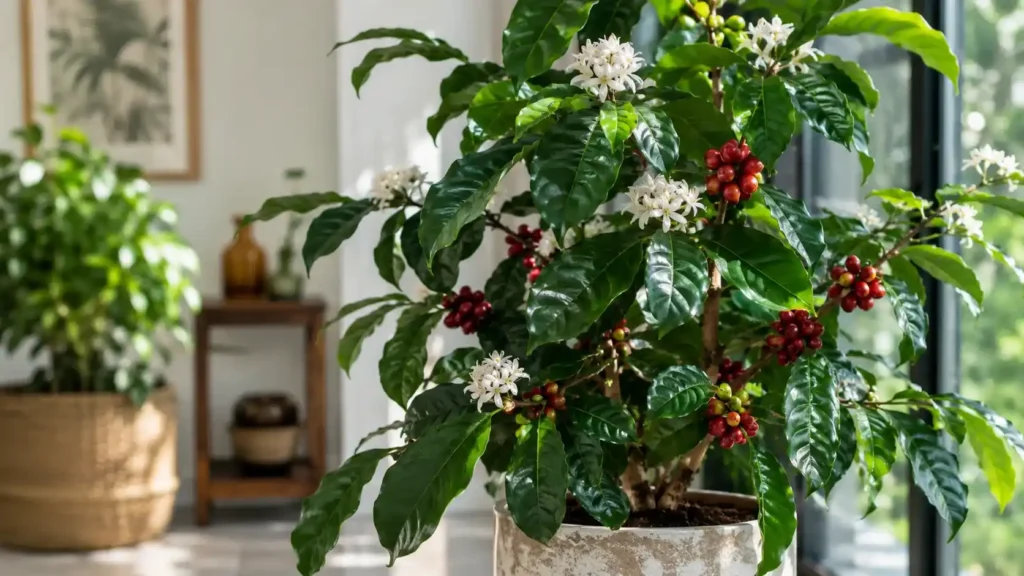
The coffee bean plant, scientifically known as Coffea arabica, is a tropical evergreen shrub grown for the seeds that produce coffee. Native to the highlands of Ethiopia, this remarkable plant is responsible for most of the world’s coffee production. Beyond its agricultural importance, Coffea arabica is also a popular ornamental houseplant thanks to its glossy green foliage and elegant growth habit. While commercial coffee farms cultivate it for coffee beans, many gardeners grow it indoors for its attractive appearance. Understanding the coffee bean plant’s origins, growth habits, and care requirements helps gardeners appreciate both its beauty and its role in one of the world’s most widely consumed beverages. The coffee bean plant is one of many fascinating species featured in our comprehensive Plants: Benefits and Guides resource, which explores plant care, growth habits, and practical gardening advice.
Quick Summary
- The coffee bean plant (Coffea arabica) is a tropical evergreen shrub native to Ethiopia and produces most of the world’s coffee.
- It can be grown indoors as a houseplant, although fruit production is uncommon in typical home conditions.
- Fragrant white flowers develop into colorful coffee cherries that contain coffee seeds.
- Bright indirect light, consistent moisture, warmth, and humidity are essential for healthy growth.
- Coffea arabica is both an economically important crop and an attractive ornamental plant.
What Is the Coffee Bean Plant?
The coffee bean plant is Coffea arabica, a flowering evergreen shrub in the Rubiaceae family. Commonly known as the Arabian coffee plant or arabica coffee plant, it is the most widely cultivated coffee species worldwide. Arabica coffee is valued for its smooth flavor, lower bitterness, and complex aroma compared to other coffee species. For additional botanical background and classification details, readers can consult the Wikipedia article on Coffea arabica.
The scientific name Coffea arabica identifies the plant responsible for approximately 60–70% of global coffee production. The term “latin for coffee” commonly refers to the genus Coffea, while arabica identifies the specific species.
Coffea arabica Scientific and Common Names
Coffea arabica belongs to the following scientific classification:
| Classification | Name |
| Kingdom | Plantae |
| Family | Rubiaceae |
| Genus | Coffea |
| Species | Coffea arabica |
Common names include:
- Arabian coffee plant
- Arabica coffee plant
- Arabica coffee tree
- Mountain coffee
- Coffee bean plant
What Does “Arabica” Mean?
Arabica refers to Arabia, particularly Yemen and neighboring regions where coffee was first commercially cultivated and traded. The designation Coffea arabica L. includes the abbreviation “L.” in recognition of Carl Linnaeus, who formally described the species.
Coffea arabica pronunciation is:
“kof-EE-uh uh-RAB-ih-kuh”
Arabica pronunciation is:
“uh-RAB-ih-kuh”
What Does a Coffee Bean Plant Look Like?
A coffee bean plant has glossy, dark green leaves with gently wavy edges and an attractive tropical appearance. The leaves grow opposite one another along woody stems, creating a dense and elegant canopy. Its glossy foliage also makes it a natural addition to collections featuring other house plants with waxy leaves.
Young plants often resemble compact shrubs, while mature specimens develop into small trees. Outdoors, they can become substantial plants, whereas indoor specimens remain more compact through pruning and container growth.
The Coffea arabica Flower
The Coffea arabica flower is small, white, and highly fragrant. The flowers often appear in clusters along stems and produce a jasmine-like scent.
Key flower characteristics include:
- White star-shaped petals
- Sweet fragrance
- Self-pollinating habit
- Usually appear after rainfall or watering changes
Flowering generally occurs when plants reach maturity and receive suitable growing conditions.
Coffee Cherries: The Fruit of the Coffee Plant
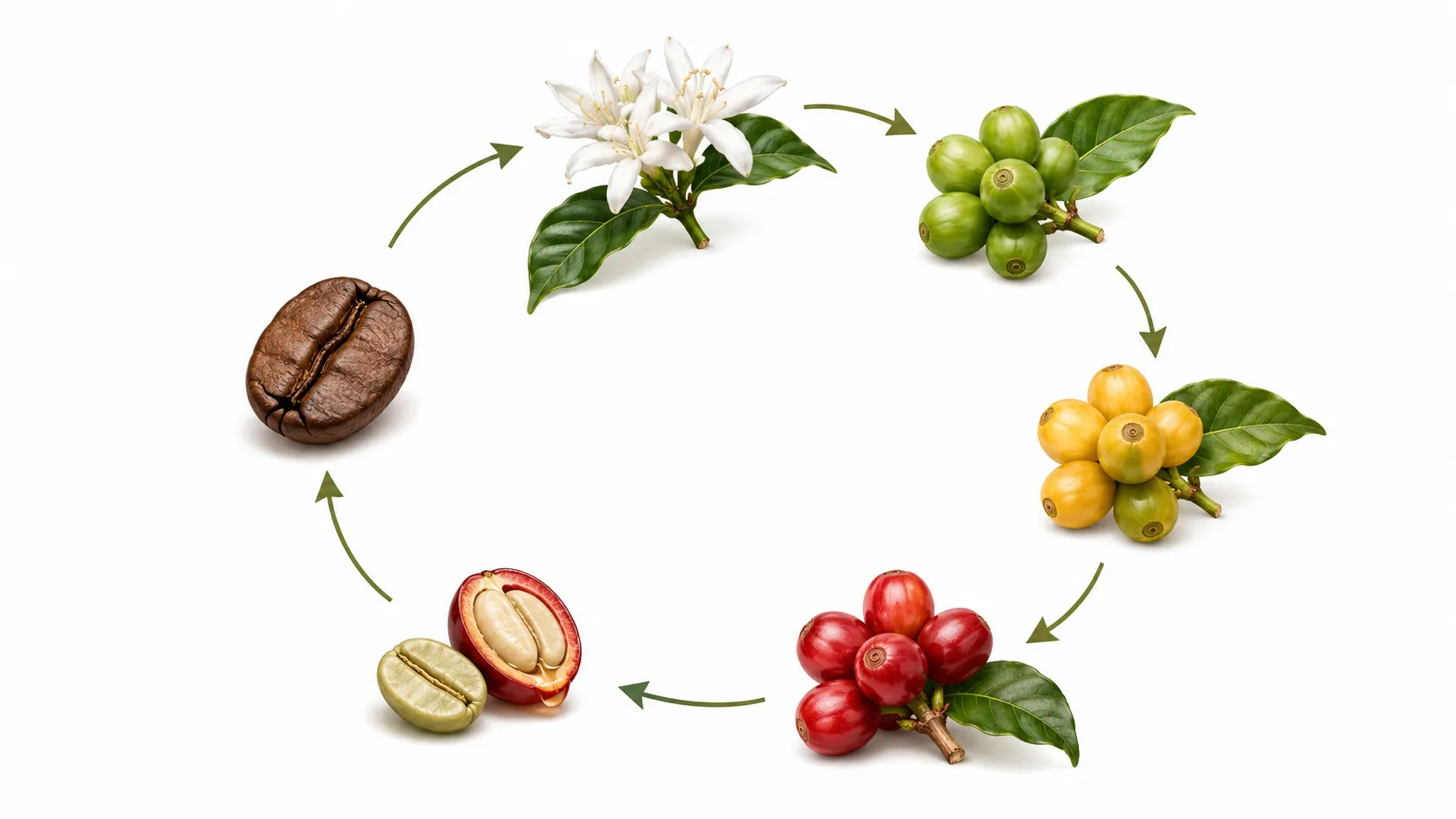
Coffee cherries are the fruit of the coffee plant. After pollination, flowers develop into green berries that gradually mature through yellow shades before turning red or purple when ripe.
The lifecycle includes:
- Flower formation
- Pollination
- Green cherry development
- Ripening to red or purple
- Harvesting and processing
Many people assume coffee beans are fruits, but they are actually seeds located inside the coffee cherry. Coffee cherries are edible and have a sweet flavor. In some regions, the fruit flesh is consumed fresh or dried to produce cascara tea.
Where Do Coffee Beans Come From?
Coffee beans originate from the seeds of coffee cherries produced by Coffea arabica and related species. The birthplace of arabica coffee is widely recognized as Ethiopia, particularly the Kaffa region.
From Ethiopia, coffee cultivation spread to Yemen, then throughout the Arabian Peninsula before expanding globally through trade and agricultural development.
Today, coffee is cultivated across tropical regions worldwide.
The Global Coffee-Growing Belt
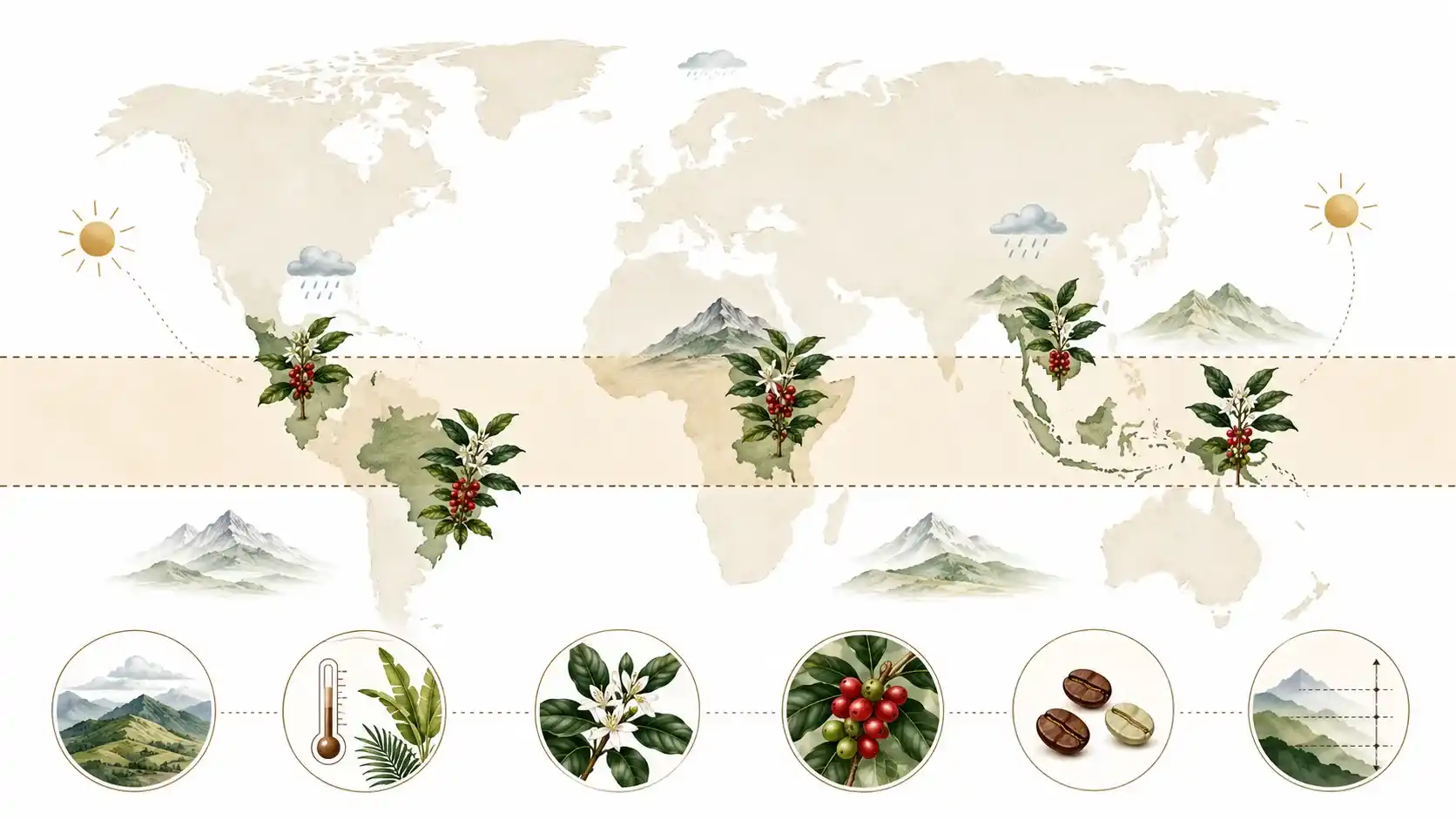
The Coffee Belt refers to equatorial regions located between the Tropics of Cancer and Capricorn. These areas provide the warm temperatures, rainfall, altitude, and humidity needed for coffee production.
| Country | Coffee Type | Growing Altitude |
| Ethiopia | Arabica | 1,500–2,200m |
| Colombia | Arabica | 1,200–2,000m |
| Brazil | Arabica & Robusta | 600–1,200m |
| Vietnam | Robusta | 500–1,500m |
| Indonesia | Arabica & Robusta | 1,000–1,800m |
Coffee Bean Plant Size and Appearance at Maturity
A full-grown coffee bean plant typically reaches 3–5 metres tall outdoors. In natural habitats, some specimens can exceed 10 metres.
Commercial plantations often prune plants to 2–3 metres to simplify harvesting and improve productivity.
Indoor plants generally remain much smaller and easier to manage.
Indoor vs Outdoor Size Differences
Indoor Coffea arabica houseplants usually grow between 0.5 and 1.5 metres tall. Growth is influenced by:
- Pot size
- Light availability
- Humidity levels
- Pruning practices
- Nutrient availability
Indoor plants grow more slowly and remain compact compared to outdoor specimens.
Coffee Bean Plant Growth Rate
Coffea arabica is considered a slow-to-moderate growing plant. Plants grown from seed often require patience before reaching maturity.
Typical timeline:
- Germination: Several weeks
- Young plant establishment: 1–2 years
- First flowers: 3–4 years
- Fruit production: 5+ years
Growth is most active during spring and summer when temperatures are warm and light levels increase.
Coffea arabica Care Guide
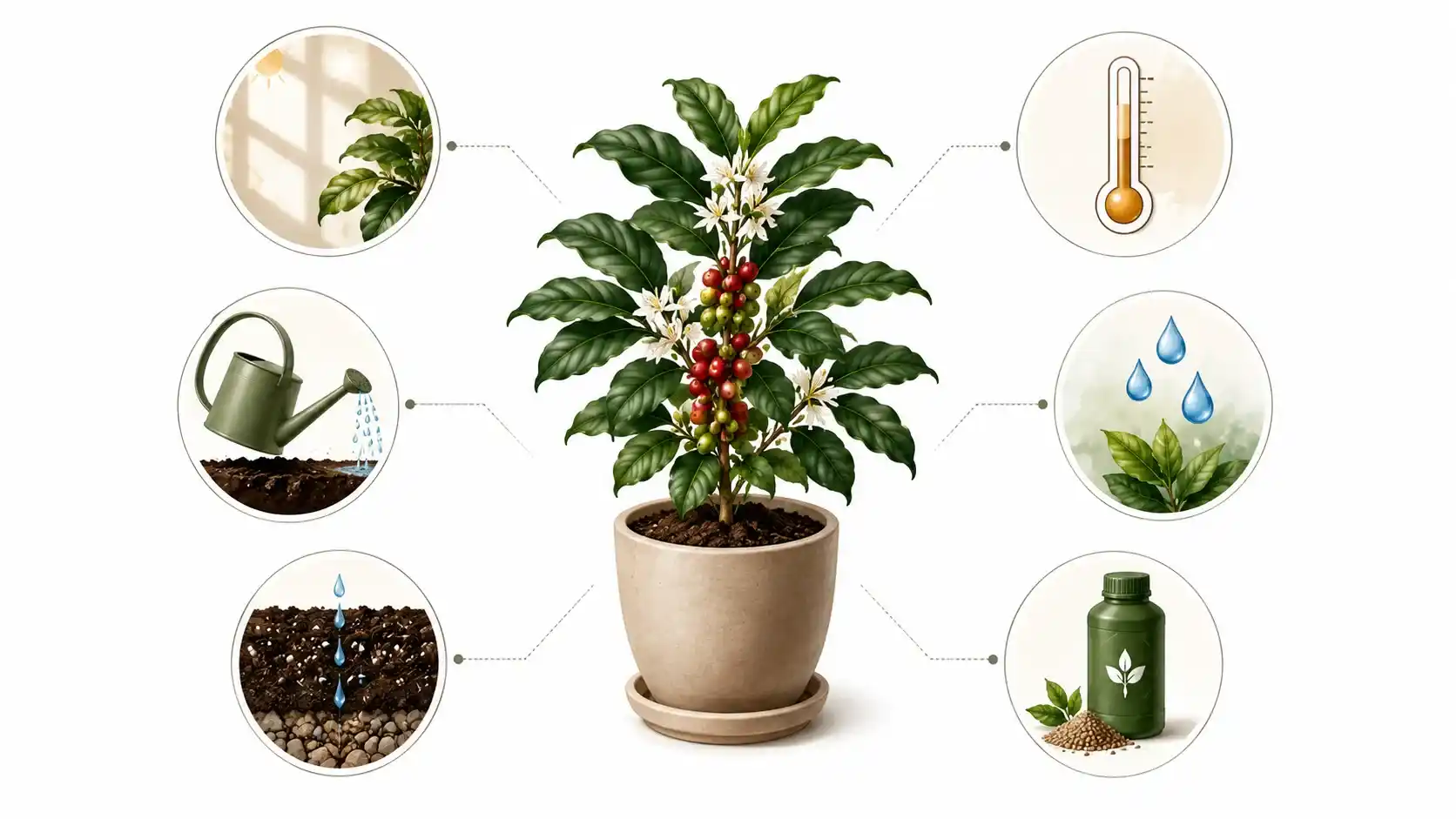
Light Requirements
Coffee plants thrive in bright, indirect light. Direct afternoon sun can scorch leaves and cause discoloration.
Best locations include:
- East-facing windows
- Bright south-facing rooms with filtered light
- Outdoor areas with dappled shade
Watering Needs
Keep soil consistently moist but never saturated. Allow the top inch of soil to dry slightly between watering sessions.
Common watering mistakes include:
- Overwatering
- Poor drainage
- Allowing soil to become completely dry
Soil and Potting
Use a well-draining, slightly acidic growing medium with a pH between 6.0 and 6.5.
Suitable mixes include:
- Peat-based compost
- Houseplant compost with perlite
- Coffee plant-specific growing mixes
Repot every 2–3 years as the plant grows.
Temperature and Humidity
Coffee plants prefer temperatures between 18°C and 25°C.
Important environmental requirements:
- Protect from frost
- Avoid cold drafts
- Maintain high humidity
- Mist leaves when necessary
- Use pebble trays or humidifiers indoors
If you enjoy humidity-loving tropical plants, you may also find our Alocasia Amazonica indoor care guide helpful.
Fertilization
Feed every 2–4 weeks during active growth using a balanced liquid fertiliser.
Reduce feeding during winter when growth naturally slows.
Pruning
Prune in early spring to maintain shape and encourage bushier growth.
Remove:
- Leggy stems
- Damaged branches
- Weak growth
Growing Coffee Bean Plants Indoors in the UK
Growing coffee plants indoors in the UK is entirely possible with proper care. However, lower winter light levels, dry indoor heating, and cooler temperatures present challenges. Most UK-grown coffee plants are maintained as ornamental houseplants rather than fruit-producing specimens.
Like the Zamioculcas Zamiifolia (ZZ Plant), coffee plants are popular indoor specimens, although they require higher humidity and more consistent moisture.
Why Coffee Plants Are Popular UK Houseplants
Coffee plants are popular because they offer:
- Attractive glossy foliage
- Exotic tropical appearance
- Compact indoor growth
- Air-quality benefits
- Easy maintenance when conditions are suitable
Alongside the Lucky Money Plant, Coffea arabica remains a popular choice for adding lush greenery to indoor spaces.
Where to Buy a Coffee Bean Plant in the UK
Coffee plants are commonly available through:
- Garden centres
- Houseplant specialists
- Online plant retailers
- Tropical plant nurseries
Many sellers offer young Coffea arabica plants suitable for indoor cultivation. Coffee plants share similar indoor care requirements with tropical foliage favorites such as Begonia maculata.
From Coffee Bean to Cup: Understanding the Process
The journey from plant to beverage involves several processing stages.
The process includes:
- Coffee cherry harvesting
- Pulp removal
- Seed drying
- Green bean storage
- Roasting
- Grinding
- Brewing
Roasting dramatically changes flavor, aroma, and color, creating the characteristics associated with coffee beverages.
What Are Coffee Beans, Really?
Coffee beans are actually seeds found inside coffee cherries. These seeds are removed, dried, processed, and roasted before use.
Most cherries contain two seeds, although occasional single-seed cherries called peaberries can occur.
Can You Grow Coffee from Seeds at Home?
Yes, coffee can be grown from fresh seeds. However, success depends on seed freshness.
Important facts:
- Fresh seeds germinate best
- Germination may take several weeks
- Warm temperatures improve success
- Roasted coffee beans will not germinate
Coffea arabica Benefits and Uses
Coffea arabica provides numerous benefits and uses.
Major uses include:
- Coffee production
- Ornamental houseplant cultivation
- Cosmetic ingredients
- Skincare formulations
- Agricultural trade
Coffea arabica extract is commonly used in skincare products because of its antioxidant properties. As a houseplant, it contributes visual appeal and indoor greenery.
Arabica vs Robusta: How Does the Coffee Bean Plant Compare?
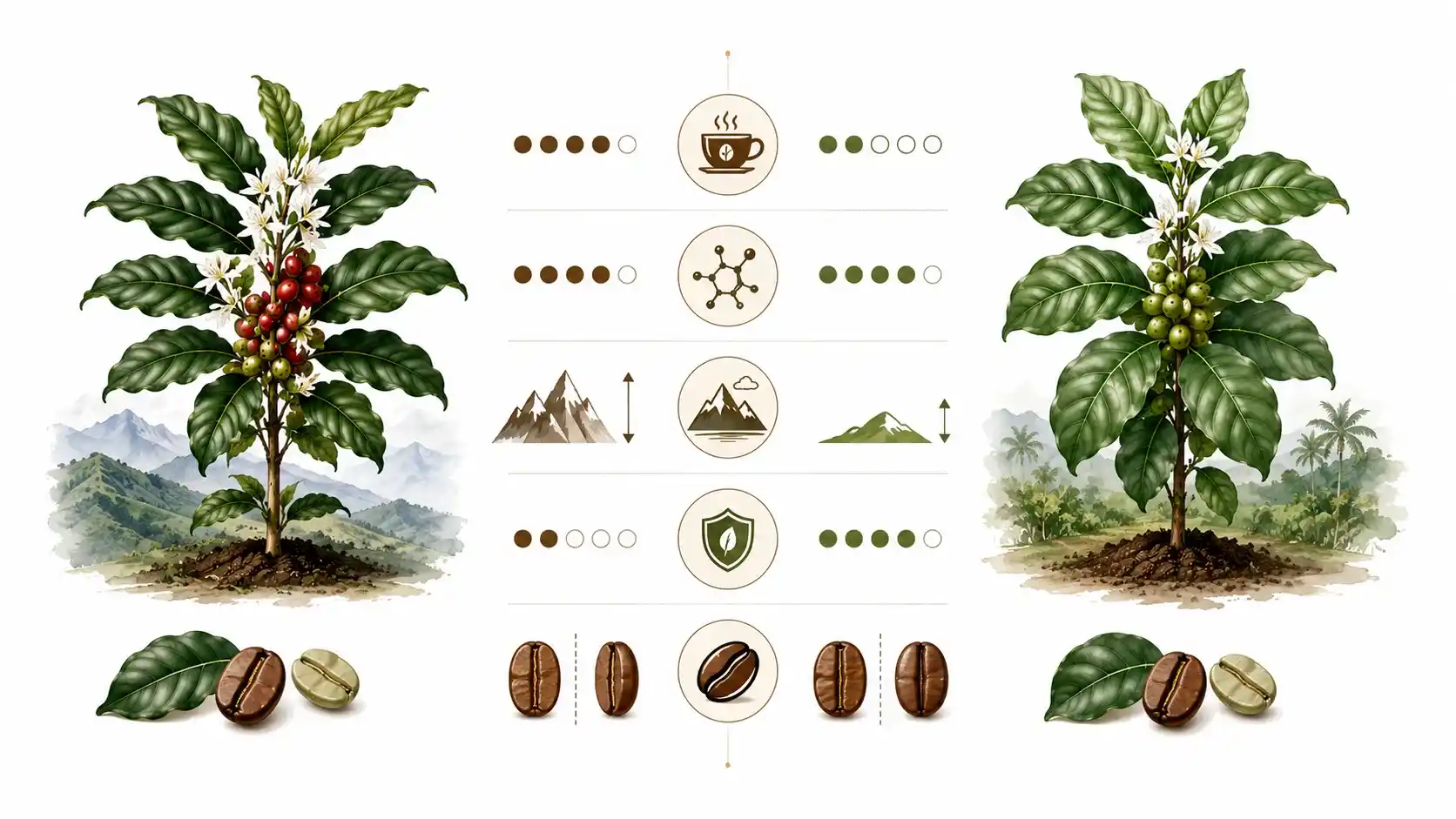
| Feature | Coffea arabica | Coffea robusta |
| Flavour profile | Smooth, complex, sweet | Earthy, bitter, harsh |
| Caffeine content | ~1.2–1.5% | ~2.2–2.7% |
| Growing altitude | High (1,000–2,000m) | Low (200–800m) |
| Disease resistance | Low | High |
| Price | Higher | Lower |
| Global share | ~60–70% of market | ~30–40% of market |
Arabica coffee generally commands higher prices due to its flavor quality, while robusta is valued for resilience and higher caffeine content.
Common Coffee Bean Plant Problems and How to Fix Them
Leaves Turning Yellow
Yellow leaves are usually caused by:
- Overwatering
- Poor drainage
- Excessive sunlight
- Low humidity
Improve drainage, adjust watering practices, and maintain consistent humidity.
Leaf Drop and Brown Leaf Tips
Leaf drop and brown tips commonly result from:
- Cold drafts
- Dry indoor air
- Temperature fluctuations
Move plants away from cold windows and increase humidity levels. Similar humidity-related issues can also affect indoor palms, as explained in our guide to Chamaedorea elegans dry leaves causes and fixes.
Pests: Scale Insects, Mealybugs, and Spider Mites
Common indoor pests include:
- Scale insects
- Mealybugs
- Spider mites
Treat infestations with neem oil or insecticidal soap and inspect leaves regularly.
Regular inspections are important because indoor plants may also attract aphids, which are covered in our guide on removing aphids from houseplants.
No Flowers or Fruit
Lack of flowering often occurs because:
- Plant is too young
- Light levels are insufficient
- Humidity is too low
- Temperature conditions are unsuitable
Most indoor coffee plants never produce fruit, even when healthy.
Beginner Mistakes When Growing a Coffee Bean Plant
Common mistakes include:
- Overwatering roots
- Using poorly draining soil
- Exposing plants to direct afternoon sun
- Ignoring humidity requirements
- Repotting too frequently
- Allowing temperatures to drop too low
Avoiding these issues significantly improves plant health and long-term success.
Conclusion
The coffee bean plant (Coffea arabica) is one of the most rewarding and fascinating houseplants available. Whether you grow it as an ornamental Coffea arabica houseplant, want to learn about arabica coffee plant care, or are interested in where coffee beans come from, understanding its biology and cultivation requirements provides valuable insight into one of the world’s most important crops. With bright indirect light, consistent moisture, warm temperatures, and adequate humidity, a coffee bean plant can thrive indoors for many years and become an attractive addition to any home.
Frequently Asked Questions
1. What is the scientific name of the coffee bean plant?
The scientific name is Coffea arabica. It belongs to the Rubiaceae family and is commonly written as Coffea arabica L. in scientific literature.
2. How do you pronounce Coffea arabica?
3. Can you grow a coffee bean plant indoors in the UK?
Yes. Coffea arabica grows well indoors in the UK when provided with bright indirect light, warmth, and adequate humidity. Fruiting indoors is uncommon.
4. How long does it take a coffee plant to produce coffee beans?
A coffee bean plant typically requires 3–5 years to produce its first fruit and may take longer under indoor growing conditions.
5. What is a coffee cherry?
A coffee cherry is the fruit of the coffee plant. It contains the seeds that become coffee beans after processing.
6. What are the benefits and uses of Coffea arabica extract?
Coffea arabica extract is used in skincare products for its antioxidant properties. The plant is also the world's most important coffee-producing species.
7. Can you eat coffee cherries?
Yes. Coffee cherries are edible and naturally sweet. They can be eaten fresh or processed into cascara tea.