
Introduction
Manjula Pothos propagation is the process of creating new Manjula Pothos plants from healthy stem cuttings. Manjula Pothos (Epipremnum aureum ‘Manjula’) is a patented variegated pothos cultivar known for its creamy white and green marbled leaves. This popular houseplant can be propagated mainly through water or soil methods when cuttings contain healthy nodes. Understanding the correct cutting technique, rooting conditions, and care requirements helps growers successfully create new plants while maintaining the unique variegation pattern of this attractive pothos variety.
Quick Summary
- Manjula Pothos can be propagated in water or soil, with water being easier for beginners to monitor root development.
- Manjula Pothos is a patented cultivar, meaning commercial reproduction may have restrictions.
- Healthy propagation requires stem cuttings with at least one node.
- Slow growth, yellow leaves, and root rot are common problems caused by incorrect care.
- Its heavy cream-and-green variegation makes it one of the most desirable pothos varieties.
What Is Manjula Pothos?
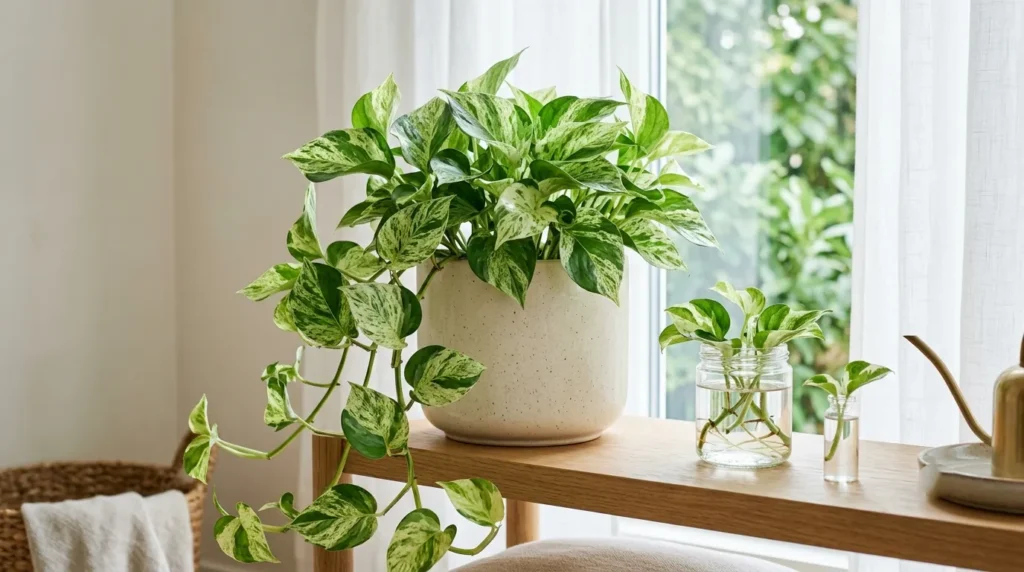
Manjula Pothos is a patented cultivar of Epipremnum aureum developed through the University of Florida and Southern Ag Research programs. It is recognized for its large, heart-shaped leaves featuring irregular patches of white, cream, and green variegation. Unlike common green pothos, Manjula has a slower growth habit because the lighter leaf areas contain less chlorophyll.
Manjula Pothos is a cultivated form of Epipremnum aureum, a tropical vine species commonly known as pothos or golden pothos.
The unique variegation pattern creates a marbled appearance, with each leaf showing different combinations of green and creamy-white sections. This makes every Manjula plant visually distinct.
Manjula Pothos vs Other Pothos Varieties (Comparison Block)
| Variety | Variegation Level | Growth Rate | Light Needs | Rarity |
| Manjula Pothos | High cream, white, and green marbling | Slow to moderate | Bright indirect light preferred | Less common |
| Marble Queen Pothos | High white and green streaks | Moderate | Bright indirect light | Common |
| N’Joy Pothos | White edges with green centers | Moderate | Medium to bright indirect light | Moderately available |
| Pearls and Jade Pothos | Small green leaves with white markings | Moderate | Bright indirect light | Less common |
Manjula generally grows slower than many pothos types because heavy variegation reduces the plant’s ability to produce energy through photosynthesis.
Is Manjula Pothos Rare or Hard to Find?
Manjula Pothos is considered less common than standard pothos varieties because its patented status limits large-scale commercial propagation. Availability has improved over time, but highly variegated plants may still be harder to locate.
Reasons for its higher demand include:
- Limited commercial propagation compared with common pothos.
- Unique cream-and-green leaf patterns.
- Increased collector interest in variegated houseplants.
- Seasonal availability differences at plant retailers.
The price of Manjula Pothos varies depending on plant size, variegation level, and availability.
Is It Legal to Propagate Manjula Pothos?
Manjula Pothos is a patented plant cultivar, which means commercial reproduction and selling propagated plants may be restricted under plant patent laws. These protections generally apply to asexual reproduction for business purposes, such as producing plants for sale.
Home growers usually propagate plants for personal enjoyment, but rules can vary depending on location and patent status. This information is general guidance and is not legal advice.
Which Pothos Varieties Have Patent Restrictions
Examples of pothos cultivars that may have patent protection include:
- Manjula Pothos
- Global Green Pothos
- Shangri La Pothos
Patent protection does not mean the plant cannot exist in home collections; it mainly affects commercial propagation rights.
How Big Do Manjula Pothos Get?
Manjula Pothos can develop long trailing vines indoors, although it usually grows slower than many other pothos varieties. Indoor plants commonly produce vines several feet long when grown in suitable conditions.
Factors affecting size include:
- Light availability
- Pot size
- Fertilization
- Support structures
- Growing environment
With climbing support, such as a moss pole, leaves may become larger because the plant receives structural support similar to its natural climbing habit.
Do Pothos Prefer to Climb or Hang?
Pothos can both climb and trail depending on how they are grown. In nature, Epipremnum aureum is a climbing vine that attaches itself to trees and produces larger leaves as it matures.
Climbing with a moss pole or trellis can encourage:
- Larger mature leaves
- Stronger stems
- More vertical growth
Hanging baskets create a trailing appearance with cascading vines and are popular for decorative indoor displays.
How to Propagate Manjula Pothos
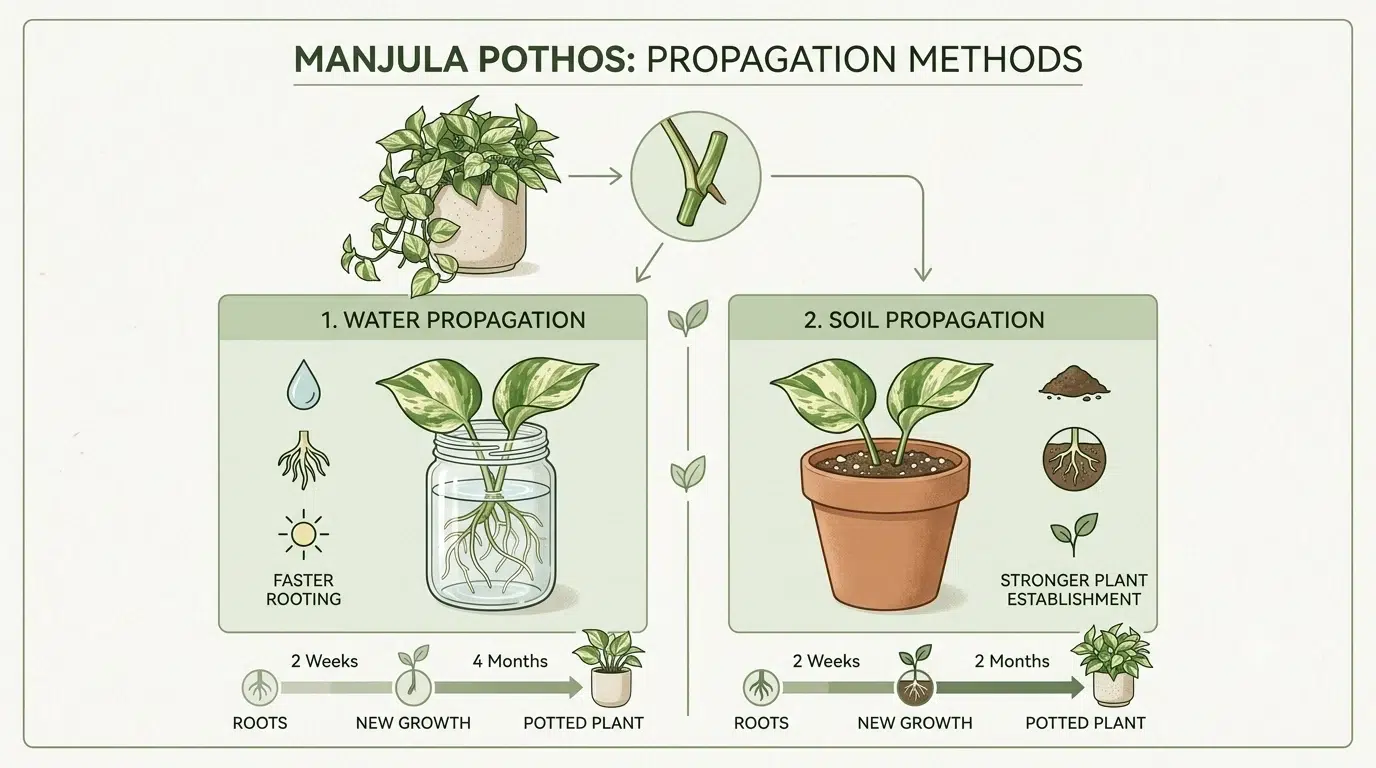
Manjula Pothos propagation works best using healthy stem cuttings containing at least one node. A node is the small area where leaves and aerial roots develop.
Basic propagation steps:
- Choose a healthy vine with strong leaves.
- Cut below a node using sterilized scissors.
- Place the cutting in water or suitable soil.
- Provide bright indirect light.
- Wait for roots to develop before transplanting if needed.
Water Propagation vs Soil Propagation (Comparison Block)
| Method | Pros | Cons | Best For |
| Water Propagation | Easy monitoring, visible roots | Requires water changes | Beginners |
| Soil Propagation | Stronger root adaptation | Root growth is hidden | Long-term growth |
Both methods can be successful when cuttings receive proper warmth, moisture, and light. Similar water and soil propagation methods are also commonly used for other popular aroid houseplants, including philodendrons.
Manjula Pothos Propagation in Water
Water propagation is often the easiest method for beginners. Place a node below the water surface while keeping leaves above the water.
Steps include:
- Select a cutting with one or more nodes.
- Change water every 5–7 days.
- Keep it in bright indirect light.
- Move to soil when roots are several centimeters long.
Root development commonly takes a few weeks depending on temperature and plant health.
Can You Put Pothos Cuttings Straight in Soil?
Yes, pothos cuttings can be planted directly into soil. This method reduces transplant shock because roots develop in their final growing medium.
Successful soil propagation requires:
- Moist but not waterlogged soil.
- High humidity.
- Warm temperatures.
- A cutting with a healthy node.
Rooting hormone is optional but may help encourage faster root formation.
Propagating Manjula Pothos From a Leaf
A single Manjula Pothos leaf without a node usually cannot produce a new plant. The node contains the growth tissue required for producing roots and new stems.
A successful cutting should include:
- At least one node.
- A healthy leaf.
- A small section of stem.
Where to Cut Pothos to Propagate
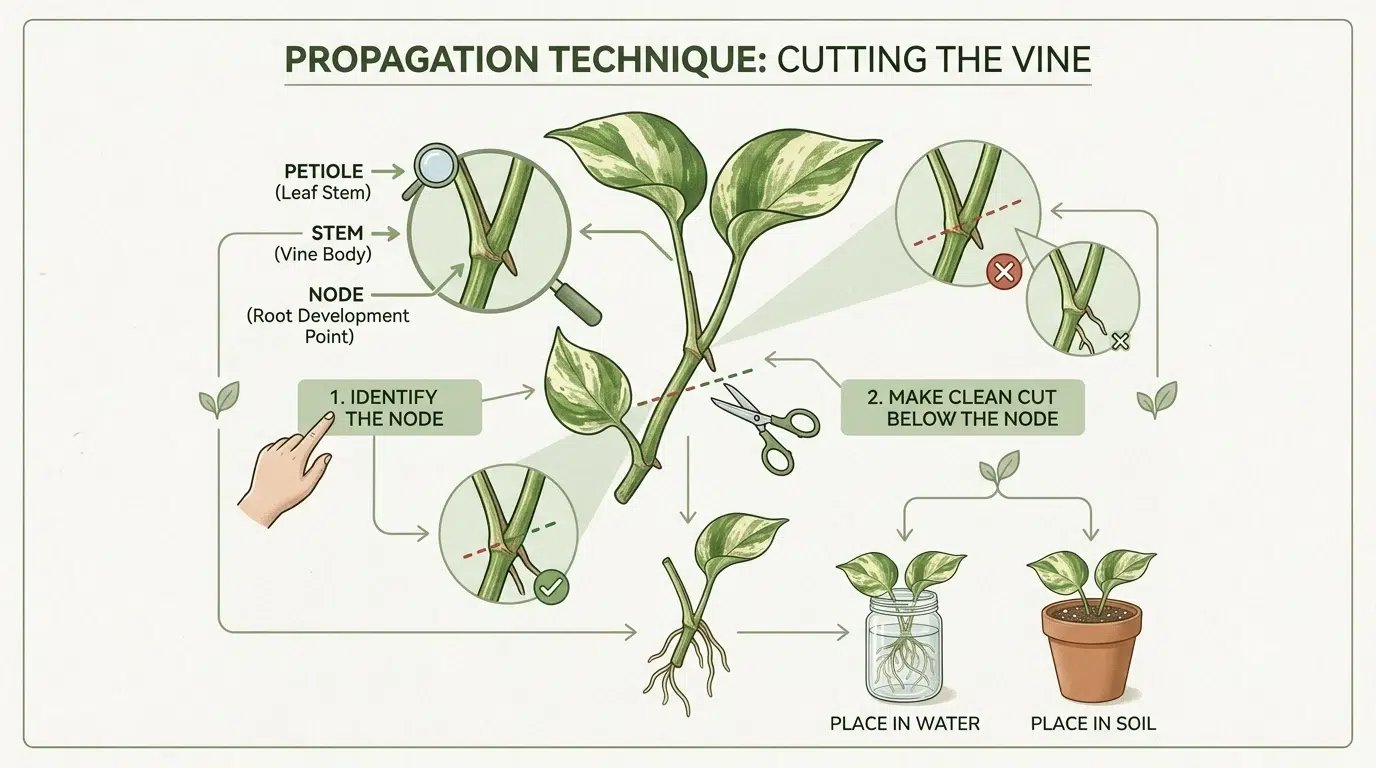
The best place to cut pothos is just below a node. Use clean, sterilized scissors to reduce the risk of bacterial or fungal problems. Understanding where to cut pothos for propagation also helps encourage healthier regrowth and fuller vines after pruning.
An ideal cutting usually contains:
- One or two nodes.
- Healthy leaves.
- No damaged or diseased sections.
Fastest Way to Propagate Pothos
The fastest propagation results come from healthy cuttings kept in warm conditions with bright indirect light.
Helpful steps include:
- Cut below a healthy node.
- Place cutting in water or moist soil.
- Maintain warmth and humidity.
- Transplant only after strong roots develop.
Common Pothos Propagation Mistakes
Common beginner mistakes include:
- Cutting without a node.
- Keeping cuttings in poor light.
- Failing to replace old water.
- Moving cuttings to soil too early.
- Using dirty tools.
Avoiding these problems improves rooting success.
Can I Use Tap Water for Pothos Propagation?
Yes, many pothos plants can grow successfully in tap water. However, water quality can affect growth.
Problems may occur with:
- High chlorine levels.
- Excess fluoride.
- Very hard water.
Filtered water may help when plants show stress related to water quality.
Do Pothos Go Into Shock After Repotting?
Pothos may experience temporary transplant shock after moving from water to soil or after repotting. Symptoms can include drooping leaves, slower growth, or mild yellowing.
Recovery usually improves with:
- Stable moisture.
- Avoiding fertilizer immediately after transplanting.
- Maintaining consistent light conditions.
Are Manjula Pothos Hard to Care For?
Manjula Pothos is beginner-friendly but requires slightly more attention than fully green pothos because its variegation makes growth slower.
Manjula Pothos Light Requirements
Manjula prefers bright indirect light. More light usually helps maintain stronger variegation, while very low light may cause slower growth and greener leaves. Proper pothos light requirements vary between cultivars, but most varieties perform best with bright indirect light rather than harsh direct sun.
Direct harsh sunlight should be avoided because it can scorch delicate leaves.
Manjula Pothos Soil Mix and Pot Requirements
A well-draining aroid-style mix works well.
A suitable blend may include:
- Potting soil
- Perlite
- Orchid bark
Pothos generally prefer slightly snug pots rather than oversized containers because excess soil can retain too much moisture.
What Makes Pothos Happy (General Care Conditions)
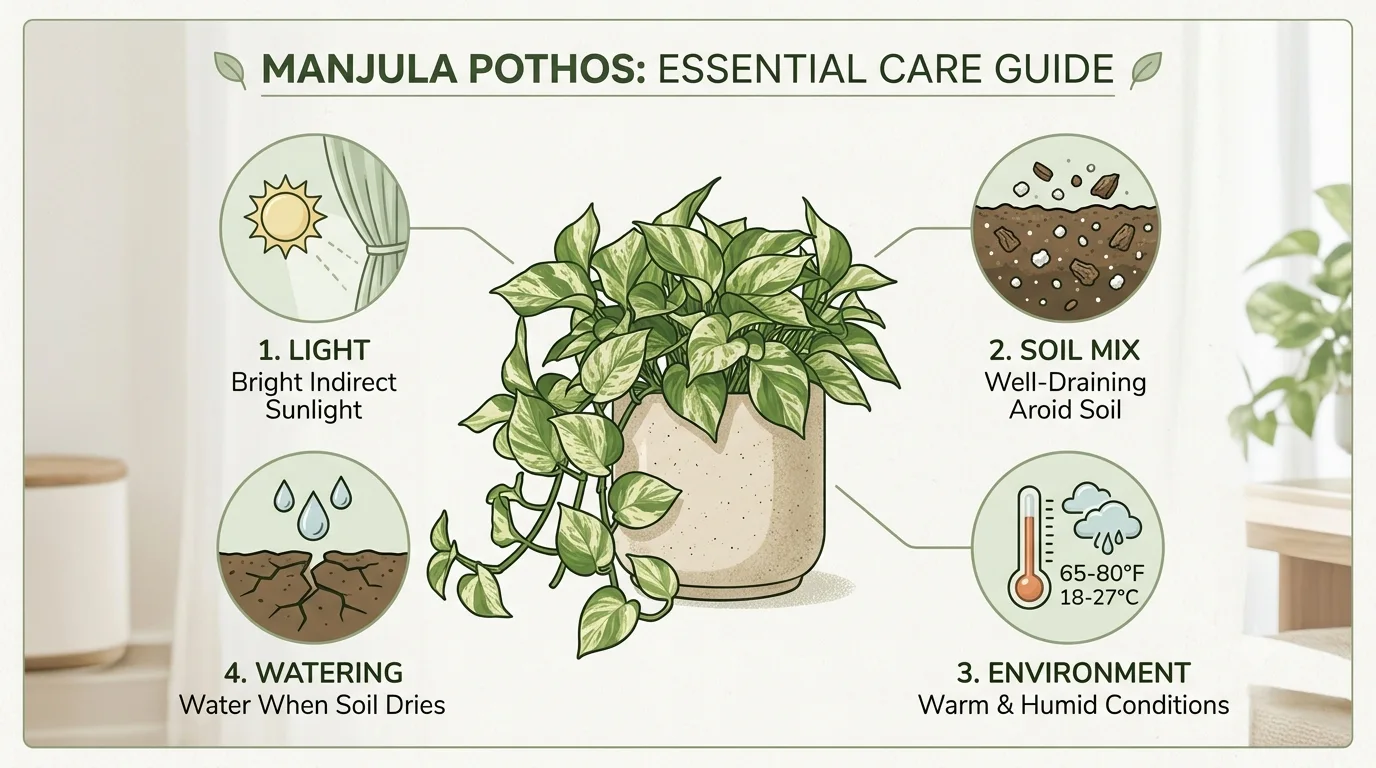
Healthy pothos growth depends on:
- Bright indirect light
- Proper watering
- Good drainage
- Moderate humidity
- Warm temperatures
Manjula Pothos Watering Guide
Manjula Pothos prefers watering when the upper soil layer begins to dry. It tolerates occasional drought better than constant wet soil.
Signs of underwatering:
- Drooping leaves
- Curling leaves
- Crispy edges
Signs of overwatering:
- Yellow leaves
- Mushy stems
- Root problems
Do Coffee Grounds or Vinegar Help Pothos?
Coffee grounds and vinegar are common home remedies, but they should be used carefully. Coffee grounds may add organic matter but can create moisture and mold problems if applied excessively.
Vinegar is not recommended as a regular plant treatment because it can alter soil acidity and damage roots.
Common Manjula Pothos Problems (Problem-Solution Section)
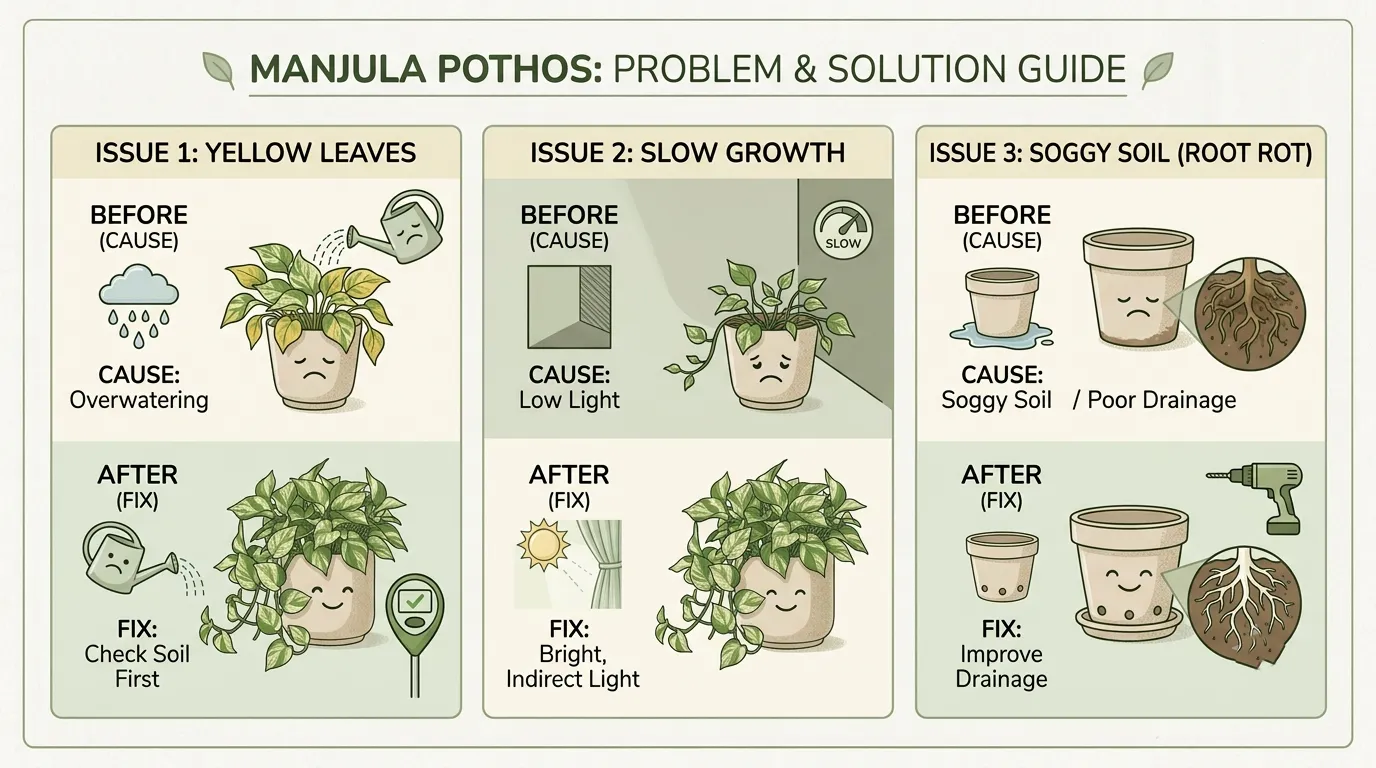
Yellowing Leaves — Why It Happens and How to Fix It
Yellow leaves often result from overwatering, poor drainage, or insufficient light. Allow soil to dry slightly between watering and improve drainage.
Slow Growth or Reverting to Green — Causes and Solutions
Slow growth is normal because Manjula has heavy variegation. Low light can also encourage greener leaves. Providing brighter indirect light helps maintain patterns.
Root Rot From Overwatering — Prevention and Recovery
Root rot occurs when roots remain wet for too long. Remove damaged roots, use fresh well-draining soil, and adjust watering habits.
Disadvantages of Pothos
Pothos has several limitations:
- It is toxic to pets and children if consumed.
- Some species can become invasive outdoors in suitable climates.
- Beginners may overwater because it is often marketed as extremely easy-care.
Most Beautiful Pothos Varieties (Comparison Block)
Popular attractive pothos varieties include:
- Manjula Pothos: Creamy marbled leaves with artistic patterns.
- Marble Queen Pothos: Bright white and green streaked foliage.
- Snow Queen Pothos: Extremely white variegation.
- Pearls and Jade Pothos: Compact leaves with detailed markings.
Conclusion
Manjula Pothos propagation is a simple way to create new plants when healthy stem cuttings with nodes are used. Water propagation is beginner-friendly, while soil propagation can produce strong long-term growth. Proper light, balanced watering, and awareness of patent restrictions help growers successfully maintain this unique variegated pothos cultivar.
Manjula Pothos is one of many popular indoor plants covered in detailed indoor plant care guides, helping growers understand propagation, watering, and long-term maintenance.
FAQs
Is it better to propagate pothos in water or soil?
Water propagation is often better for beginners because root growth is visible, while soil propagation can encourage stronger root adaptation.
Is Manjula pothos rare or expensive?
Manjula Pothos is less common than standard pothos because of its unique variegation and limited commercial availability.
Can you propagate Manjula pothos from a single leaf?
No, a single leaf without a node usually cannot grow into a new plant because it lacks the growth tissue needed for new roots.
Do pothos need deep or shallow pots?
Pothos generally prefer slightly shallow, well-draining pots rather than very deep containers that hold excess moisture.
How long does it take for pothos cuttings to root?
Pothos cuttings commonly develop roots within a few weeks, depending on temperature, light, and propagation method.
Can pothos go two weeks without water?
Yes, mature pothos plants can sometimes survive two weeks without water, but growth may slow and leaves may droop if they become too dry.